2027 Best Degrees With Low GPA Options

Co-Founder and Chief Data Scientist
A low undergraduate GPA can make graduate school feel out of reach, but the right question is which programs will consider your complete application - and which degrees fit your goal. The U.S. Bureau of Labor Statistics (BLS) reported median weekly earnings of $1,543 for workers with a bachelor's degree in 2024, underscoring the value of making an informed decision about further education rather than enrolling just to earn another credential. This guide compares master's degree fields, explains how to assess admission flexibility, and helps you check costs, career requirements, and alternatives before applying.
Key Things You Should Know
- A low GPA does not automatically rule out a master's degree: compare the published policy for your specific program, including whether it reviews recent coursework or offers conditional admission.
- The strongest field depends on your goal. Business and technology programs may emphasize experience or technical preparation; nursing, counseling, teaching, and social work can have separate licensure requirements.
- BLS reports median weekly earnings of $1,840 for workers with a master's degree in 2024. That workforce-wide figure does not predict what a particular program's graduates will earn or whether another degree is worth its cost.
Top 10 Best Degrees With Low GPA Options
Business Programs
An MBA or master's in management can suit applicants who have substantial work experience but weaker undergraduate grades. Some programs consider professional achievements, recommendations, an interview, or recent coursework alongside GPA; others enforce a firm minimum. Compare the applicable admissions policy before assuming experience offsets grades. An MBA is most useful when its courses and recruiting opportunities match a specific career move. If you need accounting eligibility instead, check your state's coursework requirements before choosing a general business degree.
Healthcare Programs
Master's degrees in healthcare administration or public health can serve applicants interested in operations, policy, or population health rather than direct patient care. Relevant employment, a strong statement, or recent academic work may strengthen a low-GPA application where holistic review is permitted. Public health programs may expect quantitative preparation; clinical programs have different prerequisites and admission rules. Neither an MHA nor an MPH, by itself, grants a clinical license. Choose based on the jobs you want, not the broad appeal of "healthcare."
Information Technology Programs
A master's in information technology, cybersecurity, or information systems may fit an applicant who can document technical projects or relevant work despite a low GPA. Check whether the program admits students from other majors and whether foundation courses add time and expense. A practical curriculum might include networks, cloud systems, security, and a capstone. A degree can support advancement, but employers may also expect demonstrable skills, certifications, and experience. Compare those requirements with a less costly skills-focused route.
Computer Science Programs
A computer science master's is a stronger fit than a general IT degree if your goal requires deeper study of algorithms, software systems, or computing research. Admission can be difficult with a low GPA when programs require calculus, programming, and other technical prerequisites. Ask whether recent graded courses can demonstrate readiness and whether missing foundations must be completed before or after admission. Compare a thesis-based path with a course- or project-based option; neither admission flexibility nor degree completion guarantees a software job.
Nursing Programs
Most MSN pathways require an active registered nurse license and specified nursing preparation; a low GPA is only one eligibility issue. Schools may also evaluate prerequisite grades, clinical experience, and references. An RN-to-MSN bridge and a graduate program for nurses with a BSN have different entry requirements, so verify which pathway applies to you. If your goal is advanced practice, confirm that the concentration, clinical placements, and state rules support the intended license. An MSN alone does not confer advanced-practice authority.
Psychology Programs
A master's in psychology may support research, behavioral-health-related work, or preparation for further study, but it is not interchangeable with a license-eligible counseling degree. Applicants with low GPAs should examine prerequisite psychology courses, research expectations, and how each program evaluates recent grades. If you want to provide therapy, identify the exact occupation and check state licensing rules before applying. A general psychology master's may not include the supervised training or specific curriculum required for independent clinical practice.
Education Programs
A master's in education can serve practicing teachers seeking specialization or applicants pursuing an initial teaching credential, but those are different pathways. A low-GPA applicant should check both graduate admission and, where applicable, teacher-preparation admission. Initial-licensure programs may require fieldwork, student teaching, background checks, and state exams even when coursework is online. If you already teach, confirm whether the degree meets your district's advancement rules; a master's does not automatically provide certification or a pay increase.
Criminal Justice Programs
A criminal justice master's can be relevant to policy, administration, analysis, or advancement in an existing public-safety career. Professional service and strong recent academic work may help where a program reviews applications holistically. Compare coursework in research methods, law, and leadership with the actual qualifications for your target job. Many law-enforcement roles do not require this degree, and hiring or promotion may depend more heavily on experience, agency rules, examinations, and background screening.
Engineering Programs
An engineering master's can deepen an existing technical specialty, but prerequisites can be substantial for applicants without the relevant undergraduate preparation. If your overall GPA is low, ask whether the program separately evaluates upper-level engineering and mathematics grades. Compare professional, project-based degrees with research-focused degrees that may require a thesis. For work involving a professional engineer license, verify your state board's education and experience rules; earning a master's does not automatically establish licensure eligibility.
Social Work Programs
An MSW is the relevant graduate credential for many social-work career paths, including routes toward clinical licensure. Programs may examine human-services experience and recent coursework, but field-placement capacity and academic standards can limit admission flexibility. Advanced-standing MSW pathways generally require a qualifying social work bachelor's degree; they are not simply shortcuts for any applicant with a low GPA. Check the program's accreditation, placement arrangements, and your state's supervised-practice and examination requirements before enrolling.
What Degrees Can You Earn With a Low GPA?
You can pursue many master's degree fields with a low GPA, but no field is universally "easy to enter." The useful comparison is between your preparation, each program's actual admission policy, and the credential your goal requires. If your priority is manageable coursework rather than admission flexibility, distinguish that question from searches for the easiest masters degree.
This comparison shows where an applicant's strengths may matter most; it does not imply that every program in a field accepts low GPAs.
| Degree option | Potential strength to present | Requirement to check closely |
| MBA or management | Progressive professional experience | Program-specific GPA and experience rules |
| IT or information systems | Technical work and completed projects | Programming or quantitative prerequisites |
| Public health or healthcare administration | Relevant health-sector work | Quantitative preparation and career fit |
| Education or social work | Relevant service and recent coursework | Fieldwork and licensure eligibility |
A certificate or targeted prerequisite courses may be a better first step if you lack the required foundation. Use a master's degree when its credential and full curriculum - not just the possibility of admission - serve your goal.
Which Colleges Accept Students With Low GPAs?
No responsible list of "low-GPA colleges" can tell you whether you qualify for a particular master's program. A university's general graduate admission policy may differ from the policy for nursing, engineering, social work, or another department. Even where a school advertises holistic review, a program may require a minimum GPA or specific grades in prerequisites.
Build a shortlist from official graduate catalogs and program admissions pages. Look for explicit language about conditional admission, probationary status, GPA calculation, and exceptions; if the policy is unclear, ask the program for a written explanation. Do not treat an unpublished GPA minimum as proof that no minimum exists.
If you have not yet completed a bachelor's degree, graduate admission is not the immediate decision. An associate degree online may offer an undergraduate starting point, but ask a prospective bachelor's institution how its credits would apply before enrolling.
How Can You Get Into College With a Low GPA?
Start by calculating which grades a program will actually review: overall undergraduate GPA, last-credit GPA, major GPA, or prerequisite GPA. Then ask whether recent, graded college coursework can demonstrate improvement. A compelling explanation addresses the earlier record briefly and supplies evidence that your circumstances or preparation have changed.
For each realistic program, contact admissions with your transcript and ask whether you meet the published standard, whether conditional admission is available, and what conditions you would have to satisfy. Apply where your academic preparation and career goal fit - not simply where the application seems easiest.
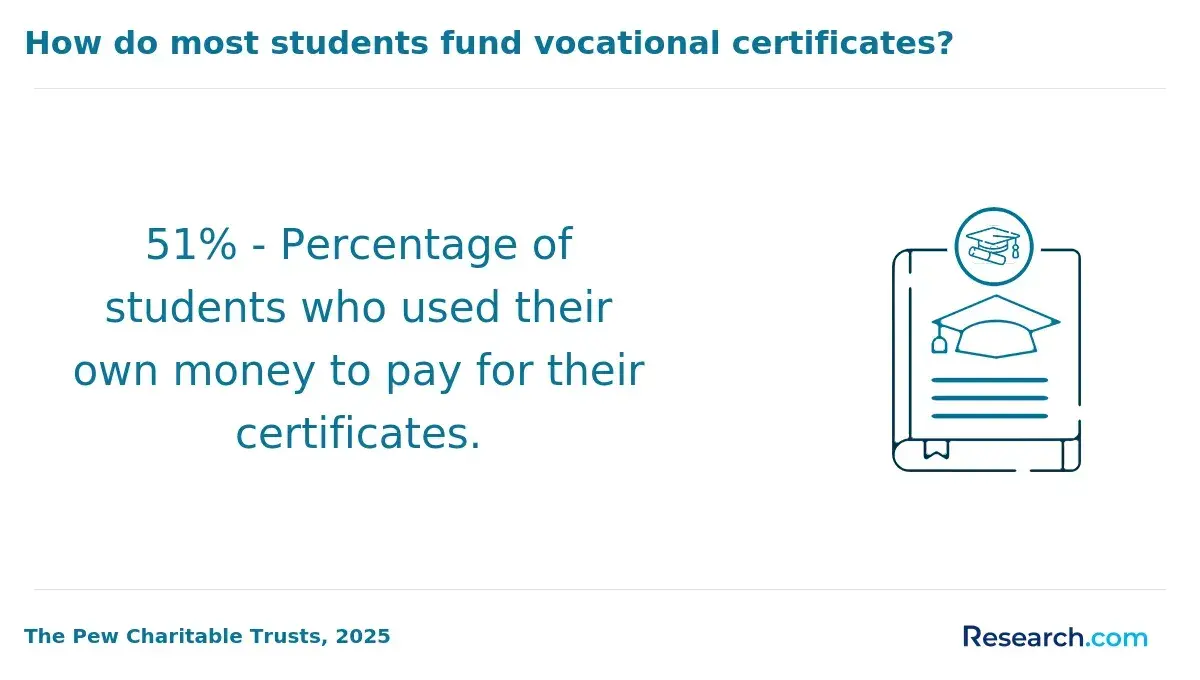
If you mainly need a specific job skill rather than a graduate credential, compare short certificate programs that pay well online with a degree. Verify employer recognition and the full cost; a certificate does not replace a license or a required master's.
What Admission Requirements Apply to Low-GPA Degree Programs?
Most master's programs require a completed bachelor's degree and transcripts. Depending on the program, applicants may also need prerequisite courses, recommendations, a statement, a résumé, an interview, a portfolio, or a standardized test. Testing policies vary; never assume a GRE or GMAT waiver applies to every program at a university.
For a low-GPA applicant, the decisive details are the minimum grade standard, which coursework counts toward it, and whether an exception or conditional pathway exists. Conditional admission usually brings specified academic performance requirements after enrollment; it is not the same as unrestricted admission. Licensure-oriented programs may impose additional background, placement, or professional-credential requirements. Request the current requirements for your specific degree and applicant category before paying an application fee.
Are Online Degrees Better for Students With Low GPAs?
Online study is not inherently easier to enter or complete with a low GPA. Admission standards may be the same as those for campus students, while the scheduling demands can be quite different. The format comparison below can help you identify questions to ask before choosing a program.
| Format | Potential advantage | Constraint to verify |
| Asynchronous online | More choice about when to complete coursework | Fixed deadlines, exams, and group projects |
| Scheduled online | Regular live interaction | Required meeting times and time-zone fit |
| Hybrid or campus | In-person access to labs or peers | Travel and attendance requirements |
Clinical placements, practicums, student teaching, laboratories, or residencies can still be required in an online program. Ask where those activities occur and who secures placements. Choose the format in which you can consistently meet the requirements, especially if you are using new coursework to establish a stronger academic record.
How Long Do Low-GPA Degree Programs Take and Cost?
Completion time and cost depend on the degree, enrollment pace, prerequisites, course sequencing, and required experiences. A nonclinical master's may have fewer placement constraints than a nursing or social work pathway, but the individual curriculum - not the field name - determines how long you will study. Part-time enrollment can spread payments over more terms while extending the time to completion.
Compare each school's estimated total cost to finish, including tuition, mandatory and program fees, books, travel, and any placement-related expenses. Add the cost of foundation courses if your prior degree does not meet prerequisites. Ask when financial aid eligibility begins, whether conditional admission affects it, and how much coursework remains after any approved graduate transfer credit. Undergraduate credits do not automatically reduce master's requirements. The cheapest advertised tuition rate may not produce the lowest total cost.
What Careers Can You Pursue With These Degrees?
These degrees connect to different kinds of work, and the degree alone rarely settles hiring eligibility. The following examples distinguish a plausible direction from an occupation with additional requirements.
| Degree field | Possible career direction | Additional factor |
| Business | Operations or project leadership | Relevant work and management experience |
| IT or computer science | Systems, security, or software work | Technical skills and demonstrated projects |
| Education | Teaching or curriculum work | State certification where required |
| Social work | Social-service or clinical practice | Applicable license and supervised practice |
If your target role does not require a master's, compare its requirements with shorter training options, including 6 month programs. Confirm what a shorter credential actually prepares you to do; program length alone is not evidence of job eligibility or earnings.
What Salaries and Job Outlook Can You Expect?
Use occupational wage data to assess a career, not as a forecast for graduates of a particular master's program. For example, BLS reported median annual pay of $93,600 for registered nurses in 2024. That figure covers the occupation broadly; it is not an MSN graduate salary, and an RN license is the essential entry credential for registered nursing.
Job outlook also varies by occupation within each degree field. Compare the BLS profile for your intended role with local job postings, then note whether openings call for the master's degree, a license, experience, or specific skills. A program's value depends on those requirements and its total cost - not on attaching an appealing occupational median to the degree.
How Can You Verify a Program's Accreditation and Licensing?
Accreditation and licensing checks are especially important when a degree is meant to qualify you for regulated work. Institutional accreditation addresses the college; programmatic accreditation or state approval may separately matter for a professional pathway. An accredited university can offer a program that does not meet your particular state's licensing requirements.
Before enrolling, find the institution in the U.S. Department of Education's accreditation database, confirm any applicable programmatic status with the accreditor, and check the licensing board in the state where you plan to practice. Give the board the exact degree, program, and delivery format when asking about eligibility. Get clarification in writing if placement rules, online study, or out-of-state enrollment create uncertainty. Skipping this check is a more consequential mistake than choosing a program with a less recognizable name.
Other Things You Should Know About
Possibly, but only if the program allows an exception or conditional admission. Ask how its policy applies to your transcript before applying.
It can strengthen an application where the program considers experience, but it does not override a firm academic requirement or missing prerequisites.
Consider recent, graded coursework if it addresses weak prerequisites or demonstrates readiness. First ask prospective programs which courses they would consider relevant.
Not necessarily. Check the online program's own admission policy and any in-person requirements rather than assuming its format changes eligibility.
References
- Accreditation in the U.S. | ed.gov http://www.ed.gov/laws-and-policy/higher-education-laws-and-policy/college-accreditation/accreditation-in-the-us
- School-Determined Requirements | 2024-2025 Federal Student Aid Handbook https://fsapartners.ed.gov/knowledge-center/fsa-handbook/2024-2025/vol1/ch1-school-determined-requirements
- Field of degree: Occupational Outlook Handbook | bls.gov https://www.bls.gov/ooh/field-of-degree/
- Admission Status Categories - Mississippi State catalogs https://catalog.msstate.edu/archives/2018-19/graduate/admissions-information/admission-procedure/status/
- Why Is Accreditation Important? | ACE Blog https://ace.edu/blog/why-is-accreditation-important/
- Transfer Options | Nashville State Community College https://www.nscc.edu/current-students/transfer-options.php
- How to Get Into Grad School With a Low GPA | bestcolleges.com https://www.bestcolleges.com/resources/get-into-grad-school-with-low-gpa/
- How To Get Into Grad School With A Low GPA | affordablecollegesonline.org https://www.affordablecollegesonline.org/college-resource-center/grad-programs-that-accept-low-gpa/
- Types of Admission - CMU Bulletins https://cmich.smartcatalogiq.com/en/2018-2019/graduate-bulletin/policies-and-general-information/general-information/admission/types-of-admission