
2027 Best Adult Degree Programs

Co-Founder and Chief Data Scientist
Returning to school is easier to justify when a program fits both your career goal and your weekly schedule. The stakes can be substantial: the U.S. Bureau of Labor Statistics (BLS) reported a May 2024 median wage of $133,080 for software developers, but that occupational figure is not a promise of graduate earnings. This guide compares degree program fields for working adults, with particular attention to master's options, and explains how to check flexibility, prior credit, total cost, and professional requirements before enrolling.
Key Things You Should Know
- The best fit depends on your starting credential, target occupation, available study hours, and whether required practical work can fit around your job.
- BLS reported a May 2024 median wage of $93,600 for registered nurses; compare that occupational figure with program costs and licensing requirements, not with advertised graduate earnings.
- Before applying, request a written evaluation of eligible previous credit and confirm live-class, placement, and campus requirements; "online" alone does not establish flexibility.
Top 10 Best Adult Degree Programs
Business Programs
An MBA or specialized master's in accounting, finance, or management can suit adults seeking advancement or a change in business function. An MBA typically builds broad leadership and decision-making skills; a specialized degree offers deeper preparation for a particular role. Compare part-time course sequencing, group-project schedules, employer tuition assistance, and whether foundation courses add time. An MBA is not necessary for every promotion, and accounting career goals may call for coursework that meets state CPA education rules. Choose the curriculum that fills a documented skills gap rather than relying on the credential's name.
Healthcare Programs
Master's programs in public health, healthcare administration, and health informatics serve different goals. An MPH emphasizes population health; an MHA focuses on organizational operations; informatics combines healthcare workflows with data systems. Adults should check whether an internship or field experience can be completed near home and whether classes meet at fixed times. These degrees may support advancement, but they generally do not grant a clinical license. If your goal is direct patient care, identify the required professional credential first and select a program designed for that pathway.
Information Technology Programs
A master's in information technology, cybersecurity, or information systems can help experienced workers move toward systems design, security, or technical leadership. Curricula differ: some emphasize governance and management, while others require substantial programming or network experience. Compare prerequisites, hands-on labs, and scheduled team projects before assuming an online course will fit rotating shifts. A degree can deepen expertise, but employers may also value demonstrated projects and role-specific certifications. Adults entering IT for the first time should compare a master's with a bachelor's, certificate, or entry-level experience pathway.
Computer Science Programs
A computer science master's is most useful when its technical depth matches the work you want to do, such as software engineering or advanced computing. Some programs expect prior coursework in programming, data structures, and mathematics; bridge courses can extend completion time. Compare thesis and project-based options, course availability, and whether examinations require scheduled attendance. Working adults without a technical bachelor's should confirm eligibility before applying. For a first software role, a strong portfolio and relevant experience may matter alongside - or instead of - graduate study.
Nursing Programs
Master of Science in Nursing programs can prepare licensed nurses for advanced practice, education, administration, or other specialized work. Entry routes differ for registered nurses with an associate degree and those with a BSN. Advanced-practice tracks typically involve supervised clinical hours and additional certification and state licensure; an online classroom does not remove those obligations. Ask who secures clinical placements, whether sites near your home are acceptable, and how placements interact with work shifts. Choose a track only after checking the rules for the state where you intend to practice.
Psychology Programs
A psychology master's can support research, applied organizational work, or preparation for further study, depending on its curriculum. It does not automatically qualify graduates to practice as licensed psychologists. Adults interested in counseling should distinguish psychology programs from counseling degrees designed around their state's educational and supervised-practice requirements. Compare research methods, thesis expectations, internships, and whether required courses run regularly in the evenings or online. If independent clinical practice is the goal, work backward from the relevant state license before choosing a degree title.
Education Programs
A master's in education may focus on curriculum, instructional design, school leadership, or teacher preparation. Those are different outcomes: a degree for experienced teachers may not provide an initial teaching license. Working adults should verify student-teaching or internship hours, district partnerships, and whether evening or online classes conflict with school-day placements. Ask the school and your state education agency whether the specific track meets the credential you need. For advancement within a district, also check whether its pay policies recognize the degree or specialty.
Criminal Justice Programs
A criminal justice or criminology master's can fit adults pursuing policy, administration, research, or advancement within a public-safety organization. Compare coursework in analysis and leadership with the qualifications in actual job postings. Many frontline roles rely on agency hiring standards and training rather than a graduate degree, so a master's may offer limited value for initial entry. Check whether an internship is required and whether relevant professional work can satisfy it. Shift workers should also confirm that required classes and group meetings are available at workable times.
Engineering Programs
An engineering master's can deepen technical specialization or support a move into engineering management. Admission may require an engineering or closely related undergraduate background, and some tracks include labs, design projects, or a thesis. Adults should check prerequisite courses, access to equipment, and the frequency of required classes before committing to part-time study. A graduate degree does not itself confer a Professional Engineer license; state rules generally include qualifying education, examinations, and experience. Select a concentration that aligns with the technical work you already do or can realistically enter.
Social Work Programs
A Master of Social Work can prepare adults for social-work practice, but its field placements may be difficult to combine with full-time employment. Advanced-standing routes are generally intended for applicants with a qualifying bachelor's in social work; applicants from other majors should expect a different curriculum. Compare placement hours, local site availability, and whether the program's accreditation supports your intended licensing path. Clinical social work typically also requires post-degree supervised experience and an examination under state rules. Confirm these obligations before choosing an online or accelerated option.
What are the best degree programs for adult learners?
The best adult degree program is the one you can complete without losing sight of the job it is meant to support. For a working adult, a strong option combines relevant coursework, predictable scheduling, a manageable total cost, appropriate accreditation, and a realistic path through any required practical training. The master's fields above serve different starting points; a graduate program is not automatically the right next step for someone who still needs an entry credential.
This comparison shows where to start, not a universal ranking. Use it to narrow the field before comparing individual schools.
| Starting point and goal | Program type to investigate | Decisive check |
| Experienced professional seeking advancement | Relevant part-time professional master's | Does the curriculum address a skill or credential employers value? |
| Career changer lacking field prerequisites | Bachelor's, bridge pathway, or master's with foundations | How much additional coursework is required before core classes? |
| Applicant targeting licensed practice | Program designed for that profession and state | Will the exact track meet education and placement requirements? |
| Worker with substantial previous college credit | Transfer-friendly degree-completion program | Which accepted credits actually satisfy remaining requirements? |
Ask each school for a degree plan showing courses, placement obligations, and an expected schedule based on your own record. That is more useful than choosing a program solely because it appears on a "best" list.
Which adult degree programs offer the strongest career outcomes?
Programs with the strongest career outcomes are those tied to a clear, attainable role - not necessarily those associated with the highest occupational wage. Nursing and social work have identifiable licensing pathways; computing and business offer broader possibilities but often depend heavily on experience and demonstrated skills. An education degree may be valuable when it meets a district or state requirement, while a general criminal justice master's may be less compelling for someone seeking a first frontline job.
Compare the jobs you want with current local postings: note required degrees, licenses, experience, and schedules. Then weigh likely benefits against tuition, time away from work, and any unpaid placements. BLS occupation-wide wages describe workers at many career stages, not the expected pay of new graduates.
Are online or campus-based degree programs better for working adults?
Online study is often easier to reach; campus study may be better when you need hands-on facilities or face-to-face structure. Neither format is automatically more flexible. An online program can still require live evening classes, fixed deadlines, proctored exams, or in-person clinical work. A nearby campus program may offer a more workable part-time timetable than an online program whose required classes overlap with your shifts.
Request a recent course schedule rather than relying on a format label. Check how often required courses run, whether part-time students receive placement support, and where any labs or practica occur. For parents or workers with unpredictable hours, the ability to plan those obligations matters more than the word "online."
What accreditation should adult learners look for in degree programs?
Look first for institutional accreditation from an accrediting agency recognized by the U.S. Department of Education. It matters for federal student-aid eligibility and can affect whether other schools or employers recognize the credential. Then check programmatic accreditation where the profession requires or strongly relies on it, particularly in nursing, social work, counseling-related fields, education, and some engineering pathways.
Do not assume institutional accreditation alone makes a particular track eligible for a state license. Verify the exact program, delivery location, and intended state of practice with the program and the appropriate licensing authority before paying a deposit.
What are the admission requirements for adult degree programs?
Requirements depend on the degree level and field. Adult bachelor's applicants may need previous transcripts and proof of secondary-school completion; graduate applicants generally need a bachelor's degree and may face GPA, prerequisite, professional-experience, recommendation, or portfolio requirements. Nursing and other practice-oriented tracks can have separate admission and licensure prerequisites. Test policies vary by program, so an institution's broad admissions policy is not enough to establish eligibility.
Collect transcripts early and ask for a written review of prerequisites and applicable previous credit. If application costs are a barrier while you compare schools, online universities with no application fee can provide another starting point; verify the fee policy for your specific program and applicant category.
How long do adult degree programs take to complete?
Completion time depends on what remains after admission, not simply on how short individual courses are. A student entering a bachelor's completion program with applicable credit has a different timeline from someone starting without it. At the master's level, foundation courses, part-time enrollment, thesis work, course sequencing, and clinical or field placements can substantially change the finish date.
Be especially cautious with unusually short timelines. A 6-month master's degree online may depend on intensive enrollment or a narrowly defined starting point; compare its actual remaining requirements with your available hours. Ask for a term-by-term plan showing when every required course and practical component is offered.
How much do adult degree programs cost?
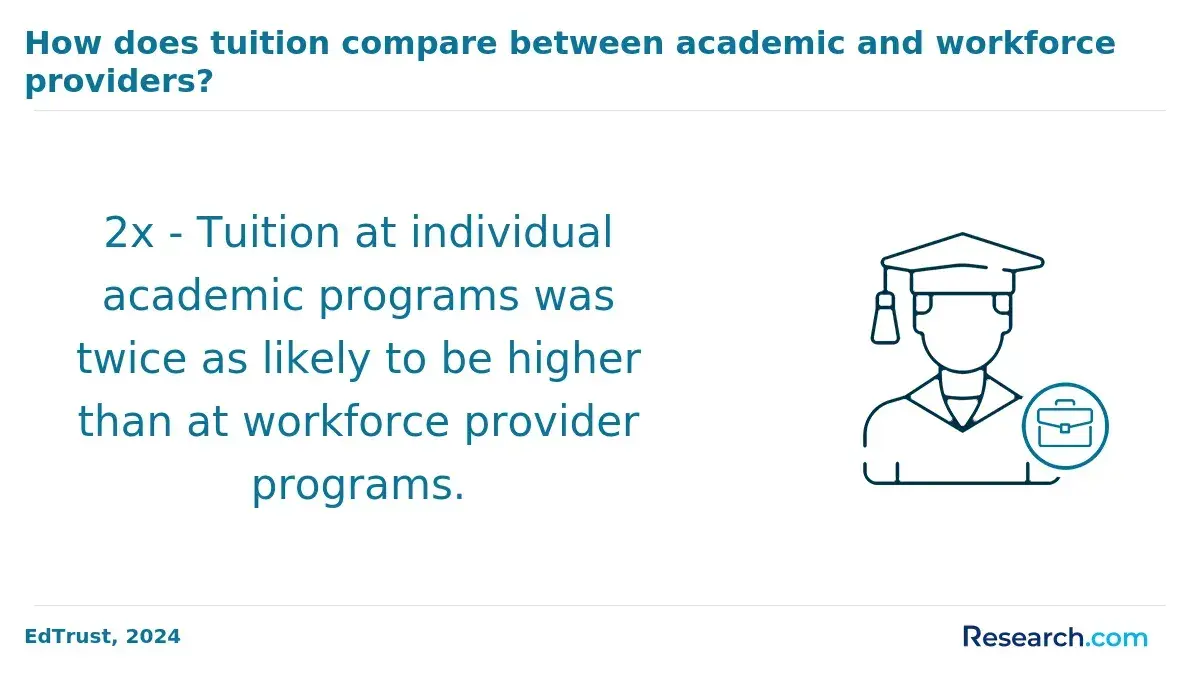
There is no single price for an adult degree program. Compare the total cost to finish: remaining credits multiplied by the applicable tuition rate, plus mandatory and program fees, books, technology, travel, and any costs associated with placements or campus visits. Financial aid, employer assistance, and accepted transfer credit can change your out-of-pocket cost; a low per-credit price alone cannot establish which program is cheapest.
If you still need an undergraduate credential, a lowest cost online bachelor's degree comparison can help you identify candidates. Obtain an individualized credit evaluation and aid estimate before comparing them with graduate pathways. A common mistake is counting credits a school accepts without checking whether they fulfill the major, general education, or residency requirements that determine what you must still pay for.
What careers and salaries can adult degree programs lead to?
Adult degree programs can connect to licensed practice, technical work, education, administration, or research, but the credential alone rarely establishes a salary. The examples below use BLS May 2024 occupational median wages. They are pay figures for people working in those occupations - not starting salaries or measured outcomes of the programs in this guide.
| Occupation | BLS May 2024 median wage | Important qualification |
| Registered nurse | $93,600 | Requires nursing education and state licensure; an MSN is not required for every RN role. |
| Software developer | $133,080 | A computer science master's is not the standard entry requirement for every position; skills and experience matter. |
Use wages to test whether further study makes financial sense, not to predict your first offer. Check local openings and advancement policies as well: a degree that qualifies you for a specific license or employer pay step may have a clearer payoff than one pursued for a broad salary headline.
Which certifications or licenses do adult degree graduates need?
Requirements follow the occupation and state, not the degree title. Registered nurses need state licensure; advanced-practice nursing has additional state and certification requirements. Clinical social workers typically need a qualifying degree, supervised practice, and an examination. Teachers and Professional Engineers also face state-specific credential rules. In IT and business, certifications may help demonstrate specialized skills, but whether they are needed depends on the role.
Check the licensing board or employer requirements for your intended job before enrolling, particularly if you plan to move between states. If your goal is research or a role requiring doctoral preparation rather than professional licensure, explore a PhD online separately; a doctorate is not a substitute for meeting a regulated profession's licensing rules.
Other Things You Should Know About
Often, but feasibility depends on scheduled classes, weekly workload, and practical placements. Ask the program for a part-time plan based on your work hours.
Not automatically. Some schools assess eligible learning through published prior-learning processes. Request an evaluation showing whether any awarded credit satisfies your degree requirements.
A master's generally requires an eligible bachelor's degree. If you have unfinished undergraduate study, compare degree-completion options and the credits you would still need.
An inability to explain total remaining cost, required attendance and placements, or licensing eligibility for your intended state. Get those answers in writing before enrolling.
References
- Business career options: Outlook, wages, and entry requirements | bls.gov https://www.bls.gov/careeroutlook/2025/article/business-career-options.htm
- How to transfer credits from military studies and training to civilian education institutions - VA News https://news.va.gov/30022/transfer-credits-military-studies-training-civilian-education-institutions/
- Types of Financial Aid: Grants, Work-Study, and Loans | studentaid.gov https://studentaid.gov/understand-aid/types
- Employer-offered educational assistance programs can help pay for college | Internal Revenue Service https://www.irs.gov/newsroom/employer-offered-educational-assistance-programs-can-help-pay-for-college
- College Credit for Military Training & Experiences | dantes.mil https://www.dantes.mil/credit4training/
- Direct Assessment (Competency-Based) Programs | ed.gov http://www.ed.gov/laws-and-policy/higher-education-laws-and-policy/higher-education-policy/direct-assessment-competency-based-programs
- Cost of Attendance | Cal State LA https://www.calstatela.edu/financialaid/cost-attendance
- Tuition & Fees | CSU https://www.calstate.edu/apply/paying-for-college/csu-costs/tuition-and-fees
- Career Outcomes for Graduate Students | Meruelo Family Center for Career Development https://careerdevelopment.nd.edu/outcomes/graduate/
- What is a Degree Completion Program? | Notre Dame de Namur University https://www.ndnu.edu/articles/guides-tips/what-is-degree-completion-program.html


