2027 Best Online Cinematography Degree Programs at Nonprofit Universities

Co-Founder and Chief Data Scientist
Choosing an online cinematography degree means weighing creative training against practical production access, not simply finding the lowest tuition. The U.S. Bureau of Labor Statistics reports a $68,810 median annual wage for film and video editors and camera operators in May 2024, but employment outcomes vary by portfolio, location, network, and experience.
This guide helps prospective students compare nonprofit programs by degree level, accreditation, cost, scheduling, equipment expectations, and career alignment before applying.
Key Things You Should Know
- The strongest online cinematography option is usually an institutionally accredited nonprofit program that combines film theory, camera and lighting practice, portfolio feedback, and clearly defined production requirements.
- Cost comparisons should include tuition, fees, camera and editing equipment, software, travel for residencies, and lost work time—not just the advertised per-credit rate.
- The BLS reported a $68,810 median annual wage for U.S. film and video editors and camera operators in May 2024; a degree can build skills and access to mentors, but it does not guarantee work or earnings.
What Makes an Online Cinematography Degree Program at a Nonprofit University Different?
An online cinematography degree at a nonprofit university is a film, media-production, digital-cinema, or visual-storytelling credential delivered substantially online by a public or private nonprofit institution. Cinematography focuses on visual storytelling through camera operation, lighting, lenses, framing, movement, exposure, color, and collaboration with directors and production crews.
Nonprofit status means the institution does not distribute surplus revenue to owners or shareholders, but it is not a quality seal. Public universities are generally nonprofit and may offer lower in-state tuition, while private nonprofit universities may offer smaller cohorts, faith-based missions, or more structured student support. Either type can be a good fit only when its accreditation, curriculum, costs, and outcomes match the student's goals.
Students should also distinguish a true cinematography-focused pathway from a broader online media degree. A broad program may be useful for students seeking editing, content creation, communications, or production-management work; a camera-focused curriculum is usually better for aspiring directors of photography, camera assistants, or lighting specialists.
The degree level changes both the investment and the likely use of the credential. This comparison shows the common routes:
| Credential | Typical purpose | Common timeline | Best fit |
| Associate degree | Foundational production, editing, and general education | About 2 years full-time | Beginners seeking an affordable entry point or transfer pathway |
| Bachelor's degree | Broader film education, advanced projects, and portfolio development | About 4 years full-time before transfer credit | Students seeking a comprehensive undergraduate credential |
| Master's degree | Advanced creative practice, leadership, research, or specialized production | Often 1-3 years | Students with a bachelor's degree and a defined professional goal |
| Doctoral degree | Research, higher education, or senior academic leadership rather than crew entry | Often several years | Professionals pursuing scholarly or academic careers |
Online study can be especially useful for working adults, military-connected learners, rural students, and creators who need to remain in their local production market. It is less suitable for students who need daily access to campus soundstages, cinema-camera inventories, or in-person crew collaboration and cannot obtain comparable access locally.
Students exploring creative majors alongside practical labor-market considerations can compare cinematography with other top degrees in demand for the future. A creative degree is most defensible when the student can identify the skills, portfolio evidence, and professional relationships they need from it.
How Can Students Verify Accreditation for an Online Cinematography Degree at a Nonprofit University?
Students should verify institutional accreditation before paying an application fee or transferring credits. Institutional accreditation evaluates the university as a whole and affects federal aid eligibility, transferability, and graduate-school recognition. Cinematography usually does not require a separate professional license, so specialized programmatic accreditation is less common than in fields such as nursing or engineering.
Start with the school's accreditation disclosure, then independently confirm the accreditor and current institutional status through the U.S. Department of Education's Database of Accredited Postsecondary Institutions and Programs or the Council for Higher Education Accreditation. Do not rely solely on an institution's logo, advertising language, or use of words such as "licensed," "approved," or "recognized."
Use these checks to avoid confusing marketing claims with meaningful academic review:
- Confirm that the university identifies an accrediting agency recognized by the U.S. Department of Education or CHEA.
- Verify that the institution's status is current and note any warning, probation, or teach-out information.
- Ask whether the specific online degree is the same credential awarded to campus students and whether it appears on the transcript as online.
- For transfer plans, obtain written confirmation from the receiving institution before enrolling in courses.
- Review whether the curriculum has external industry partnerships, but do not mistake those partnerships for accreditation.
A red flag is a school that will not name its accreditor, makes vague claims about "international accreditation," or pressures applicants to enroll before providing a catalog and refund policy. Another mistake is assuming an accredited university automatically makes every course transferable; receiving schools decide transfer credit individually.
How Rigorous Are Online Cinematography Degree Programs at Nonprofit Universities?
Rigorous online cinematography programs require more than watching lectures about cameras. Students should expect analytical work in film history and visual language, technical exercises in exposure and lighting, script and shot analysis, production planning, editing workflows, critiques, and a portfolio or capstone. Academic rigor is demonstrated by clear learning outcomes, detailed feedback, deadlines, and work that can be evaluated - not by a program's marketing emphasis on flexibility.
Because cinematography is applied, quality depends heavily on how the program handles hands-on production. Some programs require students to own or borrow specified equipment; others provide loaner kits, local partnerships, short residencies, or campus intensives. Ask whether students must complete shoots with other people, how safety is taught, and how faculty observe or assess camera and lighting work completed off campus.
The following comparison helps students decide whether online delivery can support their learning style and resources:
| Learning component | What a strong online design may include | Question to ask |
| Camera technique | Recorded exercises, exposure tests, instructor annotations, and repeatable assignments | What camera, lenses, and accessories are required? |
| Lighting | Lighting diagrams, safety instruction, scene analysis, and practical demonstrations | Can I complete assignments safely in my home or local setting? |
| Collaboration | Virtual crews, production documents, peer critiques, and local-project options | How are crew roles and collaboration evaluated? |
| Portfolio review | Faculty critique, revision cycles, reel development, and capstone review | How often will an instructor give individualized feedback? |
| Experiential learning | Internship, practicum, residency, or supervised production options | Is participation required, and who pays related travel costs? |
AI-assisted editing, image generation, virtual production, and automated color tools are changing production workflows, but they do not replace visual judgment, on-set communication, copyright awareness, or technical camera knowledge. Look for a curriculum that addresses emerging tools ethically while retaining foundational craft.
Students seeking a highly accelerated route should be cautious. Compressed terms can work for experienced learners with time to practice, but they may leave too little time to build a thoughtful reel, reshoot assignments, or coordinate productions. This differs from classroom-heavy fields, where options such as accelerated psychology programs online may have fewer equipment-dependent assignments.
The total cost of an online cinematography degree can vary widely by residency status, transfer credit, degree level, public or private nonprofit control, and required production resources. Students should obtain a written estimate for the entire program, because an apparently low tuition rate can be offset by technology fees, course fees, equipment purchases, editing subscriptions, insurance, travel, or required in-person intensives.
For context, the College Board reported that average published tuition and fees for full-time in-state students at public four-year institutions were $11,610 for the 2024-25 academic year. That national figure is not the price of a particular online film program and excludes many living and production costs, so it should be used only as a broad benchmark.
Compare costs in categories rather than relying on one headline price:
| Cost category | What to compare | Why it matters |
| Tuition | Per-credit rate, required credits, and online or out-of-state pricing | Shows the core academic charge |
| Mandatory fees | Technology, graduation, course, studio, and distance-learning fees | Can materially change the billed total |
| Equipment | Camera, lenses, tripod, lights, audio, storage, computer, and repairs | May be essential for completing practical assignments |
| Software and media | Editing, color, collaboration, cloud storage, and hard-drive costs | Recurring expenses may continue after a course ends |
| Travel and residency | Transportation, lodging, meals, and missed work | Important when an online program has campus requirements |
| Opportunity cost | Reduced work hours and time needed for shoots | Helps assess affordability realistically |
A public nonprofit may be the strongest value for an in-state student who can transfer general-education credits. A private nonprofit may make sense if institutional scholarships reduce the net price, its schedule fits a working adult, or its mentorship and production opportunities clearly support a student's goals. The lower sticker price is not automatically the lower total cost or better return on investment.
Before accepting admission, request a net-price estimate, a list of required equipment by course, and confirmation of whether transfer credits will reduce the number of credits billed. Avoid signing loan documents based only on a monthly payment estimate.
Eligible students at accredited nonprofit universities may use federal aid, including Pell Grants for qualifying undergraduates, Direct Loans, work-study, and need-based aid determined through the Free Application for Federal Student Aid. State grants, institutional scholarships, veteran education benefits, employer tuition assistance, and private scholarships may also help, although availability and eligibility vary.
Financial aid should be evaluated as a package, not as a promise that all costs are covered. Grants and scholarships generally do not require repayment when eligibility conditions are met; federal and private loans do. Equipment, travel, and some noncredit production expenses may not be covered in the same way as tuition.
Use this sequence to make aid comparisons more meaningful:
- Submit the FAFSA early and review the aid offer from each admitted institution.
- Separate gift aid from loans, then compare the remaining out-of-pocket cost for the full degree.
- Ask whether scholarships renew automatically, what GPA or enrollment level is required, and whether online students qualify.
- Ask the financial-aid office whether required equipment, software, and residency expenses can be included in the cost of attendance.
- Compare federal loan terms before considering private loans, and borrow only after estimating a realistic repayment plan.
Students changing careers should also ask whether they will need to reduce work hours for group shoots, internships, or capstones. Aid can reduce billed costs, but it cannot eliminate the time commitment required to produce portfolio-quality work.
For students who may ultimately manage creative teams, studios, or production businesses, an accelerated MBA can be a later complement to production training, although it is not a substitute for cinematography practice or a reel.
Online cinematography programs differ sharply in flexibility. Asynchronous courses let students complete lectures and discussions within weekly deadlines, while synchronous courses require attendance at scheduled video sessions. Hybrid programs add campus labs, weekend intensives, or residencies. A program can be marketed as online while still requiring specific live meetings or in-person production experiences.
Working students should evaluate flexibility at the course level, not just the program level. Editing lectures may be manageable after work, but collaborative shoots can require daylight hours, actors, locations, equipment pickup, and repeated takes. Programs that use group projects may involve evening or weekend coordination across time zones.
Ask admissions staff and program faculty for a sample term schedule and written answers to these practical questions:
- Which courses require live attendance, and in which time zone are sessions held?
- Are there mandatory residencies, internships, campus checkouts, or proctored exams?
- How many hours per week should students reserve for filming, editing, critique, and group work?
- Can part-time students take prerequisite production courses in the needed sequence?
- What happens if weather, illness, equipment failure, or local permitting issues delay a shoot?
Traditional pacing is usually better for beginners building technical confidence and balancing employment. Accelerated pacing may fit experienced creators who already own equipment, understand editing workflows, and can devote concentrated time to projects. Neither format is inherently better; the best choice is the one that permits consistent practice and timely feedback.
Useful online student support goes beyond a help desk. Cinematography students may need academic advising, library access, disability accommodations, tutoring, career coaching, portfolio review, mental-health referrals, technology support, and help locating internships or local production opportunities. Ask whether these services are designed for distance learners and available outside standard daytime hours.
Faculty access is particularly important in a visual discipline. A school should be able to explain how students receive critique on footage, lighting choices, camera movement, shot continuity, production documents, and final reels. Large asynchronous courses with limited individualized feedback may be less useful for students who need intensive artistic and technical coaching.
This table identifies services that can affect both persistence and portfolio development:
| Support service | What to look for | Why it matters for cinematography |
| Academic advising | Degree maps and prerequisite planning | Prevents delays in sequenced production courses |
| Technical support | Extended hours and software assistance | Helps resolve upload, editing, and platform problems |
| Career services | Resume, reel, interview, and networking guidance | Supports entry into freelance and staff production work |
| Faculty mentorship | Scheduled critique and accessible office hours | Improves artistic growth through revision |
| Library and research support | Streaming media, production databases, and librarian consultations | Strengthens film analysis and preproduction research |
| Accessibility services | Documented accommodations and accessible course materials | Supports equitable participation in online coursework |
Ask to speak with a current online student or recent graduate and request concrete examples of how the program supports a student living away from campus. A school that cannot describe its online support model may be relying on generic services that do not address production-specific needs.
Online cinematography degrees can prepare graduates for camera, editing, production, media, and content roles when students leave with demonstrable work, technical fluency, and professional habits. Potential entry points include camera production assistant, camera operator, assistant editor, videographer, production coordinator, content producer, lighting technician, and postproduction assistant. Job titles and hiring standards differ across film, television, advertising, corporate media, sports, news, nonprofit communications, and independent production.
The BLS projects 3% employment growth for film and video editors and camera operators from 2023 to 2033, about as fast as the average for all occupations. This national outlook is useful context, but it does not measure every freelance opportunity, regional production incentive, or creator-economy role; students should also research their local market and the types of work they want to pursue.
Employers and clients commonly evaluate a reel, completed projects, reliability, communication, software competence, and on-set experience alongside a degree. A career-focused curriculum should therefore provide repeated opportunities to plan, shoot, edit, receive critique, revise, and explain creative decisions.
Students should compare career preparation using evidence rather than broad placement claims.
- Review whether the school publishes job-placement, retention, graduation, or alumni-outcome information, and ask how each measure is calculated.
- Inspect faculty biographies for current or recent professional work relevant to camera, lighting, directing, editing, or production.
- Ask whether internships are optional or required, whether they can be completed locally, and whether academic credit is available.
- Request examples of capstone expectations and the type of portfolio students complete before graduation.
- Ask whether career services understand freelance invoicing, contracts, networking, and reel-based job searches.
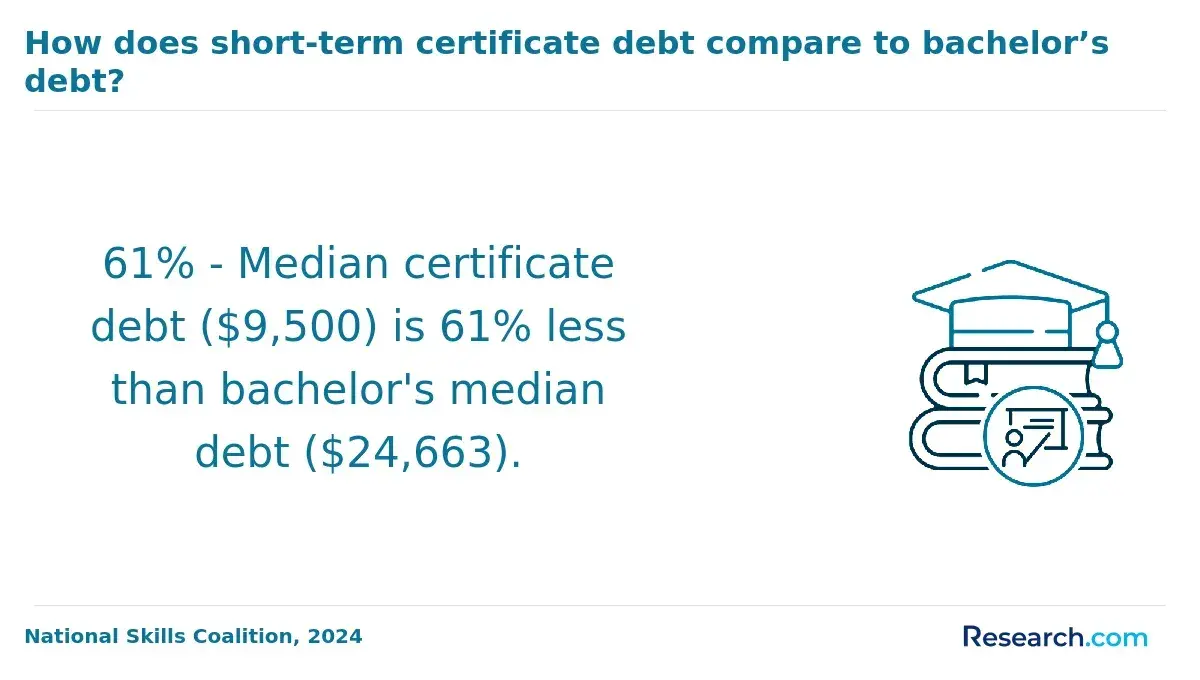
A degree is most likely to add value when it creates a disciplined body of work and professional feedback. Students who primarily want a fast technical credential may also compare certificate programs, community-college pathways, workshops, and supervised local production work before committing to a four-year program.
An institutionally accredited online bachelor's degree can generally support applications to relevant graduate programs, such as an MFA in film production, MA in media studies, master's in digital media, or graduate business and communications programs. Admission requirements are set by each receiving school, and many creative graduate programs weigh a portfolio, statement of purpose, recommendations, and prior coursework as heavily as GPA.
Students considering graduate school should choose an undergraduate program with sufficient liberal-arts coursework, writing, research, and faculty interaction. A purely technical curriculum may build practical skills but may not provide the analytical writing sample or academic references some MA and doctoral programs expect. Conversely, a theory-heavy degree may require the student to build a stronger production portfolio independently for an MFA application.
Before enrolling, contact prospective graduate programs and compare their prerequisites with the undergraduate catalog. Verify whether online laboratory courses are accepted, whether a minimum GPA is expected, and what portfolio format applicants submit. Keep syllabi, project files, transcripts, and evidence of production roles.
A doctoral pathway is usually appropriate for people interested in research, curriculum, media scholarship, or academic administration rather than working as a cinematographer. Students whose long-term goal is educational leadership may eventually consider an EdD program, but a film-production master's degree is typically the more direct next step for advanced creative practice.
How Should Students Compare the Best Online Cinematography Degree Programs at Nonprofit Universities?
The best online cinematography degree is the one that meets a student's creative, financial, and scheduling constraints with evidence - not the one with the most attractive label. Build a short list of institutionally accredited public and private nonprofit universities, then compare the actual degree plan, total expected cost, hands-on requirements, and career support. A program is a stronger match when its assignments resemble the work the student hopes to create after graduation.
Use a weighted comparison rather than relying on rankings or promotional claims. For example, a working editor might prioritize asynchronous scheduling and transfer credits, while an aspiring director of photography may prioritize lighting instruction, faculty critique, equipment access, and residency options.
| Comparison factor | Evidence to collect | Decision implication |
| Accreditation | Current institutional status and accreditor | Supports aid eligibility, transfer planning, and graduate-school options |
| Curriculum | Course sequence, camera and lighting content, capstone requirements | Shows whether the degree fits a camera-focused or general media goal |
| Total cost | Written estimate including fees, equipment, software, and travel | Prevents misleading tuition-only comparisons |
| Format | Live sessions, residencies, group projects, and part-time availability | Determines whether the program fits work and family obligations |
| Transfer policy | Credit evaluation process and maximum transferable credits | Can reduce completion time and expense |
| Student support | Faculty feedback model, advising, technology help, and career services | Indicates the quality of the remote learning experience |
| Outcomes | Published definitions and alumni examples | Offers context without treating outcomes as guarantees |
After narrowing the list, take these final steps before committing:
- Download the catalog and map every required course, prerequisite, residency, and elective through graduation.
- Calculate the full estimated cost after grants and scholarships, including equipment and travel.
- Request a transfer-credit evaluation in writing if you have prior college, military, or relevant coursework.
- Review two or three faculty members' qualifications and ask how often students receive individual feedback.
- Compare sample assignments, capstone expectations, and portfolio support against your intended role.
- Talk with admissions, financial aid, and—when possible—current students, then document answers before making a deposit.
Common mistakes include treating nonprofit status as proof of value, overlooking required synchronous sessions, buying equipment before confirming specifications, assuming every online program includes local internship support, and borrowing without reviewing the full program cost.
Students interested in adjacent design fields may also compare an architecture online degree; however, architecture follows a distinct curriculum and, for licensure-oriented paths, different professional requirements.
Other Things You Should Know About Cinematography
Cinematography is a major part of filmmaking, focused on how a story is captured visually through camera, lenses, lighting, composition, movement, and color. Filmmaking is broader and can include directing, producing, screenwriting, sound, editing, and distribution.
Not always. Some early courses can be completed with accessible cameras or smartphones, while advanced courses may require specific cameras, lenses, lighting tools, editing-capable computers, or local rentals. Obtain the required-equipment list for each course before enrolling or purchasing gear.
Yes. Film, commercial, corporate, sports, news, wedding, documentary, and nonprofit-media work exists in many regions. Large production hubs can offer more networking density, but local relationships, a strong reel, dependable work habits, and willingness to travel can also create opportunities.
A focused reel should show well-executed images that demonstrate lighting, composition, camera movement, exposure control, visual continuity, and storytelling choices. Include project credits, identify your exact role, and prioritize a concise selection of your strongest work over a long collection of unrelated clips.
- Digital Cinematography Bachelor's https://www.fullsail.edu/degrees/digital-cinematography-bachelor-degree-program
- Online Degree Programs - The Los Angeles Film School - Catalog https://catalog.lafilm.edu/007-online-degree-programs/
- Digital Filmmaking Online - The Los Angeles Film School https://www.lafilm.edu/programs/digital-filmmaking-online/
- Chicago Filmmakers https://chicagofilmmakers.org/
- Top 10 Film Scholarships to Apply for in December 2025 https://bold.org/scholarships/by-major/film-scholarships/
- Online Degrees https://www.nyfa.edu/online-degrees/
- Film School Alumni: Take Our Survey on Employment and Success Outcomes https://www.filmschool.org/threads/film-school-alumni-take-our-survey-on-employment-and-success-outcomes.31899/
- How and Where to Learn Virtual Production Techniques - Frame.io Insider https://blog.frame.io/2022/07/14/how-and-where-to-learn-virtual-production-techniques/
- Filmmaking and Digital Media Certificate https://www.sessions.edu/online-certificates/filmmaking-digital-media/
- Associate of Applied Science in Digital Filmmaking - San Francisco Film School https://www.sanfranciscofilmschool.edu/programs/associate-of-applied-science-in-digital-filmmaking/