2027 Online Cinematography Master's Programs Under $20,000: Total Tuition and Required Fees

Co-Founder and Chief Data Scientist
An advertised tuition figure can make an online cinematography master's degree appear affordable while technology charges, graduation fees, residency requirements, and equipment needs push the actual cost higher. This guide is for working creatives and aspiring directors of photography who need to evaluate a $20,000 ceiling realistically.
The U.S. Bureau of Labor Statistics reported a $68,950 median annual wage for camera operators in 2024, but career outcomes depend heavily on portfolio quality, credits, location, and professional relationships. Use this guide to compare full program costs, delivery formats, and career value before applying.
Key Things You Should Know
- A program is genuinely under $20,000 only when published tuition and mandatory institutional fees for all required credits remain below the cap; production gear, travel, and optional services may still add to personal spending.
- Multiply the per-credit rate by the graduation-credit requirement, then add every recurring term, course, technology, and graduation charge before comparing programs; a $500 difference across 36 credits equals $18,000.
- Affordability matters, but an online cinematography master's program should also offer credible institutional accreditation, faculty feedback, a portfolio-building curriculum, and a format compatible with production-based learning.
How Much Does an Online Cinematography Master's Degree Under $20,000 Cost in Total?
The total cost of an online cinematography master's degree is the amount a student must pay to complete all graduation requirements, not the school's headline tuition rate. A program can meet a $20,000 tuition target yet exceed that amount after mandatory fees, repeated courses, or required campus intensives.
Dedicated online master's degrees titled "cinematography" are comparatively uncommon. Many relevant low-cost options use broader titles such as film production, digital media, media arts, communication, or fine arts with production coursework. That distinction matters: a broader degree may cost less and be fully online, while a cinematography-focused curriculum may require equipment access, collaborative shoots, or short residencies.
The calculation below shows the cost test readers should apply to every program. It separates charges controlled by the institution from expenses that vary with a student's circumstances.
| Cost category | How to calculate it | Include in the $20,000 test? |
| Tuition | Required credits × applicable per-credit rate, or published flat program price | Yes |
| Mandatory recurring fees | Per-term, per-course, online-learning, or distance-learning fees × required occurrences | Yes |
| One-time required fees | Application, enrollment, graduation, assessment, or required residency charges | Yes when required to earn the degree |
| Equipment and production spending | Camera, lighting, editing software, storage, insurance, travel, and crew costs | Track separately, but budget for them |
| Optional services | Parking, voluntary insurance, optional workshops, or elective travel | No, unless the student chooses them |
Request a written program-cost estimate for your expected start term. If the school cannot confirm the total number of credits, applicable tuition rate, and required fees, treat the under-$20,000 claim as unverified rather than assuming the lowest published figure applies.
What Required Fees Can Increase the Cost of an Online Cinematography Master's Degree Beyond $20,000?
Required fees are charges students cannot avoid while progressing through the curriculum. They can be assessed once, per term, per credit, per course, or only when students reach a capstone or graduation stage. A small term fee becomes meaningful in a part-time program because it is charged across more enrollment periods.
Before accepting an offer, obtain the current fee schedule and ask the bursar or program office which charges apply specifically to online graduate students. The following categories are the most important to confirm because they can change the final institutional bill.
- Online-learning, learning-management-system, technology, and digital-services fees
- Graduate application, enrollment deposit, student-record, and graduation fees
- Course, studio, lab, production, portfolio-review, and capstone fees
- Mandatory in-person residency, workshop, assessment, or intensive-session charges
- Proctoring, background-check, software-license, or media-storage charges when required by the program
Students should also distinguish required school charges from practical production expenses. An online production course may expect access to a camera, tripod, lighting, sound equipment, editing workstation, and reliable high-speed internet even when the university does not bill for those items. Borrowing equipment or using an employer's facilities can reduce personal costs, but confirm that the program permits it.
A common mistake is comparing only a tuition webpage with another school's cost-of-attendance page. Use the same standard for both schools: required institutional charges for completion, followed by a separate estimate for equipment and travel.
How Does Per-Credit Tuition Affect the Total Cost of an Online Cinematography Master's Degree Under $20,000?
Per-credit pricing determines whether a program stays under budget because tuition is usually the rate multiplied by required credits. The advertised rate alone says little without the credit count. A lower rate can still produce a higher total when a degree requires substantially more credits.
This comparison illustrates why students should calculate full tuition rather than rank programs by their per-credit price. These are mathematical examples, not quotes from particular institutions.
| Illustrative structure | Required credits | Per-credit tuition | Calculated tuition | Position relative to $20,000 before fees |
| Lower-credit program | 30 | $600 | $18,000 | Leaves $2,000 for required fees |
| Higher-credit program | 36 | $550 | $19,800 | Leaves only $200 for required fees |
| Flat-rate program | Varies by curriculum | Not applicable | Published program charge | Confirm exclusions and fee schedule |
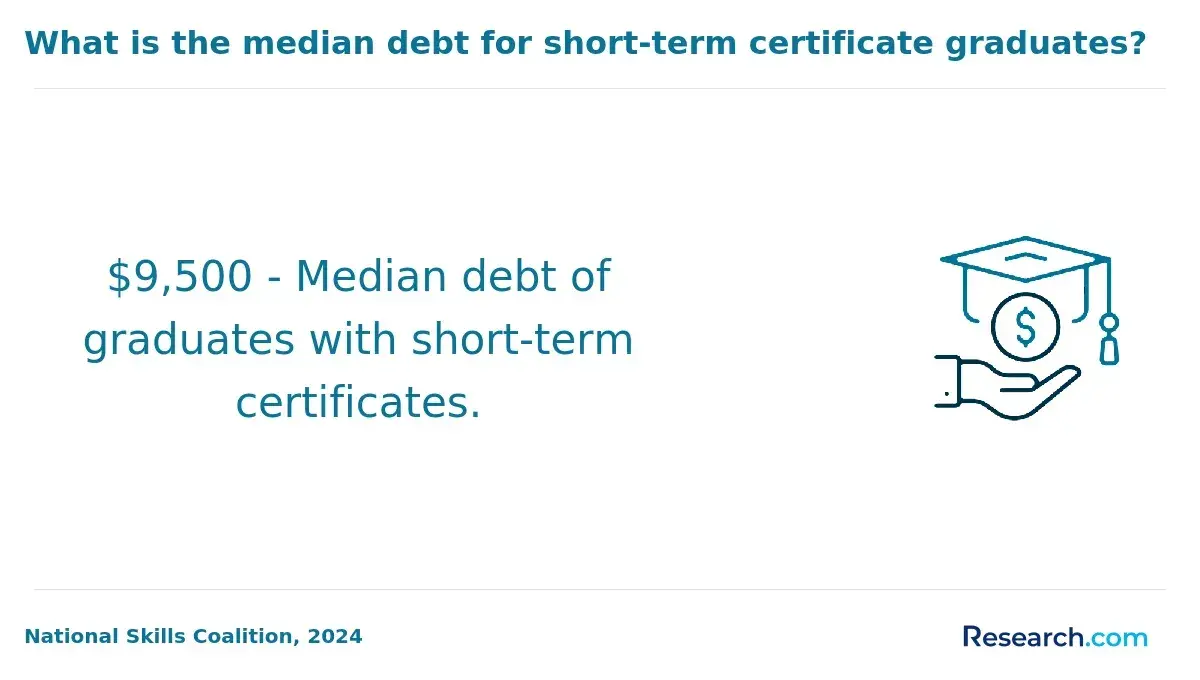
A flat-rate program can be easier to budget for, especially if tuition is locked for the normal completion window. However, ask whether the price includes all courses, whether it changes after a set number of terms, and what happens if a capstone takes longer than planned. Students evaluating broader low-cost pathways can also review cheap online colleges when considering whether a lower-cost undergraduate credential or certificate would better fit an early-career goal.
Do not assume that enrolling faster always lowers tuition. Acceleration can reduce term-based fees, but it may also make it harder to sustain the production, editing, and critique workload needed to build a strong reel.
Most online master's programs require students to complete a prescribed graduate-credit sequence, a final project, portfolio, thesis, or capstone. Completion time depends on credit requirements, course availability, transfer-credit approval, and whether students enroll full time or part time. Programs marketed as online may be asynchronous, scheduled live, or hybrid with limited in-person production experiences.
Format affects both time and cost. Asynchronous courses can suit professionals with irregular production schedules, but they still have deadlines and may require substantial independent shooting. Synchronous formats offer real-time critique and collaboration but can conflict with evening shoots or work travel. Hybrid programs may provide valuable access to facilities and faculty direction, though travel and lodging can raise the actual investment.
Use the school's published course map rather than its shortest advertised timeline. Confirm that required courses are offered in the needed sequence, that capstone enrollment is available when expected, and that a leave of absence or slower pace will not trigger a tuition reset.
Admissions requirements can also extend the path. Applicants may need a bachelor's degree, official transcripts, a statement of purpose, recommendation letters, a creative portfolio, and evidence of prior production or editing experience. Students without prerequisite film, media, or visual-storytelling coursework may be assigned foundation courses, which can add credits or time.
For students considering graduate education after building professional experience, the planning logic is similar to comparing 1-year PhD programs online no dissertation: verify the actual academic requirements, not merely a compressed marketing timeline.
Accreditation is a quality-assurance review of an institution or, in some fields, a specialized program. For an online cinematography-related master's degree, institutional accreditation is usually the most important verification point because specialized cinematography accreditation is not a universal requirement for film and media careers.
Verify accreditation through the institution's official accreditation disclosure and the accreditor's directory, then confirm that the accreditation covers the degree-granting institution and online delivery. Do not rely solely on a logo, a statement in advertising, or a similarly named organization.
A practical verification process includes the following steps.
- Identify the exact legal institution awarding the degree, not only the school, platform, or production partner marketing it.
- Check the institution's current accreditation statement and confirm the named accreditor is recognized by the appropriate U.S. oversight system.
- Ask whether the online master's is the same credential shown on the institution's academic catalog and transcript.
- Review the curriculum for cinematography-relevant learning, including camera operation, lighting, visual storytelling, production planning, postproduction workflow, and portfolio development.
- Confirm whether a prospective employer, union pathway, doctoral program, or teaching goal has additional expectations beyond institutional accreditation.
Accreditation does not guarantee industry employment, and film careers do not generally have a single state-license pathway comparable to regulated professions. It can nevertheless affect credit transferability, eligibility for federal student aid, employer perception, and admission to future graduate study.
Studio-intensive online fields have similar verification concerns; readers comparing other design-oriented options can explore an architect degree online pathway while keeping profession-specific licensure rules separate from film-career expectations.
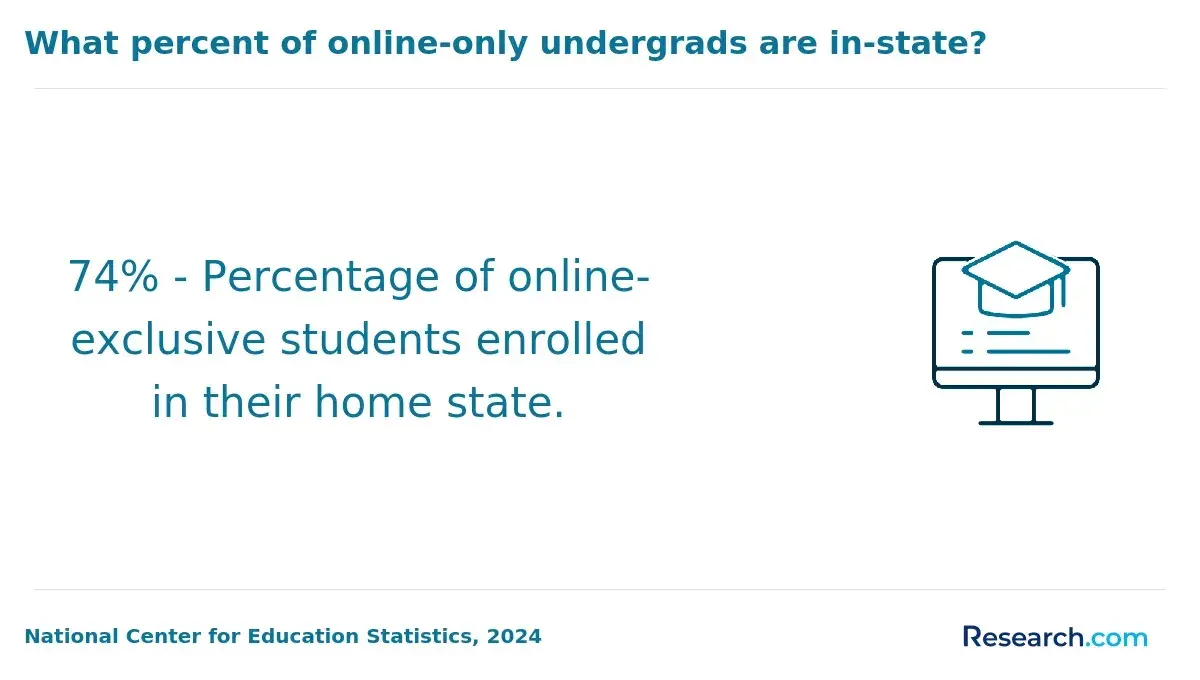
Out-of-state students may pay more when a public university uses separate resident and nonresident graduate tuition rates. Many online programs charge one nationwide rate, but that policy is not universal. A program that appears under $20,000 for residents may exceed the threshold for a nonresident before fees are added.
Ask each school whether the online graduate rate is the same for all U.S. students, whether residency is determined at admission or each term, and whether military affiliation, alumni status, employer partnerships, or regional agreements affect eligibility. Obtain the answer in writing with the relevant academic year and expected start term.
The table highlights the residency questions that most directly affect a budget comparison.
| Pricing policy | Potential effect on total cost | What to verify |
| Single online tuition rate | Usually easier to compare across states | Whether any separate online, technology, or distance fees apply |
| Resident and nonresident rates | Nonresident tuition may push the program beyond the budget cap | Your classification and whether it can change |
| Flat program tuition | Can improve predictability | Whether the rate covers every term, course, and required intensive |
| Tuition guarantee or lock | May protect continuing students from future increases | Duration, eligibility rules, and exclusions |
Do not move or establish residency solely on an assumption that tuition will fall. State residency rules vary, may require substantial documentation, and may not apply to online tuition categories.
Transfer credits can reduce the remaining credit requirement and therefore tuition, but they are not automatic. Graduate programs commonly limit the number, age, grade, and subject fit of transferable credits. Production experience, a professional reel, certificates, and prior undergraduate coursework may support admission but usually do not substitute for graduate credits unless the university formally approves an exception.
Request a preliminary transfer evaluation before committing to enrollment. The most useful questions are these.
- What is the maximum number of graduate transfer credits allowed toward this specific degree?
- Must credits come from an institution with recognized accreditation, and is there a minimum grade requirement?
- Are prior credits old enough to be accepted under the program's time-limit policy?
- Can transferred work replace required cinematography, production, or capstone courses, or only electives?
- Will transfer approval reduce the published tuition total and the time to graduation?
A common error is treating an informal conversation as approval. Get the final transfer decision, remaining degree plan, and revised cost estimate in writing. If the program is flat-rate rather than per-credit, transferred credits may not reduce the price even though they reduce coursework.
Students changing fields should be cautious about choosing a degree only because prior business credits appear transferable. An accelerated online associate's business degree is a separate undergraduate pathway and does not automatically meet graduate film-production prerequisites.
Financial aid can reduce a student's net price below $20,000, but it does not change the program's published cost.
For graduate students, aid may include institutional scholarships, employer tuition assistance, veterans' education benefits for eligible students, private scholarships, and federal Direct Unsubsidized Loans for eligible borrowers. Federal Graduate PLUS Loans may also be available to eligible borrowers, but borrowed funds increase repayment obligations rather than lowering educational cost.
Complete the FAFSA for the intended enrollment year and ask the financial-aid office whether the program qualifies for federal aid, whether aid requires at least half-time enrollment, and whether summer terms are treated differently. Compare grants and scholarships first because they do not ordinarily require repayment; then evaluate loans based on total borrowing, interest, origination charges, and realistic repayment capacity.
Use a net-cost worksheet that separates gift aid from debt. The comparison below prevents a common mistake: describing loans as if they were a discount.
| Funding source | Effect on amount paid now | Repayment consideration |
| Scholarship or grant | Reduces net cost when awarded and applied | Typically no repayment, subject to award terms |
| Employer tuition assistance | Can reduce out-of-pocket cost | May require continued employment or repayment if conditions are not met |
| Federal or private loan | Can cover eligible costs | Borrowed principal, interest, and possible fees must be repaid |
| Payment plan | Spreads payments across a term | Does not reduce tuition and may include an enrollment fee |
Recheck aid eligibility when changing enrollment intensity. Dropping a class, repeating a course, or extending a capstone can affect both aid and the final bill.
An online cinematography master's degree can be worth an investment under $20,000 when it directly improves the skills, portfolio, professional network, and credibility needed for a student's specific target role. It is less compelling when the student primarily needs hands-on set experience, has no access to equipment or collaborators, or could reach the same goal through lower-cost workshops, assistant roles, targeted certificates, and sustained reel development.
Cinematography careers can include camera operator, director of photography, camera assistant, lighting technician, digital-imaging technician, editor, producer, and content-creation roles. Responsibilities vary by role but often involve visual planning, camera and lens choices, lighting, exposure, movement, crew communication, file management, editing workflow, and safety. Employers frequently evaluate demonstrated work and professional reliability alongside education.
The Bureau of Labor Statistics reported a 2024 median annual wage of $68,950 for camera operators. This national figure is useful labor-market context, not a predicted salary for a new graduate: earnings vary by experience, project type, union status, geography, self-employment, and the ability to secure ongoing work.
Assess career value using evidence the school can show. Strong evidence includes detailed curriculum maps, faculty working in relevant production roles, clear equipment expectations, examples of capstone standards, opportunities for critique, career support, and alumni outcomes described with enough context to evaluate. Treat broad employment claims without definitions, timeframes, or role details as a red flag.
Career research should remain role-specific. For example, a guide to FBI profiler salary illustrates why salary information must be tied to the actual occupation rather than borrowed from an unrelated field; cinematography applicants should compare their intended production roles instead.
How Should Students Choose the Best-Value Flat-Rate Online Cinematography Master's Program?
The best-value flat-rate online program is not necessarily the one with the smallest advertised price. It is the one whose fixed charge covers the required curriculum, fits the student's schedule, supplies adequate creative and professional support, and leaves a realistic budget for equipment, portfolio work, and unexpected delays.
Compare finalists using the same written information from each institution. The following decision sequence helps prevent tuition-only comparisons.
- Confirm the exact degree title, total required credits, concentration options, and whether the curriculum includes cinematography-specific camera, lighting, and production work.
- Request a written all-in institutional estimate that identifies tuition, required fees, residency charges, and the cost consequences of taking longer than the standard timeline.
- Determine whether the flat rate is per term, per year, or for the full degree and whether it remains fixed for continuing students.
- Review the delivery format, required live sessions, equipment access, collaboration expectations, and any travel or residency requirements.
- Evaluate admissions prerequisites and transfer-credit decisions before paying a deposit or assuming the shortest completion path.
- Compare portfolio outcomes, faculty access, career services, and alumni evidence against your intended role, then choose the lowest-cost option that meets those needs.
A higher-priced program may be justified when it provides essential in-person production access, stronger mentoring, a specialization that matches a defined career direction, or a network unavailable through a cheaper option. Conversely, a lower-cost online program can be the better choice for an experienced professional who already has equipment, collaborators, and a developing reel and mainly needs structured advanced study.
Before enrolling, preserve screenshots or PDFs of the catalog, tuition schedule, fee schedule, transfer policy, and award letter. Published prices and policies can change, and written records make it easier to confirm whether the program still fits the $20,000 ceiling.
Other Things You Should Know About Cinematography
No. Cinematography is generally portfolio- and experience-driven rather than dependent on one required graduate credential. A master's can help students gain structured feedback, advanced technical knowledge, and a body of work, but practical shooting experience and professional relationships remain important.
Requirements vary, but applicants commonly submit a reel or selected work that demonstrates visual storytelling, composition, lighting, camera movement, editing awareness, and creative intent. Follow the school's technical specifications and provide concise context about your role on each project.
Sometimes. Programs may allow students to use consumer or borrowed equipment for some assignments, but expectations differ. Ask whether cameras, lighting, editing software, storage, and production spaces are supplied, loaned, required for purchase, or available only during residencies.
Usually, an MFA is a studio- or practice-intensive terminal degree in creative fields, while MA and MS programs may place relatively more emphasis on research, media theory, management, or technical study. Review the actual curriculum and capstone requirements because degree labels alone do not determine career fit.
- Film Production MFA https://www.fullsail.edu/degrees/film-production-mfa
- Tuition - Anaheim University https://anaheim.edu/programs/mfa-digital-filmmaking/tuition/
- Scholarships and Grants https://www.nyfa.edu/student-finances/scholarships-and-grants/
- Online Film School | F.I.R.S.T. Institute https://www.first.edu/programs/online-film-school/
- Master of Fine Arts in Filmmaking | EICAR https://www.eicar.fr/en/filmmaking/programs/master-fine-arts-in-filmmaking
- How Long is an Online Master's Degree Program? OnlineEducation.com https://www.onlineeducation.com/faqs/how-long-to-earn-masters-degree
- Film and TV Production Diploma | Toronto Film School https://www.torontofilmschool.ca/programs/film-production/