2027 Online Cinematography Degree Programs With No Personal Statement or Admissions Essay Required

Co-Founder and Chief Data Scientist
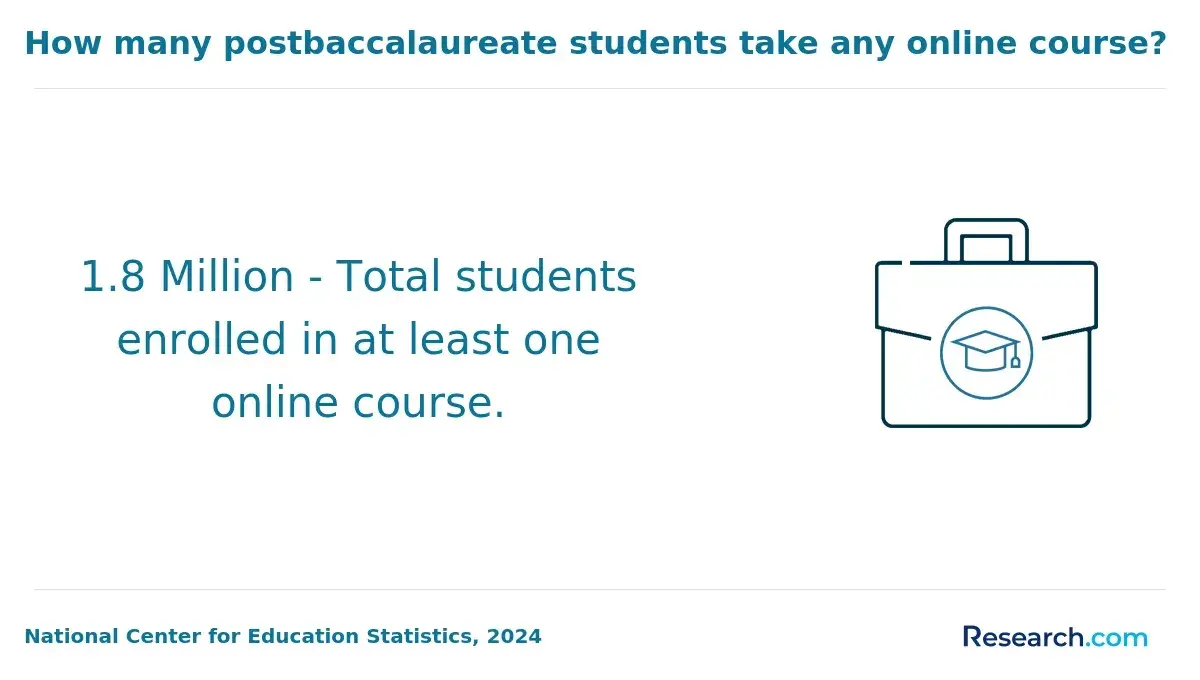
An online cinematography degree with no personal statement can reduce application writing, but it does not remove the need to meet academic and program requirements. National Center for Education Statistics data show that 53.5% of U.S. undergraduates took at least one distance education course in fall 2022, making online program evaluation increasingly important.
This guide is for first-time, transfer, and adult students seeking a simpler application. Learn what "no essay" actually covers, what schools may require instead, and how to compare programs for creative training, affordability, and career value.
Key Things You Should Know
- A true no-essay application does not request a personal statement for standard admission, but schools may still evaluate official transcripts, GPA, prerequisite courses, portfolio materials, identity verification, and English-language proficiency where applicable.
- No-essay admission is not automatic or necessarily open admission: selective film programs can assess academic preparation and may require an artistic portfolio, while broad-access institutions may use placement or conditional-admission processes.
- Essay-optional and essay-waived policies differ from a permanent no-essay policy; honors programs, competitive scholarships, special cohorts, and appeals may still request written responses even when the degree application does not.
What Does No Personal Statement or Admissions Essay Required Mean for Online Cinematography Degree Programs?
For an online cinematography degree, "no personal statement or admissions essay required" usually means the standard application does not ask applicants to submit a narrative about their background, goals, creative interests, or reasons for enrolling. The admissions office instead makes its initial decision from structured materials such as an application form, transcripts, and prior coursework.
This policy applies to admission, not necessarily to the program itself. A cinematography curriculum may still require written work after enrollment, including production proposals, scene analyses, reflection papers, script breakdowns, and artist statements for a capstone portfolio. It also does not mean that every pathway at the institution follows the same policy. A bachelor's completion track, a first-year program, and a graduate certificate can have different requirements.
Students should read the requirement as a narrow administrative benefit: it can make applying faster and less writing-intensive, particularly for applicants balancing work or family responsibilities. It should not be treated as evidence of lower standards, stronger career outcomes, lower tuition, or guaranteed acceptance.
What Admissions Requirements Do Online Cinematography Degree Programs Use Instead of an Essay?
Schools replace an essay with evidence that helps them determine whether an applicant can succeed in college-level coursework and, where applicable, production courses. Requirements vary widely by degree level and whether the program is a general media degree, a film-production specialization, or a selective arts program.
The following comparison shows common alternatives to an essay and what each item is designed to demonstrate.
| Requirement | What the school evaluates | Common applicant consideration |
| Official or unofficial transcripts | Prior coursework, GPA, graduation status, and academic progression | Some schools require official transcripts only after conditional admission. |
| High school diploma or GED | Eligibility for undergraduate enrollment | First-time students commonly submit this evidence or a qualifying transcript. |
| College transfer credits | Course equivalencies and remaining degree requirements | Creative, general education, and technical courses may transfer differently. |
| Portfolio or creative sample | Visual storytelling, technical awareness, and artistic potential | More likely in production-intensive or selective film programs than broad media degrees. |
| Prerequisite coursework | Readiness for advanced production, editing, or visual media classes | Applicants may need foundational credits before entering upper-division coursework. |
| Test scores or placement measures | Academic placement rather than overall talent | Many institutions are test-optional, but placement requirements can remain. |
| Recommendation or interview | Fit for a special cohort, scholarship, or competitive program | These are not automatically eliminated by a no-essay admissions policy. |
Before applying, confirm whether the listed GPA is a minimum for application review, direct program admission, or unconditional admission. A student who meets the institutional minimum may still need to complete prerequisites before taking advanced camera, lighting, color-grading, or production-management courses.
Students exploring creative fields alongside other career paths may also compare their choice with top degrees in demand for the future. That comparison can clarify whether a specialized production degree, a broader digital-media credential, or a complementary business-focused path better supports their employment goals.
Who Is a Good Fit for Online Cinematography Degree Programs With No Admissions Essay?
No-essay online cinematography programs can be a practical fit for applicants whose academic record and prior experience already communicate their readiness. They are especially useful when a personal statement would add little to a straightforward application or would delay enrollment.
Applicants who may benefit most include working adults returning to school, transfer students with a substantial college record, military-affiliated students managing deployment-related timelines, and first-time students who meet published academic requirements but prefer a streamlined process. Students with informal production experience may also appreciate a program that assesses transcripts and portfolios rather than requiring a polished admissions narrative.
However, an essay-required or essay-optional program may be the better choice for an applicant whose record needs context. For example, an essay can explain a major GPA improvement, a gap caused by caregiving, a career change into filmmaking, or relevant on-set experience that does not appear on a transcript. Students seeking highly competitive scholarships, specialized production cohorts, or graduate study should be prepared to write even if the base degree application does not require it.
Online study also fits students who can organize independent production work. Cinematography is hands-on: learners need reliable access to a camera or capable mobile device, editing software, storage, a safe filming environment, and time for shoots. Fully online delivery does not always mean fully remote production, since some courses may require local projects, synchronous critiques, equipment purchases, or optional residencies.
The wording on an admissions page matters. These policies can look similar, but they give applicants different choices and create different risks if instructions change by term or applicant type.
This table separates the three terms so applicants know whether they can submit writing, whether it may influence review, and what to verify before applying.
| Policy | Meaning for standard admission | What to verify |
| No essay required | The application does not request an admissions essay or personal statement. | Confirm the policy applies to the exact degree, campus, start term, and applicant category. |
| Essay-optional | The applicant may submit an essay, and the school may consider it in review. | Ask whether an optional essay can help explain academic context or strengthen scholarship consideration. |
| Essay-waived | An essay normally required has been removed for a specific group, term, promotion, or condition. | Check the waiver's effective dates and whether it applies to all applicants. |
| Open or broad-access admission | The institution may admit many qualified applicants with limited selective screening. | Do not assume this status applies simply because no essay is requested. |
A common mistake is treating "optional" as "irrelevant." If an applicant has a nontraditional background, meaningful production credits, or academic circumstances that deserve explanation, an optional response can be useful. Conversely, applicants should not send unsolicited essays when the school explicitly says it will not review them.
Admissions requirements can also differ across fields. For example, applicants looking at an accelerated psychology programs online may encounter prerequisite and progression rules that have little in common with a studio-production curriculum. Compare policies within the exact program, not across an institution's entire catalog.
Not necessarily. A missing essay removes one application component; it does not reveal the program's acceptance rate, cohort capacity, transfer-credit rules, portfolio expectations, or academic thresholds. A school can have a simple application and still be selective for production courses, equipment access, scholarships, or upper-division film tracks.
Admissions difficulty has several dimensions. Institutional admission concerns whether the college admits the student. Program admission concerns whether the student can enter the cinematography concentration. Course progression concerns whether the student can advance after completing foundational classes. A student may be admitted to the institution but need to satisfy GPA, portfolio, or prerequisite requirements later.
For career context, the U.S. Bureau of Labor Statistics reported May 2024 median annual wages of $68,810 for camera operators and $70,980 for film and video editors. These figures describe occupations, not a guaranteed outcome of a cinematography degree. They do show why applicants should prioritize technical training, portfolio development, networking opportunities, and production experience rather than choosing solely by application ease.
Ask each school whether admission is direct to the cinematography major, pre-major, or a broader digital-media program. Also ask whether students compete for limited advanced-production seats. Clear answers are more useful than broad claims that a school is "easy" or "hard" to enter.
Accreditation and instructional quality should carry more weight than an essay policy. For most students seeking federal financial aid or transferable academic credit, institutional accreditation recognized by the U.S. Department of Education is a fundamental check. Accreditation does not certify that every course is excellent, but it helps establish baseline oversight of institutional operations and academic standards.
Use the school's official website and federal accreditation records to confirm the accreditor, current status, and whether the online degree is awarded by the accredited institution itself. Be cautious when marketing emphasizes a simple application but makes accreditation, tuition, faculty credentials, or graduation requirements difficult to locate.
Quality review should extend beyond institutional accreditation. Examine the curriculum for camera operation, lighting, visual composition, sound awareness, editing workflow, color correction, production safety, copyright basics, and collaborative production practice. Review whether faculty have relevant creative or technical experience and whether students receive detailed feedback on work samples.
The most useful questions for admissions and academic advisors are:
- Is this degree fully online, and are there required residencies, local shoots, or synchronous sessions?
- Which cameras, lenses, lighting kits, editing applications, storage devices, or subscriptions must students obtain?
- Can students build a reel or portfolio from assessed course projects?
- Are internships, mentorships, virtual critiques, or production collaborations available?
- Is admission direct to the cinematography pathway, and what is required to remain in it?
- What support is available for online learners who need tutoring, library resources, disability accommodations, or career services?
Students who value design-oriented visual work may also find it helpful to compare curriculum structures in an architecture online degree. The fields are distinct, but both require careful evaluation of hands-on learning, software access, project critique, and any in-person requirements.
The process is usually shorter than an essay-based application, but it still requires careful document collection and deadline tracking. Requirements can change by start date, so use the admissions page for the precise program and term rather than relying on general institutional advertising.
These steps help applicants avoid delays and confirm that "no personal statement" applies before they submit.
- Identify the exact online cinematography degree, concentration, start term, and applicant category.
- Read the published admissions checklist and save a copy of the page for your records.
- Confirm in writing whether a personal statement, portfolio, recommendation, interview, or writing sample is required for your pathway.
- Submit the institutional application and pay any application fee or request a published fee waiver if eligible.
- Request transcripts early from high school, prior colleges, military education providers, or other required institutions.
- Provide any required portfolio, prerequisite evidence, residency documentation, or placement information by the stated deadline.
- Review the admission decision carefully to determine whether it is direct, conditional, provisional, or pending official documents.
- After admission, compare the financial-aid offer, transfer evaluation, technology costs, and course sequence before enrolling.
Do not mistake a quick online application for a quick degree-completion timeline. Production courses may follow prerequisite sequences, and part-time enrollment can extend the time needed to finish. Students planning around a promotion or career transition should request a term-by-term plan, including when portfolio-producing courses occur.
Yes, many transfer and adult applicants can apply through no-essay pathways, but they often have more documentation responsibilities than first-time students. Colleges commonly need transcripts from every previously attended institution to determine admission eligibility and transfer-credit awards. Omitting a prior school can delay review or create problems after enrollment.
Transfer evaluation is especially important in cinematography because general education credits may transfer more easily than specialized production courses. A course titled "Digital Video" may not automatically satisfy a requirement in camera lighting, cinematography, postproduction, or film history. Ask for a written preliminary evaluation and determine which credits are accepted toward the major rather than merely accepted as elective credit.
Adult learners should also ask whether professional experience can support credit for prior learning, portfolio assessment, challenge exams, or competency-based credit. Policies vary, and creative work experience does not automatically convert to academic credit. Applicants returning after a long absence may need placement measures or updated prerequisites, even if no admissions essay is required.
For students considering a rapid transition into another discipline, an accelerated MBA can illustrate why program pacing should be evaluated separately from admissions simplicity. The right choice depends on career goals, transfer credits, work schedule, and the depth of technical preparation needed.
No-essay admission generally does not determine tuition. Tuition is more often based on institution type, residency classification, credit load, degree level, delivery format, and required fees. For cinematography students, the total cost also may include cameras, lighting equipment, editing software, cloud storage, hard drives, travel for shoots, and portfolio-production expenses.
Federal student aid eligibility is generally tied to enrollment in an eligible program and completion of the Free Application for Federal Student Aid, not to whether a personal statement was required for admission. Students should still compare aid offers carefully because grants, loans, work-study availability, and institutional aid can differ substantially by school.
Scholarships are the key exception. A college may admit a student without an essay while requiring written responses for merit awards, honors programs, creative scholarships, or departmental grants. A scholarship essay can be worth completing when it gives the applicant an opportunity to show financial need context, artistic goals, leadership, or a distinctive production background.
Before committing, request a complete cost estimate that separates tuition from fees and required technology. Compare net price after grants rather than selecting a program based only on a low advertised cost per credit. Borrowing should be evaluated against realistic completion time, expected equipment spending, and the variability of freelance creative work.
Applicants who may later pursue education leadership should note that an EdD program has different financial and professional considerations from an undergraduate cinematography pathway. Program-specific aid rules and career outcomes should always be compared within the relevant field.
How Should You Compare Online Cinematography Degree Programs With No Admissions Essay?
Compare programs in a consistent order: first confirm eligibility and accreditation, then assess curriculum and learning format, and finally evaluate net cost and career support. This prevents a convenient application from overshadowing the factors that affect educational value.
The following framework highlights the evidence that matters most when comparing two or more no-essay options.
| Comparison factor | What to look for | Why it matters |
| Admissions policy | Written confirmation of no essay requirements for your applicant type | Avoids discovering late-stage portfolio or writing requirements. |
| Accreditation | Recognized institutional accreditation and transparent academic policies | Supports aid eligibility and can affect transfer-credit recognition. |
| Curriculum | Courses in camera, lighting, editing, storytelling, production workflow, and portfolio development | Shows whether the degree develops skills employers and collaborators can evaluate. |
| Online format | Live versus asynchronous classes, project critiques, local production expectations, and residencies | Determines whether the format matches your schedule and access to equipment. |
| Faculty and feedback | Faculty backgrounds, instructor availability, and rubric-based project feedback | Cinematography skills improve through critique and revision, not content viewing alone. |
| Total cost | Net tuition, fees, equipment, software, travel, and transfer-credit savings | Creates a more realistic affordability comparison. |
| Outcomes support | Internships, career advising, alumni access, reel reviews, and local production connections | Can help students translate coursework into a portfolio and professional next steps. |
Red flags include unclear accreditation information, a vague equipment list, promises of employment, pressure to enroll before receiving a transfer evaluation, and marketing that describes the application process but not the curriculum. A strong program should be able to explain how online students complete production assignments, receive technical feedback, and develop work suitable for a reel.
Choose a no-essay pathway when the application is genuinely simpler and the program meets your academic, financial, and creative needs. Consider an essay-optional or essay-required program when your story, artistic background, or academic context could materially strengthen your application or scholarship prospects.
Other Things You Should Know About Cinematography
Not always. Requirements can differ for first-time students, transfers, international applicants, readmitted students, graduate applicants, and applicants to competitive production tracks. Verify the policy for your specific degree and start term.
Yes. An admissions office may request clarification about transcripts, academic history, residency, disciplinary disclosures, transfer coursework, or missing documents. This does not necessarily mean the published no-essay policy was inaccurate.
It depends on the program. Broad media or film studies degrees may not require one, while production-focused or upper-division cinematography tracks may ask for creative samples. A portfolio requirement is separate from an admissions essay requirement.
An online degree can help build relevant technical and storytelling knowledge, but employment commonly depends on a demonstrable reel, production experience, professional relationships, reliability on set, and familiarity with evolving camera and postproduction workflows. Seek programs that create opportunities to develop and receive feedback on finished work.
- Film Schools & Careers | How To Become A Filmmaker https://www.learnhowtobecome.org/arts-humanities-careers/film/
- Admissions Requirements - The Los Angeles Film School https://www.lafilm.edu/admissions/general-requirements/
- Any grad. film schools that don't require you to make a film? https://www.filmschool.org/threads/any-grad-film-schools-that-dont-require-you-to-make-a-film.841/
- Pros and Cons of B. Sc. in Filmmaking https://www.seamedu.com/blog/Pros-and-cons-of-Filmmaking
- Is Film School Worth It? The Truth About Filmmaking Careers https://www.insidetheedit.com/blog/is-film-school-worth-it
- Life After Film School: What to Expect As Graduates https://collegeforartsandtech.com/life-after-film-school/
- Film, Cinematography and Media Personal Statement Example https://www.studential.com/personal-statement-examples/film-and-cinematography-personal-statement
- Admissions Requirements | AFI CONSERVATORY https://conservatory.afi.com/admissions-requirements/