
2027 Best Online Career Programs for Remote Jobs

Co-Founder and Chief Data Scientist
Choosing an online program is easier than finding one that prepares you for work an employer will actually let you do remotely. The U.S. Bureau of Labor Statistics (BLS) projects 29% employment growth for information security analysts from 2024 to 2034, but that opportunity does not make every cybersecurity course a route to a remote job.
This guide compares career-focused certificates and degrees across ten fields, explains where hands-on or licensed work limits remote options, and shows how to check costs, credentials, and job requirements before enrolling.
Key Things You Should Know
- Strong remote-work matches include software development, IT support, accounting, business analytics, and certain administrative roles - but employers may require experience before offering remote work.
- BLS reports a $133,080 median annual wage for software developers in 2024; that occupational figure is not a starting salary or a promised outcome of an online program.
- "Online" describes coursework, not necessarily the entire program or future job: nursing, teaching, counseling, and social work may require local placements, licenses, or in-person duties.
Top 10 Best Online Career Programs for Remote Jobs
Business Programs
An online MBA or specialized master's in accounting, finance, or business analytics can support experienced professionals seeking remote-friendly analyst, operations, or accounting work. Look for applied projects using spreadsheets, financial systems, and data visualization - not just management theory.
An MBA is generally better suited to advancement than first-time job entry; a focused certificate or bachelor's program may be a better starting point for career changers. Some accounting roles require CPA licensure, which has separate state education and examination rules. Confirm whether team projects involve scheduled meetings.
Healthcare Programs
Online master's programs in health informatics, healthcare administration, or public health may fit people seeking remote-capable data, compliance, or program-management work. Informatics is the closer match if you want to work with health data and electronic records; administration usually favors applicants with healthcare experience.
Review prerequisites in statistics or healthcare, plus any practicum requirements. A healthcare degree does not itself qualify you for a clinical license, and many healthcare employers expect familiarity with privacy rules and real care-delivery workflows.
Information Technology Programs
A master's in information technology, cybersecurity, or information systems can help IT professionals move toward systems administration, cloud operations, or security analysis. Programs with hands-on labs, incident-response exercises, and documented projects offer more job evidence than lecture-only curricula.
Entry-level IT support is a more realistic first step than assuming a master's leads directly to remote cybersecurity work. Check whether labs are virtual, whether exams require a testing center, and whether the curriculum aligns with - but does not automatically award - any certification you want.
Computer Science Programs
An online master's in computer science can strengthen preparation for software engineering, data-intensive work, or technical specialization. Choose programs by prerequisites and project depth: career changers may need foundational programming and mathematics before graduate coursework.
A substantial code portfolio can matter as much as the credential when applying for remote development roles. Compare thesis and project options if your goal is industry work rather than research, and verify any required exams, live sessions, or campus visits.
Nursing Programs
Online MSN programs commonly serve licensed registered nurses pursuing leadership, education, informatics, or advanced practice. Nurse informatics and some administrative jobs may permit remote work; direct patient care usually does not.
Advanced-practice tracks require supervised clinical hours and state-specific licensure or certification even when classes are online. Before applying, confirm RN-license and degree prerequisites, whether you must arrange local clinical placements, and whether your state authorizes the program. An MSN alone does not make an applicant eligible to practice in every state.
Psychology Programs
An online master's in psychology can support research, user-research-adjacent, or organizational roles, depending on its methods and statistics training. It generally does not independently qualify graduates to work as licensed psychologists.
Counseling-oriented programs are a different choice: they may prepare students for a specific license but require supervised placements, examinations, and state approval. If telehealth is your goal, check the exact license required and the rules governing where both you and your clients are located.
Education Programs
An online M. Ed. in instructional design, educational technology, or curriculum can suit teachers and trainers aiming to build digital courses or support online learning. A portfolio of learning modules is particularly useful for instructional-design applications.
Licensure-track teaching programs are less suited to someone seeking an entirely remote pathway because student teaching usually occurs in person. Ask whether a program is intended for already licensed educators and whether its credential meets requirements in your state.
Criminal Justice Programs
An online master's in criminal justice may be useful for experienced professionals targeting policy, intelligence analysis, compliance, or research roles. Many policing and corrections jobs remain location-bound, so the field is a weaker remote-work bet if those are your intended occupations.
Favor coursework in statistics, investigations, or regulatory analysis tied to a specific job posting. Government and contractor positions may also impose experience, citizenship, or background-check requirements that a degree cannot replace.
Engineering Programs
Online engineering master's programs can suit working engineers pursuing design, simulation, systems engineering, or technical management. Some modeling and documentation tasks can be remote, while testing, manufacturing, and site work often cannot. Check whether the program requires laboratory access, an on-site residency, or a thesis.
If professional engineer licensure matters, investigate your state's education and experience rules; a graduate engineering credential does not substitute for the required licensing process.
Social Work Programs
An online MSW can prepare eligible students for social-work practice, including some telehealth or remote case-management roles. Accredited MSW programs still require supervised field education, generally completed at an approved placement rather than solely online. Clinical practice also requires state licensure and usually additional supervised experience.
Applicants with a qualifying BSW may find advanced-standing options, but admission and shorter timelines depend on program rules. If remote work is essential, investigate local placement availability and the employer's expectations for in-person client contact.
What Are the Best Online Career Programs for Remote Jobs?
The best online career program depends on your starting qualifications and the tasks you want to perform remotely. A certificate may be enough to build entry-level technical skills; a bachelor's degree often provides broader preparation; a master's usually makes more sense for specialization or advancement. Remote eligibility is ultimately set by employers, not by a program's delivery format.
The comparison below separates promising pathways by entry point and their most important limitation. Use it to narrow your search before comparing individual schools.
| Program pathway | Potential remote-capable work | Best fit and main caveat |
| IT support certificate or associate degree | Help desk and technical support | Accessible technical starting point; some employers require on-site device work or scheduled shifts. |
| Accounting certificate or degree | Bookkeeping, payroll, and accounting | Fits detail-oriented work; accountant roles may require a bachelor's degree, while CPA work requires separate licensure. |
| Computer science or software-development degree | Software development and testing | Strong project-based pathway; entry-level remote vacancies can be competitive. |
| Health informatics degree | Health data and systems support | Useful for people with healthcare or technical experience; some roles require access to on-site teams or systems. |
| Instructional-design degree or certificate | Digital course and training development | Well suited to applicants who can show a portfolio; education experience may matter more than a general degree title. |
If you already hold a bachelor's degree, compare specialized graduate study with targeted training before committing to another degree. Some online master's programs may suit advancement, but a short advertised timeline can depend on prerequisites and a demanding course load.
Which Remote Careers Can You Start With an Online Certificate?
Online certificates can help you apply for remote-capable IT support, bookkeeping, payroll, customer-support, and digital-content roles. They are most useful when the curriculum teaches the software and tasks named in local or national job postings and gives you work samples to show employers. A certificate is an educational credential; it is not automatically the same as an industry certification or professional license.
For example, an IT support course should include troubleshooting practice, while a bookkeeping course should cover reconciliations and accounting software. Compare 6-month certificate programs that pay well against actual entry requirements: the length of training does not establish either pay or remote-job eligibility. If postings consistently ask for a degree or prior experience, plan for an intermediate role rather than assuming the certificate removes that hurdle.
How Much Do Remote Jobs Pay After Online Career Training?
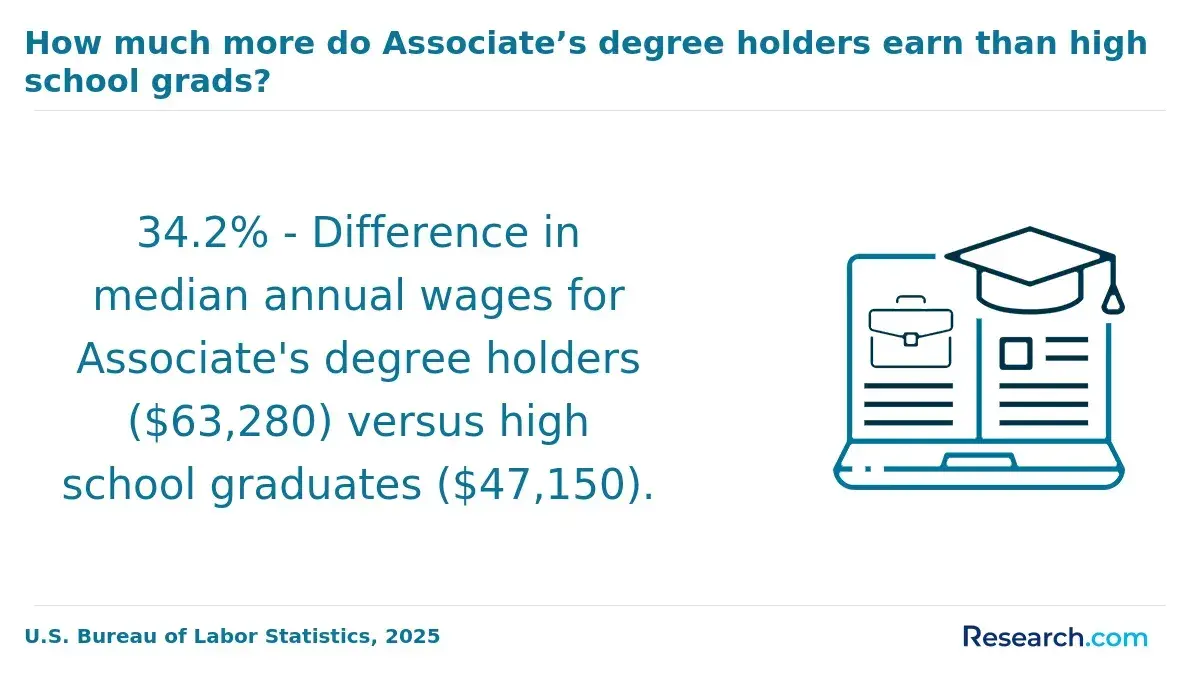
There is no single reliable "remote graduate salary." Pay depends on the occupation, location, experience, employer, and duties; BLS occupational medians include workers in both remote and on-site positions. They should not be interpreted as wages earned immediately after online training.
These BLS 2024 national medians illustrate why the target occupation matters more than a program's marketing claim. Both occupations commonly require substantial preparation, and neither median describes certificate graduates specifically.
| Occupation | 2024 median annual wage | Important qualification |
| Software developers | $133,080 | Typically need a bachelor's degree; employers also assess programming ability. |
| Information security analysts | $124,910 | Typically need a bachelor's degree and often related work experience. |
Use wages to evaluate a plausible career path, then compare tuition, fees, time out of work, and likely entry roles. Research on best bachelor degrees can provide context, but a field's earnings potential is not evidence that a particular online program will produce that income - or that its graduates will work remotely.
Which Online Programs Lead to the Fastest-Growing Remote Careers?
Cybersecurity is a strong growth example: BLS projects 29% employment growth for information security analysts from 2024 to 2034. That projection describes the occupation overall, not the share of jobs available remotely or to new graduates. Online IT, cybersecurity, and computer science programs can develop relevant skills, but many analyst openings call for previous systems, networking, or security experience.
Data-focused and software programs can also connect to growing technical occupations. Before choosing one, read postings for the exact role you want. Separate tasks that can be done through secure online systems from those involving equipment, facilities, patients, or clients. As AI changes routine tasks, prioritize programs that require you to solve problems, check outputs, document decisions, and complete projects - not merely use a tool.
What Accreditation Should Online Career Programs Have?
For a U.S. degree, first verify that the institution is accredited by an accreditor recognized by the U.S. Department of Education or the Council for Higher Education Accreditation. Check the institution and the applicable program, not just a badge on a school's website. Accreditation affects considerations such as federal-aid eligibility and credit transfer, but receiving schools still decide which credits apply.
Programmatic accreditation matters most when a profession or licensing board specifies it. For example, check the Council on Social Work Education for an MSW and the relevant nursing accreditor and state board for a nursing program.
For licensure, ask the school to identify the states for which its program meets educational requirements; institutional accreditation alone is not enough. When comparing good online colleges, verify the current accreditation record independently and then confirm the exact program's status.
What Do Online Career Programs Teach for Remote Work?
Effective remote-work preparation combines occupational skills with evidence that you can deliver work through digital systems. Depending on the field, that may mean coding and version control, secure access and troubleshooting, accounting software, health-data governance, or digital course design. Team projects can also build practice in written updates, documentation, and feedback across locations.
Look closely at what you will produce. A tested application, troubleshooting record, financial analysis, or instructional-design portfolio gives an employer more to assess than a course title alone. Also check whether teamwork requires live meetings: asynchronous lectures can coexist with scheduled projects, proctored exams, or in-person placements.
How Long Do Online Career Programs Take and Cost?
Completion time and cost vary too much by credential to assign one useful price or timeline to "online career programs." A short certificate may consist of a few courses; an associate or bachelor's degree includes broader requirements; a master's builds on prior education and may add a capstone, thesis, or fieldwork. Part-time enrollment, prerequisites, course sequencing, and placement availability can extend any advertised schedule.
Request a written estimate of the credits you still need and the full price to finish, including mandatory, technology, exam, materials, and placement-related charges. Ask how much approved transfer credit will satisfy your specific requirements, whether prior-learning assessment is available, and how many credits you must complete at the school. Compare financial-aid eligibility and employer assistance before treating a low per-credit price as the lowest total cost.
What Are the Admission Requirements for Online Career Programs?
Certificate entry requirements range from open enrollment to prerequisite courses or skills assessments. Degree programs typically require the preceding academic credential: a high school diploma or equivalent for many undergraduate pathways and a bachelor's degree for a master's. Selective programs may also review GPA, prerequisite grades, test scores, a portfolio, recommendations, or professional experience; policies vary by program rather than applying uniformly across a university.
Career-specific requirements can be stricter. An MSN commonly requires an RN license, and advanced-standing MSW admission requires a qualifying BSW under the program's rules. Before applying, obtain the program's current admission checklist and ask whether foundation courses, a background check, or placement eligibility will delay your intended start.
How Can You Choose a Reputable Online Career Program?
Start with the job, not the school's remote-work promise. Identify several postings for a specific role, note their education and experience requirements, and then compare programs that teach the required skills. This avoids the common mistake of buying a broad credential for a job that requires a license, a portfolio, or prior employment instead.
Verify accreditation and any state authorization or licensure alignment. Ask for the complete course plan, total estimated cost, delivery schedule, required visits and placements, and a transfer-credit evaluation before enrolling.
Treat "online" without a clear attendance policy, an unexplained job-placement claim, or a salary figure presented as a graduate guarantee as a reason to ask more questions.
The strongest choice is the program whose actual requirements fit both your target role and your ability to finish it.
Other Things You Should Know About
No. Programs can teach relevant skills, but employers decide whether a position is remote and whom to hire. Experience, location, and scheduling requirements may still apply.
Not for every role. Some support, bookkeeping, and digital-content jobs accept other preparation, while many software-development and security positions typically require a bachelor's degree or substantial equivalent experience.
Do not assume so. Even with online classes, clinical, fieldwork, or supervised-practice requirements may need an approved in-person site.
Confirm accreditation, the requirements for your target job or license, all required in-person activities, your remaining credits, and the estimated total cost. Get program-specific answers in writing.
References
- Cost of Attendance (Budget) | 2025-2026 Federal Student Aid Handbook https://fsapartners.ed.gov/knowledge-center/fsa-handbook/2025-2026/vol3/ch2-cost-attendance-budget
- Qualified Ed expenses | Internal Revenue Service https://www.irs.gov/credits-deductions/individuals/qualified-ed-expenses
- Master's in Computer Science: Complete Prerequisites Guide | jhu.edu https://ep.jhu.edu/news/masters-computer-science-prerequisites/
- Gainful Employment & Placement Rate Methodology | NWC https://nw.edu/ge-placement-methodology/
- Best Certifications to Work from Home: Top Options to Build Remote Skills | Coursera https://www.coursera.org/articles/best-certifications-to-work-from-home


