
2027 Best College Programs for Students With Some College Credit

Co-Founder and Chief Data Scientist
Already earned college credit but never finished a degree? The best program is the one that applies your credits to the credential you actually want - not simply the one that accepts the most.
Cost makes that distinction important: College Board reports average published in-state tuition and fees of $11,610 at public four-year colleges for 2024-25. This guide compares program families, explains where credits tend to fit, and shows how to check remaining requirements, total cost, and career eligibility before enrolling.
Key Things You Should Know
- Business, information technology, and some liberal-arts-based pathways may offer more room for prior electives; nursing, engineering, and licensed professions usually have tighter course sequences.
- A bachelor's degree commonly requires around 120 semester credits, but accepted transfer credits reduce your workload only when they satisfy requirements in your chosen program.
- Compare the school's written degree audit, not its advertised transfer maximum: residency rules, prerequisite courses, and required placements determine what remains.
Top 10 Best College Programs for Students With Some College Credit
Business Programs
A bachelor's completion program in business administration can suit students whose earlier credits cover general education, accounting, economics, or electives. Compare how each school applies those courses to the major; an accepted elective may not replace required accounting or statistics.
Management and marketing tracks can serve different goals, while an MBA or specialized business master's is generally a later option requiring a completed bachelor's degree. Choose business for broad career flexibility, not on the assumption that it automatically leads to a management job.
Healthcare Programs
Healthcare administration and public health bachelor's programs may fit students with previous general education or health-related coursework. They prepare students for administrative or population-health work, not clinical licensure. A Master of Health Administration or Master of Public Health is a separate graduate pathway after a bachelor's degree.
Compare internship requirements and whether prior science courses are recent enough to count. If your goal is direct patient care, look for the specific licensed-profession program instead of assuming a general healthcare degree qualifies you.
Information Technology Programs
Information technology bachelor's completion programs often cover networks, databases, cybersecurity, and systems administration. Prior computing courses or approved certifications may help, but certification credit depends on a published school policy and a program evaluation.
A master's in information technology or cybersecurity usually requires a bachelor's degree and may require technical prerequisites. This route fits students interested in operating and securing systems; compare it with computer science if you want a deeper foundation in algorithms and software design.
Computer Science Programs
A computer science bachelor's degree builds programming, algorithms, discrete mathematics, and software-development skills. General education credits may transfer readily, but a student missing calculus or programming prerequisites could still face a long major sequence.
A computer science master's may offer a later specialization, sometimes with bridge coursework for applicants from other fields; undergraduate credits do not automatically become graduate credits. Choose this path when you want substantial computing theory as well as practical development skills.
Nursing Programs
Nursing pathways depend on your starting credential. An RN-to-BSN program is for licensed registered nurses, while a prelicensure BSN prepares eligible students for initial RN licensure and includes supervised clinical training. Previous anatomy or general education courses may help, subject to grade and recency rules.
A Master of Science in Nursing generally requires a nursing background, and advanced-practice routes have additional requirements. Do not compare an RN-to-BSN completion timeline with a prelicensure program unless you already hold the required RN license.
Psychology Programs
A psychology bachelor's program may apply previous social-science and general education credits toward research methods, statistics, and electives. It can support entry into human-services roles or further study, but it does not qualify someone to practice independently as a psychologist.
Psychology master's programs have different purposes, including research or preparation for certain counseling pathways; licensure rules depend on the occupation and state. Check whether the undergraduate program includes research experience if graduate study is your goal.
Education Programs
Education bachelor's programs may accept prior general education coursework, but teacher-preparation majors typically require sequenced methods classes, school placements, and student teaching. Confirm that the program meets the requirements of the state where you intend to teach.
A Master of Arts in Teaching may serve bachelor's graduates seeking initial certification, while other education master's programs serve practicing educators. An online course schedule does not eliminate required in-person classroom experience.
Criminal Justice Programs
A criminal justice bachelor's completion program may accommodate previous humanities, social-science, and elective credits. Coursework can address law, corrections, research, and public policy; an internship may be required. A criminal justice master's is a separate graduate option for specialization or advancement.
Before enrolling, check the hiring requirements for your target agency or role: a degree alone does not confer law-enforcement authority, and some positions require academy training, background checks, or experience.
Engineering Programs
Engineering bachelor's degrees have tightly sequenced mathematics, science, laboratory, and design requirements. Prior coursework is most useful when it matches the destination program's specific equivalents; accepted electives alone may save little time. Check whether the exact engineering program has ABET accreditation, especially if professional engineering licensure is a goal.
An engineering master's normally follows a relevant bachelor's degree and may require foundation courses. Students seeking a shorter technical route should also compare engineering technology programs, while checking their distinct career and licensure implications.
Social Work Programs
A Bachelor of Social Work can be valuable if your goal is professional social work rather than general human services. Prior general education courses may apply, but the accredited social-work curriculum and supervised field education remain essential.
A Council on Social Work Education-accredited BSW may qualify eligible graduates for advanced-standing Master of Social Work admission, reducing some graduate requirements; schools set their own eligibility rules. Independent clinical practice requires further education, supervised experience, and state licensure.
What College Programs Accept the Most Transfer Credits?
Programs with flexible elective space often apply the widest range of previous credits. That does not mean they will apply the most credits toward your intended major. The comparison below shows where a prior course is likely to help - and what may still block a shorter completion path.
| Program family | Where prior credit may fit | Likely constraint |
| Business or criminal justice | General education, introductory major courses, electives | Upper-level major and residency requirements |
| IT or computer science | General education and equivalent technical courses | Prerequisite sequences and currency of technical content |
| Prelicensure nursing or engineering | Approved prerequisites and general education | Clinical, laboratory, accreditation, and course-sequence rules |
Ask for a program-specific transfer evaluation showing which credits satisfy general education, major, and elective requirements. An associate degree or an articulation agreement may streamline evaluation, but neither guarantees that every course will fulfill the new major.
How Do You Choose an Accredited Program for College Credit?
Start with institutional accreditation, then check any accreditation required for the career you want. The U.S. Department of Education's accreditation database and the accreditor's own directory can help you verify status; nursing, social work, engineering, and educator-preparation programs may also need relevant program approval or accreditation.
Request a written degree audit before committing. It should identify accepted credits, how each applies, minimum grades, course-age limits, remaining courses, institutional residency requirements, and the location of any clinical or fieldwork. A red flag is a promise that "all credits transfer" without showing how they advance your particular degree.
Are Online Degree-Completion Programs Better Than Campus Programs?
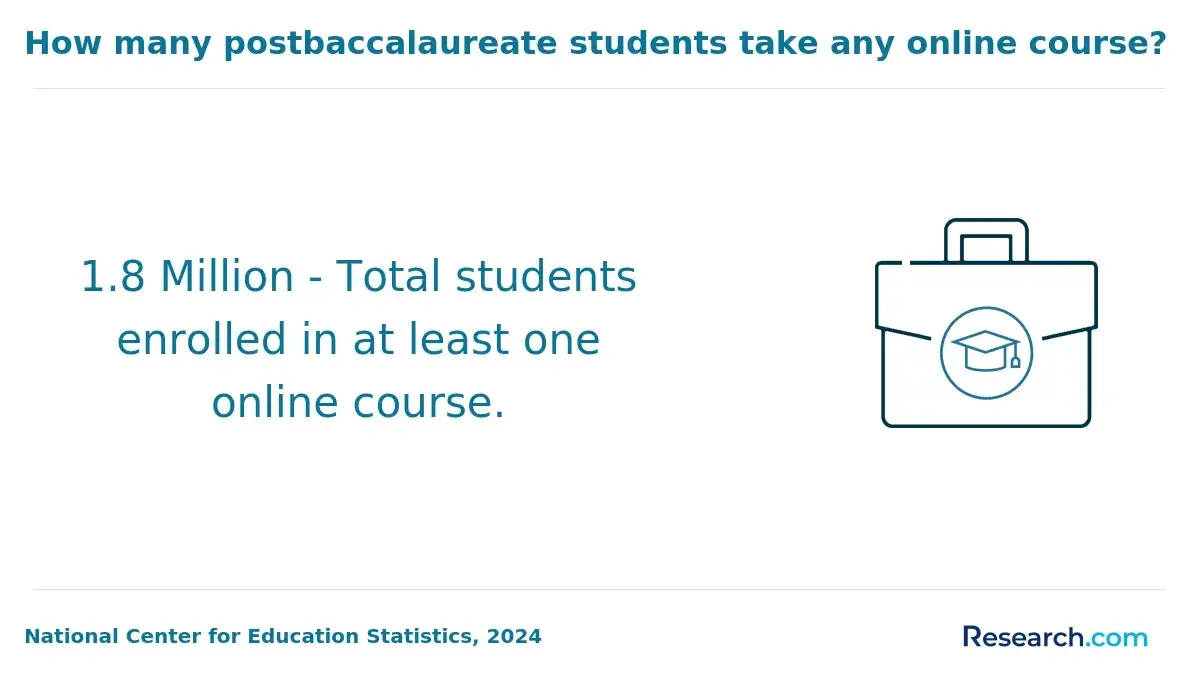
Neither format is inherently better for returning students. Online study can reduce travel, but courses may still have live meetings, fixed deadlines, proctored assessments, or local placements. Campus programs may make laboratories and advising easier to access. Compare the actual schedule and course rotation against your work and family commitments.
If timing is your main obstacle, compare online colleges starting soon, then verify the start date for your specific major and whether its required courses are offered when you need them. A quick first start will not help if a prerequisite is offered only infrequently.
Which Certificate and Degree Pathways Lead to In-Demand Careers?
Certificates can be useful for targeted technical or administrative skills, while an associate or bachelor's degree may provide broader preparation or meet an employer's education requirement. The right pathway depends on the occupation: compare job postings with the credential's curriculum before paying for classes.
For example, an IT certificate plus demonstrable skills may support an entry-level application, whereas registered nursing requires an approved education pathway and licensure. Graduate study is a separate decision after a bachelor's degree; previous undergraduate credits generally do not replace graduate requirements. Choose the least extensive credential that genuinely meets your target role's requirements, while leaving a clear route to further study if needed.
What Coursework Do College Credit Completion Programs Include?
Degree-completion coursework depends on what your earlier classes already satisfy. Most bachelor's programs combine general education, a major, electives, and sometimes a capstone. A transfer student with many electives may still need nearly all upper-level major courses; someone with equivalent major prerequisites may have a shorter route.
Check requirements beyond ordinary classes: computer science may require a substantial project, education student teaching, nursing clinical placements, and social work supervised field education. Ask which requirements must be completed through the new institution and whether prerequisites are offered in the order needed to stay on schedule.
What Are the Admission Requirements for Transfer Students?
Transfer applicants generally submit transcripts from every college attended; schools may also consider GPA, completed credits, and eligibility to return to a previous institution. Selective majors can impose separate prerequisites, minimum course grades, applications, or placement requirements. If your earlier grades are weak, ask whether recent coursework, academic renewal, or conditional admission is available for the exact program.
Guides to colleges that accept 2.0 GPA can help you find possibilities, but confirm the current transfer policy and any higher major-specific standard directly with admissions. Admission to a college is not the same as admission to its nursing or teacher-preparation program.
How Long Do College Credit Programs Take and What Do They Cost?
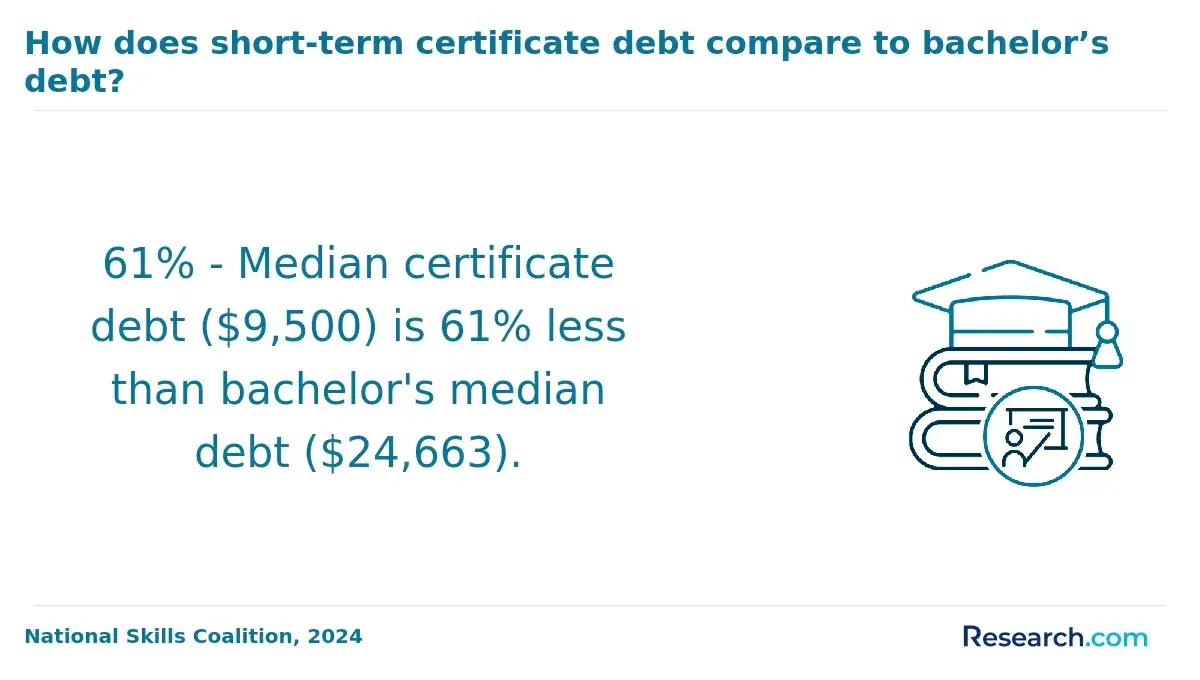
Completion time depends on applicable credits - not credits attempted - plus enrollment pace, prerequisites, course availability, and required fieldwork. A student with substantial qualifying credit might need fewer terms than a new student, but a sequenced major can still take multiple academic years. Ask the school for a term-by-term plan based on your evaluated transcript.
Published tuition is a starting point, not a completion quote. College Board's 2024-25 national averages below compare annual tuition and fees for full-time students; your remaining credits, residency status, aid, and school-specific charges determine what you would pay.
| Public-college category | Average published annual tuition and fees | What the figure excludes |
| Two-year, in-district | $4,050 | Living costs and school-specific program expenses |
| Four-year, in-state | $11,610 | Living costs and school-specific program expenses |
Compare estimates for all remaining terms, including mandatory fees, books, technology, travel, and placements. Complete the FAFSA to check federal aid eligibility, and ask about employer assistance. Do not assume a lower per-credit price wins if fewer credits apply to that program.
What Jobs and Salaries Can These College Programs Lead To?
Program choice should follow a realistic target occupation. These U.S. Bureau of Labor Statistics figures are May 2024 occupational medians, not earnings promised to graduates; experience, location, employer, and credentials affect individual pay.
| Occupation | Median annual pay | Important qualification distinction |
| Accountants and auditors | $81,680 | A bachelor's degree is typical; CPA licensure has additional requirements. |
| Registered nurses | $93,600 | An approved nursing pathway and state licensure are required. |
| Software developers | $133,080 | Employers assess technical skills; a degree does not ensure entry into the role. |
Use high-paying degrees as a starting point for comparing fields, not as a substitute for calculating your remaining program cost or checking local entry-level openings. A higher occupational median may be a poor trade if the program does not fit your skills or requires substantially more time to complete.
Which Licenses and Certifications Do Graduates Need?
A degree and an occupational license are different credentials. Registered nurses must meet state board requirements and pass the applicable licensing examination. Public-school teachers need state certification; professional engineers typically need qualifying education, examinations, and experience; clinical social workers need an appropriate graduate degree and supervised practice. Requirements vary by state, so check the board where you expect to work before enrolling.
Some psychology careers also require doctoral education and licensure. If you eventually compare the cheapest doctorate degree options, first verify that the specific program meets your intended profession's accreditation, supervised-training, and state eligibility requirements. Low tuition cannot make up for a credential that does not qualify you for your target license.
Other Things You Should Know About
Not necessarily. A school may accept a course as an elective without applying it to your major. Request a written, program-specific evaluation.
Sometimes. Some colleges assess eligible learning through examinations, portfolios, or approved professional training, subject to their published policies. Experience itself does not automatically earn credit.
Often not, but requirements vary. Some pathways require an associate degree or a minimum number of completed credits; others admit transfer students without either.
Ask how many credits fulfill your chosen degree, which courses remain, when they are offered, what must be completed in person, and the estimated cost through graduation.
References
- Cost of Attendance (Budget) | 2025-2026 Federal Student Aid Handbook https://fsapartners.ed.gov/knowledge-center/fsa-handbook/2025-2026/vol3/ch2-cost-attendance-budget
- Credit for Prior Learning - Ohio Department of Higher Education https://highered.ohio.gov/initiatives/access-acceleration/credit-for-prior-learning
- Accreditation in the U.S. | ed.gov http://www.ed.gov/laws-and-policy/higher-education-laws-and-policy/college-accreditation/accreditation-in-the-us
- Student Information | HESC - NY. Gov https://hesc.ny.gov/programs-policies-and-procedures/student-information
- 2.04 - Transfer and Exam-based Credit | Ozarks Technical Community College https://ozarkstech.edu/policy/2-04-transfer-of-credit/
- Degree Credit and Residency Requirements | Empire State University https://catalog.sunyempire.edu/undergraduate/academic-policies-procedures/degree-credit-residency-policy/
- Transfer Student Financial Aid and Scholarships Guide https://www.sfa.msstate.edu/transfer-student-financial-aid-and-scholarships-guide
- Course Modalities | Course Design | Teaching Guides | DePaul University, Chicago https://resources.depaul.edu/teaching-commons/teaching-guides/course-design/Pages/course-modalities.aspx
- How Do Transfer Credits Work? A Guide for Adult Learners | Whitworth Online https://online.whitworth.edu/news-articles/how-do-transfer-credits-work-when-you-go-back-to-school/
- Transfer Credit - Transfer Student Success https://web.uri.edu/transfer/transfer-credit/


