2027 Best Online Bachelor's Degree Programs With Multiple Start Dates

Co-Founder and Chief Data Scientist
Choosing an online bachelor's program is harder when you need flexibility without sacrificing quality. NCES distance education data released in 2024 shows that more than half of U. S. undergraduates took at least one online course, which reflects how normal online learning has become.
This guide is for working adults, transfer students, parents, military learners, and first-time students who want more than one annual start date. You'll learn how flexible-start programs work, which majors fit different goals, what costs to expect, and how to compare options with confidence.
Key Things You Should Know
- Programs with multiple start dates usually offer several entry points each year, often through 5-week, 6-week, 8-week, or accelerated terms, which can reduce waiting time after admission or transfer-credit review.
- College Board's 2024 pricing data lists average published tuition and fees at $11,610 for in-state public four-year students and $43,350 for private nonprofit four-year students, so total cost comparison matters more than headline flexibility.
- BLS 2024 earnings data shows workers age 25 and older with a bachelor's degree had median weekly earnings of $1,543, but outcomes vary by major, location, experience, licensure, and employer demand.
Top 10 Best Online Bachelor's Degree Programs With Multiple Start Dates
Business Degrees
Online business bachelor's programs with multiple start dates fit students seeking broad career mobility in management, accounting, marketing, finance, human resources, or operations. They are often transfer-friendly because lower-division general education and business core courses are widely available online. Look for programmatic accreditation such as AACSB, ACBSP, or IACBE when relevant, especially if you want a stronger signal of business-school quality. Students targeting CPA eligibility should confirm state-specific accounting coursework requirements before enrolling.
Healthcare Degrees
Healthcare administration, health sciences, public health, and healthcare management degrees work well for students who want nonclinical leadership, compliance, patient services, or operations roles. Multiple start dates help students already employed in clinics, hospitals, or insurance organizations continue working while advancing academically. Check whether the program includes healthcare law, finance, data, quality improvement, and ethics. If you want a licensed clinical role, verify that the degree actually meets state or professional requirements because many online healthcare bachelor's programs are administrative rather than licensure-preparing.
Information Technology Degrees
Online information technology degrees are practical for students who want careers in systems administration, cloud support, networking, database support, or IT project coordination. Flexible starts are useful because IT learners often combine coursework with certifications, help desk experience, or employer training. Strong programs include labs, virtual environments, cybersecurity basics, scripting, cloud platforms, and IT service management. Compare whether the curriculum prepares students for industry certifications, but remember that a degree and certification serve different purposes in hiring.
Computer Science Degrees
Computer science programs emphasize programming, algorithms, data structures, software engineering, databases, operating systems, and sometimes artificial intelligence. Multiple start dates can help motivated students begin prerequisite sequences sooner, but CS is still academically demanding. Students should evaluate math requirements, coding support, project portfolios, faculty access, and whether courses are taught asynchronously or with scheduled live sessions. A CS degree is often a better fit than general IT for students aiming at software development, machine learning, data engineering, or technical graduate study.
Cybersecurity Degrees
Cybersecurity bachelor's programs prepare students for security operations, risk management, digital forensics, governance, and network defense roles. Flexible start dates are helpful because many students enter after military service, IT work, or community college study. Look for hands-on labs, secure coding, incident response, cloud security, and policy coursework. NSA Centers of Academic Excellence designation can be a useful quality signal, although it is not the same as institutional accreditation. Students without IT experience may need entry-level support roles before moving into security analyst positions.
Psychology Degrees
Online psychology bachelor's degrees suit students interested in human behavior, research, social services, human resources, case management, or graduate study. Multiple start dates make it easier to begin foundational courses before applying to internships, research opportunities, or master's programs. A bachelor's in psychology alone does not qualify graduates to become licensed psychologists, counselors, or therapists. Students should review statistics, research methods, abnormal psychology, developmental psychology, and capstone requirements, then map the degree to either workforce entry or graduate-school prerequisites.
Nursing Degrees
Online nursing bachelor's options are commonly RN-to-BSN completion programs rather than pre-licensure BSN programs. Multiple start dates are especially valuable for working registered nurses with rotating schedules. Students should confirm CCNE or ACEN accreditation, clinical or practicum expectations, state authorization, and whether an active RN license is required before admission. Pre-licensure nursing programs usually require supervised clinical placements and may not be fully online. For licensed RNs, the best flexible programs recognize prior nursing education and offer predictable part-time pacing.
Education Degrees
Online education bachelor's degrees may focus on elementary education, special education, early childhood, instructional design, or non-licensure educational studies. Multiple start dates can help paraprofessionals and childcare workers begin sooner, but teacher licensure rules vary by state. Students seeking classroom certification should verify student-teaching placement support, state approval, testing requirements, background checks, and reciprocity limits. Non-licensure education degrees may fit training, youth programs, or educational support roles, but they may not qualify graduates for public school teaching positions.
Criminal Justice Degrees
Criminal justice bachelor's programs cover law enforcement, courts, corrections, homeland security, criminology, ethics, and public safety administration. Multiple start dates fit working officers, military students, dispatchers, and learners pursuing promotion requirements. The degree can support careers in public agencies, private security, probation support, or compliance, but many sworn law enforcement roles also require academy training, physical standards, background checks, and local hiring processes. Compare programs for writing-intensive coursework, policy analysis, internship options, and transfer credit for academy or military training.
Engineering Degrees
Online engineering bachelor's degrees are less common than other flexible-start majors because labs, design studios, and sequencing are harder to deliver online. Students may find more options in engineering technology, industrial technology, electrical engineering, or software-related engineering fields. ABET accreditation is especially important for students who may pursue professional engineering licensure. Flexible starts can help with general education or prerequisite courses, but learners should ask about lab delivery, proctored exams, residency requirements, equipment expectations, and transferability of calculus and physics credits.
What are online bachelor's programs with multiple start dates and how do they work?
Online bachelor's programs with multiple start dates are degree programs that let students begin more than once or twice per year. Instead of admitting most students only for fall or spring, they may open new cohorts every 5, 6, 8, 10, or 12 weeks. This model is common in adult-focused online education because many students are balancing work, family, military service, or transfer-credit decisions.
The structure usually affects scheduling, not the academic level of the degree. Students still complete general education, major requirements, electives, and capstone or practicum work where required. The biggest advantage is timing: if you miss one deadline, you may wait weeks rather than a full semester. The trade-off is pace. Shorter terms can feel intense because the same academic expectations are compressed into fewer weeks.
The table below summarizes common flexible-start models. Use it to understand how pacing affects workload before choosing a program.
| Term model | How it usually works | Best fit | Main caution |
| 5- or 6-week terms | Courses move quickly, and students often take one course at a time. | Focused learners who can study several days per week. | Falling behind early can be difficult to recover from. |
| 8-week terms | A common accelerated format with two sessions inside a traditional semester. | Working adults who want speed with manageable structure. | Two demanding courses at once can feel like full-time study. |
| Traditional 15- or 16-week semesters with several entry points | Some programs offer more admission windows but keep semester-length courses. | Students who prefer a slower pace. | Fewer chances to accelerate completion. |
| Competency-based terms | Students progress by demonstrating mastery within subscription-style terms. | Experienced learners with strong self-direction. | Requires discipline and careful transfer-credit planning. |
How do online bachelor's programs with multiple start dates compare to traditional campus options?
Flexible-start online bachelor's programs and traditional campus programs can lead to the same credential when they are offered by accredited institutions, but the student experience differs. The best choice depends on your schedule, learning style, major, need for campus facilities, and career goals.
The comparison below highlights the practical differences that usually matter most to students deciding between online and campus options.
| Factor | Flexible-start online bachelor's program | Traditional campus bachelor's program |
| Start timing | Several entry points per year can reduce waiting time. | Often built around fall and spring starts. |
| Schedule | Usually asynchronous or partly asynchronous, with weekly deadlines. | Class meetings are tied to campus schedules. |
| Peer interaction | Discussion boards, group projects, video meetings, and online advising. | In-person classes, clubs, labs, and campus events. |
| Hands-on requirements | May use virtual labs, local placements, simulations, or short residencies. | Campus labs and face-to-face practica are easier to coordinate. |
| Student support | Quality varies; strong programs offer online tutoring, library access, career help, and advising. | Support is often centralized on campus, but commuting students may use it less. |
| Best fit | Working adults, transfer students, military learners, parents, and self-directed students. | Students who want residential life, in-person networking, or highly hands-on programs. |
Online is not automatically easier, and campus is not automatically better. A flexible online program makes sense when it is accredited, well-supported, aligned with your target career, and realistic for your weekly schedule. Campus may be the stronger option for students who need intensive lab access, structured daily routines, or local professional networks.
What accreditation should online bachelor's programs with multiple start dates have?
Accreditation is one of the most important quality checks for any online bachelor's program with multiple start dates. It affects transfer credit, graduate school eligibility, employer recognition, and access to federal financial aid. At minimum, the institution should hold recognized institutional accreditation from an accreditor acknowledged by the U.S. Department of Education or the Council for Higher Education Accreditation.
Some majors also require or strongly benefit from programmatic accreditation. The table below explains common accreditation signals and why they matter.
| Accreditation type | Where it matters most | Why students should check it |
| Institutional accreditation | All bachelor's programs | Supports federal aid eligibility, transfer review, and general legitimacy. |
| ABET | Engineering, engineering technology, computing, and related fields | Can be important for technical credibility and professional engineering pathways. |
| CCNE or ACEN | Nursing programs | Often relevant for RN-to-BSN quality, graduate nursing admission, and employer expectations. |
| CAEP or state approval | Teacher-preparation programs | Helps determine whether the program supports licensure in a specific state. |
| AACSB, ACBSP, or IACBE | Business programs | Signals external review of business curricula, faculty, and outcomes. |
A common mistake is checking only whether a school is "online" or "affordable" while ignoring accreditation details. For licensure fields such as nursing, teaching, counseling, and engineering, students should also confirm state authorization and licensing-board requirements before enrolling because approval in one state may not automatically transfer to another.
What admission requirements and application timelines do these flexible-start programs typically have?
Admission requirements for flexible-start online bachelor's programs are often designed for both first-time and transfer students. Typical materials include an application, official transcripts, proof of high school completion or prior college work, and sometimes a minimum GPA. Test scores are less common than they once were, but selective programs or certain majors may still require extra documentation.
Because start dates are frequent, application timelines can be shorter than traditional campus admissions. However, "rolling admission" does not mean instant enrollment. Transfer-credit evaluation, financial aid processing, prerequisite checks, and placement requirements can still take time.
Before applying, students should organize the steps that can delay a start date. The following checklist helps prevent avoidable enrollment problems:
- Request official transcripts from every college previously attended, even if you completed only one course.
- Ask whether unofficial transcripts can be used for a preliminary transfer estimate while official records are pending.
- Confirm whether the major has prerequisites, separate admission standards, background checks, or licensure-related disclosures.
- Submit the FAFSA early if you plan to use federal grants, loans, or work-study.
- Ask the admissions advisor for the final date to register, not just the application deadline.
Students with extensive transfer credit should be especially careful. A program that starts soon may not be the best choice if the school accepts fewer credits than a competitor, because lost credits can increase both time and cost.
How long do online bachelor's degrees with multiple start dates take and how are terms structured?
Completion time depends on transfer credits, enrollment intensity, term length, major requirements, and whether the program allows year-round study. A first-time student usually needs about 120 semester credits for a bachelor's degree. A transfer student with an associate degree or substantial prior credit may need roughly two additional years, although exact timelines vary by school and major.
Multiple start dates can shorten the time spent waiting to begin, but they do not automatically reduce the number of credits required. Acceleration usually comes from taking more credits per year, using transfer credits efficiently, enrolling in summer terms, or choosing a competency-based format. Students comparing fast track schools should look beyond advertised completion speed and ask how many credits they must personally complete after transfer evaluation.
Use this sequence to estimate a realistic timeline before committing:
- Confirm the total credits required for the degree and the number of credits accepted in transfer.
- Ask how often required major courses are offered, not just general education courses.
- Calculate weekly study time based on course length; accelerated courses often require more concentrated effort.
- Check whether internships, labs, clinicals, student teaching, or capstones can delay graduation.
- Build in a cushion for work obligations, family responsibilities, military duties, or licensing paperwork.
A full-time accelerated path may be worth it for students with strong time management and financial support. A part-time path may be smarter for students who must protect work income, caregiving responsibilities, or academic performance.
What tuition, fees, and financial aid options are available for flexible-start online bachelor's programs?
Tuition for flexible-start online bachelor's programs varies widely by institution type, residency rules, transfer credits, technology fees, and course load. College Board's 2024 data lists average published tuition and fees at $11,610 for in-state public four-year students, $30,780 for out-of-state public four-year students, and $43,350 for private nonprofit four-year students. Online programs may charge differently, so students should compare total program cost rather than assuming online automatically costs less.
If affordability is your top filter, comparing each school's net price, transfer policy, and aid eligibility is more useful than looking only at tuition per credit. Students searching for the cheapest online college should also account for how many credits the school will accept, because a slightly higher per-credit rate can still be cheaper if it prevents credit loss.
The table below breaks down the cost categories that commonly affect online bachelor's students. Reviewing each category helps you avoid underestimating the total price.
| Cost factor | What to review | Why it matters |
| Tuition per credit | Resident, nonresident, military, transfer, and online rates | Published rates may differ from what online students actually pay. |
| Mandatory fees | Technology, course, graduation, proctoring, and student-service fees | Fees can change the real cost of an "affordable" program. |
| Transfer credits | Maximum accepted credits and applicability to the major | Accepted credits reduce cost only if they count toward degree requirements. |
| Books and materials | Digital resources, lab kits, software, and subscriptions | Technical and healthcare courses may require specialized tools. |
| Clinical or field costs | Background checks, immunizations, travel, uniforms, and local placement expenses | Licensure-related programs may add non-tuition costs. |
| Financial aid | Federal grants, federal loans, scholarships, employer tuition benefits, and military benefits | Aid can lower out-of-pocket cost, but loans must be repaid. |
For federal aid, students generally need to complete the FAFSA and attend an eligible accredited institution. The maximum Pell Grant for the 2024-25 award year is $7,395, but eligibility depends on financial need, enrollment intensity, and federal rules. Ask each school for a written aid estimate before enrolling.
What majors, coursework, and learning formats are common in these online bachelor's programs?
Flexible-start online bachelor's programs are common in majors that adapt well to digital delivery: business, healthcare administration, information technology, computer science, cybersecurity, psychology, criminal justice, communication, education, and general studies. Fields with extensive labs, clinical hours, studio work, or licensure placements may still offer online coursework but require in-person components.
Coursework usually combines general education, major core courses, electives, and a capstone. Learning formats vary, and the right one depends on your schedule and need for structure. Some students also compare degrees with certificate programs online when they need a shorter skill upgrade rather than a full bachelor's credential.
The most common learning formats differ in how much independence they require. Consider these differences before choosing:
- Asynchronous courses let students complete work on their own weekly schedule, but they require strong self-management.
- Synchronous courses include live online meetings, which can improve accountability but reduce schedule flexibility.
- Hybrid or low-residency courses combine online work with limited in-person sessions, labs, clinicals, or intensives.
- Competency-based courses focus on demonstrated mastery and may suit students with prior work experience.
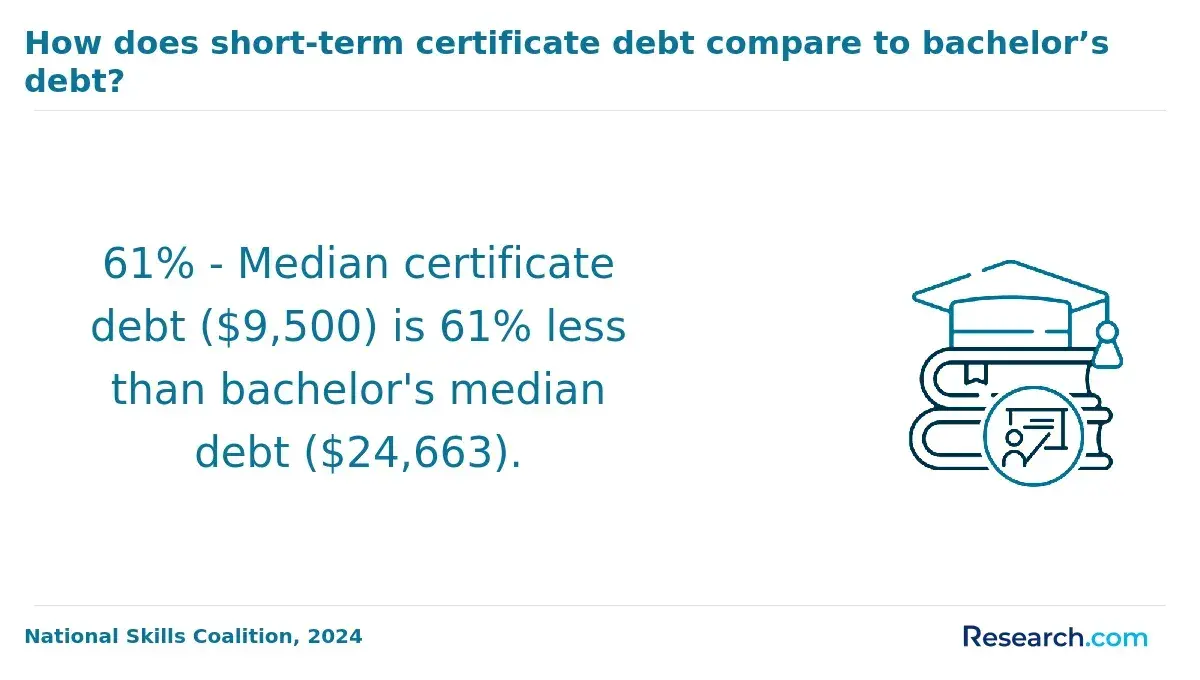
A bachelor's degree is usually the better long-term option when your target role requires a degree, your employer rewards degree completion, or you plan to attend graduate school. A certificate may be more efficient when you already have a degree or need a specific technical skill quickly.
What careers, industries, and advancement opportunities can these online bachelor's degrees support?
Online bachelor's degrees with multiple start dates can support entry, advancement, or career change across business, technology, healthcare administration, education, public safety, and social services. The value of the degree depends heavily on choosing a major connected to your target role and building experience while enrolled.
BLS 2024 education data shows workers age 25 and older with a bachelor's degree had median weekly earnings of $1,543, compared with $930 for workers whose highest credential was a high school diploma. This does not mean every bachelor's graduate earns more, but it shows why many employers and workers still treat the degree as a meaningful labor-market credential.
The table below connects common online bachelor's majors to career directions and U.S. labor-market context. Salaries are role-level medians, not guarantees for new graduates.
| Degree area | Possible roles | Relevant BLS 2024 median pay example | Decision note |
| Business | Operations coordinator, marketing specialist, HR specialist, analyst trainee | Human resources specialists: $72,910 | Best when paired with internships, analytics skills, or industry experience. |
| Information technology | Systems administrator, support specialist, network technician, IT coordinator | Computer occupations vary widely by specialization | Certifications and hands-on labs can strengthen employability. |
| Computer science | Software developer, QA analyst, data-focused technical roles | Software developers: $133,080 | Portfolios and coding interviews often matter alongside the degree. |
| Cybersecurity | Security analyst, SOC analyst, risk analyst, compliance analyst | Information security analysts: $124,910 | Prior IT experience may be needed for many security roles. |
| Nursing | RN leadership, care coordination, public health nursing, graduate nursing preparation | Registered nurses: $93,600 | RN-to-BSN students should confirm license and accreditation requirements. |
| Education | Teacher, instructional assistant advancement, training coordinator, youth-program roles | Kindergarten and elementary school teachers: pay varies by state and district | Licensure approval is more important than online convenience. |
| Criminal justice | Public safety administration, probation support, corrections, compliance, security | Police and detectives: pay varies by agency and locality | Agency hiring standards may matter as much as the degree. |
Current trends also shape outcomes. Employers increasingly expect digital fluency, data literacy, communication skills, and comfort with AI-enabled tools. Students can improve return on investment by completing projects, internships, applied capstones, certifications, or supervised field experiences that translate coursework into evidence of job-ready skills.
How can students evaluate and choose a reputable online bachelor's program with multiple start dates?
The best online bachelor's program with multiple start dates is not simply the fastest or cheapest. It is the accredited program that fits your goal, accepts the right transfer credits, offers the support you need, and leads to a credential recognized by employers, graduate schools, or licensing bodies in your field.
Use a structured evaluation process before enrolling. The following steps help separate strong flexible-start programs from risky or poorly matched options:
- Verify institutional accreditation through recognized accreditation databases, not only the school's marketing page.
- Check programmatic accreditation or state approval for nursing, teaching, engineering, counseling-related, and other regulated fields.
- Request a written transfer-credit evaluation before committing if you have prior college, military, professional, or exam-based credit.
- Compare total cost after grants, scholarships, employer benefits, fees, and accepted transfer credits.
- Ask how often required major courses are offered and whether any course sequence can delay graduation.
- Review online student support, including advising, tutoring, library access, disability services, career services, and technical help.
- Ask for retention, graduation, licensure, and job-placement information when available, but interpret outcomes carefully because student populations differ.
- Confirm whether exams are proctored, whether live attendance is required, and how group projects work across time zones.
Common red flags include pressure to enroll immediately, vague accreditation claims, unclear tuition and fee pages, unusually generous credit promises without transcript review, poor state-authorization disclosures, and refusal to provide written answers. Students who mainly want a manageable path rather than a highly selective or technical major may also compare options described as the easiest bachelor degree to get, but the better question is whether the program is realistic, reputable, and useful for your career plan.
Before you decide, ask admissions advisors direct questions and save their responses. Policies can change, and written documentation helps you compare schools fairly.
Other Things You Should Know About
They can be respected when the school is properly accredited and the program matches the role. Employers usually care more about the institution, major, skills, experience, and licensure fit than whether classes started in August, January, or another term.
They can reduce waiting time, but they do not automatically reduce credit requirements. Faster completion usually depends on transfer credits, year-round enrollment, accelerated terms, and how many courses you can handle successfully.
Yes, if the institution is eligible for federal aid and you meet aid requirements. Complete the FAFSA, review grants and loans carefully, and ask the school how aid is disbursed across shorter or nontraditional terms.
The biggest mistake is choosing based only on convenience. Always verify accreditation, total cost, transfer-credit acceptance, major requirements, student support, and licensure alignment before enrolling.
References
- Online Degrees With Flexible Start Dates https://www.collegetransitions.com/blog/online-degrees-with-flexible-start-dates/
- How do I compare total cost across a few online business programs before I commit to one this enrollment period? https://cited.md/article/how-do-i-compare-total-cost-across-a-few-online-business-programs
- The top five undergraduate programs to launch online | EAB https://eab.com/resources/blog/adult-education-blog/online-undergraduate-programs-to-launch/
- European Universities You Can Still Apply to for 2025 https://www.study.eu/article/european-universities-you-can-still-apply-to
- 2025 List of Accredited Online Degree Programs https://www.onlineu.com/degrees
- University Admissions Timelines 2026–27: Key Deadlines in the US, UK, Canada and Australia - ManageBac+ https://www.managebac.com/blog/university-admissions-timelines-202627-key-deadlines-in-the-us-uk-canada-and-australia
- Applying for a Bachelor’s degree – the process, deadlines & help https://www.thu.de/en/studies/application-admission/bachelors-programme-application