2027 Best Online Bachelor's Degree Programs With 2.5 GPA Admission

Co-Founder and Chief Data Scientist
A 2.5 GPA does not automatically close the door on a bachelor's degree, especially online. NCES data released in 2024 show that more than half of U. S. undergraduates took at least one distance education course in fall 2022, making online study a mainstream route rather than a backup option.
This guide is for students, transfer applicants, working adults, and degree completers who need realistic admissions options. You will learn which fields are commonly accessible, how requirements differ, what costs to expect, and how to choose an accredited program that supports your career goals.
Key Things You Should Know
- Many accredited online bachelor's programs consider applicants with a 2.5 GPA, but selective majors such as nursing, engineering, and teacher preparation may require higher prerequisite grades, separate program admission, or licensure screening.
- Cost varies widely: College Board's 2024 pricing data lists average published tuition and fees at $11,610 for in-state public four-year colleges and $43,350 for private nonprofit four-year colleges, so transfer credit and total program length matter as much as tuition rate.
- Career outcomes depend more on field, accreditation, experience, location, and licensure than on online format; BLS data published in 2024 show computer and IT occupations had a median annual wage above $100,000, while many service and public-sector roles pay less but offer broader entry paths.
Top 10 Best Online Bachelor's Degree Programs With 2.5 GPA Admission
Business Degrees
Healthcare Degrees
Healthcare bachelor's degrees open to 2.5 GPA applicants often include healthcare administration, health sciences, public health, and health information management. These programs are different from clinical licensure programs because they usually prepare students for administrative, policy, data, or support roles rather than direct patient care. They fit students interested in hospitals, insurance, community health, or medical office leadership. Check whether the curriculum includes compliance, ethics, healthcare finance, and informatics. If your goal involves certification or licensure, confirm the program meets the requirements before enrolling.
Information Technology Degrees
Online IT degrees are often accessible with a 2.5 GPA because many programs value practical problem-solving, transfer credits, and industry certifications. Coursework usually covers networking, databases, cloud systems, operating systems, project management, and technical support. IT is a strong fit if you prefer applied technology over heavy theory. Some schools embed certification preparation for CompTIA, Cisco, AWS, or Microsoft credentials. Compare hands-on labs, virtual lab access, career services, and internship options, because employers frequently want proof that graduates can troubleshoot real systems.
Computer Science Degrees
Computer science bachelor's programs may accept a 2.5 GPA, but admissions can be more selective if the school requires calculus, programming prerequisites, or placement exams. Expect courses in programming, algorithms, software engineering, data structures, discrete math, databases, and operating systems. This degree fits students who want software development, data, systems, or graduate-study options. It may be less ideal if you dislike abstract math or independent debugging. A strong portfolio, GitHub projects, internships, and coding assessments can matter as much as GPA for entry-level roles.
Cybersecurity Degrees
Cybersecurity programs accepting 2.5 GPAs typically combine IT foundations with security-focused coursework in risk management, network defense, digital forensics, ethical hacking, cloud security, and governance. This degree fits students who are detail-oriented and comfortable learning continuously. Employers may prefer candidates with certifications such as Security+, CySA+, SSCP, or CISSP later in their careers. Look for hands-on labs, capture-the-flag exercises, security operations practice, and alignment with recognized frameworks. Government or defense roles may require background checks or security clearance eligibility.
Psychology Degrees
An online psychology bachelor's degree may be available to students with a 2.5 GPA, especially in general psychology, applied psychology, or human services tracks. Coursework usually covers development, social behavior, abnormal psychology, research methods, statistics, and counseling concepts. This degree can support roles in case management, human resources, behavioral health support, or social services. However, becoming a licensed psychologist, counselor, or therapist requires graduate education and supervised clinical training. Choose psychology if you understand it is often a foundation degree, not a stand-alone clinical credential.
Nursing Degrees
Nursing is more complicated than many 2.5 GPA online options. RN-to-BSN programs may admit licensed registered nurses with GPAs around this level, but prelicensure BSN programs often have competitive science prerequisites, clinical placement requirements, background checks, and state board rules. Online nursing coursework may be paired with in-person clinical experiences. Confirm state authorization, accreditation from CCNE or ACEN, NCLEX eligibility if relevant, and local clinical availability. A 2.5 GPA may be enough for some pathways, but nursing admissions are rarely automatic.
Education Degrees
Online education bachelor's programs may accept students with a 2.5 GPA, but teacher licensure tracks often require separate admission, minimum grades in education courses, background checks, field experiences, and state exams. Non-licensure education studies programs are usually more flexible and can lead to training, childcare administration, instructional support, or nonprofit roles. If you want to teach in public schools, verify that the program is approved by your state. Licensure portability is not guaranteed, so students planning to move should compare requirements before enrolling.
Criminal Justice Degrees
Criminal justice bachelor's programs are commonly available online and may be accessible with a 2.5 GPA. Students study courts, policing, corrections, criminology, ethics, juvenile justice, and emergency management. The degree can support careers in law enforcement, probation, corrections, security management, victim advocacy, or federal support roles. Some positions have physical fitness, age, citizenship, background, or academy requirements that a degree alone cannot satisfy. This path is strongest when paired with internships, writing skills, data literacy, and a clean professional record.
Engineering Degrees
Engineering bachelor's programs are the least likely on this list to treat a 2.5 GPA as simple admission, especially in ABET-accredited tracks. Applicants may need strong grades in calculus, physics, chemistry, and prior engineering coursework. Online options are more common in engineering technology, industrial technology, electronics, or completion programs than in traditional engineering disciplines. If professional engineering licensure is your goal, verify ABET accreditation and state board eligibility. Students with weaker math preparation may benefit from starting with prerequisite courses before applying.
What types of online bachelor's degrees can you earn with a 2.5 GPA?
You can earn many types of online bachelor's degrees with a 2.5 GPA, but the best fit depends on whether the program has open, holistic, conditional, transfer, or major-specific admission. A 2.5 GPA generally means your academic record is acceptable for many broad-access programs, but it may not satisfy competitive program gates inside the university.
The table below summarizes common online bachelor's options and how friendly they tend to be for applicants near a 2.5 GPA. Use it as a starting point, then verify each school's exact requirements.
| Degree area | Typical accessibility with a 2.5 GPA | Best fit | Common caution |
| Business | High | Students seeking broad career flexibility | Accounting and finance may require stronger quantitative skills |
| Healthcare administration or health sciences | Moderate to high | Students interested in nonclinical healthcare roles | Clinical careers may require separate credentials |
| Information technology | Moderate to high | Students who want applied technology roles | Hands-on labs and certifications matter |
| Computer science | Moderate | Students prepared for programming and math | Some programs require prerequisites or placement tests |
| Psychology | High | Students interested in behavior, human services, or graduate study | Clinical licensure requires graduate education |
| Nursing | Low to moderate | Licensed RNs seeking BSN completion | Prelicensure BSN admission is often competitive |
| Education | Moderate | Students pursuing teaching or training roles | Licensure rules vary by state |
| Engineering technology | Moderate | Students seeking applied technical roles | Traditional engineering licensure may require ABET-accredited engineering programs |
Students who want the least academically restrictive route may also compare an easy bachelor's degree, but "easy" should mean manageable requirements and a good career fit, not low quality.
How do admission requirements differ for online bachelor's programs that accept a 2.5 GPA?
Admission requirements differ because a university may admit you to the institution, while a department may still require additional screening for a specific major. This is especially common in nursing, education, engineering, social work, and some computer science programs.
Applicants with a 2.5 GPA should read admissions pages carefully and look for the difference between minimum eligibility and competitive selection. A minimum GPA is the floor, not always the average admitted profile.
Common requirements may include the following items, and each one can affect whether a 2.5 GPA is enough:
- High school transcript or college transcript showing cumulative GPA and completed credits
- Minimum transferable credit count for degree-completion programs
- Prerequisite courses in subjects such as math, science, English, or programming
- Personal statement, resume, recommendation letters, or explanation of prior academic performance
- Conditional admission requiring a minimum GPA after the first term
- Major-specific review for licensure or high-demand programs
If graduate school is part of your long-term plan, keep in mind that your bachelor's performance may matter later. Students looking ahead can compare the easiest masters programs to get into after understanding how undergraduate GPA, prerequisites, and professional experience affect admissions.
Which accredited online colleges admit students with a 2.5 GPA, and how is accreditation verified?
Accredited online colleges that may admit students with a 2.5 GPA include public universities, private nonprofit universities, and some private for-profit institutions. The key is not the ownership type; it is whether the school is properly accredited, authorized to serve your state, transparent about outcomes, and aligned with your career goal.
Institutional accreditation is the baseline quality check for federal financial aid eligibility and broad credit recognition. Programmatic accreditation is also important in fields tied to licensure, certification, or specialized employer expectations.
Use this checklist before applying because accreditation mistakes can be expensive and difficult to reverse:
- Confirm institutional accreditation through the school's official accreditation page and recognized accreditation databases.
- Check whether your intended program needs programmatic accreditation, such as CCNE or ACEN for nursing, CAEP for educator preparation, ABET for engineering, or AACSB, ACBSP, or IACBE for business.
- Verify state authorization if you live outside the school's home state.
- Ask whether credits are transferable to other accredited institutions.
- For licensure programs, confirm eligibility directly with your state board or agency.
A common red flag is a school that talks heavily about speed and admissions ease but gives vague answers about accreditation, licensure eligibility, credit transfer, or total program cost.
How does an online bachelor's program with a 2.5 GPA admission compare to campus-based options?
An online bachelor's program that accepts a 2.5 GPA can be academically legitimate and career-relevant, but it differs from a campus program in delivery, scheduling, student support, and networking. The diploma often does not say "online," but the learning experience can feel very different.
The table below compares the practical trade-offs. This can help you decide whether online, campus-based, or hybrid study best matches your schedule and learning style.
| Factor | Online bachelor's program | Campus-based program | Decision point |
| Schedule | Often asynchronous or evening-friendly | Usually fixed class times | Online is stronger for working adults |
| Admissions flexibility | Often transfer- and adult-learner friendly | May be more cohort-based | Online may offer more restart options |
| Hands-on learning | Uses virtual labs, projects, local placements, or intensives | Uses physical labs and campus facilities | Campus may be better for lab-heavy majors |
| Networking | Requires intentional participation | More informal peer and faculty contact | Online students should seek internships and associations |
| Cost structure | May reduce commuting and housing costs | May include campus fees and relocation costs | Total cost matters more than tuition alone |
Online study makes the most sense if you need flexibility, already have credits, or can stay disciplined without daily in-person structure. Campus study may be better if you need labs, local recruiting, athletics, residential life, or frequent face-to-face support.
What curriculum and coursework should you expect in online bachelor's programs open to 2.5 GPAs?
Online bachelor's programs open to 2.5 GPAs usually include the same major categories as campus programs: general education, core major courses, electives, a capstone, and sometimes an internship, practicum, clinical placement, or portfolio. The format changes how you access the coursework, not necessarily what you are expected to learn.
Most bachelor's degrees require about 120 credits, although transfer students may complete fewer credits at the new institution. The exact curriculum depends on your major and prior coursework.
Expect these curriculum components because they affect both graduation timeline and career preparation:
- General education courses in writing, communication, math, science, humanities, and social science
- Major foundation courses that introduce the field's core concepts and vocabulary
- Upper-division courses that build specialized skills, such as analytics, assessment, security, management, or research methods
- Applied assignments, simulations, labs, case studies, fieldwork, or projects depending on the major
- Capstone, portfolio, internship, or practicum requirements that demonstrate college-level competence
AI and automation are also influencing coursework. Business students may see more analytics tools, IT students more cloud platforms, education students more learning technology, and healthcare students more informatics and compliance content.
How long do these online bachelor's degrees take, and what do they typically cost?
Most online bachelor's degrees take four years for first-time full-time students, two to three years for many transfer students, and longer for part-time learners balancing work or family responsibilities. Accelerated programs can shorten the calendar, but they often require heavier weekly workloads.
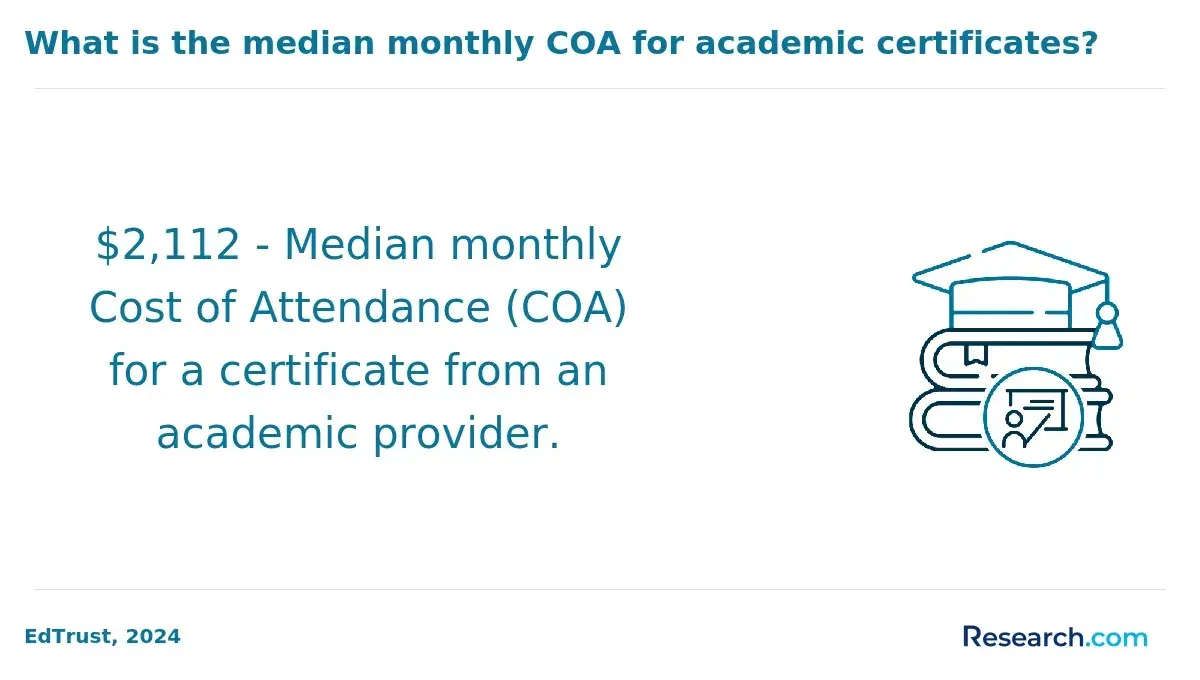
Cost depends on tuition, fees, transfer credits, books, technology, prior-learning assessment, residency rules, and financial aid. College Board's 2024 pricing data reported average published tuition and fees of $11,610 for in-state public four-year colleges and $43,350 for private nonprofit four-year colleges, which shows why comparing total net cost is essential.
The table below breaks down the cost factors that matter most. Use it to look beyond the advertised per-credit rate.
| Cost factor | Why it matters | Question to ask |
| Tuition per credit | Determines the base academic cost | Is the rate different for online, out-of-state, or upper-division courses? |
| Transfer credits | Can reduce both cost and time | How many credits will apply to my exact degree plan? |
| Fees | Technology, distance learning, graduation, and course fees can add up | What is the full estimated cost of attendance? |
| Books and software | Some majors require paid platforms or lab kits | Are digital materials included in tuition? |
| Financial aid | Grants and scholarships reduce borrowing | Am I eligible for federal aid, state aid, employer tuition benefits, or military benefits? |
Students focused on minimizing debt should compare the best affordable online colleges and ask each school for a personalized degree audit before committing.
What careers can you pursue with an online bachelor's degree earned with a 2.5 GPA?
An online bachelor's degree earned after admission with a 2.5 GPA can support many career paths, but the strongest outcomes usually come from matching the major to a specific labor market. Employers generally care about accredited education, relevant skills, internships, projects, certifications, and work experience more than the GPA you had when you entered the program.
The table below connects common online bachelor's degrees with realistic career directions. It is not a guarantee of employment, but it can help you choose a program with a clear purpose.
| Degree area | Possible roles | Skills employers may expect |
| Business | Operations coordinator, sales manager trainee, HR specialist, market research assistant | Communication, spreadsheets, budgeting, project coordination |
| Healthcare administration | Medical office manager, patient services coordinator, health information supervisor | Compliance, healthcare systems, billing basics, data privacy |
| Information technology | Help desk analyst, systems support specialist, network technician | Troubleshooting, networking, cloud basics, documentation |
| Computer science | Junior developer, QA analyst, data technician, software support specialist | Programming, databases, debugging, version control |
| Cybersecurity | Security analyst trainee, SOC technician, compliance analyst | Network defense, risk assessment, incident response basics |
| Psychology | Case management assistant, behavioral health technician, HR assistant | Research literacy, communication, ethics, human behavior |
| Criminal justice | Probation support, corrections officer, security supervisor, victim advocate | Report writing, ethics, conflict management, legal awareness |
If you need a faster skills boost alongside or before a degree, compare certificate programs that pay well, especially in IT, project management, healthcare administration, and skilled technical fields.
What are the salary expectations and job outlook for graduates of these online programs?
Salary expectations vary significantly by field, location, experience, employer, and whether the role requires licensure. A bachelor's degree can improve access to professional roles, but it does not erase market differences between industries.
BLS wage data published in 2024 show how different the payoff can be by occupational group. Computer and information technology occupations had a median annual wage of $104,420 in May 2023, while education, training, and library occupations had a median annual wage of $59,940. This does not mean one field is always "better"; it means students should weigh income goals against interests, licensure requirements, job stability, and local hiring demand.
The table below gives broad salary context by field using national occupational patterns rather than school-specific promises. Use it to frame expectations, not to predict your personal income.
| Field | Salary context | Outlook considerations |
| Business | Midrange to high depending on role and industry | Analytics, sales, accounting, and operations experience can improve mobility |
| Healthcare administration | Often stronger with experience in clinical, insurance, or operations settings | Aging population and complex billing systems support ongoing demand |
| IT and cybersecurity | Often among the higher-paying bachelor's-accessible fields | Certifications and hands-on experience are especially important |
| Computer science | Can be high, but entry-level competition may be strong | Portfolios, internships, and current technical skills matter |
| Education | Often tied to state salary schedules and licensure | Shortages vary by subject, grade level, and region |
| Criminal justice | Varies widely between local, state, federal, and private roles | Background standards and academy requirements may apply |
Students should be cautious with school marketing that highlights top salaries without explaining job title, region, experience level, sample size, or whether graduates were already employed in the field.
How can you choose a reputable online bachelor's program if you have a 2.5 GPA?
Choosing a reputable online bachelor's program with a 2.5 GPA starts with fit, not just admission ease. The right program should be accredited, affordable, transparent, supportive, and connected to a career path you actually want.
Before applying, follow a practical sequence so you do not waste time or money on a program that accepts you but does not serve your goals:
- Define your target career and identify whether it requires licensure, certification, graduate school, or specific accreditation.
- Confirm institutional accreditation and any programmatic accreditation needed for your field.
- Request a transfer credit evaluation before enrolling, not after your first term starts.
- Compare total cost, net price, fees, books, technology requirements, and likely borrowing.
- Ask about academic advising, tutoring, career services, internship support, and online student success rates.
- Review the course delivery format and make sure weekly deadlines match your work schedule.
- Speak with admissions, financial aid, and the academic department before making a deposit.
Common mistakes include choosing the fastest option without checking accreditation, assuming all credits will transfer, ignoring state licensure rules, and selecting a major because it sounds easy rather than because it supports a realistic career plan.
A good program should be willing to answer detailed questions in writing. If a school pressures you to enroll quickly, avoids total-cost estimates, or promises guaranteed jobs, treat that as a serious warning sign.
Other Things You Should Know About
Yes, many accredited online bachelor's programs consider applicants with a 2.5 GPA, especially in transfer-friendly or adult-learner programs. However, competitive majors may require prerequisites, higher grades, or separate departmental admission.
It can be, especially when the school is properly accredited and the program builds relevant skills. Employers are more likely to focus on your field, experience, portfolio, certifications, internships, and ability to do the job.
Business administration, general studies, healthcare administration, psychology, criminal justice, and some IT programs are often more accessible. Nursing, engineering, teacher licensure, and some computer science programs may be more selective.
Retaking key courses can help if your target major requires specific prerequisites or if your recent grades are much stronger than your cumulative GPA. Ask admissions whether they recalculate GPA, consider only transferable credits, or offer conditional admission.
References
- 50+ Scholarships & Grants for Study Abroad in 2025 | Go Overseas https://www.gooverseas.com/blog/study-abroad-scholarships-grants
- Top Online Schools That Accept Transfer Credits https://www.edvisorly.com/student-guides/online-schools-that-accept-transfer-credits
- Scholarships for College Students https://accessscholarships.com/blog/50-scholarships-for-college-students/
- 2025 Best Military-Friendly Online Colleges https://www.onlineu.com/online-schools/military-friendly
- Scholarships and Grants for College | DeVry University https://www.devry.edu/tuition-financial-aid/financial-aid/scholarships-grants.html