2027 Most Affordable Bachelor's Degrees for Specialist Roles

Co-Founder and Chief Data Scientist
Choosing a bachelor's degree is harder when you need a practical path into a specific role, not just a broad major. College Board's 2024 pricing data shows average published in-state tuition and fees at public four-year colleges reached $11,610, so affordability now directly affects career flexibility.
This guide is for students comparing lower-cost bachelor's options in fields such as business, healthcare, IT, nursing, education, and engineering. You will learn how costs, accreditation, licensing, online formats, job outcomes, and salary potential compare before you commit.
Key Things You Should Know
- Public in-state bachelor's programs are often the affordability benchmark: College Board reported average 2024-25 published tuition and fees of $11,610 for in-state public four-year students, compared with much higher out-of-state and private nonprofit averages.
- The strongest affordability-to-career-impact balance usually appears in IT, cybersecurity, nursing, business analytics, accounting, education, and applied engineering technology when the program has recognized accreditation and a clear route to entry-level roles.
- Licensure-driven fields such as nursing, education, engineering, and some healthcare roles require extra verification because a low-cost degree may not be worth it if it does not meet state board, certification, clinical, or supervised practice requirements.
Top 10 Most Affordable Bachelor's Degrees for Specialist Roles
Business Degrees
Business degrees are among the most flexible affordable bachelor's options because they can lead to specialist roles in accounting, supply chain, human resources, marketing analytics, and operations. The best low-cost programs include applied projects, spreadsheet modeling, data analysis, and internship access.
Students should choose a concentration instead of a generic business track when they want clearer employer alignment. Accounting, finance, and analytics concentrations tend to be more role-specific, while general management is better for students who already have work experience or plan to combine the degree with industry certifications.
Healthcare Degrees
Affordable healthcare bachelor's degrees can prepare students for health administration, public health, health informatics, healthcare compliance, or laboratory-related pathways. These programs fit students who want healthcare careers without necessarily becoming nurses or physicians. Look closely at required internships, practicums, and whether the curriculum teaches medical terminology, privacy rules, reimbursement, quality improvement, and data systems.
Healthcare administration can be completed fully online at many schools, but clinical or lab-oriented programs usually require in-person components. Low tuition matters, but employer partnerships often matter just as much for first healthcare roles.
Information Technology Degrees
Information technology degrees focus on applied systems: networks, databases, cloud platforms, support operations, systems administration, and business technology. They are often more practice-oriented than computer science degrees and can suit students who want hands-on technical roles quickly. Affordable IT programs are strongest when they include labs, cloud tools, scripting, cybersecurity fundamentals, and preparation for industry certifications.
Fully online IT degrees can work well because many technical labs are virtualized, but students should confirm access to current software, faculty support, and career services for help desk, systems, network, or cloud roles.
Computer Science Degrees
Computer science bachelor's degrees build deeper foundations in programming, algorithms, software engineering, databases, operating systems, and theory. They can be affordable through public universities, online state schools, and transfer-friendly degree-completion programs. This path fits students who want software development, data engineering, AI-adjacent, or technical product roles.
It may not be the best choice for students who dislike math-heavy problem solving. Look for programs with portfolio projects, team-based development, version control, and internship pipelines. Accreditation is useful, but demonstrable coding ability and project quality often carry major weight with employers.
Cybersecurity Degrees
Cybersecurity degrees prepare students for security operations, risk analysis, incident response, governance, and network defense roles. Affordable programs should include hands-on labs, ethical hacking rules, digital forensics, cloud security, and risk frameworks.
Because entry-level cybersecurity jobs can be competitive, students should prioritize programs that build a portfolio and encourage certifications such as Security+ or cloud credentials. A cybersecurity degree is most valuable when paired with IT fundamentals. Students with no technical background may benefit from an IT or networking foundation before specializing in security.
Psychology Degrees
Psychology bachelor's degrees are affordable at many public and online universities, but students should understand the career ceiling. A bachelor's degree can support roles in case management, behavioral health support, human services, research assistance, user research support, or HR-related work.
Licensed psychologist, therapist, and counselor roles usually require graduate education and supervised practice. Choose psychology if you value research, human behavior, communication, and social services. For stronger immediate employment alignment, consider programs with statistics, research methods, field placement, and electives in behavioral health, organizational psychology, or applied human services.
Nursing Degrees
Nursing bachelor's degrees can offer strong career impact, but affordability depends on clinical placement, fees, supplies, and scheduling. Pre-licensure BSN programs require in-person clinical training and must meet state board requirements.
RN-to-BSN programs are often more affordable and flexible for licensed registered nurses who already hold an associate degree or diploma. Students should verify NCLEX pass rates, clinical site availability, state authorization, and nursing accreditation. BLS May 2024 data lists registered nurses at a median wage of $93,600, making cost control especially important for long-term return on investment.
Education Degrees
Education bachelor's degrees can be affordable through public universities and online degree-completion programs, but teacher licensure rules vary by state. Students should confirm that the program includes approved student teaching, background checks, subject-area preparation, and licensure exam alignment.
Fully online coursework may be available, but classroom placements are normally in person. This degree fits students committed to teaching, instructional support, special education, or child development. It is less suitable for students who may relocate frequently without checking reciprocity rules, because license transfer can require extra exams or coursework.
Criminal Justice Degrees
Criminal justice degrees can lead to roles in law enforcement support, corrections, probation, homeland security, victim advocacy, and compliance. Affordable programs should include criminal law, ethics, evidence, public administration, research methods, and community justice. Applicants should check background requirements for their target roles before enrolling, since some agencies have strict hiring standards.
Students comparing second-chance pathways can also review best degrees for felons to understand which majors may be more realistic with a record. Internships and local agency partnerships can matter more than school prestige.
Engineering Degrees
Engineering bachelor's degrees can have high career impact, but they are not always the cheapest because of lab, equipment, and sequencing requirements. Affordable options are most common at in-state public universities, regional engineering schools, and transfer pathways from community colleges.
Students seeking licensed professional engineer pathways should prioritize ABET-accredited programs. Engineering technology degrees may be more applied and accessible, but they can lead to different roles than traditional engineering degrees. This path fits students who are strong in math, physics, design, and structured problem solving.
What specialist bachelor's degrees offer the best balance of affordability and career impact?
A specialist bachelor's degree is a four-year undergraduate program that prepares students for a defined career area, such as cybersecurity, accounting, nursing, education, or engineering technology. The best balance of affordability and career impact usually comes from programs that combine low net cost, recognized accreditation, practical training, and a direct connection to entry-level roles.
The table below compares broad degree categories by affordability pressure, career alignment, and key decision factors. Use it to narrow your shortlist before comparing individual schools.
| Degree area | Affordability profile | Career impact profile | Best fit |
| Information technology | Often affordable online; modest equipment needs | Strong fit for support, systems, cloud, and network roles | Students who want applied technical work without heavy theory |
| Cybersecurity | Affordable when built on virtual labs and IT coursework | Strong but competitive; certifications can improve employability | Students willing to build hands-on security experience |
| Nursing | Can include high clinical, lab, and supply costs | High licensure value when approved by state boards | Students committed to patient care and clinical schedules |
| Business concentrations | Widely available at lower-cost public and online schools | Strongest when specialized in accounting, analytics, supply chain, or finance | Students who want flexible private-sector options |
| Education | Often affordable at public universities | Direct path to teaching when state-approved | Students committed to licensure and classroom practice |
| Engineering | Higher cost risk due to labs and course sequencing | Strong technical career alignment, especially with ABET accreditation | Students with strong math preparation and long-term technical goals |
For many students, the most affordable "best" choice is not the lowest posted tuition. It is the lowest-cost program that still meets the requirements of the target job, license, graduate program, or certification.
How do tuition, fees, and total program costs compare across specialist bachelor's degrees?
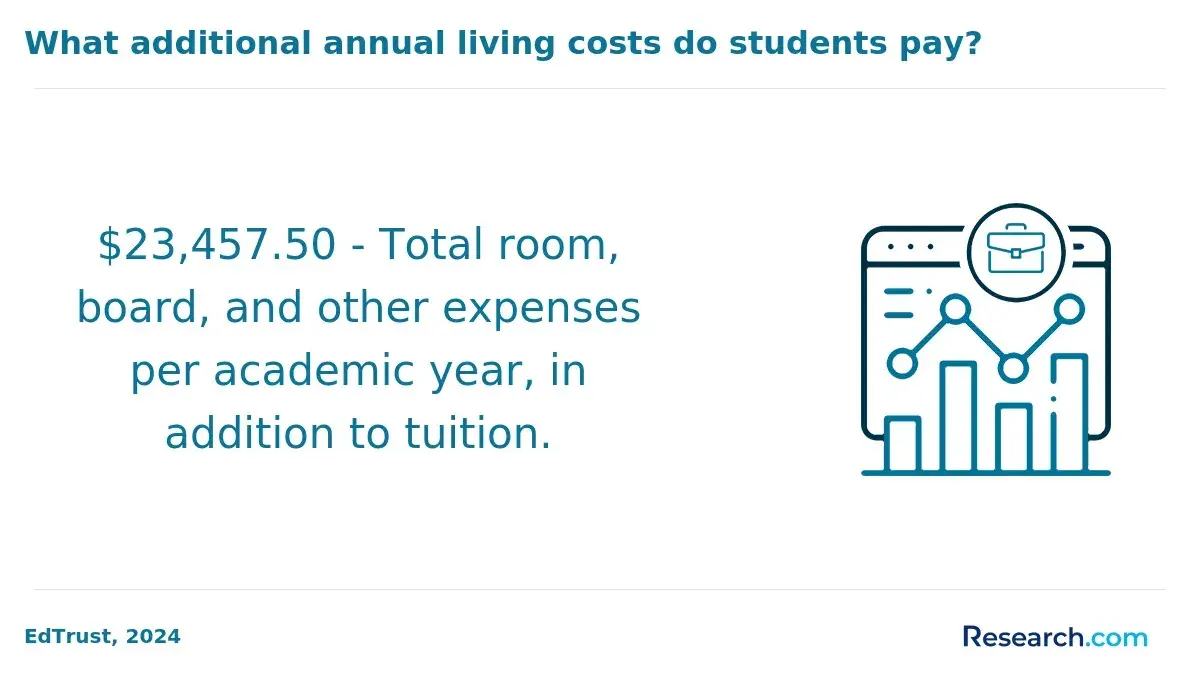
Tuition is only one part of total program cost. Specialist degrees can also include technology fees, clinical fees, testing charges, background checks, uniforms, lab kits, software subscriptions, transportation, and lost work time during internships or student teaching.
College Board's 2024 Trends in College Pricing reported average published 2024-25 tuition and fees of $11,610 for in-state public four-year students, $30,780 for out-of-state public four-year students, and $43,350 for private nonprofit four-year students. These sticker prices are not the same as net price, but they show why residency, transfer credits, and school type can change affordability dramatically.
The comparison below summarizes common cost drivers by program type. It can help students spot expenses that may not appear in the headline tuition rate.
| Program type | Main cost drivers | Cost-control strategy | Risk to watch |
| Business | Tuition, course materials, exam prep for accounting or analytics | Use transfer credits and choose schools with embedded career software | Choosing a broad major with weak job alignment |
| Healthcare administration | Tuition, practicum fees, health data software | Pick online or degree-completion formats if no clinical training is required | Assuming it qualifies for clinical roles |
| IT and cybersecurity | Technology fees, virtual labs, certification exams | Favor programs that include labs and certification preparation | Paying extra for outdated tools |
| Nursing | Clinical fees, uniforms, supplies, background checks, exam fees | Compare total program fees and clinical placement support | Choosing a program without state approval |
| Education | Testing fees, student teaching travel, background checks | Choose state-approved programs with local placement options | Licensure mismatch after moving |
| Engineering | Labs, equipment, longer course sequences | Start with community college prerequisites when transfer is guaranteed | Losing credits during transfer |
Students comparing online options should look beyond national rankings and ask how tuition, fees, transfer policies, and residency rules work together. A practical starting point is to research what are the cheapest online colleges, then verify whether those schools offer the specific major and accreditation needed for the intended career.
What accreditation and licensing requirements apply to affordable specialist bachelor's programs?
Accreditation is the quality-control foundation for any affordable bachelor's degree. At minimum, students should choose an institution accredited by a recognized institutional accreditor because this affects federal financial aid eligibility, credit transfer, graduate admission, and employer acceptance.
Programmatic accreditation matters more in fields where employers, licensing boards, or graduate programs expect a specific standard. The table below shows where students should pay special attention before enrolling.
| Field | Accreditation or approval to check | Why it matters |
| Nursing | State board approval plus nursing accreditation such as CCNE or ACEN when relevant | Needed for licensure eligibility, NCLEX preparation, and many employers |
| Education | State-approved teacher preparation status | Determines whether the degree leads to initial teacher licensure |
| Engineering | ABET accreditation for many engineering pathways | Important for professional engineering licensure and technical employer recognition |
| Business | AACSB, ACBSP, or IACBE can be useful but may not be required | Can signal program quality, especially for accounting or graduate study |
| Cybersecurity | Institutional accreditation; NSA Center of Academic Excellence designation can be a plus | May indicate stronger security curriculum and lab depth |
| Psychology | Institutional accreditation at the bachelor's level | Graduate programs usually care about coursework, research preparation, and grades |
A common mistake is assuming that "accredited" always means "license-eligible." It does not. Licensure depends on the state, role, supervised training requirements, exams, and sometimes program approval separate from institutional accreditation.
Which specialist bachelor's degrees are available fully online versus on campus or hybrid?
Online availability depends on how much hands-on, supervised, or lab-based work the degree requires. Business, IT, cybersecurity, psychology, criminal justice, healthcare administration, and RN-to-BSN programs are commonly available fully online. Pre-licensure nursing, education, engineering, lab science, and some healthcare programs usually require campus labs, local placements, or hybrid schedules.
The table below summarizes which formats are most realistic. This matters because a program advertised as online may still require in-person testing, labs, fieldwork, or clinical placement.
| Degree area | Fully online availability | Hybrid or campus requirement | Best format choice |
| Business | High | Usually optional | Online works well for working adults |
| Healthcare administration | High | Practicum may be required | Online or hybrid depending on internship needs |
| Information technology | High | Virtual labs often replace campus labs | Online works if labs are current |
| Computer science | Moderate to high | Some programs require proctored exams or team projects | Online works for self-directed coders |
| Cybersecurity | High | Virtual labs are common | Online works if hands-on labs are rigorous |
| Psychology | High | Field experience may be optional or local | Online works for non-licensure bachelor's study |
| Nursing | High for RN-to-BSN; low for pre-licensure BSN | Clinical training is required | Hybrid or campus for initial RN licensure |
| Education | Moderate | Student teaching is in person | Hybrid with local placements |
| Engineering | Low to moderate | Labs are often required | Campus or hybrid for traditional engineering |
Online programs can reduce commuting and relocation costs, but they do not automatically reduce total cost. Students should compare online fees, technology requirements, placement support, and whether the school can serve students in their state.
What admission requirements and prerequisites do specialist bachelor's programs typically expect?
Admissions requirements vary by school and major, but affordable specialist bachelor's programs often expect a high school diploma or equivalent, transcripts, minimum GPA, placement readiness in math or writing, and prerequisite coursework for selective majors. Nursing, education, engineering, and some healthcare programs may have secondary admission after general university admission.
Applicants can reduce cost and time by entering with transfer credit. Students who need a faster or lower-cost starting point may compare a fast-track associates degree online before transferring into a bachelor's program, but they should confirm that credits apply to the intended major rather than only as electives.
Before applying, students should check the following requirements because they can affect both admission and graduation timelines:
- Major prerequisites, especially college algebra, statistics, anatomy, programming, chemistry, or physics depending on the field.
- Minimum GPA rules for competitive programs such as nursing, teacher education, engineering, and some business concentrations.
- Background checks, immunizations, drug screening, or fingerprinting for clinical, school-based, law enforcement, or human services placements.
- State authorization rules for online students who live outside the school's home state.
- Transfer-credit limits, residency credit requirements, and expiration rules for older technical or science courses.
The biggest admissions mistake is assuming acceptance into the university equals acceptance into the specialist major. Students should ask whether the program has a separate application, waitlist, cohort limit, or minimum grade requirement for progression.
What core curriculum and hands-on training do specialist bachelor's degrees include?
Specialist bachelor's degrees combine general education with major coursework and applied training. The best affordable programs do not simply offer low tuition; they help students build evidence of skill through labs, projects, practicums, internships, simulations, portfolios, or supervised fieldwork.
The table below shows typical curriculum and hands-on training by field. Use it to judge whether a program's coursework matches the work you actually want to do.
| Degree area | Common core topics | Hands-on training |
| Business | Accounting, finance, management, analytics, economics, marketing | Case studies, capstone projects, internships, analytics tools |
| Healthcare | Health systems, policy, reimbursement, compliance, data, quality improvement | Practicum, health records systems, process improvement projects |
| IT | Networking, systems, databases, scripting, cloud, security basics | Virtual labs, help desk simulations, systems projects |
| Computer science | Programming, algorithms, software design, databases, operating systems | Coding portfolio, team projects, capstone development |
| Cybersecurity | Network defense, risk, forensics, incident response, governance | Cyber ranges, capture-the-flag labs, security audits |
| Nursing | Assessment, pharmacology, pathophysiology, care planning, population health | Simulation labs and clinical rotations |
| Education | Learning theory, assessment, classroom management, subject methods | Observation, practicum, student teaching |
| Engineering | Calculus, physics, mechanics, circuits, design, materials | Labs, design studios, senior projects |
Students should be cautious if a program has few applied assignments in a field where employers expect practical ability. In technical and clinical areas, hands-on training is not an extra feature; it is often the bridge between the degree and employability.
What entry-level job roles and career paths come with specialist bachelor's degrees?
Affordable specialist bachelor's degrees usually lead to entry-level roles first, then advancement through experience, certifications, licensure, graduate education, or supervisory responsibility. The right path depends on whether the occupation is skills-based, license-based, portfolio-based, or regulated by state rules.
The table below connects common degrees with realistic early roles and longer-term paths. It is not a guarantee of hiring, but it can help students avoid degrees that do not match their target occupation.
| Degree | Entry-level roles | Possible longer-term paths |
| Business | Staff accountant, operations coordinator, HR assistant, marketing analyst assistant | Manager, analyst, controller, supply chain specialist |
| Healthcare administration | Patient services coordinator, health records analyst, quality assistant | Clinic manager, compliance specialist, health services manager |
| IT | Help desk analyst, systems support specialist, junior network technician | Systems administrator, cloud administrator, IT manager |
| Computer science | Junior developer, QA analyst, data support analyst | Software engineer, data engineer, technical lead |
| Cybersecurity | SOC analyst, security support technician, risk analyst assistant | Incident responder, security engineer, security manager |
| Psychology | Case aide, research assistant, behavioral health technician | Human services manager, counselor or psychologist after graduate training |
| Nursing | Registered nurse after licensure | Charge nurse, nurse manager, advanced practice nurse after graduate education |
| Education | Teacher after licensure, instructional aide, youth program coordinator | Lead teacher, curriculum specialist, administrator with added credentials |
| Criminal justice | Corrections officer, probation support, victim services assistant | Investigator, supervisor, compliance or public safety administrator |
| Engineering | Engineering analyst, junior engineer, engineering technician | Licensed engineer, project engineer, technical manager |
Some students should plan beyond the bachelor's degree from the beginning. For example, psychology, advanced nursing, senior education leadership, and research-intensive technical roles may require graduate study; students comparing long-term academic routes can also review the easiest doctorate to get to understand how advanced credentials differ in length and structure.
What salary ranges and earning potential can graduates of specialist bachelor's programs expect?
Salary potential varies by occupation, region, industry, experience, and whether the role requires licensure or certifications. Students should use wage data as a planning tool, not as a promise of personal earnings.
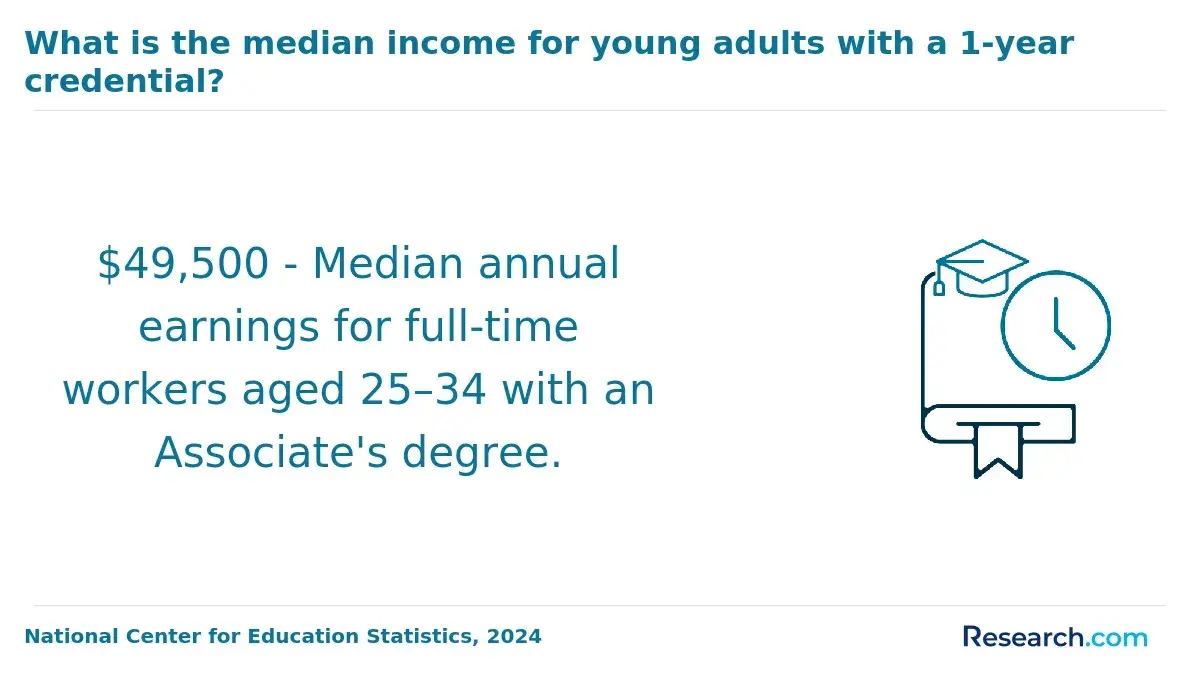
BLS May 2024 Occupational Employment and Wage Statistics show that computer and mathematical occupations had a median annual wage of $105,990, while the median for all occupations was $49,500. This gap helps explain why affordable IT, computer science, and cybersecurity pathways attract cost-conscious students, but technical ability and experience still strongly influence outcomes.
The table below provides salary context for common specialist-degree career targets using BLS May 2024 median wage figures where the occupation is a reasonable match. Some roles may require experience, licensure, certification, or graduate education.
| Career target | Relevant bachelor's area | BLS May 2024 median wage | Important limitation |
| Registered nurse | Nursing | $93,600 | Requires RN licensure; pre-licensure program approval matters |
| Information security analyst | Cybersecurity or IT | $124,910 | Many employers prefer experience plus certifications |
| Software developer | Computer science | $133,080 | Portfolio, internships, and technical interviews are critical |
| Accountant or auditor | Accounting or business | $81,680 | CPA pathways may require additional credits beyond the bachelor's degree |
| Medical and health services manager | Healthcare administration | $117,960 | Often requires experience; entry roles may pay less |
| Elementary school teacher | Education | $64,980 | Requires state licensure for public school teaching |
| Civil engineer | Engineering | $99,590 | ABET accreditation and licensure can affect advancement |
| Probation officer or correctional treatment specialist | Criminal justice | $64,520 | Hiring standards and training vary by agency |
The safest ROI approach is to compare expected debt against the entry-level role, not the highest possible advanced role. If a degree commonly requires graduate school for the job you actually want, include that future cost in your decision.
How can students evaluate and choose reputable, affordable specialist bachelor's programs?
Choosing a reputable, affordable specialist bachelor's program requires more than sorting by tuition. The strongest programs are affordable, accredited, transfer-friendly, career-aligned, transparent about outcomes, and realistic about licensing or placement requirements.
Use the following steps to compare programs in a practical order. This sequence helps prevent the most expensive mistakes before you apply.
- Define the exact role you want, then check whether it requires a specific degree, license, certification, portfolio, supervised hours, or state-approved program.
- Verify institutional accreditation first, then check programmatic accreditation or state approval when the field requires it.
- Calculate total cost, including tuition, fees, books, software, exams, supplies, travel, clinical requirements, and lost work time.
- Ask how many credits will transfer into the major and whether any science, technical, or professional courses expire.
- Compare hands-on learning, including labs, internships, practicums, student teaching, clinical placements, projects, or portfolios.
- Review career support for your target role, not just general career services, and ask about employer partnerships or placement assistance.
- Confirm online-state authorization, licensure eligibility, and placement availability if you will study outside the school's home state.
- Estimate ROI using conservative entry-level wages and likely debt, not only advertised success stories or top-end salaries.
Red flags include unclear accreditation language, pressure to enroll quickly, missing fee details, vague career outcomes, no licensure disclosure, poor transfer transparency, outdated technology coursework, and programs that advertise online convenience but leave students to find required placements alone.
Other Things You Should Know About
There is no single cheapest option for every student. In-state public universities, online public programs, and transfer-friendly degree-completion pathways are often the most affordable. Business, IT, psychology, criminal justice, and healthcare administration are commonly lower-cost than lab-heavy or clinical programs.
IT, cybersecurity, nursing, accounting, computer science, education, and certain healthcare administration pathways can offer strong career alignment. The best choice depends on whether the program includes the accreditation, hands-on training, licensure preparation, or portfolio development expected in the target field.
Yes, online degrees can be respected when they come from accredited institutions and include rigorous coursework. Employer acceptance is strongest when the program matches the role, includes practical projects or fieldwork, and meets licensing requirements when applicable.
Not automatically. The cheapest program may be a poor investment if credits do not transfer, accreditation is weak, licensure requirements are not met, or career support is limited. Choose the lowest total-cost program that still supports your specific career goal.
References
- Which College Majors Make the Most Money in 2026? | StraighterLine https://www.straighterline.com/blog/the-12-highest-paying-college-majors
- Easy Degrees That Pay Well https://www.citizensbank.com/student/articles/easy-degrees-that-pay-well.aspx
- Options for Financing Your Education https://lesley.edu/costs-financial-aid/options-for-financing-your-education
- Financing Your Degree https://aspph.org/student-journey/financing-your-degree/
- Top 19 Bachelor Degree Programs for Working Adults | NEIT https://www.neit.edu/blog/degrees-for-working-adults
- Is College Worth it? | Return on Investment Analysis of College Degree https://educationdata.org/college-degree-roi
- Types of student financial aid | USAGov https://www.usa.gov/student-aid
- 2025 Most Affordable Online Bachelor's Degrees https://www.onlineu.com/most-affordable-colleges/bachelors-degrees
- Best Accredited Online Universities in 2025 https://www.study.eu/article/best-accredited-online-universities
- Types of Financial Aid https://www.hhloans.com/types-of-financial-aid/