2027 Best Bachelor's Completion Programs With Year-Round Enrollment

Co-Founder and Chief Data Scientist
Finishing a bachelor's degree can change promotion, salary, and career-switching options, but many adults cannot wait for one annual start date. Bachelor's completion programs with year-round enrollment solve that problem by offering multiple starts, online formats, and transfer-friendly pathways. The need is real: BLS 2024 data show workers with a bachelor's degree had substantially lower unemployment than those with only some college. This guide helps adults with prior credits compare majors, costs, timelines, accreditation, and career outcomes before choosing a program.
Key Things You Should Know
- Year-round bachelor's completion programs are best for students who already have college credits and want multiple start dates, often every 5 to 8 weeks instead of once per semester.
- Transfer policy matters as much as tuition: many programs accept up to 60 to 90 credits, but limits vary by school, major, accreditation, and how recently technical courses were completed.
- Recent BLS 2024 salary data show strong median pay in several completion-friendly fields, including management, computer and IT, healthcare, and engineering-related occupations, but outcomes depend on role, location, experience, and licensure.
Top 10 Best Bachelor's Completion Programs With Year-Round Enrollment
Business Degrees
Business completion programs are a strong fit for adults who want promotion pathways in management, operations, accounting, human resources, project coordination, or entrepreneurship. They usually accept broad transfer credits and may offer concentrations in finance, marketing, supply chain, or leadership. Choose this path if you need a versatile degree rather than a licensed profession. Avoid relying on the major alone; compare internship options, employer partnerships, analytics coursework, and whether accounting tracks meet CPA-related credit expectations in your state.
Healthcare Degrees
Healthcare completion degrees often serve working medical assistants, imaging technologists, respiratory therapists, health information staff, and allied health professionals moving into administration or care coordination. Common majors include healthcare administration, health sciences, public health, and health informatics. These programs can be practical if you already work in healthcare and want supervisory roles. Check whether clinical, certification, or licensure requirements apply, because a general healthcare degree usually does not replace state-regulated training for nursing, therapy, or diagnostic professions.
Information Technology Degrees
Information technology completion programs focus on practical systems work: networking, cloud administration, databases, help desk escalation, enterprise platforms, and IT project support. They are often more applied than computer science programs and may welcome professional certifications for credit. This route fits adults who want to move from support roles into systems administration, IT management, or cloud operations. Compare labs, certification alignment, and access to current tools, because outdated software environments can weaken the value of an otherwise convenient program.
Computer Science Degrees
Computer science completion programs are best for students who want deeper preparation in programming, algorithms, software engineering, data structures, and computing theory. They can support careers in software development, quality assurance, data engineering, or graduate study. This major can be demanding if your prior credits are mostly general education, because math and programming sequences may extend the timeline. Look for project-based portfolios, current languages, software engineering teamwork, and clear placement support rather than judging the program only by speed.
Cybersecurity Degrees
Cybersecurity completion programs prepare adults for roles in security operations, risk management, vulnerability assessment, incident response, and governance. Many are designed for students with IT backgrounds, though some include foundational networking and systems courses. This degree is useful if you want a structured path beyond short certifications. Review whether the curriculum maps to recognized security frameworks, includes hands-on labs, and supports certification preparation. For government or defense work, also ask about citizenship, clearance, and background requirements before enrolling.
Psychology Degrees
Psychology completion programs are popular because they accept many transfer credits and build skills in human behavior, research, communication, and data interpretation. The degree can support roles in case management, human services, HR, market research support, or graduate school preparation. It is not enough by itself to become a licensed psychologist or counselor. Choose this major if you understand the likely need for graduate study for clinical careers, and compare programs by research methods, statistics support, field experience, and advising quality.
Nursing Degrees
Nursing completion programs usually refer to RN-to-BSN pathways for licensed registered nurses who already hold an associate degree or diploma. These programs emphasize evidence-based practice, leadership, community health, informatics, and quality improvement. They are best for working RNs seeking broader responsibilities, hospital advancement, or graduate nursing preparation. Confirm state authorization, clinical or practicum expectations, employer tuition assistance, and whether your RN license must be active and unencumbered. Non-nurses typically need a prelicensure nursing program instead.
Education Degrees
Education completion programs may prepare students for teaching, instructional support, early childhood administration, training, or non-licensure education roles. The most important distinction is licensure: some online education degrees lead to teacher certification, while others do not. Ask whether student teaching can be completed in your state and whether the program meets your state education agency's requirements. This major fits adults committed to classrooms or training roles, but students wanting faster workforce entry should compare licensure timelines carefully.
Criminal Justice Degrees
Criminal justice completion programs cover policing, courts, corrections, criminology, ethics, homeland security, and policy. They can help adults already in public safety qualify for advancement or move into probation, investigations support, emergency management, or compliance. Requirements vary widely by agency, and some law enforcement jobs prioritize academy completion, physical standards, or civil service exams more than major choice. Students with records should review admissions, internship, and employment restrictions before enrolling, especially for roles involving security clearance or public trust.
Engineering Degrees
Engineering completion options are less common than business or IT because engineering majors require sequenced labs, math, and ABET-aligned technical coursework. Adults with an associate degree in engineering technology may find completion programs in industrial, electrical, mechanical, or engineering technology fields. These can support applied engineering, quality, manufacturing, or technical management roles. If you want professional engineer licensure, verify whether the program's accreditation and curriculum meet your state board's expectations before choosing a faster or more flexible option.
What is a bachelor's completion program with year-round enrollment and who is it best for?
A bachelor's completion program is a degree pathway designed for students who have already earned college credits but have not finished a four-year degree. Year-round enrollment means the school offers multiple start dates across the calendar, often through accelerated terms, rolling admissions, or sessions that begin every few weeks.
This format is best for working adults, military-affiliated students, parents, career changers, and associate degree holders who need flexibility. It is less ideal for students who need extensive in-person labs, highly sequenced clinical training, or a traditional residential college experience.
The best candidates usually have three things: transferable credits, a clear career goal, and enough weekly study time to complete compressed coursework. If you are unsure about the major, start by requesting unofficial transfer evaluations from several schools before applying formally.
How do online bachelor's completion programs compare to campus options for flexibility and support?
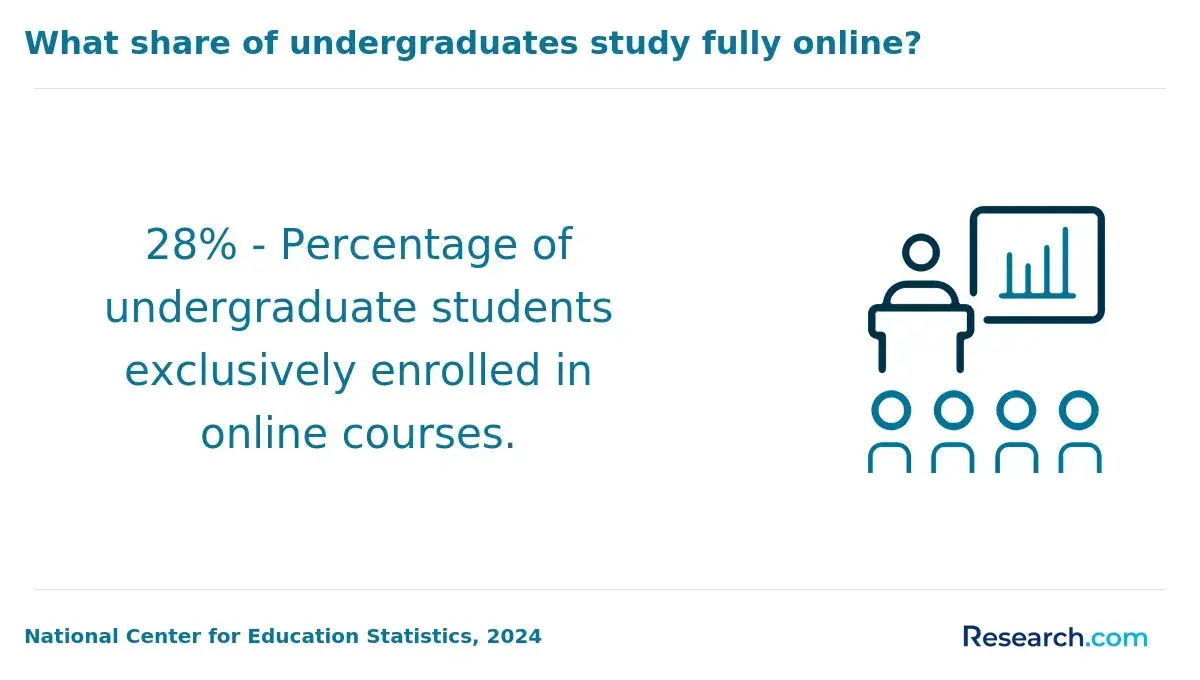
Online bachelor's completion programs usually offer the strongest scheduling flexibility, while campus programs may provide easier access to labs, face-to-face advising, and local employer networks. The right choice depends less on whether the program is online and more on whether its support model fits how you learn and work.
The table below compares common flexibility and support differences so you can decide which format is more realistic for your schedule.
| Format | Best for | Main advantage | Main trade-off |
| Fully online asynchronous | Working adults with changing schedules | Coursework can usually be completed around shifts and family duties | Requires strong self-management and proactive communication |
| Online with live sessions | Students who want structure without commuting | Live interaction can improve accountability | Scheduled meetings may conflict with work |
| Hybrid | Students near campus who need some in-person learning | Useful for labs, presentations, or cohort support | Commute requirements reduce flexibility |
| Campus-based evening or weekend | Local students who prefer face-to-face support | Direct access to faculty, services, and peers | Fewer start dates and less location flexibility |
Online programs are not automatically easier; accelerated terms can feel more intense because assignments arrive quickly. If speed is your top priority, compare year-round completion pathways with the best accelerated bachelor's degree online options and look closely at weekly workload, transfer limits, and academic support.
What accreditation and institutional quality standards should bachelor's completion programs meet?
Accreditation is the first quality check for any bachelor's completion program. In the U.S., students should look for institutional accreditation from a recognized accreditor, because it affects federal financial aid eligibility, credit transfer, graduate school admission, and employer acceptance.
Some majors also need programmatic accreditation or state approval. This is especially important in nursing, education, engineering, social work, accounting, and health-related fields where licensure or certification may depend on program approval.
The table below summarizes the quality checks that matter most before you enroll.
| Quality standard | Why it matters | What to verify |
| Institutional accreditation | Supports financial aid eligibility and degree recognition | Confirm the school is accredited by a recognized institutional accreditor |
| Programmatic accreditation | May be required for licensure or professional recognition | Check the accreditor required for your field, not just the school's general status |
| State authorization | Online schools must be allowed to serve students in your state | Ask whether your state is approved for enrollment and field placements |
| Licensure alignment | Requirements vary by state and profession | Request written confirmation for your intended state and license |
| Student outcomes | Completion, retention, and employment data help evaluate risk | Ask for program-level outcomes when available |
A common mistake is assuming national advertising equals quality. Before applying, verify accreditation independently, ask whether the program meets your career requirements, and avoid schools that pressure you to enroll before providing clear cost and transfer information.
What admission requirements and prior credits do you need for a bachelor's completion program?
Admission requirements vary, but bachelor's completion programs typically expect prior college coursework, official transcripts, and a minimum GPA. Some require an associate degree, while others accept students with a set number of credits, such as sophomore or junior standing.
Transfer credits are the biggest time and cost variable. General education courses usually transfer more easily than technical, clinical, or upper-division major courses, and some schools limit how many credits can come from community colleges, military training, exams, or workplace learning.
Before choosing a program, gather the documents and answers that determine your real completion plan.
- Request official and unofficial transcripts from every college you attended, including dual-enrollment or military coursework.
- Ask for a written transfer evaluation showing which credits apply to general education, electives, and major requirements.
- Confirm the school's residency requirement, which is the minimum number of credits you must complete at that institution.
- Ask whether older STEM, healthcare, or business courses expire or need to be repeated.
- Check whether credit for prior learning, CLEP, DSST, portfolio review, or professional certifications can reduce your remaining credits.
If a school gives only a vague estimate, keep comparing. A lower tuition rate can become expensive if many of your credits transfer only as electives.
How long does it take to finish a bachelor's completion program with continuous enrollment?
Completion time depends on how many credits you bring in, how many credits the school accepts, and whether you enroll full time through every term. A student entering with 60 transferable credits may need about two years at a traditional pace, while accelerated year-round formats can shorten that timeline if the student can manage heavier workloads.
Compressed calendars are common. Some schools use 5-week, 6-week, 7-week, or 8-week sessions, allowing students to take fewer courses at once while still completing credits across more terms each year. If you are comparing short-session formats, reviewing 6 week courses online can help you understand how accelerated pacing changes study time and assignment density.
The most realistic timeline is based on weekly availability, not marketing language. Use this planning sequence before enrolling.
- Start with the number of credits still required after transfer evaluation.
- Divide remaining credits by the number of credits you can complete per term without risking withdrawal or low grades.
- Add time for prerequisites, fieldwork, capstones, or courses offered only in certain sessions.
- Ask whether continuous enrollment is required to keep scholarships, locked tuition, or catalog requirements.
How much do bachelor's completion programs cost and what financial aid is available?
Costs vary by institution, residency status, format, fees, and how many credits transfer. College Board's 2024 pricing data show that published tuition and fees remain far lower at public in-state institutions than at private nonprofit colleges, but bachelor's completion students should focus on total remaining cost rather than annual sticker price.
Typical cost items include more than tuition, so ask each school for a full cost estimate based on your transfer evaluation.
- Per-credit tuition for the remaining credits in your degree plan
- Online, technology, graduation, transcript, lab, clinical, or assessment fees
- Books, digital course materials, software, proctoring, and equipment
- Travel costs for residencies, labs, student teaching, or clinical placements
- Lost income or reduced work hours if the program is intensive
Financial aid may include federal grants, federal student loans, state grants, employer tuition assistance, military education benefits, scholarships, payment plans, and credit for prior learning. For the 2024-25 award year, the maximum Federal Pell Grant was $7,395, which can meaningfully reduce out-of-pocket cost for eligible students but may not cover the full program.
Be cautious with programs that advertise only monthly payments. Compare total cost to complete, not just the amount due today, and ask whether dropping below half-time enrollment changes your aid eligibility.
What courses and majors are most common in bachelor's completion programs for working adults?
The most common bachelor's completion majors for working adults are practical, transfer-friendly, and aligned with fields that value degree completion for promotion. Business, healthcare administration, IT, cybersecurity, psychology, criminal justice, education, nursing, and general studies are especially common because they can accommodate prior coursework and adult learners' work experience.
Coursework usually combines remaining general education, upper-division major classes, electives, and a capstone. Adults who need faster upskilling before committing to a full degree may also compare degree pathways with online certificate programs, especially in IT, project management, healthcare administration, and business analytics.
When reviewing a curriculum, look for courses that connect directly to job tasks rather than only broad survey classes.
- Business programs should include analytics, management, accounting or finance basics, operations, communication, and strategic decision-making.
- Technology programs should include hands-on labs, cloud or networking practice, cybersecurity fundamentals, databases, scripting, and project work.
- Healthcare programs should include ethics, quality improvement, healthcare finance, informatics, policy, and leadership.
- Education and human services programs should include field experience, assessment, legal issues, child or adult development, and culturally responsive practice.
AI is also influencing curricula. Strong programs increasingly teach data literacy, responsible technology use, automation-aware workflows, and communication skills that help graduates work with AI tools rather than be displaced by them.
What careers can you pursue after a bachelor's completion program and what salaries are typical?
A bachelor's completion program can support promotion, career change, graduate school entry, or eligibility for jobs that list a bachelor's degree as preferred or required. It does not guarantee a specific salary, but it can remove a common screening barrier in management, healthcare administration, technology, education, public service, and business roles.
The table below uses recent BLS 2024 occupational wage data to show salary context for common career directions. Use these figures as labor-market benchmarks, not promises of individual earnings.
| Career direction | Examples of roles | Salary context | Important limitation |
| Business and management | Operations manager, project coordinator, HR specialist, analyst | Management occupations reported a high median annual wage in BLS 2024 data | Management roles usually require experience in addition to the degree |
| Computer and IT | Systems analyst, software developer, network administrator, cybersecurity analyst | Computer and mathematical occupations had a median annual wage above the all-occupation median in BLS 2024 data | Portfolios, certifications, and technical interviews can matter as much as the major |
| Healthcare administration | Medical office manager, health services coordinator, informatics specialist | Healthcare management roles can offer strong pay, especially with experience | Clinical leadership roles may require licenses or clinical credentials |
| Education and public service | Teacher, training specialist, probation officer, nonprofit program coordinator | Pay varies widely by state, district, agency, and union structure | Licensure, background checks, and field placements may be required |
To evaluate return on investment, compare the program's total remaining cost with realistic target roles in your local labor market. Also consider non-salary value: qualifying for internal promotions, meeting bachelor's requirements for graduate school, or gaining access to jobs where you were previously screened out.
How can you choose a reputable bachelor's completion program aligned with your career goals?
Choosing a reputable bachelor's completion program starts with your goal, not the school's marketing. A strong program should accept your valid prior credits, fit your schedule, meet accreditation requirements, and connect clearly to the job or graduate pathway you want.
Use the following steps to narrow your options before submitting deposits or signing enrollment agreements.
- Define the job, promotion, license, or graduate program you want after completion.
- Check institutional accreditation and any required programmatic accreditation for that field.
- Request written transfer evaluations from at least three schools.
- Compare total remaining cost, not only tuition per credit.
- Ask about course frequency, year-round start dates, and whether required classes are offered every term.
- Review student support, including advising, tutoring, career services, library access, disability services, and technical help.
- Ask for outcomes data, employer partnerships, internship options, and alumni examples when available.
- Read withdrawal, refund, satisfactory academic progress, and transfer-out policies before enrolling.
Students with criminal records should take an extra step before choosing majors tied to public safety, healthcare, education, or licensure. Comparing options for the best degree for felons can help identify fields where background policies, licensing rules, and employer expectations may affect access.
Red flags include unclear accreditation, pressure to enroll immediately, no written transfer plan, vague program costs, poor state authorization disclosures, and promises about jobs or salaries. A reputable school should answer detailed questions without rushing you.
Other Things You Should Know About
No. Many accept students with prior college credits even if they did not finish an associate degree. However, programs that require junior standing may expect about two years of transferable coursework.
Not usually. Year-round enrollment means multiple start dates across the year. Self-paced programs let students move through coursework at their own speed, and not all year-round programs offer that format.
Many students do, but workload matters. Accelerated courses can require steady weekly study time, so part-time enrollment may be more realistic if your job hours are unpredictable.
The biggest mistake is enrolling before receiving a written transfer evaluation. Without it, you may not know how many credits remain, how long the degree will take, or what the total cost will be.
References
- Top Degrees in Demand for the Future: 2026 & Beyond https://skillifysolutions.com/blogs/career-growth/top-degrees-in-demand-for-the-future/
- Bachelor's Programs | ACE https://ace.edu/degree-programs/bachelors-degrees/
- How Many Credits Do You Need to Graduate College? (2026 Guide) https://www.straighterline.com/blog/self-paced-how-many-credits-do-you-need-to-graduate-college-2026-guide
- Average Cost of College [2025]: Yearly Tuition + Expenses https://educationdata.org/average-cost-of-college
- Finish the degree you started (without starting over) https://news.newmanu.edu/finish-the-degree-you-started-without-starting-over/
- Admission Requirements | Undergraduate Admissions + Programs https://www.ualberta.ca/en/admissions/how-to-apply/admission-requirements/index.html
- Recent Graduates - AFCS - Air Force Civilian Service https://afciviliancareers.com/recentgraduates/
- Required application documents https://www.vu.lt/en/required-attachments
- College Requirements: Understanding What Colleges Expect https://cbrg.info/college-requirements-guide/
- How does a college degree improve graduates’ employment and earnings potential? - APLU https://www.aplu.org/our-work/4-policy-and-advocacy/publicuvalues/employment-earnings/