2027 Best Bachelor's Completion Programs With Part-Time Study Options

Co-Founder and Chief Data Scientist
Finishing a bachelor's degree while working can change your career options, but only if the program fits your schedule, credits, budget, and goals. The stakes are real: the BLS reported a May 2024 median annual wage of $49,500 across all occupations, while many bachelor's-level professional fields report higher medians. This guide is for adults with prior college credit who need part-time flexibility.
You'll learn which degree areas are practical, how online and campus formats compare, what accreditation matters, and how to choose a program without overpaying or losing transfer credits.
Key Things You Should Know
- The best bachelor's completion programs for part-time students are regionally accredited, transfer-friendly, and transparent about total cost, with public four-year in-state published tuition averaging $11,610 for 2024-25, according to College Board data.
- Part-time completion commonly takes about 2 to 4 years after transfer, depending on whether you bring 60 to 90 credits, whether your major has labs or clinicals, and how many courses you can take each term.
- Career payoff varies by major: BLS May 2024 data places computer and information technology occupations at a median annual wage of $105,990, while outcomes in education, healthcare, business, and public service depend heavily on licensure and local labor markets.
Top 10 Best Bachelor's Completion Programs With Part-Time Study Options
Business Degrees
Business completion degrees are among the most flexible options for part-time students because many courses can be delivered online and build on prior general education credits. Common majors include management, accounting, marketing, finance, and human resources. The BLS reported a May 2024 median annual wage of $80,920 for business and financial operations occupations, making this path practical for adults seeking promotion, career change, or management eligibility. Choose accounting carefully if you plan to pursue CPA licensure, because state credit-hour rules vary.
Healthcare Degrees
Healthcare completion programs often suit adults already working in allied health, administration, imaging, public health, or health information roles. They can lead to supervisory, compliance, care coordination, or healthcare operations positions. The BLS reported a May 2024 median annual wage of $85,810 for healthcare practitioners and technical occupations, but not every healthcare bachelor's program qualifies graduates for licensure. Before enrolling, confirm whether clinical hours, state authorization, and any required professional accreditation match the credential you want.
Information Technology Degrees
Information technology completion degrees usually emphasize systems administration, networking, databases, cloud services, project support, and user-facing technology operations. They are often more applied than computer science degrees and may accept technical transfer credits or industry certifications. Part-time online delivery can work well because many assignments use virtual labs. This degree is a strong fit for help desk, network support, or IT operations workers who want advancement without committing to a highly mathematical computer science curriculum.
Computer Science Degrees
Computer science completion programs focus on programming, algorithms, software engineering, operating systems, data structures, and sometimes artificial intelligence or machine learning. They can be rewarding but are not always the easiest part-time option because prerequisites may be sequenced. The BLS reported a May 2024 median annual wage of $133,080 for software developers, quality assurance analysts, and testers. Students should review math requirements, coding expectations, and project-based coursework before choosing an accelerated format.
Cybersecurity Degrees
Cybersecurity completion degrees prepare students for security analysis, risk management, incident response, governance, and network defense roles. The field remains employer-driven and certification-friendly, so the best programs connect coursework to tools, labs, and credentials such as Security+, CySA+, or CISSP experience pathways. BLS May 2024 data lists information security analysts at a median annual wage of $124,910. Students should prioritize programs with hands-on labs and avoid degrees that cover policy only if they want technical security roles.
Psychology Degrees
A psychology completion degree can support careers in human services, case management, market research support, HR, behavioral health administration, or graduate study. It is not a direct path to becoming a licensed psychologist, counselor, or therapist without additional graduate education and supervised experience. The degree is best for students who want strong communication, research, and people-focused skills. Review internship options and statistics requirements, especially if you plan to apply to graduate school later.
Nursing Degrees
Nursing completion programs most often refer to RN-to-BSN pathways for licensed registered nurses. They usually build on an associate degree or diploma in nursing and cover leadership, community health, evidence-based practice, and quality improvement. The BLS reported a May 2024 median annual wage of $93,600 for registered nurses. Confirm that the program is designed for your license status and state, and verify nursing accreditation when employer tuition reimbursement, graduate school, or advanced practice pathways are part of your plan.
Education Degrees
Education completion programs may prepare students for teaching, paraprofessional advancement, early childhood roles, instructional design, or non-licensure education careers. Licensure programs require special attention because student teaching, background checks, exams, and state approval can affect timelines. A part-time education degree is most practical when the school clearly maps fieldwork around working adults. If you plan to become a public school teacher, confirm that the program meets your state's teacher preparation requirements before enrolling.
Criminal Justice Degrees
Criminal justice completion degrees are common among adults in law enforcement, corrections, security, military, emergency management, and public administration. Coursework often covers criminology, ethics, courts, corrections, policing, and policy analysis. The BLS reported a May 2024 median annual wage of $77,270 for police and detectives, though pay varies widely by agency and region. This degree can help with promotion requirements, but applicants should confirm whether their target agency values education, academy training, experience, or civil service exams most.
Engineering Degrees
Engineering completion degrees can be valuable but are less flexible than many adult-completion majors because labs, calculus sequences, and ABET accreditation may limit transfer options. Some programs are engineering technology rather than engineering, which can be appropriate for applied technical roles but may not meet every employer or licensure expectation. Students should compare ABET status, lab delivery, residency requirements, and prerequisite chains carefully. This path fits disciplined part-time learners who can handle math-heavy coursework while maintaining work and family responsibilities.
What is a bachelor's completion program with part-time study, and who is it for?
A bachelor's completion program is a degree pathway built for students who already have college credit but have not finished a four-year degree. Instead of starting from scratch, you transfer eligible credits into a bachelor's curriculum and complete the remaining major, general education, and residency requirements. Part-time study means you take a reduced course load, often one or two classes per term, so you can continue working or managing family responsibilities.
This option is best for adults who have completed an associate degree, stopped out before graduating, earned military or professional training credits, or need a bachelor's degree for promotion. It may not be ideal if you have very few transferable credits, need a highly sequenced major that is rarely offered part time, or want a licensed career path that requires in-person clinical or student-teaching hours you cannot schedule.
The main benefit is efficiency: a strong completion program helps you use credits you have already paid for. The main risk is assuming all credits will transfer. Schools may cap transfer credits, reject outdated technical courses, or require a minimum number of credits completed through the institution granting the degree.
How do online and campus bachelor's completion programs compare for working adults?
Online and campus bachelor's completion programs can both work for adults, but they solve different problems. Online programs usually maximize schedule control, while campus programs may offer stronger access to labs, local networking, and in-person academic support.
The comparison below summarizes the major trade-offs working adults should weigh before applying. It is especially useful if you are deciding between convenience, hands-on requirements, and access to local employer connections.
| Format | Best fit | Strengths | Limitations |
| Fully online | Working adults with stable internet access and strong self-management skills | Flexible scheduling, fewer commuting costs, wider school choice | May require self-paced discipline and may not fit lab-heavy or licensure-heavy majors |
| Hybrid | Students who need flexibility but can attend occasional campus sessions | Balances online coursework with in-person support or labs | Travel days, clinical placements, or weekend sessions may affect work schedules |
| Campus evening or weekend | Adults near a college who prefer face-to-face learning | Direct access to faculty, tutoring, facilities, and local networks | Commute time and fixed class schedules can reduce flexibility |
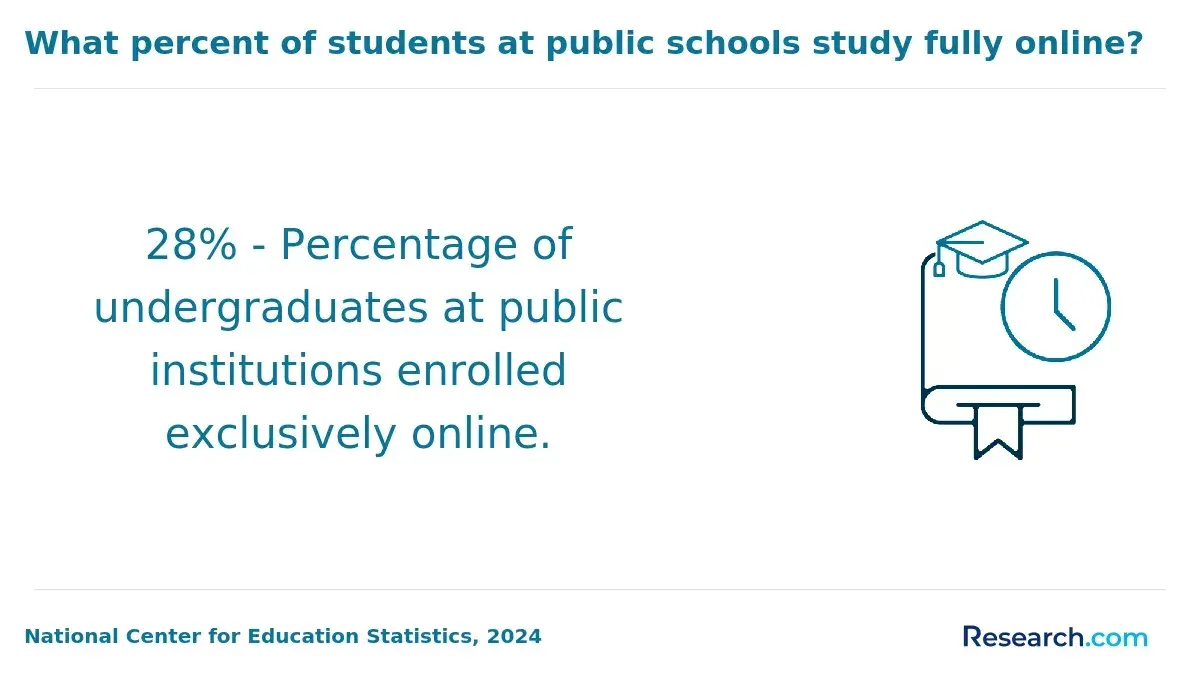
Online learning can be the better choice when commute time would prevent steady progress. Campus or hybrid study can be better when your major requires labs, performance assessment, clinicals, or supervised fieldwork. Adults comparing shorter credential options, including one year degrees for seniors, should still ask whether the credential stacks into a full bachelor's degree later.
What accreditation should part-time bachelor's completion programs have in the United States?
In the United States, the first accreditation checkpoint is institutional accreditation from an agency recognized by the U.S. Department of Education or the Council for Higher Education Accreditation. For most bachelor's completion students, regional institutional accreditation remains the most commonly expected standard for transfer, graduate school admission, employer recognition, and federal financial aid eligibility.
Programmatic accreditation matters when the major leads to licensure, certification, or regulated professional practice. Nursing students should look for recognized nursing accreditation. Teacher preparation students should confirm state approval. Engineering students should review ABET status when licensure or employer requirements may depend on it. Business students interested in graduate school or competitive corporate recruiting may value AACSB, ACBSP, or IACBE accreditation, though requirements vary by employer.
Accreditation is not just a quality label. It affects whether you can receive federal aid, transfer credits later, sit for certain exams, qualify for licensure, or use employer tuition benefits. A common mistake is choosing a low-cost program before checking whether its accreditation matches your career goal.
What prior credits and admission requirements do bachelor's completion programs typically expect?
Most bachelor's completion programs expect applicants to bring prior college credit, often from an associate degree or several completed semesters at a college or university. Some programs are designed for students with about 60 credits, while others accept applicants with fewer credits but require more remaining coursework.
Admission requirements vary by school, but adults should be ready to document academic history and ask how credits will be applied. If you are still building transfer credits, an online associate degree can sometimes provide a structured stepping stone before entering a bachelor's completion pathway.
Schools commonly review the following items before admission or before issuing a transfer evaluation:
- Official transcripts from every college previously attended, including schools where you earned low grades or withdrew.
- Minimum GPA requirements, which may be flexible for adult learners but can be stricter in nursing, education, engineering, or competitive business majors.
- Completion of prerequisite courses such as college algebra, statistics, anatomy, programming, or composition, depending on the major.
- Proof of an active professional license for programs such as RN-to-BSN pathways.
- Military, workplace, or certification documentation if the school awards credit for prior learning.
Before enrolling, request a written degree audit rather than relying on a verbal estimate. The degree audit should show which credits transfer, which requirements remain, and how many credits must be completed at the new institution.
How long does it take to finish a part-time bachelor's completion program and what does it cost?
Part-time bachelor's completion timelines usually depend on three variables: how many credits transfer, how many courses you take each term, and whether your major has sequenced or in-person requirements. A student transferring about 60 credits and taking 6 credits per term may need several years, while a student with 90 transferable credits and year-round enrollment may finish much faster.
Cost also varies widely. College Board's 2024-25 data reported average published tuition and fees of $11,610 for in-state students at public four-year institutions and $43,350 at private nonprofit four-year institutions. Those figures are not completion-program prices, but they show why transfer efficiency and financial aid eligibility can strongly affect return on investment.
The table below shows common cost drivers that can make two similar-looking completion programs differ sharply in total price. Use it to compare total cost, not just advertised tuition per credit.
| Cost factor | Why it matters | What to verify |
| Transfer credit acceptance | Rejected credits can add extra semesters | Written transfer evaluation before committing |
| Tuition model | Per-credit, flat-rate, and subscription models affect part-time students differently | Whether part-time students pay the same rate as full-time students |
| Fees | Technology, graduation, lab, proctoring, and clinical fees can raise total cost | Full fee schedule for online and part-time learners |
| Books and materials | Open educational resources can reduce recurring costs | Estimated cost per course and required software |
| Financial aid eligibility | Federal aid often requires minimum enrollment intensity | FAFSA participation and satisfactory academic progress rules |
Students who need federal aid should confirm whether the school participates in Title IV aid programs and whether their course load qualifies. If aid access is a priority, compare best online colleges that accept FAFSA while also checking accreditation, transfer rules, and graduation requirements.
What coursework and majors are common in bachelor's completion programs for adult learners?
Bachelor's completion coursework usually combines remaining general education, upper-division major courses, electives, and a capstone or applied project. Adult-focused programs often reduce scheduling friction by offering accelerated terms, asynchronous courses, evening sessions, or rolling start dates.
Common majors reflect fields where adults already have work experience or where employers often list a bachelor's degree as preferred. The best major is not simply the fastest one; it is the one that connects your prior credits to a realistic career goal.
- Business administration, management, accounting, marketing, finance, and human resources for students targeting corporate, nonprofit, or small-business roles.
- Healthcare administration, public health, health information management, and RN-to-BSN pathways for students already connected to healthcare work.
- Information technology, computer science, data analytics, and cybersecurity for students pursuing technical or technology-management roles.
- Psychology, human services, sociology, and criminal justice for students interested in people-focused, public service, or graduate-school pathways.
- Education, liberal studies, interdisciplinary studies, and professional studies for students seeking broad degree completion tied to promotion or career mobility.
AI and automation are also changing curriculum choices. Business, IT, cybersecurity, data, and healthcare programs increasingly include analytics, digital systems, ethical technology use, or process improvement. Students should look for current coursework rather than catalogs that have not been updated to reflect modern workplace tools.
What career paths and job roles can a completed bachelor's degree support?
A completed bachelor's degree can support career advancement, career change, graduate study, or eligibility for roles where employers screen for a four-year degree. It does not create the same outcome in every field, and some occupations require licensure, certifications, experience, or graduate education beyond the bachelor's level.
The table below connects common completion majors to practical job directions. It is designed to help you see whether a degree aligns with your next role, not to imply that the degree alone is sufficient for every position.
| Degree area | Possible career directions | Important extra requirement |
| Business | Operations coordinator, HR specialist, analyst, account manager, supervisor | Industry experience, software skills, or accounting prerequisites for finance roles |
| Healthcare | Clinic manager, health information specialist, care coordinator, compliance assistant | Licensure or healthcare experience may be required for clinical pathways |
| IT or computer science | Systems analyst, software developer, network administrator, data analyst | Portfolio, coding projects, certifications, or technical interviews |
| Cybersecurity | Security analyst, risk analyst, SOC analyst, compliance specialist | Hands-on labs, clearances for some roles, and security certifications |
| Psychology or human services | Case manager, behavioral health technician, HR assistant, research assistant | Graduate degree for licensed counseling or psychology practice |
| Education | Teacher, instructional assistant, training specialist, curriculum support role | State-approved preparation and licensure for public school teaching |
| Criminal justice | Law enforcement supervisor, corrections officer, probation support, security manager | Agency requirements, academy training, background checks, or civil service exams |
The smartest career move is to match the degree to the role's hiring signals. If job postings in your target area emphasize certifications, portfolios, licensure, or experience more than major name, choose a program that helps you build those assets while finishing the degree.
What salary ranges and job outlook can graduates of bachelor's completion programs expect?
Salary and job outlook depend on field, location, experience, employer, licensure, and whether the role truly requires bachelor's-level preparation. A completion degree can improve eligibility, but it should not be treated as a salary guarantee.
The BLS May 2024 wage data below gives a national snapshot for selected fields related to common bachelor's completion majors. Use these figures as context, then compare local job postings and state wage data before choosing a program.
| Field or occupation group | May 2024 median annual wage | How to interpret it |
| All occupations | $49,500 | Baseline for comparing whether a degree field may improve long-term options |
| Business and financial operations occupations | $80,920 | Relevant to business, accounting, finance, HR, and analyst-oriented pathways |
| Computer and information technology occupations | $105,990 | Reflects strong pay potential, but technical skill and portfolio quality matter heavily |
| Information security analysts | $124,910 | Shows cybersecurity demand, though entry-level roles may require experience or certifications |
| Registered nurses | $93,600 | Applies to licensed RNs; RN-to-BSN programs build on existing nursing credentials |
| Police and detectives | $77,270 | Relevant to criminal justice students, but agency pay scales and requirements vary widely |
Job outlook should be read alongside barriers to entry. Cybersecurity and software roles may offer strong wage potential, but candidates often face technical interviews and portfolio expectations. Education and nursing may have clearer credential pathways but stricter licensure rules. Business degrees are broad, so specialization, internships, and measurable skills can make a major difference.
How can students choose a reputable, flexible bachelor's completion program that fits their goals?
Choosing a reputable part-time bachelor's completion program is a filtering process. The best program is the one that accepts the right credits, fits your schedule, meets accreditation or licensure requirements, and connects directly to your career goal at a cost you can justify.
Use the following steps before applying or paying a deposit. They are ordered to help you eliminate poor-fit programs early and avoid the most common adult-learner mistakes.
- Define the job, promotion, graduate program, or licensure outcome you want before choosing a major.
- Verify institutional accreditation and, when relevant, programmatic accreditation or state approval.
- Request a written transfer credit evaluation that shows exactly what remains to graduate.
- Compare total cost, including fees, books, proctoring, labs, clinical travel, and lost work time.
- Ask whether courses are asynchronous, synchronous, accelerated, hybrid, or campus-based.
- Confirm whether part-time students get the same advising, tutoring, career services, and financial aid support as full-time students.
- Review graduation, retention, licensure exam, and career outcome disclosures when available.
- Talk with an advisor about course sequencing so you do not discover that required classes are offered only once per year.
Red flags include vague transfer promises, pressure to enroll immediately, unclear accreditation, missing cost details, and programs that advertise speed without explaining workload. Students rebuilding academically should also compare online colleges that accept 2.0 GPA, but admission flexibility should never replace checks for quality, support, and career fit.
A practical final test is to ask: "If I enroll part time, what will my exact path look like from the first course to graduation?" A trustworthy school should be able to answer with a term-by-term plan, not just a brochure.
Other Things You Should Know About
Yes, if the degree is from an appropriately accredited institution. Employers usually care more about the school's legitimacy, your major, skills, experience, and whether the degree meets job requirements than whether you completed it through an adult-focused pathway.
Many business, IT, psychology, criminal justice, and professional studies programs can be completed online. Nursing, education, healthcare, and engineering programs may require clinicals, labs, student teaching, or local field placements.
Many programs are designed for students with prior college credit, often around an associate degree level, but requirements vary. Ask for a transcript review before assuming your credits will count toward the major.
Part-time study can be worth it when it lets you keep earning income, use employer tuition benefits, and avoid burnout. It may be less effective if slow pacing causes higher total costs or delays a required credential for your target career.
References
- StudentSpace - How Much Do Studies in Poland Cost? Explaining Tuition Prices and Fees https://www.studentspace.pl/en/blog/post/how-much-do-studies-in-poland-cost-explaining-tuition-prices-and-fees
- Admissions : Campus Tuition | Full Sail University https://www.fullsail.edu/admissions/tuition
- Comparing Outcomes Across Credentials | HESA https://higheredstrategy.com/comparing-outcomes-across-credentials/
- How does a college degree improve graduates’ employment and earnings potential? - APLU https://www.aplu.org/our-work/4-policy-and-advocacy/publicuvalues/employment-earnings/
- Cost to Study in USA – Living Cost & Tuition Fees https://www.studies-overseas.com/blogs/cost-to-study-in-usa
- Flexible Learning with Online & Evening Programs https://applymontana.mus.edu/colleges/flexible-learning-options/index.html
- Credentials & credit transfers for Prospective Students - Study in BC https://studyinbc.com/prospective-students/credentials-credit-transfers/
- Can You Transfer Credits From a Completed Degree? https://www.edvisorly.com/student-guides/can-you-transfer-credits-from-a-completed-degree
- Flexible online colleges https://www.gatewayunj.org/student-stories/flexible-college-programs-making-it-possible-to-earn-your-degree-on-your-schedule
- Part-Time or Degree Completion Requirements https://www.rmu.edu/admissions/part-time/requirements