2027 Best Associate Degree Programs With Prior Learning Credit

Co-Founder and Chief Data Scientist
If you already have job training, military education, professional credentials, or previous college coursework, starting an associate degree from scratch could mean paying for learning you can document. College Board reported average published tuition and fees of $4,050 for public two-year in-district students in 2024-25.
That makes the number of credits a college will actually apply to your degree worth investigating. This guide compares promising fields and colleges, explains how prior learning credit works, and shows you how to estimate what remains before you enroll.
Key Things You Should Know
- Choose a college that evaluates your specific training and applies awarded credits to required courses - not merely to electives.
- Associate degrees commonly require about 60 credits, but accepted prior learning reduces expenses only when it replaces credits you otherwise would have taken.
- Work experience alone does not automatically earn credit; schools may require an exam, portfolio, approved training record, or credential evaluation.
Top 10 Best Associate Degree Programs With Prior Learning Credit
Business Programs
Business administration and accounting associate programs can suit applicants with documented management training, bookkeeping credentials, or employer-sponsored coursework. Ask whether that learning replaces business requirements or only open electives. An Associate of Arts (AA) or Associate of Science (AS) may support transfer, while an Associate of Applied Science (AAS) may emphasize immediate workplace skills; check the actual curriculum. Compare remaining accounting, mathematics, and general education courses before deciding. An associate degree can support entry-level administrative or bookkeeping work, but management positions generally require experience.
Healthcare Programs
Healthcare administration or health information programs may evaluate documented clinical training, coding credentials, or military medical education. These are often more practical prior-learning options than tightly sequenced clinical degrees. Check whether an approved credential satisfies a major requirement and whether any internship must be completed separately. For health information roles, employers may prefer or require a professional certification. Prior learning credit in a nonclinical healthcare program does not authorize patient care or substitute for a professional license.
Information Technology Programs
Information technology, networking, and cybersecurity associate programs may evaluate current industry certifications, military technical training, or documented workplace learning. They are strongest choices when awarded credit replaces specific technical courses without leaving gaps in your skills. Ask whether certifications must be current and whether older coursework still qualifies. Compare hands-on labs and employer-relevant projects as well as credit awards. A degree can help establish technical foundations, but employers may also look for practical experience and particular certifications.
Nursing / Pre-Nursing Programs
Pre-nursing coursework may accept credit for general education or prior healthcare training, but admission to an Associate Degree in Nursing (ADN) is often selective. Nursing programs commonly require specific science prerequisites, supervised clinical hours, and approved course sequences; prior experience may not replace them. Confirm program approval with the relevant state board of nursing and ask how transferred or assessed credits affect eligibility. Graduates must meet state requirements and pass the NCLEX-RN to become licensed registered nurses. A pre-nursing associate degree alone does not confer nursing licensure.
Criminal Justice Programs
Criminal justice associate programs may evaluate police academy education, corrections training, military learning, or related examinations. The best fit depends on whether credits satisfy the major and whether the curriculum supports your intended job or bachelor's transfer. Ask for a degree audit before assuming an academy record will shorten your program. Hiring and certification rules for law enforcement vary by state and agency; a criminal justice degree alone does not meet every academy, fitness, background, or licensing requirement.
Psychology / Counseling Programs
Psychology associate programs are usually most useful as transfer pathways, so prioritize credits that will satisfy a planned bachelor's degree. Documented human-services training might earn elective or applied coursework credit, but it may not replace foundational psychology requirements. Compare articulation agreements before accepting a large elective award. An associate degree may support some supervised human-services roles; independent professional counseling typically requires graduate education, supervised experience, and state licensure. Choose this path for its next educational step, not for an assumed immediate counseling credential.
What Are Associate Degree Programs With Prior Learning Credit?
Associate degree programs with prior learning credit let a college assess knowledge gained outside its courses and, if approved, award credit toward an associate degree. Schools may call this prior learning assessment (PLA), credit for prior learning (CPL), or experiential learning assessment. The credit appears only after the institution applies its policies and determines where it fits in the curriculum.
An AA or AS often supports transfer to a bachelor's program; an AAS commonly emphasizes workforce preparation. Those are tendencies, not guarantees. Programs typically combine general education with major requirements and may also require labs, practicums, or clinical work. Although many are built around roughly 60 credits, your remaining coursework and completion time depend on the degree audit, course availability, enrollment pace, and credits the school accepts.
Which Accredited Colleges Offer Associate Degrees With Prior Learning Credit?
Thomas Edison State University, Charter Oak State College, and SUNY Empire State University are useful starting points for adults comparing accredited associate-level study and published prior learning assessment options. They are examples, not a ranking: the best choice is the one that applies the most relevant credit to your intended degree at an acceptable total cost. Confirm the current catalog and evaluation process directly before applying.
The comparison identifies each college's broad approach. It does not imply that every form of experience earns credit or that every award fulfills a major requirement.
| College | Prior learning option to investigate | Most important comparison question |
| Thomas Edison State University | Portfolio assessment, examinations, and evaluated training | How would each award apply to the chosen associate degree's remaining requirements? |
| Charter Oak State College | Portfolio assessment and evaluated learning from other sources | Which credits count toward the selected concentration rather than electives? |
| SUNY Empire State University | Individualized assessment of documented college-level learning | How will an approved assessment fit the planned associate degree and any later transfer goal? |
These institutions are institutionally accredited, but accreditation does not make individual credits universally transferable. If you intend to enter a licensed profession or transfer to a particular bachelor's program, check those separate requirements before treating any credit award as a saving.
How Does Prior Learning Credit Reduce Associate Degree Time and Cost?
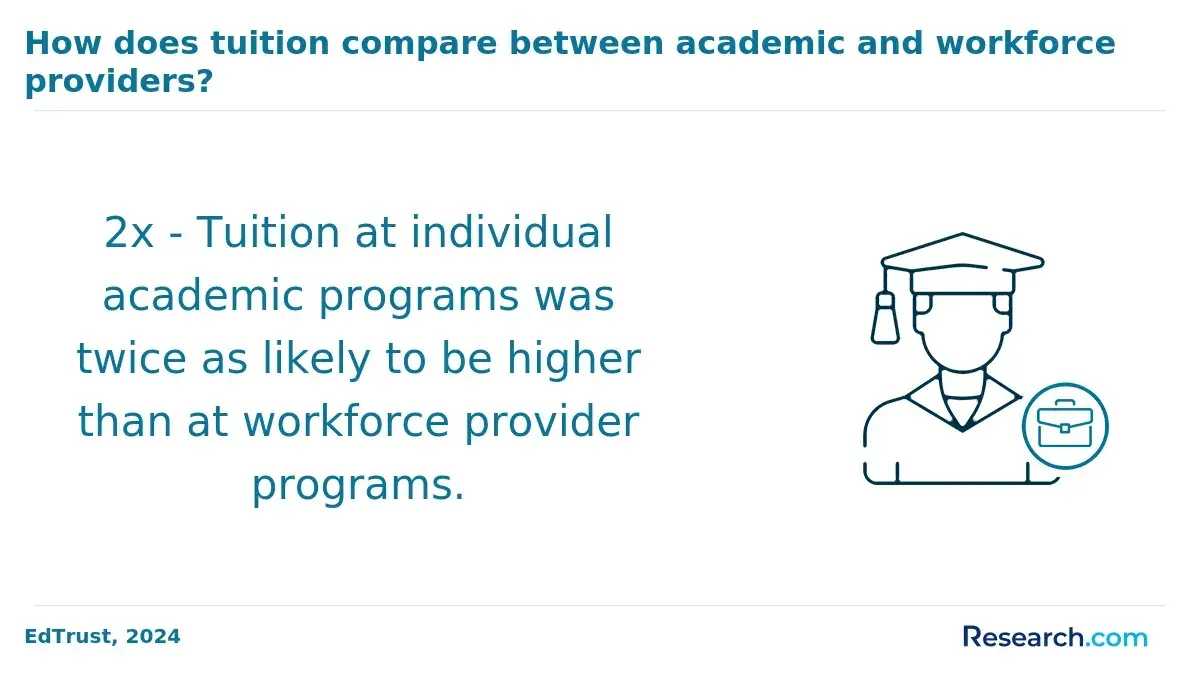
Prior learning credit can reduce both time and cost when it replaces courses you would otherwise need. It may not help if the college awards more electives than your degree permits, requires you to complete a minimum number of credits there, or charges assessment fees that outweigh the tuition saved. A shorter course schedule also depends on when required classes are offered.
Ask for a written degree evaluation showing accepted transfer coursework, proposed prior learning awards, unmet general education and major requirements, and the college's residency-credit rule. Then price the remaining courses using your applicable tuition rate, mandatory fees, assessment charges, books, and any travel or clinical expenses. Published tuition is not the same as your final bill; financial aid and employer assistance may change what you pay. Do not rely on an advertised completion time unless the school states how many incoming credits it assumes.
What Types of Prior Learning Qualify for Associate Degree Credit?
Colleges generally assess demonstrated college-level learning, not simply the time you spent working. Common sources include previous college courses, standardized examinations, military education documented on a Joint Services Transcript, evaluated employer or apprenticeship training, industry credentials, and portfolios that demonstrate mastery of course outcomes.
Evaluation methods create different trade-offs. An examination can be efficient if you know the subject and the college accepts the resulting score. A portfolio may capture specialized workplace learning, but preparing evidence takes time and an award is not assured. Military or professional training may be easier to document, yet the college still decides its course equivalency, credit limit, and degree applicability. Ask whether credits are posted before enrollment, whether older training is eligible, and what happens if an assessment is denied.
Are Online Associate Degree Programs Better Than Campus Programs?
Neither format is automatically better for students seeking prior learning credit. An online program may make it easier to study while working, but scheduled meetings, proctored exams, labs, and fixed deadlines can still limit flexibility. Campus study can provide in-person instruction or easier access to required labs. Either format may have the same institutional credit-evaluation rules - or different program-specific restrictions.
When comparing an associates degree online with a campus option, focus on the entire remaining degree, not the length of an individual course. Confirm whether every required class is offered in your preferred format and how often it runs. Nursing and other clinical programs can require in-person placements even when lectures are online.
What Are the Admission Requirements for These Associate Degree Programs?
Most associate programs ask for an application and evidence of secondary-school completion or its equivalent. Applicants seeking prior learning credit should also expect to provide official college transcripts, examination scores, military records, credentials, training documentation, or a portfolio, depending on the assessment method. A college may admit you before it decides how those records apply to your degree.
Admission to the college is not always admission to a selective major. Nursing and some allied-health programs may set separate prerequisite, GPA, testing, background-check, or clinical eligibility requirements. If application costs matter, online colleges with free applications can help you identify options to investigate, but a waived application fee says nothing about assessment charges or total program cost.
Which Careers Can You Pursue After Earning an Associate Degree?
The right career target depends more on the major and its requirements than on how the college awarded credit. Business and IT programs may support entry-level office or technical roles; health information programs may prepare students for records-related work; and transfer-oriented psychology programs can provide a foundation for further study. Employers may still require experience, certification, or specific technical skills.
For regulated work, map the full pathway before enrolling. Registered nursing requires an approved nursing education pathway, an examination, and state licensure - not just prior healthcare experience. Independent counseling generally requires a graduate degree and supervised practice. If counseling is your goal, evaluate graduate programs against licensing requirements rather than choosing solely by what is the easiest masters degree to get online.
What Salaries and Job Outlook Can Associate Degree Graduates Expect?
There is no single salary or job-growth figure for graduates of associate programs with prior learning credit. Occupational data describe people employed in a role, not the earnings caused by a particular degree or credit-award method.
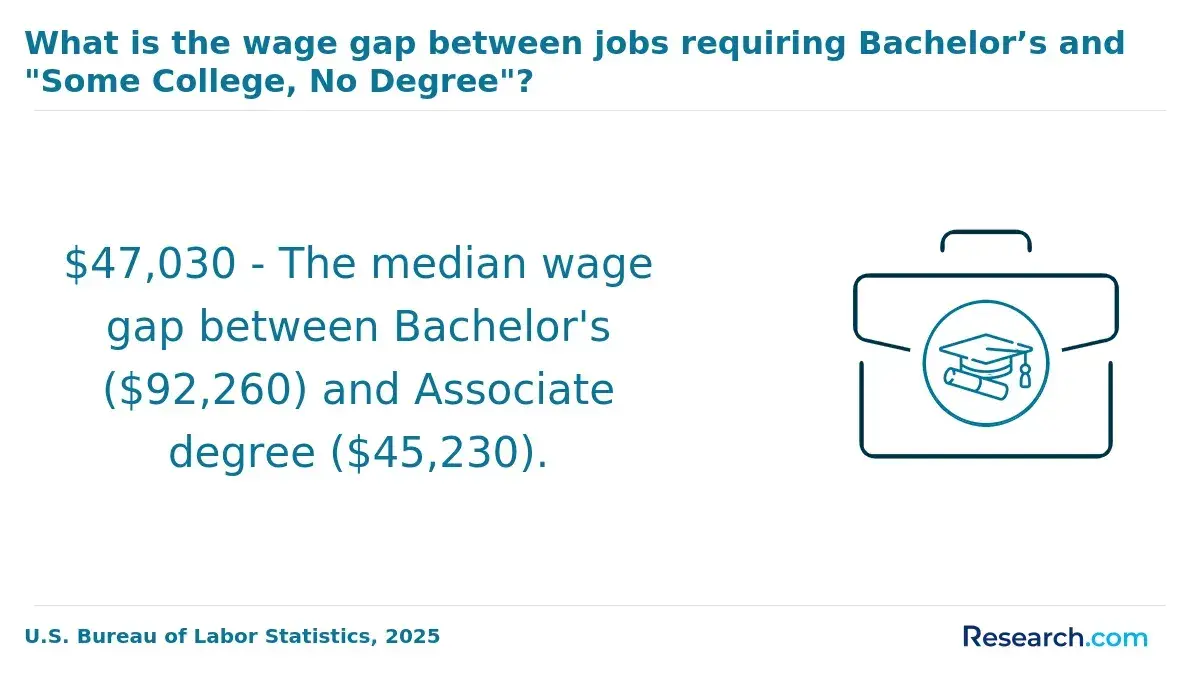
For example, the U.S. Bureau of Labor Statistics reported a May 2024 median annual wage of $93,600 for registered nurses. That figure includes nurses with different education and experience levels; it is not a predicted starting salary for ADN graduates. Because registered nursing requires licensure, use occupational pay and outlook figures only after confirming that your proposed program leads to the required eligibility. For other fields, compare the duties, typical entry requirements, and local openings for the specific jobs you intend to pursue.
How Can You Choose a Reputable Associate Degree Program?
Start with your intended outcome: workforce entry, a license, or transfer to a bachelor's degree. Then compare accredited colleges on credits applied to requirements, remaining course availability, total cost, and support for your schedule. A large credit award is less valuable if it fills only electives or does not transfer toward your next degree.
Before you commit, ask an advisor for a written answer to these questions. Together, they expose common red flags that published tuition and broad claims about "credit for experience" can hide.
- Which of my existing courses, credentials, examinations, or training records can be evaluated, and what will evaluation cost?
- Which accepted credits replace general education or major requirements, and which count only as electives?
- What residency, course-sequencing, lab, clinical, or in-person requirements will remain?
- If I plan to transfer or seek licensure, will the destination institution or licensing board accept this pathway?
- What is my estimated total cost and realistic schedule after the evaluation - not before it?
Students balancing study with caregiving may also want to compare advising hours and predictable deadlines when researching college programs for moms. Whatever your circumstances, avoid enrolling on the promise of "maximum credit" without a degree audit: applied credit, not promotional language, determines whether the program fits.
Other Things You Should Know About
Usually not. You must document college-level learning through an accepted assessment, examination, credential, or evaluated training; the college decides whether to award and apply credit.
No. Transfer credit usually comes from completed college courses. Prior learning credit assesses learning gained through other routes, although colleges may impose limits and degree-applicability rules on both.
Not necessarily. A destination college may accept the associate degree but evaluate individual prior learning awards differently. Request its transfer policy before paying for an assessment.
Do not assume so. Nursing programs and state boards set clinical and eligibility requirements. Ask the approved program and relevant board which, if any, previously completed education can satisfy them.
References
- Academic Credit for Prior Learning | WSAC https://wsac.wa.gov/assessments-prior-learning
- TNReconnect | Prior Learning Assessment Information https://tnreconnect.gov/Choose-a-Degree-College-Path/Prior-Learning-Assessment-Information
- School-Determined Requirements | 2024-2025 Federal Student Aid Handbook https://fsapartners.ed.gov/knowledge-center/fsa-handbook/2024-2025/vol1/ch1-school-determined-requirements
- WAC 250-61-100 | wa.gov https://app.leg.wa.gov/wac/default.aspx
- Credit for Prior Learning - Ohio Department of Higher Education https://highered.ohio.gov/initiatives/access-acceleration/credit-for-prior-learning
- Credit for Prior Learning - The City University of New York https://www.cuny.edu/academics/academic-policy/credit-prior-learning/
- How Do I Earn Credit for Prior Learning? | GCTC https://gateway.kctcs.edu/education-training/prior-learning/standards-for-awarding-credit/index.aspx
- Credit for Prior Learning | rcc.edu https://www.rcc.edu/academics/cpl/index.html
- Utah Students Save Millions with Credit for Prior Learning - Utah System of Higher Education https://ushe.edu/utah-students-save-millions-with-credit-for-prior-learning/
- College Credit for Work and Life Experience | Purdue Global https://www.purdueglobal.edu/transfer-students/work-life-experience/