2027 Best Associate Degree Completion Programs for Work-Life Balance

Co-Founder and Chief Data Scientist
Finishing an associate degree while working or caring for family is less about finding the shortest course and more about finding a schedule you can sustain. The stakes extend beyond graduation: the U.S. Bureau of Labor Statistics reports a 2024 median wage of $93,600 for registered nurses, but entering that occupation also requires an approved nursing education pathway and licensure.
This guide compares six associate degree completion fields by scheduling flexibility, hands-on requirements, transfer-credit fit, and career relevance so you can choose a realistic path - not just an appealing program description.
Key Things You Should Know
- For students with previous college credit, the best work-life-balance fit is usually a program that applies those credits to required courses and offers predictable, part-time scheduling - not merely an online label.
- Associate degrees commonly require about 60 credits, but accepted transfer credits, remaining major requirements, and residency rules determine how much work you actually have left.
- The College Board reported average published tuition and fees of $4,050 for in-district students at public two-year colleges in 2024-25; compare your remaining credits and total fees, not that annual benchmark alone.
Top 10 Best Associate Degree Completion Programs for Work-Life Balance - Work-Life Balance Programs
Business Programs
A business AA or AS can suit someone planning to transfer; a business AAS may emphasize immediate workplace skills. Accounting, management, and general business courses often work well in asynchronous formats, making this a strong completion option for people with changing shifts. Check whether your earlier math and general education credits satisfy the degree plan. A business associate degree can support applications for administrative or bookkeeping work, but management roles generally require substantial experience, and some employers prefer a bachelor's degree.
Healthcare Programs
Health information or medical records programs may offer more scheduling flexibility than patient-facing clinical programs. An AAS may focus on workforce skills, while a health sciences AS may be designed for transfer. Look closely for coding labs, internships, scheduled exams, or certification-related coursework before assuming the program is entirely self-paced. Prior science courses may have grade or recency rules. A degree can prepare you for relevant entry-level applications, but employers may also seek specialized credentials or experience.
Information Technology Programs
IT, networking, and computer support associate programs can be workable for students who need evening or asynchronous study. Remote-access labs are convenient, but projects, group work, and certification preparation still require regular study time. An AS may emphasize transfer; an AAS may emphasize job-ready technical practice. Ask whether older technology courses count toward current major requirements. Entry-level support work is a possible goal, though certifications, troubleshooting experience, and employer requirements can matter as much as the degree.
Nursing / Pre-Nursing Programs
Separate pre-nursing from an associate degree in nursing (ADN). Pre-nursing coursework may transfer toward a later nursing application; it does not itself qualify someone for registered nurse licensure. ADN programs typically require selective admission, sequenced courses, and in-person clinical shifts that may be difficult to move around a job. Previous credits can reduce general education requirements without shortening clinical sequences. Confirm state board approval, clinical scheduling, and eligibility for the required licensing examination before committing.
Criminal Justice Programs
A criminal justice AA or AS often supports transfer, while an AAS may focus more on workplace preparation. Online coursework can fit around employment, but the jobs graduates pursue may not: policing and corrections commonly involve shifts, physical requirements, background checks, academy training, or other agency-specific steps. Ask whether transferred courses count toward the major and whether the curriculum matches your intended agency or bachelor's pathway. The degree alone is not a substitute for hiring or training requirements.
Psychology / Counseling Programs
Psychology AA and AS programs are generally most useful as transfer pathways. Reading, discussion, and research assignments may be easier to schedule around work than clinical courses, provided online classes do not require live attendance. An associate degree does not qualify someone to practice independently as a psychologist or licensed counselor; those careers require substantially more education and state-specific credentials. Choose this path if you have a clear bachelor's transfer plan or a separate, realistic entry-level goal.
What Are the Best Associate Degree Completion Programs for Work-Life Balance?
For most working adults with prior credits, business, IT, and nonclinical healthcare offer the strongest starting points for a flexible completion search. They are not universally "best": the right choice depends on which credits count, whether required classes run when you can take them, and whether the resulting degree serves your goal. Work-life balance describes the study pathway here; no major guarantees balanced hours in a future job.
The comparison below separates scheduling advantages from the requirements most likely to disrupt them. It describes typical program designs, not verified features of every school.
| Program type | Potential scheduling advantage | Main constraint to check |
| Business | Many courses can be completed online | Math requirements and availability of remaining courses |
| Nonclinical healthcare | Some records-focused coursework can be online | Internships, exams, and credential expectations |
| Information technology | Remote labs may reduce travel | Lab access, group projects, and changing technical requirements |
| Nursing or pre-nursing | Some prerequisites may be scheduled flexibly | Selective admission and fixed clinical sequences |
| Criminal justice | Academic coursework may be available online | Agency hiring and training differ from college coursework |
| Psychology | Transfer-focused coursework may fit part-time study | Further education needed for licensed practice |
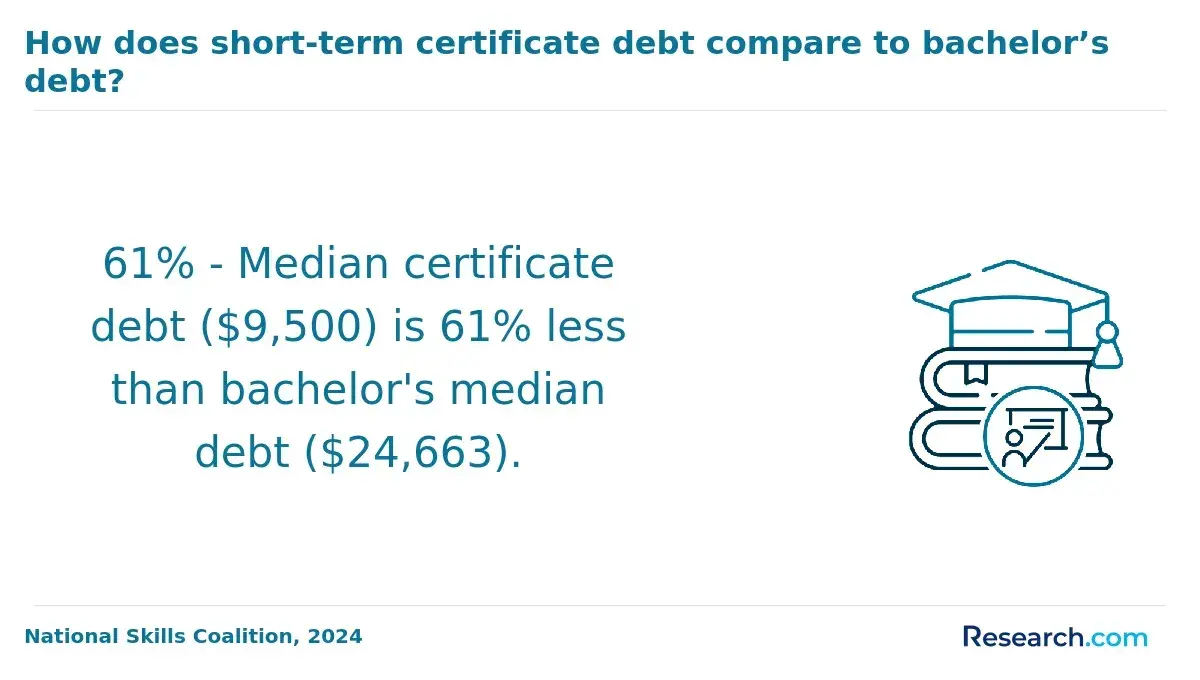
If you mainly want the shortest route to a new occupation, compare the remaining degree requirements with certificates and other fast online degrees that pay well. A shorter credential is useful only if it meets the hiring requirements for the job you actually want.
Which Associate Degrees Offer the Best Work-Life Balance and Career Opportunities?
Business and IT are practical first comparisons for flexible coursework; nonclinical healthcare deserves a look if you want a healthcare-related role without assuming a clinical schedule. Psychology and pre-nursing can be sound choices when you are deliberately preparing for further study. None of these degrees guarantees a predictable job schedule: hours depend on the occupation and employer.
Make the career decision separately from the class-schedule decision. An accounting-focused business program may align with office work, while IT support positions can require evening or weekend coverage. A nursing program can lead toward a well-defined licensed occupation, but its clinical training is less adjustable. If income is your primary criterion, research what degree makes the most money alongside the education, licensing, and experience required for the specific role; occupational wages are not promised earnings for associate degree graduates.
How Do Online Associate Degree Completion Programs Compare With Campus Programs?
Online study removes a commute, but it does not necessarily remove scheduled obligations. An asynchronous course lets you access lessons at different times while still meeting deadlines. A synchronous online course may require live attendance. Hybrid and campus programs require travel, but they may provide easier access to equipment, instructors, or clinical sites.
The distinctions below show which delivery details matter most when you are fitting school around work or caregiving.
| Format | Possible advantage | Schedule question |
| Asynchronous online | Study times may be adjustable | Are exams proctored or group meetings scheduled? |
| Scheduled online | Live instruction without commuting | Can you attend every required session? |
| Hybrid | Online theory with in-person practice | When and where are campus or site visits required? |
| Campus | On-site facilities and face-to-face support | Are required classes offered outside your work hours? |
Accelerated terms can change your weekly workload rather than reduce it. For example, 6 week courses describe individual classes, not a six-week associate degree. Ask for a term-by-term plan showing when every remaining required course is offered.
What Accreditation Should Associate Degree Completion Programs Have?
Start with the institution's accreditation by an agency recognized by the U.S. Department of Education or the Council for Higher Education Accreditation. Institutional accreditation matters when evaluating academic oversight, federal aid eligibility, and potential credit transfer, though another college still decides which credits it will accept and apply to a degree.
For a regulated or credential-linked field, check requirements beyond institutional accreditation. A prospective nursing student should verify state board approval and whether the program meets applicable licensing-exam eligibility rules. For other fields, ask whether a particular certification requires an approved program, specified coursework, or experience. Do not treat a school's general accreditation as proof that a specific degree satisfies a state licensing requirement.
What Are the Admission Requirements for Associate Degree Completion Programs?
Many colleges require an application, prior college transcripts, and evidence that you meet general admission requirements. A degree-completion pathway may additionally require a minimum amount of previous credit. Some majors - particularly nursing - have a separate, selective application with prerequisite, grade, testing, or background requirements. Admission to the college does not mean admission to that major.
Request an official transfer evaluation before committing if the school offers one. Ask which credits satisfy general education, which satisfy the major, and which transfer only as electives. Also confirm minimum grades, limits on older coursework, maximum accepted credits, any minimum credits you must earn at the new college, and whether military training, examinations, professional credentials, or other prior learning can be evaluated. Experience earns credit only under a school's documented assessment policy.
How Long Do Associate Degree Completion Programs Take and What Do They Cost?
Completion time starts with what remains, not the age of your first college credits. An associate degree often totals about 60 credits, but a student whose previous coursework covers general education may still face sequenced major classes. Part-time enrollment, course rotation, prerequisites, and clinical placements can extend the calendar. A short advertised timeline may assume both a particular number of accepted credits and continuous enrollment.
For cost, compare an individualized estimate of remaining tuition and mandatory fees, then add books, technology, commuting, exam fees, or clinical-related expenses where applicable. Published annual tuition is a starting point, not the price of finishing your degree. Federal aid eligibility depends on the institution, program, and student circumstances; employer tuition assistance and scholarships may also reduce out-of-pocket costs.
If your accepted credits put you close to a bachelor's pathway instead, compare the associate completion plan with accelerated bachelors degree programs for adults. Ask each institution for a written degree audit and cost estimate before deciding which route uses more of your previous coursework.
What Courses Are Included in Associate Degree Completion Programs?
Most associate completion plans combine unfinished general education with major requirements. Depending on the degree, general education may include writing, mathematics, natural science, and social science. Business students may take accounting; IT students may complete networking and troubleshooting labs; health information students may study medical terminology and records systems. Nursing adds prescribed science prerequisites and supervised clinical education.
An AA or AS is often structured for transfer, while an AAS often emphasizes workforce preparation, but the letters alone do not establish where courses will apply. Request a degree audit that identifies outstanding courses by requirement. If you intend to pursue a bachelor's degree, have the destination college confirm how those courses will count toward that specific major, not merely whether it accepts the credits.
What Careers, Salaries, and Job Outlook Follow These Associate Degrees?
Career opportunities differ sharply by field. Business coursework may support applications for administrative or bookkeeping positions; IT coursework can support entry-level technical support applications; healthcare records coursework may be relevant to medical records work. Actual hiring can also depend on experience, software skills, certifications, and local employers. Psychology is generally a foundation for further education rather than a direct route to licensed counseling.
The nursing wage figure in the introduction is the national median for the registered nurse occupation, not a salary prediction for ADN graduates. Nursing candidates must meet applicable education and licensing requirements, and compensation varies by location, setting, and experience. For any field, read current BLS occupational profiles for wages and projected employment, then check local job postings for schedules and qualifications. A growing occupation can still have inconvenient hours or limited entry-level openings where you live.
How Can Students Choose a Reputable Associate Degree Completion Program?
A reputable completion program should be able to show how your previous learning changes your remaining coursework, schedule, and total cost. Compare schools using the same goal - workable graduation while meeting your intended transfer or career requirements - rather than relying on a general ranking.
Before enrolling, take these steps so you can compare actual completion plans instead of marketing claims:
- Send transcripts for an official evaluation and obtain a written audit separating major, general education, and elective credit.
- Confirm the minimum and maximum transfer allowances, residency requirement, prior-learning process, and any grade or course-age restrictions.
- Request a term-by-term schedule for the courses you still need, including live sessions, labs, clinical shifts, and in-person exams.
- Calculate remaining tuition, mandatory fees, and required extras; ask which aid and employer benefits may apply.
- Verify accreditation, transfer agreements, and any program approval or licensing eligibility relevant to your goal.
Be cautious if a school promises a fixed finish date before reviewing transcripts, calls a program "fully online" without explaining required visits, or discusses credit acceptance without showing how credits apply to graduation. A good next step is to compare written degree audits from at least two institutions against your actual weekly availability.
Other Things You Should Know About
Sometimes. Verify every remaining course and ask about live meetings, labs, proctored exams, internships, and clinical placements. Nursing pathways typically require in-person clinical work.
Not necessarily. A school may accept a course as transfer credit without applying it to a required major or general education slot. An official degree audit gives the clearest answer.
It can make the weekly load more manageable, but it may extend the calendar and affect when sequenced courses are available. Compare realistic term plans before choosing a pace.
Choose by the program's documented destination, not its abbreviation alone. Confirm bachelor's transfer applicability if further study is your goal; for direct employment, compare the AAS curriculum with local hiring requirements.
References
- College Credit for Military Training & Experiences | dantes.mil https://www.dantes.mil/credit4training/
- Program Eligibility, Written Arrangements, and Distance Education | ed.gov https://fsapartners.ed.gov/knowledge-center/fsa-handbook/2024-2025/vol2/ch2-program-eligibility-written-arrangements-and-distance-education
- Degrees and Certificates | lowercolumbia.edu https://lowercolumbia.edu/publications/catalog/degrees-and-certificates/
- Transfer Credits - Pace University Online https://online.pace.edu/admission-requirements/transfer-credits/
- Understanding Transfer Credit Guidelines and Limitations | American Public University https://www.apu.apus.edu/transfer-credit/graduate/transfer-credit-guidelines/
- Tri-C Flexible Learning Options: Cleveland, Ohio | tri-c.edu https://www.tri-c.edu/programs/flexed-learning-that-fits-your-life.html
- Transfer College Credits via Prior Learning Assessments | coloradotech.edu https://www.coloradotech.edu/military/credit-transfer/faqs
- Monroe Online | Monroe University https://www.monroeu.edu/academics/monroe-online
- Transfer Credit Policy - First-Year / Transfer Students | Pace University New York https://catalog.pace.edu/undergraduate/general-university/admission/transfer-credit-policy-first-year-transfer-students/
- Understanding Degrees & Certificates | Colorado Community College System https://cccs.edu/our-colleges/understanding-degrees-certificates/