
2027 Best Online Two-Year Degrees for Career Growth

Co-Founder and Chief Data Scientist
Choosing an online two-year degree means weighing more than convenience: the program must lead somewhere useful without costing more than you can reasonably manage. The College Board reported average published tuition and fees of $4,050 for in-district students at public two-year colleges in 2024-25, before books, living expenses, and program-specific costs.
That makes the starting price attractive, but career value depends on the field, credential requirements, and whether credits transfer. This guide compares practical options for career starters and changers, then shows what to verify before enrolling.
Key Things You Should Know
- For direct career entry, compare workforce-oriented Associate of Applied Science (AAS) programs with transfer-oriented Associate of Arts (AA) or Associate of Science (AS) programs; many require roughly 60 semester credits.
- Nursing and certain allied-health paths offer clear occupational targets, but an online degree does not replace clinical training or licensure. The 2024 median wage for registered nurses was $93,600 across the occupation, not specifically among associate-degree graduates.
- The best choice depends on your intended job, total cost, local hiring requirements, and whether required labs or placements fit your schedule - not simply whether classes are advertised as online.
Top 10 Best Online Two-Year Degrees for Career Growth
Business Programs
An online associate degree in business administration or accounting can support entry-level office, bookkeeping, customer-service, or operations work. An AA or AS may suit students planning to transfer into a business bachelor's program; an AAS often emphasizes immediate workplace skills. Compare courses in spreadsheets, accounting, and business communication against local job postings. Supervisory and management positions usually require experience, and some employers prefer a bachelor's degree. If promotion is the goal, ask whether the college has a documented transfer agreement rather than assuming every business credit will apply.
Healthcare Programs
Healthcare administration, health information technology, and medical assisting are distinct associate-degree paths. Health information programs may prepare students for records and coding-related work; medical assisting programs typically include hands-on skills and may require a local practicum. A healthcare administration degree alone does not qualify someone for clinical practice or a management role. Check employer preferences, certification eligibility, and whether the advertised online program includes in-person training. Choose the occupation first, then confirm that the curriculum meets its actual entry requirements.
Information Technology Programs
Online associate degrees in IT support, networking, cybersecurity, or software development can build skills through virtual labs and projects. IT support is generally a more accessible starting target than a cybersecurity analyst role, which commonly requires additional experience or education. Look for current coursework, substantial hands-on practice, and opportunities to build a portfolio. An AAS may prioritize job-ready technical work; an AS may offer a clearer route to a computing bachelor's degree. Certifications can complement either path, but they do not substitute for demonstrable troubleshooting skills.
Nursing / Pre-Nursing Programs
An Associate Degree in Nursing (ADN) can provide a route toward registered-nurse licensure, but nursing courses, labs, and supervised clinical placements cannot be completed entirely from home. Admission to the nursing major may be selective even when the college itself has open admission. Pre-nursing AS programs generally cover prerequisites and do not, by themselves, qualify graduates for RN licensure. Confirm state board approval, nursing accreditation where relevant, clinical placement arrangements, and eligibility to take the NCLEX-RN before applying.
Criminal Justice Programs
An online criminal justice AA, AS, or AAS introduces law, courts, corrections, and public-safety systems. It may support applications for certain entry-level administrative or security roles, but police and corrections hiring depends on agency standards, background checks, academy training, and sometimes physical requirements. An associate degree does not confer law-enforcement authority. If your goal is a specific agency, check its current eligibility rules first. A transfer-focused degree may offer more flexibility if you later pursue a bachelor's degree.
Psychology / Counseling Programs
An online psychology AA or AS is usually a transfer foundation, not a qualification to practice counseling or psychology. It can introduce research methods, human development, and communication skills relevant to some entry-level human-services support roles. Licensed counselors and psychologists generally need substantially more education, supervised experience, and state licensure. Choose this path if you have a realistic bachelor's or graduate-school plan, and check how its courses apply to that plan. If you need a job-focused credential sooner, compare human-services programs with supervised fieldwork.
What Are the Best Online Two-Year Degrees for Career Growth?
The strongest online two-year degree for career growth is the one that connects an achievable first job to a credible next step. Nursing offers a defined licensed occupation but substantial in-person requirements. IT and business can provide more online coursework and multiple entry points, although advancement depends heavily on skills and experience. The comparison below evaluates fields, not individual colleges or guaranteed earnings.
Use these trade-offs to narrow your options before comparing schools. "Online" describes coursework delivery, not necessarily the location of every required activity.
| Degree field | Realistic starting point | Growth-path strength | Main constraint |
| Nursing ADN | RN practice after meeting licensure requirements | Defined occupation and potential for later BSN study | Selective admission and in-person clinical training |
| Health information | Medical records or related administrative work | Specialization through experience and relevant credentials | Employer expectations for software and certification vary |
| Information technology | Support or junior technical work | Skills-based progression into systems or networking roles | Projects, experience, and sometimes certifications matter |
| Business or accounting | Office, bookkeeping, or operations support | Broad transfer and promotion possibilities | Management roles generally require experience |
| Criminal justice or psychology | Field-dependent support work or bachelor's transfer | Useful foundation for a defined longer-term plan | Desired professional roles often require more training |
Start with job postings in your area: note their education, experience, and credential requirements, then compare those requirements with each program's courses. If your target is a bachelor's-level profession, an affordable, well-articulated AA or AS may have more career value than a narrowly focused AAS. Readers comparing longer educational paths can also explore majors that make the most money, while treating occupational pay as context rather than a guaranteed return.
Are Online Two-Year Degrees Accredited and Recognized by Employers?
Yes, online associate degrees can be accredited and recognized by employers, but recognition depends on the institution, program, and occupation. Confirm that the college holds institutional accreditation from an accreditor recognized by the U.S. Department of Education or the Council for Higher Education Accreditation. Accreditation does not mean every course will transfer or every program meets professional licensing rules.
For nursing and certain allied-health programs, also check state approval, applicable programmatic accreditation, and eligibility for the intended examination or license. Ask a prospective transfer institution whether credits will satisfy specific degree requirements, not merely whether it accepts them. A red flag is a school that advertises career eligibility without identifying required clinical work, certification steps, or state restrictions.
How Much Do Online Two-Year Degrees Cost and How Long Do They Take?
Many associate degrees require about 60 semester credits and are designed around two years of full-time study. Part-time attendance, prerequisite sequences, limited course availability, and clinical placements can extend completion time; accepted transfer credit may shorten it. An accelerated course term does not make the entire degree a short course.
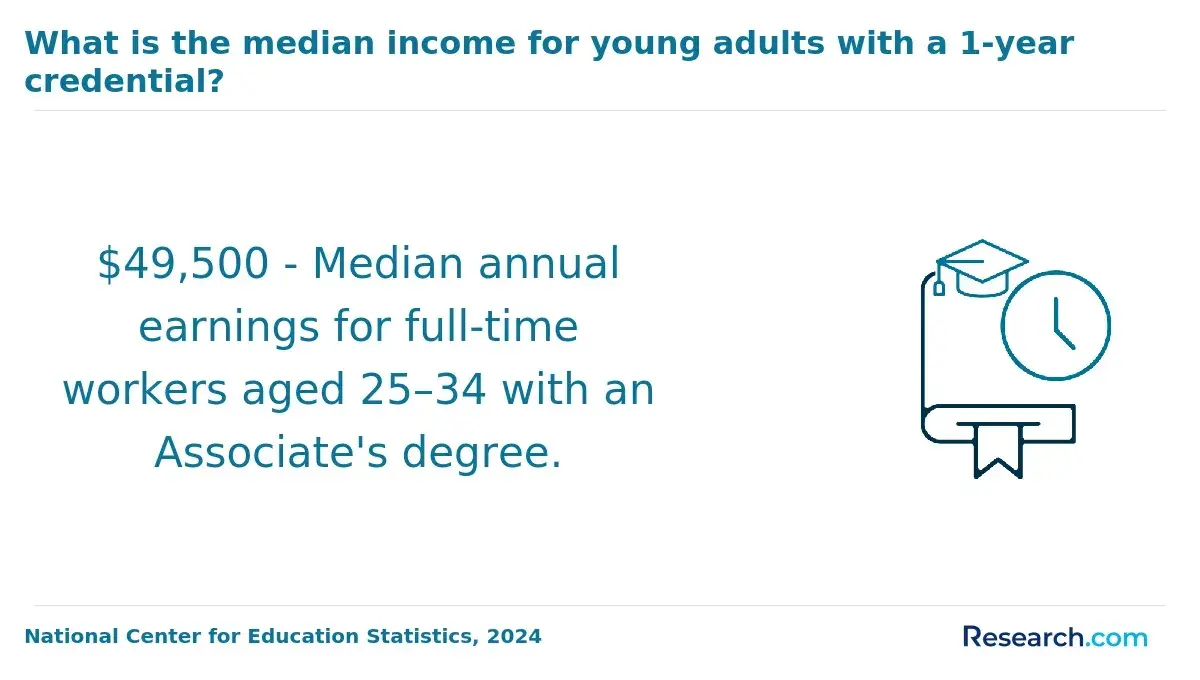
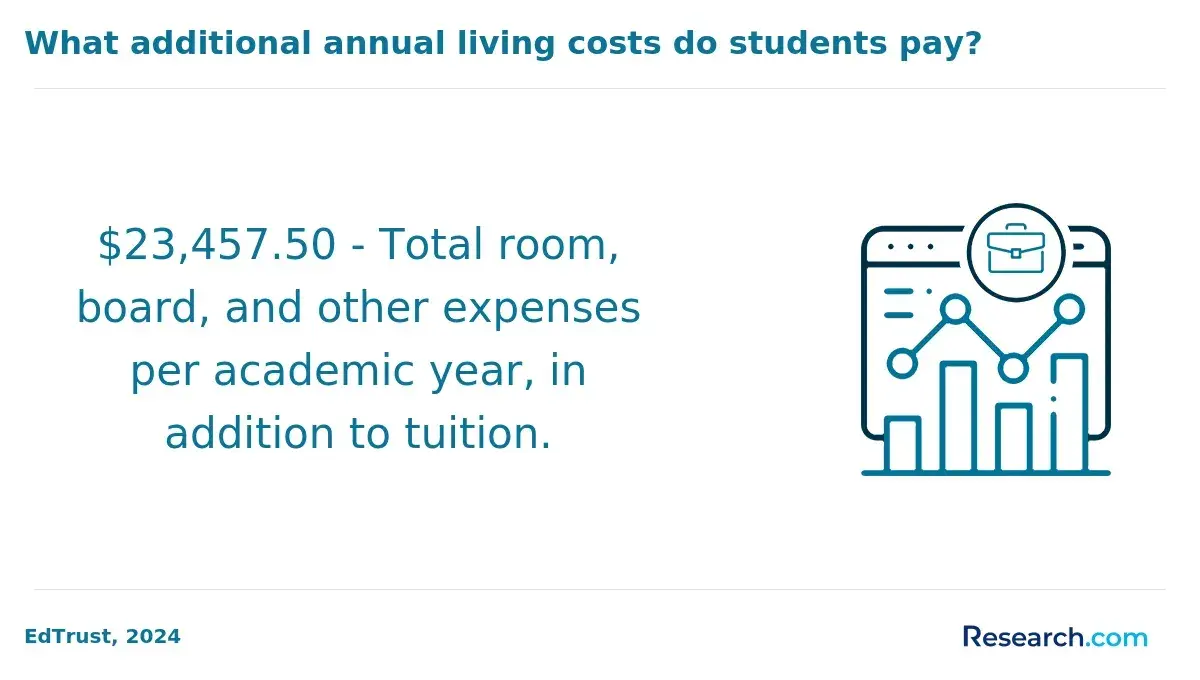
Build a total-cost estimate from tuition, mandatory fees, books, technology, equipment, commuting to placements, and any lost work time. Residency rules can change public-college tuition substantially. Published tuition is not the same as net price after grants: compare each school's aid offer and remaining out-of-pocket costs, and ask about employer assistance if you work. Federal aid eligibility also depends on the institution and your circumstances.
If you need a skill update rather than an associate degree, 6-week online courses with certificates may cost less time, but compare what employers accept before choosing a shorter credential.
Which Careers Can You Start With an Online Two-Year Degree?
An associate degree can support applications for IT support, bookkeeping, medical records, and other entry-level roles, depending on the curriculum and employer. An ADN is a potential route to RN work only after the graduate meets state licensure requirements. Medical assisting may require practical training, while agency-specific public-safety jobs have separate hiring standards.
Separate a plausible first job from an eventual goal. Cybersecurity analyst, healthcare manager, licensed counselor, and police officer should not be treated as automatic outcomes of similarly named online degrees. For each target, read several local job postings and identify which qualifications the associate program provides - and which you must gain afterward.
What Are the Admission Requirements for Online Two-Year Degree Programs?
Colleges commonly request a high school diploma or equivalent and an application; they may also assess academic readiness or review prior college transcripts. Admission to the institution is not always admission to a selective major. Nursing and some allied-health programs can require prerequisite courses, a minimum GPA, testing, background checks, or health documentation. Requirements vary, so check the specific program rather than assuming a college-wide policy applies.
Before applying, request a transcript evaluation and ask which credits satisfy remaining major and general-education requirements. Also confirm the next start date and when required courses actually run. Online universities with multiple start dates may offer scheduling options, but frequent entry dates do not eliminate course sequencing or clinical requirements.
What Courses Do Online Two-Year Degree Programs Typically Include?
Most associate programs combine general education, such as writing, mathematics, and communication, with courses in the major. Business students may take accounting and spreadsheets. IT students may study networking and operating systems; psychology students may take introductory psychology and research-related coursework. Healthcare and nursing pathways can add anatomy, science prerequisites, labs, and supervised practice.
Course titles alone do not show whether a program builds usable skills. Examine the catalog for projects, current tools, required placements, and the order in which courses must be taken. If you intend to transfer, compare the course list with your intended bachelor's program before enrolling.
How Do Online Two-Year Degrees Compare With Campus-Based Programs?
Online study can remove a regular commute, but it is not automatically self-paced. Some courses require live meetings, proctored activities, fixed deadlines, or in-person labs and placements. Campus study may make hands-on access easier, while online study may better fit a work schedule.
The comparison below highlights scheduling and training differences that matter most when choosing a delivery format.
| Format | Potential advantage | What to confirm |
| Fully online coursework | Study without routine campus travel | Live sessions, proctoring, and any local experiential work |
| Hybrid | Online classes with scheduled hands-on instruction | Frequency and location of required visits |
| Campus-based | Direct access to labs and on-site services | Commute, class schedule, and attendance expectations |
For a clinical career, choose based on placement quality and feasibility rather than the online label. For a nonclinical program, compare the weekly schedule and support services as carefully as the delivery format.
What Salaries and Job Outlook Can Graduates Expect?
Occupational wages are useful for comparing career targets, but they are not the expected earnings of everyone who completes a related associate degree. The U.S. Bureau of Labor Statistics reported a May 2024 median annual wage of $93,600 for registered nurses. That figure covers nurses across education and experience levels; an ADN graduate must also qualify for RN licensure before entering the occupation.
The Bureau of Labor Statistics projects registered-nurse employment growth of 5% from 2024 to 2034. Growth indicates potential openings across the occupation, not a promise of local employment. For any field, compare wages for the specific role you can initially pursue, local openings, and the cost of further credentials. A high-paying destination role may be a poor short-term comparison if it typically requires a bachelor's degree or substantial experience.
Which Certifications or Licenses Do These Careers Require?
Credential requirements differ sharply by occupation. Prospective RNs generally must complete an approved nursing program and meet state requirements, including passing the NCLEX-RN. Some allied-health roles have separate certification or licensing rules. IT employers may value industry certifications, but the relevant credential depends on the job and is not universally mandatory. Business, criminal justice, and psychology associate degrees do not themselves grant a professional license.
Before enrolling in a regulated pathway, confirm eligibility with the appropriate state board and ask the program how it arranges required in-person experience. For an unregulated role, compare job postings before paying for extra credentials. Some easy certifications to get online can complement an associate program, but a certificate's convenience is not evidence that employers will require or reward it.
Other Things You Should Know About
Sometimes. Business and some IT programs may offer all coursework online, but check for proctored activities or required visits. Nursing and other clinical programs require hands-on training, commonly at approved local sites.
Choose based on your next step. An AA or AS often fits a planned bachelor's transfer; an AAS often focuses on workforce preparation. Verify the individual program's transfer agreements and career requirements rather than relying on its abbreviation.
Not automatically. Pay depends on the occupation, location, experience, and any additional credentials. Compare realistic entry-level jobs with your longer-term goal before estimating a return on the degree.
Identify your target job, then verify the program's accreditation, total cost, delivery requirements, transfer policy, and any licensing or certification eligibility. Ask for a written plan showing remaining courses and when you can take them.
References
- Pathways for Students and Graduates | Student Internships and Jobs | Careers at CDC https://jobs.cdc.gov/working-at-cdc/student-intern-jobs/pathways.html
- College Transfer Pathway | NC DPI https://www.dpi.nc.gov/students-families/enhanced-opportunities/advanced-learning-and-gifted-education/career-and-college-promise/college-transfer-pathway
- Associate's degree: Career Outlook | bls.gov https://www.bls.gov/careeroutlook/subject/associates_degree.htm
- Annual Earnings by Educational Attainment - COE https://nces.ed.gov/programs/coe/indicator/cba/annual-earnings
- Jenzabar University | qcc.edu https://theq.qcc.edu/ICS/Student_Services/Transfer_Services_Sub_Pages/Step_5_Transferring_Options.jnz
- A.S. Degree Career Pathways - Valencia College https://catalog.valenciacollege.edu/articulationandtransferpathways/ascareerpathways/
- The Major Payoff: Evaluating Earnings and Employment Outcomes Across Bachelor's Degrees - CEW Georgetown https://cew.georgetown.edu/cew-reports/major-payoff/
- Regional vs. National Accreditation: Which is Better? | Drexel University Online https://www.online.drexel.edu/news/national-vs-regional-accreditation.aspx
- Our Online Campus | CHCP https://www.chcp.edu/locations/online-school/
- Credit for Prior Learning | UMGC https://www.umgc.edu/transfers-and-credits/fast-paths-to-credit/prior-learning


