
2027 Most Affordable Associate Degrees for Future-Proof Careers

Co-Founder and Chief Data Scientist
Which associate degree is worth paying for when tuition is only part of the bill? The College Board reported average published tuition and fees of $4,050 for in-district students at public two-year colleges in 2024-25. That makes community college a useful starting point, but supplies, clinical placements, commuting, and an extra semester can change the final cost. This guide compares career-oriented and transfer-oriented fields, explains where an associate degree is enough to enter a field and where it is not, and shows how to find the lowest-cost path that still supports your goal.
Key Things You Should Know
- Compare the cost to finish, not just the price per credit: check required credits, fees, supplies, residency rates, and course availability.
- Many associate programs require around 60 credits, but prerequisites, clinical schedules, and part-time enrollment can extend the timeline.
- Healthcare offers several defined occupational pathways; for context, the U.S. Bureau of Labor Statistics (BLS) reports a 2024 median annual wage of $93,600 for registered nurses, an occupational figure - not a promised outcome for nursing graduates.
Top 10 Most Affordable Associate Degrees for Future-Proof Careers
Business Programs
Business administration and accounting associate degrees can lead toward bookkeeping, payroll, customer operations, or further study. Public-college programs may have fewer specialized equipment costs than clinical majors, but compare software charges and required internships. An Associate of Arts (AA) or Associate of Science (AS) may suit a planned bachelor's transfer; an Associate of Applied Science (AAS) often emphasizes immediate workplace skills. Ask which accounting tools and spreadsheet skills employers expect locally. An associate degree alone usually does not qualify someone for a professional accountant or management role.
Healthcare Programs
Allied-health associate options include radiography, respiratory therapy, and dental hygiene. These can offer clearer occupational targets than a general health studies degree, but selective admission, prerequisites, equipment, screenings, clinical travel, and exam fees can substantially increase total cost. Compare each program's accredited status, clinical placement arrangements, and eligibility for the relevant credential in your state. A general healthcare AS may be better for transfer, but it should not be mistaken for a direct route into a licensed clinical occupation.
Information Technology Programs
IT support, networking, and cybersecurity associate programs can combine relatively modest equipment needs with practical labs. Compare included software, certification-exam vouchers, and whether the college offers accessible lab time before choosing by tuition alone. Help desk or technical support may be a realistic entry point; cybersecurity analyst positions commonly require substantial experience and, often, additional education. Because tools change, prioritize troubleshooting, networking fundamentals, and hands-on projects over a curriculum built around one product.
Nursing / Pre-Nursing Programs
An associate degree in nursing (ADN) is designed as a nursing education pathway; pre-nursing coursework prepares students to apply and does not itself qualify them for RN licensure. Compare prerequisite costs, admission competitiveness, clinical schedules, background-check expenses, and state board approval before treating a tuition quote as the program price. ADN graduates must meet state requirements and pass the NCLEX-RN to become licensed. If a bachelor's degree is a later goal, ask how nursing credits apply to an RN-to-BSN program.
Criminal Justice Programs
A criminal justice AA or AS can support transfer; an AAS may emphasize workplace preparation. Either can introduce legal systems, report writing, and corrections, but a degree does not replace police academy training, employer screening, or other agency requirements. Before paying for a specialized program, check the qualifications for the exact job and jurisdiction you want. A broad, transferable program may be the less costly choice if you expect to pursue a bachelor's degree.
Psychology / Counseling Programs
Psychology and counseling associate degrees generally provide a transfer foundation or preparation for supervised support work, not independent clinical practice. Courses in research, development, and communication can apply across human-services settings. Compare articulation agreements carefully: inexpensive credits save little if they do not satisfy your intended bachelor's major. Licensed counselors and psychologists need substantially more education and must meet state requirements. If immediate employment is the priority, compare the associate program with specific entry-level human-services job requirements.
What Are the Most Affordable Associate Degrees for High-Demand Careers?
The most affordable choice is usually the eligible in-district public-college program that meets your career or transfer goal without avoidable extra credits. Business and IT may have fewer required on-site expenses, while nursing and allied health can justify higher costs for a defined credential pathway. Neither pattern establishes a universal cheapest major: local tuition, aid, supplies, and scheduling decide the actual result.
This comparison shows where costs commonly arise and what each field can realistically provide. It compares degree fields, not particular colleges or verified program prices.
| Degree field | Costs to investigate beyond tuition | Best-fit goal |
| Business | Software, books, possible internship travel | Office-related entry roles or bachelor's transfer |
| IT | Computer access, labs, certification exams | Technical support or an experience-building pathway |
| Nursing and allied health | Prerequisites, equipment, screenings, clinical travel, exams | A specific clinical occupation, subject to credential requirements |
| Criminal justice or psychology | Books, fieldwork, potential additional education | Transfer or selected entry-level support roles |
If transfer is your plan, compare the field with your intended bachelor's degree before enrolling. A guide to the best majors in college can help frame that longer-term choice, but your destination college must confirm which associate credits apply.
Which Associate Degrees Offer the Best Career Outlook and Salary Potential?
Healthcare associate pathways can connect most directly to specific licensed occupations; IT and business offer broader entry points but less predictable advancement from the degree alone. BLS reports a 2024 median annual wage of $93,600 for registered nurses and projects 5% employment growth from 2024 to 2034. Those figures describe the occupation nationally - not starting pay, local openings, or the earnings of ADN graduates specifically.
Outlook also depends on the job within a field. IT support can build experience for more specialized work, but a cybersecurity title is not an automatic first job. Business programs can support office and accounting-related work, while professional accounting and management generally require further qualifications or experience. Psychology and criminal justice graduates should check named entry-level positions rather than assume the major itself meets hiring or licensing rules.
"Future-proof" means building adaptable skills and a workable route to advancement, not finding a job immune to automation or economic change. Before choosing, compare local postings, credential requirements, and the cost of any education needed for the next role - not just the first one.
How Much Do Affordable Associate Degree Programs Cost?
Published tuition is a starting price, not a completion budget. The College Board's 2024-25 public two-year in-district average of $4,050 covers published annual tuition and fees; it is not the price of an entire associate degree and does not account for every student's residency status or required expenses.
To compare offers, separate sticker price (published charges), net price (cost after applicable grants and scholarships), and total completion cost (all required terms and expenses). Ask each college for a term-by-term estimate covering mandatory program fees, books, equipment, commuting or housing, clinical costs, and any prerequisites outside the major. Check whether courses are offered often enough to avoid an extra term.
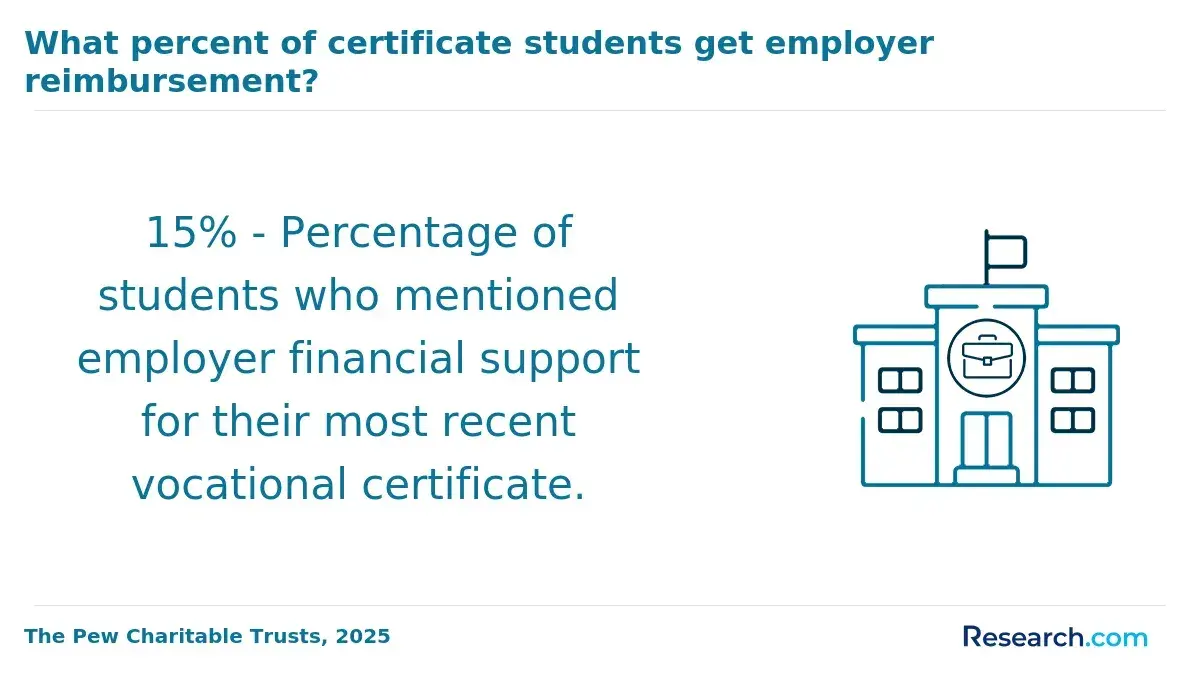
Complete the FAFSA to see whether federal, state, or college aid is available; aid eligibility and awards vary. Also ask about payment plans, employer assistance, and transfer-credit evaluations. If the budget cannot support an associate program, an easiest associate degree to get is not necessarily the cheapest or best alternative: compare its full requirements with a shorter credential tied to your actual job goal.
Are Online Associate Degrees as Valuable as Campus-Based Programs?
An online associate degree can be as useful as a campus-based one when the college is appropriately accredited, the curriculum fits the intended job or transfer path, and required hands-on work is available. Delivery format does not waive employer standards, state licensing rules, or clinical requirements.
Online business, psychology, and some IT coursework may reduce commuting costs. Nursing and many allied-health programs still require in-person labs or clinical placements; some online courses also have scheduled meetings or proctored exams. Compare technology fees, travel, local placement availability, and course schedules. A nearby hybrid program may cost less overall than an online program charging nonresident tuition or requiring distant campus visits.
What Accreditation Should Students Look for in Associate Degree Programs?
Start with institutional accreditation recognized by the U.S. Department of Education or the Council for Higher Education Accreditation. It matters for federal aid eligibility and can affect transfer, although accreditation alone never guarantees that credits will meet another school's major requirements.
For a regulated occupation, check the specific program as well. Relevant programmatic accreditation and state board approval can affect eligibility for a licensing or certification exam; requirements differ by profession and state. Ask the program and the appropriate licensing board to confirm eligibility for the state where you intend to work before paying a deposit. Treat vague claims that a college is "accredited" as a reason to verify exactly what institution and program the claim covers.
What Do You Learn in Future-Proof Associate Degree Programs?
Most associate degrees combine general education with major courses. An AA or AS often emphasizes coursework intended for transfer, while an AAS often includes more occupation-specific practice; the actual catalog and transfer agreement matter more than the abbreviation. Many programs are built around roughly 60 credits, but required totals and completion time vary.
Business students may study accounting and spreadsheets; IT students, networking and troubleshooting; clinical students, anatomy and supervised patient care. Criminal justice and psychology students commonly build writing, research, and communication skills. Labs, prerequisites, internships, and clinical rotations can add scheduling constraints even when the classroom courses appear flexible. If your priority is lighter coursework, remember that the easiest associate degree to get would not necessarily prepare you for your target occupation.
What Are the Admission Requirements for Affordable Associate Degrees?
Colleges commonly ask for a high school diploma or equivalent, an application, and prior transcripts. Placement measures or prerequisite courses may determine where you begin. Open admission to a college does not mean automatic admission to a selective nursing or allied-health major, which may require specific grades, tests, screenings, or a separate application.
Students concerned about academic history can compare online colleges that accept 2.0 GPA, but should verify the current requirements for the particular associate major. Ask for a written evaluation of previous credits and whether accepted credits satisfy degree requirements, rather than merely counting as electives. That distinction affects both time to completion and total cost.
Which Careers Require Licensure or Professional Certification After Graduation?
Licensure and certification depend on the occupation, not simply the associate degree title. ADN graduates seeking RN practice must meet state nursing-board rules and pass the NCLEX-RN. Radiography, respiratory therapy, and dental hygiene graduates should verify the applicable state requirements, program eligibility, and required examinations. Police roles can require academy training and agency selection.
IT certifications may help demonstrate specific skills, but they are separate from the degree and are not universally required for support jobs. Licensed counseling and psychology roles generally require education beyond an associate degree. Check the regulator or employer for your intended state and role before treating an advertised career outcome as a qualification you will hold at graduation.
How Can Students Choose a Reputable Associate Degree Program?
Choose a program by testing its total cost, completion feasibility, and career fit together. A low tuition rate is a poor bargain if required classes are rarely offered, credits will not apply to a planned bachelor's degree, or the program does not meet occupational requirements.
Use this sequence when comparing your finalists:
- Define a specific entry-level role or transfer destination, then confirm its education and credential requirements.
- Verify institutional accreditation, and check program accreditation or state approval where relevant.
- Request a written degree plan, transfer-credit evaluation, course schedule, and estimate of all required costs through graduation.
- Ask about clinical or internship placement, exam eligibility, completion support, and available outcome information.
- Compare your likely net cost and schedule with alternatives, then confirm the details before enrolling.
Red flags include an unverified "fully online" claim for a clinical major, an advertised price excluding mandatory fees, or a promise that the degree guarantees a job or salary. If your target job does not require an associate degree, compare the scope and employer relevance of 6 month programs or other certificates before committing to a longer path.
Other Things You Should Know About
There is no universally cheapest field. Business or general transfer programs may have fewer specialized expenses, but residency, aid, required credits, and time to completion can outweigh the major's typical supply costs.
Some occupation-specific programs can provide the required education for entry, especially in healthcare, but graduates may also need examinations, licensure, certification, or employer screening. Confirm the rules for the exact role and state.
None is inherently cheaper. Choose based on the required courses and your goal: an AA or AS may fit a verified transfer pathway, while an AAS may fit direct workforce preparation. Unnecessary credits are costly regardless of degree label.
Only after comparing the full cost to finish. Mandatory fees, nonresident rates, clinical travel, available financial aid, accepted transfer credits, and course availability can make a higher-tuition option less expensive overall.
References
- Occupations Licensed and Certified by NYS | Department of Labor https://dol.ny.gov/occupations-licensed-and-certified-nys
- Education pays: U.S. Bureau of Labor Statistics https://www.bls.gov/emp/chart-unemployment-earnings-education.htm
- Fast Facts: Tuition costs of colleges and universities (76) | ed.gov https://nces.ed.gov/fastfacts/display.asp
- NYS Mental Health Counseling: License Requirements | nysed.gov https://www.op.nysed.gov/professions/mental-health-counselors/license-requirements
- Debt After College: Employment, Enrollment, and Student-Reported Stress and Outcomes | IES https://ies.ed.gov/use-work/resource-library/report/web-table/debt-after-college-employment-enrollment-and-student-reported-stress-and-outcomes
- After Everything: Projections of Jobs, Education, and Training Requirements through 2031 - CEW Georgetown https://cew.georgetown.edu/cew-reports/projections2031/
- The relationship between student debt and earnings | Brookings https://www.brookings.edu/articles/the-relationship-between-student-debt-and-earnings/
- Tuition Rates, Fees, & Expenses | Johnston Community College https://www.johnstoncc.edu/admissions-and-aid/paying-for-college/tuition-rates-fees-expenses.html
- How to Transfer Credits to an Online College Program | NMSU Global Campus https://global.nmsu.edu/blog/general/how-to-transfer-credits-to-an-online-college/
- Completion Rates and Time to Degree Completion | Academic Affairs https://academicaffairs.uams.edu/irpa/office-of-institutional-studies/student-outcomes/completion-rates/


