2027 Best Online Associate Degree Completion Programs for Flexible Careers

Co-Founder and Chief Data Scientist
If you have college credits but no degree, the best online completion program is the one that applies those credits to a credential you can realistically finish around work and other commitments. Cost matters, too: the College Board reported average published tuition and fees of $4,050 for in-district students at public two-year colleges in 2024-25.
That benchmark is useful, but your remaining credits and fees determine what you will actually pay. This guide compares flexible program types and colleges, then shows you how to check transfer rules, online requirements, career fit, and total cost before enrolling.
Key Things You Should Know
- Start with a credit evaluation: an associate degree commonly requires about 60 semester credits, but only credits that satisfy your new program's requirements reduce the work left to do.
- For a business-focused example, Southern New Hampshire University allows up to 45 transfer credits toward an associate degree; confirm which of your courses apply and what you must complete there.
- "Online" does not necessarily mean self-paced or home-based: scheduled classes, proctored assessments, and local clinical placements can limit flexibility.
Top 10 Best Online Associate Degree Completion Programs for Flexible Careers
Business Programs
An online business associate degree can suit students with prior general education or business credits who want broadly applicable skills. Compare accounting, management, and marketing requirements against your transcript; a program with many open electives may preserve more previous credit. An Associate of Arts or Associate of Science may support transfer to a bachelor's program, while an Associate of Applied Science may emphasize workplace courses. Neither format automatically qualifies you for management. For flexibility, check whether required classes run every term and whether group projects or exams require attendance at fixed times.
Healthcare Programs
Healthcare administration and health information associate programs may offer online coursework for students seeking nonclinical roles. Compare medical terminology, records, billing, and general education requirements with credits you already hold. Ask whether an internship, certification-oriented course, or supervised experience is required and whether it can be arranged locally. Do not confuse an online healthcare administration degree with a clinical credential: jobs involving patient care can have separate laboratory, placement, and licensing requirements. Check the specific job description before choosing the quickest-looking pathway.
Information Technology Programs
IT associate completion options commonly cover networking, systems, programming, or cybersecurity fundamentals. They may fit students with previous math, computing, or general education credits, but schools may decline older technical courses whose content no longer matches current requirements. Look for remote-access labs and required software, then compare course schedules with your work hours. An Associate of Applied Science can emphasize job-ready practice; an Associate of Science may offer a clearer transfer route. Either way, projects, troubleshooting experience, and relevant certifications can matter alongside the degree.
Nursing / Pre-Nursing Programs
Pre-nursing associate programs may let students complete transferable prerequisites online, but they do not themselves qualify graduates for registered nurse licensure. Associate Degree in Nursing programs typically require supervised, in-person clinical training and may have selective admission even when the college admits students broadly. Previous science courses may face recency, grade, or laboratory rules. Before enrolling, verify admission to the nursing major, clinical scheduling, state-board approval, and eligibility for the NCLEX-RN. A flexible prerequisite schedule is useful only if the courses satisfy your intended nursing program.
Criminal Justice Programs
Online criminal justice associate programs often combine law, courts, corrections, and social science. They can help students finish a transferable degree or prepare for certain entry-level support roles, but an associate degree alone does not establish eligibility for sworn law-enforcement work. Agencies may impose age, background, physical, academy, or other requirements. Compare whether the program awards useful credit for documented military or academy training; such credit is evaluated, not automatic. If a bachelor's degree is your goal, confirm that major courses will apply at your intended destination.
Psychology / Counseling Programs
An online psychology associate degree is generally a foundation for further study, not a counseling license. It may suit students whose existing writing, statistics, and social science credits can fill degree requirements. Compare transfer-oriented Associate of Arts or Associate of Science curricula with the bachelor's prerequisites at your target school. Some support positions may be available with an associate degree, but professional counselor and psychologist roles require substantially more education and state-specific credentials. Choose this path for a planned transfer route, not an expectation of immediate independent practice.
What are online associate degree completion programs, and who are they designed for?
Online associate degree completion programs let students apply eligible college credit toward an unfinished associate degree while taking remaining coursework online. They are designed for students returning after a break, changing colleges, or seeking a credential before continuing to a bachelor's degree. "Completion" describes your starting point; it does not guarantee a special curriculum or a fixed graduation date.
An Associate of Arts (AA) or Associate of Science (AS) is often transfer-oriented, while an Associate of Applied Science (AAS) commonly emphasizes workforce preparation. The catalog and transfer agreements matter more than the abbreviation. If your direction is undecided, exploring the best degrees can help clarify a goal before you choose which existing credits to prioritize.
Which accredited colleges offer the best online associate degree completion programs?
There is no single best college for every returning student: the strongest choice accepts your useful credits, offers your remaining courses on a workable schedule, and fits your career or transfer goal. The accredited institutions below illustrate different starting points, not a ranking. Confirm the current catalog, institutional accreditation, course delivery, and a written transfer evaluation before committing.
| College and online option | Potential fit | Key completion check |
| Southern New Hampshire University - AS in Business Administration | Students seeking a business-focused associate degree | Which prior courses meet business and general education requirements, rather than counting only as electives? |
| Thomas Edison State University - AA in Liberal Studies | Students combining previous credits from several subjects | Which credits meet degree requirements, and which enrollment-plan or residency rules affect cost? |
| Excelsior University - AS in Liberal Arts | Students seeking a broad degree or a possible transfer step | Which remaining courses are available online, and how will the intended bachelor's institution apply them? |
Admission and career eligibility are separate questions. Applicants concerned about the effect of a criminal record can review online colleges that accept felons, then ask the college and any relevant licensing body about restrictions for their particular program and occupation.
How much do online associate degree completion programs cost and how long do they take?
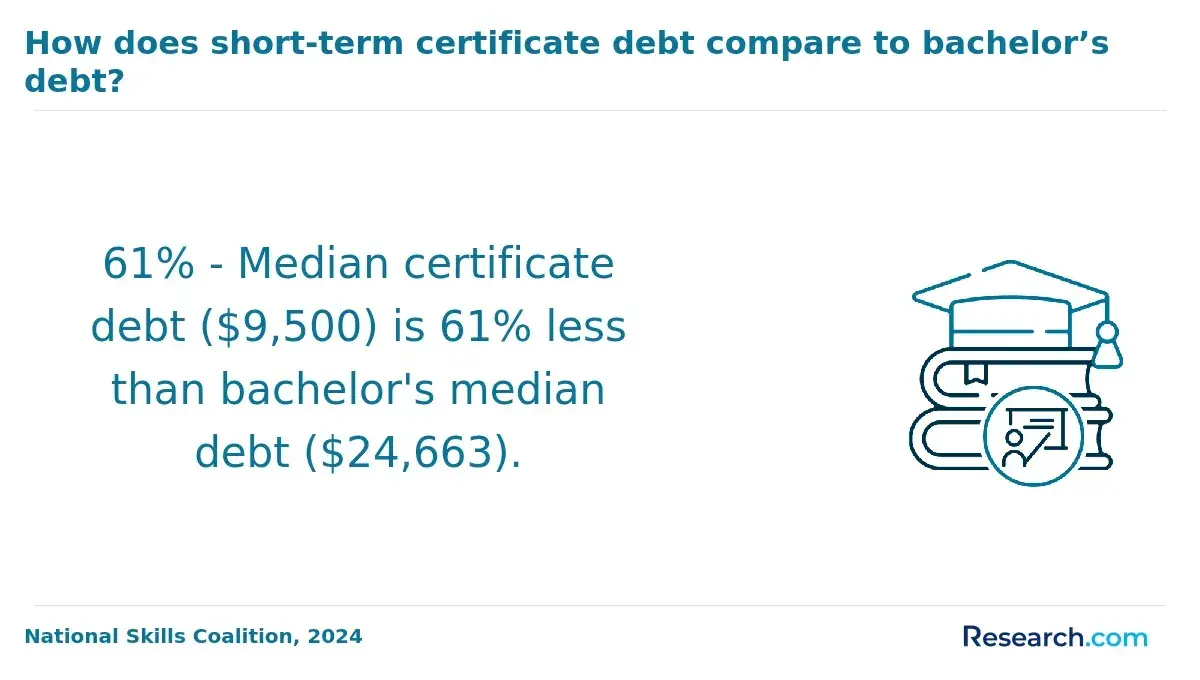
Most associate degrees require around 60 semester credits, but your timeline depends on credits accepted into the degree, required course sequencing, enrollment load, and term availability. A student whose previous courses satisfy most requirements could finish much sooner than a new student; credits accepted only as electives may save little time. Short classes are not proof that the whole degree can be completed quickly.
The College Board's $4,050 public two-year in-district tuition-and-fees average for 2024-25 is a comparison point, not an estimate for your remaining program. Published price, residency status, and aid eligibility vary. This breakdown shows why two schools with similar tuition can produce different bills.
| Cost component | Why it changes the comparison |
| Remaining tuition and mandatory fees | Depends on credits still required and the rate charged to you |
| Books, technology, and assessments | Can differ by major and course format |
| Placement or travel expenses | May apply to clinical, lab, internship, or occasional campus requirements |
| Grants, scholarships, and employer assistance | Can reduce out-of-pocket cost if you qualify |
Request an itemized estimate based on your evaluated transcript, not the price of a full degree. Ask the financial aid office how part-time enrollment and previously attempted coursework could affect your aid.
What admission requirements apply to online associate degree completion programs?
Colleges commonly request an application and transcripts from every previously attended institution. An open-admission college may still have separate requirements for nursing or another selective major. GPA rules, prerequisite grades, placement procedures, and deadlines vary; a lack of a stated minimum should not be read as proof that none applies. Students comparing colleges that accept 2.0 GPA should check both general admission and admission to their intended program.
Ask for a course-by-course evaluation before enrolling when possible. Confirm the maximum transferable credit, minimum credits you must earn at the new college, required grades, and any age limits on science or technical courses. Military training, examinations, industry credentials, and professional learning may earn credit only through the school's documented evaluation process.
What coursework do students complete in online associate degree programs?
Remaining coursework usually includes a combination of general education, major requirements, and electives. A business student might need accounting and communications; an IT student might need programming and networking labs. A transfer-focused curriculum may leave room for courses specified by a future bachelor's program, while a career-focused AAS may devote more credits to applied subjects.
Your transcript evaluation should show where each previous course applies. Pay particular attention to prerequisites: having enough total credits does not help if a required course is unavailable until a later term. Clinical, internship, practicum, or laboratory components can also limit when and where you study, even when lectures are online.
How do online associate degree programs compare with campus-based options?
Online study can remove a commute, but flexibility depends on attendance rules and course availability. Campus study may be preferable when you need equipment, face-to-face instruction, or a predictable place to focus. The comparison below highlights scheduling differences that matter most to a student finishing an existing degree.
| Format | Scheduling advantage | Potential constraint |
| Asynchronous online | Access lessons around work hours | Weekly deadlines and limited offerings can still control your pace |
| Scheduled online | Attend remotely with regular class interaction | Live sessions may conflict with shifts or caregiving |
| Campus or hybrid | Direct access to facilities and in-person instruction | Travel, fixed meeting times, or local placement requirements |
Before choosing, compare actual schedules for the courses you have left - not just the college's general description of its online programs.
What careers can you pursue after completing an online associate degree?
Career possibilities depend more on the major, experience, and employer requirements than on the word "online" on a program page. Business study may support administrative or sales-related roles; IT may support help desk work; healthcare administration may support office or records-related work. Criminal justice and psychology degrees can provide foundations for support roles or further education, but many specialized positions require additional qualifications.
If you plan to continue studying, compare associate coursework with bachelor's entry requirements rather than assuming every transferred credit will satisfy the major. Lists of degrees that pay well can inform a longer-term plan, but bachelor's-level outcomes should not be treated as likely outcomes from an associate degree alone.
What salaries and job outlooks can graduates expect from associate degree careers?
Salary figures describe occupations, not what graduates of a particular associate program will earn. The U.S. Bureau of Labor Statistics reports a 2024 median annual wage of $93,600 for registered nurses. That figure covers working registered nurses with different education and experience levels; an associate nursing degree alone is insufficient without meeting licensing requirements. It should not be used as a pay forecast for pre-nursing students.
For any target role, compare the Bureau of Labor Statistics' occupational wage and projected employment outlook with local job postings. Check required credentials, schedules, and experience as well as pay. A field with attractive wages may be a poor immediate fit if entry commonly requires a license, a bachelor's degree, or experience you do not yet have.
Which certifications or licenses may be required after earning an associate degree?
Requirements differ sharply by occupation. Registered nurses must satisfy state licensing rules and pass the NCLEX-RN; nursing-program approval and clinical eligibility therefore matter before enrollment. Some IT employers value role-specific certifications, but these are not universal legal requirements. Healthcare records roles may favor particular credentials, while independent counseling requires education and state licensure beyond an associate degree.
A common mistake is choosing the most convenient online degree before checking the occupation's rules. Identify the job you want, verify requirements with the relevant state board or prospective employers, and then confirm that the program's curriculum and any required in-person work support that path.
Other Things You Should Know About
Sometimes. Verify delivery for every remaining course and ask about labs, clinical placements, internships, proctored exams, and campus visits.
Not necessarily. A college may accept credits for transfer but apply some only as electives. Request a degree-specific evaluation showing what remains.
It can be if your previous credits satisfy required courses. Your actual timeline also depends on prerequisites, course availability, and how many classes you can take at once.
Choose by your next goal and the program's curriculum. AA and AS pathways often emphasize transfer, while an AAS often emphasizes workforce preparation; confirm the requirements and any transfer agreement before deciding.
References
- Cost of Attendance (Budget) | 2025-2026 Federal Student Aid Handbook https://fsapartners.ed.gov/knowledge-center/fsa-handbook/2025-2026/vol3/ch2-cost-attendance-budget
- How Many Credits Do You Need to Graduate College? | SNHU https://www.snhu.edu/about-us/newsroom/education/how-many-credits-to-graduate-college
- Cost of Attending UC Riverside | The Office of Financial Aid https://financialaid.ucr.edu/cost
- CPL: Section 1-Credit from Postsecondary Institutions | Northern Virginia Community College Academic Catalog https://catalog.nvcc.edu/cpl-manual/credit-postsecondary-institutions/
- Synchronous vs Asynchronous | University of Bridgeport https://www.bridgeport.edu/news/synchronous-vs-asynchronous/
- The difference between a synchronous and an asynchronous class | Boise State Online https://www.boisestate.edu/online/2024/10/25/the-difference-between-a-synchronous-and-an-asynchronous-class/
- Online Associate's Degree Programs (AS and AAS) - Purdue Global https://www.purdueglobal.edu/degree-programs/associates-degrees/
- Summer Course Type Definitions - The University of Rhode Island https://web.uri.edu/summer/types/