2027 Best Online Two-Year Degrees for Parents

Co-Founder and Chief Data Scientist
Choosing a degree while raising children is a scheduling decision as much as an academic one. An online associate program can reduce travel, but fixed class times, clinical shifts, and childcare costs can still make it difficult to finish. The College Board reports average published tuition and fees of $4,050 for in-district students at public two-year colleges in 2024-25; a manageable sticker price is only part of the calculation. This guide compares degree fields by flexibility, career purpose, and hidden time commitments so you can find a path that fits your family.
Key Things You Should Know
- Business, IT, and many transfer-focused programs often offer the most scheduling flexibility; nursing and some healthcare programs require in-person training.
- An associate degree commonly requires about 60 credits, but part-time enrollment, prerequisites, and course availability can extend completion beyond two years.
- Compare total cost and realistic career requirements, not just online tuition: the Bureau of Labor Statistics reports a $93,600 median wage for registered nurses in 2024, but an eligible nursing degree and state licensure are required for that occupation.
Top 10 Best Online Two-Year Degrees for Parents
Business Programs
An online Associate of Applied Science (AAS) in business administration or accounting can suit parents seeking office, bookkeeping, or operations work. Courses commonly cover spreadsheets, accounting, communication, and management fundamentals. Assignments may be asynchronous, although group projects and exams can have fixed deadlines. An Associate of Arts (AA) or Associate of Science (AS) in business may be a better choice if a bachelor's degree is the goal. An AAS can lead toward employment sooner, but its specialized credits may transfer less readily; management roles generally require experience.
Healthcare Programs
Health information technology and medical coding programs may offer parents more at-home coursework than patient-facing fields. They teach medical terminology, records systems, privacy, and coding; a certificate may be sufficient for some coding goals, while an associate degree provides broader study. Verify whether the program includes a supervised experience, scheduled exams, or a separate certification pathway. By contrast, allied-health degrees involving direct patient care often require labs and clinical placements. "Online" may describe the lectures, not the entire program.
Information Technology Programs
An AAS in information technology or cybersecurity typically emphasizes networking, operating systems, troubleshooting, and applied labs. An AS may leave more room for transfer to a bachelor's program. Remote-access labs can help parents study after bedtime, but some courses require scheduled team work or proctored assessments. For entry-level support roles, employers may also value demonstrable skills and certifications; an associate degree alone does not secure a remote job or a cybersecurity position. Ask how the program helps students build a portfolio and obtain hands-on practice.
Nursing / Pre-Nursing Programs
An Associate Degree in Nursing (ADN) can prepare eligible graduates to apply for registered-nurse licensure, but online lectures do not eliminate in-person labs and clinical shifts. Nursing admission is often selective and may require prerequisite sciences, testing, and health clearances. Graduates must meet state board requirements and pass the NCLEX-RN before practicing. A pre-nursing AA or AS is different: it provides prerequisite or transfer coursework, not RN eligibility by itself. Parents should obtain the clinical schedule and confirm state approval before enrolling.
Criminal Justice Programs
An online AA or AS in criminal justice can provide a transfer foundation; an AAS may emphasize applied public-safety coursework. Parents can often complete reading and writing assignments around family commitments, but the degree's career value depends on the intended role. Police and corrections jobs have separate hiring, training, background, and physical requirements that vary by agency. Some investigative or supervisory roles require substantial experience or further education. Choose this field for a defined career or transfer plan, not on the assumption that the credential grants law-enforcement authority.
Psychology / Counseling Programs
An online AA or AS in psychology can be a flexible starting point for parents planning to transfer. Coursework introduces human development, research, and behavior, but an associate degree does not qualify someone to practice independently as a counselor or psychologist. Those professions generally require advanced education and state licensure. If you want a nearer-term helping role, investigate its specific hiring requirements before choosing a major; a human-services AAS may include a supervised practicum that limits scheduling flexibility.
What Are the Best Online Two-Year Degrees for Parents?
The best online two-year degree for a parent is the one that meets a specific career or transfer goal and has requirements the family can reliably schedule. Business and IT are strong starting points when at-home coursework is essential. Health information programs may fit parents interested in healthcare without clinical shifts; nursing can offer a clear licensed career path but demands substantially more in-person time.
This comparison shows each field's usual purpose and the scheduling constraint most likely to affect completion. Formats vary by college, so treat the table as a shortlist, not a ranking of individual programs.
| Degree field | Common purpose | Key scheduling constraint |
| Business | Office work or bachelor's transfer | Group work and fixed deadlines |
| Health information | Records or coding-related work | Possible supervised experience |
| Information technology | Technical skills or bachelor's transfer | Labs and team projects |
| Nursing or pre-nursing | RN preparation or prerequisites | In-person clinicals or later program admission |
| Criminal justice | Public-safety foundation or transfer | Separate agency hiring requirements |
| Psychology or counseling | Transfer toward further study | Advanced education for licensed practice |
If family obligations make unexpected schedule changes particularly costly, favor a program that publishes course rotations and experiential requirements before registration. A field with appealing job prospects is not the best fit if its required hours are impossible to cover.
How Much Do Online Two-Year Degrees Cost for Parents?
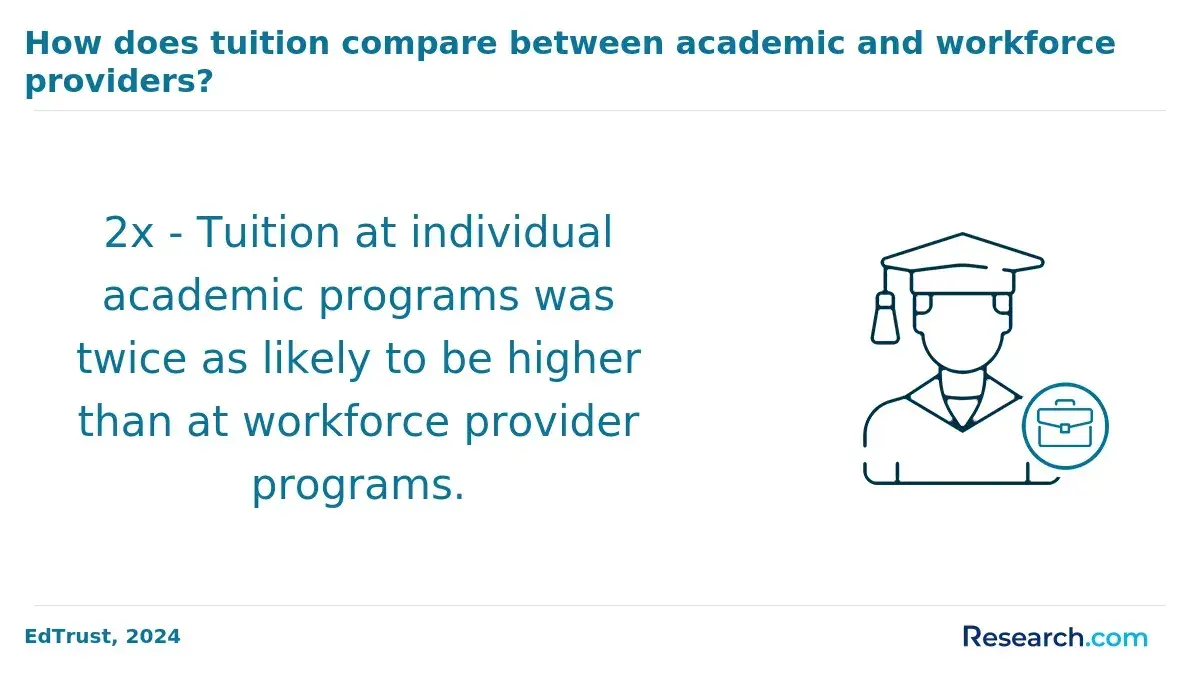
Tuition depends on residency, institution, enrollment, and remaining credits. The College Board's 2024-25 average of $4,050 in published tuition and fees for in-district public two-year students is a useful benchmark, not the price of a particular online degree. Out-of-district or out-of-state online rates may differ, and nursing or IT equipment can add expenses.
Request an estimate for all credits you still need, including mandatory online fees, books, software, background checks, travel to clinical sites, and any required childcare. Compare that total after grants and scholarships, rather than multiplying a low per-credit rate without checking fees. Ask the financial aid office about federal aid eligibility, part-time enrollment, employer assistance, and payment plans; eligibility varies. For military families, a comparison of online military colleges may help identify additional benefit and support questions to ask.
Which Online Two-Year Degrees Offer the Best Career Opportunities?
Career opportunity is strongest when a program connects to an occupation with a clear entry route - and when its requirements fit your household. An ADN offers a defined route toward RN licensure, subject to admission, graduation, examination, and state requirements. Business and IT can support several entry-level paths, but job titles and employer expectations vary; healthcare records programs may connect more directly to specialized administrative work.
The Bureau of Labor Statistics projects registered-nurse employment to grow 5% from 2024 to 2034. That national projection indicates demand, not an individual graduate's chance of being hired or a reason to overlook clinical scheduling. Psychology and counseling are better understood as longer educational pathways if licensed practice is the goal. Parents considering that route should account for bachelor's study and graduate training; comparisons of affordable online masters can be useful later, once a specific profession's licensing requirements are clear.
Are Online Two-Year Degrees Accredited and Recognized by Employers?
Online associate degrees can be recognized by employers when awarded by an appropriately accredited college, but accreditation alone does not make every program suitable for every occupation. Confirm the institution's accreditation with the accreditor or the U.S. Department of Education's recognition information. For nursing, also confirm state board approval and any accreditation requirements that matter to your intended employer or future school.
Transfer recognition is a separate question. An accredited college may accept your credits while applying some only as electives, particularly if you move from a career-focused AAS to a bachelor's major. Obtain a written degree audit or transfer agreement showing how courses meet the destination program's requirements before relying on a transfer promise.
What Admission Requirements Apply to Online Two-Year Degree Programs?
Many associate programs begin with a high school diploma or equivalent, an application, and transcripts. A college may use placement measures to determine starting courses even when it does not require SAT or ACT scores. Applicants with previous college coursework should request a transfer evaluation early; accepted credits can reduce time and cost only if they fulfill degree requirements.
Admission to the college does not necessarily mean admission to a selective major. Nursing and some allied-health programs may impose prerequisite grades, entrance testing, immunizations, background checks, or separate application deadlines. Ask whether you can enroll in required courses before formal major admission - and what happens if a clinical placement is unavailable.
How Long Does It Take Parents to Complete an Online Two-Year Degree?
A two-year label usually describes a full-time plan, not a completion guarantee. Associate degrees often require about 60 credits; parents studying part time may need longer, especially when prerequisites run in sequence or a required course is offered only once a year. Accepted transfer credit can shorten the remaining plan, while developmental coursework, clinical scheduling, or limited childcare can extend it.
Ask for a term-by-term plan based on the number of courses you can consistently manage, including summer availability and any minimum enrollment rules. An accelerated course is shorter than a standard course, but the whole degree still requires every remaining credit. If your goal is ultimately a bachelor's degree, compare the associate-to-transfer route with a self-paced bachelor's degree online; confirm which credits transfer and whether self-paced study suits your need for structure.
What Do Online Two-Year Degree Programs Teach?
Most associate programs combine general education - such as writing and mathematics - with major courses. An AA or AS often emphasizes courses intended for bachelor's transfer, while an AAS commonly devotes more space to occupational skills. These are tendencies, not guarantees: the catalog and a prospective transfer school determine what a particular degree actually accomplishes.
Parents should look beyond course titles to delivery. A computer lab may be accessible remotely, whereas a nursing skills lab requires physical attendance; a human-services practicum may require daytime hours. Syllabi can reveal whether classes are asynchronous, when assignments are due, and whether exams require a proctor. That detail matters more to a weekly family schedule than a broad "online" label.
What Jobs and Salaries Can Parents Expect After Graduation?
Possible entry points include office support or bookkeeping-related work after business study, technical support after IT study, and records-related roles after appropriate healthcare training. Employers may require specific software skills, experience, or certification, so compare local postings with the curriculum. Criminal justice and psychology degrees can support further study or applications to roles with separate hiring standards; they do not independently confer police authority or counseling licensure.
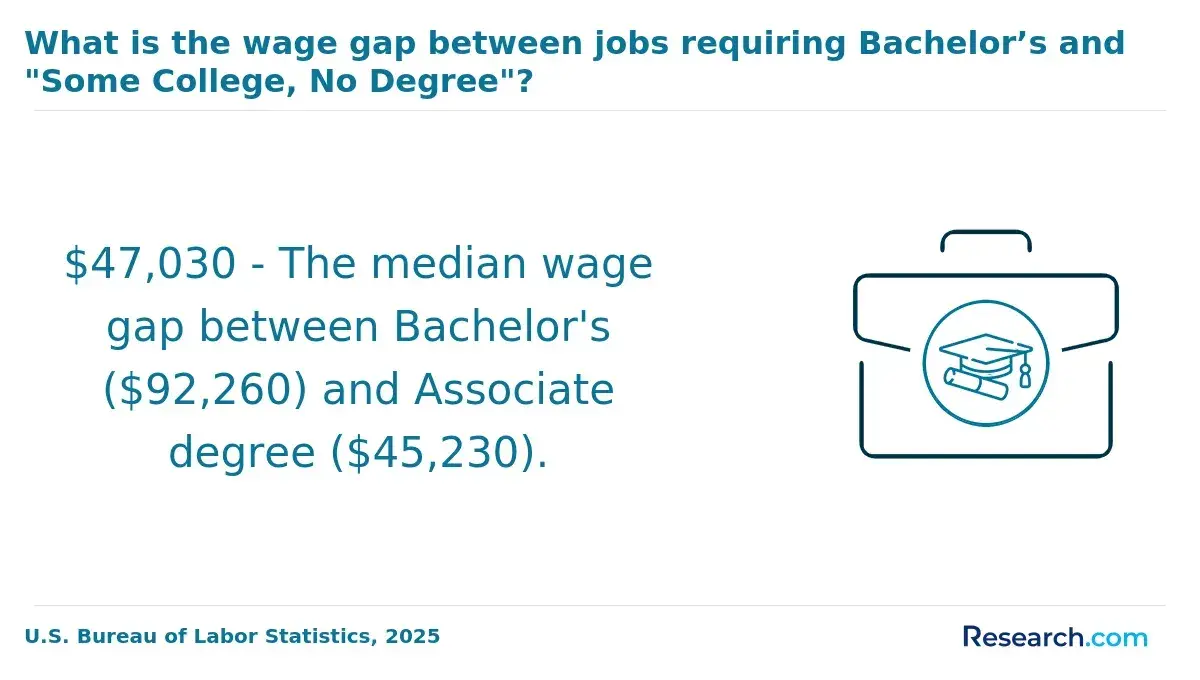
For a regulated example, the Bureau of Labor Statistics reports a 2024 median annual wage of $93,600 for registered nurses as an occupation. It is not a predicted salary for ADN graduates, and practice requires state licensure. Rather than choosing a major by its highest-profile salary, identify an attainable first job, its actual entry requirements, and whether its shifts and commute work for your family.
How Should Parents Choose a Reputable Online Two-Year Degree Program?
Start with your target job or bachelor's major, then compare colleges on the requirements that could prevent you from finishing. Admissions pages describe eligibility, but the catalog, course schedule, and program staff are more useful for testing whether the degree fits a parent's routine.
Before applying, get clear answers to these decision-critical questions:
- Which courses are asynchronous, and which require live attendance, campus visits, labs, practicums, or clinical shifts?
- What will the complete degree cost after an evaluation of my existing credits, including fees and required equipment?
- When is each required course offered, and what is a realistic part-time completion plan?
- Does the program meet my intended transfer school's requirements or my state's applicable licensing rules?
- What advising, tutoring, and placement assistance can online and part-time students actually use?
Red flags include an "online" claim with undisclosed in-person requirements, a salary promise, unclear accreditation, or a transfer assurance without a course-by-course evaluation. If a degree is more than your goal requires, compare shorter training options, including certifications that pay well, against local job requirements before committing to additional credits.
Other Things You Should Know About
Sometimes. Business and some IT programs may allow it, but live sessions or proctored exams can still apply. Nursing and many patient-facing healthcare programs require in-person training.
Often, but aid amounts and eligibility depend on enrollment level, the institution, and the student's circumstances. Ask the financial aid office to estimate support for your planned course load.
Choose based on the courses and destination. AA and AS degrees often support transfer; an AAS commonly emphasizes workforce preparation. Verify how specific credits apply to your intended job or bachelor's program.
Plan for uninterrupted study time even in asynchronous classes. You may also need scheduled coverage for exams, group meetings, labs, clinicals, or practicums; request those schedules before enrolling.
References
- Pathways for Students and Graduates | Student Internships and Jobs | Working at CDC | Careers at CDC https://jobs.cdc.gov/working-at-cdc/student-intern-jobs/pathways.html
- Cost of Attendance (Budget) | 2025-2026 Federal Student Aid Handbook https://fsapartners.ed.gov/knowledge-center/fsa-handbook/2025-2026/vol3/ch2-cost-attendance-budget
- [PDF] Career and Technical Education Guidelines - THECB Report Center https://reportcenter.highered.texas.gov/agency-publication/guidelines-manuals/career-and-technical-education-guidelines/
- Undergraduate Retention and Graduation Rates - COE https://nces.ed.gov/programs/coe/indicator/ctr/undergrad-retention-graduation
- Child Care Financial Assistance Options https://childcare.gov/consumer-education/get-help-paying-for-child-care/child-care-financial-assistance-options
- Understanding College Costs | studentaid.gov https://studentaid.gov/resources/prepare-for-college/students/choosing-schools/consider-costs
- Semester Course Load and Student Performance - PMC - NIH https://pmc.ncbi.nlm.nih.gov/articles/PMC7568764/
- Applying for Admission - Texas Comptroller https://comptroller.texas.gov/programs/education/msp/applying/
- Apply for funds to help pay for child care - Mass.gov https://www.mass.gov/how-to/apply-for-funds-to-help-pay-for-child-care
- How Long Are Community College Programs? | Edison State Community College https://www.edisonohio.edu/blog/how-long-are-community-college-programs