2027 Best Online Two-Year Degrees With No Campus Visits Required

Co-Founder and Chief Data Scientist
"Online" does not always mean you can finish an associate degree without visiting campus. An orientation, lab, exam, or required placement can change that decision - especially if you live far from the college. The College Board reported average published tuition and fees of $4,050 for in-district students at public two-year colleges in 2024-25, but travel and other requirements can raise the real cost. This guide compares degree fields that may be completed without campus visits, identifies paths that usually cannot, and shows you what to confirm before applying.
Key Things You Should Know
- Business, information technology, criminal justice, and transfer-focused social science degrees are strong fields to investigate, but delivery requirements vary by program.
- For 2024-25, the maximum federal Pell Grant was $7,395; eligibility depends on the student, and aid does not establish whether a program is fully online.
- Ask for written confirmation that orientation, exams, labs, internships, and graduation requirements involve no campus visits before treating any degree as a match.
Top 10 Best Online Two-Year Degrees With No Campus Visits Required
Business Programs
An online associate degree in business administration, accounting, or management can suit students seeking office work or a foundation for a bachelor's degree. Business administration AA and AS programs often emphasize transferable courses; an accounting or business AAS may emphasize workplace skills. Compare the actual curriculum with your target job or transfer institution. These fields are plausible no-campus-visit options because coursework can often be delivered online, but confirm whether presentations, proctored exams, or a capstone require attendance at a particular location. A management degree alone does not normally qualify someone for a management role.
Healthcare Programs
Healthcare administration and some health information programs may offer fully online coursework without clinical training. They are better candidates for a no-campus-visit search than hands-on allied-health programs. Check whether a health information degree requires a supervised practice experience, where it can be completed, and whether its programmatic accreditation matters for a credential you want. An administrative degree is not a clinical qualification. If your goal is direct patient care, expect to investigate in-person training requirements rather than assume an online course schedule removes them.
Information Technology Programs
Computer information systems, IT support, and programming associate degrees can be practical no-campus-visit candidates when labs use remote software or equipment shipped to students. An AAS may focus on job-ready technical work; an AS may better support transfer, depending on the college. Ask how you will access required software, complete technical exams, and receive support when tools fail. Review actual projects and skills taught, not just the degree title. Industry certifications can complement a degree, but neither a certification nor an associate degree guarantees an IT job.
Nursing / Pre-Nursing Programs
Pre-nursing or health sciences associate programs may put prerequisite and general education courses online with no campus visits. They do not themselves qualify students for registered nurse licensure. An associate degree in nursing typically requires supervised, in-person clinical training, even if lectures are online; it is a poor fit if you cannot attend placements. Check prerequisites and whether courses will satisfy your intended nursing program before enrolling. To become licensed, graduates must also meet state board requirements and pass the required licensing examination.
Criminal Justice Programs
Criminal justice AA, AS, and AAS programs can cover law, courts, corrections, and public safety entirely through online coursework. They may suit transfer students or people exploring related administrative and support roles. Verify whether a field placement, academy component, or exam creates an in-person obligation. A criminal justice degree is not a substitute for police academy training or an employer's hiring standards. If you have a specific occupation in mind, check its entry requirements before choosing a transfer-focused or career-focused curriculum.
Psychology / Counseling Programs
An online psychology AA or AS is usually a transfer foundation, not a qualification to practice counseling. It can work without campus visits if research assignments, exams, and any service-learning requirement are remote. Review the receiving bachelor's program's course requirements before choosing electives. Counseling and psychologist roles generally require substantially more education and, where applicable, supervised experience and licensure. If you want to enter the workforce after the associate degree, ask what specific entry-level roles the college's curriculum prepares you to pursue.
What are the best online two-year degrees with no campus visits?
The best fields to investigate first are business, IT, criminal justice, and psychology or other transfer-focused social sciences. They can offer a useful degree without an inherently hands-on clinical curriculum. No degree field guarantees no campus visits: only a particular college's published requirements and written confirmation can establish that. Start with your goal, then compare delivery details - not a school's "online" label alone.
This comparison shows where each field is most useful and the requirement most likely to change your decision. It compares degree paths, not verified individual programs.
| Degree field | Best fit | Requirement to check |
| Business or accounting | Office-work preparation or transfer | Exam proctoring and capstone format |
| Information technology | Technical skills and project work | Remote access to labs and software |
| Criminal justice | Transfer or public-safety-related study | Internship or academy requirements |
| Psychology | Preparation for further study | Transfer alignment and service learning |
If you are still deciding on a major, compare these options against your longer-term goals using a broader guide to the best degrees to get. Choose a transfer-oriented path if a bachelor's degree is necessary for your intended role; choose a workforce-oriented path if its specific skills match jobs you can realistically pursue sooner.
Are fully online two-year degrees accredited and legitimate?
Yes. A fully online associate degree can be legitimate when the institution holds recognized institutional accreditation. Accreditation concerns the institution's educational standards; it does not certify that every course is self-paced, that credits will transfer, or that a graduate meets a state licensing requirement.
Check the institution in the U.S. Department of Education's accreditation database, then ask whether your specific program has any required programmatic accreditation. This matters especially when a professional credential or receiving college expects it. If you intend to transfer, request a course-by-course evaluation or written articulation guidance: accepted credits do not necessarily fulfill the bachelor's degree requirements you need.
Which online associate degrees lead to the best careers and salaries?
IT, accounting, and some health information paths can connect to defined entry-level work, while business administration, psychology, and pre-nursing often make more sense as steps toward further education. The best career choice depends on the job's actual entry requirements, local openings, your skills, and whether you can complete any required practical training.
Be wary of salary lists that pair an associate major with an advanced occupation. The U.S. Bureau of Labor Statistics reports a May 2024 median wage of $124,910 for information security analysts and projects 29% employment growth from 2024 to 2034. Those are occupation-wide figures, not outcomes for IT associate graduates; analysts typically need a bachelor's degree and related experience. Use guides to the best degrees to make money as starting points, then verify the education required for each job.
What types of two-year degrees can you complete entirely online?
Associate of Arts (AA) and Associate of Science (AS) degrees commonly include general education and major courses and often support transfer. Associate of Applied Science (AAS) degrees commonly emphasize career preparation. Those are tendencies, not guarantees: inspect the curriculum and any transfer agreement.
Fields with coursework that can often be delivered entirely online include business, accounting, IT, criminal justice, psychology, and some healthcare administration programs. Whether a specific program qualifies depends on its exams, labs, and experiential requirements. Work preferences can also inform your choice: a reader considering jobs for introverts that pay well should compare day-to-day duties, not assume that online study leads to solitary or remote work.
Do online two-year degree programs require internships, labs, or clinicals?
Some do, and "no campus visits" does not necessarily mean "no in-person activity." A college might permit an internship near your home while still requiring you to attend it in person. Nursing and other clinical programs generally require supervised placements; other programs may use remote simulations or online projects instead.
These terms describe different obligations. Distinguishing them helps you avoid enrolling in a program that meets your campus restriction but not your broader scheduling or travel needs.
| Requirement | What it may mean for attendance |
| Remote lab or simulation | May be completed from home if required tools are available |
| Local internship or clinical | No campus trip may be needed, but attendance at a placement is required |
| On-campus lab or orientation | Conflicts with a strict no-campus-visits requirement |
| Online proctored exam | May avoid travel but can require a webcam and scheduled session |
Ask whether placements are required, who arranges them, and whether the college can support a placement where you live. If you cannot attend any in-person activity, state that explicitly when requesting confirmation.
What are the admission requirements for online associate degree programs?
Most online associate programs ask for an application and a high school diploma or equivalent. Colleges may also request prior transcripts, use placement information to guide course selection, or require prerequisites for a particular major. General admission to a college does not mean admission to a selective nursing or allied-health program.
Before applying, check whether the college enrolls students in your state and whether your intended program has separate requirements. If you have previous college credit, request an evaluation showing which credits count toward general education and the major - not merely how many the college will accept.
How long do online two-year degrees take and how much do they cost?
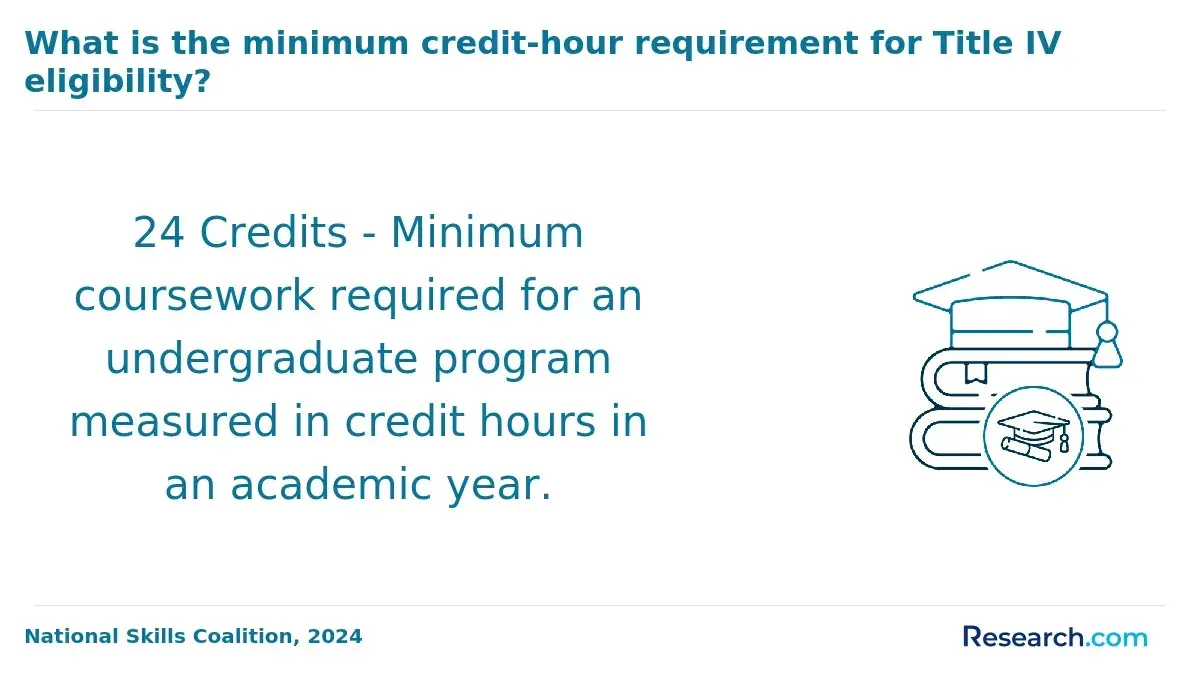
An associate degree commonly requires about 60 semester credits. Full-time students may finish in roughly two academic years, while part-time study, course sequencing, prerequisites, and accepted transfer credit can change that timeline. Short online course terms do not shorten the degree unless the full sequence and your course load make an earlier finish possible.
Published tuition is only a starting point. The College Board's 2024-25 public two-year in-district average of $4,050 covered tuition and fees for an academic year, not every student's total degree cost. Compare the credits you still need, residency rates, mandatory online fees, books, software, exam costs, and any travel or placement expense. Eligible students can investigate federal grants and loans, scholarships, employer assistance, and payment plans; ask for a personalized aid estimate rather than assuming the lowest advertised tuition will be your lowest net cost.
Do online two-year degrees qualify graduates for licensing or certification?
Sometimes, but the degree and the credential are separate. An IT program may prepare students for an optional industry certification exam without awarding the certification. A health information program may need particular accreditation or coursework for a credential. Nursing licensure additionally requires an approved educational pathway, clinical training, an examination, and satisfaction of state requirements.
If certification or licensure is your goal, check the relevant credentialing body's and state board's current rules before enrolling. Ask the college whether the exact online program - not just its campus counterpart - meets those rules where you intend to work. A no-campus-visit preference may rule out the practical training required for some licensed occupations.
How can you choose a reputable online two-year degree program?
Choose a program by testing its fit against your nonnegotiable requirement: no campus visits. Accreditation, total cost, course access, and the value of the degree for your next step matter too. If you are comparing a public college with a non profit university, evaluate the specific associate program and your total cost rather than assuming an institution type settles the question.
Use the following checks with each shortlisted college. Request answers for the exact program and your location, ideally in writing.
- Ask for the degree plan and confirm how orientation, labs, exams, capstones, internships, and graduation are completed without campus visits.
- Verify institutional accreditation, any relevant programmatic accreditation, and whether the college can enroll you in your state.
- Request a transfer-credit evaluation and an estimate of remaining credits, required terms, tuition, and mandatory fees.
- Check whether courses are asynchronous or scheduled and whether required courses run often enough for your intended pace.
- Confirm transfer agreements or credential eligibility with the receiving institution or licensing body, not solely with an admissions representative.
Red flags include an "online" label with unexplained residency requirements, a low per-credit price that omits mandatory fees, and career claims that skip required licensing or further education. If a school cannot clarify an in-person requirement before enrollment, keep looking.
Other Things You Should Know About
Yes, some programs permit it. Confirm every requirement for the specific degree, including orientation, proctored exams, and graduation; do not rely on the word "online" alone.
Not necessarily. It may avoid a campus trip while still requiring in-person attendance near your home. Check who finds and approves the placement.
It can, but transfer depends on the receiving school and how each course applies to your intended major. Seek written course-specific guidance before enrolling.
Focus on programs using online coursework, remote labs, and remote assessments. Avoid assuming that an online clinical, nursing, or internship-based program meets that stricter requirement.
References
- Fast Facts: Tuition costs of colleges and universities (76) | ed.gov https://nces.ed.gov/fastfacts/display.asp
- DAPIP | Homepage - Office of Postsecondary Education (OPE) https://ope.ed.gov/dapip/
- Clinical Laboratory Technician - Associate - Broome - SUNY Online https://explore.suny.edu/programs/broome-community-college-clinical-laboratory-technician-associate-associate-of-applied-science-1470329459605
- Distance Education - Distance Education - Southern Union State Community College https://www.suscc.edu/programs/distance-learning
- Transfer credit policies - Office of Admissions https://admit.washington.edu/apply/transfer/policies/
- How Internships, Practicums, and Clinicals Actually Work | Florida National University (FNU) https://www.fnu.edu/internships-practicums-clinicals-explained/
- Tuition & Fees | National University https://www.nu.edu/admissions/tuition/
- College Credit for Work and Life Experience - Purdue Global https://www.purdueglobal.edu/transfer-students/work-life-experience/
- Practicum and Experiential Learning Requirement | Northwestern University https://sesp.northwestern.edu/undergraduate/degree-requirements/practicum.html
- Credit for Prior Learning - The City University of New York - CUNY https://www.cuny.edu/academics/academic-policy/credit-prior-learning/