2027 Best Associate Degree Programs With Weekend Classes

Co-Founder and Chief Data Scientist
If weekdays are already full, the question is not simply which associate degree interests you - it is which one you can realistically finish around work or family responsibilities. The College Board reported average published tuition and fees of $4,050 for in-district students at public two-year colleges in 2024-25, making community college worth investigating, though schedules and total costs vary. This guide compares six degree fields by weekend-class fit, explains where labs or clinical work limit flexibility, and shows you what to confirm before enrolling.
Key Things You Should Know
- Business, IT, and transfer-oriented psychology or criminal justice programs often offer the most scheduling flexibility, but a college must confirm that required courses are available on weekends or asynchronously.
- Many associate degrees require about 60 credits; part-time weekend study can take longer than two years, especially when required courses are offered infrequently.
- The College Board's 2024-25 average of $4,050 covers published in-district public two-year tuition and fees - not books, transportation, clinical expenses, or the cost of additional terms.
Top 10 Best Associate Degree Programs With Weekend Classes
Business Programs
Business administration is a strong option for students who need to avoid weekday campus classes: accounting, management, and marketing coursework may be available online or in weekend sections. An Associate of Arts (AA) or Associate of Science (AS) can support transfer, while an Associate of Applied Science (AAS) may emphasize immediate workplace skills.
Look for a complete weekend-compatible course sequence, not just a Saturday introduction to business. If your goal is a bachelor's degree, check whether accounting and economics credits satisfy the destination school's major requirements.
Healthcare Programs
Health information technology and medical coding may suit students seeking healthcare-related work without routine patient-facing clinical shifts. Some allied-health associate programs, however, require daytime labs, supervised placements, or selective admission. An online lecture does not make those requirements weekend-compatible.
Ask whether placements can occur on Saturdays, who arranges them, and whether the credential meets any certification eligibility rules relevant to your intended job. Choose an AAS for a defined workforce goal only after checking its transfer options if a bachelor's degree may follow.
Information Technology Programs
IT support, networking, and cybersecurity coursework can be a practical fit when lectures and virtual labs are asynchronous. Some programs still require scheduled lab access, proctored exams, or an internship during business hours.
Compare an applied associate degree with a transfer-oriented computer science pathway: the former may prioritize troubleshooting and industry tools, while the latter may require more mathematics and programming. Neither the degree nor an optional industry certification guarantees an IT job; hands-on projects and experience matter too.
Nursing / Pre-Nursing Programs
Pre-nursing AA or AS coursework may offer weekend-friendly general education classes, but it does not itself qualify someone to practice nursing. Associate degree in nursing programs typically add selective admission, science labs, and supervised clinical rotations whose times may be assigned rather than chosen.
Confirm the actual clinical calendar before treating a nursing program as a weekend option. For a registered nurse (RN) goal, also verify state board approval, applicable nursing accreditation, graduate eligibility for the NCLEX-RN, and whether the program has a bachelor's transfer pathway.
Criminal Justice Programs
Criminal justice AA and AS programs may provide flexible coursework in law, courts, and corrections, particularly for students planning to transfer. An AAS may include more occupation-focused courses or an internship. Ask whether required field experience can fit your schedule.
A criminal justice degree does not replace an agency's hiring process, academy training, background investigation, or state-specific certification requirements. If you have a particular law-enforcement or corrections role in mind, check that employer's requirements before choosing a major.
Psychology / Counseling Programs
A psychology AA or AS can be a weekend-friendly starting point for a bachelor's degree because introductory coursework often has online options. It is not a direct route to practicing as a licensed counselor or psychologist; those careers generally require substantially more education and state licensure.
Check transfer agreements and the destination major's statistics and laboratory-science requirements. If you want to work sooner, compare the program with human-services pathways and ask whether any required service-learning or practicum hours are available outside weekdays.
What Are Associate Degree Programs With Weekend Classes?
An associate degree program with weekend classes lets students complete at least some coursework on Saturdays or Sundays. That description does not establish that every required course can be taken on weekends. "Weekend-friendly" may mean campus meetings on Saturdays, asynchronous online courses completed during weekends, or a hybrid combination with occasional weekday obligations.
AA and AS degrees are often built for transfer; AAS degrees often emphasize occupational preparation. Actual requirements matter more than the abbreviation.
If you expect to continue toward a bachelor's degree, compare the associate pathway with your intended university's requirements - including whether an easiest bachelor degree option actually accepts the courses you plan to take. Transfer credit awarded as electives may not shorten the major.
Which Associate Degrees Offer the Best Weekend Class Options?
The best weekend option is the field whose entire required sequence fits your available hours and your goal. Business and IT often offer more flexibility because coursework may be delivered online; nursing and hands-on healthcare programs are harder to schedule around weekends because placements depend on outside facilities.
Availability varies by college and term, so the comparison below identifies likely scheduling pressure points rather than promising a weekend-only program.
This comparison shows what to investigate first for each field. "Weekend fit" describes the nature of typical requirements, not a verified schedule at a particular school.
| Field | Potential weekend fit | Requirement to check closely |
| Business | Often flexible when courses are online or offered in evening/weekend sections | Required course rotation and transfer applicability |
| IT | Often flexible for lectures and virtual labs | Scheduled labs, exams, and internships |
| Criminal justice | Potentially flexible, especially in transfer-oriented programs | Internship or fieldwork hours |
| Psychology | Potentially flexible for introductory and transfer coursework | Statistics, science, and any practicum requirements |
| Healthcare | Varies substantially by specialty | In-person labs and supervised placements |
| Nursing | Often limited by assigned clinical schedules | Selective admission, labs, and clinical shifts |
For a shortlist, request a term-by-term plan showing when every required course is offered. If a college cannot show how its weekend sections lead to completion, treat the schedule as an open question rather than a program feature.
How Do Online and Campus Weekend Associate Programs Compare?
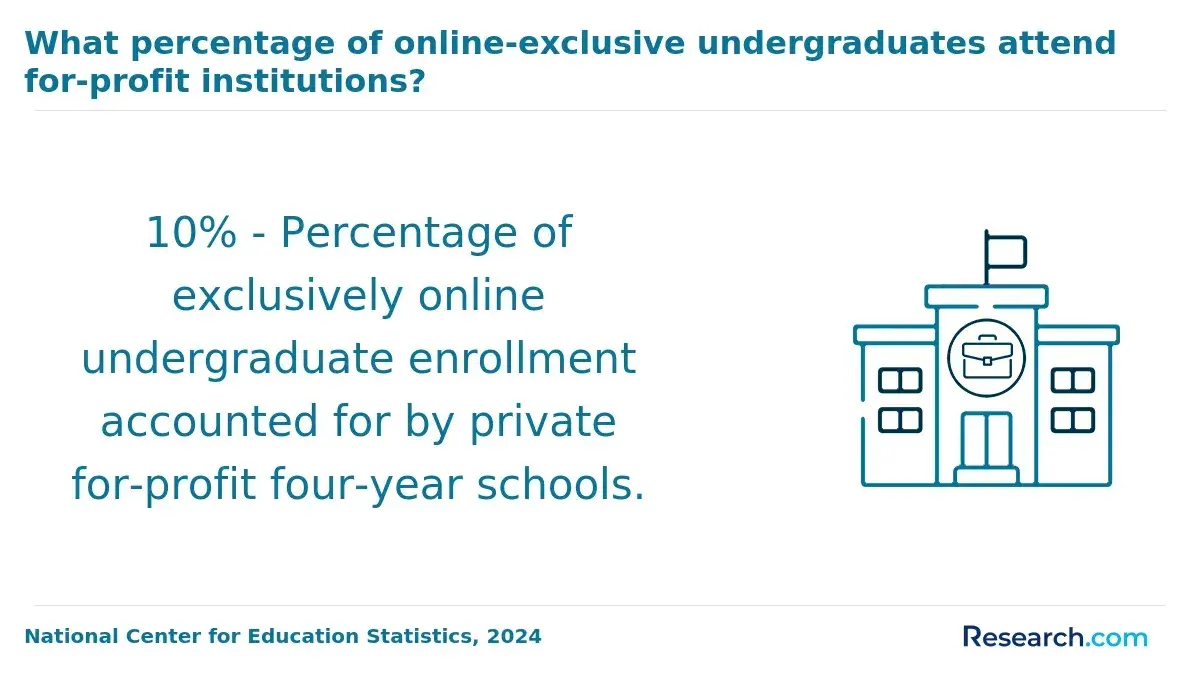
Online study can let you do coursework on weekends, but fixed deadlines, live sessions, exams, and placements may still conflict with work. Campus weekend classes offer a predictable meeting time and in-person access to instructors, but commuting and limited section availability can slow progress.
The delivery formats below differ most in how much control students have over their time. Compare the format of required courses, not just the college's general description of its online offerings.
| Format | Scheduling advantage | Trade-off to verify |
| Asynchronous online | Complete lessons outside scheduled class meetings | Weekly deadlines, exams, and possible in-person components |
| Live online | Avoid commuting for class | Required attendance at set times |
| Campus weekend | Predictable in-person class time | Travel and whether later required courses have weekend sections |
| Hybrid | Less frequent campus attendance | Labs or meetings that may occur on weekdays |
Students using military education benefits should also confirm how course format and enrollment affect their benefits. A military online college may be worth comparing, but its online label alone does not establish weekend access or benefit eligibility for a specific course load.
What Courses Do Weekend Associate Degree Programs Include?
Most associate programs combine general education with major courses. A weekend business student might take writing, mathematics, accounting, and management; an IT student might add networking and hands-on labs. Healthcare and nursing students may need anatomy, microbiology, or other sciences before they can enter a selective clinical sequence.
Course order can matter as much as course format. A prerequisite available only once a year can delay a part-time student, even if most classes meet on Saturdays. Ask an advisor for the catalog requirements and a sample part-time plan that identifies prerequisites, labs, and any internship or clinical hours.
What Are the Admission Requirements for Weekend Associate Programs?
Colleges commonly ask for an application and prior school records. Placement procedures, prerequisite grades, and minimum GPA rules vary; some schools use prior coursework or other measures instead of a standardized placement test. Admission to a college does not necessarily mean admission to a selective nursing or allied-health major.
If you have previous college credit, request an official evaluation before committing. Find out which credits satisfy degree requirements, which count only as electives, and how many credits you must complete at the new college. If a major admits students separately, ask when you can apply and what happens if you finish its prerequisites but do not receive a place.
How Long Do Weekend Associate Degrees Take and Cost?
Many associate degrees require about 60 credits, but programs with extensive technical, clinical, or prerequisite requirements may require more. A full-time student may finish a suitable program in roughly two years; weekend-only or part-time attendance can extend that timeline, particularly when a required class runs infrequently.
Transfer credits may shorten the remaining work only after the college accepts and applies them to the degree.
The College Board's 2024-25 average published tuition and fees of $4,050 for in-district public two-year students is a starting point for comparing prices, not an estimate of total degree cost. Check your residency rate, mandatory course fees, books, equipment, transportation, and the cost of extra terms.
Ask the financial aid office about aid eligibility, scholarships, payment plans, and employer tuition assistance; aid depends on individual circumstances and enrollment. A lower per-credit price may not save money if limited weekend offerings add terms.
What Careers Can Weekend Associate Degrees Lead To?
Match the program to an occupation before choosing its schedule. An applied business degree may support entry-level office or accounting-support work; IT coursework can prepare students to seek support roles; certain healthcare programs train for specific technical jobs.
Transfer-oriented psychology and criminal justice degrees more often serve as steps toward further education or employer-specific training.
Weekend availability should not drive you into a field that misses your goal. Compare degree requirements with actual job postings and, where relevant, alternatives such as certificates, apprenticeships, or easy degrees that pay well.
These are starting points for comparing pathways, not promises of easy coursework or high earnings. For regulated roles, verify licensing eligibility separately from graduation.
What Salaries and Job Outlook Apply to Associate Degree Careers?
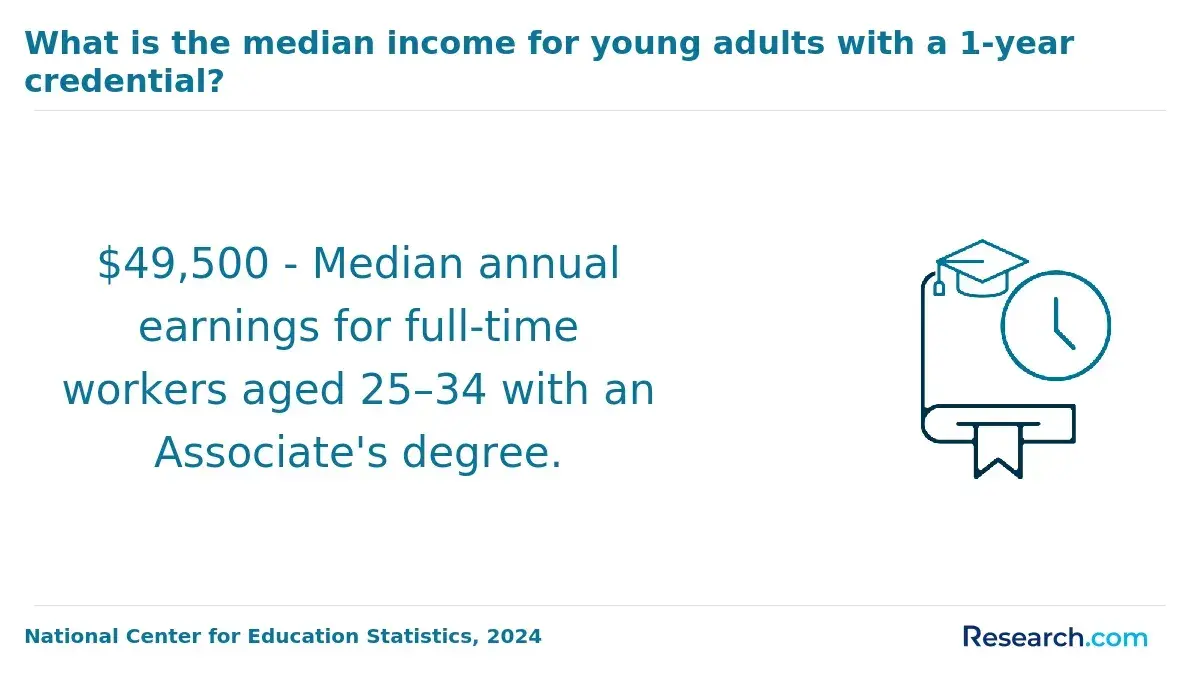
Occupational pay is useful for evaluating a career goal, but it is not the expected pay of everyone who earns a related associate degree. The U.S. Bureau of Labor Statistics reports a May 2024 median annual wage of $93,600 for registered nurses and projects 5% employment growth from 2024 to 2034.
That figure covers RNs across education and experience levels; an associate degree in nursing is one potential education route, and graduates must meet licensure requirements before practicing.
For business, IT, and other fields, compare the BLS occupation that matches the specific job you want rather than assigning one salary to an entire major. If earnings are your main criterion, best degrees to make money can provide broader context, but weigh the additional education, experience, and licensing each career may require.
How Can You Verify Accreditation, Licensing, and Program Quality?
A college's institutional accreditation is a first check, not the last. Confirm its status through the accreditor's directory or the U.S. Department of Education's accreditation database. For nursing and other regulated healthcare fields, check applicable program accreditation, state board approval, and whether graduates are eligible for the examination or credential required where you intend to work.
Before paying a deposit, request written answers about the next several terms:
- Are all required courses available in weekend-compatible formats?
- Who sets clinical or internship hours?
- What happens if a required weekend section is canceled?
Also ask for a complete cost estimate, an individualized transfer-credit evaluation, and any available completion or licensure-exam outcomes. Red flags include a "weekend program" advertised without a full course schedule, unclear placement arrangements, and claims that the degree alone guarantees a license, job, or salary.
Other Things You Should Know About
Possibly, but verify a complete course sequence with the college. Some programs require weekday labs, exams, internships, or clinical placements.
No. It may let you study on weekends, but deadlines and required live or in-person activities can still fall on weekdays.
Business, IT, and some transfer-oriented majors may have fewer required in-person placements than nursing or hands-on healthcare programs. The deciding factor is your college's actual schedule.
Not necessarily. Completion time depends on your course load, accepted credits, prerequisites, and how often required classes are offered.
References
- Fast Facts: Undergraduate graduation rates (40) | ed.gov https://nces.ed.gov/fastfacts/display.asp
- Cost of Attendance (Budget) | 2025-2026 Federal Student Aid Handbook https://fsapartners.ed.gov/knowledge-center/fsa-handbook/2025-2026/vol3/ch2-cost-attendance-budget
- Learn on Your Terms - Contra Costa College https://www.contracosta.edu/academics/flexible-schedule/
- Learning Modalities | Golden Gate University https://ggu.edu/learning-modalities/
- Evening and Weekend Track | dcc.edu https://www.dcc.edu/academics/evening-weekend/default.aspx
- How Long Are Community College Programs? | Edison State Community College https://www.edisonohio.edu/blog/how-long-are-community-college-programs
- How Online Courses Work & Resources - ASU Online https://asuonline.asu.edu/students/courses/
- Class Formats - Ivy Tech Community College https://www.ivytech.edu/classes/class-formats/
- Academic Options - Davidson-Davie Community College https://catalog.davidsondavie.edu/content.php