2027 Adjunct vs Full-Time Nursing Faculty Work: Contracts, Preparation Time, and Career Planning
Audited and Verified:
Our Editorial and Data Verification Process
Research.com uses government datasets, official education statistics and primary institutional information to support its career and degree guides. Our review process checks factual accuracy, occupational definitions, source dates and the requirements associated with the credentials discussed.
How This Article Was Fact-Checked
Our editorial team verifies salary estimates, employment projections, education requirements and program information against original data providers and official organizations. Salary figures are checked against the relevant occupational definitions and reporting periods. Information about licensure, accreditation and required in-person training is reviewed separately.
Fact-checked and verified on:

Co-Founder and Chief Data Scientist
An adjunct teaching offer can look like a manageable way for an experienced nurse to enter academia. A full-time position may offer greater stability but also brings advising, committees, and program responsibilities that are easy to overlook.
This guide is for RNs and APRNs weighing those options. It explains what to check in a faculty contract, how to estimate the work beyond scheduled class or clinical hours, and which qualifications matter for different teaching assignments—so you can compare an offer with your current job and longer-term goals.
Key Things You Should Know
- Adjunct work is generally contracted by course or term; full-time appointments may run for an academic year or 12 months. Neither title alone establishes benefits, renewal rights, or total workload.
- For a 15-week course, calculate preparation, grading, student support, and meetings in addition to scheduled teaching hours; clinical supervision also requires site travel and evaluation time.
- Faculty eligibility depends on the assignment, institution, state requirements, and nursing program standards. An MSN may fit many teaching roles, while some full-time or graduate-level positions require a doctorate.
What Is the Difference Between Adjunct and Full-Time Nursing Faculty?
Adjunct faculty are typically hired for a defined teaching assignment, such as a clinical group, simulation lab, or classroom course. Full-time faculty usually have a continuing set of teaching and program duties, though the length and security of their appointments vary. Neither "adjunct" nor "full-time" tells you whether a job is tenure-track.
This comparison identifies the work most likely to affect fit. An offer letter and workload policy—not the job title—determine the actual assignment.
| Decision factor | Adjunct appointment | Full-time appointment |
| Typical scope | One or more specified courses or clinical groups | Teaching plus advising, service, and potentially scholarship or administration |
| Schedule control | May fit around clinical employment, but assigned clinical days can be fixed | More institutional obligations, often scheduled across the week |
| Continuity | Future assignments may depend on enrollment and staffing | Usually a longer appointment, subject to its stated renewal terms |
| Career-building opportunities | Focused teaching experience and a chance to test the role | More sustained involvement in curriculum, mentoring, and governance |
A licensed RN who needs to finish a bachelor's degree before pursuing graduate educator preparation can explore flexible BSN completion routes for licensed RNs. Confirm whether the target faculty job actually requires the BSN, MSN, or another credential before enrolling.
How Do Nursing Faculty Contracts and Workloads Differ?
An adjunct contract may specify a course, term, payment schedule, and required meetings without guaranteeing another assignment. A full-time contract may be for nine, 10, or 12 months and may define teaching load, office hours, advising, service, scholarship, and summer expectations. Benefits, paid leave, promotion, and termination provisions vary by employer and appointment type.
Before accepting either job, request the offer letter, faculty handbook, and workload policy. Check who pays for clinical travel, orientation, required training, and canceled sections. Ask whether compensation changes when enrollment falls, a clinical site is lost, or you must supervise a replacement session. For a full-time role, find out whether advising and course coordination reduce the assigned teaching load or are added to it.
If a master's degree is needed for the positions you want, compare its cost with the likely contract terms rather than assuming more education will immediately secure full-time employment. Planning the cost of a BSN-to-MSN transition can help frame that investment, but the hiring institution must confirm that the completed degree meets its faculty requirements.
How Much Preparation Time Do Adjunct and Full-Time Faculty Need?
Scheduled contact hours are only one part of faculty work. A new classroom assignment may require lesson design, current evidence review, assessment writing, grading, accessibility adjustments, and student feedback. Clinical instructors must also learn site policies, coordinate with staff, observe students, document evaluations, and address safety concerns. Reusing an established course may reduce preparation, but it does not eliminate those duties.
Build a weekly estimate before comparing teaching pay with a clinical shift. For example, hypothetically, three hours of class, four hours of preparation, three hours of grading, and two hours of student support total 12 hours—not three. Over 15 weeks, that is 180 hours, before initial course setup or required meetings. Your first term may take longer, and a clinical course will have a different mix of hours.
Full-time faculty may prepare several courses simultaneously while handling advising and service. Adjuncts can face a particularly high first-term workload if they receive materials late or teach a course they have never delivered. Ask for the syllabus, learning platform access date, grading expectations, and available mentoring. A nurse considering post-master's DNP programs for non-bedside goals should also budget study time separately; a doctorate is not a substitute for adequate paid preparation time in a faculty offer.
Requirements depend on what and whom the faculty member teaches. Schools assess nursing education, current subject expertise, clinical experience, and teaching ability against state rules, institutional policy, and program accreditation standards. Many faculty roles call for graduate nursing preparation; a clinical or lab position may have a different minimum than a graduate-level classroom or faculty leadership position. A doctorate can strengthen eligibility for some full-time, graduate, or research-focused appointments but is not universally required.
Experience as a preceptor, simulation facilitator, or staff educator can demonstrate teaching potential, but it does not automatically satisfy academic degree requirements. Likewise, an education-focused MSN is relevant to curriculum and assessment, while an APRN specialty degree supplies different clinical expertise. Review the exact posting and ask which credentials are required on the start date versus preferred.
For someone entering nursing from another profession, ABSN programs with flexible admission requirements may be a route toward initial RN preparation, not a direct route to nursing faculty eligibility. Licensure, appropriate experience, and the qualifications for the eventual teaching assignment remain separate steps.
Start with the teaching role you want, not the highest degree available. An experienced RN seeking an initial clinical-instructor assignment should first check whether existing education and experience meet the school's requirements. An RN aiming to design courses or compete for broader faculty appointments may benefit from an MSN with nursing education coursework. A DNP is practice-focused doctoral preparation; a PhD is generally the more direct research-focused route for faculty whose work will center on original scholarship.
Those routes are not interchangeable at every school. Some positions require a doctorate regardless of whether it is a DNP or PhD; others specify a discipline, teaching specialty, or research record. Compare job postings from the institutions where you would realistically work before paying for another degree. Accessible entry routes to DNP study can inform an admissions comparison, but easier entry does not establish that a DNP fits your intended faculty appointment.
Often, yes—especially when faculty supervise direct patient care. Clinical teaching commonly requires an active, appropriately authorized nursing license in the jurisdiction of the clinical site, along with any site-specific onboarding. Classroom-only requirements can differ by state, school, discipline, and position. Do not assume that a compact privilege, an out-of-state license, or a graduate degree satisfies every teaching assignment.
Ask the employer which license or practice authorization it requires, where students will be placed, and whether the role includes patient-care supervision. If you are considering a clinical specialty instead of teaching, a credential such as one reached through time-efficient PMHNP certificate pathways serves a different purpose: APRN education and eligibility must be evaluated under the applicable certification and state requirements, not treated as a general faculty license.
Online teaching can remove a commute without making the job asynchronous. Faculty may still lead live sessions, grade on a fixed cycle, hold student conferences, and monitor participation. A campus-based role may add lab setup and travel; a hybrid role can require both online instruction and scheduled simulation or clinical-site visits. Clinical supervision remains tied to approved sites and oversight arrangements regardless of where lectures are delivered.
Compare the required live hours, student-to-faculty workload, time zones, technology support, clinical travel, and who resolves placement problems. Ask whether online course materials already exist and whether faculty receive training and paid time to adapt them. If you are weighing teaching against an online clinical-specialty pathway, accelerated online PMHNP MSN programs lead toward a different role and may still have scheduled learning and supervised clinical requirements.
Separate three sources of requirements: the institution's employment policies, the state board of nursing's rules for nursing education and clinical instruction, and the applicable nursing program accreditor's faculty standards. Institutional accreditation and nursing program accreditation address different scopes; neither replaces state requirements. Standards may address faculty education, expertise, development, and sufficiency, but their application depends on the program and assignment.
Ask the hiring program which rules it used to determine your eligibility and whether any conditions—such as completing graduate coursework—will be written into the appointment. Check the specific program's accreditation status and the relevant board's requirements rather than relying on an institution-wide claim. If your longer plan begins with initial nursing education, remember that ABSN programs with flexible admission requirements must also be evaluated for their own approval and accreditation status; admissions flexibility says nothing about eventual faculty eligibility.
Adjunct offers may pay by course, credit, clinical day, or hour; full-time offers are more commonly stated as an annual salary. These figures cannot be compared fairly until you account for preparation, grading, meetings, contract length, benefits, and income lost from clinical work. An adjunct rate may exclude unpaid work between terms, while a full-time annual salary may cover a nine-month or 12-month appointment with different summer duties.
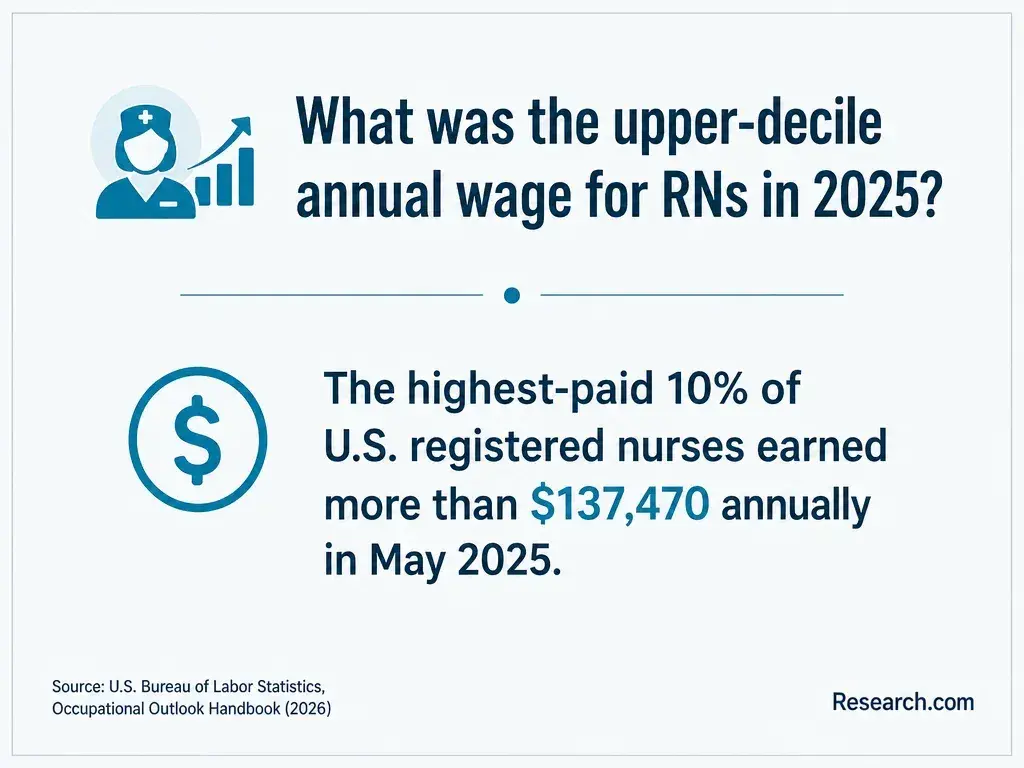
The U.S. Bureau of Labor Statistics reports national wages for nursing instructors and teachers, postsecondary, but that occupation-wide measure does not separate adjunct from full-time pay or predict an individual offer. Use the latest published wage figures as market context, then compare local written offers. For a pay-per-course job, divide the offered amount by your estimated total hours. A hypothetical $4,500 course payment for 180 hours of work equals $25 per hour before taxes and expenses; it is not a typical faculty rate.
Also compare the opportunity cost of leaving clinical practice. If the alternative is graduate preparation for an APRN role, online PMHNP tuition and fee considerations may help estimate education costs, but neither path guarantees a particular salary. Weigh the actual cost, likely work schedule, and role you want—not an occupation-wide wage alone.
How Can Nurses Plan a Long-Term Nursing Faculty Career?
Adjunct work can be a useful trial if you can absorb variable assignments and obtain meaningful feedback. A full-time search makes more sense when you want sustained curriculum responsibility, mentoring, and institutional service—and the contract supports those goals. Before committing to a degree or leaving clinical employment, identify several plausible jobs and compare their required qualifications with your current credentials.
Use the following sequence to turn that comparison into a career plan:
- Choose the setting and assignment you want: clinical supervision, simulation, undergraduate classroom teaching, graduate teaching, or research-focused faculty work.
- Collect local postings and ask hiring programs about degree, license, experience, scholarship, and teaching expectations.
- Build evidence of teaching readiness through approved precepting, staff development, guest instruction, or supervised teaching; request feedback you can ethically include in an application.
- Compare written offers using total expected hours, benefits, renewal terms, professional development support, and effects on your clinical career.
If direct patient care and advanced clinical practice interest you more than faculty work, compare that goal separately with lower-cost options for future nurse practitioners. An education degree is not required merely to test whether you enjoy teaching, and an APRN degree should not be pursued solely as a presumed shortcut to a faculty appointment.
Other Things You Should Know About Nursing
Sometimes. Check each contract for outside-employment rules, scheduling conflicts, and expectations for responding to students. Holding multiple appointments does not guarantee compatible clinical days.
Often, if schedules and employer policies permit it. Account for fixed clinical days, grading deadlines, fatigue, and any conflict-of-interest rules before accepting both roles.
It can support an application by showing how you coached and evaluated learners. Document the duties and feedback, but confirm that you separately meet the position's degree, license, and experience requirements.
Payment and reassignment depend on the contract and school policy. Ask in writing about cancellation deadlines, compensation for work already completed, and whether another section is available.
- Faculty Procedures Manual - myPBA https://my.pba.edu/ICS/Portlets/ICS/Portlet.Resources/ViewHandler.ashx
- School of Nursing: Policy on Faculty Workload | University of North Carolina at Chapel Hill https://policies.unc.edu/TDClient/2833/Portal/KB/Article/151981/School-of-Nursing-Policy-on-Faculty-Workload
- Credentials for Initial Assignment of Rank for Adjunct Faculty | sps.nyu.edu https://www.sps.nyu.edu/about/policies-and-procedures/faculty-policies-and-procedures/credentials-for-intial-assignment-of-rank-for-adjunct-faculty.html
- Full-time Curriculum Working Hours and Workload | isothermal.edu https://isothermal.edu/manual/human-resources/teaching-load-fulltime.html
- Staffing and faculty compensation in associate degree nursing education programs - ScienceDirect https://www.sciencedirect.com/science/article/pii/S1557308723002020
- Texas Education Code Section 51.943 - Renewal of Faculty Employment Contracts | Texas. Public. Law https://texas.public.law/statutes/tex._educ._code_section_51.943
- Adjunct Faculty Contract Process and Details - Nursing https://nursing-apu.happyfox.com/kb/article/55-adjunct-faculty-contract-process-and-details/
- Academic vs Clinical Nurse Educator: Roles, Salary & Paths https://www.nurseeducator.com/articles/academic-vs-clinical-nurse-educators/
- Adjunct Faculty in the Higher Education Workforce | CUPA-HR https://www.cupahr.org/resource/adjunct-faculty-in-the-higher-education-workforce/