2027 Accredited Online Nurse Education Degree Programs With No GRE or GMAT Requirements

Co-Founder and Chief Data Scientist
Many working nurses want to move into teaching but do not want a standardized test to delay graduate school. That matters because AACN reported that U.S. nursing schools turned away 65,766 qualified applications in 2023, often due to faculty shortages. Accredited online nurse education programs with no GRE or GMAT requirements can help experienced RNs enter educator pathways faster.
This guide explains program types, admissions trade-offs, accreditation, costs, and career outcomes so you can compare options based on quality and fit, not just test flexibility.
Key Things You Should Know
- Many accredited online MSN nurse educator, post-master's certificate, DNP, and EdD programs no longer require the GRE or GMAT, but they still evaluate RN licensure, GPA, clinical experience, recommendations, and writing ability.
- Skipping a standardized test can save roughly $220 to $275 in exam fees before prep costs, but it does not make a weak application competitive if the program expects strong professional evidence.
- Labor demand remains relevant: BLS data published for 2024 lists registered nurses at a $93,600 median annual wage, while AACN's 65,766 turned-away applications signal continued need for qualified nurse faculty and clinical educators.
Which Accredited Online Nurse Education Degree Programs Do Not Require the GRE or GMAT?
Accredited online nurse education degree programs without GRE or GMAT requirements are most often offered at the master's, post-master's certificate, and doctoral levels. The most common path is an MSN with a nurse educator concentration, but some nurses choose a DNP or EdD when they want leadership, curriculum design, academic administration, or doctoral-level teaching roles.
The table below summarizes common no-GRE or no-GMAT online nurse education options that students typically compare. Admissions policies can change, so treat the test requirement as something to verify directly with the school before submitting an application.
| Program example | Typical credential | Accreditation to verify | Common test policy | Best fit |
| Online MSN in Nursing Education | Master of Science in Nursing | CCNE or ACEN program accreditation plus institutional accreditation | Often no GRE or GMAT | RNs who want to teach in clinical, academic, staff development, or simulation settings |
| RN-to-MSN Nurse Educator | Bridge MSN pathway | CCNE or ACEN program accreditation plus institutional accreditation | Often no GRE or GMAT | Experienced RNs with an associate degree or non-nursing bachelor's background who want a graduate route |
| Post-Master's Nurse Educator Certificate | Graduate certificate | Institutional accreditation; nursing program accreditation when applicable | Usually no GRE or GMAT | MSN-prepared nurses who want educator preparation without completing a second full degree |
| DNP with education, leadership, or academic practice electives | Doctor of Nursing Practice | CCNE or ACEN program accreditation plus institutional accreditation | Commonly no GRE, waived, or optional | Advanced practice or MSN-prepared nurses seeking practice leadership and teaching credibility |
| EdD in Nursing Education or Health Professions Education | Doctor of Education | Institutional accreditation; nursing-specific accreditation may not apply if housed outside a nursing school | Often no GRE or test-optional | Nurses focused on curriculum, research translation, academic leadership, and adult learning |
In practical terms, "no GRE or GMAT" may mean one of three things: the school never asks for scores, the program is test-optional, or the program offers waivers to applicants who meet GPA or experience thresholds. A test-free program is the simplest route because no applicant is expected to submit scores, while a test-optional program may still allow strong scores to support a borderline academic record.
Examples of online nurse education programs that commonly advertise no standardized graduate test requirement include competency-based MSN education pathways, public university MSN nurse educator tracks, and online graduate certificates for MSN-prepared nurses. The safer strategy is to confirm three items before applying: the program's current test policy, whether the nursing program is accredited, and whether the online format is authorized in your state.
Why Have Accredited Online Nurse Education Degree Programs Eliminated GRE and GMAT Requirements?
Many nursing schools have moved away from GRE and GMAT requirements because standardized test scores are not the only, or necessarily the strongest, evidence that an experienced RN can succeed in a nurse educator program. Graduate nursing admissions committees often care more about professional judgment, academic writing, clinical reasoning, leadership readiness, and the ability to teach adult learners.
The shift also reflects broader enrollment and workforce pressures. When nursing programs struggle to find enough faculty, schools have an incentive to reduce barriers that do not clearly predict educator success. Removing a test requirement can help qualified nurses apply sooner, especially those balancing full-time clinical work, family responsibilities, and rotating schedules.
There is also an equity and access argument. Test preparation can be expensive and time-consuming, and exam scheduling may be difficult for rural nurses, military-affiliated nurses, and shift workers. A no-GRE admissions model lets programs evaluate applicants through materials that are more directly connected to nursing education practice.
That does not mean standards disappear. Instead, the evidence shifts from a single exam score to a broader admissions file. Programs may place more weight on prior GPA, BSN coursework, RN licensure history, professional recommendations, a résumé, a goals statement, and sometimes an interview or writing sample.
What Admissions Criteria Matter Most Without GRE or GMAT Scores?
Without GRE or GMAT scores, admissions committees look for proof that you can handle graduate-level nursing coursework and contribute meaningfully to education-focused practice. The most important materials usually show academic readiness, professional maturity, and a clear reason for pursuing nurse education.
The table below compares common admissions factors and how they are usually interpreted in a no-test review. Use it to identify where your application is strong and where you may need to add context.
| Admissions factor | Why it matters | How to strengthen it |
| Active RN license | Shows legal eligibility and current professional standing | Confirm that your license is unencumbered and valid in the state required by the program |
| Undergraduate GPA | Signals readiness for graduate-level reading, writing, and evidence-based practice | Explain grade trends, highlight recent strong coursework, or ask about provisional admission if needed |
| BSN or bridge eligibility | Determines which degree pathway you can enter | Verify whether the program accepts ADN-prepared RNs, non-nursing bachelor's degrees, or transfer credits |
| Clinical experience | Gives credibility for teaching students, patients, staff, or new nurses | Emphasize precepting, charge nurse duties, unit education, quality improvement, or specialty experience |
| Personal statement | Replaces part of what tests cannot show: goals, fit, communication, and motivation | Connect your nursing experience to specific educator goals, not just a general interest in teaching |
| Recommendations | Provides third-party evidence of professionalism and graduate potential | Choose supervisors, faculty, or clinical leaders who can describe your teaching, leadership, and reliability |
If your GPA is below the preferred threshold, do not assume a no-GRE program is out of reach. Some schools consider recent graduate coursework, professional certifications, leadership roles, or a strong writing sample. In a test-optional program, submitting scores may still help if they are clearly above the program's typical range, but weak scores rarely strengthen an otherwise solid nursing application.
Applicants who are still exploring adjacent health graduate programs may notice similar holistic admissions trends in fields such as an online masters degree in nutrition, where schools increasingly balance academic records with professional experience and career goals.
Are No-GRE or No-GMAT Online Nurse Education Degree Programs Easier to Get Into?
No-GRE and no-GMAT online nurse education programs are usually easier to apply to, but not automatically easier to get into. The application process may be faster because you avoid exam registration, preparation, and score reporting. However, selective programs can still deny applicants who lack a strong academic record, clear goals, RN experience, or a convincing fit with the curriculum.
The key difference is admissions friction. A test-free program removes one barrier, which can be especially valuable for working nurses who already have years of clinical performance to demonstrate readiness. But once the application is complete, the school still has to decide whether you are likely to succeed in graduate-level nursing education coursework.
Use the comparison below to understand how admissions pathways differ. This can help you decide whether to skip scores, submit optional scores, or consider a waiver-based program.
| Admissions model | What it means | When it helps | Potential drawback |
| Test-free | No applicant submits GRE or GMAT scores | Best for experienced nurses with strong professional evidence | You cannot use high scores to offset a weaker GPA |
| Test-optional | You decide whether to submit scores | Useful if your scores are strong and add something positive | Applicants may be unsure whether withholding scores creates doubt |
| Test waiver | Scores are waived only if you meet specific conditions | Good for applicants with a required GPA, prior graduate credits, or extensive experience | You may need extra documentation to prove waiver eligibility |
| Test-required | Scores are mandatory for admission review | May help applicants who test well and want another academic signal | Adds cost, time, and scheduling pressure |
If you have a strong GPA, relevant teaching or precepting experience, and a focused career goal, a test-free program can be a smart choice. If your GPA is weak but you are a strong standardized test taker, a test-optional or test-required program may give you another way to show readiness.
Does Skipping the GRE or GMAT Affect Academic Quality or Accreditation?
Skipping the GRE or GMAT does not determine academic quality by itself. Accreditation, curriculum design, faculty qualifications, student support, clinical or practicum expectations, and graduate outcomes are much better indicators of whether an online nurse education program is credible.
For nursing programs, the two major specialized accreditors to verify are the Commission on Collegiate Nursing Education and the Accreditation Commission for Education in Nursing. Institutional accreditation also matters because it affects federal financial aid eligibility, credit transfer, employer recognition, and admission to later graduate study.
No-GRE admissions can coexist with rigorous coursework. Nurse education students commonly study curriculum development, assessment and evaluation, teaching strategies, simulation, pathophysiology or pharmacology refreshers, evidence-based practice, leadership, and practicum-based educator experiences. Doctoral programs may add scholarship, systems leadership, policy, quality improvement, and advanced teaching or academic leadership components.
If you are comparing master's and doctoral pathways, remember that the degree level matters more than the absence of a test. Nurses considering practice leadership, faculty advancement, or executive roles may want to compare nurse educator programs with the best DNP programs to see whether a practice doctorate better matches their long-term goals.
Which Students Benefit Most From Online Nurse Education Degree Programs Without GRE or GMAT Requirements?
No-GRE and no-GMAT online nurse education programs are especially useful for experienced nurses whose professional records already show readiness for graduate study. They can also benefit applicants who are returning to school after years in practice and do not want a test score to overshadow current clinical competence.
The students who benefit most usually share several traits. The list below can help you decide whether test-free admission fits your situation or whether another pathway may be better.
- Working RNs with preceptor, charge nurse, staff development, simulation, or patient education experience who can show teaching potential through practice.
- BSN-prepared nurses with solid undergraduate performance who do not need a test score to prove academic readiness.
- Rural, military-affiliated, night-shift, or travel nurses who need online flexibility and cannot easily schedule exam prep or testing.
- MSN-prepared nurses who want a post-master's nurse educator certificate rather than a second full graduate degree.
- Nurses who are more interested in curriculum, clinical instruction, academic advising, or professional development than in test-heavy admissions competition.
These programs may not be ideal for applicants who need a standardized score to compensate for a low GPA, limited recent coursework, or an unclear professional direction. In those cases, it may be smarter to complete a graduate-level statistics or nursing theory course, earn a certification, improve the personal statement, or ask admissions whether provisional entry is available.
Nurses who are unsure whether they want to teach nursing specifically or move into broader wellness, exercise science, or health promotion education may also compare nurse educator routes with a kinesiology degree online before committing to a specialized nursing education curriculum.
How Do Tuition and Financial Aid Compare for No-GRE Online Nurse Education Degree Programs?
No-GRE online nurse education programs are not automatically cheaper or more expensive than test-required programs. Tuition depends more on institution type, residency rules, credit load, transfer policy, program length, and whether the school charges online fees. The main immediate savings is avoiding test-related costs, which can include exam fees, score reports, prep materials, and lost time.
Graduate nursing students should focus on total program cost rather than per-credit tuition alone. A lower per-credit price can be offset by more required credits, technology fees, practicum travel, books, background checks, or repeated clinical compliance costs.
The table below shows cost categories to compare before enrolling. It is designed to help you estimate the full financial commitment, not just the advertised tuition rate.
| Cost factor | Why it matters | Question to ask the school |
| Tuition per credit | Sets the baseline cost of the degree | Is tuition the same for online, out-of-state, and part-time students? |
| Total required credits | Determines whether a low per-credit rate actually leads to lower total cost | How many credits are required after transfer or prior graduate credit review? |
| Fees | Can add meaningful cost beyond tuition | Are there online, technology, clinical placement, graduation, or assessment fees? |
| Practicum expenses | Nurse educator programs may require local site coordination | Does the school help secure educator practicum sites, or is the student responsible? |
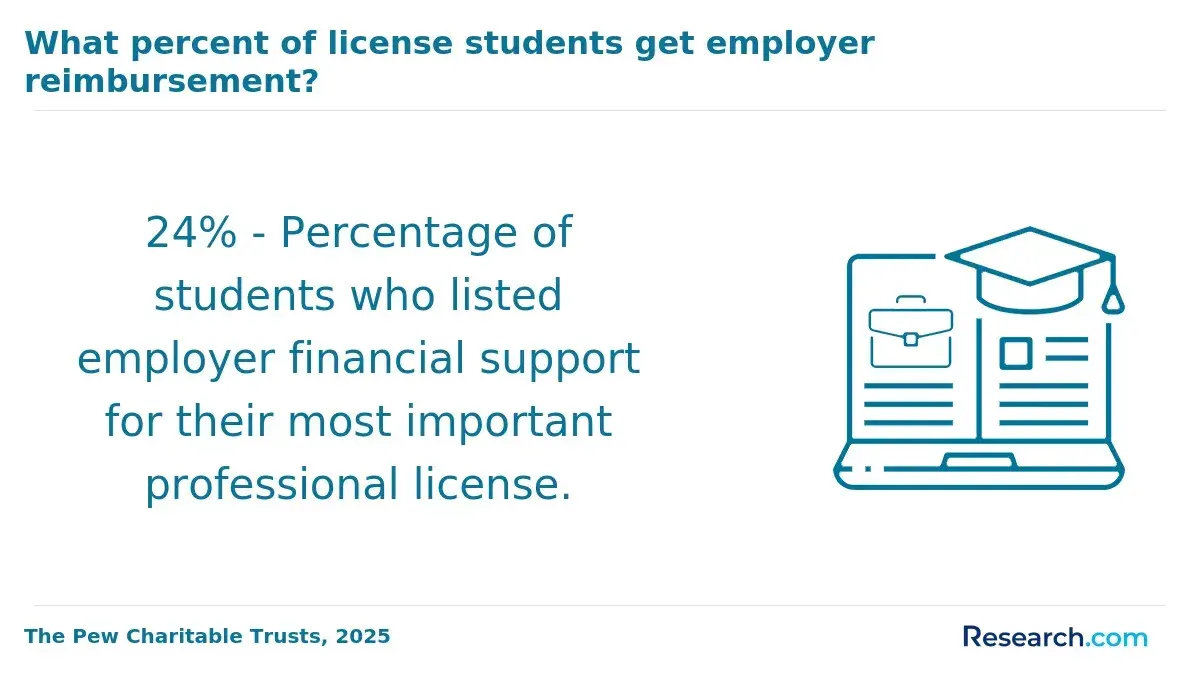
| Employer tuition assistance | Hospitals and health systems may subsidize graduate education | Does the program schedule allow reimbursement deadlines to be met? |
| Federal loans | Eligible graduate students may use federal aid at accredited institutions | Is the institution eligible for federal financial aid, and what is the estimated aid package? |
A useful benchmark is the federal graduate unsubsidized loan limit: eligible graduate students may borrow up to $20,500 per academic year under current federal rules, subject to aggregate limits. That figure helps you judge whether tuition can be managed with federal loans alone or whether you may need employer support, scholarships, payment plans, savings, or Grad PLUS loans.
Because healthcare graduate programs vary widely in cost structure, it can help to compare nursing education tuition with other professional healthcare pathways, including PharmD programs, especially if your long-term goal involves interprofessional teaching or academic health leadership.
What Career Outcomes Can Graduates Expect From No-GRE Online Nurse Education Degree Programs?
Employers generally care about your nursing license, degree, accreditation, teaching experience, clinical background, and ability to support learners. They typically do not ask whether your graduate program required the GRE or GMAT. The credential and your demonstrated educator skills matter much more than the admissions test policy.
Graduates of online nurse education programs may pursue roles in academic, clinical, and organizational settings. Common outcomes include clinical nurse educator, staff development specialist, simulation educator, adjunct nursing faculty, patient education coordinator, professional development practitioner, and eventually full-time faculty or academic leadership roles, depending on degree level and experience.
BLS data published for 2024 lists registered nurses at a $93,600 median annual wage, which is useful context because many nurse educator candidates compare teaching roles with continued clinical practice. Academic salaries, hospital educator salaries, and contract structures vary widely, so the best financial decision depends on whether you want schedule stability, faculty advancement, leadership opportunities, or continued bedside earning potential.
Career value is strongest when the program helps you build evidence of teaching competence. Look for courses and practicum experiences that produce usable work samples such as lesson plans, evaluation tools, simulation scenarios, curriculum maps, learner assessments, and evidence-based teaching projects. These artifacts can make your résumé stronger than a transcript alone.
Some nurses also use educator preparation as a bridge into interdisciplinary health teaching, workforce training, or wellness education. If you are comparing broader online learning formats before choosing a nursing-specific pathway, research on accredited self-paced online colleges can help you understand how flexible academic models differ.
What Common Application Mistakes Reduce Admission Chances to No-GRE Online Nurse Education Degree Programs?
The biggest mistake is assuming that "no GRE" means "low standards." In reality, test-free programs often look more closely at the rest of the application, especially the personal statement, résumé, GPA, recommendations, and fit with the program's educator mission.
Before applying, watch for the mistakes below. Avoiding them can make your application clearer, stronger, and easier for an admissions committee to evaluate.
- Choosing a program only because it does not require a test, without checking CCNE, ACEN, and institutional accreditation.
- Submitting a generic personal statement that says you like teaching but does not explain your educator goals, population of interest, or relevant nursing experience.
- Ignoring GPA rules, prerequisite requirements, or bridge-program conditions until late in the application process.
- Using recommenders who know you personally but cannot speak to your clinical judgment, professionalism, leadership, or teaching potential.
- Failing to explain academic weaknesses, employment gaps, license issues, or major career transitions when the application gives you space to provide context.
- Overlooking state authorization, practicum placement rules, or whether the program accepts students from your state.
- Comparing only tuition per credit instead of total credits, fees, transfer policies, and time to completion.
Another red flag is an online program that emphasizes easy admission but provides little information about accreditation, faculty qualifications, practicum expectations, student support, or graduate outcomes. If admissions flexibility is the main selling point and academic quality is hard to verify, keep looking.
How Should Students Compare Accredited Online Nurse Education Degree Programs Without GRE or GMAT Requirements?
The best no-GRE online nurse education program is not simply the one with the easiest application. It is the one that matches your license status, academic background, schedule, budget, teaching goals, and long-term career plan.
Use the following steps to compare programs in a practical order. This approach helps you avoid being distracted by admissions convenience before confirming quality and fit.
- Verify institutional accreditation and, for nursing degrees, confirm whether the program holds CCNE or ACEN accreditation.
- Confirm the current test policy in writing, including whether the program is test-free, test-optional, or waiver-based.
- Match the credential to your goal: MSN for educator entry, certificate for MSN-prepared nurses, DNP for practice leadership, or EdD for academic and curriculum leadership.
- Check whether the program is authorized in your state and whether any practicum placements can be completed where you live or work.
- Compare total cost, including credits, fees, books, compliance costs, travel, and lost work time.
- Review course content for curriculum design, assessment, teaching strategies, simulation, evaluation, diversity in learning, and evidence-based education practice.
- Ask about faculty support, advising, writing assistance, online library access, and help with practicum planning.
- Look for career-relevant outputs, such as teaching portfolios, simulation projects, curriculum maps, or practicum evaluations.
- Compare completion time and scheduling format, especially if you work rotating shifts or need part-time enrollment.
- Speak with admissions or program faculty before applying, and ask how competitive applicants are evaluated without GRE or GMAT scores.
If you are deciding between several healthcare education pathways, include opportunity cost in the comparison. For example, a nurse educator program may fit if you want to teach nursing students or clinical staff, while an online masters degree in nutrition may be more relevant for dietetics, wellness education, or community nutrition roles.
A strong final shortlist should include at least three programs: one that is highly affordable, one that offers the best schedule fit, and one that has the strongest curriculum or faculty alignment with your goals. If one program performs well in all three areas, it is likely a better choice than a school selected only because it removed the GRE or GMAT.
Other Things You Should Know About Nurse Education
Many academic and clinical nurse educator roles prefer or require an MSN, especially for teaching in nursing programs. Some staff development roles may consider BSN-prepared nurses with strong experience, but graduate education usually improves eligibility for formal educator positions.
An MSN is a full graduate degree, while a nurse educator certificate is usually a shorter credential for nurses who already hold a graduate nursing degree. A certificate can add education-focused coursework without repeating an entire MSN program.
Many require an educator practicum rather than traditional bedside clinical hours. This may involve teaching, curriculum work, simulation, evaluation, or supervised academic and clinical education activities.
Possibly, but requirements vary by employer and course level. Online teaching roles often require graduate preparation, teaching experience, comfort with learning management systems, and sometimes prior academic faculty experience.
References
- Nursing Degree You Need to Become an RN https://www.allnursingschools.com/registered-nursing/degrees/
- Frequently Asked Questions https://www.aacnnursing.org/essentials/tool-kit/faqs
- Guide to Online Nursing Programs | OEDb.org https://www.oedb.org/rankings/online-nursing-programs/
- Online Nursing Schools in NY: Searching for Top Programs https://www.edumed.org/online-schools/nursing-rn-programs/new-york/
- Online & Traditional Nurse Educator Programs Near Me https://www.nurseeducator.com/schools/
- Top No GRE Online NP Programs 2026 (Comprehensive Rankings) https://www.npschools.com/rankings/all-no-gre-online-np-programs
- Pardon Our Interruption https://www.coloradotech.edu/degrees/masters/nursing
- 7 Things to Consider When Getting a Nursing Degree Online https://onlinedegrees.elmhurst.edu/blog/seven-things-consider-when-picking-online-nursing-program
- Online MSN Programs No GRE Required (Master of Science in Nursing) https://www.onlineeducation.com/nursing/faqs/online-msn-programs-no-gre-required
- Are There No-GRE Online Nursing Administration Programs? https://www.mhaonline.com/faq/no-gre-nursing-administration-programs