2027 Accredited Online Nurse Education Degree Programs for Working Adults: Flexible, Part-Time, and Self-Paced Options

Co-Founder and Chief Data Scientist
Choosing an online nurse education degree while working full time means weighing accreditation, clinical or practicum requirements, cost, and schedule fit. Demand is one reason this decision matters: BLS projections published in 2024 estimate 17% employment growth for postsecondary nursing instructors from 2023 to 2033, much faster than average. This guide is for RNs, BSN-prepared nurses, and graduate-level nurses comparing accredited online programs. You will learn how part-time, full-time, asynchronous, and self-paced formats differ so you can choose a program that fits your work schedule and long-term teaching goals.
Key Things You Should Know
- Accreditation should be your first filter: look for institutional accreditation plus nursing program accreditation such as CCNE, ACEN, or CNEA when applicable, because employers, certification bodies, and financial aid rules may depend on it.
- Flexible does not always mean low workload: a 6-credit graduate term can require about 18 hours per week using the federal credit-hour expectation, while part-time study may take 2 to 4 years depending on credits, practicum hours, and course availability.
- Cost comparisons should use total credits, not only per-credit tuition; for example, 36 credits at $600 per credit equals $21,600 before fees, and accepting 6 to 12 transfer credits can reduce both time and tuition if the program permits it.
What Is an Accredited Online Nurse Education Degree Program and Why Does Accreditation Matter?
An accredited online nurse education degree program prepares licensed nurses to teach in academic, clinical, simulation, patient education, or staff development settings. Most options are graduate programs, commonly a Master of Science in Nursing with a nurse educator concentration, a post-master's nurse educator certificate, or a Doctor of Nursing Practice with an education-focused pathway. Some RN-to-MSN or BSN-to-MSN programs allow working RNs to move into graduate-level nursing education without relocating.
Accreditation matters because it is a quality-control signal and a practical eligibility requirement. Institutional accreditation applies to the college or university. Programmatic nursing accreditation applies to the nursing program itself and is commonly granted by CCNE, ACEN, or CNEA. For working adults, this is not just a technical detail: it can affect access to federal financial aid, transfer-credit acceptance, employer tuition reimbursement, certification eligibility, and whether future schools or employers recognize the degree.
Accreditation checks are especially important in online health programs because "online" can describe anything from a respected university program to a low-support, nonaccredited option. The same logic applies across health-related online education, whether you are comparing nurse educator pathways or a kinesiology degree online: verify the school, the program, and any state authorization rules before applying.
The table below summarizes the main accreditation and recognition checkpoints. Use it to separate legitimate program quality indicators from marketing claims that sound reassuring but may not carry much weight.
| Checkpoint | What It Means | Why It Matters for Working Adults |
| Institutional accreditation | The college or university is accredited by a recognized institutional accreditor. | Often required for federal aid, employer reimbursement, and future transfer or doctoral study. |
| Nursing program accreditation | The nursing program is accredited by a nursing accreditor such as CCNE, ACEN, or CNEA. | Signals nursing-specific review of curriculum, faculty, outcomes, and student learning. |
| State authorization | The school is authorized to offer online education to students in your state. | Important if you live outside the school's home state or plan to complete a practicum locally. |
| Certification alignment | The curriculum supports nurse educator competencies and may help prepare for certification. | Useful if you plan to pursue credentials such as Certified Nurse Educator after meeting experience rules. |
| Employer recognition | Hospitals, colleges, or healthcare systems recognize the credential for teaching or staff development roles. | Can influence promotion, tuition reimbursement, and whether the degree supports your career goal. |
Before enrolling, confirm accreditation directly through the accreditor's database and the school's catalog, not only through an admissions brochure. A strong program should clearly state its accreditation status, practicum expectations, state authorization limitations, faculty qualifications, and whether the degree is designed for academic teaching, clinical education, or both.
Which Flexible Nurse Education Degree Formats Are Best for Working Adults: Part-Time, Full-Time, or Self-Paced?
The best format depends on your weekly availability, financial tolerance, and how quickly you need the credential. Working adults usually compare four format features: course load, live attendance requirements, pacing rules, and the amount of control they have over deadlines. A program can be online and still feel rigid if it requires frequent live classes, fixed practicum windows, or lockstep cohort progression.
Use the table below to compare the main online formats. The key question is not which format is "best" overall, but which trade-off you can realistically sustain while working as a nurse.
| Format | Typical Fit | Main Advantage | Main Trade-Off |
| Part-time online | RNs working full time, parents, shift workers, and learners paying as they go. | Lower weekly workload and more room for family or clinical schedules. | Longer time to graduation and possible tuition increases over time. |
| Full-time online | Students who can reduce work hours or use employer support, savings, or grants. | Faster completion and quicker entry into educator roles. | Higher weekly workload, greater risk of burnout, and less flexibility during practicum terms. |
| Asynchronous online | Students with rotating shifts or unpredictable schedules. | Coursework can usually be completed outside set class meeting times. | Deadlines still apply, and group projects may require coordination. |
| Synchronous online | Students who want live faculty interaction and structured class meetings. | More real-time discussion, accountability, and community. | Live sessions may conflict with evening, weekend, or rotating nursing shifts. |
| Self-paced or competency-based | Experienced nurses with strong self-direction and prior graduate-level readiness. | Potential to move faster through familiar material. | Requires high discipline, and some programs set term, subscription, or maximum-completion limits. |
Self-paced programs can be appealing, but they are not automatically easier. If you are comparing self-paced education models broadly, reviewing how accredited self-paced online colleges structure deadlines, faculty access, and assessment windows can help you ask better questions of nursing schools.
For most full-time nurses, part-time asynchronous study is the safest starting point because it provides schedule control without depending entirely on self-motivation. Full-time study may make sense if your employer gives protected education time, you can temporarily reduce shifts, or your target role requires the degree quickly. Self-paced study can work well for highly organized learners, but it is risky if you need frequent faculty reminders, peer interaction, or a fixed weekly rhythm.
Before choosing a format, ask the school these questions. They will reveal whether the advertised flexibility matches the reality of the program.
- Are courses asynchronous, synchronous, or a mix of both?
- How many courses do working students usually take per term?
- Are there required live sessions, residencies, simulation days, or weekend intensives?
- Can I pause for one term without losing my place in the program?
- Are practicum hours arranged around my work schedule, or do they require weekday availability?
- Does "self-paced" mean I can accelerate, or only that I can complete weekly work at any time before fixed deadlines?
What Are the Admission Requirements for Accredited Online Nurse Education Degree Programs?
Admission requirements vary by degree level, but accredited online nurse education programs usually expect applicants to be licensed nurses with prior academic preparation in nursing. The most common pathway is a BSN-to-MSN nurse educator program. Post-master's certificates usually require an MSN, while doctoral programs may admit BSN- or MSN-prepared nurses depending on the track.
The table below shows typical admission requirements by program type. Always confirm details with each school because GPA thresholds, license rules, and clinical experience expectations vary.
| Program Type | Common Applicant Profile | Typical Requirements |
| RN-to-MSN nurse educator pathway | Licensed RN with an ADN or nursing diploma, often with bridge coursework. | Active RN license, prior nursing credits, transcripts, professional experience, and completion of BSN-equivalent requirements. |
| BSN-to-MSN nurse educator | BSN-prepared RN seeking teaching, clinical education, or faculty preparation. | Active RN license, accredited BSN, transcripts, GPA minimum, resume, references, and goal statement. |
| Post-master's nurse educator certificate | MSN-prepared nurse adding education-focused coursework. | MSN from an accredited program, RN license, transcripts, and sometimes prior graduate statistics or advanced nursing courses. |
| DNP with education focus | Advanced nurse seeking leadership, curriculum, evidence-based practice, or academic roles. | BSN or MSN depending on entry point, RN or APRN license if applicable, graduate transcripts, clinical hours documentation, and scholarly writing sample. |
Admissions teams may also review whether your state is eligible for online enrollment and whether your practicum can be completed where you live. This matters for travel nurses, military spouses, and nurses who may move during the program. If you plan to relocate, ask whether the school can continue serving you after a state change.
To prepare a stronger application while minimizing delays, gather the following documents before you request transcript reviews or advising calls.
- Unencumbered RN license documentation for your state or compact privilege, if applicable.
- Official transcripts from every college attended, including community college and bridge coursework.
- Current resume showing nursing practice, precepting, charge nurse work, staff development, patient education, or teaching experience.
- Professional references who can speak to your communication, leadership, and readiness for graduate study.
- Goal statement connecting the nurse educator curriculum to a specific career aim, such as clinical faculty, simulation educator, patient educator, or hospital staff development specialist.
A common mistake is assuming that years of nursing experience replace admission prerequisites. Experience can strengthen your application, but accredited graduate programs still need evidence of prior coursework, license status, and academic readiness.
How Much Does an Online Nurse Education Degree Cost, and What Financial Aid Options Are Available?
The cost of an online nurse education degree depends on the school type, tuition model, number of credits, fees, practicum expenses, textbooks, technology requirements, and whether you receive employer tuition assistance. Per-credit tuition can be misleading because a lower rate may still cost more if the program requires more credits or charges separate online, clinical placement, graduation, or subscription fees.
Instead of comparing advertised tuition alone, calculate total direct cost. These examples show why the number of credits matters when you compare programs.
- 30 credits at $600 per credit equals $18,000 before fees.
- 36 credits at $600 per credit equals $21,600 before fees.
- 36 credits at $900 per credit equals $32,400 before fees.
- 42 credits at $900 per credit equals $37,800 before fees.
Federal Student Aid rules for the 2024-25 award year list the annual Direct Unsubsidized Loan limit for graduate and professional students at $20,500. That figure is useful because many nurse educator students are graduate students, but it should not be treated as a recommendation to borrow the full amount. Borrowing should be tied to a realistic career plan, expected employer support, and your current debt load.
The table below breaks down common cost categories. Use it as a checklist when asking schools for a full cost estimate.
| Cost Category | What to Ask | Why It Matters |
| Tuition | Is tuition charged per credit, per term, or by subscription period? | The billing model affects whether part-time or accelerated study is more affordable. |
| Online and technology fees | Are online course, learning platform, exam proctoring, or simulation fees separate? | Small fees can add up across multiple terms. |
| Practicum costs | Are background checks, immunizations, placement systems, liability insurance, or travel required? | Online students may still have local hands-on requirements. |
| Books and software | Are digital resources included or purchased separately? | Graduate nursing courses may use specialized assessment, simulation, or curriculum-design tools. |
| Time away from work | Will practicum or live sessions require reduced shifts? | Lost income can be a larger cost than fees for some working adults. |
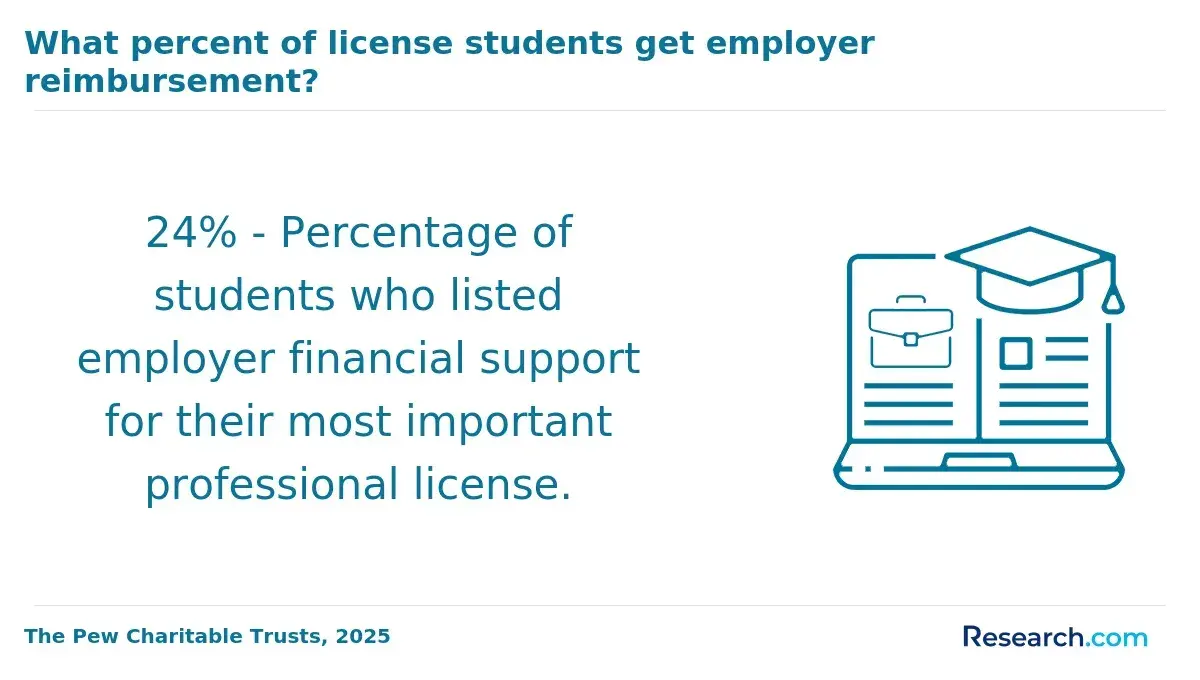
Financial aid options may include federal loans, school scholarships, employer tuition reimbursement, military education benefits, state workforce grants, payment plans, and professional association scholarships. Employer support is especially relevant for nurses because hospitals and health systems may fund degrees that support preceptor development, clinical education, onboarding, simulation, quality improvement, or faculty partnership needs.
Before borrowing or enrolling, complete these steps. They help you compare affordability without underestimating the full cost.
- Request a written program cost sheet that includes tuition, mandatory fees, books, technology, and practicum-related expenses.
- Ask whether tuition is locked for the full program or may increase each academic year.
- Confirm whether part-time enrollment changes scholarship eligibility, loan disbursement timing, or employer reimbursement.
- Check whether your employer reimburses only after passing grades are posted and whether you must remain employed for a set period afterward.
- Estimate monthly loan repayment before enrolling, not after graduation.
How Long Does It Take to Complete an Online Nurse Education Degree, and Can Transfer Credits Help You Graduate Faster?
Completion time depends on degree level, course load, term length, practicum scheduling, and transfer-credit policy. A typical MSN nurse educator program may require about 30 to 42 credits, while certificates often require fewer credits and doctoral programs require more. Part-time students often take longer, but they may be more likely to persist because the workload is compatible with full-time employment.
The table below summarizes common timelines. Treat these as planning ranges rather than promises, because course sequencing and practicum placement can extend or shorten the path.
| Pathway | Typical Credit Pattern | Common Time Frame | Best Fit |
| Post-master's nurse educator certificate | Focused graduate education courses. | About 1 year to 2 years. | MSN-prepared nurses who want educator preparation without a second full degree. |
| BSN-to-MSN nurse educator | Graduate nursing core, education courses, and practicum. | About 2 years full time or 3 to 4 years part time. | BSN-prepared RNs moving into faculty, clinical education, or staff development roles. |
| RN-to-MSN nurse educator | Bridge, BSN-equivalent, and MSN-level coursework. | Often longer than BSN-to-MSN pathways. | ADN-prepared RNs who want a graduate teaching pathway. |
| DNP with education focus | Doctoral coursework, scholarly project, and practice-hour requirements. | Often 2 to 4 years depending on entry point and prior graduate credits. | Nurses seeking advanced leadership, curriculum, evidence-based practice, or academic roles. |
Transfer credits can help, but graduate nursing programs are usually selective. Many schools cap transfer credits, require a minimum grade, reject older coursework, or accept only courses that match their curriculum closely. If you are comparing doctoral options after an MSN, reviewing how best DNP programs structure credits, practice hours, and project requirements can help you understand why transfer reviews differ from one school to another.
Working adults should ask for a formal transfer-credit evaluation before committing. A verbal estimate from admissions is helpful, but it is not the same as an official degree plan. To avoid timeline surprises, use this sequence.
- Send official transcripts from all prior colleges and graduate programs.
- Ask which courses may transfer and which must be repeated because of age, content, or accreditation rules.
- Request a written plan showing remaining credits, term-by-term course sequence, and expected graduation date.
- Confirm whether accepted transfer credits reduce tuition, shorten time, or both.
- Ask whether practicum, capstone, or final project requirements can ever be waived; in many accredited programs, they cannot.
The biggest timeline mistake is assuming that online courses are always available every term. Some nurse educator courses run only once per year, and missing one prerequisite can delay graduation by a full term or longer.
What Should You Look for When Comparing Accredited Online Nurse Education Degree Programs?
Program comparison should start with accreditation, but it should not stop there. A strong online nurse education program should match your career target, learning style, state location, budget, and weekly availability. Two accredited programs can lead to very different experiences if one is asynchronous and part-time friendly while another is cohort-based with fixed live sessions.
Health professions education is highly regulated, so it helps to evaluate nursing programs with the same caution you would use for other professional healthcare degrees, including PharmD programs. The core question is whether the curriculum, accreditation, hands-on expectations, and outcome data align with the credential you need.
The table below highlights comparison factors that are especially important for working adults. Use it to move beyond marketing language and focus on evidence.
| Factor | Strong Sign | Red Flag |
| Accreditation | Institutional and nursing accreditation are clearly listed and verifiable. | The school uses vague phrases such as "nationally recognized" without naming the accreditor. |
| Schedule flexibility | The program publishes live-session expectations, assignment deadlines, and part-time plans. | "Flexible" is advertised without details about deadlines, practicum timing, or course sequencing. |
| Faculty expertise | Faculty have nursing education, clinical, simulation, curriculum, or research experience. | Faculty bios are missing or do not show nurse educator preparation. |
| Practicum support | The school explains placement responsibilities, preceptor criteria, and approval timelines. | Students are told to "find their own placement" without structured guidance. |
| Outcomes | The program can discuss completion, certification preparation, alumni roles, or employer partnerships. | No meaningful outcome information is available. |
| Student support | Advising, library help, writing support, technology help, and career services are available online. | Support services are designed mainly for campus students. |
Common mistakes can cost time and money. Before applying, watch for these avoidable problems and use the better alternative beside each one.
- Mistake: enrolling without verifying accreditation. Better alternative: check the institutional accreditor and nursing accreditor directly before submitting a deposit.
- Mistake: assuming "online" means no required attendance. Better alternative: ask for a sample weekly schedule and live-session policy.
- Mistake: focusing only on tuition. Better alternative: compare total program cost, fees, transfer credits, and lost work time.
- Mistake: choosing the fastest program without checking workload. Better alternative: estimate weekly study hours for each term before selecting full-time or accelerated enrollment.
- Mistake: ignoring practicum logistics. Better alternative: ask who secures sites, when hours occur, and what happens if a site falls through.
- Mistake: assuming every online program works in every state. Better alternative: confirm state authorization and any licensure-related restrictions for your location.
A good final test is simple: can the school provide a written degree plan, a complete cost estimate, accreditation details, practicum expectations, and online support information before you enroll? If not, keep comparing.
What Career Opportunities and Salary Potential Can You Expect With a Nurse Education Degree?
A nurse education degree can support careers in academic teaching, clinical instruction, professional development, patient education, simulation learning, curriculum design, and healthcare workforce training. It is especially relevant for nurses who enjoy explaining complex concepts, mentoring new nurses, improving clinical onboarding, or designing learning experiences that connect evidence to practice.
The most direct labor-market category is postsecondary nursing instructor. BLS projections published in 2024 estimate 17% employment growth for postsecondary nursing instructors from 2023 to 2033. For working nurses, that growth suggests continued demand for educators, but it does not guarantee a specific job, salary, or faculty appointment. Hiring still depends on degree level, specialty experience, geography, teaching experience, and whether the employer requires an MSN, doctorate, or certification.
The table below connects common roles to typical responsibilities. It can help you decide whether a nurse educator program aligns with the work you actually want to do.
| Role | Typical Responsibilities | Credential Considerations |
| Clinical nurse educator | Train nursing staff, support onboarding, teach clinical skills, and update practice education. | MSN with education coursework is often useful; requirements vary by employer. |
| Nursing faculty member | Teach nursing students, design courses, supervise clinical learning, and assess competencies. | MSN may qualify for some roles; doctorate may be preferred or required for tenure-track positions. |
| Simulation educator | Build simulation scenarios, facilitate debriefing, and evaluate clinical judgment. | Education, simulation, and specialty clinical experience can be important. |
| Patient educator | Develop and deliver education for patients, families, and communities. | Nursing education coursework can strengthen communication and instructional design skills. |
| Professional development specialist | Plan continuing education, competency programs, residency training, and quality initiatives. | Graduate education and relevant certifications may improve competitiveness. |
Salary potential varies widely because nurse educator roles exist in hospitals, universities, community colleges, online programs, public health organizations, and private healthcare companies. Academic faculty salaries may differ from hospital-based educator salaries, and some nurses combine teaching with clinical practice. When assessing return on investment, compare the total cost of the degree with likely roles in your region rather than relying on national averages alone.
If your long-term goal is broader health education rather than nursing-specific instruction, it may also be useful to compare adjacent programs such as an online masters degree in nutrition, public health, health education, or instructional design. Those paths may fit better if you want community wellness, population health, or non-nursing education roles.
This degree is usually worth considering if you want to move from bedside or advanced clinical practice into teaching, mentoring, curriculum, simulation, or staff development. It may be a weaker fit if your main goal is higher clinical authority, direct advanced practice licensure, or a non-teaching leadership role with little interest in instruction.
How Can Working Adults Balance a Nurse Education Degree With Full-Time Work and Family Responsibilities?
Balancing graduate nursing education with full-time work requires more than motivation. It requires a realistic schedule, employer communication, family planning, and a program format that matches your shift pattern. Nurses are especially vulnerable to overload because 12-hour shifts, nights, weekends, mandatory overtime, and emotional fatigue can make "just study after work" unrealistic.
A useful planning benchmark is the federal credit-hour expectation, which generally assumes about 1 hour of instruction and 2 hours of outside work per credit each week during a standard term. In practical terms, a 3-credit graduate course may require roughly 9 hours per week, and two courses may require roughly 18 hours per week. Some weeks will be lighter, but papers, group projects, practicum preparation, and exams can raise the workload.
The table below shows how different course loads may feel for a working nurse. Use it as a planning tool before deciding how many credits to take in your first term.
| Course Load | Estimated Weekly Academic Time | Practical Fit |
| 1 graduate course | About 9 hours per week for a 3-credit course. | Often manageable for full-time nurses, new parents, night-shift workers, or students returning after a long gap. |
| 2 graduate courses | About 18 hours per week for 6 credits. | Possible with strong support and predictable schedules, but demanding during heavy work weeks. |
| 3 graduate courses | About 27 hours per week for 9 credits. | Usually difficult with full-time nursing work unless shifts are reduced or protected study time is available. |
| Practicum term | Coursework plus approved field hours. | Requires early planning because hours may need to align with preceptor availability. |
The best strategy is to design your schedule before classes begin. These steps can help you protect study time and reduce burnout.
- Start with one course if you are unsure about graduate workload, then increase later if the program allows it.
- Block study time on non-work days instead of relying only on post-shift energy.
- Tell your manager early if you will need practicum flexibility, reduced overtime, or education days.
- Use a shared family calendar for class deadlines, practicum hours, work shifts, and major assignments.
- Batch weekly tasks such as readings, discussion posts, citations, and lecture viewing.
- Choose group-project partners who understand rotating shifts and agree on communication expectations early.
- Plan lighter enrollment during predictable high-stress periods, such as holidays, unit transitions, or major family events.
Working adults should also be honest about learning preferences. If you need external structure, a scheduled asynchronous program with weekly deadlines may be better than a highly self-paced option. If your shifts change unpredictably, avoid programs with frequent mandatory live sessions unless recordings or alternative attendance options are available.
What Student Support Services and Online Learning Resources Should You Expect From a Nurse Education Degree Program?
Online support services can make the difference between a flexible program and an isolating one. Working adults need help outside traditional campus hours, especially when assignments are due after evening shifts or on weekends. Strong programs make advising, technology help, library access, writing support, and faculty communication available to distance learners, not just campus students.
As online healthcare education matures, programs are also using more digital simulation, virtual collaboration, video feedback, learning analytics, and AI-supported study tools. These resources can be helpful, but they should support faculty-led learning rather than replace expert instruction, clinical judgment, or ethical nursing education.
The table below lists support services that working adults should expect from a quality online nurse education program. These services are not extras; they directly affect persistence and learning quality.
| Support Service | What Good Support Looks Like | Why It Matters |
| Academic advising | Advisors help build part-time plans, monitor prerequisites, and prevent sequencing delays. | Working adults need predictable timelines and early warning about bottleneck courses. |
| Faculty access | Faculty offer virtual office hours, clear response times, and feedback on teaching projects. | Nurse educator students need mentoring, not just content delivery. |
| Online library | Remote access to nursing databases, research guides, citation help, and librarian support. | Graduate coursework requires evidence-based writing and current nursing literature. |
| Writing and research help | Support is available for APA style, scholarly papers, presentations, and capstone writing. | Many returning students need help adjusting to graduate academic expectations. |
| Technology help | After-hours support is available for the learning platform, proctoring, video tools, and simulation software. | Technical problems should not derail assignments for students studying outside business hours. |
| Career services | Students receive resume, interview, teaching portfolio, and job-search support for educator roles. | The degree should connect to a clear career transition strategy. |
Support expectations also apply when comparing nearby health education fields. For example, students considering a best DNP programs pathway often need project mentoring and practice-hour tracking, while nurse educator students need teaching portfolio guidance, practicum coordination, and feedback on curriculum design.
Before enrolling, ask how support works for online students in your time zone. A school may offer many services on paper, but if advising and faculty meetings are available only during your work shifts, the support may not be practical.
Do Online Nurse Education Degree Programs Include Internships, Practicums, or Other Hands-On Learning Requirements?
Yes, many accredited online nurse education degree programs include a practicum, teaching experience, capstone, simulation project, or field-based learning component. These requirements help students apply curriculum design, assessment, instructional methods, clinical teaching, and evaluation skills in real educational settings. "Online" usually refers to didactic coursework, not the complete absence of applied learning.
Practicum requirements vary by school and credential level. Some programs require students to identify a qualified preceptor, while others provide placement support or formal site agreements. Working adults should ask about this early because practicum scheduling can be the least flexible part of an otherwise online program.
The table below shows common hands-on components and why they matter. It can help you anticipate the non-classroom parts of the degree.
| Requirement | What It May Include | Planning Concern |
| Teaching practicum | Observation, lesson planning, instruction, learner evaluation, and faculty mentoring. | May require daytime availability if completed in an academic nursing program. |
| Clinical education practicum | Staff training, competency validation, preceptor development, or unit-based education. | May be easier to align with hospital employment but still needs school approval. |
| Simulation project | Scenario design, facilitation, debriefing, or assessment of clinical judgment. | May require access to simulation resources or approved virtual alternatives. |
| Capstone or scholarly project | Evidence-based education intervention, curriculum project, or evaluation plan. | Requires sustained writing, faculty feedback, and sometimes site data approval. |
| Residency or intensive | Short on-campus or virtual intensive sessions for skills, orientation, or presentations. | May create travel, childcare, scheduling, or shift-swap needs. |
To avoid practicum problems, clarify responsibilities before enrolling. These questions are especially important if you work nights, live in a rural area, or cannot reduce your work hours.
- How many practicum or field hours are required?
- Can hours be completed at my current workplace, and are there conflict-of-interest rules?
- Who approves the preceptor, and what credentials must the preceptor hold?
- Does the school help secure placements, or is the student responsible?
- Are there state restrictions that could prevent placement where I live?
- Can practicum hours be completed during evenings or weekends?
- What happens if a site cancels or a preceptor becomes unavailable?
The safest choice is a program that explains practicum expectations in writing and offers proactive placement guidance. If a school cannot clearly describe the applied learning requirement, that is a warning sign for working adults who need predictable scheduling.
Other Things You Should Know About Nurse Education
A post-master's nurse educator certificate can be enough for some clinical education, staff development, or adjunct teaching roles if you already have an MSN. However, many full-time faculty roles prefer or require a graduate nursing degree, and some institutions prefer doctoral preparation.
Policies vary, but many universities do not label the delivery format on the diploma. What matters most to employers is usually the school's accreditation, the nursing program's quality, your license status, and your relevant teaching or clinical experience.
Certification is not always required, but it can strengthen credibility. Credentials such as Certified Nurse Educator may require a qualifying degree and relevant teaching experience, so review eligibility rules before assuming your program alone is enough.
Yes. Precepting, charge nurse work, onboarding, patient education, and staff training can help show readiness for nurse educator coursework. It may also help you choose practicum projects, but it usually does not replace required graduate courses unless the school has a formal prior-learning policy.
References
- Guide to Online Nursing Programs | OEDb.org https://www.oedb.org/rankings/online-nursing-programs/
- New Graduate Employment Data https://www.aacnnursing.org/news-data/research-data-center/new-graduate-employment-data
- Your Questions About Online Nursing School, Answered https://www.allnursingschools.com/how-to-get-into-nursing-school/online-programs/
- 5 Career Options for Nurse Educator Graduates https://online.worcester.edu/programs/nursing/msn-educator/careers-for-nurse-educator-graduates/
- What is Accreditation, and Why is it Important? | NursingEducation https://nursingeducation.org/resources/what-is-accreditation/
- Types of nursing degrees for every nursing career | edX https://www.edx.org/resources/guide-to-the-different-types-of-nursing-degrees
- How does a college degree improve graduates’ employment and earnings potential? - APLU https://www.aplu.org/our-work/4-policy-and-advocacy/publicuvalues/employment-earnings/
- Nursing School Accreditation https://nursinglicensemap.com/nursing-degrees/nursing-accreditation/
- What’s the Deal with Accreditation? https://nursingcas.org/resources-for-current-schools/whats-the-deal-with-accreditation
- Flexible Online Nursing Degrees for Active Adults https://reviewnprep.com/blog/flexible-online-nursing-degrees-for-active-adults/