2027 Academic Nurse Educator vs Hospital Clinical Educator Nursing: Daily Work, Schedules, and Career Fit
Audited and Verified:
Our Editorial and Data Verification Process
Research.com uses government datasets, official education statistics and primary institutional information to support its career and degree guides. Our review process checks factual accuracy, occupational definitions, source dates and the requirements associated with the credentials discussed.
How This Article Was Fact-Checked
Our editorial team verifies salary estimates, employment projections, education requirements and program information against original data providers and official organizations. Salary figures are checked against the relevant occupational definitions and reporting periods. Information about licensure, accreditation and required in-person training is reviewed separately.
Fact-checked and verified on:

Co-Founder and Chief Data Scientist
If you are an experienced RN considering education, the workplace matters as much as the job title. Academic nurse educators prepare students for nursing practice; hospital clinical educators help employed nurses develop and maintain workplace competencies. Both teach, but their audiences, schedules, and measures of success differ.
This comparison shows what each job looks like day to day, which qualifications employers may expect, and how to evaluate an offer before committing to a degree or leaving your current role.
Key Things You Should Know
- Academic educators teach and assess nursing students; hospital clinical educators support staff orientation, continuing education, and practice changes. The job description matters more than the shared "educator" title.
- An active RN license and relevant clinical experience are commonly important in both settings, but a faculty appointment may require a graduate degree while some hospital positions accept a BSN plus specialty experience.
- Neither setting guarantees a Monday-Friday schedule or a particular pay increase. The Bureau of Labor Statistics does not publish a wage series that isolates hospital clinical educators, so compare actual offers rather than treating faculty or RN medians as your expected salary.
What Is the Difference Between an Academic Nurse Educator and Hospital Clinical Educator?
An academic nurse educator works for a nursing school or college and is accountable for student learning and evaluation. A hospital clinical nurse educator works for a healthcare employer and is accountable for helping its nursing workforce learn, demonstrate competencies, and adapt to practice requirements. Hospital titles vary: "clinical educator," "staff development educator," and "nursing professional development specialist" may describe overlapping jobs.
The comparison below separates the main responsibilities. Individual positions may combine classroom teaching, simulation, bedside coaching, or administrative work.
| Decision factor | Academic educator | Hospital clinical educator |
| Primary learners | Nursing students | New hires and employed nurses |
| Core work | Courses, clinical instruction, assessment, and curriculum | Orientation, competency development, continuing education, and practice updates |
| Work cycle | Academic terms and placement schedules | Hiring, unit needs, policy changes, and training deadlines |
| Typical evidence of effectiveness | Student assessment and program outcomes | Documented learning, competency assessment, and practice-improvement measures |
These are postlicensure career paths, not routes to an initial RN license. An RN considering a bachelor's completion program should check understanding clinical expectations in BSN completion separately from the supervised teaching or workplace preparation an educator job may require.
What Does an Academic Nurse Educator Do Each Day?
A faculty member might begin by revising a lesson on clinical judgment, teach a class, meet with students who need feedback, and grade care plans or examinations. On another day, the priority may be supervising students at a clinical site or running a simulation and debriefing. Full-time faculty may also advise students, participate in curriculum and accreditation work, serve on committees, and complete scholarship or service obligations specified in their appointment.
The distinction between teaching and evaluating is consequential. Faculty must document student performance against course objectives, respond to unsafe practice through school and site procedures, and make defensible progression recommendations. Clinical expertise alone does not make those assessments easy.
Ask whether a posting is for classroom faculty, clinical faculty, simulation faculty, or an adjunct instructor. Their preparation time, student contact, benefits, and advancement expectations can differ substantially. A doctorate can support some faculty ambitions, but shortest online nursing practice doctorates should not be mistaken for a universal requirement for teaching.
What Does a Hospital Clinical Nurse Educator Do Each Day?
A hospital educator might review orientation progress with a preceptor, teach a new device workflow, observe a skill demonstration, and update learning materials after a policy change. The work can include simulation, unit-based coaching, continuing-education planning, and coordination with managers, quality teams, infection prevention, or informatics staff.
Hospital educators generally support practice rather than replace a nurse manager's staffing decisions or a preceptor's continuous supervision. They also should not equate attendance at training with demonstrated competence. Before accepting a position, ask who validates skills, how performance concerns are escalated, and whether educators carry a patient assignment when staffing is short.
If the appeal is diagnosing and treating patients rather than developing staff, educator work may miss the goal. Accelerated FNP education comparisons concern a separate advanced-practice pathway with its own clinical preparation, certification, and state authorization requirements.
Both roles may offer fewer routine bedside shifts, but neither is automatically a standard office job. Academic schedules follow classes and student placements; hospital schedules follow workforce needs. The table shows why an advertised "day shift" deserves follow-up questions.
| Schedule issue | Academic setting | Hospital setting |
| Predictable commitments | Class meetings, office hours, grading, and clinical days | Orientation sessions, meetings, unit visits, and training deadlines |
| Less visible time | Lesson preparation, grading, and student support | Material development, records, coordination, and follow-up |
| Possible off-hours work | Early clinical starts, evening courses, or weekend placements | Training night and weekend staff or responding to urgent changes |
| Variation to check | Term length, summer assignment, and adjunct versus full-time contract | Units covered, travel between sites, and on-call expectations |
For an RN balancing work and caregiving, ask for a sample month - not just scheduled teaching hours. The same test applies when comparing educator study with exploring faster online MSN-PMHNP programs: online coursework does not remove live sessions, supervised placements, or other fixed commitments.
Requirements depend on the employer, position, and state. Academic nursing faculty commonly need an active RN license, clinical expertise in the subject they teach, and graduate preparation; schools may specify a master's degree or doctorate and additional qualifications for particular appointments. Hospital educators commonly need an RN license and substantial experience in the relevant specialty. Some positions require a BSN, while others require or prefer graduate nursing education.
Read "required" and "preferred" separately. A strong unit preceptor with a BSN may qualify for one hospital educator opening but not a full-time faculty appointment. Conversely, a graduate degree does not establish current competence to teach a high-acuity specialty. Confirm licensure and faculty rules with the relevant state board and school, and confirm hiring standards with the employer.
Practical nursing preparation serves a different license and role. Accelerated practical nursing education options do not substitute for an RN license when an educator position requires one.
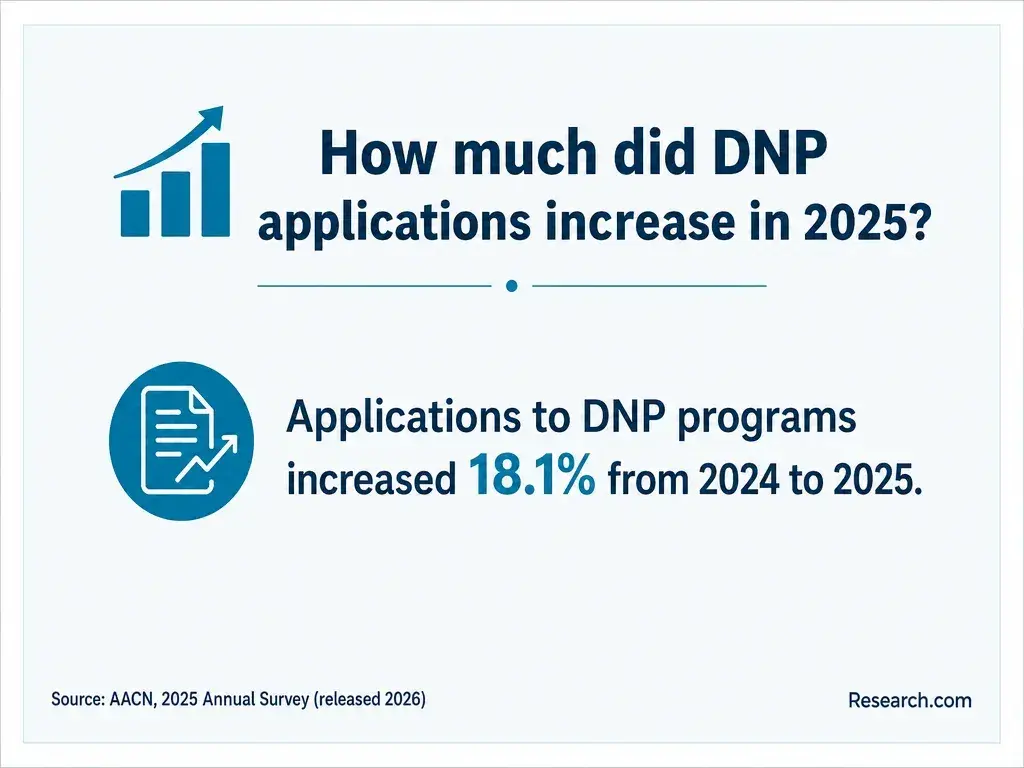
For an RN, the useful degree is the one that closes a documented hiring gap. A BSN may strengthen eligibility for hospital staff-development positions; an MSN with a nursing education focus may be a more direct route to many faculty roles. A DNP or PhD can matter for positions with particular leadership, scholarship, or research expectations, but neither is automatically necessary to teach.
The distinctions below help prevent paying for preparation that does not match the intended job.
| Path | Most relevant potential use | Limit to check |
| RN-to-BSN | Meeting a bachelor's requirement while building on RN preparation | May not meet a faculty posting's graduate-degree requirement |
| MSN in nursing education | Faculty and staff-development preparation | Does not itself confer an APRN license |
| DNP | Practice-focused leadership, improvement, or certain faculty appointments | Program focus and employer requirements vary |
| PhD in nursing | Research-intensive academic careers | Often more research preparation than a staff educator job calls for |
Compare tuition, fees, time away from paid work, required teaching experiences, and employer assistance - not degree names alone. Doctoral nursing programs with broader entry pathways may be worth investigating for a defined doctoral goal, but an accessible entry route does not establish that a doctorate is the best investment for an educator opening.
A nursing education curriculum commonly covers learning theory, course and lesson design, teaching strategies, simulation or clinical instruction, assessment, and evaluation. Students may practice writing measurable objectives, building assessments that match those objectives, giving feedback, and evaluating whether an educational change worked. Program-specific teaching practica or supervised experiences should be checked before enrollment.
Hospital-bound educators should look for preparation in adult learning, competency assessment, implementation, and evaluation across shifts and units. Faculty-bound educators should examine opportunities to teach, assess students, and work with curriculum. In either setting, an education project must respect patient privacy and employer or school approval; a proposed improvement is not proof of improved patient outcomes.
A specialty certificate teaches a different set of competencies. For example, short-format online PMHNP study is relevant to psychiatric advanced-practice preparation, not a replacement for learning how to design and evaluate nursing instruction.
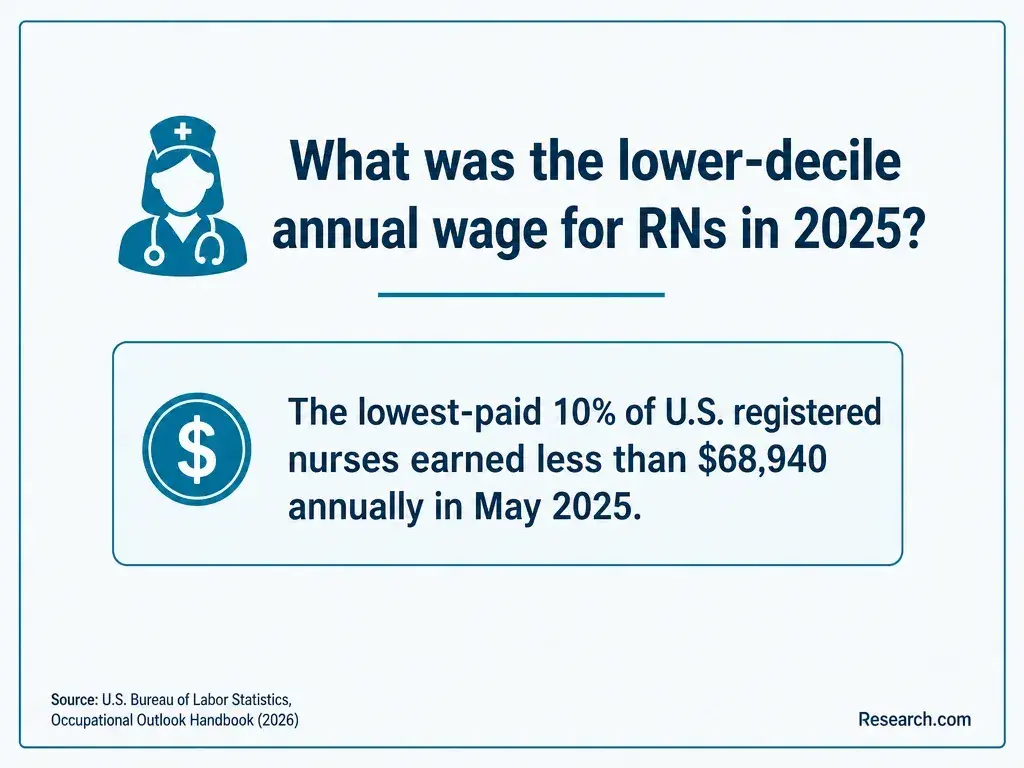
There is no dependable national salary figure that directly compares these two exact job titles. The U.S. Bureau of Labor Statistics reports wages for nursing instructors and teachers, postsecondary, an occupation relevant to many academic positions. Hospital clinical educators do not have a comparably isolated BLS wage series; many are classified with broader nursing or professional-development work. A registered nurse median is therefore not a hospital educator salary, and a postsecondary instructor median is not every faculty offer.
For a useful comparison, request the salary range and employment terms for specific openings. Calculate annualized pay alongside contract months, paid preparation time, benefits, retirement contributions, tuition support, expected off-hours work, and any reduction in bedside shift differentials. An adjunct course payment and a full-time hospital salary should not be compared as if they bought the same hours or benefits.
Likewise, projected earnings from a different career should not be treated as an educator pay forecast. If advanced practice is also under consideration, lower-cost options for future nurse practitioners can inform the education-cost side of that separate decision, but not predict an individual offer or return on investment.
Two credentials align with the settings in this comparison. The National League for Nursing offers the Certified Nurse Educator (CNE) credential for eligible academic nurse educators. The American Nurses Credentialing Center offers Nursing Professional Development-Board Certified (NPD-BC), relevant to eligible nurses in professional-development roles. Eligibility, examination, and renewal rules belong to the awarding organization and should be checked before paying an application fee.
Certification can demonstrate focused professional knowledge, but it does not replace an RN license, an employer's competency validation, or a degree required by a particular posting. A school-issued education certificate is also not the same as board certification. Postgraduate FNP certificates organized by duration illustrate another important distinction: an APRN educational certificate prepares for a different role and is not a nurse educator credential.
Which Nurse Educator Career Path Fits Your Goals?
Choose the academic path if you want sustained responsibility for student learning, grading, curriculum, and possibly scholarship. Choose the hospital path if you prefer coaching employed clinicians, improving orientation, and translating changing practice requirements into usable training. If you mainly enjoy mentoring one colleague at a time, a formal preceptor or unit-based resource role may let you test that interest before committing to a graduate degree.
Before applying or enrolling, take these steps to test the fit against real openings rather than an idealized job title:
- Collect several local postings in each setting and separate required qualifications from preferences.
- Ask an educator in each workplace to describe a typical week, including preparation, documentation, and off-hours obligations.
- Identify one evidence gap - such as classroom teaching, competency evaluation, or specialty experience - and seek a supervised opportunity to address it.
- Compare actual offers and education costs only after confirming the work you want to do.
If your intended destination is psychiatric advanced practice instead of educating students or staff, affordable online psychiatric nurse practitioner programs belong in a separate comparison. An educator degree is not a shortcut to PMHNP certification or licensure.
Other Things You Should Know About Nursing
Potentially. Check both employers' scheduling, conflict-of-interest, clinical-site, and outside-employment policies. A school may also need to approve the site and supervision arrangements for student instruction.
It depends on the state's renewal rules and the activity involved. Teaching employment and continuing-education credit are not automatically interchangeable; check the board of nursing's requirements.
The immediate priority is patient safety under the clinical site's procedures. The supervising instructor, site staff, school, and employer may have different reporting and evaluation responsibilities; follow their applicable policies.
Yes. Document the teaching you performed, feedback you gave, and competencies you assessed without including patient-identifiable information. Then compare that experience with the qualifications in the educator postings you want.
- Clinical teaching practices of nurse educators - PMC - NIH https://pmc.ncbi.nlm.nih.gov/articles/PMC9575343/
- Pre-Licensure Nursing Program Educator | ca.gov https://www.rn.ca.gov/education/faculty.shtml
- Nurse Educator vs Nurse Administrator: Career Differences | American College of Education https://ace.edu/blog/nurse-educator-vs-nurse-administrator/
- Nursing Career Paths And Specializations | Davis & Elkins https://www.dewv.edu/nursing-major/top-nursing-career-paths-and-specializations-for-2025/
- What Does a Nurse Educator Do? | Texas A&M University College of Nursing https://nursing.tamu.edu/degrees/msn-education/blog/what-does-a-nurse-educator-do.html
- Clinical Instructor vs. Nurse Educator: Key Differences | Arkansas State University Online https://degree.astate.edu/online-programs/healthcare/msn/nurse-educator/clinical-instructor-vs-nurse-educator/
- Nurse Educator Roles: Career Paths & Responsibilities | Missouri Baptist University (Mobap) https://www.mobap.edu/news/inside-the-roles-of-todays-nurse-educators/
- What Is the Role of Nurse Educators in Hospital Settings? | walsh.edu https://online.walsh.edu/blog/role-of-nurse-educators-in-hospital-setting
- What Healthcare Career Is Right for Me? | UMA https://www.ultimatemedical.edu/blog/how-to-choose-a-healthcare-career/
- A Typical Day as a Nurse Educator: Daily Schedule & Tasks https://www.nurseeducator.com/articles/typical-day-nurse-educator/