
2027 AACSB Accreditation for Career Changers Without a Business Bachelor's

Co-Founder and Chief Data Scientist
Changing into business can feel risky when your bachelor's degree is in art, nursing, engineering, or another nonbusiness field. AACSB accreditation can be a useful quality signal, but it does not require applicants to hold a business major. The U.S. Bureau of Labor Statistics projects about 1.1 million openings per year in business and financial occupations from 2023 to 2033.
This guide explains which AACSB pathways welcome career changers, what prerequisite work may be needed, and how to judge cost, format, and career fit before applying.
Key Things You Should Know
- AACSB accredits business schools and qualifying business programs, not individual students, and many accredited MBA and specialized master's programs accept applicants with any accredited bachelor's degree.
- Career changers commonly need quantitative preparation or foundation courses in accounting, economics, finance, and statistics; the added coursework can affect both completion time and total tuition.
- Business and financial occupations had a $79,050 median annual wage in May 2023, according to the U.S. Bureau of Labor Statistics, but pay varies substantially by role, experience, location, and industry.
Can you earn AACSB accreditation without a business bachelor's degree?
You can earn a degree from an AACSB-accredited business school without first earning a business bachelor's degree. AACSB International accredits business schools based on standards involving faculty qualifications, learning assurance, strategic management, and student support. It does not award accreditation to a student or require every graduate student to have studied business as an undergraduate.
An MBA is usually the most flexible option for a career changer because it is designed as a broad management degree. Many Master of Science programs also welcome nonbusiness majors, although quantitative fields such as finance, business analytics, accounting, and economics may require stronger math preparation or specific prerequisites. A post-baccalaureate business certificate can be a lower-commitment way to test the field before pursuing a graduate degree.
A second bachelor's degree can make sense when you need extensive undergraduate preparation, want access to entry-level recruiting, or are changing into a regulated specialty. For people who need to rebuild fundamentals from the ground up, an online bachelor's degree may offer a more structured route than trying to complete numerous graduate prerequisites separately.
The comparison below clarifies which starting point usually fits different career-change situations.
| Path | Best for | Typical nonbusiness barrier | Important trade-off |
| MBA | Professionals seeking management, strategy, operations, or leadership roles | May need statistics or quantitative readiness; work experience is often valued | Broad degree, but may be less technical than a specialized master's |
| Specialized business master's | Career changers targeting analytics, finance, marketing, supply chain, or accounting | Specific prerequisites are more common | Focused training, but narrower career flexibility |
| Graduate certificate or bridge courses | People testing a field or filling prerequisites | Admissions standards may be lighter | Usually does not replace a graduate degree for senior roles |
| Second bachelor's degree | Applicants needing a full business foundation or a recruiting reset | More credits and general education requirements | Longer route, but may provide deeper foundational preparation |
Do not assume AACSB status alone means a program fits your goal. Verify that the exact degree, delivery format, concentration, and campus are covered by the school's accreditation listing and that its curriculum supports the job you want.
What AACSB-accredited business programs accept career changers?
Career changers are most likely to find accessible admission policies in general MBA programs, Master of Management programs, and master's programs with built-in foundation modules. Schools may describe applicants as "all academic backgrounds welcome," but that statement still does not eliminate GPA, English-language, transcript, or quantitative-readiness requirements.
An MBA tends to suit someone with professional experience who wants to translate prior expertise into business leadership. For example, a clinician may move toward healthcare operations, a teacher toward learning-and-development management, or an engineer toward product management.
A specialized master's makes more sense when the target job requires identifiable technical skills, such as SQL and statistical modeling for analytics or financial statement analysis for corporate finance.
Use this comparison to narrow the degree type before spending time on applications.
| Program type | Common career-changer fit | Prior business coursework expectation | When to reconsider |
| MBA | Experienced professionals moving into management or changing industries | Often none, though foundation work may be assigned | If you need technical depth immediately or have little work experience |
| Master of Management | Early-career applicants seeking broad business training | Usually none or limited | If employers in your target field strongly prefer an MBA or specialized credential |
| MS in Business Analytics | Applicants comfortable with math, data, and problem-solving | Statistics, calculus, programming, or equivalent preparation may be required | If you dislike quantitative work or need a general management credential |
| MS in Finance | Applicants pursuing corporate finance, investments, or financial analysis | Economics, accounting, calculus, and statistics are commonly requested | If you cannot complete prerequisites or are primarily interested in people management |
| MS in Marketing or Supply Chain | Applicants pursuing functional business roles with applied skills | Varies; statistics and introductory business knowledge may be useful | If the curriculum lacks the analytics, internship, or employer connections you need |
A practical shortlisting method is to compare each program's prerequisite policy, work-experience preference, internship access, career services, required residency, and published employment information. Ask admissions whether foundation courses count toward the degree, whether they can be waived with prior coursework, and whether they add tuition beyond the advertised program total.
What are the admission requirements for nonbusiness applicants?
Requirements vary by school and degree, but nonbusiness applicants generally submit the same core materials as business majors: a completed bachelor's degree, official transcripts, application essays, recommendations when required, and evidence of readiness for graduate-level study. Some programs request a GMAT or GRE score; others use test-optional review or waive testing for qualifying applicants. A waiver is not the same as no academic review.
Applicants with a lower undergraduate GPA should look closely at minimum thresholds, conditional admission policies, and whether recent coursework can demonstrate improvement. Schools listed among colleges that accept 2.0 GPA may provide useful starting points, but admission to a particular AACSB graduate program remains school-specific.
Before applying, identify gaps that could slow admission or create difficulty in the first term:
- Review transcripts for statistics, college algebra or calculus, microeconomics, accounting, and finance, depending on the program.
- Complete prerequisite courses early through the target school when possible, so credit acceptance is clear before you pay elsewhere.
- Use your statement to connect previous work to a defined business goal rather than presenting the change as a vague desire for better pay.
- Prepare a current résumé that quantifies transferable work, such as budgets managed, projects delivered, process improvements, client results, or team leadership.
- Ask whether prerequisites must be completed before enrollment, can be taken concurrently, or are embedded in the curriculum.
Common mistakes include applying only to highly selective MBA programs without checking work-experience expectations, treating a test waiver as an admissions advantage, and overlooking required math preparation.
If your academic record is older or nonquantitative, an accredited statistics or accounting course and a strong recent grade may provide more persuasive evidence than an unsupported claim that you are "good with numbers."
How do online and campus AACSB programs compare?
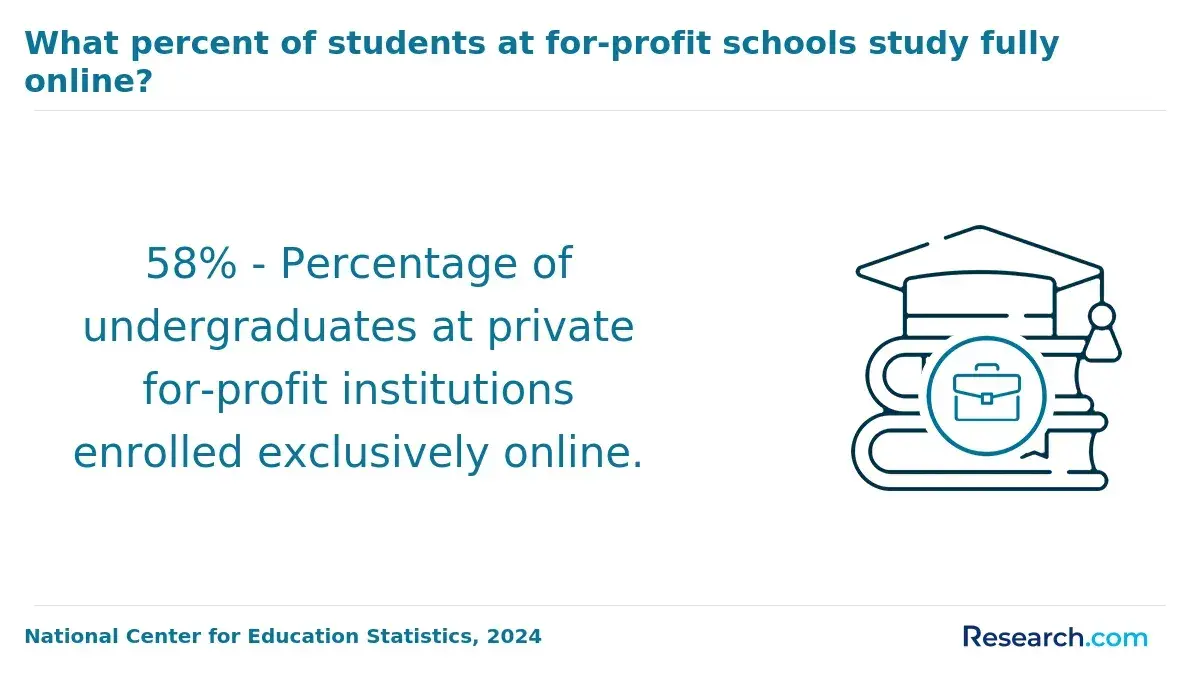
Online and campus-based AACSB programs can carry the same school-level accreditation, but their learning experience, networking access, and schedule design may differ. Accreditation should be verified for the school and relevant business unit; then evaluate the exact program rather than assuming that an online version mirrors its campus counterpart in every respect.
Online study is often the better fit for employed adults who need asynchronous coursework and do not want to relocate. Campus study may suit career changers who need intensive recruiting, face-to-face networking, or a structured transition away from a previous occupation. Hybrid programs can balance flexibility with cohort relationships, but required residencies can add travel costs.
The following comparison focuses on practical differences that affect a career changer's return on investment.
| Factor | Online format | Campus format | Decision implication |
| Schedule | Often asynchronous with scheduled live sessions in some courses | Usually fixed class meetings | Choose online if work or caregiving requires flexibility |
| Networking | Requires deliberate virtual participation and outreach | More spontaneous access to peers, faculty, and events | Campus may help if you are relying heavily on a local career pivot |
| Career services | May offer virtual coaching and national recruiting resources | May provide more on-site employer events | Ask whether online students receive identical recruiting access |
| Cost beyond tuition | May reduce relocation and commuting costs | May add housing, transportation, and relocation expenses | Compare total budget, not tuition alone |
| Learning support | Needs strong self-management and comfort with digital tools | Provides more in-person structure | Choose the format that matches your study habits, not just convenience |
AI tools are increasingly used in business analysis, marketing, and operations, so program quality now includes how instructors teach responsible use of data and generative AI. Ask whether coursework includes practical analytics, ethical decision-making, and assessment methods that confirm you can independently apply what you learn.
What coursework do AACSB business bridge programs include?
A business bridge program, sometimes called a foundation, leveling, or pre-master's curriculum, helps nonbusiness graduates gain the vocabulary and analytical base needed for graduate study. It is not a uniform credential: some schools embed modules in the degree, while others require standalone courses before admission or during the first year.
Most bridge curricula cover the subjects below because they support later work in managerial decision-making. The exact course titles and depth differ by program.
- Financial accounting and managerial accounting, including how to interpret financial statements and support internal decisions.
- Microeconomics and macroeconomics, which explain market behavior, incentives, inflation, and broader business conditions.
- Business statistics or quantitative methods, covering data interpretation, probability, regression concepts, and evidence-based decisions.
- Corporate finance, including time value of money, capital budgeting, risk, and funding decisions.
- Marketing, management, and organizational behavior, which introduce customer value, team dynamics, leadership, and strategy.
- Information systems or spreadsheet modeling, which develop comfort with business data, systems, and basic analysis.
Choose a bridge path based on the degree's entry requirements, not on a generic checklist. An aspiring financial analyst may need calculus and accounting beyond a general MBA foundation, while an applicant to a management program may benefit more from statistics and financial literacy.
Confirm whether bridge credits apply toward graduation and whether they affect federal financial-aid eligibility, as nondegree coursework can be treated differently by institutions.
How long does an AACSB business degree take?
Completion time depends on the degree type, enrollment pace, transfer or waiver policies, and whether prerequisites are required. A full-time MBA commonly takes about two years, while accelerated and specialized master's programs may be shorter. A part-time schedule can make a degree financially manageable for a working professional, but it usually delays the career transition.
Programs marketed as accelerated are not automatically the fastest option for a nonbusiness applicant. Foundation courses, sequencing requirements, internships, and course availability can extend the calendar.
If you already meet prerequisites and can study full time, compare one year masters programs online with traditional programs, while checking whether the compressed workload is realistic alongside work and family obligations.
This timeline shows the planning ranges career changers should discuss with each admissions office.
| Route | Common completion pattern | What can extend the timeline |
| Full-time MBA | Often about two academic years | Prerequisites, internships, dual concentrations, or summer breaks |
| Accelerated MBA or management master's | May be completed in about one year when prerequisites are met | Foundation courses and intensive term workload |
| Specialized master's | Often one to two years | Quantitative prerequisites, capstones, and internship requirements |
| Part-time online or campus degree | Often longer because students take fewer courses per term | Work demands, course rotation, and leaves of absence |
| Second bachelor's degree | Varies widely by accepted transfer credit and major requirements | General education, major sequencing, and limited transfer equivalencies |
Ask for a personalized degree map before enrolling. It should show prerequisite courses, required credits, expected term-by-term enrollment, residency dates, internship timing, and the latest possible completion date if you need to reduce your course load.
How much does AACSB-accredited business school cost?
There is no single AACSB tuition rate. Public and private nonprofit institutions can both hold AACSB accreditation, and total cost depends on residency, program format, required credits, foundation courses, fees, books, technology, travel, and lost earnings if you reduce work hours. Institution type alone does not determine return on investment.
For broad context, the College Board reported average published tuition and fees of $12,596 for in-state students at public four-year institutions and $43,350 at private nonprofit four-year institutions for the 2024-25 academic year. Those undergraduate figures are not MBA prices, but they illustrate why applicants should obtain the graduate program's written cost estimate rather than relying on a schoolwide tuition headline.
Build a decision-ready budget using the cost categories below. This reveals whether a lower per-credit rate actually produces a lower total price.
| Cost component | Why it matters to career changers | Question to ask |
| Tuition and required credits | Foundation courses may increase the credit total | What is the estimated tuition from my current transcript to graduation? |
| Mandatory fees | Technology, student services, course materials, and graduation fees can add up | Which fees are charged each term and which are one-time? |
| Residency and travel | Hybrid programs may require flights, hotels, and time away from work | How many in-person sessions are required and where are they held? |
| Opportunity cost | Reducing work hours can affect income and benefits | Can I complete the program part time without sacrificing essential earnings? |
| Financing terms | Borrowing changes the long-term cost of the degree | What grants, employer support, assistantships, and federal aid are available? |
To reduce cost, start with employer tuition assistance, then compare scholarships, assistantships, in-state eligibility, prerequisite options, and transfer or waiver policies. Do not borrow based only on a hoped-for salary increase. Compare the program's total cost with realistic entry roles, geographic job demand, and the time needed to build experience after graduation.
Which business careers suit AACSB graduates best?
An AACSB-accredited degree can support many business careers, but it is not a job license or a substitute for relevant experience. The strongest path connects your prior field knowledge to a business function. A former nurse may be competitive in healthcare operations, for example, while a former engineer may have an advantage in operations, supply chain, analytics, or product roles.
The occupations below illustrate common directions, but hiring standards vary by employer. Some roles require a graduate degree, while others value a bachelor's degree plus targeted technical skills and experience more highly.
| Career direction | Typical work | Helpful background for career changers | Useful degree emphasis |
| Management analyst | Improve organizational processes, performance, and strategy | Industry expertise, communication, and problem-solving | MBA, management, or analytics |
| Financial analyst | Evaluate financial information, budgets, investments, or business performance | Comfort with accounting, modeling, and quantitative work | Finance, accounting, or MBA with finance coursework |
| Operations or supply chain manager | Coordinate processes, inventory, vendors, quality, and delivery | Project management, engineering, healthcare, or logistics experience | Operations, supply chain, or MBA |
| Market research analyst | Study customers, markets, and campaign performance | Research, writing, survey design, and data interpretation | Marketing or business analytics |
| Human resources specialist or manager | Support talent, employee relations, staffing, and organizational systems | People-facing work, training, compliance, or leadership | Management, HR-focused coursework, or MBA |
The BLS projects management occupations to grow faster than the average for all occupations from 2023 to 2033. That is a useful market signal, not a guarantee of a management title immediately after graduation; many employers expect demonstrated leadership and domain experience.
If you need a quicker way to explore a job function before committing to graduate school, review 6 month certificate programs that pay well. A short credential may help you test interest or build an entry-level skill, though it generally will not provide the breadth of an AACSB business degree.
What salaries do AACSB business graduates earn?
Salary should be evaluated by occupation rather than by accreditation alone. AACSB accreditation can indicate that a business school has met a recognized set of quality standards, but employers set pay based on role, experience, location, industry, performance, and the skills a candidate can demonstrate.
According to the U.S. Bureau of Labor Statistics, business and financial occupations had a median annual wage of $79,050 in May 2023, compared with $48,060 for all occupations. This broad category includes entry-level and experienced jobs, so it is best used as a labor-market benchmark rather than an expected salary for a new graduate.
The role-level figures below provide a more useful frame for comparing possible directions. They are national median annual wages reported by the BLS for May 2023 and should not be interpreted as starting salaries.
| Occupation | Median annual wage | How to use the figure |
| Management analysts | $99,410 | Consider this path if you can pair business training with problem-solving and industry knowledge. |
| Financial analysts | $99,890 | Use it as context for finance roles that often require strong analytical preparation. |
| Market research analysts | $74,680 | Compare it with local demand and the program's analytics and research curriculum. |
| Human resources specialists | $67,650 | Evaluate alongside experience requirements and any preferred HR credentials. |
| Logisticians | $79,400 | Assess whether supply chain coursework and practical operations experience are included. |
For a realistic ROI estimate, identify three local job postings you could plausibly pursue before graduation and three you could pursue after gaining experience. Compare their stated qualifications with your current résumé and the degree curriculum. This approach is more reliable than assuming an MBA or master's title alone will produce a particular pay outcome.
How do you verify AACSB accreditation and program quality?
Verify accreditation directly through AACSB's official accredited-school directory and the school's own accreditation page. Check the legal institution name, business school, location, and degree delivery format. A school may use accreditation language broadly in marketing, so confirm the business unit - not merely the university - holds AACSB accreditation.
Accreditation is an important baseline, but it is not a complete buying decision. The best program for a career changer also provides transparent prerequisites, a schedule you can complete, relevant experiential learning, and career support that serves students in your format.
Use the following steps before submitting an application or paying a deposit:
- Confirm the business school appears in AACSB's accredited-school directory and verify the accreditation is current.
- Request a written transcript evaluation showing prerequisites, transfer credit decisions, and the total credits you must complete.
- Ask whether online, hybrid, and campus students receive the same faculty access, career coaching, recruiting opportunities, and alumni services.
- Review the curriculum for the skills required in your target roles, including analytics, communication, ethical decision-making, and industry-relevant projects.
- Compare the full cost of attendance, expected completion timeline, withdrawal policies, and financing options across at least two programs.
- Ask for recent outcomes information with definitions for employment rate, salary reporting rate, job functions, and the share of graduates included.
Red flags include vague claims about accreditation, unclear prerequisite pricing, pressure to enroll before a transcript review, missing faculty or curriculum information, and career-outcome claims without a reporting methodology.
Also be cautious of any school implying that accreditation guarantees employment, promotion, salary, or professional licensure. Licensure rules are set by states and boards, and many business careers do not require licensure at all.
Other Things You Should Know About Business Administration Programs
Many do not. AACSB-accredited MBA programs often accept graduates from nonbusiness majors, although they may require foundation courses, quantitative preparation, professional experience, or other evidence of readiness.
It is a useful quality indicator, especially when comparing business schools, but it should be one factor among several. Also compare the exact curriculum, total cost, prerequisite policy, schedule, career services, and fit with your intended occupation.
Often, yes, particularly in part-time or online formats. Before enrolling, review synchronous class times, group-project expectations, course load, residency requirements, and the program's maximum completion period.
Choose an MBA if you want broad management preparation and can benefit from leadership, strategy, and cross-functional coursework. Choose a specialized master's if you have a clearly defined target, such as analytics, finance, marketing, or supply chain, and are prepared for its technical prerequisites.
References
- Accredited Online MBA for Career Changers: A Full Guide https://www.nexford.edu/insights/accredited-online-mba-for-career-changers-a-full-guide
- Original. Unsurpassed. Earn an online MBA intentionally designed for you. https://kelley.iu.edu/programs/online/why-kelley/index.html
- Affordable accredited Online MBA programs in the US 2026 | Compare costs https://www.gmac.com/resources/learners/business-programs/explore-programs/most-affordable-us-online-mba-programs





























![2027 Best Advanced Standing Online MSW Programs [CSWE Accredited] thumbnail](/uploads/Online_Advanced_Standing_MSW_301dbd5368.jpg)


