2027 A Second BS in Business Administration After a Bachelor's in International Relations: Credits, Cost, and Alternatives
Audited and Verified:
Our Editorial and Data Verification Process
Research.com uses government datasets, official education statistics and primary institutional information to support its career and degree guides. Our review process checks factual accuracy, occupational definitions, source dates and the requirements associated with the credentials discussed.
How This Article Was Fact-Checked
Our editorial team verifies salary estimates, employment projections, education requirements and program information against original data providers and official organizations. Salary figures are checked against the relevant occupational definitions and reporting periods. Information about licensure, accreditation and required in-person training is reviewed separately.
Fact-checked and verified on:

Co-Founder and Chief Data Scientist
A bachelor's in international relations may have given you research, writing, and cross-cultural skills, but not the accounting or operations background requested for your next role. A second BS in Business Administration can fill those gaps - if enough prior coursework applies to the new degree and the remaining cost is justified.
This guide helps graduates considering a US business program assess credit evaluations, completion time, financing, career relevance, and shorter alternatives before committing.
Key Things You Should Know
- A completed international relations degree may satisfy many general education requirements, but accepted credits can still leave most of the business core, a concentration, or residency requirements unfinished.
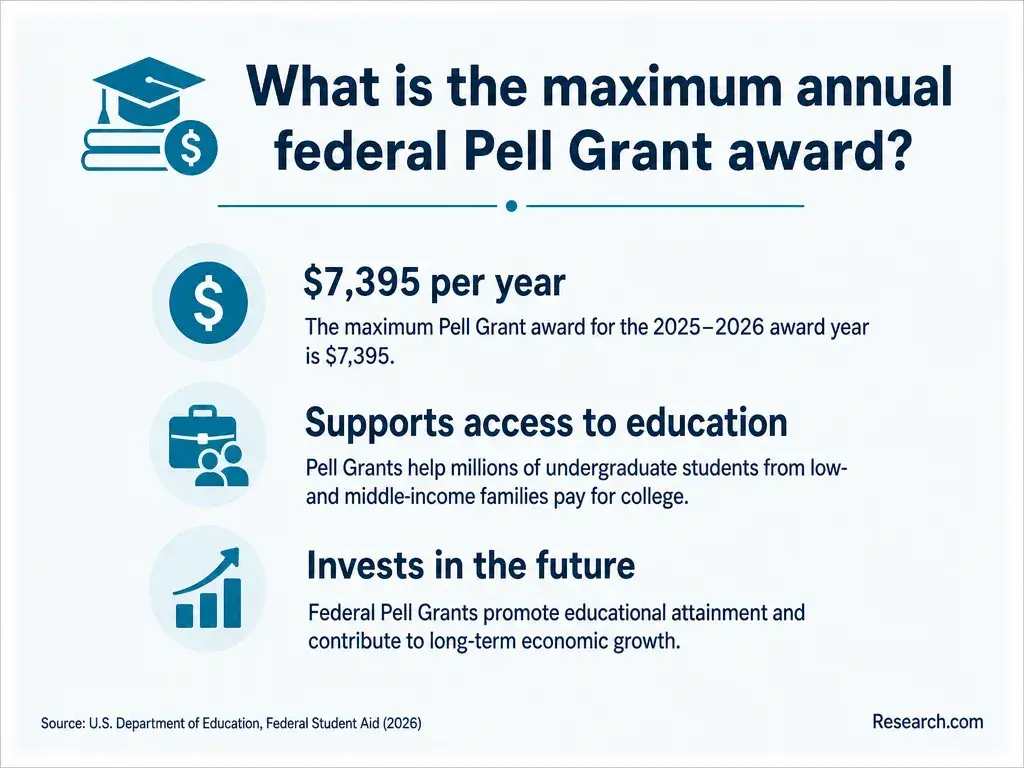
- Compare the cost of remaining required credits, not the advertised price of a full bachelor's degree; second-bachelor's students generally cannot receive federal Pell Grants.
- A second BS is most compelling when a target role calls for broad undergraduate business preparation and the approved degree audit offers a workable path. For a narrow skill gap, targeted study and relevant experience may be faster.
Is a second bachelor's in business administration necessary after international relations?
Usually not. International relations graduates already bring skills useful in global operations, procurement support, nonprofit administration, and stakeholder-facing work. First identify the job you want and the missing evidence an employer would need to see: financial-statement literacy, spreadsheet analysis, process improvement, customer research, or relevant work experience.
A second BS makes more sense when you need a broad business foundation, prefer structured undergraduate study, and can complete the requirements without substantial repeated coursework. It is less compelling when a specific course, certificate, supervised project, or entry-level role would address the gap. A BS and a BBA can both provide general business preparation, but their curricula and transfer rules are not interchangeable. If cost could change your decision, compare approved degree audits alongside lower-priced college options for business majors, rather than comparing advertised tuition alone.
How many credits transfer toward a second business administration bachelor's degree?
There is no dependable universal number. A school may accept coursework from your first degree without applying it to the new business major. Its second-degree policy may waive completed general education requirements while still requiring a specified business core, upper-division credits, and coursework taken at that institution.
The distinctions below explain why a large transfer-credit total does not necessarily mean a short route to graduation.
| Credit category | What an international relations graduate should check |
| General education | Whether the first bachelor's satisfies these requirements automatically or course by course |
| Business prerequisites and core | Whether economics, statistics, mathematics, or other prior courses match required business courses |
| Concentration and electives | Whether accepted courses fulfill a formal concentration or only open electives |
| Residency and upper-division work | How much must be completed at the new institution, regardless of prior credits |
Request an official evaluation using transcripts and, for disputed courses, syllabi. Ask the transfer office or registrar which credits are accepted, then ask a business adviser to identify exactly where each applies in the degree audit. If you are comparing a function-specific route, online project management degrees for transfer applicants may have different rules; request a separate audit rather than assuming the same credits will apply.
How much does a second bachelor's in business administration cost?
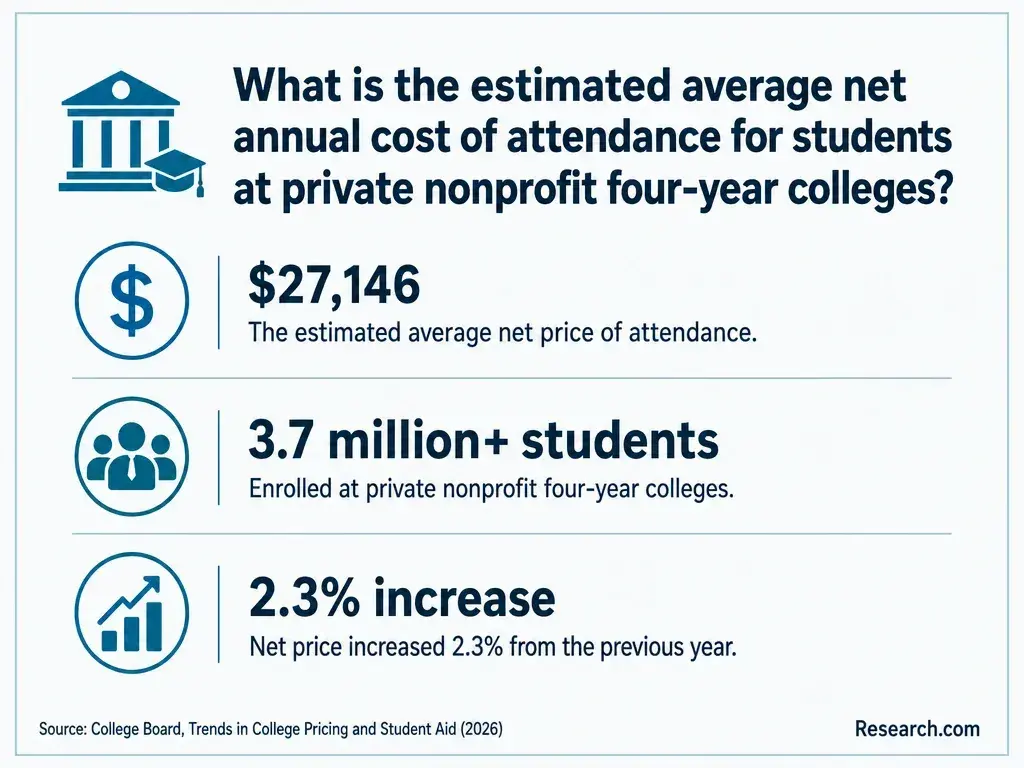
Your useful price comparison is remaining required coursework × the applicable tuition rate, plus fees and other completion costs. Check whether the school charges by credit, course, or term. Include books, software, proctoring, travel, and any income lost if you reduce work hours. A lower tuition rate may not be cheaper if more credits must be repeated or required courses are offered infrequently.
A prior bachelor's generally makes a student ineligible for federal Pell Grants, but it does not by itself rule out all federal student loans; eligibility and borrowing limits still apply. State, institutional, and employer benefits vary, and employer reimbursement may arrive only after you pay tuition and meet grade requirements. Use FAFSA planning for affordable business administration study as a starting point, then obtain a school-specific aid estimate. Compare your likely out-of-pocket cost and borrowing - not just the sticker price - with the narrower training option you would otherwise pursue.
Expect to provide transcripts documenting your completed bachelor's degree and prior coursework. Schools may also set a minimum GPA or require particular mathematics, economics, or introductory business courses before admission to the major. Admission to the university, admission to its business program, and approval of transfer credit can be separate decisions.
An international relations major is not inherently a barrier. Before applying, ask admissions whether the program accepts second-degree students, whether prerequisites must be finished before entry, and whether courses from your first degree meet them. For a closer look at possible preparation, review business administration admissions coursework and credit requirements, then confirm the rules for your intended school and entry term. If your first degree was earned outside the US, also ask which credential evaluation and English-language documentation, if any, the school requires.
Choose the format that lets you complete the remaining requirements reliably. Online study may help you keep working, but it may still involve live sessions, group presentations, proctored exams, fixed deadlines, or an in-person internship. Campus study may offer easier access to local recruiting and classmates, but commuting and scheduled attendance can raise its practical cost.
Ask for a schedule of required courses - not just a description of the program's delivery mode - and check whether those courses are offered when you need them. Online colleges offering accelerated bachelor's can be worth examining if speed matters, but an accelerated calendar does not remove business prerequisites or guarantee a lower total price.
Requirements vary, but a general business core commonly covers accounting, economics, finance, marketing, management, operations, statistics, and business law or ethics. Some programs add information systems, strategy, an internship, or a capstone. Your international relations coursework may overlap with economics, statistics, or international business, but only the receiving school can approve an equivalency or substitution.
Read the course sequence as well as the catalog list: accounting or quantitative prerequisites may delay later finance and analytics courses. If your goal is procurement or logistics rather than broad administration, compare the depth of the business curriculum with fast-track supply chain bachelor's programs. A specialized program is useful only if its required courses and approved transfer credits fit your goal better; an elective alone is not a formal concentration.
Completion time depends on the approved degree audit, how many courses you can take each term, prerequisite order, and when required classes are offered. Satisfying general education requirements through your first degree can shorten the route, but residency rules and an upper-division business core may still require substantial study.
Ask an adviser to map every remaining requirement to a specific term, including alternatives if a course is unavailable. If your main goal is organizational leadership, online leadership bachelor's programs with compressed schedules offer another timeline to compare. Check their remaining-credit and course-availability rules rather than treating the advertised schedule as your personal graduation date.
Match the alternative to the gap. Accounting or spreadsheet courses can address technical preparation; a business certificate can provide a structured cluster of courses; and an approved workplace project can help document applied ability. An MBA is a graduate degree with different admissions expectations, content, and costs - not simply a quicker version of an undergraduate business core.
For a transition into project coordination, pair relevant coursework with evidence that you can track schedules, budgets, risks, and stakeholder updates. A specialized degree may be appropriate if a full credential is important; find project management programs with lower total costs and compare their approved completion plans with the business BS. If you need only one functional skill, paying for another bachelor's is harder to justify.
International relations graduates can seek entry routes in operations coordination, procurement support, marketing coordination, or HR support. A business degree may strengthen preparation, but employers will also look for spreadsheets, communication, relevant projects, and experience with the function. Management titles generally require demonstrated responsibility beyond completing a degree.
For salary context, the US Bureau of Labor Statistics reports a May 2025 median annual wage of $102,320 for project management specialists and projects 7% employment growth from 2025 to 2035. That occupation-wide median is not an expected starting salary for a career changer. If project work is your target, compare the remaining cost of a general business BS with project management schools with competitive tuition and, more importantly, the opportunities each path offers to demonstrate project skills.
Does business administration require professional licenses or certifications?
No general license is required to hold a BS in Business Administration or work in most general business roles. Particular jobs can have separate requirements: accounting licensure, for example, depends on state rules, while financial-services activities may require role-specific licenses. Voluntary HR or project-management certifications have their own eligibility and examination rules; a business course does not automatically qualify you.
Check the requirements for your intended occupation before paying for another degree. If the role calls for a separate credential, compare that pathway's requirements and costs with the BS; if it calls for a bachelor's, confirm whether your existing international relations degree already satisfies that condition. For applicants weighing further study, grants versus loans for project management bachelor's study illustrates a financing distinction to check when a specialized degree - not a certification - is under consideration.
Other Things You Should Know About Business Administration
No. A double major is generally completed within one bachelor's program. A second bachelor's is a separate degree subject to the new institution's second-degree and graduation rules.
No. Completing another degree does not erase the first. Ask the new school how it displays transferred coursework and the newly awarded degree on its transcript.
Do not assume so. A business capstone may require distinct learning outcomes or enrollment at the awarding institution. Request a written decision on any proposed substitution.
No. Undergraduate courses may prepare you for graduate study, but an MBA program determines its own admission and degree requirements. Ask about specific waivers rather than assuming credits will carry forward.
- Student Eligibility for Pell Grants | ed.gov https://fsapartners.ed.gov/knowledge-center/fsa-handbook/2024-2025/vol7/ch1-student-eligibility-pell-grants
- Bachelor of Science in Business Administration: Admissions | CSU College of Business https://biz.colostate.edu/academics/undergraduate-programs/bsba/admissions
- Business - Accelerated BSBA to MBA Program https://www.saintpeters.edu/academics/graduate-programs/business/master-of-business-administration/accelerated-bsba-to-mba-program/
- Carlos Alvarez College of Business | The University of Texas at San Antonio Undergraduate Catalog Academic Catalog https://catalog.utsa.edu/undergraduate/business/
- General Education & Resident Credit Requirements | University of Wisconsin Flexible Option https://flex.wisconsin.edu/getting-started/general-education-requirements/
- Transfer Evaluation Processes - Office of the Registrar | Coles College of Business https://campus.kennesaw.edu/current-students/registrar/transfer/transfer-evaluation-processes.php
- Business Administration (B.A. and B.S.) - Academic Catalog https://bulletins.wayne.edu/undergraduate/school-business/bachelors-business-administration/
- Second Bachelors Degree | Admissions - Queens College | The Center for Excellence in Teaching, Learning & Leadership https://www.qc.cuny.edu/admissions/secondbachelorsdegree/
- Guidelines for Second Bachelor's Degree | towson.edu https://catalog.towson.edu/undergraduate/admissions/undergraduate-admissions/guidelines-second-bachelors-degree/
- Second Bachelor's - UF Online - University of Florida https://ufonline.ufl.edu/apply/admissions-requirements/second-bachelors/