2027 Freshman in High School: Guide for Parents, Teachers, and Students

Co-Founder and Chief Data Scientist
Freshman year is when high school starts to count: course levels, grades, study routines, and activities begin shaping later college and career choices. The stakes are real. The National Center for Education Statistics reported in 2024 that the U.S. public high school graduation rate was 87%, meaning early academic support still matters.
This guide is for parents, teachers, and ninth graders who want a clear plan. You will learn how to choose classes, build habits, compare school options, explore careers, and avoid decisions that limit future opportunities.
Key Things You Should Know
- Freshman-year grades usually become part of the cumulative high school transcript, so a weak start can lower GPA, while early improvement gives students more time to recover before college applications.
- College Board's 2024 data lists average published tuition and fees at $11,610 for in-state public four-year colleges and $43,350 for private nonprofit four-year colleges.
- BLS data published in 2024 shows workers with a bachelor's degree had median weekly earnings of $1,493 in 2023, compared with $899 for workers with only a high school diploma.
What does being a freshman in high school mean for future college and career planning?
Being a freshman in high school means a student has entered ninth grade, the first year that typically appears on the official high school transcript used for graduation, college admissions, scholarships, and some career-training programs. It does not mean a student must choose a lifelong career immediately. It means the student should start building academic range, reliable habits, and evidence of curiosity.
The most important decision in ninth grade is not "Which college will I attend?" but "Am I keeping enough doors open?" A freshman who takes appropriate core classes, asks for help early, and tries a few meaningful activities will have more options later than a student who coasts through the year and waits until junior year to think about planning.
Freshman year connects to college and career planning in four practical ways. These areas help families see why early choices matter without turning ninth grade into a high-pressure race.
| Freshman-year area | Why it matters later | What families should watch |
| Course placement | Math, science, language, and honors placement can affect access to advanced courses in later grades. | Whether the student is appropriately challenged without being overwhelmed. |
| Transcript record | Grades usually contribute to cumulative GPA and class rank where used. | Patterns of missing work, low test scores, or sudden declines. |
| Skill development | Reading, writing, organization, and problem-solving become harder to rebuild if ignored. | Whether study habits match the difficulty of high school work. |
| Career exposure | Early exploration helps students choose electives, clubs, and summer opportunities more wisely. | Whether the student is trying options rather than locking into one path too soon. |
Families should also understand that long-term education pathways vary. Some students may stop after a certificate, some may pursue an associate or bachelor's degree, and others may eventually consider graduate study, including accelerated options such as 1-year masters programs. The freshman-year goal is to build the foundation that keeps those paths available.
How can parents, teachers, and students work together to set strong academic foundations?
Strong academic foundations are built through shared responsibility. Parents provide structure and advocacy, teachers provide instruction and feedback, and students gradually learn to own their routines, choices, and communication.
The most effective collaboration is specific. Instead of saying "work harder," adults and students should agree on observable habits: completing assignments, checking grades weekly, attending help sessions, and asking questions before confusion becomes failure.
Use this role breakdown to clarify who is responsible for what. It prevents over-parenting on one side and under-supporting on the other.
| Person | Primary role | Signs the system is working |
| Student | Track assignments, attend class prepared, ask for help, and reflect on mistakes. | The student can explain current grades and upcoming deadlines. |
| Parent or guardian | Create routines, monitor patterns, communicate respectfully with school staff, and support healthy balance. | Conversations focus on problem-solving rather than blame. |
| Teacher | Explain expectations, give feedback, identify academic gaps, and recommend interventions. | The student knows what improvement looks like in that class. |
| Counselor | Guide course planning, graduation requirements, support services, and postsecondary exploration. | The family understands the student's four-year course sequence. |
A simple monthly routine can keep everyone aligned without making school feel like constant surveillance. The steps below work best when they are short, predictable, and focused on next actions:
- Review current grades, missing work, and upcoming tests once a week at a consistent time.
- Choose one academic priority for the next two weeks, such as improving quiz scores in algebra or turning in English drafts on time.
- Have the student contact the teacher first when a problem is manageable, with the parent stepping in if the issue continues.
- Schedule counselor check-ins before course registration, after major grade changes, or when the student is considering a program change.
- End each review by naming one thing that is improving so the process does not feel only corrective.
Common mistakes include waiting until report cards arrive, treating every low grade as a crisis, or assuming a capable student automatically knows how to study. High school success often depends less on intelligence and more on planning, repetition, and willingness to use support early.
Which core classes and electives should freshmen take to keep college options open?
Freshmen should take a balanced schedule that satisfies graduation requirements, prepares them for college-entry expectations, and leaves room for exploration. In most cases, that means English, math, science, social studies, and physical education or health, plus a world language, arts, technology, or career-focused elective when available.
The right level matters as much as the subject. Honors, Advanced Placement preparation, International Baccalaureate pathways, dual enrollment, and career and technical education can all be valuable, but only when the student has the readiness and support to succeed.
This table summarizes common freshman course choices and how they affect future flexibility. Families should confirm local graduation requirements because state and district rules differ.
| Course area | Typical freshman option | Decision value |
| English | Grade 9 English or honors English | Builds reading, writing, research, and discussion skills needed across all college and career paths. |
| Math | Algebra I, geometry, or higher placement | Influences later access to algebra II, precalculus, statistics, calculus, and STEM pathways. |
| Science | Biology, physical science, or honors science | Keeps health, engineering, environmental, and laboratory science options open. |
| Social studies | World history, geography, civics, or local equivalent | Develops evidence-based reasoning and prepares students for government, economics, and history courses. |
| World language | Level I or continuation from middle school | Can support college admissions requirements and global career interests. |
| Elective | Arts, computer science, business, engineering, journalism, agriculture, or health sciences | Lets students test interests before committing to advanced courses or career programs. |
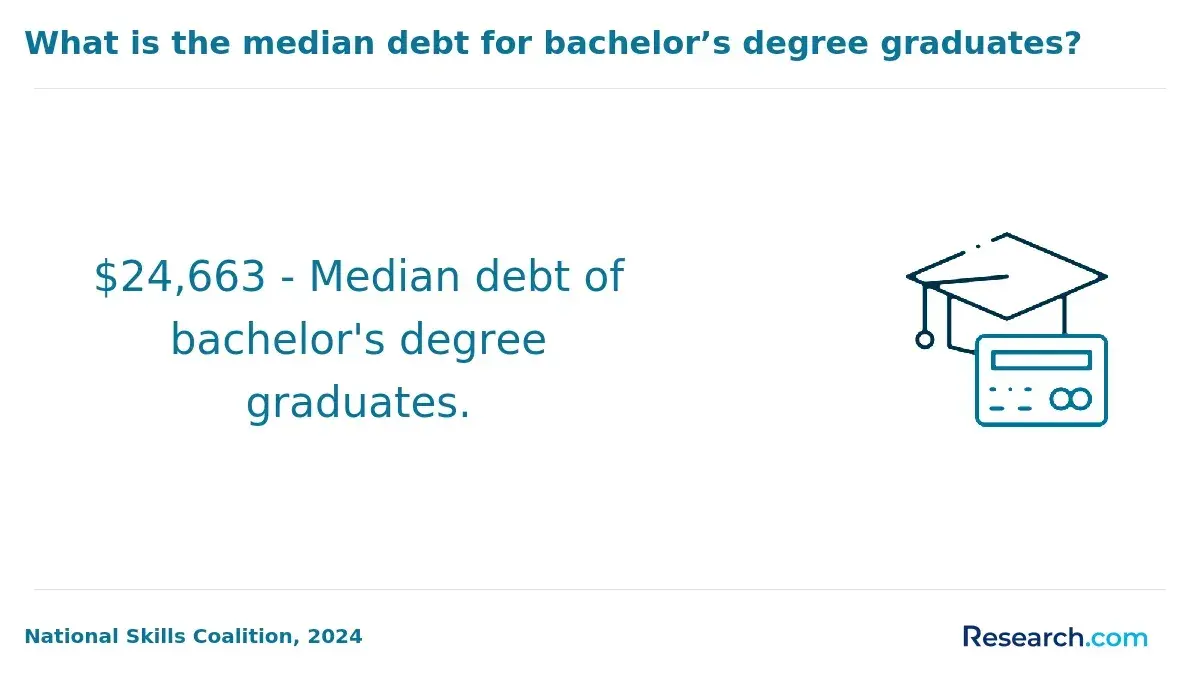
Freshmen who are unsure about college should still choose courses that preserve options. A student may later decide to pursue an affordable bachelor's pathway, transfer route, or online program, so families comparing long-term cost should understand resources such as the cheapest online degrees before assuming one college format is the only realistic choice.
Red flags include dropping a world language too early without checking college expectations, choosing the easiest schedule only to protect GPA, or taking too many advanced courses for status rather than fit. A strong schedule is rigorous enough to show readiness but realistic enough for the student to learn deeply and stay healthy.
How do freshman-year grades, GPA, and study habits affect college admissions later on?
Freshman-year grades matter because they usually become part of the cumulative GPA, which many colleges, scholarship programs, athletic eligibility systems, and selective high school programs review. A low freshman GPA does not ruin a student's future, but it can make later years more demanding because the student has fewer semesters left to raise the average.
GPA is commonly calculated by converting course grades into points, averaging them, and sometimes adding weight for honors, AP, IB, or dual-enrollment courses. Schools calculate GPA differently, so families should ask whether the transcript shows weighted GPA, unweighted GPA, or both.
The table below shows why the same grade can have different meaning depending on context. It is a comparison tool, not a universal rule, because grading scales vary by school.
| Grade pattern | What it may signal | Best interpretation |
| Mostly A's and B's in appropriate classes | Strong readiness and consistent habits | The student may be ready for selective electives or higher course levels. |
| High grades with little effort | Possible under-challenge | The student may need more rigorous work or enrichment to grow. |
| Mixed grades with missing assignments | Organization issue more than ability issue | Systems for tracking work may matter more than tutoring at first. |
| Low test scores despite completed work | Study method, reading comprehension, or concept gaps | The student may need targeted practice, teacher help, or assessment review. |
| Sudden decline across classes | Possible stress, attendance, health, or adjustment issue | Adults should look beyond grades and check well-being. |
Study habits are the controllable part. Freshmen often discover that middle school strategies, such as reviewing only the night before a test, are not enough for high school. The practical goal is to shift from emergency studying to steady learning.
Students can build stronger habits by focusing on a few repeatable behaviors rather than trying to overhaul everything at once:
- Use one planner, app, or learning-management system checklist for every class instead of relying on memory.
- Start long assignments the day they are given by creating a title, outline, source list, or first problem set.
- Study in short sessions across several days, especially for math, science, language, and history tests.
- Review graded work to identify the type of mistake: content gap, careless error, weak explanation, or time management.
- Ask for help while the grade is still recoverable, not after the final week of the term.
A common admissions misconception is that colleges look only at junior year. In reality, many colleges review the full transcript, but they also consider course rigor, grade trends, school context, and available opportunities. An upward trend can help, but it is easier to show growth when the student starts paying attention in ninth grade.
What extracurriculars, clubs, and activities are most valuable to start in ninth grade?
The most valuable freshman activities are not necessarily the most prestigious. They are the activities a student can sustain, grow in, and eventually contribute to with skill, leadership, service, or creativity.
Freshman year is a good time to sample activities without overloading the schedule. Students should try enough options to discover interests, then narrow their commitments as they learn what fits their strengths, values, and time.
Use this comparison to decide which activities are worth a freshman's time. The goal is not to collect memberships; it is to build meaningful involvement.
| Activity type | Good fit for students who | Long-term value |
| Academic clubs | Enjoy subjects such as math, robotics, science, debate, writing, business, or history | Can lead to competitions, projects, mentoring, and advanced course confidence. |
| Arts and media | Like music, theater, visual arts, design, photography, broadcasting, or journalism | Builds portfolios, communication skills, discipline, and creative identity. |
| Sports and fitness | Want teamwork, physical challenge, structure, and school connection | Develops resilience, time management, leadership, and wellness habits. |
| Service and civic groups | Care about community issues, peer support, advocacy, or volunteering | Shows responsibility and can connect to public service, education, health, or nonprofit interests. |
| Career and technical organizations | Want practical skills in health care, agriculture, engineering, business, culinary arts, or skilled trades | Can connect classroom learning to credentials, internships, and workplace expectations. |
Freshmen should evaluate activities after the first semester. If every activity feels stressful, the schedule may be too crowded. If nothing feels engaging, the student may need to try something outside the school building, such as community volunteering, local arts programs, coding groups, youth employment, faith-based service, or recreation leagues.
Good extracurricular planning follows a simple sequence:
- Try two to four activities early in the year, including at least one familiar interest and one new option.
- Track time demands honestly, including travel, practice, meetings, performances, competitions, and homework impact.
- Choose one or two activities to deepen by spring, based on interest, growth, friendships, and future opportunity.
- Look for contribution, such as helping organize an event, mentoring younger students, building a project, or serving the community.
- Reassess before sophomore year so the student's commitments match academic goals and well-being.
Colleges and employers tend to value consistency, initiative, and impact more than a long list of shallow involvement. A freshman who starts small but grows into a meaningful role by junior or senior year is building a stronger story than a student who signs up for everything and follows through on little.
How should freshmen begin exploring potential college majors and career pathways?
Freshmen should explore majors and careers through low-risk exposure: classes, clubs, conversations, projects, job shadowing, reading, and short skills-based experiences. The goal is not to choose a permanent major at age 14 or 15. The goal is to connect school subjects to real problems people solve at work.
Career exploration should include both interests and labor-market reality. BLS data published in 2024 showed median weekly earnings of $1,493 for workers with a bachelor's degree in 2023, but that figure is not a guarantee for any one major or career. It tells families that education level can matter economically, while the specific field, location, experience, and skills still shape outcomes.
The table below helps students connect common freshman interests to possible pathways. It should be used as a conversation starter, not a fixed track.
| Student interest | Related high school choices | Possible future pathways |
| Technology and problem-solving | Computer science, robotics, math team, engineering design | Software development, cybersecurity, data analysis, information systems, engineering |
| Helping people | Biology, health science, service clubs, psychology electives where available | Nursing, counseling, education, public health, social work, therapy fields |
| Business and leadership | Business electives, entrepreneurship clubs, student government, accounting basics | Management, marketing, finance, operations, human resources, entrepreneurship |
| Writing and communication | Journalism, debate, yearbook, theater, media production | Communications, law, public relations, technical writing, publishing, policy |
| Hands-on building or repair | Career and technical education, engineering, agriculture, manufacturing, automotive | Skilled trades, construction management, advanced manufacturing, logistics, applied engineering |
Current trends make early exploration especially useful. AI tools are changing how students write, research, code, design, and analyze information, while employers increasingly value adaptability, communication, judgment, and technical fluency. Students interested in flexible or technology-enabled work can start comparing fields through resources on the best degrees for remote work, but they should also learn which careers require in-person labs, clinical training, fieldwork, or licensure.
A practical freshman exploration plan can be simple. Students should keep notes on what they enjoy, what feels difficult in a good way, and what they do not want in a future work environment. Consider the following:
- Interview one adult each semester about what they do, what education they needed, and what surprised them about the job.
- Choose at least one elective or club that tests a possible career interest.
- Use school projects to explore real topics, such as renewable energy, sports analytics, child development, public policy, or app design.
- Attend career days, technical program open houses, college fairs, or employer events when available.
- Reflect on preferred work style, including teamwork, independence, creativity, structure, physical activity, and problem-solving.
The biggest mistake is confusing a favorite class with a complete career plan. A student may enjoy biology but dislike clinical care, or enjoy coding but dislike long solo debugging sessions. Exploration should test both the subject and the daily work style.
What is the best way to compare public, private, and charter high schools and programs?
Comparing public, private, and charter high schools requires more than looking at reputation or test scores. Families should evaluate academic fit, student support, transportation, cost, safety, course access, extracurricular options, special education services, culture, and graduation outcomes.
School type alone does not determine quality. A public school may offer extensive AP and career programs; a private school may offer smaller classes but fewer specialized courses; a charter school may provide a strong theme-based model but limited transportation or extracurricular depth. The best choice is the environment where the student can learn, belong, and progress toward graduation and postsecondary goals.
This comparison highlights the major trade-offs families should examine. Local details matter, so families should verify policies directly with each school.
| School type | Potential strengths | Questions to ask |
| Traditional public high school | Broad course catalogs, athletics, arts, special services, transportation, and neighborhood access | Are advanced courses, counseling, and support services accessible to freshmen? |
| Public charter high school | Specialized missions, smaller communities, project-based models, or college-prep themes | How are admissions, transportation, discipline, teacher turnover, and special education services handled? |
| Private high school | Mission-driven culture, religious or independent models, smaller settings, and sometimes strong advising | What is the total cost, including tuition, fees, uniforms, technology, trips, and aid policies? |
| Magnet or selective program | Focused academics in STEM, arts, international studies, health, or other themes | Does the student want the workload and commute that come with the program? |
| Career and technical high school or academy | Hands-on training, industry exposure, certifications, and employer connections | Can the student still complete college-prep coursework if plans change? |
Families should look for evidence, not just claims. Useful evidence includes graduation rates, freshman course failure rates, counselor availability, teacher qualifications, student attendance, college-credit options, career certification pass rates, discipline policies, and examples of student work.
Before choosing a school or program, families can use these questions during tours, open houses, or counselor meetings:
- What ninth-grade supports are available for students who struggle in math, reading, writing, organization, or attendance?
- How does the school place freshmen into honors, advanced, language, math, or support courses?
- What percentage of freshmen remain on track for graduation after ninth grade, and how does the school intervene when they are not?
- Which AP, IB, dual-enrollment, career, arts, and world language options are actually available to ninth and tenth graders?
- How does the school communicate with families about grades, missing work, behavior, and mental health concerns?
A common red flag is a school that emphasizes college acceptance slogans but cannot clearly explain freshman support, course sequencing, or student advising. Another is choosing a school primarily because it is prestigious, even if the commute, workload, or culture would make daily success harder for the student.
How can families evaluate online, hybrid, and traditional classroom options for freshmen?
Online, hybrid, and traditional classroom options can all work for freshmen, but they require different levels of independence, adult supervision, social support, and instructional design. Families should choose based on the student's learning habits, not only convenience.
A traditional classroom usually provides the most built-in structure: daily schedule, teacher presence, peer interaction, and immediate reminders. Online learning can offer flexibility and access to courses not available locally, but it may require stronger self-management. Hybrid models sit between the two, combining in-person support with online coursework.
The table below compares the formats families most often consider for ninth grade. It focuses on fit, because the same format can be excellent for one student and frustrating for another.
| Format | Best fit | Potential drawback |
| Traditional in-person | Students who benefit from routine, direct teacher contact, labs, arts, athletics, and peer community | Less schedule flexibility and possible limits if the local school lacks specialized courses. |
| Fully online | Students with strong self-direction, health needs, travel constraints, advanced course needs, or specialized schedules | Isolation, procrastination, screen fatigue, and limited hands-on experiences can become problems. |
| Hybrid | Students who need flexibility but still benefit from in-person check-ins, labs, tutoring, or community | Schedule coordination can be confusing if expectations are not clearly organized. |
| Home-based or independent study with school oversight | Students needing customized pacing or temporary alternatives for medical, safety, or family reasons | Families may carry more responsibility for structure, socialization, and academic monitoring. |
Families considering online or hybrid ninth grade should evaluate the quality of the program, not just the label. A strong program includes credentialed teachers, live or responsive support, clear pacing, accessible counseling, lab alternatives where needed, accommodations for students with disabilities, and transparent grading.
The following checks help families avoid weak programs and unrealistic expectations:
- Ask how often students interact live with teachers and how quickly teachers respond to questions.
- Confirm whether courses meet state graduation requirements and NCAA, college, or scholarship eligibility needs if relevant.
- Review how tests, labs, group projects, and academic integrity are handled.
- Check whether the student will have access to counseling, tutoring, special education services, clubs, and social opportunities.
- Create a daily schedule before enrollment, including start time, breaks, exercise, study blocks, and adult check-ins.
A major mistake is choosing online school because a student is already behind, without adding structure. Flexibility helps only when paired with pacing, feedback, and accountability. For many freshmen, the best format is the one that makes good habits easier to repeat every day.
What steps can freshmen take to build a four-year high school and college prep plan?
A four-year high school plan is a working map of courses, credits, activities, tests, career exploration, and postsecondary preparation. It should be flexible, because students mature and interests change, but it should be specific enough to prevent missed requirements.
Cost awareness should be part of planning early. College Board's 2024 pricing report listed average published tuition and fees of $11,610 for in-state public four-year colleges and $43,350 for private nonprofit four-year colleges for the 2024-25 academic year.
Those are sticker prices, not final net prices, but they show why families should discuss affordability, scholarships, community college transfer, dual enrollment, and work-based pathways before senior year.
The table below outlines typical planning priorities by grade. Students should adapt it to local graduation rules, college goals, and career interests.
| Grade | Main planning focus | Evidence of progress |
| 9th grade | Adjust to high school, complete core courses, build study systems, try activities | Student is passing required courses and can name interests to explore further. |
| 10th grade | Increase appropriate rigor, deepen activities, explore careers, consider early college or technical options | Student has a draft course sequence and understands graduation requirements. |
| 11th grade | Prepare for college, career, military, apprenticeship, or workforce pathways; take key tests if needed | Student has a realistic list of postsecondary options and understands costs. |
| 12th grade | Apply, compare offers, finish requirements, and transition to the next step | Student chooses a path with a clear financial and academic plan. |
Freshmen can begin with a simple planning process. The plan should be reviewed at least once per semester and always before course registration:
- List graduation requirements by subject, including credits, exams, service hours, career requirements, and state-specific rules.
- Map the likely math, science, English, social studies, and world language sequence from grades 9 through 12.
- Add possible advanced, dual-enrollment, technical, arts, or elective courses that match the student's interests.
- Identify support needs, such as tutoring, executive-function coaching, language support, disability accommodations, or mental health services.
- Discuss broad postsecondary options, including four-year college, community college, apprenticeships, military pathways, employment, and gap-year programs.
- Revisit the plan after each semester using actual grades, stress level, activity commitments, and changing interests.
Some students will later add short credentials to a degree plan, especially in technology, business, health care support, or skilled fields. Families can explore how online certificates fit into broader education planning, but they should verify whether a credential is recognized by employers, colleges, or licensing bodies before paying for it.
The biggest planning mistake is building a schedule around prestige instead of purpose. A student does not need the hardest possible version of every class. They need the strongest sustainable program that supports learning, well-being, and credible next-step options.
How can students and families access counseling, support services, and enrichment resources?
Freshmen and families should use support services before problems become emergencies. High schools often provide academic counseling, college and career advising, tutoring, special education services, English learner support, mental health referrals, attendance teams, enrichment programs, and family engagement resources.
Support is especially important because academic issues and well-being often overlap. The CDC's 2023 Youth Risk Behavior Survey, released in 2024, reported that 40% of high school students experienced persistent feelings of sadness or hopelessness. Families should treat sudden withdrawal, attendance problems, sleep changes, missing work, or sharp grade drops as signals to ask questions, not simply as motivation problems.
This table summarizes common support options and what they are designed to address. Availability varies by school, district, and state.
| Resource | What it can help with | Who to contact first |
| School counselor | Course planning, graduation requirements, college and career planning, social concerns | Counseling office or assigned counselor |
| Teacher help sessions | Class-specific confusion, reassessment options, missing work, study strategies | Classroom teacher |
| Tutoring or academic center | Skill gaps, homework support, test preparation, writing help | Teacher, counselor, or tutoring coordinator |
| Special education or 504 team | Disability-related accommodations, services, and learning supports | Case manager, counselor, or school administrator |
| Mental health professional | Anxiety, depression, stress, grief, crisis concerns, emotional regulation | School counselor, social worker, nurse, or local provider |
| Enrichment programs | Advanced learning, summer programs, career exposure, arts, STEM, service, leadership | Counselor, teacher, program coordinator, or community organization |
Families can make support easier to access by keeping communication clear and documented. When reaching out, describe the concern, what has already been tried, and what kind of help is being requested:
- Email the teacher when a class-specific problem appears, using the student's own message whenever appropriate.
- Ask the counselor for a graduation-credit review if the student fails a course, changes schools, or considers a program switch.
- Request evaluation information if a student has ongoing difficulties with reading, writing, attention, anxiety, processing speed, or organization.
- Use community resources such as libraries, youth centers, local colleges, nonprofits, employer programs, and recreation departments for enrichment.
- In urgent safety or mental health situations, contact local emergency services, a crisis line, or a qualified health professional immediately.
Students who want practical career exposure can also compare short, skill-based pathways, including quick certifications that pay well, as they get older. For freshmen, the best use of these resources is exploration; families should be cautious about paying for credentials before confirming age eligibility, employer recognition, safety rules, and whether the certification fits a realistic career pathway.
A common red flag is a student silently struggling because they believe asking for help means they are not capable. Adults should normalize support as part of high performance. Strong students, athletes, artists, and professionals all use coaching, feedback, and practice.
Other Things You Should Know About Freshman in High School
A freshman should focus first on passing core classes, building reliable study habits, learning how to ask for help, and joining one or two activities that support belonging and growth. These basics create the foundation for later honors courses, college planning, career exploration, and leadership.
Many colleges review the full high school transcript, including ninth grade, although they may also consider grade trends, course rigor, school context, and personal circumstances. A weak freshman year can be improved, but students should address problems early so they have more time to raise GPA and strengthen habits.
Most freshmen do best by trying a few activities early and then narrowing to one or two meaningful commitments. Depth, consistency, and contribution are usually more valuable than joining many clubs with little involvement.
Yes, but only as exploration. Freshmen should connect interests to classes, clubs, projects, and conversations with adults in different careers. They do not need to choose a major yet; they need to learn what subjects, problems, and work environments fit them.
References
- Why Do Students Prefer Blended Learning over Traditional Learning? | CAE https://www.cae.net/why-students-prefer-blended-learning-over-traditional-learning/
- Method Schools — Tuition-free SoCal TK-12 charters https://methodschools.org/words
- What to Do (and When) for College Prep in High School | Covenant Christian Academy https://www.covenantchristian.net/blog/what-to-do-and-when-for-college-prep-in-high-school/
- 100 Extracurricular (ECs) Activities for High School and College Students https://www.citizensbank.com/student/articles/what-extracurriculars-activities-do-colleges-look-for.aspx
- 160 Extracurricular Activities for High School Students https://kdcollegeprep.com/extracurricular-activities-160-ideas-how-to-choose-wisely/
- 8 Ways Families Support Student Mental Health Resources https://parentpowered.com/blog/schools-page/student-mental-health-resources/