2027 Social Work Voter Engagement Programs: Professional Roles and Organizational Policies
Audited and Verified:
Our Editorial and Data Verification Process
Research.com uses government datasets, official education statistics and primary institutional information to support its career and degree guides. Our review process checks factual accuracy, occupational definitions, source dates and the requirements associated with the credentials discussed.
How This Article Was Fact-Checked
Our editorial team verifies salary estimates, employment projections, education requirements and program information against original data providers and official organizations. Salary figures are checked against the relevant occupational definitions and reporting periods. Information about licensure, accreditation and required in-person training is reviewed separately.
Fact-checked and verified on:

Co-Founder and Chief Data Scientist
A social service agency may want to help clients participate in elections, but good intentions are not enough: staff need clear boundaries around political neutrality, privacy, accessibility, and their professional roles. This guide is for social workers, students, and human services professionals considering voter engagement work.
It explains what these programs do, how agencies can govern them, and when a social work degree - or a more targeted training route - makes sense. The goal is to help you choose a role and educational path that fit the work you actually want to perform.
Key Things You Should Know
- Nonpartisan voter engagement can include registration information, election reminders, and help locating official voting resources; it should not pressure clients to register, vote, or support a candidate.
- Agency rules depend on its funding, tax status, setting, and jurisdiction. A written policy should address neutrality, consent, privacy, staff training, and referrals to election officials.
- A BSW or MSW can prepare someone for broader social service or policy roles, but voter outreach alone usually does not require a social work license or a DSW. The appropriate credential depends on the job's other duties.
What are social work voter engagement programs?
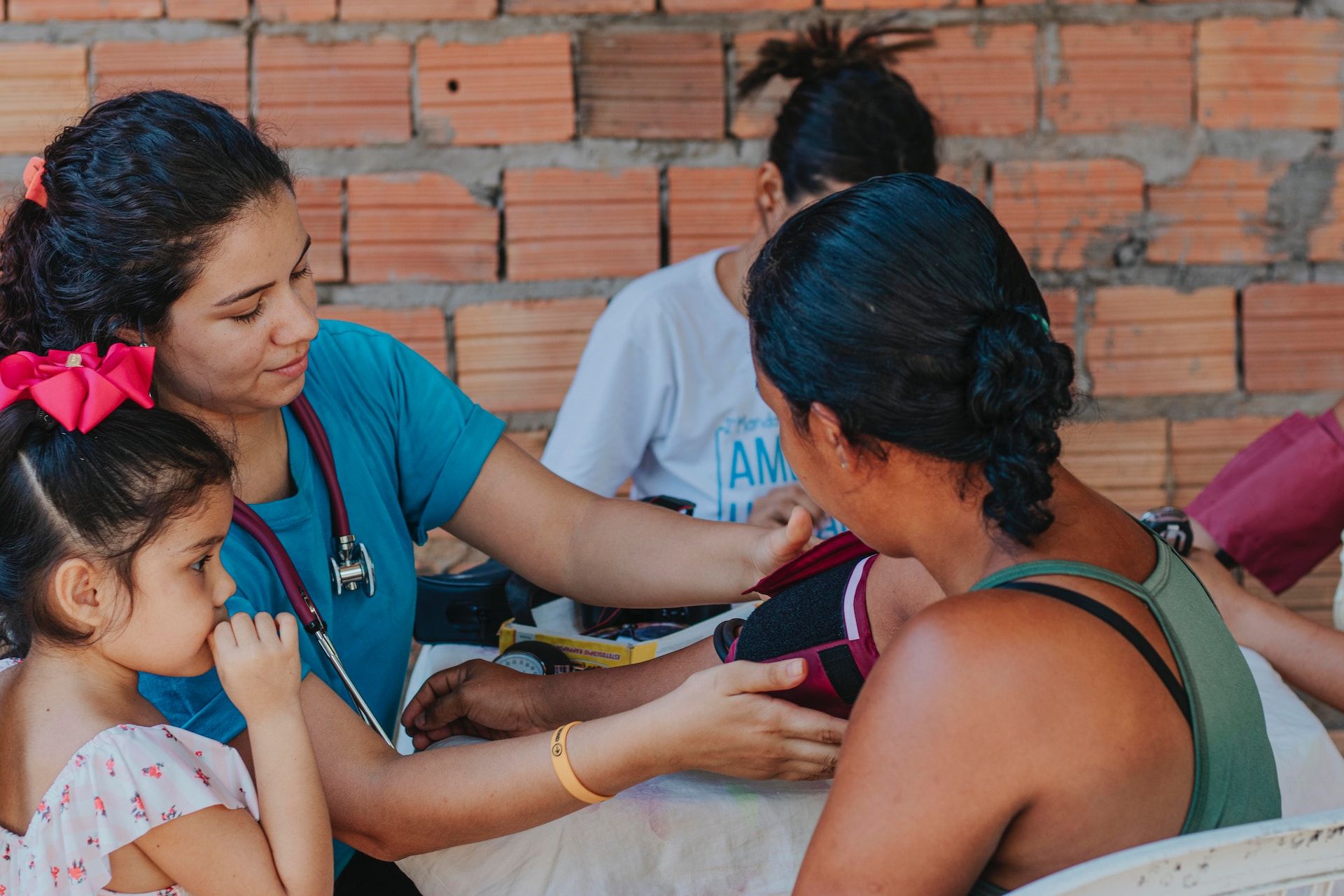
Social work voter engagement programs are organized efforts to reduce practical barriers to civic participation for people served by social agencies. Depending on the setting, activities may include sharing official registration and election information, explaining where to find accessible voting options, or connecting clients with a local election office. Participation must be voluntary; receiving services should never depend on a client's political activity.
These initiatives may sit within a housing nonprofit, community health organization, school-connected service, or public benefits office. They are agency programs, not social work degree programs. If your goal is a social service career rather than a single outreach project, a guide to accredited undergraduate social work study can help you assess whether BSW preparation serves that broader goal.
The most useful program design starts with a service-access question: Which clients face barriers, and what assistance is the agency authorized and equipped to offer? Staff should direct questions about eligibility, deadlines, and voting procedures to the relevant election authority rather than guessing.
What roles do social workers play in voter engagement?
Social workers may identify participation barriers during ordinary service conversations, develop accessible outreach materials, train colleagues, coordinate community partners, or evaluate whether clients can reach reliable election information. Their person-in-environment perspective helps connect an individual concern - such as transportation or disability access - to the systems that shape it.
The role should match the worker's position. A case manager might offer an approved resource sheet without making voting a condition of service. A community organizer might coordinate a neutral information event. A supervisor might review scripts, complaints, and documentation practices. For people comparing advocacy with other positions, MSW career directions beyond a single job title provide useful context.
Voter engagement is not psychotherapy, an eligibility determination, or permission to speak for a client. Outreach coordinators and volunteers without social work degrees may also perform approved tasks. The degree becomes more relevant when the position additionally requires social work assessment, supervision, program leadership, or a protected professional title.
What organizational policies govern nonpartisan voter engagement?
There is no single policy that fits every agency. A tax-exempt charitable organization must avoid partisan campaign intervention; public agencies, grant recipients, schools, healthcare settings, and public employees may face additional rules. Some public assistance and disability-service agencies also have specific voter-registration duties under the National Voter Registration Act. Leadership should have counsel or an appropriate compliance officer review the rules that actually apply before launching an initiative.
A practical written policy should tell staff what they may do and how to respond when a client declines. The following controls address distinct risks rather than treating "be nonpartisan" as a complete procedure:
- Neutrality: Use approved, consistently presented information; prohibit candidate endorsements or selective assistance based on political views.
- Consent and service boundaries: Make participation optional, separate it from benefits and case decisions, and explain when staff must refer a question to election officials.
- Privacy: Limit collection of registration or participation information, restrict access, and follow applicable records and confidentiality rules.
- Access and accountability: Provide language and disability accommodations, train staff, assign a policy owner, and establish a way to report concerns.
A student placed at an agency must follow both its approved procedures and the school's learning agreement. When assessing a potential online MSW placement, ask how the program coordinates agency orientation and supervision; field education support for distance MSW learners is particularly relevant when a local site has its own outreach restrictions.
For a BSW or MSW, check the specific program's Council on Social Work Education accreditation status and the requirements of any state where you intend to seek a license. Institutional accreditation, social work program accreditation, graduation, license eligibility, and license issuance are separate matters. A social work degree alone does not grant a license or independent clinical authority.
Voter outreach itself generally is not a reason to pursue clinical licensure. A job combining outreach with clinical services, however, may require an appropriate state license and additional supervised experience. Before enrolling for that broader role, use a process for checking professional eligibility when choosing an MSW, and confirm the result with the relevant program and licensing board.
State rules may also govern use of the "social worker" title even when the assigned outreach tasks are nonclinical. Read the actual job posting and jurisdiction's rules rather than assuming a community-organizing title and a licensed social work title are interchangeable.
Useful coursework includes social welfare policy, community practice, ethics, research methods, and program evaluation. Students can practice writing neutral information, assessing accessibility, and distinguishing a client's expressed goal from an agency's outreach target. Skills are strongest when a field instructor can observe how the student handles consent, boundaries, and referrals.
An appropriate field project might be an agency-approved review of whether publicly available voting information is accessible to its service population. Its learning agreement should specify permitted tasks, supervision, and how the student will assess the work without assuming access to confidential client records. Ordinary employment or volunteering does not automatically count as accredited field education.
Field learning is also different from post-degree clinical supervision. Students planning a separate clinical career should review social work clinical hour requirements and completion planning rather than assuming voter-engagement placement hours satisfy a licensing board's clinical requirements.
Duration and price depend on the school, prior credits, enrollment pace, and field sequence. A BSW is typically planned as an undergraduate degree; a traditional MSW has more foundation study than an eligible advanced-standing route. Neither a compressed calendar nor online classes eliminate required learning or approved field work.
Compare each school's published tuition and fees against a realistic personal schedule. Add books, technology, placement travel, screening, and any reduced paid hours during field education. Short-format MSW program comparisons can identify options, but confirm whether their weekly class and field commitments are workable before treating a shorter calendar as a savings.
If the intended job is voter-outreach coordination and does not require an MSW, compare the degree's full cost with targeted training and relevant agency experience. Paying for graduate education solely for a task an employer assigns to trained nonlicensed staff may be a poor fit.
What are the salary prospects and job outlook for related careers?
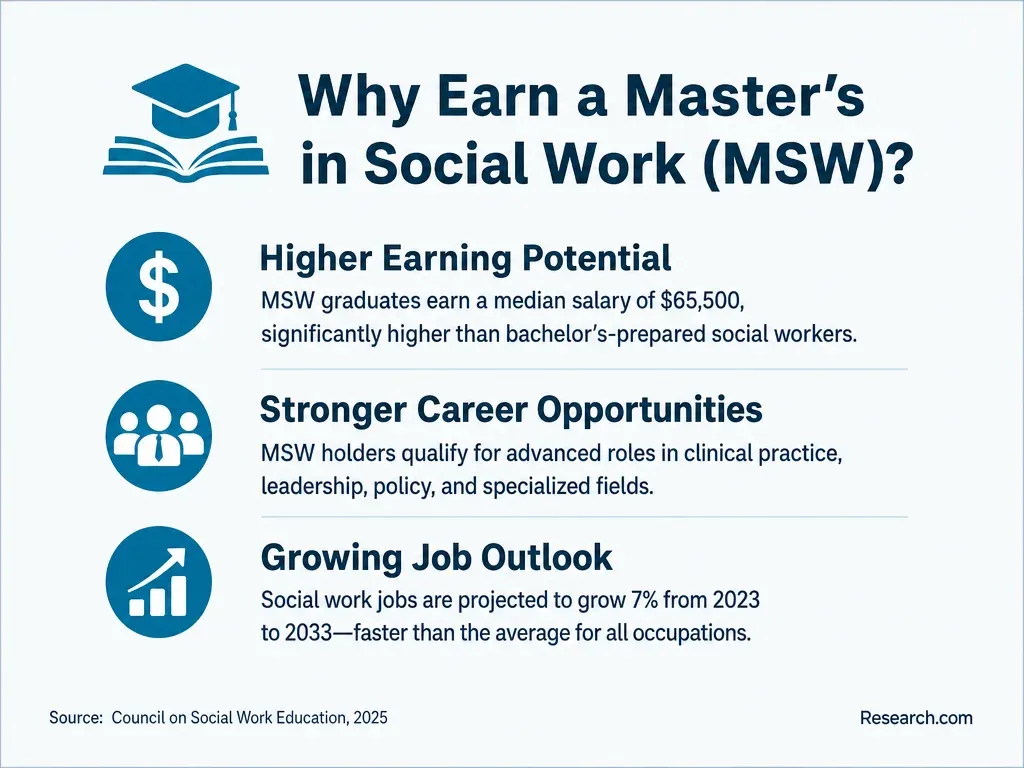
There is no single federal wage category for "social work voter engagement specialist." For context, the U.S. Bureau of Labor Statistics reports a May 2025 median annual wage of $61,780 for social workers across specialties and projects 6% employment growth from 2025 to 2035. These occupation-wide figures describe neither voter-outreach jobs specifically nor the salary a new BSW or MSW graduate will receive.
Pay for a particular position depends on whether its primary duties are social work, community organizing, program administration, or another function, as well as its employer, location, funding, and required credentials. Compare postings with matching duties and qualifications. If an MSW is required for the broader role, planning the cost of an online MSW can help you weigh that requirement against likely earnings without assuming the degree will produce a raise.
Other Things You Should Know About Social Work
Do not assume so. Rules for ballot assistance vary by jurisdiction and may restrict who can help and how. Refer the client to the election authority's current instructions and follow agency policy; never choose responses for them.
Only if there is a legitimate, approved reason and a lawful, privacy-conscious process. An agency can often evaluate its own outreach activity without recording an individual client's voting behavior.
Potentially, but it should first review funding restrictions, neutrality requirements, accessibility, insurance, and applicable election rules. Transportation must not be conditioned on how someone votes.
Personal activity and speaking for an employer are different. Staff should check applicable employment rules, avoid implying agency endorsement, and never use client information or agency resources for personal political activity.
- Restriction of political campaign intervention by Section 501(c)(3) tax-exempt organizations | Internal Revenue Service https://www.irs.gov/charities-non-profits/charitable-organizations/restriction-of-political-campaign-intervention-by-section-501c3-tax-exempt-organizations
- How to vote in the United States https://vote.gov/guide-to-voting
- VOTER LISTS: REGISTRATION, CONFIDENTIALITY, AND VOTER LIST MAINTENANCE | U.S. Election Assistance Commission https://www.eac.gov/election-officials/voter-lists-registration-confidentiality-and-voter-list-maintenance
- Voter accessibility laws | usa.gov https://www.usa.gov/voter-accessibility-laws
- Resources for Schools and Organizations | Voting is Social Work https://voting.socialwork.uconn.edu/resources-for-schools-and-organizations/
- Code of Ethics: English | socialworkers.org https://www.socialworkers.org/about/ethics/code-of-ethics/code-of-ethics-english
- Staying Nonpartisan: Permissible Election Activities Checklist | Nonprofit VOTE https://www.nonprofitvote.org/resource/staying-nonpartisan-permissible-election-activities-checklist-2/
- Nonprofit Nonpartisan Voter Engagement Guide | councilofnonprofits.org https://www.councilofnonprofits.org/nonprofit-nonpartisan-voter-engagement-guide
- The 2026 Florida Statutes | state.fl.us https://www.leg.state.fl.us/statutes/index.cfm
- All Social Workers Can Help With Voting | Social Work Today Magazine https://www.socialworktoday.com/archive/exc_101624.shtml