2027 Fastest Accredited Online Retail Management Programs: Accelerated Degrees and Completion Times
Audited and Verified:
Our Editorial and Data Verification Process
Research.com uses government datasets, official education statistics and primary institutional information to support its career and degree guides. Our review process checks factual accuracy, occupational definitions, source dates and the requirements associated with the credentials discussed.
How This Article Was Fact-Checked
Our editorial team verifies salary estimates, employment projections, education requirements and program information against original data providers and official organizations. Salary figures are checked against the relevant occupational definitions and reporting periods. Information about licensure, accreditation and required in-person training is reviewed separately.
Fact-checked and verified on:

Co-Founder and Chief Data Scientist
The hard part is not finding an online retail management degree; it is figuring out which one you can finish fastest without choosing a weak fit. BLS May 2024 data shows more than 1 million U. S. workers employed as first-line supervisors of retail sales workers, making speed and career relevance important for working adults.
This guide explains accredited online retail management programs, accelerated formats, realistic completion times, transfer-credit limits, prerequisites, course load, and optional fieldwork so you can compare speed, flexibility, cost, and credibility before applying.
Key Things You Should Know
- The fastest realistic path is usually a bachelor's-completion program: students entering with about 60 to 90 transferable credits may finish an accredited online retail management bachelor's degree in roughly 12 to 24 months, while students starting with no credits should expect closer to 3.5 to 4 years.
- Accelerated does not always mean self-paced; many online retail management programs use 6-, 8-, or 10-week courses, and taking two courses per term can move faster than a traditional 16-week semester but requires a heavier weekly workload.
- Transfer policy is often the biggest speed factor: many bachelor's programs accept up to 90 transfer credits, and some schools also evaluate military training, professional certifications, corporate training, exams, or portfolios for prior-learning credit.
Which Colleges Offer the Fastest Accredited Online Retail Management Programs?
The fastest accredited online retail management programs are usually not traditional four-year tracks. They are online bachelor's-completion programs, transfer-friendly business degrees with a retail management major or concentration, or competency-based business programs that let experienced retail workers move quickly through material they already know.
Exact retail management majors are less common than general business administration, marketing, supply chain, or management degrees. The table below focuses on accredited online options that are relevant to retail management and that publish speed-related features such as transfer-credit limits, short terms, or frequent start dates.
| College or program type | Retail management fit | Speed features to verify | Best-fit student |
| Franklin University | Online B.S. in Retail Management | Transfer-friendly bachelor's-completion structure, online delivery, and short course formats listed in university materials | Working adults with prior college credit who want a retail-specific bachelor's degree |
| American Public University | Online B.A. in Retail Management | Monthly starts, 8- and 16-week courses, and a published transfer-credit pathway commonly used by adult learners | Students who need frequent start dates and want a dedicated retail management major |
| Transfer-friendly online business schools | B.S. or B.B.A. in Business Administration, Management, Marketing, or Supply Chain with retail-relevant electives | Often accept large blocks of transfer credit and may offer 8-week terms year-round | Retail professionals who want broader business mobility beyond store operations |
| Competency-based business programs | Business management degree with retail-applicable coursework rather than a retail-only major | Progress may depend on assessments completed per term instead of seat time | Experienced managers who can demonstrate knowledge quickly and study independently |
| Online associate-to-bachelor pathways | Associate degree in business, merchandising, or management followed by bachelor's completion | Can shorten the bachelor's phase if credits transfer cleanly | Students who want a lower-cost first step before committing to a full bachelor's program |
For most students, the "fastest" school is the one that accepts the most usable credits toward the major, not the one with the shortest advertisement. Before ranking programs, ask each school for a degree audit showing exactly how many credits remain after transfer evaluation.
How Long Does It Take to Complete an Accredited Online Retail Management Degree?
Completion time depends on where you start. A student with no prior credits is completing a full undergraduate degree; a student with an associate degree or many transfer credits is completing the remaining upper-division requirements. That difference can change the timeline by years.
The table below compares common online retail management degree paths and the realistic timeline students should expect. Use it as a planning tool, then confirm the actual remaining credits with each institution.
| Starting point | Typical credits remaining | Common online pace | Realistic completion time |
| No previous college credit | About 120 credits for a bachelor's degree | Full time, year-round | About 3.5 to 4 years |
| Some college credit | About 60 to 90 credits remaining | Full time or accelerated part time | About 2 to 3 years |
| Completed associate degree | About 45 to 60 credits remaining if transfer is clean | Full time, 8-week terms | About 12 to 24 months |
| High transfer-credit student | About 30 to 45 credits remaining | Full time or competency-based | About 9 to 18 months |
| Part-time working student | Varies widely | One course per term | Often 3 to 6 years, depending on credits remaining |
An accelerated online course is shorter than a traditional semester, but it is not necessarily easier. An 8-week course often compresses the same assignments, exams, projects, and readings into half the time. Students comparing a bachelor's-completion plan with an associate's degree online should focus on whether credits will apply to the next degree, not just how quickly the first credential can be completed.
Retail management programs may also include capstone projects, business simulations, analytics courses, or optional internships. These requirements usually do not delay graduation if planned early, but they can extend the timeline when a student waits until the final term to schedule prerequisites or employer-based projects.
How Do Accelerated and Competency-Based Online Retail Management Programs Work?
Accelerated online retail management programs shorten the calendar, not the degree requirement. A bachelor's degree still typically requires about 120 credits, but schools may offer shorter terms, year-round enrollment, transfer-friendly degree plans, or self-paced assessments that help prepared students finish sooner.
These formats affect completion time in different ways, so it is important to understand the trade-off before enrolling:
- Accelerated terms: Courses run in 6-, 8-, or 10-week blocks instead of traditional 15- or 16-week semesters, which can let students complete more courses per year.
- Year-round scheduling: Programs with summer terms and multiple annual starts reduce waiting time between courses, especially for students who missed a fall or spring deadline.
- Stacked course loads: Some students take one course in each accelerated session, while others take two at a time; the second option is faster but can become difficult for full-time workers.
- Competency-based education: Students advance by proving mastery through assessments, papers, projects, or exams, which may benefit experienced retail supervisors who already understand operations, staffing, inventory, and customer service.
- Prior-learning assessment: Schools may award credit for documented college-level learning from work, military service, industry training, or approved exams.
Competency-based programs can be especially appealing to retail professionals because many already manage schedules, sales goals, customer issues, loss prevention concerns, vendor relationships, and store-level data. However, this format requires strong self-direction. If you need frequent instructor check-ins, fixed deadlines, or weekly discussion structure, a term-based accelerated program may be safer.
Accreditation is the quality-control step you should verify before comparing speed. For degree programs, the most important baseline is institutional accreditation from an agency recognized by the U.S. Department of Education or the Council for Higher Education Accreditation. This affects federal financial aid eligibility, credit transfer, employer recognition, and graduate school options.
Retail management degrees usually sit inside a business school or department, so programmatic business accreditation can be a useful additional signal. It is not always required for retail jobs, but it may indicate that the business curriculum has gone through an external review.
When reviewing accreditation, look for these items because each one can affect whether a fast degree is also usable:
- Institutional accreditation: Confirms that the college or university meets broad academic and administrative standards.
- Business accreditation: Organizations such as AACSB, ACBSP, or IACBE may accredit business schools or programs, though many legitimate retail management degrees do not require all three.
- State authorization: Online programs must be authorized to enroll students in your state, especially if any internship, practicum, or employer-based project is required.
- Transfer recognition: Regionally accredited institutions often have clearer transfer pathways, but each receiving school decides which credits apply.
- Federal aid eligibility: If you plan to use FAFSA-based aid, verify that the institution participates in Title IV federal student aid programs.
A common mistake is assuming that "accredited" means every credit will transfer anywhere. Accreditation helps, but it does not override course equivalency rules, grade minimums, residency requirements, or major-specific limits.
Transfer credit is usually the largest time-saver in an online retail management degree. A student who transfers 90 credits into a 120-credit bachelor's program may have only about one year of full-time coursework left, while a student starting from zero must complete general education, business core, major courses, and electives.
Prior-learning credit can also matter for experienced retail professionals. Store managers, assistant managers, department leads, military logistics personnel, and corporate retail trainees may have completed training that overlaps with college-level management, supervision, operations, or sales coursework.
Use the following steps before enrolling because a written credit evaluation is more reliable than a verbal estimate from admissions:
- Send official transcripts from every college you attended, even if you completed only one or two courses.
- Ask whether the school accepts ACE-recommended credit, military training, standardized exams, professional certifications, employer training, or portfolio assessment.
- Request a program-specific degree audit showing which credits apply to general education, business core, retail major requirements, electives, and residency credits.
- Confirm the minimum grade required for transfer courses, especially accounting, economics, statistics, business law, and marketing classes.
- Ask how many credits must be completed at the institution before graduation, because residency rules can prevent some students from transferring in the maximum number of credits.
Credit-transfer strategy is useful beyond the bachelor's level, too. Students who later compare advanced online programs, including a cheapest online doctorate, will run into similar questions about accreditation, residency requirements, and how prior coursework applies to the new credential.
The main red flag is a school that advertises a very short timeline but does not provide a written transfer evaluation before you commit. Without that audit, you cannot know whether your previous credits will actually shorten the retail management degree.
Most online retail management bachelor's programs are designed for adult learners, so admission is usually more flexible than selective campus-based programs. Requirements vary, but schools commonly ask for a high school diploma or equivalent, official transcripts, an application, and proof of English proficiency when applicable.
Accelerated programs often have more frequent start dates than traditional colleges. Monthly starts, 6- to 8-week terms, and rolling admissions can reduce waiting time, but they also leave less time to gather transcripts, complete financial aid forms, or plan work schedules.
Before choosing the earliest start date, confirm the requirements that can affect your first term and graduation timeline:
- Transcript processing time: Transfer evaluations can take days or weeks, and enrolling before the audit is complete may lead to an inaccurate course plan.
- Placement or prerequisite rules: Some business programs require college algebra, statistics, accounting, or writing courses before upper-level retail management classes.
- Technology requirements: Online programs may require a reliable computer, webcam, spreadsheet software, learning-management-system access, and proctored exam tools.
- Start-date frequency: Monthly or multiple annual starts can speed entry, but course sequencing still matters if certain classes are offered only in specific terms.
- Internship or capstone approval: If the program uses an employer-based project, ask whether your current retail workplace can be used and when approval must happen.
The fastest start is not always the fastest finish. If waiting one extra term gives the school time to apply more transfer credits, confirm prerequisites, and build a cleaner degree plan, that delay may save more time later.
Cost depends on tuition per credit, credits remaining, transfer acceptance, fees, books, prior-learning assessment charges, and whether you study full time or part time. A faster program can reduce opportunity cost, but it is not automatically cheaper if the per-credit tuition is high or if credits do not transfer efficiently.
Published tuition changes regularly, so use current school pages and your degree audit before estimating the total price. Examples of cost items students commonly see include:
- Undergraduate tuition charged per credit, often multiplied by the number of credits still required after transfer evaluation
- Technology, graduation, transcript, proctoring, or online course fees
- Books, access codes, retail analytics software, spreadsheet tools, or business simulation materials
- Prior-learning assessment or portfolio-review fees, if the school charges separately for credit evaluation
- Lost income or reduced work hours if the accelerated workload requires schedule changes
Federal financial aid may be available if the institution is eligible and the student qualifies. The maximum Federal Pell Grant for the 2024-25 award year is $7,395, which can materially reduce out-of-pocket cost for eligible undergraduates but may not cover the full cost of a bachelor's program.
Students planning to move from retail management into broader leadership may also compare graduate options later. If affordability is a long-term priority, it can help to understand how online business tuition varies at the next level, including options such as an MBA under 30k.
Do not choose based on tuition per credit alone. A $350-per-credit program requiring 60 remaining credits may cost less overall than a lower-tuition program requiring 90 remaining credits because fewer credits transfer.
Yes, many students do work full time while completing online retail management degrees, but the manageable pace depends on schedule predictability, family responsibilities, course difficulty, and how many classes you take at once. Retail schedules can be especially challenging because evenings, weekends, holidays, and seasonal peaks may overlap with assignment deadlines.
The table below shows how course load changes both speed and weekly pressure. It is a planning estimate, not a guarantee, because writing-heavy business courses, accounting, statistics, and capstone projects may require more time.
| Enrollment pattern | Typical course load | Speed advantage | Work-life risk |
| Light part time | One course per 8-week term | Steady progress without major schedule disruption | Longer time to graduation |
| Accelerated part time | Two courses in some 8-week terms | Can shorten completion for students with transfer credits | Heavy reading, projects, and exams during busy retail periods |
| Full time year-round | Three or more courses across overlapping terms | Fastest term-based route for many students | May require reduced work hours or strong employer flexibility |
| Competency-based pace | As many assessments as completed within the term | Can be fast for experienced, disciplined learners | Requires self-management and consistent weekly progress |
Retail employees should plan around peak periods such as holidays, inventory counts, store openings, promotional resets, and management training cycles. If your job schedule changes weekly, ask whether the program allows asynchronous coursework, flexible deadlines, or multiple sections of required classes.
A slower pace may be the better choice if you are new to college, returning after a long break, taking quantitative business courses, or managing unpredictable work shifts. Finishing is more valuable than starting at a pace that leads to withdrawals or failed courses.
An accelerated online retail management degree can be respected when it comes from an accredited institution and the curriculum matches the role you want. Employers generally care about the school's legitimacy, the degree level, relevant skills, and your work experience more than whether courses were online or campus-based.
Retail employers increasingly expect managers to understand omnichannel operations, workforce scheduling, customer experience, inventory systems, sales analytics, loss prevention, and technology-supported decision-making. AI and automation are changing routine tasks such as forecasting, product recommendations, and inventory alerts, which makes business judgment and data literacy more important for advancement.
For graduate school, the key issues are institutional accreditation, GPA, prerequisite courses, recommendation requirements, and whether the bachelor's degree is recognized by the receiving institution. Students who later consider accelerated graduate study, including 1-year master's programs online, should keep syllabi and transcripts because some programs may review course content for prerequisite equivalency.
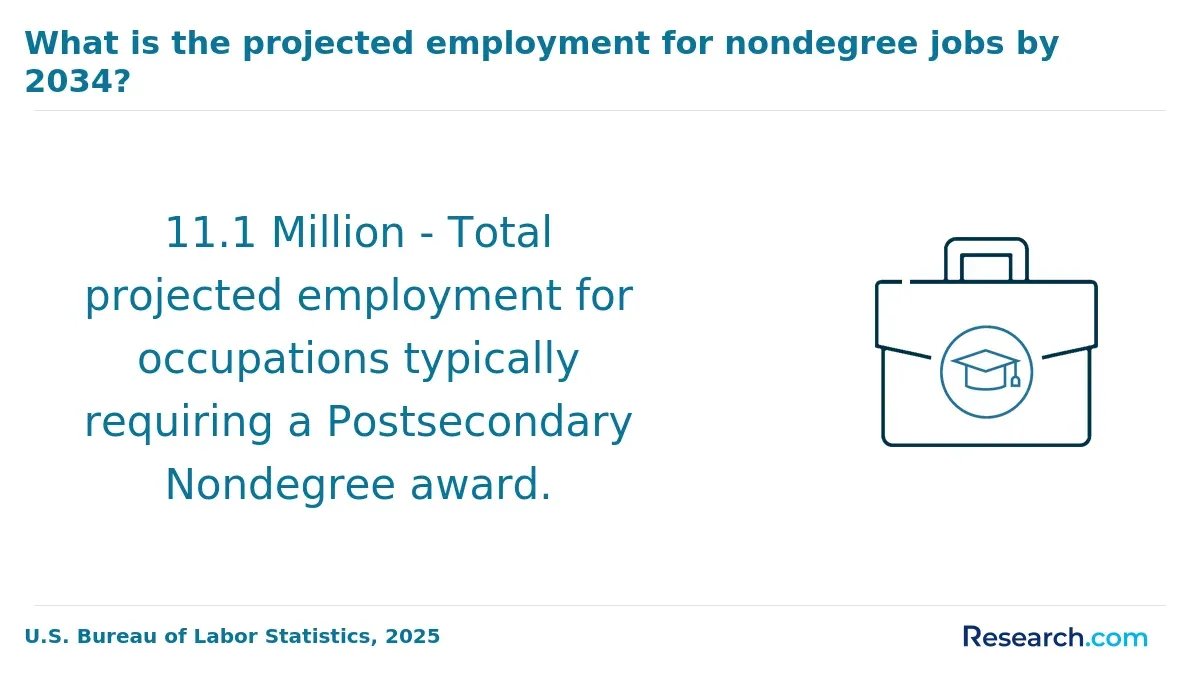
Be careful with programs that sound fast but are not degree-granting, not institutionally accredited, or only offer a certificate when you need a bachelor's degree. A short nondegree credential may help with internal promotion, but it may not satisfy degree requirements for corporate management tracks or graduate admission.
How Should You Compare the Fastest Accredited Online Retail Management Programs?
The best accelerated program is the one that gets you to a credible credential quickly without creating avoidable transfer, cost, workload, or career-fit problems. Speed matters, but it should be compared alongside accreditation, total credits remaining, course format, tuition, support services, and retail career relevance.
Use this checklist when speaking with admissions, transfer counselors, or academic advisors. Each question is designed to reveal whether the advertised completion time is realistic for your situation:
- Is the institution accredited by an agency recognized by the U.S. Department of Education or CHEA?
- Is retail management the major, a concentration, a certificate, or simply a few electives inside a broader business degree?
- How many of my credits apply directly to the degree, and how many credits remain after the official audit?
- What is the shortest completion time for students with my exact transfer-credit profile?
- Are courses 6, 8, 10, or 16 weeks long, and can required courses be taken year-round?
- How many courses can I take per term, and does the school recommend that pace for full-time workers?
- Are any internships, capstones, proctored exams, prerequisites, or field-based projects required?
- What is the total estimated cost after transfer credits, fees, books, and financial aid?
- What academic support is available for online students, especially in accounting, statistics, writing, and analytics?
- What retail, business, or management roles do graduates typically pursue, and does the curriculum match those goals?
Common mistakes include focusing only on the shortest advertised timeline, assuming all previous credits will transfer, ignoring residency-credit rules, and confusing short courses with a lighter workload. Programs in other fields can have very different accreditation expectations; for example, someone comparing a library degree would need to evaluate field-specific standards rather than using the same checklist uncritically.
If two programs look similar, choose the one that provides the clearest written degree plan, accepts the most usable credits, offers required courses frequently, and matches the retail career path you want. The fastest credible option is rarely the one with the boldest marketing claim; it is the one with the fewest remaining obstacles between enrollment and graduation.
Other Things You Should Know About Retail Management
Yes. A retail management degree usually focuses more on store operations, merchandising, customer experience, inventory, sales, and retail leadership. A business management degree is broader and may be better for students who want flexibility across industries.
Many do not require internships, especially programs designed for working adults, but some may include capstones, employer-based projects, or optional field experiences. Always check whether any in-person or workplace-based requirement could affect your timeline.
Sometimes. Some accredited colleges evaluate prior learning through portfolios, military or corporate training, standardized exams, or ACE-recommended credits. Approval is not automatic, so request a written evaluation before relying on it for a faster completion plan.
A credible program should come from a college accredited by a U.S. Department of Education-recognized regional accreditor, such as HLC, SACSCOC, WASC, NECHE, MSCHE, or NWCCU. Some business-focused programs also hold ACBSP or IACBE accreditation, which can strengthen quality and transfer considerations.
- Retail Management https://ici.net.au/courses/management/retail-management/
- E-Commerce vs. Traditional Retail: A Data-Driven Comparison of Profitability and Sustainability https://acr-journal.com/article/e-commerce-vs-traditional-retail-a-data-driven-comparison-of-profitability-and-sustainability-1581/
- Business of Retail | RISE Up | NRF Foundation https://nrffoundation.org/rise-up/credentials/business-of-retail
- Best Accredited Online Universities in 2025 https://www.study.eu/article/best-accredited-online-universities
- Management - Vistula University https://vistula.edu.pl/en/major/management-ii
- Retail Management Courses: Build Your Career in 2026 https://basatraining.com/retail-management-courses/
- Brick & Mortar Retail vs. Online Retail: Cost Comparison | Retail Dogma https://www.retaildogma.com/brick-and-mortar-retail-vs-online-retail/
- Retail Operations Management https://www.helms.edu/programs/retail-operations-management/
- Can Online Colleges Offer Competitive Career Outcomes? https://www.onlineu.com/magazine/popular-online-schools-career-outcomes
- The disruptive potential of online learning: Comparing the cost and quality of online and traditional education | CEPR https://cepr.org/voxeu/columns/disruptive-potential-online-learning-comparing-cost-and-quality-online-and