2027 Accredited Online Retail Management Degree Programs for Working Adults: Flexible, Part-Time, and Self-Paced Options
Audited and Verified:
Our Editorial and Data Verification Process
Research.com uses government datasets, official education statistics and primary institutional information to support its career and degree guides. Our review process checks factual accuracy, occupational definitions, source dates and the requirements associated with the credentials discussed.
How This Article Was Fact-Checked
Our editorial team verifies salary estimates, employment projections, education requirements and program information against original data providers and official organizations. Salary figures are checked against the relevant occupational definitions and reporting periods. Information about licensure, accreditation and required in-person training is reviewed separately.
Fact-checked and verified on:

Co-Founder and Chief Data Scientist
Choosing an accredited online retail management degree is usually a schedule, cost, and career decision at the same time. NCES reported in 2024 that more than half of U. S. undergraduates took at least one distance education course, showing how mainstream online study has become for busy adults. This guide is for retail associates, assistant managers, career changers, and working parents comparing flexible, part-time, and self-paced options. You will learn how accreditation, tuition, transfer credits, course format, workload, and career outcomes affect whether a program fits your work schedule and long-term retail leadership goals.
Key Things You Should Know
- Choose an institution recognized by a U.S. Department of Education-approved accreditor so your credits, financial aid eligibility, and degree recognition are more likely to hold value with employers and graduate schools.
- Most bachelor's programs require about 120 credits; full-time students often finish in about 4 years, while working adults studying part time may need 5 to 6 years unless they bring transfer credits, prior learning credit, or an associate degree.
- College Board's 2024-25 benchmark lists average public four-year in-state tuition and fees at $11,610, and a realistic online workload is often 10 to 15 hours weekly for two 3-credit courses.
What Is an Accredited Online Retail Management Degree Program and Why Does Accreditation Matter?
An accredited online retail management degree is a college program delivered fully or mostly online by an institution that has been reviewed by a recognized accrediting agency. Retail management programs are usually offered as associate or bachelor's degrees in retail management, business administration, merchandising, marketing, supply chain management, or organizational leadership with a retail concentration.
The coursework typically connects store operations with broader business skills. Students may study customer experience, inventory control, staffing, sales analytics, merchandising, digital commerce, loss prevention, accounting, marketing, business law, and leadership. For working adults already in retail, the degree can help turn job experience into a more portable management credential.
Accreditation matters because it affects three practical issues: whether you can use federal financial aid, whether another college may accept your transfer credits, and whether employers or graduate schools are likely to view the degree as legitimate. Institutional accreditation is the baseline.
Some business schools also hold programmatic accreditation from organizations such as AACSB, ACBSP, or IACBE, but many reputable retail-related bachelor's programs do not require specialized business accreditation to be useful.
The table below summarizes the accreditation checks that matter most when comparing online retail management programs. Use it as a quick screen before you spend time with admissions calls, application fees, or transcript requests.
| Accreditation or approval factor | What it means | Why it matters for working adults |
| Institutional accreditation | The college or university is reviewed by a recognized accreditor. | It supports federal aid eligibility, transferability, and employer recognition. |
| Programmatic business accreditation | The business school or business program meets standards from a specialized accreditor. | It can add credibility, especially if you plan to pursue graduate business study later. |
| State authorization | The school is allowed to enroll online students from your state. | It helps prevent enrollment problems for out-of-state online students. |
| Transfer articulation | The school has clear pathways for community college or prior college credits. | It can shorten your degree timeline and reduce total cost. |
A strong program should make accreditation easy to verify on its website and in federal databases. Be cautious if a school uses vague phrases such as "fully recognized," "internationally approved," or "career accredited" without naming the accrediting agency.
Which Flexible Retail Management Degree Formats Are Best for Working Adults: Part-Time, Full-Time, or Self-Paced?
The best format depends on how predictable your work schedule is, how quickly you want to finish, and how much weekly study time you can protect. "Online" does not always mean "do it whenever you want"; some programs still require weekly deadlines, live sessions, group projects, or proctored exams.
The table below compares common online formats for retail management and business-related degree programs. It is especially useful if you work rotating shifts, manage family responsibilities, or need to keep earning while studying.
| Format | Best fit | Typical trade-off |
| Part-time asynchronous | Adults working full time who can study evenings, weekends, or on days off. | More manageable workload, but a longer graduation timeline. |
| Full-time asynchronous | Students with stable schedules, strong time management, and fewer outside obligations. | Faster completion, but heavier weekly workload. |
| Self-paced or competency-based | Experienced retail workers who can move quickly through familiar business topics. | High flexibility, but requires strong discipline and may have term-based subscription costs. |
| Synchronous live online | Students who want real-time interaction and can attend scheduled class meetings. | More structure, but less flexibility for shift workers. |
| Cohort-based online | Learners who prefer a fixed sequence and peer community. | Clear path, but fewer options to pause, accelerate, or change course loads. |
For many working adults, part-time asynchronous study is the safest starting point because it reduces the risk of dropping courses during busy retail seasons. Self-paced learning can be powerful for experienced managers, but it is not automatically easier. If you procrastinate without weekly deadlines, a self-paced model can become more expensive if you pay by term and do not complete enough credits.
Before choosing a format, ask each school direct questions about scheduling, not just whether the program is "flexible." These questions help reveal the real workload behind the marketing language.
- Are courses asynchronous, synchronous, or a mix of both?
- Are assignments due weekly, at the end of the term, or whenever I complete them?
- How many hours per week do successful students usually spend on one 3-credit course?
- Can I take one course at a time, or is there a minimum credit load?
- What happens if my work schedule changes during peak retail periods?
- Are exams proctored, and can I schedule them outside standard business hours?
A traditional full-time option may make sense if your employer offers tuition assistance, your personal responsibilities are limited, or you need the credential quickly for a promotion. A slower part-time path may be better if avoiding debt and maintaining job stability are higher priorities.
What Are the Admission Requirements for Accredited Online Retail Management Degree Programs?
Admission requirements vary by degree level and school selectivity, but online retail management programs are often designed to be accessible to working adults. Associate programs may require a high school diploma or GED, while bachelor's programs may admit first-year students, transfer students, or adults returning with prior college credit.
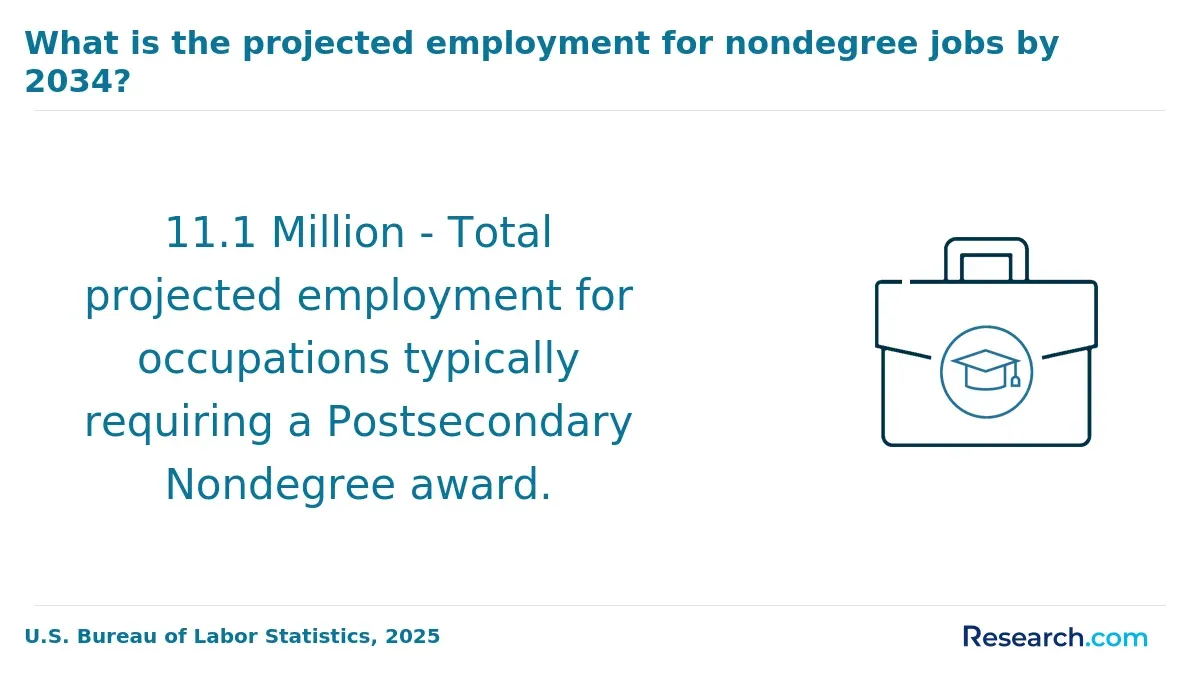
If you are not ready for a bachelor's program, an associates degree online can be a lower-cost starting point, especially if the credits transfer into a retail management or business bachelor's degree later.
Most schools will ask for a combination of academic records and identity or residency documents. More selective business programs may also request a resume, personal statement, or minimum GPA from previous college work.
- High school transcript, GED documentation, or homeschool completion record for first-time college applicants.
- Official transcripts from every college previously attended for transfer applicants.
- Minimum GPA requirement, often applied more strictly to transfer students than first-time applicants.
- Placement information or prior coursework in math and writing, especially for business statistics, accounting, or economics courses.
- Resume or work history if the program evaluates professional experience for admission or prior learning credit.
- English proficiency documentation for applicants whose prior education was not completed in English.
Working adults should pay close attention to transcript rules. Some colleges require transcripts from every institution attended, even if you withdrew or earned only a few credits. Ignoring an old transcript can delay admission, financial aid packaging, or transfer-credit evaluation.
Test scores are less common than they once were for many online undergraduate business programs, but policies vary. If a school advertises "no SAT or ACT required," confirm whether that applies to all applicants or only adults above a certain age or transfer students with enough credits.
The cost of an online retail management degree depends on tuition type, transfer credits, fees, books, technology requirements, and how long you remain enrolled. College Board's 2024-25 pricing report lists average published tuition and fees at $11,610 for in-state students at public four-year colleges, $30,780 for out-of-state students at public four-year colleges, and $43,350 at private nonprofit four-year colleges.
Online programs may be cheaper or more expensive than those benchmarks, so always compare total program cost rather than tuition alone.
- Public four-year in-state benchmark: $11,610 in published tuition and fees for 2024-25.
- Public four-year out-of-state benchmark: $30,780 in published tuition and fees for 2024-25.
- Private nonprofit four-year benchmark: $43,350 in published tuition and fees for 2024-25.
- Public two-year in-district benchmark: $4,050 in published tuition and fees for 2024-25.
These figures are not program quotes, but they help you judge whether an online retail management degree is priced competitively. A transfer-friendly pathway that starts at a community college and finishes at a public university may cost much less than completing all 120 credits at a private institution.
The table below shows common cost factors that working adults often overlook. Use it to estimate the real price of attendance before deciding that one program is more affordable than another.
| Cost factor | Why it matters | Question to ask |
| Per-credit tuition | Most undergraduate degrees require about 120 credits. | Is the online tuition rate different for in-state and out-of-state students? |
| Mandatory online fees | Technology, proctoring, and course fees can add up. | Are fees included in the tuition quote? |
| Books and software | Business courses may require access codes, analytics tools, or simulations. | Are low-cost or open educational resources used? |
| Transfer-credit policy | Accepted credits reduce the number of credits you must pay for. | How many credits can I transfer into the major and electives? |
| Time to completion | Longer enrollment can increase fees and opportunity costs. | Can I pause enrollment without losing my catalog year or tuition rate? |
Financial aid may include federal grants, federal student loans, state grants, institutional scholarships, employer tuition assistance, military education benefits, and payment plans. To access most federal aid, the school must be properly accredited and eligible to participate in Title IV federal student aid programs.
If you already know you want graduate business education after a bachelor's degree, compare undergraduate borrowing carefully so you do not limit future options. Some students later consider an MBA under 30k to build broader leadership, analytics, or operations skills without taking on the highest-cost graduate path.
Avoid choosing the lowest tuition number without checking completion requirements. A cheap program with limited transfer credit, weak advising, or required daytime live sessions may cost more in the long run if it delays graduation or forces you to reduce work hours.
A bachelor's degree in retail management or a related business field usually requires about 120 credits. A full-time student taking 15 credits per semester can often finish in about 4 academic years, while a part-time student taking 6 credits per term may need 5 to 6 years. Accelerated terms, summer enrollment, transfer credits, and prior learning credit can shorten that timeline.
The table below gives a practical comparison of pacing options. The exact timeline will vary by school calendar, course availability, major requirements, and how many credits you already have.
| Enrollment pace | Common course load | Approximate fit for working adults |
| One course at a time | 3 credits per term or session | Best for unpredictable work schedules, caregiving, or returning students rebuilding study habits. |
| Part-time | 6 to 9 credits per semester | Often realistic for full-time workers who can study consistently each week. |
| Full-time | 12 to 15 credits per semester | Better for students with stable schedules or reduced work hours. |
| Accelerated online | Shorter 5-week to 8-week courses | Useful for focused learners, but deadlines can arrive quickly. |
| Self-paced competency-based | Progress depends on demonstrated mastery | Potentially fast for experienced retail professionals, but risky without strong self-management. |
Transfer credits can make the biggest difference. Many bachelor's programs accept credits from accredited colleges, and some allow substantial transfer into general education, electives, or lower-division business requirements. However, upper-division major courses often must be completed at the degree-granting institution.
To avoid surprises, follow a transfer-credit process before enrolling, not after your first term starts.
- Request official transcripts from every previous college.
- Ask for a written preliminary transfer evaluation before committing to a program.
- Confirm which credits apply to general education, business core, major requirements, and electives.
- Ask whether professional certifications, military training, or retail management training can be evaluated for prior learning credit.
- Calculate your remaining credits, not just your accepted credits, because accepted electives may not shorten the major sequence.
Some adults later combine a bachelor's degree with 1 year master's programs online if they want a faster graduate credential in management, analytics, or a related field. That path is usually more realistic when the undergraduate program leaves you with manageable debt and a strong academic record.
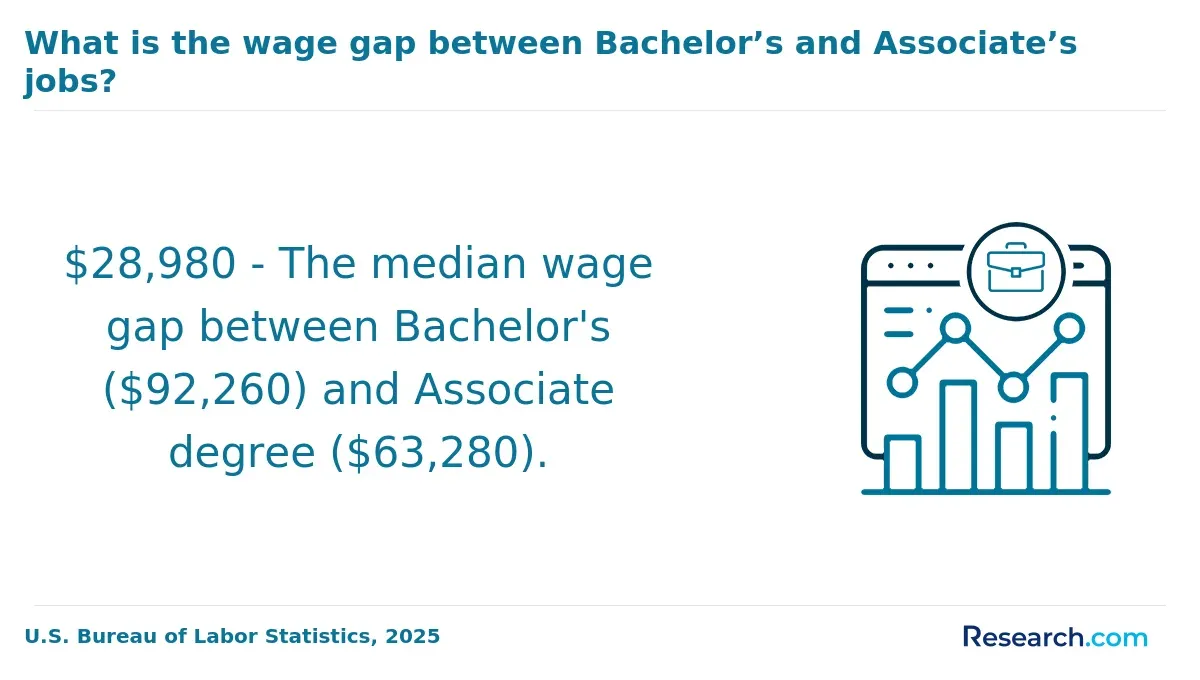
A good online retail management degree should match your career goal, schedule, budget, and learning style. Accreditation is the first screen, but it is not the only one. You should also compare curriculum depth, faculty experience, transfer policy, student support, career services, and how clearly the school explains online expectations.
The table below organizes the most important comparison factors. It can help you move beyond marketing claims and evaluate whether a program is truly built for working adults.
| Comparison factor | Strong sign | Red flag |
| Accreditation | The accreditor is named clearly and can be verified. | The school avoids naming a recognized accrediting agency. |
| Online format | The school explains live sessions, deadlines, and proctoring rules. | "Flexible" is used without schedule details. |
| Retail relevance | Courses include operations, merchandising, analytics, leadership, and customer experience. | The curriculum is generic business coursework with no retail or consumer focus. |
| Transfer policy | You receive a degree audit showing remaining requirements. | The school gives only a rough credit estimate before enrollment. |
| Adult learner support | Evening advising, online tutoring, career coaching, and technical support are available. | Support offices operate only during traditional campus hours. |
| Career alignment | The program connects coursework to retail management, e-commerce, supply chain, or sales leadership roles. | The school makes broad salary promises without evidence. |
Common mistakes often happen when adults focus on speed or tuition alone. A program can be fast but too rigid, affordable but poorly supported, or flexible but too unstructured for your learning style.
- Do not enroll before verifying institutional accreditation through a recognized source.
- Do not assume self-paced means unlimited time; many programs have term limits, subscription periods, or maximum completion windows.
- Do not ignore fees, books, proctoring costs, or required software when comparing tuition.
- Do not choose a program without seeing how your transfer credits apply to the actual degree plan.
- Do not underestimate peak-season workload if you work in retail during holidays, inventory cycles, or major sales events.
- Do not choose a degree level based on prestige alone; a bachelor's degree is usually enough for many retail management paths, while a graduate or doctoral degree serves different goals.
If you are comparing long-term education options, remember that retail management does not usually require a doctorate. Resources about the cheapest online doctorate may be useful only if your goals shift toward executive education, organizational leadership research, or academic administration rather than store, district, or corporate retail management.
A retail management degree can support advancement into store leadership, district operations, merchandising, sales management, e-commerce coordination, inventory planning, customer experience, or corporate retail roles. It is most useful when paired with practical experience, measurable performance, and skills in people management, data interpretation, scheduling, and profit-and-loss awareness.
BLS May 2024 wage data provides a useful salary reference, but it should not be treated as a promise. Pay varies by employer, region, product category, experience, bonus structure, and whether the role is store-based, district-based, or corporate.
| Role or pathway | Typical responsibilities | Salary context |
| First-line supervisor of retail sales workers | Supervise sales associates, manage shifts, support customer service, and track store performance. | BLS May 2024 median pay for first-line supervisors of retail sales workers was about $47,320. |
| Sales manager | Lead sales teams, set targets, analyze sales performance, and coordinate strategy. | BLS May 2024 median pay for sales managers was $138,060. |
| General and operations manager | Oversee budgets, staffing, operations, policies, and business performance. | BLS May 2024 median pay for general and operations managers was $101,280. |
| Market research analyst | Study consumer behavior, pricing, demand, and competitive trends. | BLS May 2024 median pay for market research analysts was $76,950. |
The strongest return on investment usually comes when the degree helps you move from hourly work into salaried leadership, from one store to multi-unit management, or from store operations into corporate functions such as merchandising, category management, supply chain, or digital retail.
A degree alone is rarely enough; employers often value evidence that you can lead teams, reduce shrink, improve conversion, manage labor costs, and solve customer experience problems.
Retail skills can also transfer outside traditional stores. If you enjoy customer service, information organization, and community-facing operations but want a different professional setting, comparing a library degree may help you evaluate an alternative path that uses service and management strengths in a different environment.
Current retail trends also affect career value. Employers increasingly expect managers to understand omnichannel shopping, inventory visibility, loyalty data, AI-assisted forecasting, workforce scheduling tools, and customer experience metrics. Programs that include analytics, e-commerce, and operations technology may be more useful than programs focused only on traditional store supervision.
Balancing a degree with full-time work is possible, but it requires a realistic course load and a plan for busy weeks. Retail work can be unpredictable because schedules may change around holidays, inventory counts, staffing shortages, promotions, and seasonal demand. The safest plan is one that assumes interruptions will happen.
Use the following steps to build a schedule that can survive real life. The goal is not to study constantly; it is to create repeatable study blocks that protect your progress without burning you out.
- Start with one or two courses in your first term so you can measure the workload before increasing your course load.
- Block study time on your calendar before your work schedule fills the week.
- Tell your manager about major assignment weeks early if you may need predictable shifts or time off.
- Use slower retail periods for harder courses such as accounting, statistics, or business analytics.
- Keep one backup study block each week for schedule changes, sick days, or family needs.
- Choose courses with asynchronous access if your shifts rotate or you cannot attend live sessions consistently.
A useful rule is to treat school like a second part-time job. Two 3-credit courses may require a meaningful weekly time commitment, especially when reading, discussion posts, group work, exams, and projects overlap. If you already work overtime or manage caregiving responsibilities, one course at a time may be the smarter path.
Family support also matters. Explain your weekly schedule, due dates, and exam periods to the people who share your household responsibilities. Many adults struggle not because the coursework is impossible, but because they never negotiate protected time to complete it.
Strong support services can make the difference between enrolling and finishing. Working adults often need help outside traditional campus hours, so online support should be easy to access remotely, clearly scheduled, and available when classes are active.
The best programs provide academic, technical, and career support that fits adult learners. Before enrolling, confirm which services are included in tuition and which require appointments, fees, or daytime availability.
- Academic advising that helps you plan course sequences around work and transfer credits.
- Online tutoring for writing, accounting, statistics, economics, and business analytics.
- Library database access, research guides, citation help, and live librarian support.
- Technical support during evenings or weekends, especially for learning platforms, exams, and proctoring tools.
- Career services that help with resumes, interview preparation, promotion planning, and employer networking.
- Disability accommodations for online courses, exams, and learning materials.
- Faculty access through virtual office hours, email, discussion boards, or scheduled video meetings.
Support quality is especially important in accelerated or self-paced programs. Fast courses leave less time to recover from confusion, and self-paced programs can feel isolating if coaching and faculty feedback are limited.
Ask how quickly instructors respond to questions, whether tutoring is available for upper-division business courses, and whether career services understand retail, sales, merchandising, logistics, and e-commerce roles. Generic support is helpful, but industry-aware support is better when you are trying to turn a degree into advancement.
Do Online Retail Management Degree Programs Include Internships, Practicums, or Other Hands-On Learning Requirements?
Some online retail management programs include internships, practicums, capstone projects, simulations, or applied business projects, but requirements vary widely. Many programs designed for working adults allow current employment to support applied assignments, especially if you already work in retail, sales, operations, merchandising, or customer service.
Hands-on learning can be valuable because retail management is practical. You may need to analyze store performance, design a merchandising plan, evaluate staffing patterns, study customer behavior, or propose an operational improvement. These projects can help you create work samples for promotion discussions or job interviews.
Before enrolling, clarify how applied learning works in an online format. These questions are especially important if you cannot quit your job or travel to a campus site.
- Is an internship required, optional, or replaceable with a capstone project?
- Can my current retail job count as a field placement or applied learning site?
- Are there minimum hours, supervisor forms, or employer approvals required?
- Can projects be completed remotely using company data, case studies, or simulations?
- Are there restrictions if I work for a small business, franchise, warehouse, or e-commerce employer?
- What happens if I cannot secure an internship near my location?
If you already have retail experience, a capstone-based program may be more practical than a required internship. If you are changing careers into retail management from another field, an internship or employer-connected project may provide useful experience and references.
Be careful with programs that require daytime field hours but market themselves as fully flexible. A degree can be online academically while still having applied requirements that affect your work schedule.
Other Things You Should Know About Retail Management
It can be a good fit if you want to move from experience-based advancement to roles that require stronger business, leadership, analytics, or operations knowledge. The degree is most useful when it builds on your work history rather than replacing it.
No. Many programs include topics such as e-commerce, omnichannel retail, consumer behavior, digital marketing, supply chain, and data-based decision-making. Review the curriculum carefully if you want corporate or online retail roles.
Often, yes, but policies vary. Check whether your employer requires accreditation, minimum grades, continued employment, manager approval, or repayment if you leave the company within a certain period.
The program should be offered by a college or university accredited by a U.S. regional accreditor recognized by the Department of Education or CHEA, such as HLC, SACSCOC, MSCHE, NECHE, NWCCU, or WSCUC. Employers and graduate schools usually give more weight to regionally accredited degrees.
- Self-Paced Learning | Flexibility & Efficiency for the Modern Workplace https://kashida-learning.com/self-paced-learning-flexibility-for-the-modern-workplace/
- Online Diploma in Retail Business Management career opportunities https://online.tut.ac.za/latest-news/online-diploma-in-retail-business-management-career-opportunities
- Financial Aid for Adult Education https://www.vsac.org/plan/adult-learners/financial-aid
- Best Online Colleges for Working Adults [2026] https://www.straighterline.com/blog/degree-completion-best-online-colleges-for-working-adults
- Graduate careers advice: you and your retail management degree https://gradireland.com/careers-advice/retail/graduate-careers-advice-you-and-your-retail-management-degree
- Retail Management Courses: Build Your Career in 2026 https://basatraining.com/retail-management-courses/
- Retail Graduate Career Profile, Retail Careers | GRB https://www.grb.uk.com/industry-profiles/retail/
- Your Education, Paid by Walmart https://www.guildeducation.com/walmart
- European Online University Accreditation Explained - MIA Digital University https://miauniversity.com/european-online-university-accreditation/
- Adult Learner Resources https://applymontana.mus.edu/resources/for-adult-learners/index.html