
Most Affordable Trade School & Training Programs - Leading Certification Courses in Arizona for 2026

Co-Founder and Chief Data Scientist
Choosing the right trade school in Arizona can open doors to rewarding careers without the burden of excessive costs. This article introduces a helpful trade school programs ranking developed by the Research.com team of data scientists to guide you toward quality and affordable options.
By exploring this resource, you’ll discover programs that fit your budget and career goals. Earning a trade school diploma or certification offers practical skills that employers value, helping you build confidence and secure a brighter future.
Take this step with assurance and excitement-your new path starts here.
Key benefits of finishing trade school programs trade school in Arizona
- Trade school graduates in Arizona can earn competitive salaries, with welders making between $39,430 and $59,480 annually and electricians earning around $59,480 per year. Construction management roles offer even higher pay, reaching about $97,860 yearly.
- Popular career paths for trade school graduates include welding, electrician work, construction management, and web development, allowing students to enter high-demand jobs without a four-year degree.
- Online trade school programs offer flexibility and convenience, enabling students to balance education with work or family commitments while gaining valuable certifications recognized by Arizona employers.
- Most Affordable Trade School & Training Programs - Leading Certification Courses in Arizona for 2026
- What can I expect from trade school programs trade schools in Arizona?
- Where can I work after finishing trade school programs trade schools in Arizona?
What can I expect from trade school programs trade schools in Arizona?
The average cost of attending a trade school program in Arizona typically ranges from about $2,000 to $7,800 per year at public institutions. Graduates from schools like Pima Community College and Gateway Community College often highlight how manageable these costs felt compared to traditional four-year universities. Many find comfort in knowing that tuition remains affordable without sacrificing quality, especially when paired with federal financial aid options like grants and scholarships.
These schools design their programs to be career-focused and efficient, allowing students to enter the workforce quickly, which helps ease financial pressure. A graduate from a welding program recalls working alongside instructors using industry-standard equipment, gaining hands-on experience that directly translated into job opportunities. Another graduate valued the flexible scheduling, balancing courses online while maintaining a part-time job.
With supportive local employer partnerships and internships available, students often feel encouraged and optimistic about their future earnings, making the investment in tuition feel worthwhile and practical in Arizona's job market.
Where can I work after finishing trade school programs trade schools in Arizona?
After finishing a trade school program in Arizona, graduates find steady employment across several thriving industries. Many enter the construction field, working for firms like Sundt or Kitchell, where they start as construction workers or remodeling specialists and often progress to supervisory roles. Success stories from popular schools like Universal Technical Institute reveal how graduates quickly adapt to hands-on roles in residential and commercial projects.
HVAC technicians trained at Arizona trade schools often secure stable jobs with local service companies or as independent contractors, benefiting from the region's constant demand for heating and cooling maintenance. Welding graduates consistently report finding rewarding positions in manufacturing and infrastructure, thanks to a statewide shortage that promises long-term job security.
Automotive service technicians frequently land roles at dealerships or fleet maintenance centers, applying skills learned in programs at institutions such as East Valley Institute of Technology. Others pursue careers in commercial truck driving or diesel technology, entering logistics companies vital to Arizona's supply chain. Graduates appreciate the strong industry connections their schools provide, smoothing their transition into the workforce.
After completing a trade school program in Arizona, graduates often see annual salaries around $62,575, translating to about $30.08 per hour. Many who trained at well-known Arizona trade schools find this range both motivating and achievable. For example, graduates entering skilled trades typically start between $17.02 and $24.42 per hour, gaining confidence as their experience grows.
Electricians and plumbers from Arizona trade programs regularly report median wages near $61,500, making these paths attractive for steady income. Aircraft mechanics stand out with salaries from $75,020 to $77,420, a powerful draw for those seeking higher earnings quickly after school.
Others, like carpenters and tool and die makers, earn between $56,350 and $61,490, showing solid financial returns while building hands-on skills.
Trade school grads in medical assistance or HVAC roles in Arizona share stories of earning $35,000 to $50,000, unlocking independence faster than traditional college routes. With shorter programs and lower costs, many feel proud stepping into well-paying jobs without the burden of heavy debt.
- Most trade schools in Arizona require a high school diploma, GED, or equivalent, with a minimum age typically set at 17 years old.
- Application processes often include rolling admissions, multiple start dates, transcripts, and sometimes non-refundable fees.
- Programs usually last from 10 to 24 months and require 61 to 76 credits or about 1,600 class hours to complete.
- Tuition ranges from $85 to $441 per credit for public schools and around $16,500 per year for private programs, with similar rates for in-state and out-of-state students.
- Entry-level salaries after graduation typically range from $40,000 to $50,000 per year, with career services and job placement support commonly available.
Trade school programs in Arizona typically take between 10 months and 2 years to complete, depending on the type of credential and trade. Many students find that short-term certificate programs offer a quick path, with schools like UEI College in Phoenix and Mesa providing courses finished in just about 10 months. Graduates often share how this fast-paced approach helped them start working and earning faster than expected, which fits well with busy lifestyles.
Diploma programs usually require a bit more time but remain manageable. For example, the Automotive Service Technician diploma at Arizona Automotive Institute is a 60-credit program completed in around 13 months. Graduates appreciate this balance, feeling well-prepared with solid skills in just over a year.
Associate degrees take longer, typically 11 to 24 months at community colleges like GateWay. These programs are great for students who want a deeper knowledge base while still keeping a clear timeline. Many report feeling confident entering the workforce with credentials recognized across Arizona's growing industries.
The main difference between online and on-campus trade school programs in Arizona comes down to how and where you learn. Online programs offer flexibility that fits busy lives-students at Central Arizona College often praise being able to study late at night or between shifts, saving time and money on commuting. These courses provide digital access to instructors and certifications from home, perfect for those balancing work or family.
On the other hand, graduates from schools like UEI College in Phoenix highlight the benefit of face-to-face interaction. They value hands-on labs and real-time feedback, which make mastering skills in healthcare or skilled trades more tangible and easier to absorb. The structured schedule helps keep motivation high and creates opportunities for networking and collaboration that online formats can't fully replicate.
Both formats lead to the same recognized credentials, but choosing between convenience and personal engagement depends on your learning style and life situation.
The average trade school tuition in Arizona typically falls between $14,894 and $15,525 for tuition and fees, making it an affordable choice compared to four-year college degrees in the state. Graduates from popular programs in healthcare or advanced technologies often mention that this pricing range aligns well with their budget while delivering practical skills quickly. For example, students who enrolled in Refrigeration Technologies at The Refrigeration School paid around $17,400, reflecting the higher end of the spectrum, while those in Mechanical Maintenance Engineering spent closer to $12,000.
Many trade schools in Arizona base tuition costs on credit hours, with public institutions like GateWay Community College charging between $85 and $441 per credit. Certificate programs here may require between 61 and 76 credits, typically completed in 11 to 24 months. This modular cost system provides flexibility for students balancing education with work or family commitments and can help manage the total cost of Arizona vocational programs effectively.
For those exploring specialized training, private for-profit schools often list annual tuition near $16,558, especially in fields like cosmetology or technical trades. What makes Arizona particularly attractive is that these figures often include course materials, textbooks, and lab fees, which many students appreciate as they reduce unexpected expenses.
Prospective students can discover affordable options by researching specific fields and schools or by exploring financial aid for veterans and active military. Some look into most affordable online appliance repair courses to further lower costs while gaining hands-on experience. This approach highlights how Arizona trade schools provide a practical, cost-effective pathway to career-ready skills.

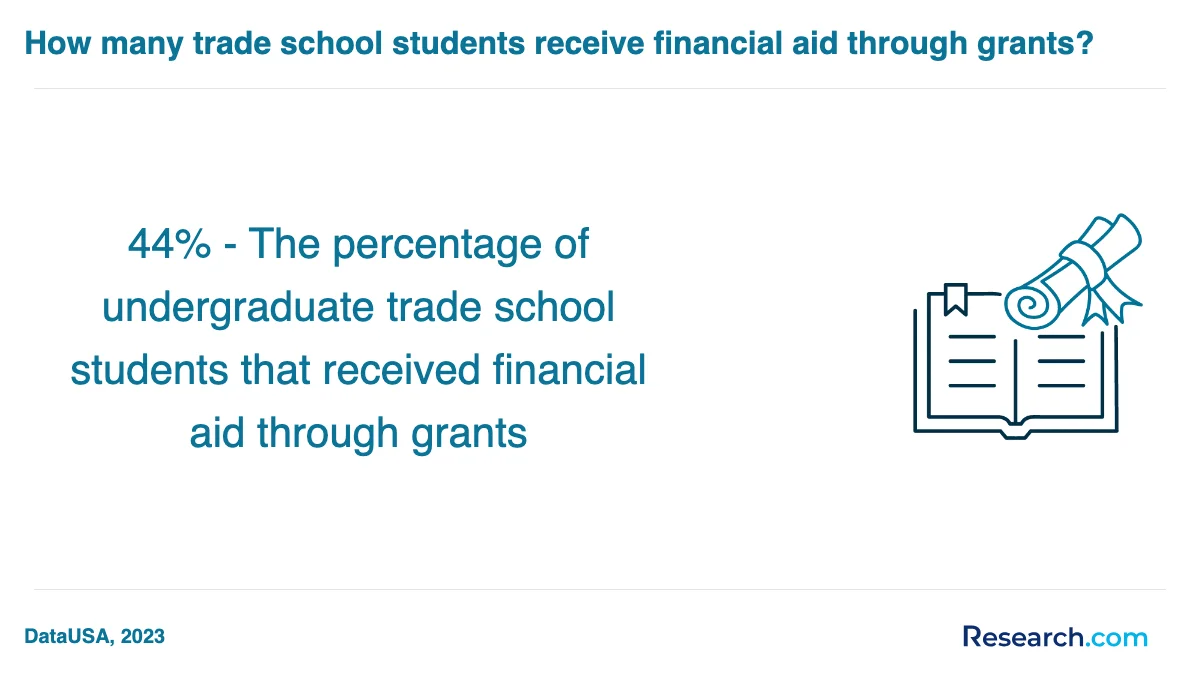
Trade school students in Arizona often rely on a mix of financial aid options to make their education affordable. Many start by completing the Free Application for Federal Student Aid (FAFSA), which opens doors to federal help like Pell Grants-funding that some graduates at Central Arizona College have used to cover significant tuition costs without needing repayment.
Besides federal grants, students benefit from state and institutional scholarships. For instance, those enrolled in career and technical education programs might earn the ACTEAZ Scholarship, offering awards up to $2,500. Past recipients from local trade schools mention how this helped ease the burden of supplies and fees.
Industry-affiliated scholarships are another avenue. Universal Technical Institute students often tap into grants like the Adult Tuition Assistance Grant and Imagine America Scholarship, each providing $1,000 to qualified learners, boosting their confidence to focus on training instead of finances.
Local initiatives, such as the Pinal Promise at Central Arizona College or the Pima Merit Tuition Award, give motivated students with good GPAs the chance to have tuition partially covered. Graduates recall how these supports made full-time study manageable and motivating.
To enroll in a trade school program in Arizona, the primary prerequisite is holding a high school diploma or GED certificate. Many graduates from popular schools like UEI College in Phoenix highlight how having official transcripts ready sped up their admission process. These transcripts, often requested early, prevent unnecessary delays.
Additional requirements can vary by program:
- Programs in electrical technology typically expect a solid math foundation to handle coursework involving circuits and electronics.
- Welding students may face physical assessments or need to demonstrate familiarity with relevant tools due to the trade's demanding nature.
- For trades like HVAC, no prior experience is usually needed, though a basic mechanical aptitude is encouraged.
Placement tests are sometimes required to ensure students are ready for the curriculum. If you're under 18 or lack a diploma, some Arizona trade schools accept minimum ACT (22) or SAT (930) scores instead, along with special admission procedures. Proof of residency and a completed application form are nearly universal requirements.
One graduate recalls signing up at UEI Mesa and appreciates that attending an accredited school not only guaranteed quality training but also opened doors to federal financial aid-making the whole process less stressful and more achievable.
Trade school programs in Arizona include courses directly aligned with in-demand industries, ensuring graduates can step confidently into the workforce. For instance, students at the Arizona Automotive Institute learn vehicle diagnostics, preventive maintenance, and repairs for both domestic and foreign cars. Graduates often recall their hands-on time replacing automotive parts, which helped them quickly secure roles in local dealerships and repair shops.
Construction trade programs, especially in growing areas like Yavapai County, focus on practical skills such as plan reading, framing, masonry, and concrete work. Yavapai College's Basic Carpentry Certificate breaks this down into modules like CBT 101 (Plan Reading and Codes) and CBT 102 (Framing), allowing students to build targeted expertise and feel confident on construction sites from day one.
HVAC, plumbing, and electrical courses teach installation, troubleshooting, and safety protocols needed in Arizona's climate and building codes. Healthcare programs in Mesa and Phoenix train students in medical assisting and pharmacy technology with a strong emphasis on patient care, preparing them for fast-paced clinical environments.
- Automotive diagnostics and repair
- Construction skills like framing, masonry, and concrete
- HVAC installation and maintenance
- Plumbing and electrical safety
- Medical and dental assisting clinical skills
- Specialized fields like welding and network security
Trade school programs in Arizona cover a variety of in-demand specializations tailored to the state's workforce needs. Graduates from institutes like the Arizona Automotive Institute often speak positively about hands-on training in automotive service technology, combination welding, and HVAC/refrigeration, which prepare them for roles in construction and maintenance sectors.
Construction-related trades are highly sought after, especially in areas like Yavapai County, where certificates in basic carpentry, masonry, and remodeling lead to job opportunities. Many students appreciate the focused nature of these programs, which allow quick skill-building in skilled trades.
Urban centers provide healthcare career paths too. Students at UEI College in Phoenix frequently complete programs in medical or dental assisting in under a year, entering the workforce promptly with confidence.
Other specializations include electrical technology, mechanical maintenance engineering, and CDL training, with some programs geared toward trades management for leadership roles. For those curious about the best paths forward, exploring the highest paying trades helps align training with Arizona's economic opportunities.
Choosing the best accredited trade schools in Arizona means focusing on programs with strong hands-on training and proven connections to local employers. Graduates from respected institutions often praise how real-world practice using industry equipment, combined with supportive instructors, helped them confidently enter fields like HVAC or welding. Look closely at schools that actively work with Arizona businesses to offer internships and job placements, as these partnerships can be crucial for launching your career.
Comparing Arizona trade school costs deserves careful attention beyond tuition alone. Assessing graduation rates and job placement statistics will give you a clearer picture of a program's real value. Many schools require a high school diploma or GED, along with placement tests that match your skill level with the right curriculum. For those considering electrical trades, exploring affordable online electrical lineworker training programs can be a smart option offering flexibility and savings.

Trade school graduates in Arizona find numerous skilled trades careers in Arizona that translate into rewarding, hands-on jobs. Many graduates from popular institutions like the Arizona Automotive Institute and UEI College step directly into roles such as automotive service technicians, HVAC technicians, and welders. These positions benefit from strong employer demand, ensuring steady work and good wages.
Construction apprenticeship opportunities Arizona are abundant, especially given the state's ongoing growth in infrastructure and commercial projects. Graduates often become residential or commercial construction workers or remodeling specialists, gaining practical experience quickly through apprenticeships. These real-world training programs are perfect for those who want to build a career while earning.
Healthcare support is another thriving path. Graduates can become medical assistants, dental assistants, or billing specialists, roles that are particularly sought-after as Arizona's healthcare sector expands. Trade schools prepare students to enter these jobs with confidence and skill.
Those interested in quick entry often explore affordable maintenance technician training online, which complements local trade programs well.
- Welding training meeting American Welding Society standards prepares graduates for stable welding jobs.
- HVAC programs lead to roles as technicians or installers with growing demand projected through 2032.
- Electrical work openings allow hands-on career entry with competitive wages.
The job outlook for trade school graduates in Arizona is steady, with key sectors expanding to meet workforce needs. Graduates from popular Arizona trade schools have found roles in health care, construction, manufacturing, and transportation, reflecting state employment projections of significant job growth through 2026.
These in-demand skilled trades careers Arizona include:
- Health care roles like medical assistants and dental hygienists, growing at 2.8% annually with more than 27,000 new jobs.
- Construction trades, including electricians and HVAC technicians, with nearly 8,000 new positions expected.
- Logistics and repair occupations within the trade, transportation, and utilities sectors.
- Manufacturing roles in industrial maintenance and machining, offering consistent opportunities.
Graduates often report rewarding, well-paying jobs that benefit from Arizona's above-average wage growth of 6.9% year-over-year. Many students choose programs aligned with these trends, some even opting for most affordable online beauty courses to enter a growing personal care industry. This practical alignment of study and labor market needs helps ensure sustained employment and career satisfaction locally.
Most Affordable Trade School & Training Programs - Leading Certification Courses in Arizona for 2026
# 1 position
Pima Community College - Automobile/Automotive Mechanics Technology/Technician.
associatePima Community College offers a hybrid program in Automobile/Automotive Mechanics Technology/Technician, preparing students to repair, service, and maintain various automobile systems. The curriculum covers brake systems, electrical systems, engine performance and repair, suspension and steering, transmissions, drive trains, and heating and air conditioning. Annual in-state tuition is $2,370. Graduates earn a median salary of $52,673 one year after completion. The program is accredited by the Higher Learning Commission.
# 2 position
Pima Community College - Criminal Justice/Safety Studies.
associatePima Community College offers a Criminal Justice/Safety Studies program with a hybrid format, including some distance-education options. The program covers criminal law, policy, police and correctional systems, administration of justice, judiciary, and public attitudes toward criminal justice. Annual in-state tuition is $2,370. Graduates earn a median income of $42,096 one year after completion. The program is accredited by the Higher Learning Commission.
# 3 position
Pima Community College - Welding Technology/Welder.
associatePima Community College offers a Welding Technology/Welder program with a hybrid format that includes some distance-education options. The program prepares students to apply technical skills in welding processes such as arc welding, resistance welding, brazing, soldering, and cutting. Tuition for in-state students is $2,370 annually. Graduates earn a median income of $41,132 one year after completion. The program is accredited by the Higher Learning Commission.
# 4 position
Pima Community College - Veterinary/Animal Health Technology/Technician and Veterinary Assistant.
associatePima Community College offers a Veterinary/Animal Health Technology/Technician and Veterinary Assistant program designed to train individuals to assist veterinarians and animal health professionals in patient care and clinical procedures. The curriculum includes animal nursing, health and nutrition, clinical pathology, radiology, anesthesiology, surgical assisting, dental prophylaxis, laboratory procedures, and office skills. The program is accredited by the Higher Learning Commission, with an annual in-state tuition of $2,370.
# 5 position
Pima Community College - Computer and Information Systems Security/Auditing/Information Assurance.
associatePima Community College offers a hybrid program in Computer and Information Systems Security/Auditing/Information Assurance. This program prepares students to assess security needs, recommend safeguards, and manage security systems, including auditing and maintenance. Instruction covers computer architecture, programming, networking, cryptography, law, risk assessment, contingency planning, and investigation techniques. The annual in-state tuition is $2,370. The program is accredited by the Higher Learning Commission.
# 6 position
Pima Community College - Language Interpretation and Translation.
associatePima Community College offers a Language Interpretation and Translation program designed to prepare individuals for professional interpreting and translating of documents and data files between English, Canadian French, and other languages. The curriculum includes intensive foreign language instruction and specialized training in interpretation techniques and various translation applications. The program is accredited by the Higher Learning Commission. Annual in-state tuition is $2,370.
# 7 position
Pima Community College - Business Administration and Management, General.
associatePima Community College offers a hybrid Business Administration and Management, General program that prepares students to plan, organize, direct, and control business functions. The curriculum covers management theory, human resources, accounting, purchasing, logistics, production, marketing, and business decision-making. Annual in-state tuition is $2,370. The program is accredited by the Higher Learning Commission, providing a flexible option that includes some distance education components.
# 8 position
Pima Community College - Accounting.
associatePima Community College offers a hybrid Accounting program designed to prepare students for careers in accounting and related business functions. The curriculum covers principles, theory, financial and managerial accounting, tax accounting, auditing, and professional ethics. The program includes instruction on legal aspects, reporting procedures, and business information systems. Annual in-state tuition is $2,370, and graduates have median earnings of $37,358 one year after completion. The program is accredited by the Higher Learning Commission.
# 9 position
Pima Community College - Computer Systems Networking and Telecommunications.
associatePima Community College offers a hybrid program in Computer Systems Networking and Telecommunications designed to prepare students as network specialists and managers. The curriculum covers operating systems, networking theory, system design, security, and troubleshooting. Annual in-state tuition is $2,370. Graduates have a median earning of $35,786 one year after program completion. The program is accredited by the Higher Learning Commission.
# 10 position
Pima Community College - Legal Assistant/Paralegal.
associateThe Legal Assistant/Paralegal program at Pima Community College offers a hybrid format with some distance-education options. It prepares students to assist attorneys through research, drafting, investigatory, and administrative tasks. Instruction covers legal research, document drafting, pleadings, courthouse procedures, and specialized areas of law. The program is accredited by the Higher Learning Commission. Annual in-state tuition is $2,370, and median earnings one year after completion are $23,190.55.
Frequently Asked Questions about trade school programs
After completing trade school in Arizona, preparing for the job market involves several important steps. First, take advantage of career services offered by your school, such as resume workshops and job placement assistance. According to the Arizona Commerce Authority, sectors like healthcare, construction, and technology frequently hire skilled trade graduates, highlighting the need to target industries with high demand.
Networking is crucial; attend local industry events and join professional associations to connect with employers. Obtaining certifications relevant to your trade can also boost your employability and earning potential.
Furthermore, Arizona's labor market statistics from the U.S. Bureau of Labor Statistics indicate that trade occupations are expected to grow by about 8% through 2030, underscoring strong opportunities for new graduates. Staying informed about local job trends can help you tailor your job search effectively.
Employers in Arizona place high value on both technical and soft skills when hiring trade school graduates. According to the Arizona Department of Economic Security, skills such as electrical wiring, welding, HVAC system maintenance, and automotive repair rank among the most in-demand technical abilities.
Communication and teamwork are critical soft skills frequently emphasized by employers. A 2023 survey by the National Association of Manufacturers showed that 82% of firms in Arizona seek candidates who can collaborate effectively on job sites.
Problem-solving and adaptability also appear essential, as trade roles often involve dynamic, hands-on challenges requiring quick thinking and flexibility.
Trade school graduates demonstrating a blend of these skills typically have stronger employment prospects within Arizona's growing skilled labor market.
Finding internships in Arizona that align with your trade school program begins with leveraging resources offered by the schools themselves. Many trade schools collaborate with local businesses in industries like construction, healthcare, and automotive repair to provide internship opportunities. According to the Arizona Commerce Authority, sectors such as manufacturing and technology frequently offer internship positions for skilled students.
Students should also utilize online platforms like the Arizona Job Connection, a state-run system that lists internships and entry-level positions specific to Arizona. Additionally, professional associations related to your trade can be valuable for networking and locating internships. Research shows that 65% of internships in Arizona are found through direct employer connections and educational partnerships, highlighting the importance of engaging with your trade school's career services.
In Arizona, a trade school diploma can significantly improve career mobility and advancement opportunities. According to the Arizona Department of Education, many sectors like construction, health care, and technology actively seek candidates with technical certifications and diplomas. These credentials often lead to higher starting salaries compared to a high school diploma alone. For example, graduates from trade programs in fields such as welding or electrical work report average entry wages 20-30% above the state median for non-college workers.
Trade diplomas also help workers quickly adapt to changing job markets. The Arizona Commerce Authority notes that industries tied to skilled trades face steady growth, making these credentials valuable for long-term employment security. Furthermore, many trade schools partner with local employers to provide apprenticeships, which can lead directly to advancement within a company.
Part-time job opportunities in Arizona can effectively complement trade school education by providing hands-on experience and income. Common roles include apprentice electrician, HVAC technician helper, and dental assistant trainee. According to the Arizona Office of Economic Opportunity, industries like construction and healthcare frequently offer part-time positions suitable for students in trade programs.
These jobs not only reinforce skills learned in class but also enhance resumes and networking prospects. Many employers in Arizona prefer hiring students from local trade schools, recognizing their specialized training. Additionally, positions such as automotive service technician assistant and welding apprentice allow flexible hours to accommodate class schedules.
Employment data from the U.S. Bureau of Labor Statistics highlights that part-time jobs in skilled trades in Arizona often pay above the state's average hourly wage, boosting students' financial stability during studies.
To find the most affordable degree program near me in Arizona, start by exploring local community colleges and state universities, which often offer competitive tuition rates for in-state residents. Research.com can be a helpful resource to compare costs and program offerings at various institutions near Arizona. Additionally, check with academic advisors and financial aid offices at nearby schools to learn about scholarships, grants, and financial assistance options to further reduce education costs.
- Most Affordable Trade School & Training Programs - Leading Certification Courses in Nevada for 2026
- Most Affordable Trade School & Training Programs - Leading Certification Courses in Utah for 2026
- Most Affordable Trade School & Training Programs - Leading Certification Courses in Colorado for 2026
- Most Affordable Trade School & Training Programs - Leading Certification Courses in Wyoming for 2026
- Most Affordable Trade School & Training Programs - Leading Certification Courses in Idaho for 2026
- Most Affordable Trade School & Training Programs - Leading Certification Courses in Nebraska for 2026
- Most Affordable Trade School & Training Programs - Leading Certification Courses in South Dakota for 2026
- Most Affordable Trade School & Training Programs - Leading Certification Courses in Iowa for 2026
- Most Affordable Trade School & Training Programs - Leading Certification Courses in Louisiana for 2026
- Most Affordable Trade School & Training Programs - Leading Certification Courses in Wisconsin for 2026
- Trade Schools, What Are The Benefits - InterCoast Colleges https://intercoast.edu/articles/benefits-of-trade-schools/
- Trade Schools In Arizona | Become With Lantern https://www.learnhowtobecome.org/trade-schools-arizona/
- Trade School - My Student HUB | Academic Support & Resources for Students https://www.mystudenthub.org/ns-trade-school
- Apprenticeship vs. Trade School - Powering AZ https://www.poweringaz.org/apprenticeship-vs-trade-school/
- Arizona Trade School | AAI Career Technical Training Programs https://www.aai.edu/programs/
- Career Paths https://arizonacareerpathways.org/career-paths/
- Career and Technical Education | Arizona Western College https://www.azwestern.edu/career-and-technical-education


