# 1 position
Most Affordable Pharmacy Technician Schools & Training in Wisconsin Rapids for 2027
Audited and Verified:
Our Editorial and Data Verification Process
Research.com uses government datasets, official education statistics and primary institutional information to support its career and degree guides. Our review process checks factual accuracy, occupational definitions, source dates and the requirements associated with the credentials discussed.
How This Article Was Fact-Checked
Our editorial team verifies salary estimates, employment projections, education requirements and program information against original data providers and official organizations. Salary figures are checked against the relevant occupational definitions and reporting periods. Information about licensure, accreditation and required in-person training is reviewed separately.
Fact-checked and verified on:

Co-Founder and Chief Data Scientist

Reviewed by Karolina Broda
Fact-Checker and Data Verification
Choosing pharmacy technician training in Wisconsin Rapids means weighing more than tuition: you need a credential, practical skills, and a route into work that fits Wisconsin's registration rules. The U.S. Bureau of Labor Statistics projects 6.4% national job growth for pharmacy technicians from 2025 to 2035, but that is not a local hiring forecast. This guide explains costs, training routes, and career prospects. It also accompanies the Most Affordable Pharmacy Technician Trade Schools in Wisconsin Rapids for 2027 ranking, created by Research.com's team of data scientists to help you identify programs worth considering.
Key findings about pharmacy technician degrees in Wisconsin Rapids
- The least expensive job-ready route may be employer training rather than school, but compare paid work, supervised practice, registration eligibility, and certification preparation - not tuition alone.
- The U.S. median annual wage for pharmacy technicians was $45,750 in May 2025; it is a national occupational midpoint, not a Wisconsin Rapids starting-pay estimate (U.S. Bureau of Labor Statistics).
- Before paying for a program, ask whether its labs and worksite experience fit your intended pharmacy setting and how it supports Wisconsin Department of Safety and Professional Services registration. An online course alone should not be assumed sufficient.
Table of Contents
- Most Affordable Pharmacy Technician Schools & Training in Wisconsin Rapids for 2027
- What can I expect from a pharmacy technician trade school program in Wisconsin Rapids?
- Where can I work with a pharmacy technician trade school training in Wisconsin Rapids?
What can I expect from a pharmacy technician trade school program in Wisconsin Rapids?
Pharmacy technician training prepares you to assist a pharmacist with prescription processing, inventory, medication preparation, records, and patient-facing service within the technician's permitted duties. Accuracy, privacy, and knowing when to refer a question to the pharmacist matter as much as speed (U.S. Bureau of Labor Statistics). A program is worth considering when it offers a realistic route from instruction to supervised practice and employment - not just a credential with a familiar name.
These pathways differ in what you pay for, how you gain experience, and who controls your training schedule. Availability and entry conditions should be confirmed before you commit.
| Pathway | What you receive | Best fit and principal trade-off |
| Technical-college certificate or diploma | Structured coursework and, where offered, labs or worksite training | Fits students who want guided preparation; compare total charges and placement arrangements. |
| Employer-sponsored entry route | Supervised workplace training, potentially with wages | Fits someone ready to apply for a position; instruction and certification support vary by employer. |
| Online or hybrid certificate | Remote theory, sometimes paired with local practical experience | Fits students needing scheduling flexibility; verify who arranges hands-on training. |
Mid-State Technical College is a local institution to check for current pharmacy technician offerings, delivery sites, and worksite arrangements; do not assume a program or clinical placement is available in every term. Pharmacy technician work-based training is not automatically a registered apprenticeship. If a provider advertises an apprenticeship, ask for its sponsor and registration details.
Where can I work with a pharmacy technician trade school training in Wisconsin Rapids?
Retail and grocery pharmacies, hospital pharmacies, and other healthcare dispensing settings are potential workplaces. The setting changes the work: retail roles commonly emphasize prescriptions, insurance transactions, and customer service, while hospital roles may emphasize medication distribution and preparation under pharmacist supervision (U.S. Bureau of Labor Statistics). Training at one site does not establish proficiency in every setting.
Wisconsin Rapids applicants should ask where a provider places trainees, not merely whether it advertises "local" experience. A placement or first job outside the city can add commuting costs and limit which shifts are feasible. If hospital work is your goal, ask specifically about sterile-compounding instruction and whether that skill requires further employer training.
The national median annual wage was $45,750 in May 2025 for pharmacy technicians (U.S. Bureau of Labor Statistics, Occupational Outlook Handbook). This figure covers experienced and newer workers across settings; it is not a published Wisconsin Rapids starting wage or a promise about what training will earn you.
For a local decision, compare actual entry-level offers for the shifts and settings you can accept, including benefits and commuting costs. Then weigh any expected earnings gain against what you already earn, program debt, and time away from paid work. A higher national median alone cannot establish that a particular certificate will pay for itself.
Time to completion depends on the credential, course sequence, enrollment pace, and whether a practical placement is required. Employer training can allow someone to earn while learning, but the time needed to demonstrate competencies may differ from the length of a school term. Do not equate a short advertised course with being ready to work independently under a pharmacist's supervision.
Ask Mid-State Technical College or another prospective training provider for its current calendar, total classroom and lab hours, worksite hours, and earliest realistic completion date. Also ask whether required courses run every term. For a working student, a part-time option may preserve income even if it delays completion.
Online delivery can work for terminology, calculations, law, and other theory. Campus labs or supervised employer sites are better suited to demonstrating tasks such as prescription workflow, inventory handling, and preparation techniques. A hybrid program combines the two; "online" does not, by itself, explain how practical competencies are assessed.
Before enrolling from Wisconsin Rapids, get the locations and schedules for every required in-person session and worksite placement. Ask who secures the site, whether travel outside the city is expected, and what happens if no placement is available when coursework ends. For a student without reliable transportation, those answers may matter more than the convenience of remote lectures.
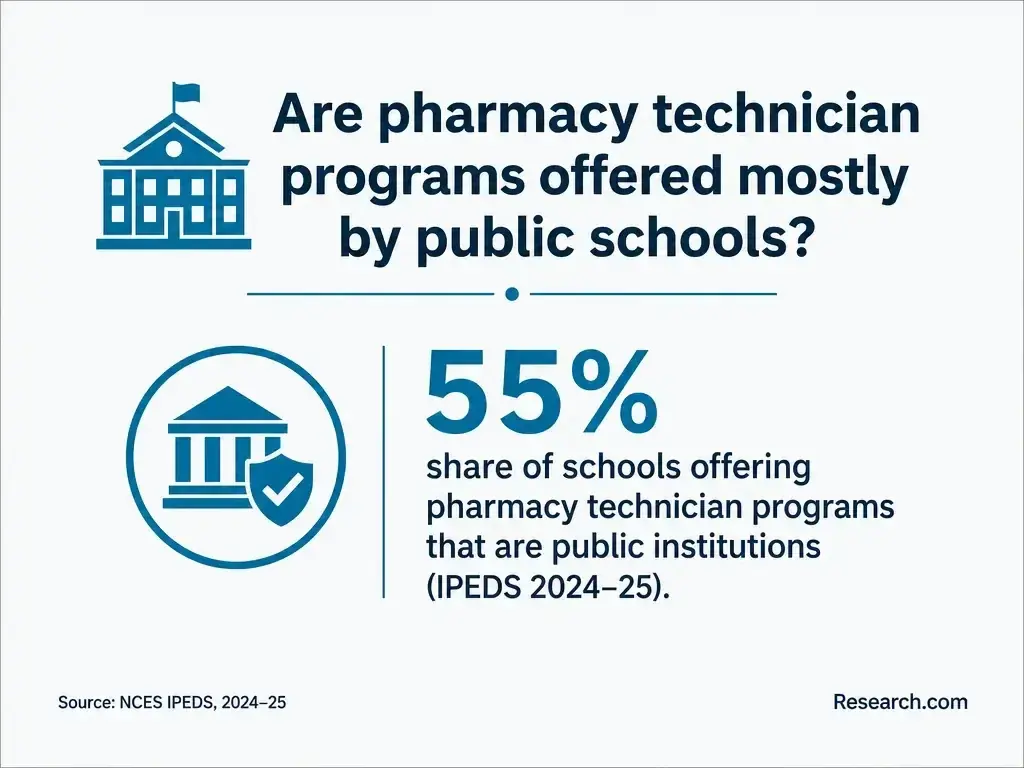
There is no defensible single local average without comparable, current prices for the programs and training routes a student can actually enter. Compare each option's total cost to become job-ready, not a tuition headline. A paid employer route may have a lower upfront price but different scheduling and training support.
Request an itemized estimate covering tuition, mandatory fees, books or software, uniforms and supplies, any background check or health requirements, travel to labs and worksites, certification examination charges, and Wisconsin registration-related charges if applicable. Subtract confirmed grants or employer payments; account separately for wages you would forgo while training. Federal aid eligibility depends on the institution and program, while Wisconsin workforce assistance depends on individual eligibility (Federal Student Aid; Wisconsin Department of Workforce Development).
Affordability is not identical to return on investment. Compare likely completion, debt, time out of work, your current earnings, and plausible post-training pay over the period you expect to work in the field. If borrowing is necessary, ask for the amount owed by students who leave without completing - not only the debt of graduates.
A school may award a certificate or technical diploma. An employer training route may document workplace competencies without awarding a school credential. Neither outcome is the same as national certification or Wisconsin registration. Ask for the credential's exact title and whether the curriculum supports the certification exam you intend to take.
The Pharmacy Technician Certification Board's Certified Pharmacy Technician credential has its own eligibility and examination requirements (Pharmacy Technician Certification Board). A school certificate alone is not national certification; certification alone should not be assumed to replace Wisconsin's registration process. If a provider claims its program is accredited, distinguish institutional accreditation from pharmacy technician program accreditation, and verify any program-specific claim with the named accreditor. The American Society of Health-System Pharmacists and Accreditation Council for Pharmacy Education oversee a pharmacy technician training program accreditation system (ASHP/ACPE).
School admission, worksite placement, employer hiring, certification, and state registration are separate checkpoints. A provider may require an application and assessment; a worksite may additionally require screening or health documentation. Requirements differ, so an admission offer does not prove that a student can enter every placement or qualify for every credential.
Before paying a deposit, ask the provider and any prospective employer these questions:
- What are the current admission, background-check, and placement requirements, and who pays for them?
- What happens if I qualify for classes but cannot obtain a required worksite placement?
- Which Wisconsin registration pathway does this training support, and what must I complete after the program?
- Does prior pharmacy employment count toward any course or training requirement, and will that recognition be confirmed in writing?
Confirm regulatory answers with the Wisconsin Department of Safety and Professional Services (DSPS), rather than relying only on an admissions representative's description.
Relevant instruction typically covers medication names and forms, pharmacy calculations, prescription processing, inventory, insurance workflows, law, patient privacy, and communication (U.S. Bureau of Labor Statistics). The practical question is how students apply those subjects: a calculation lesson and a supervised check of a prescription task are not interchangeable.
Compare syllabi and assessments against the setting where you hope to work. Ask how students practice identifying errors, when a pharmacist must intervene, and which tasks are taught only after hire. For hospital-oriented goals, confirm whether preparation and distribution skills are taught and assessed rather than inferred from a general pharmacy course title.
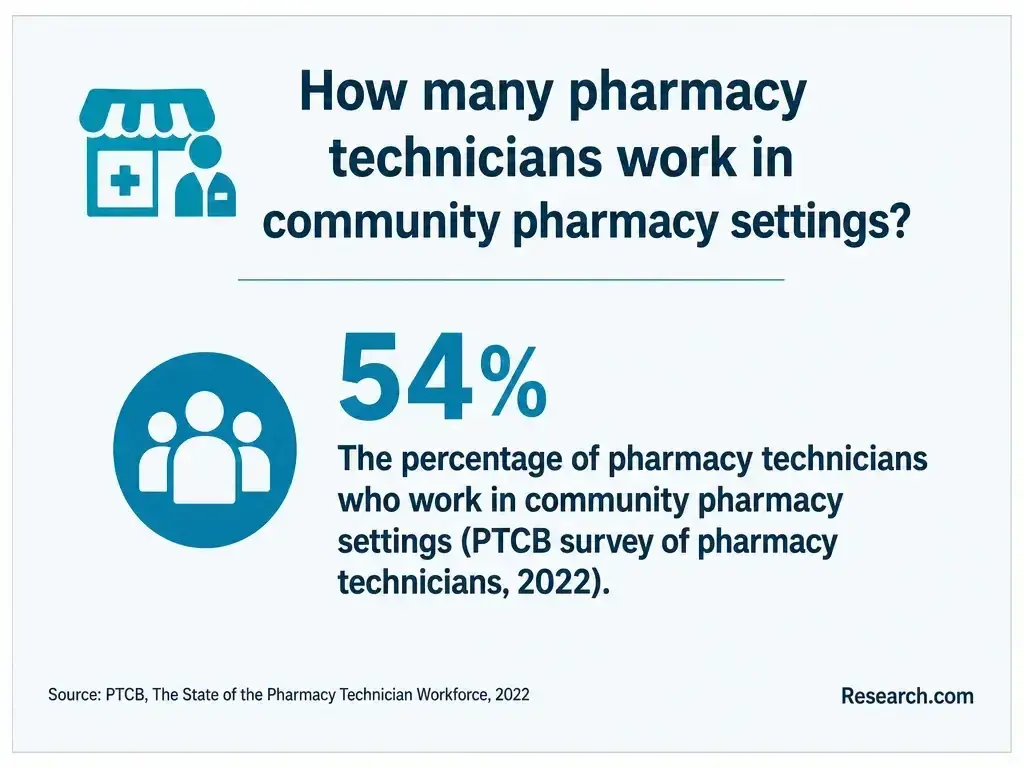
Wisconsin regulates pharmacy technician practice through state registration; national certification is a distinct credential, and school graduation does not automatically grant either one (Wisconsin DSPS). Check the current DSPS technician and trainee categories and application instructions before choosing a program, particularly if you hope to begin working while still training.
Employers may value or require certification for particular roles even where it is not identical to the state's entry requirement. Ask whether your planned coursework or qualifying work experience meets the current eligibility rules of the certification organization you choose, then verify the examination and renewal obligations directly with that organization (Pharmacy Technician Certification Board). Institutional accreditation, pharmacy technician program accreditation, certification, and Wisconsin registration each answer a different question.
Start with your intended workplace and the earliest point at which you need paid work. A structured program may suit someone who wants guided labs and certification preparation; employer training may suit someone able to secure a suitable opening and learn on the job. The cheapest advertised course is a poor bargain if it leaves you arranging essential practice alone.
Use this sequence to test a short list against your goal:
- Confirm the provider's current offering, credential, schedule, and every required training site.
- Verify institutional accreditation, any claimed pharmacy technician program accreditation, and how training relates to Wisconsin DSPS registration; do not treat one approval as a substitute for another.
- Request a written total-cost estimate and ask about aid, paid training, debt, and costs if you withdraw.
- Ask how practical skills are assessed, who arranges placements, and what evidence the provider can share about completion and employment outcomes for this specific program.
- Compare the result with an employer-sponsored opening you could realistically obtain, including its wages during training and certification support.
Rankings can identify cost candidates, not make this final decision for you. For a broader look at occupational alternatives, compare trade programs that pay well without assuming their published wages reflect entry-level offers in Wisconsin Rapids.
An entry role may center on community-pharmacy dispensing and customer transactions or on hospital medication distribution. With relevant experience and employer training, technicians may move into more specialized preparation, inventory, workflow coordination, or supervisory responsibilities (U.S. Bureau of Labor Statistics). Advancement depends on the setting and demonstrated skills; a short certificate does not confer an advanced role automatically.
If you want a hospital position, prioritize access to that setting's practical experience and ask about its hiring expectations. If your goal is to start earning promptly, compare nearby openings with a longer school pathway. In either case, optional certification can strengthen an application, but it should be evaluated separately from the Wisconsin registration needed for practice.
National employment of pharmacy technicians is projected to grow 6.4% from 2025 to 2035 (U.S. Bureau of Labor Statistics, Employment Projections). That indicates continuing national demand, not a forecast of openings in Wisconsin Rapids or a guarantee of placement after training.
Check current postings within a commute you can sustain and note whether they accept trainees, require certification, or expect experience in a particular pharmacy setting. Those requirements may change the value of a local program more than the national growth rate. Technology also affects pharmacy workflows, making accurate use of dispensing systems, records, and inventory tools a useful skill to assess in a curriculum (U.S. Bureau of Labor Statistics).
Most Affordable Pharmacy Technician Schools & Training in Wisconsin Rapids for 2027
Education is a consequential investment, so the Research.com team designed this ranking to help readers compare reported costs among relevant programs rather than assume the lowest advertised tuition is the best value. Programs are compared with others in the same occupation and location; only programs with completions reported to the Integrated Postsecondary Education Data System (IPEDS) are eligible. That limit means an employer training route or other provider absent from IPEDS is not necessarily unavailable or inferior.
The most affordable ranking scores tuition, cost of attendance, median student debt, and federal loan default rate. It uses an entropy-based weighting method, which gives more weight to cost and debt indicators that vary more across eligible programs. Accreditation and other quality measures are not part of this affordability score. Research.com also evaluates outcomes, earnings, costs, support, accreditation, and relevant industry recognition in its separate best-program rankings; readers should not mistake those criteria for the affordability formula.
The team draws on the following sources for ranking data and supporting checks. Some occupation-specific sources in the broader research process do not set pharmacy technician requirements or contribute to this affordability score:
- IPEDS database - reported completions and institutional data used to identify eligible programs and compare costs.
- National Center for Education Statistics - federal education-data definitions and context.
- College Scorecard database - available federal cost and student-debt measures.
- Peterson's database - supplemental institutional and program information.
- Commission on Accreditation of Allied Health Education Programs (CAAHEP) - allied-health accreditation checks where relevant to an occupation.
- Accrediting Bureau of Health Education Schools (ABHES) - institutional or program accreditation checks where applicable.
- Commission on Dental Accreditation (CODA) - dental-program checks in the broader trade-school methodology, not pharmacy technician accreditation.
- Dental Assisting National Board (DANB) - dental credential checks, not pharmacy technician certification.
- National Center for Construction Education and Research (NCCER) - construction-training recognition checks, not pharmacy technician approval.
- Apprenticeship.gov Partner Finder - a way to examine registered work-based alternatives where applicable.
Use the ranking to narrow your cost comparison, then confirm current program availability, the full price, practical training, and Wisconsin registration requirements directly with the provider and regulator. More detail on Research.com's approach is available on its methodology page.
# 2 position
Mid-State Technical College - Pharmacy Technician/Assistant.
certificate or diplomaFrequently asked questions about pharmacy technician programs in Wisconsin Rapids
What is the cheapest way to train as a pharmacy technician locally?
Compare the complete price of a school program with employer-sponsored training that may pay you while you learn. Include travel, supplies, exam and registration costs, and forgone wages; the lowest tuition may not mean the lowest total cost.
Does Mid-State Technical College offer pharmacy technician training?
Check Mid-State Technical College's current program listings and ask which term, location, and delivery format are available. Do not rely on an older listing when planning enrollment or practical placement.
Can I complete the training entirely online?
Theory may be available online, but verify how the program teaches and assesses practical skills and whether an employer or worksite component is needed. Do not assume an online certificate alone meets certification or Wisconsin registration requirements.
Do I have to be nationally certified before applying for a job?
National certification and Wisconsin registration are separate. Check current Wisconsin DSPS rules and each employer's posting; hiring requirements can differ by role and workplace.
Is a pharmacy technician certificate worth the cost?
It can be if its instruction, practical experience, and credential match the job you want at a manageable total cost. Compare it with a realistic paid-training option and assess debt, completion likelihood, commuting, and local entry-level offers before enrolling.
- U.S. Bureau of Labor Statistics - Pharmacy Technicians
Used to verify salary, employment outlook, and typical education requirements.
https://www.bls.gov/ooh/healthcare/pharmacy-technicians.htm - NCES College Navigator (IPEDS)
Used to verify programs offered and institutional accreditation.
https://nces.ed.gov/collegenavigator/ - NHA - ExCPT Pharmacy Technician
Professional certification reference for graduates of this occupation.
https://www.nhanow.com/certifications/pharmacy-technician - Mid-State Technical College - official website
Official school website (programs, tuition, admissions).
https://www.mstc.edu/