# 1 position
Most Affordable Pharmacy Technician Schools & Training in Brooklyn Park for 2027
Audited and Verified:
Our Editorial and Data Verification Process
Research.com uses government datasets, official education statistics and primary institutional information to support its career and degree guides. Our review process checks factual accuracy, occupational definitions, source dates and the requirements associated with the credentials discussed.
How This Article Was Fact-Checked
Our editorial team verifies salary estimates, employment projections, education requirements and program information against original data providers and official organizations. Salary figures are checked against the relevant occupational definitions and reporting periods. Information about licensure, accreditation and required in-person training is reviewed separately.
Fact-checked and verified on:

Co-Founder and Chief Data Scientist

Reviewed by Karolina Broda
Fact-Checker and Data Verification
Choosing pharmacy technician training in Brooklyn Park means weighing more than tuition: you need a route that fits Minnesota's registration rules, builds practical skills, and gets you job-ready without unnecessary debt. The Research.com team of data scientists created the Most Affordable Pharmacy Technician Trade Schools in Brooklyn Park for 2027 ranking to help students identify programs worth considering. National pharmacy technician employment is projected to grow 6.4% from 2025 to 2035 (U.S. Bureau of Labor Statistics). This guide explains how to compare costs, credentials, training, and career prospects before enrolling.
Key findings about pharmacy technician degrees in Brooklyn Park
- Start with eligibility, not price: Minnesota regulates pharmacy technicians through the Minnesota Board of Pharmacy. Confirm a program's training and registration implications before paying a deposit.
- Compare the whole bill: Tuition alone excludes possible fees, materials, examination costs, and travel to labs or work sites; an employer-training route may change that calculation.
- Use wages as context, not a promise: The U.S. median for pharmacy technicians was $45,750 in May 2025 (U.S. Bureau of Labor Statistics), not a Brooklyn Park starting wage.
Table of Contents
- Most Affordable Pharmacy Technician Schools & Training in Brooklyn Park for 2027
- What can I expect from a pharmacy technician trade school program in Brooklyn Park?
- Where can I work with a pharmacy technician trade school training in Brooklyn Park?
What can I expect from a pharmacy technician trade school program in Brooklyn Park?
A pharmacy technician program prepares students to assist pharmacists with prescription processing, medication inventory, calculations, insurance claims, and patient-facing work under pharmacist supervision. Expect instruction in drug names and dosage forms alongside practice with dispensing workflows, accuracy checks, and confidentiality. Technicians do not replace pharmacists' clinical judgment (U.S. Bureau of Labor Statistics, Occupational Outlook Handbook).
For a Brooklyn Park student, the main choice is often between a school-based certificate or diploma and training provided by a pharmacy employer. A school may offer structured labs and a scheduled path to completion; employer training may let you earn while learning, but its schedule, supervision, and preparation for certification can differ. An academic degree is not the default entry credential for this occupation. If your goal is rapid entry into pharmacy work, compare these routes rather than assuming every fast certificate program that pays well prepares you for the same job.
Where can I work with a pharmacy technician trade school training in Brooklyn Park?
Potential settings include community and hospital pharmacies, mail-order operations, and pharmacies serving long-term-care facilities (U.S. Bureau of Labor Statistics, Occupational Outlook Handbook). Brooklyn Park's location within the Minneapolis-St. Paul labor market makes the commute part of the decision: a nearby class may be convenient, but a clinical placement or suitable job could be elsewhere in the metro area.
Ask a training provider where students actually complete hands-on work, whether placements are arranged or self-sourced, and what shifts those sites require. If you need a predictable schedule, compare those answers with the hours offered by local pharmacy employers before choosing a program.
The national median annual wage for pharmacy technicians was $45,750 in May 2025 (U.S. Bureau of Labor Statistics, Occupational Outlook Handbook). A median divides employed workers into two equal groups; it is not an offer to a newly trained technician or a Brooklyn Park wage estimate. Pay can differ by setting, shift, experience, and employer.
For a realistic return-on-investment estimate, compare current local job postings for entry-level technicians with the pay and hours of any employer-training offer. Then weigh the likely earnings change against training costs, time out of work, borrowing, and the chance you will finish. A higher-priced program is not necessarily a worse investment, but it needs a convincing benefit you can verify.
Pharmacy technician programs vary in length; the U.S. Bureau of Labor Statistics describes formal programs as typically lasting a year or less. Part-time attendance, placement scheduling, and employer training can change the time until you are ready to apply for work. Do not mistake a course's advertised finish date for the date you can complete practical training and meet Minnesota's applicable registration requirements.
Ask Hennepin Technical College or any employer offering training for a current schedule showing classroom time, labs, work-site hours, and the earliest realistic completion date. If speed is your priority, compare that timeline with paid training rather than with an unrelated online accelerated bachelor's degree route.
Online coursework may cover terminology, calculations, law, and prescription-processing concepts. In-person labs or supervised work are where students can practice equipment use, medication-handling workflows, and communication under realistic conditions. A hybrid program may reduce trips to class, but it does not remove the need to verify how practical skills are taught and assessed.
This comparison focuses on what each format requires of a working Brooklyn Park student; "online" alone says nothing about certification preparation or Minnesota registration eligibility.
| Format | Potential advantage | Question to resolve before enrolling |
| On-campus | Scheduled access to instructors and practice facilities | Do class and placement times fit your commute and work schedule? |
| Hybrid | Some coursework can fit around work | Where and when do required labs and supervised practice occur? |
| Online coursework | Flexible study location | Who provides hands-on training, and will this route meet your intended credential requirements? |
For pharmacy entry, an affordable online associate degree program is not automatically a better substitute for a shorter, occupation-specific credential. Check the award, practical component, and total time commitment rather than choosing by format alone.
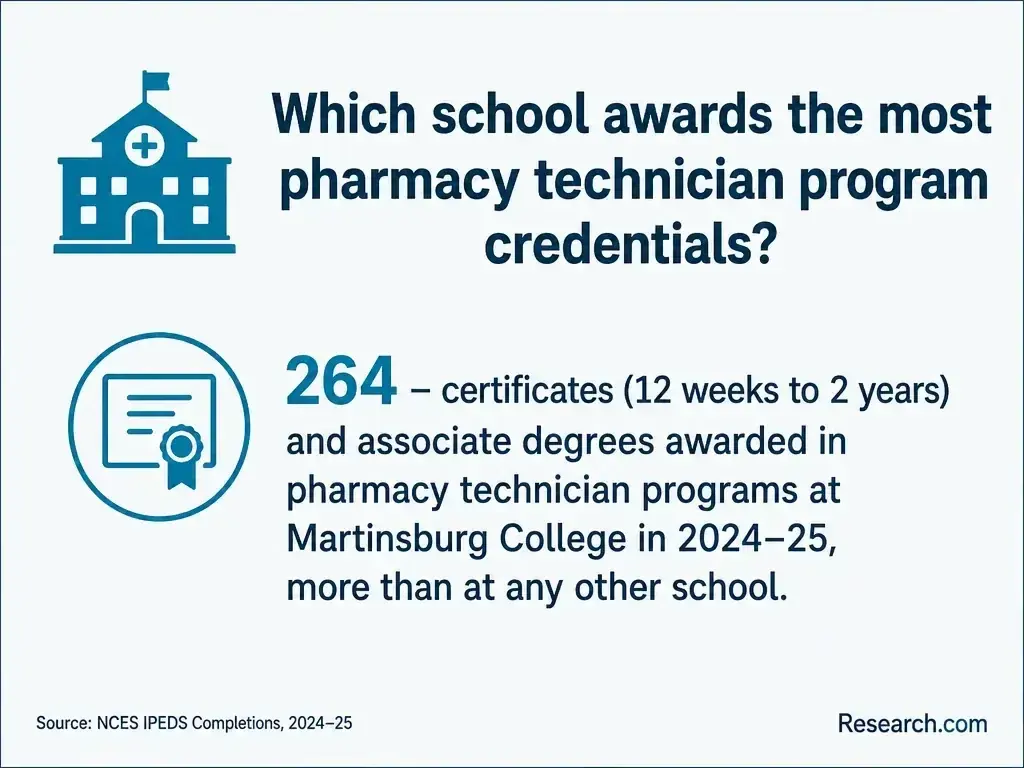
There is no reliable single Brooklyn Park average that covers school-based programs and employer training on the same basis. For a usable comparison, request each provider's current, written total cost to become job-ready, not just its tuition figure. Include mandatory fees, books or software, supplies and any required uniform, certification examination and registration costs, screening requirements, transportation to training sites, and earnings you may forgo while studying.
Ask whether the specific program qualifies for federal aid, Minnesota aid, scholarships, or workforce funding; eligibility depends on both the student and program (Federal Student Aid; Minnesota Office of Higher Education). Employer-paid training may reduce upfront expense, although available hours and training quality still matter. Comparing a certificate with the cheapest online bachelors options would not answer the pharmacy-entry cost question: compare routes that lead toward the same intended job.
A school-based program may award a certificate or diploma; check the current catalog for the exact award. That school credential is different from national certification and from Minnesota pharmacy technician registration. The Pharmacy Technician Certification Board's CPhT credential, for example, has its own eligibility and examination requirements; completing a course does not itself award CPhT status (Pharmacy Technician Certification Board).
Institutional accreditation concerns the school, while programmatic accreditation concerns a particular program. Neither should be treated as a substitute for checking the Minnesota Board of Pharmacy's registration rules or a certification body's current eligibility rules. Ask the provider to state in writing which credential you receive and which additional steps remain.
School admissions rules and pharmacy work-entry rules are separate. A provider may set its own application, prior-education, assessment, or placement requirements. A work site may also require screening before allowing a student into a pharmacy. Obtain the current requirements directly from the program and placement coordinator; do not assume acceptance into class guarantees a work-site placement.
Before committing, tell the provider whether you intend to work in Minnesota and ask how its training fits the Minnesota Board of Pharmacy's current technician-registration requirements. If you already work in a pharmacy, ask whether documented experience can count toward training or a certification pathway; do not assume a school will award credit for it.
Useful instruction connects pharmacy calculations, medication names, dosage forms, prescription entry, inventory, insurance processing, patient privacy, and error prevention to supervised practice. Those are occupational tasks identified by the U.S. Bureau of Labor Statistics and O*NET. The important comparison is not whether two catalogs list the same subjects, but whether students repeatedly practice the tasks and receive feedback before working with real prescriptions.
Ask to see how the program assesses calculations and accuracy, which pharmacy systems or simulations students use, and what happens if a placement falls through. A program with little practical access may be a poor fit even if its advertised tuition is low.
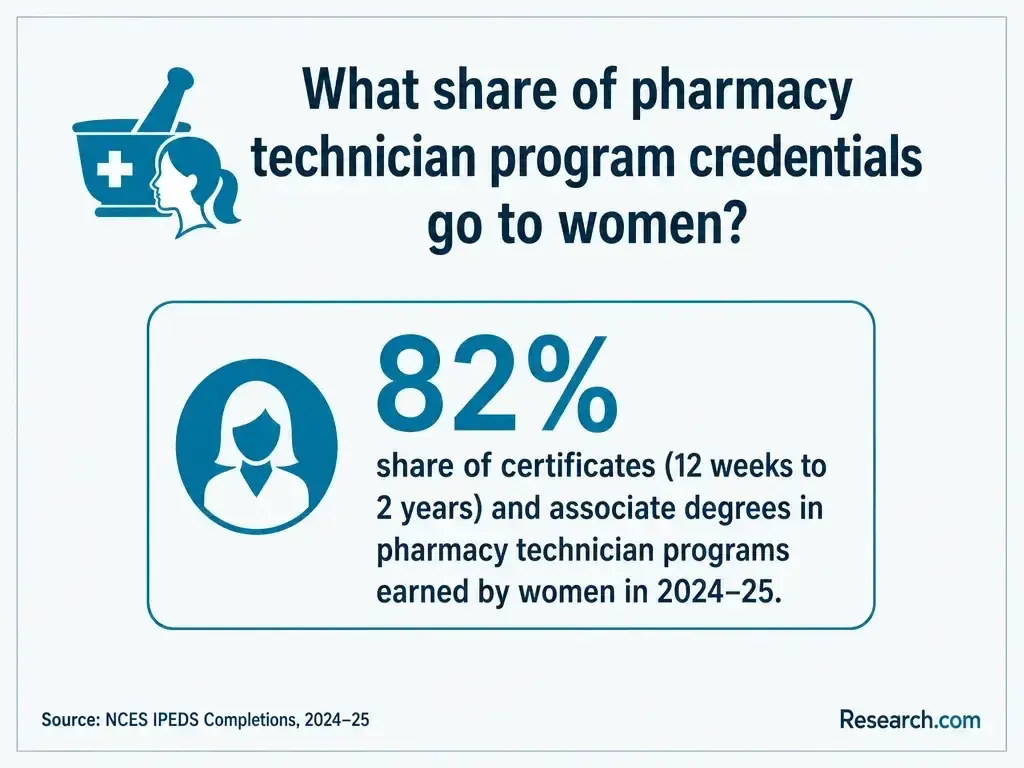
Minnesota requires pharmacy technicians to register with the Minnesota Board of Pharmacy; registration is a state requirement distinct from an optional or employer-requested national certification (Minnesota Board of Pharmacy). The Board sets the applicable training and registration rules, so verify current deadlines, acceptable training routes, and application steps directly with it before choosing a course. Do not assume that a credential advertised for another state satisfies Minnesota's rules.
National certification may broaden the positions for which you can compete, but its eligibility rules are set by the certifying body, not by a school's marketing description. For example, the Pharmacy Technician Certification Board recognizes qualifying education or work experience routes and requires its certification examination (Pharmacy Technician Certification Board).
Use the affordability ranking to build a shortlist, then test each option against the job you want. The cheapest listed program is not necessarily the least expensive route to employment if it adds travel, delays practical training, or leaves you to arrange experience on your own.
These checks turn a price comparison into an enrollment decision:
- Confirm the exact award, training format, practical-work arrangements, and realistic completion timeline.
- Verify institutional and any claimed programmatic accreditation separately from Minnesota registration and national certification eligibility.
- Request an itemized cost and aid estimate, including placement travel and examination or application charges.
- Ask for recent completion and placement information, its reporting period, and whether it covers this specific pharmacy technician program.
- Compare a school route with available employer-paid training, accounting for wages while learning and the supervision you would receive.
A red flag is a promise that graduation automatically brings certification, registration, or a particular salary. Ask for the relevant requirement in writing and check it with the organization that actually sets the rule.
Training can support entry into community or hospital pharmacy work, followed by more specialized responsibilities as experience and employer requirements allow. A technician interested in hospital workflows, inventory, or supervision should ask prospective employers what additional training or certification they expect; advancement is not automatic (U.S. Bureau of Labor Statistics, Occupational Outlook Handbook).
Choose this route if you want hands-on medication-related work under pharmacist supervision. If your goal is research rather than pharmacy operations, a search for short phd programs online addresses a different career decision and should not drive your pharmacy technician program choice.
U.S. pharmacy technician employment is projected to grow 6.4% from 2025 to 2035 (U.S. Bureau of Labor Statistics, Employment Projections). That national projection indicates continuing opportunities, but it does not forecast vacancies in Brooklyn Park or guarantee a job after training.
Because students can seek work across the Twin Cities, assess openings by commute, setting, schedule, and stated registration or certification expectations rather than counting only positions inside city limits. Compare those requirements with the experience your chosen program or employer-training route will actually provide.
Most Affordable Pharmacy Technician Schools & Training in Brooklyn Park for 2027
Investing in occupational training is a consequential decision. To make the ranking credible and useful, the Research.com team compares pharmacy technician programs with other programs serving the same occupation and location, checks multiple education datasets, and limits the ranking to programs with completions reported to IPEDS. That last rule matters: an employer training route can be legitimate even if it does not appear in the ranking.
The most affordable ranking scores tuition, cost of attendance, median student debt, and federal loan default rate. Weights use an entropy-based method, which gives more weight to measures that differ more across programs. Unlike the separate best-programs ranking, affordability scores do not include accreditation, student support, or outcomes; readers should check those independently. The team used the following sources across its trade-school ranking work, including occupation-specific sources that may not apply to pharmacy technicians:
- IPEDS database - reported completions, institutional characteristics, and education costs.
- National Center for Education Statistics - federal education data and definitions.
- College Scorecard database - available cost, debt, and outcome measures.
- Peterson's database - supplemental institution and program information.
- Commission on Accreditation of Allied Health Education Programs - accreditation information for applicable allied health fields.
- Accrediting Bureau of Health Education Schools - accreditation information for applicable health education providers.
- Commission on Dental Accreditation - accreditation information for dental occupations, not pharmacy technician training.
- Dental Assisting National Board - credential information for dental assisting, not pharmacy technicians.
- National Center for Construction Education and Research - industry-recognition information for construction trades, not pharmacy technicians.
- Apprenticeship.gov Partner Finder - information about apprenticeship pathways where applicable.
The ranking provides a cost-focused shortlist, not a finding that every listed program meets a particular employer's expectations or Minnesota's registration requirements. Readers can learn more about the approach on Research.com's methodology page.
# 2 position
Hennepin Technical College - Pharmacy Technician/Assistant.
certificate or diplomaFrequently asked questions about pharmacy technician programs in Brooklyn Park
Is trade school required to become a pharmacy technician in Minnesota?
Not necessarily. Compare school-based training with an employer-training route, then check which option satisfies the Minnesota Board of Pharmacy's current registration and training rules.
Is a cheap pharmacy technician program worth it?
It can be if its total cost, practical training, schedule, and credential fit your intended job. Low tuition alone does not establish value.
Can I complete pharmacy technician training entirely online?
You may be able to study some subjects online. Confirm how the provider delivers and assesses practical skills and whether the complete route meets your intended certification and Minnesota registration requirements.
Does finishing a program make me a certified pharmacy technician?
No. A school credential, national certification, and Minnesota registration are separate. Check each organization's requirements before enrolling.
What should I ask about a pharmacy placement?
Ask whether the provider arranges it, where sites are located, what shifts are available, what screening is required, and whether a delayed placement could postpone completion.
- U.S. Bureau of Labor Statistics - Pharmacy Technicians
Used to verify salary, employment outlook, and typical education requirements.
https://www.bls.gov/ooh/healthcare/pharmacy-technicians.htm - NCES College Navigator (IPEDS)
Used to verify programs offered and institutional accreditation.
https://nces.ed.gov/collegenavigator/ - NHA - ExCPT Pharmacy Technician
Professional certification reference for graduates of this occupation.
https://www.nhanow.com/certifications/pharmacy-technician - Hennepin Technical College - official website
Official school website (programs, tuition, admissions).
https://www.hennepintech.edu/