# 1 position
Best Pharmacy Technician Training Programs & Trade Schools in Sylmar for 2027
Audited and Verified:
Our Editorial and Data Verification Process
Research.com uses government datasets, official education statistics and primary institutional information to support its career and degree guides. Our review process checks factual accuracy, occupational definitions, source dates and the requirements associated with the credentials discussed.
How This Article Was Fact-Checked
Our editorial team verifies salary estimates, employment projections, education requirements and program information against original data providers and official organizations. Salary figures are checked against the relevant occupational definitions and reporting periods. Information about licensure, accreditation and required in-person training is reviewed separately.
Fact-checked and verified on:

Co-Founder and Chief Data Scientist

Reviewed by Karolina Broda
Fact-Checker and Data Verification
Choosing pharmacy technician training near Sylmar means checking more than tuition: the program must fit California's licensing rules and your schedule. The U.S. Bureau of Labor Statistics projects 6.4% national employment growth for pharmacy technicians from 2025 to 2035. This guide compares training routes, costs, credentials, and career prospects so you can judge what is worth pursuing. It also features a Best Pharmacy Technician Trade Schools in Sylmar for 2027 ranking created by the Research.com team of data scientists to help students make an informed choice about programs worth considering.
Key findings about pharmacy technician degrees in Sylmar
- California requires a state pharmacy technician license to work as a pharmacy technician; finishing a certificate alone does not confer that license. Confirm the training or certification route with the California State Board of Pharmacy before enrolling.
- The national median annual wage for pharmacy technicians was $45,750 in May 2025, according to the U.S. Bureau of Labor Statistics. It is not a Sylmar starting-wage estimate, so compare local job postings before borrowing for training.
- For a Sylmar resident, the strongest option is the one whose total cost, commute to required hands-on training, and California licensing pathway fit their goal - not necessarily the fastest course or the highest-ranked school.
Table of Contents
- Best Pharmacy Technician Training Programs & Trade Schools in Sylmar for 2027
- What can I expect from a pharmacy technician trade school program in Sylmar?
- Where can I work with a pharmacy technician trade school training in Sylmar?
What can I expect from a pharmacy technician trade school program in Sylmar?
Expect training for a supervised medication-dispensing role, not independent practice as a pharmacist. Pharmacy technicians typically process prescriptions, measure or package medications, maintain records and inventory, and communicate with patients and insurers under a pharmacist's supervision, according to the U.S. Bureau of Labor Statistics. Accuracy, privacy, and knowing when to refer a question to the pharmacist matter as much as speed.
For someone in Sylmar, a community-college certificate, a career-school program, and employer-based training may lead toward the same occupation but offer different levels of structure. A classroom program can be useful if you want scheduled instruction and supervised practice; an employer route may suit someone who can secure an entry-level position and learn while working. Neither route should be assumed to satisfy California's licensing criteria without checking its specific training or certification pathway with the California State Board of Pharmacy.
Be wary of treating an inexpensive remote course as equivalent to practice with prescription-processing systems and medication-handling procedures. Lists of best online certificate programs that pay well can help frame broader career choices, but pharmacy technician training has distinct practical and state-licensing questions.
Where can I work with a pharmacy technician trade school training in Sylmar?
Potential settings include community and chain pharmacies, hospital pharmacies, clinics, and other medication-dispensing operations. The workplace affects the job: retail roles often involve customer service and insurance claims, while hospital roles may place greater emphasis on medication distribution, inventory controls, and institution-specific procedures. The U.S. Bureau of Labor Statistics identifies pharmacies and hospitals among major employers of pharmacy technicians.
Sylmar residents can compare opportunities across the surrounding Los Angeles labor market rather than limiting a search to the neighborhood. That wider search may offer more settings, but a longer commute can erase the benefit of a modest wage difference - especially for evening or weekend shifts. Compare postings for required California licensure, preferred certification, shift schedules, and the tasks you want to learn. If pharmacy work is only one option you are considering, broader comparisons of trade schools jobs that pay well should not be mistaken for local pharmacy technician pay.
The U.S. Bureau of Labor Statistics reports a $45,750 national median annual wage for pharmacy technicians in May 2025. Half of workers in the occupation earned more and half earned less. This is not a Sylmar wage, an entry-level offer, or a promised return on a particular credential.
To estimate what training could be worth locally, compare current Los Angeles-area postings that accept newly licensed technicians with postings requiring hospital experience, specialized duties, or certification. Keep the job setting and schedule consistent when comparing pay. A higher advertised wage may come with different shift requirements or experience thresholds, while an entry role with substantial supervised training may have value that a wage figure does not capture.
There is no single required program length that describes every California route into pharmacy technology. Certificate schedules vary with course load, prerequisites, and whether the provider includes an externship; employer-based training follows a different timetable. Ask for the current calendar and a breakdown of classroom, lab, and worksite hours rather than relying on an advertised completion date.
Certification can add a separate timing consideration. The Pharmacy Technician Certification Board (PTCB) offers an eligibility route based on completion of a PTCB-recognized education or training program and another based on qualifying work experience; its work-experience route requires 500 hours, according to PTCB. That figure is a PTCB certification eligibility rule, not a universal California trade-school hour requirement. Ask when you can apply for state licensure, whether certification is part of your plan, and how long each step may take after coursework ends.
Online delivery can make terminology, calculations, regulations, and insurance concepts easier to study around work. Campus labs or supervised worksites offer opportunities to practice dispensing workflows, documentation, and error prevention with feedback. A hybrid format may combine both, but its convenience depends on where - and when - the required in-person work occurs.
The distinction matters in Sylmar because an advertised online program might still require travel to a lab or placement elsewhere in the Los Angeles area. Before paying, get written answers about who arranges practical training, where it takes place, and which California licensing route the program supports. Institutional accreditation, including the kind discussed in guides to non profit accredited online colleges, is not by itself proof of occupational licensing eligibility. The California State Board of Pharmacy's rules govern that question.
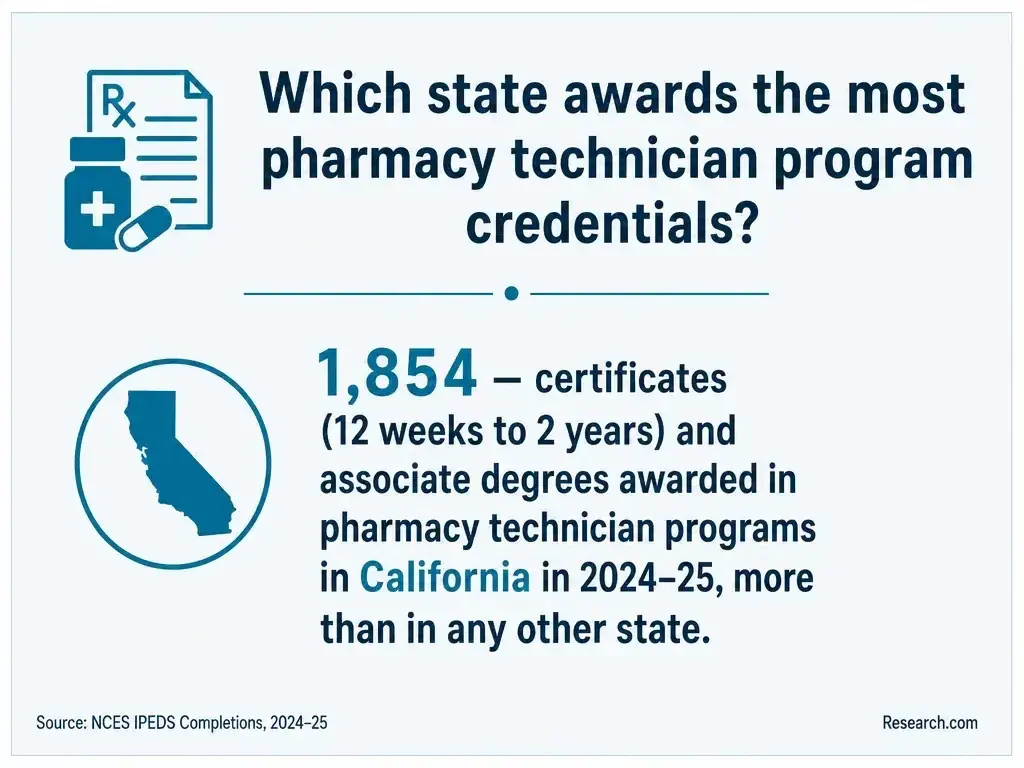
There is no reliable single average that covers every Sylmar-area classroom program, online provider, and employer-training route. A usable comparison is the total cost to become eligible and ready to apply for work, not the advertised tuition. Request an itemized, current quote from each provider; public-college charges may depend on residency and enrollment status, while career-school packages may include different materials or services.
Compare the same cost categories for each option so a shorter course does not appear cheaper simply because it excludes a required expense:
- Tuition, mandatory fees, textbooks, software, lab supplies, and any required uniform.
- Certification examination and California license-application costs, if applicable to your chosen route, plus any required background-check expenses.
- Travel and parking for classes or placements, childcare if needed, and earnings you would forgo while training.
- Offsets such as eligible financial aid, workforce funding, employer-paid training, or wages earned while learning.
Federal aid depends on both the student and the specific program's eligibility, according to Federal Student Aid; do not assume a short course qualifies. Ask for aid terms and a net-cost estimate before comparing debt. Low-price education lists - including low cost online master's programs - are not a substitute for pricing this occupational entry route. Its costs, time away from work, and licensing expenses must be assessed on their own terms.
The school credential may be a certificate of completion, a college certificate, or a diploma, depending on the provider. These are not interchangeable with a California pharmacy technician license, which the California State Board of Pharmacy issues, or with an optional professional certification such as PTCB's Certified Pharmacy Technician (CPhT) credential. Check the exact award on the provider's current catalog and ask which licensing application route its graduates use.
A longer college pathway is worthwhile only if its additional coursework advances your goal enough to justify its cost and time. If you hope to use earlier coursework, ask whether the provider grants applicable credit and whether another institution would accept it; transfer is not automatic. Likewise, a certification-preparation claim should be checked against the certifier's current eligibility rules, not inferred from the credential's name.
School admission rules vary. Providers may ask for proof of prior schooling, an application, placement information, or prerequisites in math or English. A worksite placement may have additional screening or scheduling conditions. Request the written requirements for both enrollment and any externship so you can see whether an obstacle could delay completion.
School admission is separate from California licensing. The California State Board of Pharmacy sets the conditions for a technician license, including qualifying preparation and application requirements; it evaluates the application rather than granting a license because someone was admitted to or finished a course. If a past conviction or another eligibility concern may affect you, consult the board's current instructions before committing substantial tuition. Do not rely on an admissions representative's assurance as a licensing decision.
A useful curriculum connects medication terminology and pharmacy calculations to the tasks technicians actually perform: interpreting prescription information, processing orders, handling inventory, maintaining patient records, protecting confidential information, and recognizing when a pharmacist must intervene. Programs may also introduce insurance claims, pharmacy software, safety procedures, and differences between retail and institutional workflows. These duties align with the occupational description published by the U.S. Bureau of Labor Statistics.
For a fair comparison, ask providers to identify practical exercises rather than simply naming course topics. A student who intends to seek a hospital role should look for relevant medication-distribution practice or worksite exposure; someone targeting retail should examine prescription-entry and customer-service practice. An externship can be valuable, but its duties, supervision, availability, and commute matter more than the word "externship" on a brochure.
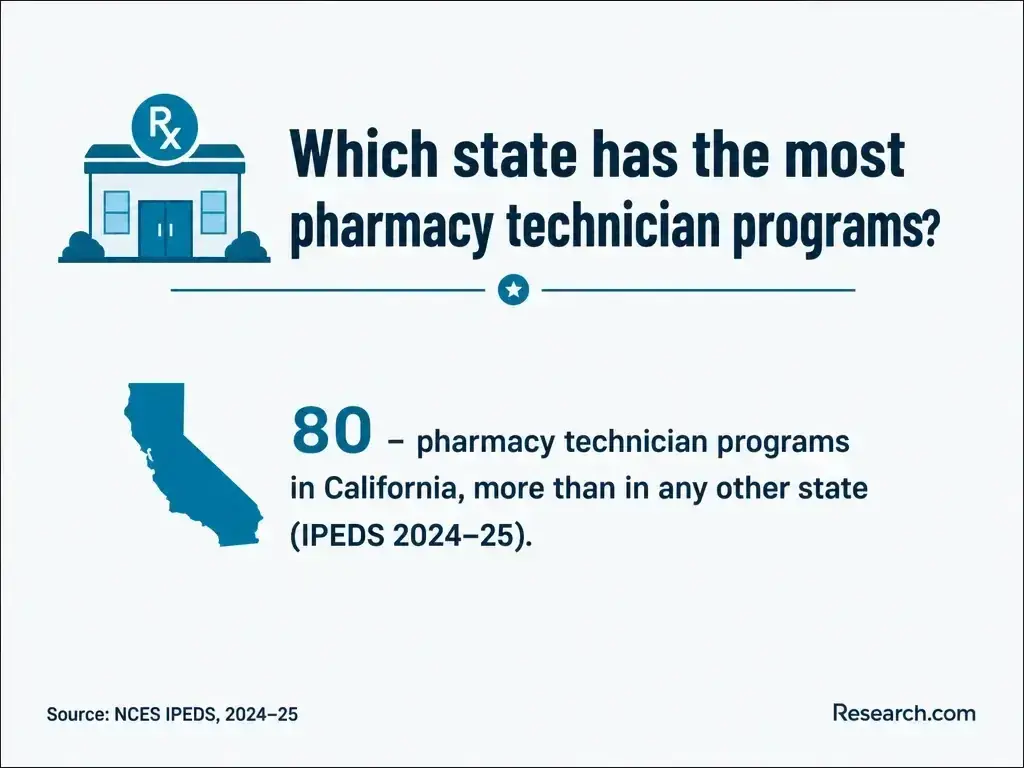
Yes, California requires a state pharmacy technician license to work as a pharmacy technician, according to the California State Board of Pharmacy. National certification is a different credential. It can be relevant to a qualifying licensing route or an employer's hiring preferences, but obtaining certification and receiving a state license are separate steps. Board rules, accepted qualifications, and application instructions should be checked in their current form before enrollment.
Keep the other forms of recognition distinct, too. Institutional accreditation concerns the school; pharmacy-technician program accreditation concerns a particular training program; state authorization concerns permission to operate; PTCB certification concerns an individual; and the board issues the occupational license. None automatically substitutes for another. Ask a provider to show exactly how its curriculum fits the board's requirements, and confirm that answer with the board rather than assuming that "accredited" means "license-qualifying."
Choose backward from the job you want: California-licensed retail technician, a hospital entry role, or another pharmacy setting. Then compare only programs that can explain their licensing relevance, provide suitable practice, and fit your budget and commute. A ranking helps identify options, but it cannot tell you whether a particular placement time works with your job or whether an employer will accept the training you received.
These checks expose the differences most likely to change a Sylmar student's decision:
- Ask which California licensing route the program prepares you to use, and independently verify the route with the California State Board of Pharmacy.
- Request the credential name, current course sequence, lab and worksite requirements, placement arrangements, and likely time from enrollment to application.
- Get a written total-cost estimate and distinguish aid that reduces cost from loans that must be repaid.
- Ask for relevant completion and employment information, its reporting period, and whether it describes this program rather than the whole institution.
- Compare the likely first job and pay range with the program's duration, forgone earnings, borrowing, and your chance of finishing.
A common mistake is buying the quickest course before confirming practical access or licensing fit. Another is assuming that a lower tuition price produces a better return. A sound return-on-investment comparison also considers completion probability, baseline and post-training earnings, debt, time horizon, and the value of money over time. If a provider cannot clearly answer licensing or placement questions, pause before paying.
The immediate goal is usually an entry-level pharmacy technician role after meeting California's licensing requirements. With experience, technicians may pursue responsibilities in inventory, insurance processing, hospital medication distribution, or training and supervision, depending on the employer. Additional certification can strengthen an application for some roles, but it is not a promise of promotion; experience, workplace competencies, and vacancies still matter.
Training is most likely to be a worthwhile investment if you want medication-related work under pharmacist supervision and can meet the licensing and practical requirements at a manageable cost. If you primarily want an independent clinical role, pharmacy technician training is not a shortcut to one. It is also a distinct entry decision from later-career options such as one year online masters; compare the technician pathway against the job you can realistically pursue next, not an unrelated credential.
The U.S. Bureau of Labor Statistics projects 6.4% growth in U.S. pharmacy technician employment from 2025 to 2035. That signals national demand over the projection period, not a forecast of Sylmar openings or a guarantee of a job after training. Openings can also arise when existing workers leave the occupation, while individual employers may change staffing and technology practices.
Use the projection as context, then test local demand before enrolling: review recent Los Angeles-area postings for California license requirements, preferred certification, shift patterns, and the split between retail and hospital work. If the roles you want routinely require experience, ask a prospective training provider how its supervised practice helps students compete for the first role. That evidence is more useful for a local investment decision than the national growth figure alone.
Best Pharmacy Technician Training Programs & Trade Schools in Sylmar for 2027
Investing in occupational training is an important decision. Research.com created its ranking to help readers compare pharmacy technician programs with other eligible programs serving the same location and occupation, rather than with unrelated schools. The team evaluates reported outcomes, costs, and quality indicators; the ranking is a starting point, not a substitute for confirming a program's current offerings and California licensing relevance.
Only programs with completions reported to the Integrated Postsecondary Education Data System (IPEDS) are eligible. The best-programs ranking considers student completion and full- and part-time retention; median earnings one year after completion and earnings relative to annual attendance cost; tuition, attendance cost, median debt - including debt among students who withdrew - and federal loan default rates; plus accreditation, occupation-relevant recognition, and student support. Programmatic accreditation or industry recognition receives 20% of the score, institutional accreditation 10%, and student support 10%. Outcomes, earnings, and costs account for the remaining 60%, with weights distributed through an entropy-based method that gives more weight to indicators that vary more across programs.
The methodology also distinguishes best-programs rankings from most-affordable-programs rankings. The latter score tuition, attendance cost, median debt, and federal loan default rate using entropy-based weights; accreditation and other quality indicators are not part of that affordability score. Research.com draws on the following sources across its trade-school rankings. Some organizations cover occupations other than pharmacy technology, so their inclusion does not imply that they accredit or endorse a pharmacy technician program:
- IPEDS database: reported program completions and institutional data used to establish eligibility and comparisons.
- National Center for Education Statistics: federal education data and definitions.
- College Scorecard database: available cost, debt, earnings, and outcome measures.
- Peterson's database: supplemental institutional and program information.
- Commission on Accreditation of Allied Health Education Programs (CAAHEP): occupation-specific accreditation information where applicable to other ranked fields.
- Accrediting Bureau of Health Education Schools (ABHES): applicable health-education accreditation information.
- Commission on Dental Accreditation (CODA): dental-program accreditation information for other occupational rankings.
- Dental Assisting National Board (DANB): dental-assisting credential information for other occupational rankings.
- National Center for Construction Education and Research (NCCER): construction-training recognition information for other occupational rankings.
- Apprenticeship.gov Partner Finder: information about apprenticeship pathways where relevant.
IPEDS and college-oriented databases do not capture every employer training route or occupational provider. An unranked option is therefore not necessarily unavailable or poor quality. Readers can find further detail on Research.com's ranking methodology and use the ranking alongside direct checks of program cost, practical training, and licensing eligibility.
# 2 position
Los Angeles Mission College - Pharmacy Technician/Assistant.
certificate or diplomaFrequently asked questions about pharmacy technician programs in Sylmar
Is trade school required to become a pharmacy technician in California?
Not necessarily. California recognizes qualifying routes to licensure that are not identical to attending a trade school. Check the California State Board of Pharmacy's current qualifications before choosing school-based or employer-supported training.
Can I become a pharmacy technician through a fully online program?
Some coursework can be remote, but an online label does not establish California licensing eligibility or provide hands-on experience. Confirm the applicable licensing route and where any practical training takes place.
Is PTCB certification the same as a California pharmacy technician license?
No. PTCB certification is a professional credential; the California State Board of Pharmacy issues the state license required to work as a pharmacy technician.
Should I choose the cheapest or fastest program?
Only after checking licensing relevance, practical training, and total cost. A short or inexpensive course can be a poor value if it leaves you needing additional training or extensive travel.
How should I compare a school program with employer training?
Compare the route to California licensure, time to a paid role, supervision and hands-on practice, out-of-pocket cost, and whether a suitable position is actually available to you.
- U.S. Bureau of Labor Statistics - Pharmacy Technicians
Used to verify salary, employment outlook, and typical education requirements.
https://www.bls.gov/ooh/healthcare/pharmacy-technicians.htm - NCES College Navigator (IPEDS)
Used to verify programs offered and institutional accreditation.
https://nces.ed.gov/collegenavigator/ - PTCB - Certified Pharmacy Technician (CPhT)
Professional certification reference for graduates of this occupation.
https://www.ptcb.org/credentials/certified-pharmacy-technician - Los Angeles Mission College - official website
Official school website (programs, tuition, admissions).
https://www.lamission.edu/