# 1 position
Best Pharmacy Technician Training Programs & Trade Schools in Norwalk for 2027
Audited and Verified:
Our Editorial and Data Verification Process
Research.com uses government datasets, official education statistics and primary institutional information to support its career and degree guides. Our review process checks factual accuracy, occupational definitions, source dates and the requirements associated with the credentials discussed.
How This Article Was Fact-Checked
Our editorial team verifies salary estimates, employment projections, education requirements and program information against original data providers and official organizations. Salary figures are checked against the relevant occupational definitions and reporting periods. Information about licensure, accreditation and required in-person training is reviewed separately.
Fact-checked and verified on:

Co-Founder and Chief Data Scientist

Reviewed by Karolina Broda
Fact-Checker and Data Verification
Choosing pharmacy technician training near Norwalk, California, means comparing more than course length: the program must fit your budget, provide useful practical training, and support your route to a California license. The U.S. Bureau of Labor Statistics reports a $45,750 national median annual wage for pharmacy technicians in May 2025. This guide explains the costs, credentials, work settings, and licensing checks behind that decision. It will also feature the Best Pharmacy Technician Trade Schools in Norwalk for 2027 ranking, created by the Research.com team of data scientists to help students identify programs worth considering.
Key findings about pharmacy technician degrees in Norwalk
- For Norwalk, California, the decisive credential is a California pharmacy technician license; a school certificate or voluntary national certification is not, by itself, permission to work as a technician. Confirm your qualifying route with the California State Board of Pharmacy.
- Compare Cerritos College's current pharmacy technician offering with nearby employer training by checking practical experience, licensing alignment, schedule, and total job-ready cost - not tuition alone.
- The national median pharmacy technician wage was $45,750 in May 2025, and national employment is projected to grow 6.4% from 2025 to 2035, according to the U.S. Bureau of Labor Statistics. Neither figure predicts a new Norwalk graduate's pay or hiring prospects.
Table of Contents
- Best Pharmacy Technician Training Programs & Trade Schools in Norwalk for 2027
- What can I expect from a pharmacy technician trade school program in Norwalk?
- Where can I work with a pharmacy technician trade school training in Norwalk?
What can I expect from a pharmacy technician trade school program in Norwalk?
Expect training for work performed under a pharmacist's supervision: processing prescriptions, measuring and packaging medications, managing inventory, using pharmacy systems, and identifying problems that must be referred to a pharmacist. Technicians do not independently counsel patients or make clinical decisions, according to the U.S. Bureau of Labor Statistics.
Cerritos College is a relevant public-college option for a Norwalk student to investigate. Before enrolling, ask for its current pharmacy technician credential, course sequence, clinical or worksite arrangements, and a written explanation of how completion supports a California license application. A similarly named certificate elsewhere may offer a different amount of lab practice or employer access.
There is also a direct employment route: some pharmacies train eligible new hires on the job. This may suit someone who needs wages immediately and can obtain a suitable position; structured school training may suit someone who wants supervised practice before applying. Neither route eliminates California's licensing requirements. If speed is the priority, compare the actual requirements behind a pharmacy technician program with other top paying 6 month certificate programs online; the shortest advertised course is not necessarily the quickest route to licensed work.
Where can I work with a pharmacy technician trade school training in Norwalk?
Potential settings include community pharmacies, hospital pharmacies, outpatient facilities, and medication-distribution operations. Retail work emphasizes prescription intake, insurance transactions, inventory, and customer service. Hospital work may involve unit-dose distribution, automated dispensing systems, or sterile-compounding duties after appropriate training and employer authorization, according to the U.S. Bureau of Labor Statistics and the California State Board of Pharmacy.
Norwalk's position within the Los Angeles-Long Beach labor market lets applicants consider work beyond city limits. That wider search can increase the range of schedules and settings, but commuting time and transportation costs matter - especially for evening, weekend, or early hospital shifts. Ask a program where its students actually complete work-based training and whether those sites are reachable from your home.
The U.S. Bureau of Labor Statistics reports a $45,750 national median annual wage for pharmacy technicians in May 2025. A median is the midpoint for employed technicians across experience levels and settings, not an entry-level offer or a Norwalk wage estimate. Use current local job postings to compare starting pay, hours, benefits, and requirements for the specific settings you could reach.
When assessing an offer, compare take-home earnings after commuting and schedule-related expenses. A higher posted wage across the metro area may not be the better choice if travel costs or limited hours offset it. Hospital or specialized roles may also require experience that an initial certificate alone does not provide.
There is no single program duration or universal classroom-hour total that describes every California route to pharmacy technician licensure. A school's timeline depends on its course schedule and any practical placement; an employer-training timeline depends on hiring, supervision, and the qualifying route used for licensure. Request a term-by-term plan rather than relying on an advertised completion date, and ask whether placement delays can extend it.
For someone comparing a short credential with the fastest degree to make money, the useful measure here is time until eligibility to apply, licensing clearance, and a realistic job start - not time until the final class. Confirm with the California State Board of Pharmacy which training or certification evidence your intended application route requires.
Online delivery can make terminology, calculations, pharmacy law, and some software instruction easier to fit around work. In-person instruction can provide closer observation while students practice dispensing workflows and equipment use. A hybrid program may combine both; an advertised "online" credential does not establish access to a local lab, worksite, or California licensing route.
The comparison below separates delivery format from practical experience. Ask providers to specify where competencies are assessed and who arranges any worksite placement.
| Format | Potential advantage | Decision-critical check |
| Online coursework | Less travel for theory and assigned work | How are practical skills assessed, and does the intended licensing route accept the training evidence? |
| Hybrid | Remote study with scheduled in-person practice | Where and when are labs or worksites held? |
| On-campus | Regular access to instructors and supervised practice | Do the timetable and commute allow you to complete every required component? |
Online study may appeal to someone researching best online jobs for introverts, but pharmacy technician work is generally a supervised, team-based occupation, often involving patients or other healthcare staff. Choose the format for its training quality and accessibility, not on the assumption that the eventual job will be remote.
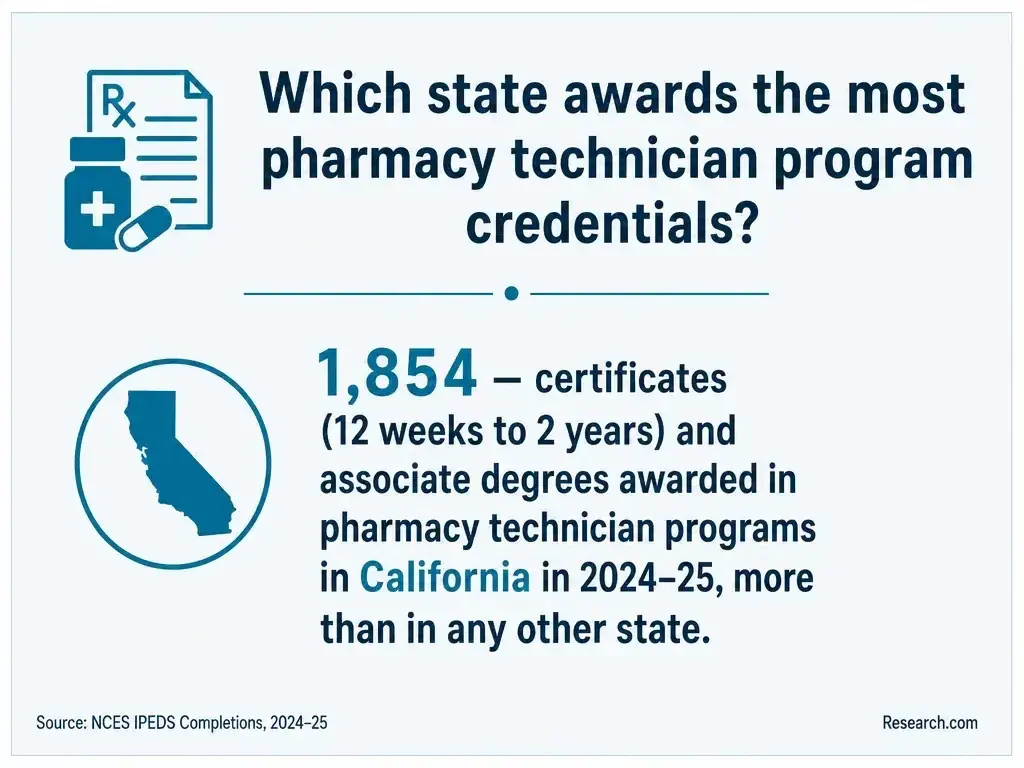
A reliable Norwalk-wide average cannot be established from a single published price: program length, residency-based public-college charges, required materials, and employer-paid training differ. Obtain a current, itemized estimate from Cerritos College and any other training provider you are considering. Compare the cost to become job-ready, not just the advertised tuition.
The same budget should cover the following categories so a cheaper-looking option does not conceal a larger final bill:
- Tuition, mandatory fees, books, supplies, and any required software or uniform.
- Any certification exam, California license application, fingerprinting, or background-check expense applicable to your route.
- Transportation to classes and worksites, plus earnings you may forgo while training.
Ask about eligible federal or state aid, scholarships, and workforce funding before borrowing; eligibility depends on the student and program, according to Federal Student Aid. Employer-sponsored training may reduce tuition and provide wages, but compare its hiring requirements and schedule. For return on investment, weigh aid and debt against completion likelihood, time out of work, your current earnings, plausible post-training pay, and how long you expect to stay in the occupation.
A training provider may award a certificate or another occupational completion credential. That document records education; it is distinct from a California pharmacy technician license issued by the California State Board of Pharmacy and from voluntary national certification issued by a certifying organization. Ask the provider for the exact credential name and which licensing qualification its graduates are expected to document.
National certification can be useful for a licensing route or an employer's hiring preferences, but exam eligibility rules belong to the certifying organization. The Pharmacy Technician Certification Board and National Healthcareer Association set requirements for their respective credentials. Do not assume a school's institutional accreditation, a program's industry recognition, exam preparation, and state licensure are interchangeable.
School admission rules and California license application rules are separate. Ask a provider whether it requires a high school diploma or equivalent, placement assessment, immunizations, background screening, or worksite documentation - and when each item is due. An employer may apply its own hiring and screening standards. Confirm requirements directly rather than assuming every certificate program uses the same checklist.
Before paying a deposit, disclose any concern that could affect licensing or a placement to the appropriate board or program contact. The California State Board of Pharmacy administers technician licensing and application requirements; a school's offer of admission is not a board decision. If you have prior pharmacy experience, ask whether it changes course placement or the training route you should pursue, without assuming experience automatically earns credit.
Relevant instruction includes pharmacy terminology, dosage forms, arithmetic used in prescription processing, medication safety, inventory control, pharmacy law, insurance workflows, and communication with patients and pharmacists. Practical exercises should let students demonstrate accurate data entry, labeling, counting or measuring, and error escalation rather than merely recognize those tasks on a quiz. The U.S. Bureau of Labor Statistics identifies these duties as central to technician work.
Curricula vary. Ask how often calculations and dispensing tasks are assessed, whether students use current pharmacy software or simulated systems, and what supervised experience is available for the setting they want. Technology can automate parts of dispensing, but it does not remove the need to recognize discrepancies and work within a technician's scope under pharmacist supervision.
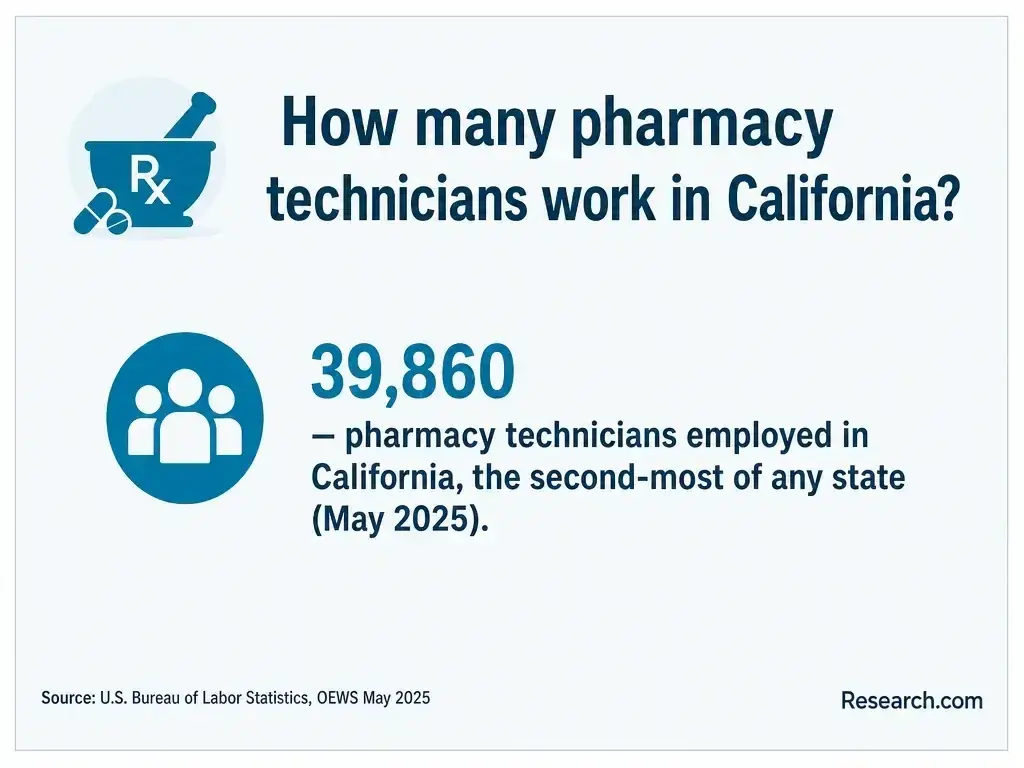
Yes, California requires a state pharmacy technician license to work as a pharmacy technician. The California State Board of Pharmacy determines application qualifications and processes licensing. National certification and school completion are possible evidence within applicable qualification routes, but neither is the state license itself. Check the board's current technician application instructions before selecting a course, particularly if a provider claims its program alone makes you "licensed."
Licensing rules can change, and a person may be able to enter a pharmacy workplace in a different, appropriately designated role while pursuing technician eligibility. Do not treat that as permission to perform licensed technician duties. If you might later work outside California, check that jurisdiction separately rather than assuming a California credential transfers automatically.
Start with the job you want - community pharmacy or a particular hospital role - and compare only routes that can realistically get you there. A ranking is a useful shortlist, not a substitute for verifying licensing evidence, hands-on training, and your complete cost. These checks turn a program comparison into an enrollment decision:
- Ask the California State Board of Pharmacy which qualification route you plan to use, then ask each provider to identify the exact documentation it supplies for that route.
- Confirm the provider's current institutional accreditation or state authorization, and verify any claimed pharmacy-specific recognition with the named accreditor; neither automatically confers a license.
- Request the credential name, course and practical-training schedule, worksite-placement policy, and recent outcomes with their measurement period and student group.
- Compare itemized net costs, aid eligibility, travel, foregone earnings, and the time to a plausible first job against employer-paid training.
A red flag is a promise of guaranteed employment, pay, certification, or licensure without explaining separate requirements. Another is an online program that cannot say where practical skills are taught or assessed. Choose the route whose evidence, schedule, and risk you can verify - not simply the fastest or highest-ranked option.
An entry-level technician may build experience in a community pharmacy and later seek hospital, inventory, medication-distribution, or specialized compounding duties, subject to employer training and California rules. Experienced technicians may also move into lead or supervisory responsibilities where employers offer them. National certification can strengthen an application for some roles, but experience and site-specific competencies still matter.
Keep career comparisons tied to the work you want to do. A search for the easiest doctorate degree to obtain addresses a different investment; it does not help establish whether pharmacy technician training meets California's entry requirements. Likewise, do all doctorates require a dissertation is unrelated to the practical training and licensing checks that govern this trade pathway.
The U.S. Bureau of Labor Statistics projects 6.4% national employment growth for pharmacy technicians from 2025 to 2035. This indicates continuing demand nationally, not a forecast of openings in Norwalk or a guarantee that every trainee will be hired. Local opportunities also depend on pharmacy staffing, competition, scheduling flexibility, and whether applicants meet California licensing and employer requirements.
For a practical local check, review recent openings across reachable parts of the Los Angeles-Long Beach area. Separate positions open to newly licensed technicians from those requiring hospital experience, sterile-compounding skills, or a particular certification. That distinction is more useful for choosing initial training than counting every technician posting as an entry-level opportunity.
Best Pharmacy Technician Training Programs & Trade Schools in Norwalk for 2027
Education is a significant investment, so the Research.com team built this ranking to help readers compare pharmacy technician programs with other eligible programs serving the same location and occupation. The team checks multiple education, outcomes, accreditation, and industry sources to improve the ranking's quality and credibility. Only programs with completions reported to IPEDS are eligible; the ranking is not a complete directory of employer training or other programs outside that dataset.
Best-program scores cover student outcomes; earnings and return on investment; costs and debt; and quality and recognition. Occupation-relevant programmatic accreditation or industry recognition receives 20%, institutional accreditation 10%, and student support 10%. Completion, full- and part-time retention, earnings one year after completion, earnings relative to annual attendance cost, tuition, attendance cost, debt - including debt among students who withdrew - and federal loan default rates account for the remaining 60%. An entropy-based method gives more weight to indicators that vary more across eligible programs. Most-affordable rankings instead score only tuition, attendance cost, debt, and loan default rates using entropy-based weights; accreditation and other quality indicators do not enter that score.
The ranking draws on the following sources. Some industry sources inform Research.com rankings across different trades; their inclusion does not mean they accredit pharmacy technician programs.
- IPEDS database: reported completions and institutional data used to identify and compare eligible programs.
- National Center for Education Statistics: federal education data and definitions.
- College Scorecard database: available cost, debt, and earnings measures.
- Peterson's database: supplemental institution and program information.
- Commission on Accreditation of Allied Health Education Programs: occupation-specific recognition information where relevant across health programs.
- Accrediting Bureau of Health Education Schools: applicable institutional or program accreditation information.
- Commission on Dental Accreditation: recognition information relevant to dental programs in the broader trade-school methodology.
- Dental Assisting National Board: credential information relevant to dental assisting in the broader methodology.
- National Center for Construction Education and Research: industry-recognition information relevant to construction trades in the broader methodology.
- Apprenticeship.gov Partner Finder: information on apprenticeship pathways where applicable.
The ranking can narrow a search, but an eligible program's score cannot establish that its current curriculum meets your licensing needs or that its schedule fits your life. Compare those details directly with providers and consult the Research.com methodology for more on how rankings are created.
# 2 position
Cerritos College - Pharmacy Technician/Assistant.
certificate or diplomaFrequently asked questions about pharmacy technician programs in Norwalk
Is pharmacy technician school required in California?
Not necessarily. California recognizes qualifying routes to a pharmacy technician license; confirm the current options with the California State Board of Pharmacy. School can provide structured preparation, while qualifying certification or training routes may suit other applicants.
Does a program certificate let me start working as a technician?
No. A school credential and a California pharmacy technician license are separate. Verify your application route and receive the required state authorization before performing licensed technician duties.
Can I complete all my training online?
Some theory can be taught online, but practical preparation and assessment depend on the provider and route. Ask where hands-on skills are taught and how the program supports California license eligibility.
Is a paid pharmacy job better than a school program?
It may be if you can obtain suitable training and meet licensing requirements while earning wages. School may be a better fit if you need structured practice or access to worksite experience before competing for a position.
What should I ask Cerritos College before enrolling?
Ask for the current credential, full cost, schedule, practical-training arrangements, and the specific California licensing qualification the program helps you document. Confirm each answer for the term in which you plan to enroll.
- U.S. Bureau of Labor Statistics - Pharmacy Technicians
Used to verify salary, employment outlook, and typical education requirements.
https://www.bls.gov/ooh/healthcare/pharmacy-technicians.htm - NCES College Navigator (IPEDS)
Used to verify programs offered and institutional accreditation.
https://nces.ed.gov/collegenavigator/ - NHA - ExCPT Pharmacy Technician
Professional certification reference for graduates of this occupation.
https://www.nhanow.com/certifications/pharmacy-technician - Cerritos College - official website
Official school website (programs, tuition, admissions).
https://www.cerritos.edu/