
Best Optician Training Programs & Trade Schools - Top Optician Schools in Georgia for 2026

Co-Founder and Chief Data Scientist
Choosing the right optician trade school in Georgia can shape your future career and open doors to rewarding opportunities. This article introduces a carefully crafted optician trade school programs ranking created by the Research.com team of data scientists to guide you toward the best options available.
By exploring these top programs, you’ll gain valuable insights to make an informed decision that fits your goals and lifestyle. Earning a diploma or certification in opticianry offers a solid foundation for a fulfilling profession helping others with eye care needs.
Take the next step confidently toward a bright future in this growing field.
Key benefits of finishing optician trade school in Georgia
- Graduates from optician trade schools in Georgia can expect hourly wages between $16.31 and $24.93, with licensed opticians earning around $21.15 per hour and experienced dispensing opticians making even more.
- Career paths include roles in retail eyewear, medical offices, and private practices, offering diverse opportunities to grow skills and advance, as shown by successful alumni from well-known Georgia trade schools.
- Completing an optician trade school online provides flexibility and convenience, helping students balance work and study while gaining practical skills, as experienced by graduates from popular online programs in Georgia.
What can I expect from optician trade schools in Georgia?
Enrolling in an optician trade school program in Georgia means engaging in a hands-on, structured curriculum designed to prepare you for state licensure and immediate employment. Graduates from popular schools like Ogeechee Technical College often describe a balanced experience of classroom learning and clinical placements in retail optical stores or doctors' offices, where they apply skills like ophthalmic dispensing and lens technology in real-world settings.
Expect a focus on passing national certification exams such as the American Board of Opticianry (ABO) and the National Contact Lens Examiners (NCLE), with some Georgia programs boasting a 100% pass rate. The practical training culminates in eligibility to take the state's practical exam, a key step toward becoming a licensed dispensing optician.
Students also encounter a supportive environment that includes access to financial aid like the Georgia HOPE Grant, which helps ease the cost of education. Many graduates highlight the confidence gained from clinical experience and the comprehensive curriculum covering optical theory, patient interaction, and state laws.
Overall, you can expect a focused, rewarding journey that equips you with both technical expertise and practical skills essential for a successful start in the optician field within Georgia.
Where can I work after finishing optician trade schools in Georgia?
After finishing an optician trade school program in Georgia, many graduates find rewarding roles at optical retail stores, such as Target Optical or independent shops, where they enjoy helping customers select stylish eyewear and ensuring perfect lens fittings. This hands-on experience often brings a sense of pride and accomplishment as they directly improve customers' vision and confidence.
Others move into ophthalmology or optometry practices, supporting eye doctors by interpreting prescriptions and guiding patients through lens options. Graduates from popular Georgia trade schools frequently share how this environment deepens their technical knowledge while fostering meaningful patient interactions.
Some graduates embrace hospital or vision care center positions, working alongside medical teams as ophthalmic technicians. These roles are valued for their blend of clinical responsibility and teamwork, offering a dynamic workplace setting.
With over 300 job openings statewide-in cities like Atlanta and Marietta-the career paths from Georgia's optician programs are diverse and flexible, often including specialized roles like contact lens fitting or travel optician work that keep the job engaging and varied.
How much can I make after finishing optician trade schools in Georgia?
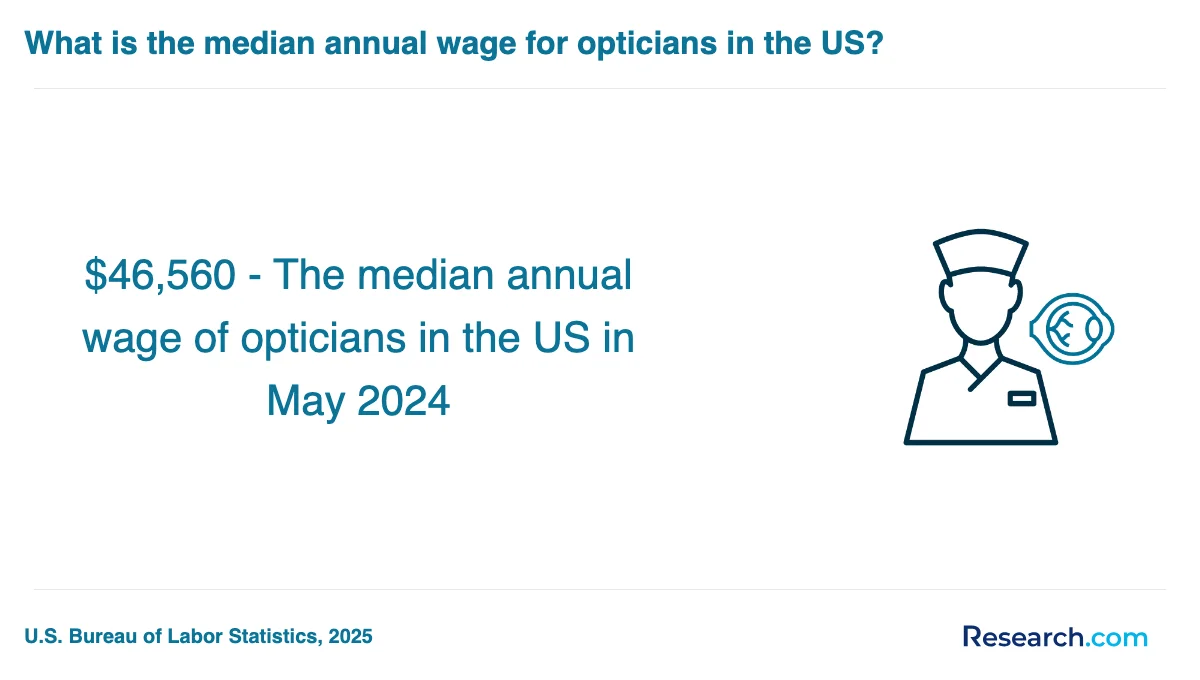
After completing an optician trade school program in Georgia, graduates typically start with salaries around $29,150 per year. Many graduates from popular schools in Atlanta and Savannah share how they quickly moved into entry-level positions fitting eyeglasses and assisting customers, finding the hands-on training invaluable for gaining confidence. With experience, salaries rise significantly, often reaching up to $59,470 annually.
Hourly wages reflect this growth, ranging from about $16.31 to $22.53 per hour. Licensed opticians in Georgia can expect even higher pay, averaging $21.15 per hour. Graduates who obtained their licenses after trade school report feeling a strong sense of accomplishment, knowing their additional certification opens doors to better-paying roles.
Urban centers like Atlanta offer particularly promising prospects, where the average salary is around $53,032. Graduates working in these areas often note the advantage of a larger customer base and more specialized employers, which can push earnings as high as $68,369 annually. For many, this makes trade school a worthwhile investment in their future.
Best Optician Training Programs & Trade Schools - Top Optician Schools in Georgia for 2026
# 1 position
Wiregrass Georgia Technical College - Opticianry/Ophthalmic Dispensing Optician.
associateWiregrass Georgia Technical College offers a hybrid Opticianry/Ophthalmic Dispensing Optician program that trains students to fit corrective eyewear and assist patients in frame selection. The curriculum covers geometrical optics, anatomy of the eye, prescription interpretation, contact lens fitting, and prosthesis adaptation. Students also learn laboratory work orders, adjustment tools, and business tasks. The program's annual in-state tuition is $3,212 and is accredited by the Southern Association of Colleges and Schools Commission on Colleges.
# 2 position
Ogeechee Technical College - Opticianry/Ophthalmic Dispensing Optician.
associateOgeechee Technical College offers a hybrid Opticianry/Ophthalmic Dispensing Optician program that trains students to fit corrective eyewear and assist patients in frame selection. The curriculum covers optics, anatomy of the eye, prescription interpretation, contact lens fitting, and administrative tasks. The program includes practical skills in adjustment, cleaning tools, and pathology identification. Annual in-state tuition is $3,170. It is accredited by the Southern Association of Colleges and Schools Commission on Colleges.
# 3 position
Georgia Piedmont Technical College - Opticianry/Ophthalmic Dispensing Optician.
associateGeorgia Piedmont Technical College offers a hybrid Opticianry/Ophthalmic Dispensing Optician program that prepares students to fit corrective eyewear and assist patients in frame selection. The curriculum covers geometrical and ophthalmic optics, eye anatomy, prescription interpretation, contact lens fitting, and administrative tasks. The program’s annual in-state tuition is $3,188 and is accredited by the Southern Association of Colleges and Schools Commission on Colleges.
Key Findings
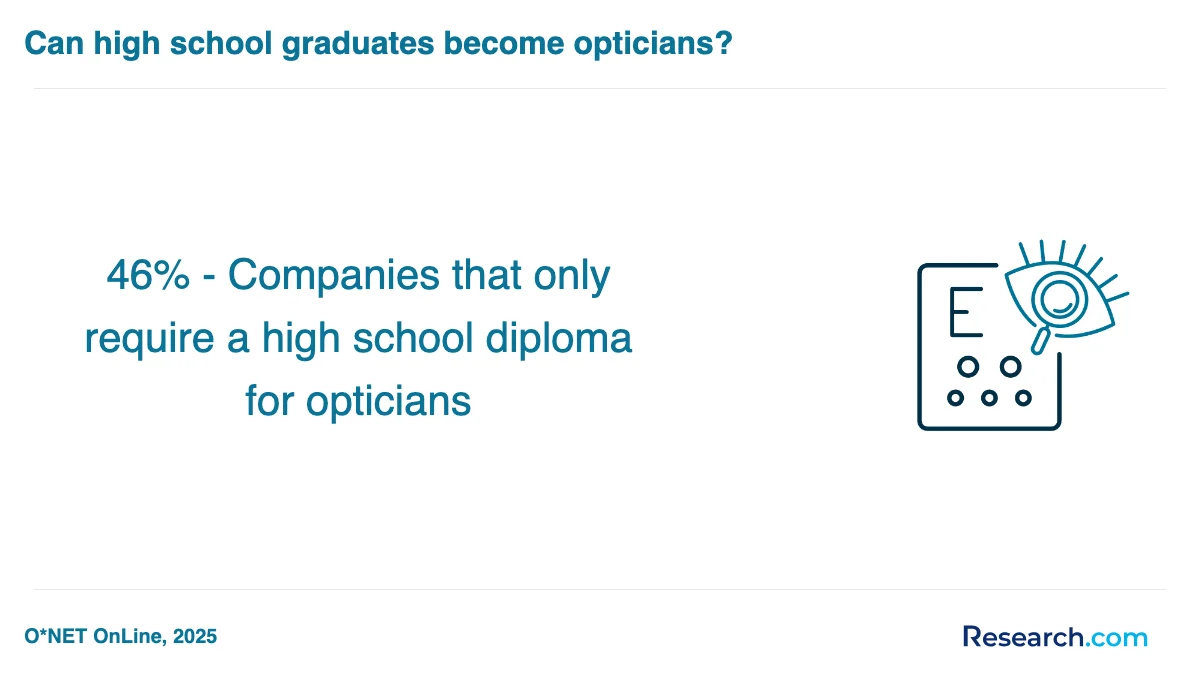
- A high school diploma or GED is required to enroll in optician trade school programs in Georgia, with a minimum age of 16 for admission and 18 to take licensure exams.
- Programs typically require about 59 semester credit hours, take five semesters to complete, and include at least 1,560 contact hours.
- The average tuition cost for completing an opticianry diploma program in Georgia is approximately $5,900.
- Graduates must pass the ABO and NCLE national certification exams and the Georgia State Board practical exam to become licensed.
- Entry-level opticians earn an average of $38,610 per year, with experienced opticians earning upwards of $52,000 annually.
How long does it take to complete optician trade schools in Georgia?
Completing an optician trade school program in Georgia typically takes about one year, though some schools offer accelerated tracks that can be finished in as little as nine months. Graduates from popular schools in Atlanta and Savannah often describe the experience as intensive yet rewarding, with hands-on training helping them build confidence quickly. Imagine starting your day fitting lenses and adjusting frames under expert supervision, which makes the learning process feel practical and engaging rather than purely theoretical.
Many students appreciate that the compact timeline allows them to enter the workforce sooner, reducing the stress of prolonged schooling and enabling sooner financial independence. For example, graduates recall how balancing coursework with real-world practice in local optical shops helped solidify their skills while maintaining a manageable schedule. This blend of classroom instruction and practical experience is a hallmark of Georgia's trade schools and contributes to positive student outcomes.
While some programs may extend to 18 months to include more in-depth clinical training, most students find the standard one-year program aligns well with their career goals and lifestyle. This timeframe strikes a balance between thorough preparation and efficient completion, making it ideal for those eager to start their careers as licensed opticians in Georgia.
What's the difference between online and on-campus optician trade school programs?
The primary difference between online and on-campus optician trade school programs in Georgia lies in the learning environment and how hands-on training is completed. Graduates from online programs, like those offered by Ogeechee Technical College, often appreciate the flexibility of completing lectures remotely while balancing work or family commitments. They emphasize the importance of having a local mentor and access to an optical facility to gain practical experience, which can feel empowering but requires proactive coordination.
On the other hand, graduates from on-campus programs value the face-to-face interaction with instructors and peers, as well as immediate access to supervised labs at their trade school. This immersive setting often helps build confidence in practical skills quickly and fosters a supportive community atmosphere. Students attending schools popular in Georgia mention feeling more guided and connected, which suits those preferring structured, in-person learning.
Both paths lead to eligibility for the American Board of Opticianry and National Contact Lens Examiners exams, reflecting that despite different formats, students can succeed with dedication and proper mentorship.
What is the average cost of optician trade schools in Georgia?
The average tuition fees for optician programs in Georgia typically range from about $2,800 to $5,900 per year for in-state students, though exact costs depend on the specific trade school and program structure. For example, graduates from Ogeechee Technical College's Opticianry Diploma program report paying $100 per credit hour for 59 semester credit hours, adding up to $5,900 in tuition alone. When fees such as $370 per semester, supplies, uniforms, and liability insurance are included, total expenses increase, yet many students still view this as a worthwhile investment in their future careers.
Graduates from Georgia Piedmont Technical College describe a more affordable experience, with in-state tuition of around $2,400 plus $778 in additional fees for the Associate in Opticianry program. Out-of-state students here face higher tuition, but students feel that the hands-on training and program reputation justify these costs. These figures help paint a realistic picture of the total expenses for optician trade schools in Georgia.
At Wiregrass Georgia Technical College, students pursuing a Certificate in Opticianry mention tuition fees near $2,794 annually, with study materials costing roughly $1,276, depending on the chosen track. This range of tuition and expenses reported by graduates emphasizes the variation in cost but also reflects many students' satisfaction in pursuing a skilled trade path. Those focused on entering the workforce with a respected credential can find this investment rewarding, especially when considering the potential of top earning trade school jobs available after program completion.

What financial aid is available for optician trade schools in Georgia?
Students pursuing optician trade programs in Georgia often find that federal financial aid depends heavily on the nature of their program. For example, graduates from accredited technical colleges like Ogeechee Technical College commonly access federal aid such as FAFSA, Pell Grants, and student loans. This aid eases the financial burden, making it possible to focus on mastering optician skills without constant money stress. One graduate recalled how Pell Grants covered a significant portion of tuition, enabling them to complete the program on time.
However, many online or non-credit courses, such as those from the University of Georgia Center for Continuing Education, do not qualify for federal aid. Students in these programs often feel frustrated but discover alternative support through Georgia's vocational rehabilitation services or workforce development boards, which can provide tuition assistance or grants for those meeting specific criteria.
Additionally, some schools offer flexible payment plans, allowing students to manage costs monthly. This option has helped others avoid large upfront payments, creating a more manageable path to certification and employment.
What are the prerequisites for enrolling in optician trade schools in Georgia?
Enrolling in an optician trade school program in Georgia typically requires meeting a few clear prerequisites that ensure students are prepared for the technical and hands-on nature of the field. Most programs expect applicants to have a high school diploma or GED as a baseline. This foundational education supports understanding of core subjects like math and biology, which are essential in opticianry.
Graduates from popular Georgia trade schools often mention the importance of basic computer skills and a genuine interest in helping people, which can make the training more engaging and meaningful. For example, students recall starting their studies with a simple but crucial aptitude test or interview to assess their readiness and commitment.
Common prerequisites include
- Proof of high school completion or equivalent
- Basic proficiency in math and science
- Passing an entrance assessment or interview
- Sometimes a background check or immunization records, depending on clinical placement requirements
These requirements, though straightforward, align well with the real-life demands of opticianry. Graduates often reflect on how early preparation helped them feel confident during hands-on training at well-known Georgia trade schools, where students learn to fit lenses and understand optical equipment. This foundation creates a positive experience that motivates many to excel in their careers.
What are the typical courses in optician trade schools in Georgia?
Optician trade school programs in Georgia typically include a variety of courses that equip students with both technical expertise and practical skills. Graduates from well-known schools like Ogeechee Technical College often highlight how coursework in optical theory, ocular anatomy and physiology, and contact lens care laid a solid foundation for their careers.
Students learn to:
- Interpret prescriptions accurately, understanding complex refractive errors.
- Master eyewear dispensing, including selecting and fitting frames and lenses.
- Gain familiarity with ophthalmic lens designs, materials, and treatments.
- Use optical instruments competently in clinical and retail environments.
Many programs also incorporate customer service skills and business concepts, which graduates find invaluable for managing dispensaries or interacting confidently with clients. For example, students describe how role-playing customer scenarios during classes boosted their communication skills and prepared them for real-world challenges.
Hands-on clinical practicums, common in associate degree tracks, allow students to apply classroom knowledge directly in optical labs or stores, fostering a sense of readiness and enthusiasm. Additionally, programs cover legal and regulatory frameworks critical to working as a licensed optician in Georgia, ensuring graduates feel informed and confident when facing certification exams such as the ABO and NCLE.
What are the available specializations in optician trade schools in Georgia?
Optician trade school programs in Georgia offer diverse specializations that prepare students for vital roles in the optical industry. Graduates from Georgia Piedmont Technical College often highlight the comprehensive nature of the Opticianry Associate of Applied Science Degree, which covers eyewear dispensing, lens fabrication, and ocular anatomy. This degree immerses students in practical experiences like frame styling, enabling them to confidently assist clients in real-world settings.
Other students choose diploma programs like those at Ogeechee Technical College, focusing on foundational skills for immediate employment. These diplomas include specializations such as:
- Contact Lens Fitting and Management
- Eyewear Dispensing and Frame Styling
Such focused training sharpens graduates' ability to excel in specific optical tasks, making daily patient interactions more rewarding.
Certificates also play a key role by allowing students to customize their education. For example, the Eyewear Dispensing Specialist Certificate at Ogeechee Technical College enhances skills in customer service, while the Optical Laboratory Technician Certificate targets lens finishing techniques. Many find these tailored paths fulfilling, especially when paired with online courses like Gwinnett Technical College's ABO exam prep, which empowers students to study flexibly and on their own terms.
For anyone interested in exploring the best options, researching programs through best vocational trade training online schools can provide valuable guidance.
How do you choose the best optician trade school program in Georgia?
To choose the best optician trade schools in Georgia, focus first on accreditation. Graduates from COA-accredited programs, like those at Ogeechee Technical College, share how this recognition simplified licensure and boosted their confidence in job searches. Next, think about curriculum and program length; some prefer the diploma at Wiregrass Georgia Technical College for quick entry into the workforce, while others benefit from the associate degree program at Georgia Piedmont Technical College, which offers a deeper clinical understanding. Admission criteria also impact your choice-ensuring you meet requirements saves stress and helps plan your path clearly.
Financially, many students appreciate scholarships and state grants like the HOPE Grant that substantially ease tuition burdens. Location and format matter too: graduates from Gwinnett Technical College praise the flexibility of online courses, enabling them to balance work and study effectively. For anyone weighing options between traditional colleges or trade schools, exploring vocational school vs college provides valuable perspective on how to choose optician trade school program in Georgia.
What career paths are available for optician trade school graduates in Georgia?
Optician trade school graduates in Georgia find diverse optician career opportunities in Georgia, ranging from hands-on eyewear fitting to technical lab work. Many start as dispensing opticians, working in private practices or retail optical stores, where they help clients choose suitable glasses and ensure prescriptions are accurate. Graduates from popular Georgia trade schools share how rewarding it is to assist customers directly and gain practical skills that lead to steady employment.
Beyond dispensing roles, graduates can become ophthalmic medical technicians who conduct diagnostic tests or ophthalmic laboratory technicians manufacturing and repairing lenses. This variety means graduates tailoring their job search to fit personal interests thrive in this field.
With experience, some advance to instructor roles or transition to optometric technicians, supporting optometrists in patient care. Career paths may also extend toward higher earning potential, such as becoming licensed optometrists, or moving into management and sales within optical retailers.
Many students find that training in Georgia opens doors not only in healthcare but also in stable retail positions, reflecting strong demand evident in over 300 optician trade school jobs Georgia listings recently.
Graduates commonly mention benefits like healthcare and paid time off, adding to job satisfaction. For those exploring options beyond optician programs, researching the best construction management trade school illustrates the importance of selecting the right program for career alignment.
What is the job market for optician trade school graduates in Georgia?
The optician job market in Georgia remains stable with over 300 openings statewide, reflecting steady demand from optical shops, medical offices, and retail eyewear providers. Graduates from well-known trade schools in Georgia often find multiple employment options in urban centers like Gainesville as well as rural areas. Experienced graduates report that having an associate degree or Opticianry certification opens doors quickly, especially when combined with strong customer service skills. Employment growth is mostly driven by replacing retiring professionals, but the market outlook remains positive.
Wages for opticians in Georgia range from $22 to $30 per hour, which compares favorably with the national median. Many new graduates appreciate how this competitive pay supports early career stability while they gain practical experience. Those with experience as optical sales associates or lab technicians tend to secure roles faster, emphasizing the value of diverse training.
Georgia's requirements usually include certification and possibly licensing, creating a professional standard that benefits both employers and workers. For students considering optician trade schools, success stories often describe enjoying hands-on learning that quickly leads to job offers in the state's solid market.
Options for those exploring easy online trade programs that leads to high paying jobs further enhance accessibility and career potential in the optician field across Georgia.
Frequently Asked Questions about optician
After completing optician trade school in Georgia, preparing for the job market involves several important steps. First, obtaining certification from the American Board of Opticianry (ABO) or the National Contact Lens Examiners (NCLE) can significantly improve employment prospects. Many employers in Georgia prefer certified opticians, which can result in higher pay and better job stability.
Networking is also crucial. Joining professional organizations like the Georgia Optometric Association helps graduates connect with local employers and stay updated on job openings. Additionally, gaining hands-on experience through internships or externships during school can boost your resume.
According to the U.S. Bureau of Labor Statistics, optician jobs in Georgia are expected to grow moderately, reflecting steady demand in healthcare settings.
Employers in Georgia seek optician trade school graduates with strong technical skills, including precise lens fitting and frame adjustment. According to the Georgia Department of Labor, proficiency in interpreting prescriptions and using optical instruments is critical for job success. Communication skills are also highly valued, as opticians must explain lens options and care instructions clearly to customers.
Attention to detail is essential given the need for accuracy in measurements and product quality. Additionally, familiarity with digital tools and software used in eyewear dispensing is increasingly important. These combined skills improve job performance and customer satisfaction in Georgia's competitive optical market.
Finding internships relevant to optician trade school programs in Georgia involves several strategic steps. Start by contacting your school's career services or program coordinator, as many trade schools have partnerships with local optical businesses. The Georgia Optometric Association and the Georgia Society of Opticians often list internship opportunities on their websites or newsletters.
Additionally, reach out directly to optometry clinics, eyewear retailers, and optical labs in cities like Atlanta and Savannah, where opticianry demand is higher. According to the Georgia Department of Labor, employment for optical technicians is expected to grow by 10% through 2030, increasing internship availability.
Networking at industry events and joining professional groups can also uncover hidden opportunities.
Obtaining a diploma from an optician trade school in Georgia significantly enhances career mobility and advancement opportunities within the optical industry. Graduates are often preferred by employers for entry-level positions such as optician assistants or technicians due to their specialized training in lens fitting, frame adjustments, and optical dispensing.
According to the Georgia Department of Labor, employment for opticians is projected to grow by 10% between 2020 and 2030, faster than average for all occupations. Holding a diploma can thus improve job security and open pathways to supervisory roles or specialized certifications like the American Board of Opticianry credentials.
Furthermore, many optician trade schools in Georgia offer partnerships with local employers, facilitating internships and job placement which support upward career movement. This credential also provides a foundation for continuing education, which is essential in a state with evolving healthcare regulations and technology advancements.
Students enrolled in optician trade schools in Georgia can benefit from several part-time job opportunities that align well with their education. Working as an optical assistant or technician in eyewear retail stores or optometry offices is common. These roles provide practical experience in lens fitting, frame adjustments, and customer service.
According to the U.S. Bureau of Labor Statistics, Georgia had over 1,200 optician jobs in recent years, with steady demand expected to grow by 10% through 2032. Part-time roles in this sector often pay between $12 and $18 per hour, offering valuable income while gaining relevant skills.
Other options include positions in healthcare facilities assisting with patient intake or inventory management related to optical products. Such jobs complement classroom learning and improve career prospects.
To find the best optician degree program near me in Georgia, you can start by researching programs at technical colleges or universities with health science departments, many of which offer opticianry or optical technology courses. Utilizing resources like Research.com can be helpful in identifying well-regarded programs and understanding their accreditation, curriculum, and career support services. Exploring these programs near Georgia can provide insights into hands-on training opportunities and potential career placements post-graduation.
Related Optician Rankings for Nearby States
- Best Optician Training Programs & Trade Schools - Top Optician Schools in Florida for 2026
- Best Optician Training Programs & Trade Schools - Top Optician Schools in North Carolina for 2026
- Best Optician Training Programs & Trade Schools - Top Optician Schools in Virginia for 2026
- Best Optician Training Programs & Trade Schools - Top Optician Schools in Indiana for 2026
- Best Optician Training Programs & Trade Schools - Top Optician Schools in Ohio for 2026
- Best Optician Training Programs & Trade Schools - Top Optician Schools in New Jersey for 2026
- Best Optician Training Programs & Trade Schools - Top Optician Schools in New York for 2026
- Best Optician Training Programs & Trade Schools - Top Optician Schools in Nevada for 2026
- Best Optician Training Programs & Trade Schools - Top Optician Schools in California for 2026
- Best Optician Training Programs & Trade Schools - Top Optician Schools in Washington for 2026
Top Trending Rankings
References
- Registering as an optician - The College of Opticians of Ontario - COO https://collegeofopticians.ca/applicants/registering-as-an-optician
- Apply for a Dispensing Optician License | Mass.gov https://www.mass.gov/how-to/apply-for-a-dispensing-optician-license
- Registering As An Optician | Opticians Association Of New Brunswick https://opticiansnb.com/registering-as-an-optician/
- Optician Trade School Programs & Certification Training https://www.best-trade-schools.net/programs/healthcare/optician/
- Optician - Florida Board of Opticianry https://floridasopticianry.gov/optician/
- How to Become an Optician in California | ACC https://americancareercollege.edu/guides/how-to-become-an-optician-in-california
- NYS Ophthalmic Dispensing:Application Forms https://www.op.nysed.gov/professions/ophthalmic-dispensing/license-application-forms
- Optician Part Time Jobs August, 2025 (Hiring Now!) - Zippia https://www.zippia.com/optician-jobs/part-time-jobs/
- Learn A Trade - SUNY https://www.suny.edu/trades/
- Optician Careers https://www.opticianedu.org/optician-careers/


