
Best Diagnostic Medical Sonographer Training Programs & Trade Schools in Newark for 2027
Audited and Verified:
Our Editorial and Data Verification Process
Research.com uses government datasets, official education statistics and primary institutional information to support its career and degree guides. Our review process checks factual accuracy, occupational definitions, source dates and the requirements associated with the credentials discussed.
How This Article Was Fact-Checked
Our editorial team verifies salary estimates, employment projections, education requirements and program information against original data providers and official organizations. Salary figures are checked against the relevant occupational definitions and reporting periods. Information about licensure, accreditation and required in-person training is reviewed separately.
Fact-checked and verified on:

Co-Founder and Chief Data Scientist

Reviewed by Karolina Broda
Fact-Checker and Data Verification
Choosing sonography training near Newark means looking beyond a school's name: you need supervised scanning experience and a credible route to certification. The U.S. Bureau of Labor Statistics projects 13.9% growth for diagnostic medical sonographers nationwide from 2025 to 2035, making program quality especially consequential. This guide explains pathways, costs, credentials, and local employment considerations for new students and career changers. It also accompanies the Best Medical Sonographer Trade Schools in Newark for 2027 ranking, created by the Research.com team of data scientists to help you identify programs worth considering.
Key findings about medical sonographer degrees in Newark
- Verify the certification route first: Ask whether a program's specific sonography track holds CAAHEP accreditation and which ARDMS prerequisite it supports; institutional accreditation alone does not establish registry eligibility.
- Budget for clinical access, not just tuition: Supervised scanning must take place in person, so a Newark-area student should confirm placement locations, schedules, and commuting costs before enrolling.
- Use pay figures carefully: The national median for diagnostic medical sonographers was $96,590 in May 2025, and projected national growth is 13.9% for 2025-2035; neither figure represents a Newark graduate's starting pay (U.S. Bureau of Labor Statistics).
Table of Contents
- Best Diagnostic Medical Sonographer Training Programs & Trade Schools in Newark for 2027
- What can I expect from a medical sonographer trade school program in Newark?
- Where can I work with a medical sonographer trade school training in Newark?
What can I expect from a medical sonographer trade school program in Newark?
A diagnostic medical sonographer uses ultrasound equipment to produce images that clinicians use in patient care. Training combines anatomy and physics with positioning, image acquisition, patient communication, and supervised clinical practice. A program may focus on general, cardiac, or vascular sonography; check the exact track because specialties do not necessarily lead to the same certification examinations or jobs (U.S. Bureau of Labor Statistics; American Registry for Diagnostic Medical Sonography).
For Newark applicants, the pivotal question is where clinical scanning occurs. A campus may be within reach while its assigned hospital or imaging site is not. Request the clinical-site list, expected shifts, and the school's placement policy before paying a deposit. For a broader comparison of good paying trade jobs, keep in mind that sonography requires substantially more supervised patient-facing practice than a short classroom-only credential.
The pathways below serve different starting points. Confirm each program's actual award and certification alignment rather than assuming that similar titles mean equivalent training.
| Pathway | Typical fit | Decision point |
| Associate degree in sonography | New entrants seeking a structured academic and clinical route | Check the specific track's accreditation, clinical placements, and total time to completion. |
| Postsecondary certificate or diploma | Applicants who meet the program's prerequisite education or healthcare-experience requirements | Ask whether your existing preparation satisfies admission and the intended certification prerequisite. |
| Employer-based clinical training | Eligible healthcare workers with access to an appropriate supervised training route | Confirm documented experience and registry eligibility; employment alone is not a credential. |
Where can I work with a medical sonographer trade school training in Newark?
Diagnostic medical sonographers work in hospitals, physicians' offices, medical and diagnostic laboratories, and outpatient care settings (U.S. Bureau of Labor Statistics). A Newark resident can search across the wider New York-Newark-Jersey City labor market, but that larger market also makes commute time, shift hours, and state-specific hiring policies worth checking.
Match a prospective clinical rotation to your preferred workplace. Hospital placements can expose students to urgent examinations and varied patients; an outpatient rotation may offer a different pace and case mix. Neither guarantees a job. Ask programs which specialties their clinical sites actually support and whether students must arrange any placements themselves.
The U.S. Bureau of Labor Statistics reports a $96,590 national median annual wage for diagnostic medical sonographers in May 2025. This is the midpoint for workers across experience levels and locations, not an entry-level offer or a Newark-specific salary. Use it to judge the occupation's broad earning potential, then compare current local vacancies by specialty, shift, experience requirement, and employer.
When evaluating a training investment, compare plausible early-career offers with your current earnings and likely debt - not just with the national median. The BLS New York-Newark-Jersey City metropolitan wage series is the appropriate geographic series to consult for a local benchmark; a metropolitan figure still covers a much wider area than Newark alone.
An associate-degree route commonly takes about two years of full-time study; certificate and diploma lengths depend heavily on prerequisites, specialty, and clinical scheduling (U.S. Bureau of Labor Statistics). The meaningful finish date is when you have completed required clinical competencies and are ready to pursue the intended certification - not merely your last online class.
Ask for a term-by-term schedule showing classroom, lab, and supervised clinical time, including any minimum hours or examinations required by that specific program and certification route. Clinical-site capacity, evening availability, and travel across the metro area can extend the timeline. If you are comparing a quick degree for high pay job with sonography training, do not assume an accelerated calendar can eliminate hands-on scanning requirements.
Online or hybrid delivery can reduce trips for lectures and some assignments. It cannot replace learning to position patients, operate ultrasound equipment, obtain diagnostic-quality images, and respond to feedback during supervised practice. Labs and clinical rotations therefore require in-person attendance even when part of the coursework is remote (U.S. Bureau of Labor Statistics; American Registry for Diagnostic Medical Sonography).
For a Newark student, hybrid study is useful only if its campus labs and clinical sites remain reachable on the required days and shifts. Ask who secures the placement and whether a local site is guaranteed, requested, or entirely the student's responsibility. Lists of top paying 6 month certificate programs online are not a substitute for verifying sonography's practical training and certification requirements.
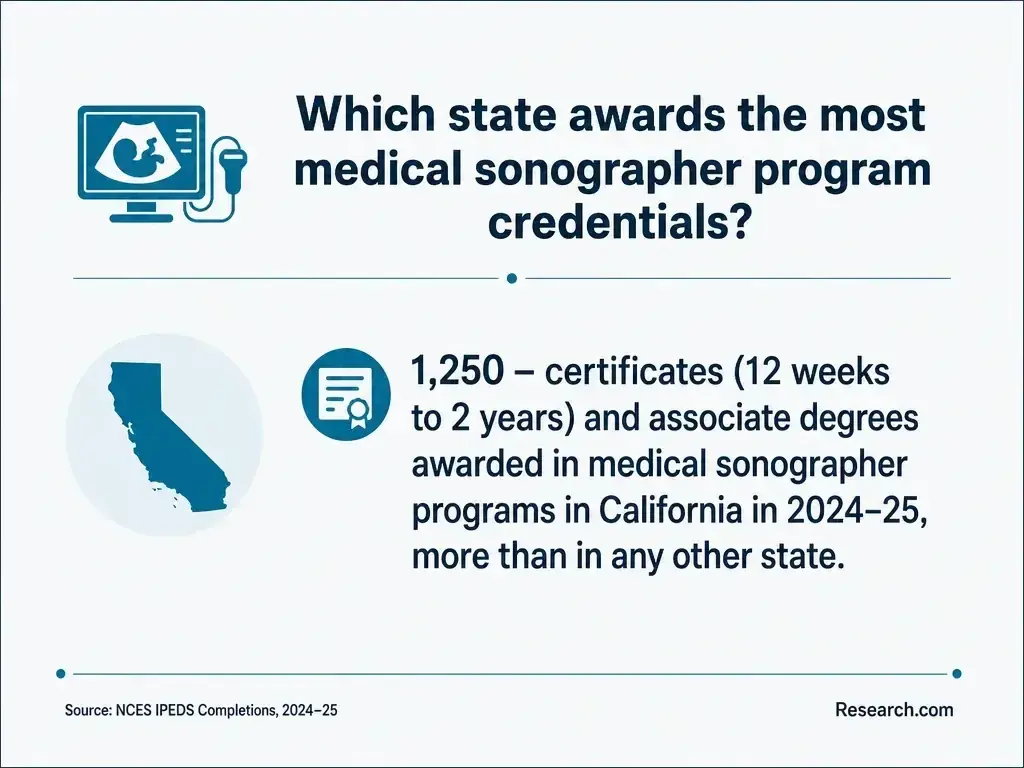
There is no reliable single Newark-wide price that covers every sonography pathway. Published tuition can differ by provider, residency status, program length, and prerequisite coursework; it also omits costs that determine whether you can finish. Ask each program for a written, program-specific cost of attendance rather than treating its advertised tuition as the total.
Your comparison should include mandatory fees, textbooks and software, uniforms, screening or health-clearance requirements, certification examinations, and transportation to both campus and clinical sites. Add earnings you may forgo during daytime rotations. Then subtract only aid you are actually eligible to receive. Federal aid depends on the institution and program's eligibility and your circumstances; New Jersey residents can also ask about applicable state aid and workforce-training assistance (Federal Student Aid; New Jersey Higher Education Student Assistance Authority; New Jersey Department of Labor and Workforce Development).
A shorter program is not automatically cheaper if it requires prior coursework or leaves clinical placement to the student. Compare the amount you would need to borrow against your probability of completing the program and your realistic post-training earnings over time.
The school may award an associate degree, certificate, or diploma, depending on its program. That award is distinct from professional certification. The American Registry for Diagnostic Medical Sonography (ARDMS) sets eligibility prerequisites and examinations for its credentials; finishing a school program does not itself confer an ARDMS credential.
Check the accreditation of the specific program and specialty, not just the institution. CAAHEP accredits eligible diagnostic medical sonography programs following review through its profession-specific process. Institutional accreditation, state authorization to operate, and CAAHEP programmatic accreditation answer different questions; none should be described as an automatic job offer or certification (CAAHEP; ARDMS).
An easy bachelor degree label, for example, tells a sonography applicant nothing about supervised scanning or registry eligibility. The useful comparison is between the actual clinical training and credential routes open to you.
Requirements vary by provider and pathway. Applicants may need prior science coursework, an entrance assessment, or existing healthcare preparation; clinical participation may require immunization records, a health examination, background screening, or other site-specific clearance. Check the program's current admissions policy rather than assuming a certificate is open to beginners.
If you already work in healthcare, ask whether documented prior coursework or clinical experience can satisfy prerequisites or earn advanced standing. Get the answer in writing and separately confirm that any shortened route still meets the certification organization's rules. An admission offer establishes a place in a program, not eligibility for every clinical site or registry examination.
Core training covers anatomy, ultrasound physics and instrumentation, image optimization, patient care, and clinical documentation. Students practice acquiring and assessing images, then apply those skills under supervision with patients. The specialty determines additional content: a vascular track, for instance, requires different examinations and competencies from an obstetric and gynecologic track (U.S. Bureau of Labor Statistics; ARDMS).
Ask to see the lab sequence and clinical competency checklist. A strong match for your goal provides repeated supervised scanning in the examinations you hope to perform, not just demonstrations or general healthcare coursework. Digital image workflow matters too: sonographers must capture usable studies and communicate findings appropriately while leaving diagnosis to the responsible clinician.
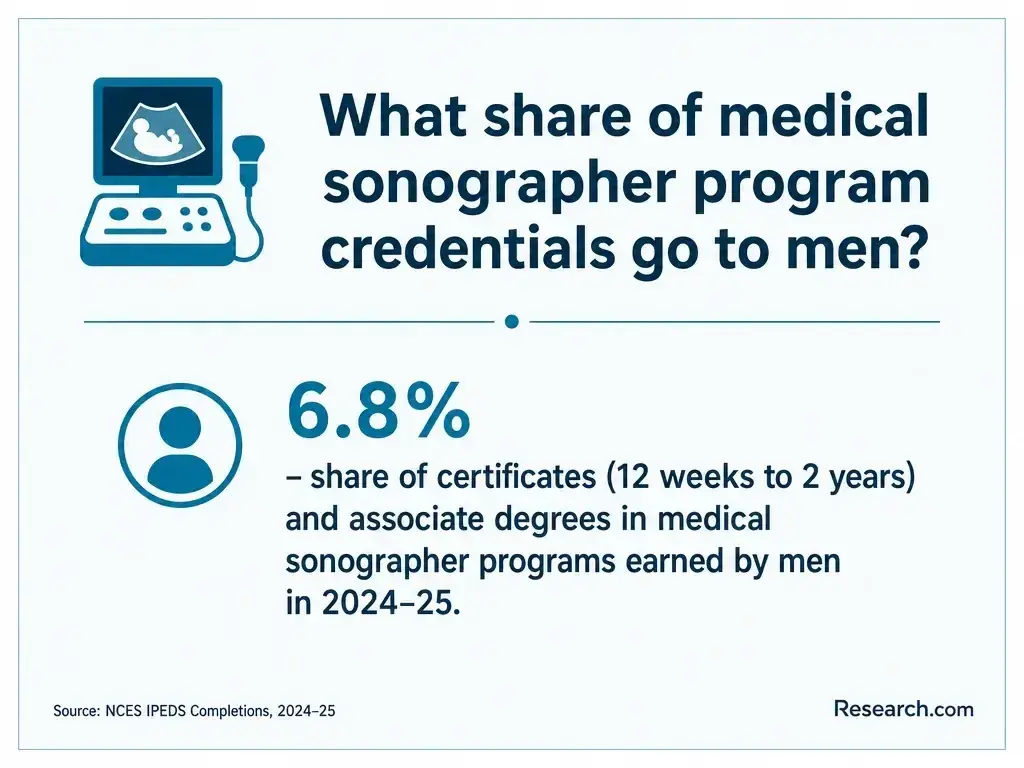
New Jersey does not have a separate state occupational license for diagnostic medical sonographers; professional certification is a different matter. Employers may require or prefer credentials such as those offered by ARDMS, sometimes within a specified period after hiring. Verify the current requirements of the roles you want before choosing a program (New Jersey Division of Consumer Affairs; ARDMS).
To assess certification eligibility, identify the exact credential and examinations you intend to pursue, then compare the ARDMS prerequisite with the program's accreditation, coursework, and documented clinical experience. Do not assume that state authorization of a school, institutional accreditation, or completion of an entirely online course replaces those requirements.
Start with the job and specialty you want, then work backward through its certification expectations and required clinical competencies. The ranking can narrow your search, but its reported outcomes cannot tell you whether a particular rotation schedule fits your life. Comparisons built for unrelated goals - even cheap phd programs - cannot establish the value of a hands-on sonography credential.
Before enrolling, get answers to these questions from each program and verify important claims with the relevant accreditor or certifying organization:
- Which specific track is accredited, and which ARDMS prerequisite can its graduates use?
- Who arranges clinical placements, where are recent sites, and what schedules must students accept?
- What is the full cost through clinical completion and the intended certification examinations?
- What are the program's recent completion and placement outcomes, and how are those measures defined?
- Can prior coursework or experience shorten training without changing certification eligibility?
A red flag is a promise of "online certification" without a clear supervised-clinical plan. Another is a price comparison that excludes prerequisite study, travel, or time away from work. The best-value option is the one you can complete, afford, and use for your intended occupation - not necessarily the fastest or lowest-tuition choice.
Entry roles depend on the examinations you have practiced and the credentials an employer expects. With appropriate training and experience, sonographers may pursue additional specialty certification, take on more complex studies, or move into lead, education, or equipment-support roles (U.S. Bureau of Labor Statistics; ARDMS). Additional credentials can expand options but should not be confused with New Jersey occupational licensure.
For a career changer, an employer-supported route may make sense if it supplies structured, documented clinical training and a viable certification pathway. If it does not, a program with established labs and placements is likely the clearer route. Ask whether the training prepares you for the specific hospital or outpatient work you want within commuting distance.
National employment of diagnostic medical sonographers is projected to grow 13.9% from 2025 to 2035 (U.S. Bureau of Labor Statistics, Employment Projections). That signals demand across the occupation, but it is not a Newark hiring forecast or a guarantee of an opening when you finish.
Use the wider New York-Newark-Jersey City market to test your plan: review recent vacancies for the specialty, certification, experience, and shifts employers request. If most positions you want ask for a credential or examination experience your proposed program does not support, national growth alone is not a reason to enroll.
Best Diagnostic Medical Sonographer Training Programs & Trade Schools in Newark for 2027
Education is a substantial investment, so the Research.com team designed the ranking to compare sonography programs with other eligible programs serving the same occupation and location - not with unrelated schools nationwide. The team evaluates student outcomes, earnings and return on investment, costs and debt, and quality and recognition. For best-program rankings, occupation-relevant programmatic accreditation or industry recognition accounts for 20% of the score, institutional accreditation for 10%, and student support for 10%. Outcomes, earnings, and costs account for the remaining 60%, distributed using an entropy-based method that gives more weight to indicators that differ more across programs.
The team checks multiple sources to improve the ranking's credibility and accuracy. These sources inform the broader trade-school ranking process; some, such as dental and construction organizations, are not sonography accreditors:
- IPEDS database - reported completions and institutional information.
- National Center for Education Statistics - federal education data and definitions.
- College Scorecard database - available cost, debt, and earnings measures.
- Peterson's database - supplementary school information.
- Commission on Accreditation of Allied Health Education Programs (CAAHEP) - occupation-relevant programmatic accreditation information.
- Accrediting Bureau of Health Education Schools (ABHES) - health education accreditation information.
- Commission on Dental Accreditation (CODA) - dental-program information used elsewhere in the trade-school ranking framework.
- Dental Assisting National Board (DANB) - dental-assisting credential information used elsewhere in the framework.
- National Center for Construction Education and Research (NCCER) - construction-training information used elsewhere in the framework.
- Apprenticeship.gov Partner Finder - information on apprenticeship pathways.
Only programs with completions reported to IPEDS enter the ranking. That makes the comparison more consistent, but it can exclude legitimate employer training or other providers that do not report those completions. The ranking is a shortlist, not proof that a particular clinical placement or certification route fits your circumstances. Research.com explains the approach further on its methodology page.
# 2 position
Central Ohio Technical College
certificate or diplomaDiagnostic Medical Sonography/Sonographer and Ultrasound Technician
Delivery mode: On Campus (May Include Online Courses)
49.86
/ 100
Final score
- School graduation rate
- 27%
- Students receiving Pell Grants
- 34%
- In-state tuition & fees (per year)
- $5,376
- Out-of-state tuition & fees (per year)
- $8,136
- School website
- cotc.edu
Accreditation
Institutional accreditation from Higher Learning Commission.
Central Ohio Technical College received a Research.com Trade Program Score of 49.86/100.
Frequently asked questions about medical sonographer programs in Newark
Can I become a sonographer through a fully online program?
Not through online coursework alone. Sonography requires in-person scanning practice and supervised clinical experience; confirm how a hybrid program provides both and whether its route meets your intended certification prerequisite (ARDMS).
Is an associate degree required?
Not for every pathway. Some applicants may qualify through an appropriate certificate or other documented training route. The right choice depends on your prior preparation, clinical experience, and the certifying organization's current prerequisites (ARDMS).
Does Newark require a sonographer license?
New Jersey does not issue a separate occupational license for diagnostic medical sonographers. Check employers' professional-certification expectations, which are distinct from state licensure (New Jersey Division of Consumer Affairs; ARDMS).
How do I check whether a program is accredited?
Confirm the institution's accreditation separately from the sonography track's programmatic status. Search CAAHEP's program listings for the exact program and specialty, then ask ARDMS how your planned route meets its prerequisites.
Are apprenticeships a common substitute for a sonography program?
Do not assume a general apprenticeship listing provides a sonography certification route. An employer-based option is useful only if it offers appropriate supervised examinations, documentation, and eligibility for the credential you intend to pursue.
- U.S. Bureau of Labor Statistics - Diagnostic Medical Sonographers and Cardiovascular Technologists and Technicians
Used to verify salary, employment outlook, and typical education requirements.
https://www.bls.gov/ooh/healthcare/diagnostic-medical-sonographers.htm - CAAHEP - Find an Accredited Program
Used to verify programmatic accreditation or industry recognition of programs.
https://www.caahep.org/students/find-an-accredited-program - ARDMS - Certification
Professional certification reference for graduates of this occupation.
https://www.ardms.org/ - Central Ohio Technical College - official website
Official school website (programs, tuition, admissions).
https://www.cotc.edu/