# 1 position


Audited and Verified:
Our Editorial and Data Verification Process
Research.com uses government datasets, official education statistics and primary institutional information to support its career and degree guides. Our review process checks factual accuracy, occupational definitions, source dates and the requirements associated with the credentials discussed.
How This Article Was Fact-Checked
Our editorial team verifies salary estimates, employment projections, education requirements and program information against original data providers and official organizations. Salary figures are checked against the relevant occupational definitions and reporting periods. Information about licensure, accreditation and required in-person training is reviewed separately.
Fact-checked and verified on:

Co-Founder and Chief Data Scientist

Reviewed by Karolina Broda
Fact-Checker and Data Verification
Choosing sonography training in Bayamón means checking more than a school's name: you need supervised scanning experience and a credential that supports your career goal. The U.S. Bureau of Labor Statistics reports a $96,590 national median annual wage for diagnostic medical sonographers in May 2025, but that is not a Bayamón starting salary. This guide explains training, costs, certification, and local job considerations. It also accompanies the Best Medical Sonographer Trade Schools in Bayamon for 2027 ranking, created by the Research.com team of data scientists to help students identify programs worth considering.
Diagnostic medical sonographers use ultrasound equipment to produce images that clinicians interpret. Training combines anatomy, patient care, image acquisition, and substantial supervised scanning. In Bayamón, the crucial distinction is whether a program has accessible labs and confirmed clinical placements - not simply whether it advertises ultrasound coursework.
Program titles do not establish what graduates can do. The comparison below shows which pathway may fit your starting point; verify the actual credential and clinical requirements with each provider.
| Pathway | Potential fit | Key limitation to check |
| Sonography certificate or diploma | An applicant who meets the program's prerequisites; some shorter routes are designed for existing healthcare professionals | Whether the curriculum and clinical experience satisfy the intended certification pathway |
| Sonography associate degree | A new entrant seeking occupational preparation alongside general education | Total time and cost, specialty coverage, and placement arrangements |
| Employer-supported specialty training | An already qualified imaging or healthcare worker adding ultrasound skills | Whether the employer provides sufficient supervised cases and documentation for certification |
For a new entrant, employer training alone is generally not a substitute for a structured clinical program. Likewise, searches about what is the easiest certification to get that pay well should not be confused with sonography preparation: professional certification requires meeting the certifier's prerequisites and passing examinations, not merely purchasing a short course (American Registry for Diagnostic Medical Sonography).
Diagnostic medical sonographers work in hospitals, physician offices, and outpatient imaging settings, according to the U.S. Bureau of Labor Statistics. A Bayamón student should search across the wider San Juan metropolitan area when evaluating clinical placements and eventual employment: a placement close to home can reduce commuting costs, while a wider search may expose more specialties and employers.
Ask whether a prospective clinical site performs the examinations you want to learn. A general ultrasound placement may not provide the same case mix as an obstetric, vascular, or cardiac setting; cardiac sonography, in particular, follows a distinct training and credentialing route. Some hospital positions may involve evenings, weekends, or call, so confirm schedule expectations before accepting a placement or job.
A verified Bayamón-specific wage figure is not established here. The appropriate national reference is the $96,590 median annual wage in May 2025 for diagnostic medical sonographers (U.S. Bureau of Labor Statistics). Half of employed workers in that occupation earned less and half earned more nationally; the figure includes experienced workers and should not be treated as a local graduate's likely first offer.
For an investment decision, request recent, occupation-specific graduate outcomes from each program, then compare actual local job postings or offers by specialty, shift, and credential requirement. Calculate what remains after transportation, debt payments, and any lost earnings during clinical training. A national median cannot settle whether a particular Bayamón program is affordable for you.
Length depends on the credential, prerequisites, specialty, course schedule, and availability of clinical placements. An associate-degree pathway commonly takes about two years of full-time study; a certificate intended for someone with prior healthcare education may be shorter. These are planning guides, not promises about a particular Bayamón program (U.S. Bureau of Labor Statistics, Occupational Outlook Handbook).
Ask for the published curriculum's total credit or clock hours, supervised clinical hours, required case experience, and the earliest realistic clinical start date. Delayed placements or part-time attendance can extend time to employment. Comparing this timeline with quick bachelor degrees does not answer the key sonography question: when will you have completed the practical experience and examinations needed for the role you want?
Online or hybrid delivery may work for lectures, terminology, anatomy review, and some image-analysis assignments. Probe handling, patient positioning, image acquisition, and supervised clinical examinations require in-person participation. A fully online classroom experience is therefore not equivalent to a program that arranges labs and clinical scanning.
For a working adult, the decisive question is where - and on what schedule - the practical portion happens. A low online price can lose its advantage if clinical travel is extensive or placements are left to the student. Guides to cheap online universities for job holders can help frame questions about flexibility, but sonography applicants must separately confirm local lab access, clinical supervision, and certification eligibility.
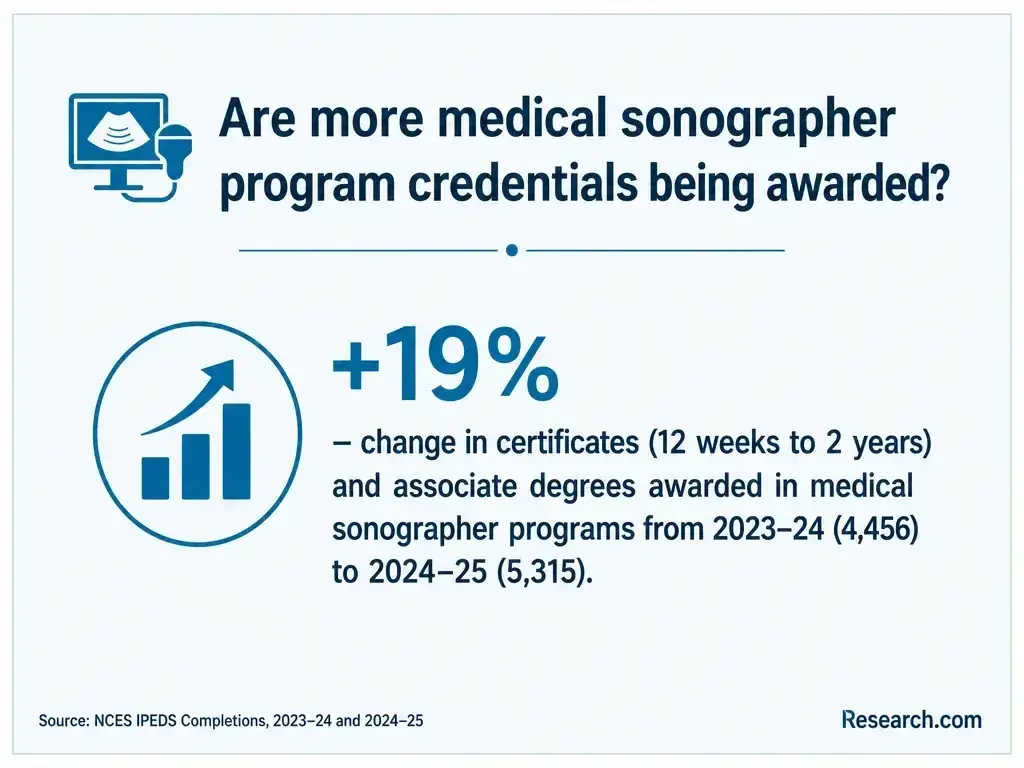
There is no defensible Bayamón-wide average program cost to quote here. Published tuition may cover different credentials and exclude substantial clinical expenses. Request an itemized, written estimate for the entire program, including the following costs where applicable:
Subtract confirmed grants, scholarships, and employer assistance rather than assuming an advertised aid amount applies to you. Ask the financial aid office whether the specific program - not just the institution - qualifies for federal aid, and compare options among colleges that accept financial aid. Federal aid eligibility and an affordable payment plan do not, by themselves, establish that a program is a good sonography investment (Federal Student Aid).
A program may award a certificate, diploma, or associate degree; the award should be stated in its current catalog. That school-issued credential is separate from professional certification. For example, the American Registry for Diagnostic Medical Sonography (ARDMS) awards credentials after applicants meet an applicable eligibility prerequisite and pass required examinations, including Sonography Principles and Instrumentation and a specialty examination (ARDMS).
Institutional accreditation addresses the school; programmatic accreditation evaluates a particular program. CAAHEP accredits eligible diagnostic medical sonography programs, based on review involving the Joint Review Committee on Education in Diagnostic Medical Sonography (CAAHEP). Neither a school's accreditation nor a program award automatically grants ARDMS eligibility, certification, or occupational licensure. Obtain the program's exact accreditation status and ask which ARDMS prerequisite its graduates use.
Requirements vary by pathway. A new-entrant program may ask for secondary-school completion, prerequisite science or math courses, and an admissions assessment; a shorter certificate may instead require an existing healthcare credential or prior coursework. Clinical partners may separately require immunizations, a health examination, background screening, or schedule availability. Check the provider's current admissions policy rather than assuming that meeting academic requirements guarantees a clinical place.
Before paying a deposit, confirm whether prerequisites can transfer and whether prior healthcare learning changes your course sequence or only your admissions eligibility. Ask whether bilingual communication is expected at assigned clinical sites, and get the placement location and schedule policy in writing. These details can determine whether the program is workable alongside a job or caregiving responsibilities.
Core instruction typically covers anatomy and physiology, ultrasound physics, equipment settings, patient positioning, infection control, and recognition of normal and abnormal imaging appearances. Students practice acquiring diagnostically useful images and documenting findings for review; interpreting images to make a medical diagnosis remains the clinician's responsibility (U.S. Bureau of Labor Statistics, Occupational Outlook Handbook).
Clinical training turns those topics into patient-care skills: explaining an examination, adjusting technique to the patient, maintaining image quality, and working safely under supervision. Compare programs by the examinations students actually perform and how faculty assess competency - not by a course title alone. Ask specifically whether the curriculum covers the specialty examination you may pursue after training (ARDMS).
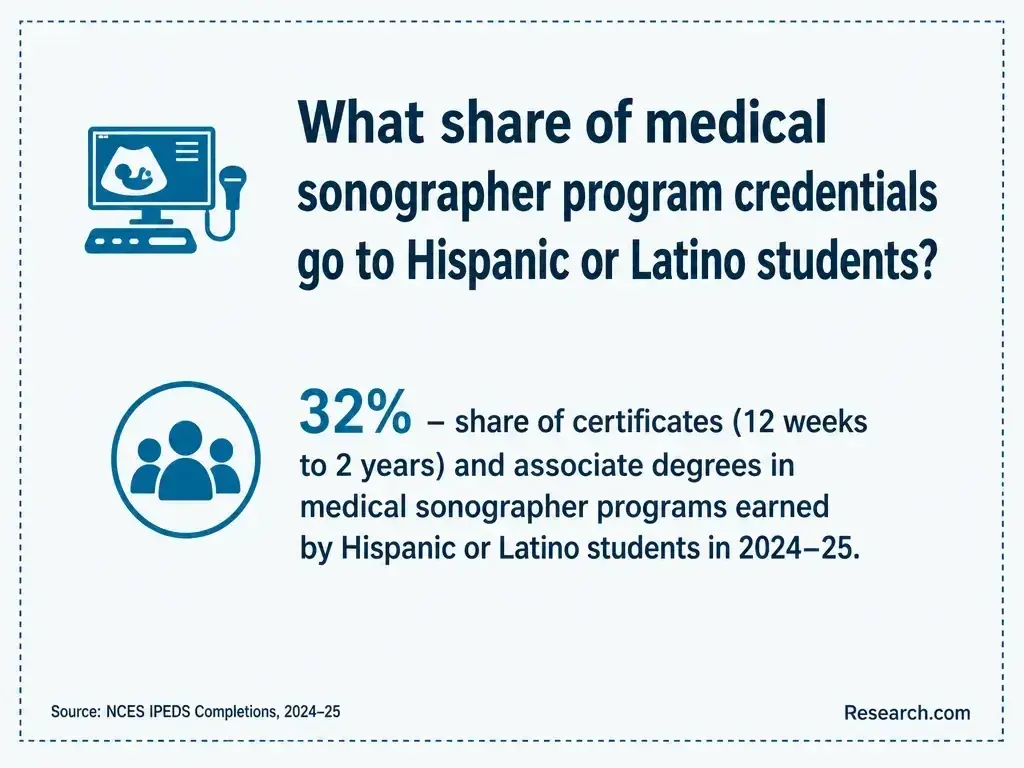
Do not treat professional certification and a Puerto Rico occupational license as the same requirement. ARDMS certification is a professional credential with defined education or experience prerequisites and examinations; employers may specify particular credentials or allow time to obtain them (ARDMS; U.S. Bureau of Labor Statistics, Occupational Outlook Handbook). Whether a particular ultrasound role is subject to a Puerto Rico licensing category should be confirmed with the Puerto Rico Department of Health and the prospective employer before choosing a program.
Ask the school to identify, in writing, the applicable Puerto Rico regulatory requirements for your intended specialty, its graduates' certification eligibility route, and any required documentation of supervised experience. If you might work outside Puerto Rico later, check the destination jurisdiction separately. A school's authorization to operate, institutional accreditation, programmatic accreditation, certification, and any occupational license answer different questions.
The best fit is the program that makes you eligible for your intended entry role at a manageable total cost. Use a ranking to identify candidates, then verify the conditions that most directly affect employability and completion. Ask each admissions team for written answers to these questions:
Common mistakes are choosing by tuition alone, mistaking institutional accreditation for sonography-specific preparation, and assuming an online course supplies clinical experience. Compare the answers with your work schedule and likely commute. If a program cannot document its clinical arrangement or explain its certification pathway, pause before committing - even if its advertised finish date is attractive.
Entry roles can involve general diagnostic ultrasound, with specialization shaped by training, supervised cases, examinations, and employer needs. Experienced practitioners may add abdominal, obstetric and gynecologic, or vascular credentials; cardiac sonography has its own training and credential considerations. Additional credentials can broaden options, but none should be assumed to come automatically with a school certificate (ARDMS; U.S. Bureau of Labor Statistics).
With experience, a sonographer may pursue lead-technologist, clinical-instructor, or department-management responsibilities. A search about which masters degree makes the most money addresses a different investment decision; for this trade-school choice, first establish the cost and eligibility of the training needed for an entry-level scanning role. If you already hold a healthcare credential, ask whether specialty training through an employer is feasible before paying for a second full program.
The U.S. Bureau of Labor Statistics projects 13.9% growth from 2025 to 2035 for diagnostic medical sonographers nationwide. This is an occupation-wide U.S. projection, not a forecast of Bayamón vacancies or a guarantee of a job after graduation. It supports considering the field, but local opportunity depends on employers' specialty needs, available shifts, and the credentials applicants hold.
To test demand before enrolling, review current postings across Bayamón and the surrounding San Juan metropolitan area. Record the requested certification, specialty, experience, and schedule for roles you would actually accept. Then compare those requirements with the program's documented curriculum and clinical cases. That check is more useful than applying a national growth rate directly to the local job market.
Investing in training is a consequential decision. Research.com created its ranking to help readers compare programs against other programs in the same occupation and location, rather than against unrelated schools. Its team uses education, outcomes, cost, and recognition data to improve the ranking's quality, credibility, and accuracy; readers should still verify current program details before enrolling.
Only programs with completions reported to the Integrated Postsecondary Education Data System (IPEDS) are eligible. Best-program scores consider completion and full- and part-time retention; earnings one year after completion and earnings relative to annual attendance cost; tuition, attendance cost, debt - including debt held by students who withdrew - and federal loan default rates; and institutional accreditation, occupation-relevant programmatic recognition, and student support. Occupation-relevant accreditation or recognition accounts for 20% of the score, institutional accreditation for 10%, and support services for 10%. The remaining 60% covers outcomes, earnings, and costs, with weights assigned through an entropy-based method that gives more weight to indicators that vary more among programs.
The following databases and organizations were used in creating the ranking. Some cover other trades and provide broader recognition or provider information; their inclusion does not mean they accredit sonography programs.
Most-affordable rankings use only tuition, attendance cost, median debt, and federal loan default rates, with entropy-based weights; accreditation and other quality measures do not enter that score. An IPEDS-based ranking cannot capture every career school, employer training route, or unreported program. A provider's absence is not proof that it lacks authorization or quality. Readers can review further details on Research.com's methodology and use the ranking as a shortlist - not a substitute for checking clinical placements and certification eligibility.
# 1 position
# 2 position

Online coursework can cover some theory, but scanning labs and supervised patient examinations require in-person training. Confirm where clinical work occurs and whether the complete pathway meets your intended certification requirements.
It depends on the certificate's admissions prerequisites, clinical training, the certification pathway, and employer requirements. Some certificates are intended for people who already have healthcare training; do not assume every short certificate prepares a new entrant.
No. Check the specific program's status and ask which ARDMS eligibility prerequisite its graduates meet. Certification also requires the applicable examinations (CAAHEP; ARDMS).
Choose based on total cost and the training you will receive. A lower tuition bill is poor value if you cannot obtain a clinical placement or document eligibility for the credential your intended employer requests.
No. The U.S. Bureau of Labor Statistics' national median includes workers at different experience levels and locations. Use local offers and postings to evaluate likely entry pay.