# 1 position


Audited and Verified:
Our Editorial and Data Verification Process
Research.com uses government datasets, official education statistics and primary institutional information to support its career and degree guides. Our review process checks factual accuracy, occupational definitions, source dates and the requirements associated with the credentials discussed.
How This Article Was Fact-Checked
Our editorial team verifies salary estimates, employment projections, education requirements and program information against original data providers and official organizations. Salary figures are checked against the relevant occupational definitions and reporting periods. Information about licensure, accreditation and required in-person training is reviewed separately.
Fact-checked and verified on:

Co-Founder and Chief Data Scientist

Reviewed by Karolina Broda
Fact-Checker and Data Verification
Choosing an affordable HVAC training program in West Covina means looking beyond tuition: the lowest-priced option may not provide the hands-on practice or certification preparation you need. The U.S. Bureau of Labor Statistics projects 10.9% national growth for heating, air conditioning, and refrigeration mechanics and installers from 2025 to 2035. For career changers and first-time students, this guide explains costs, credentials, work-based alternatives, and California requirements. It also accompanies the Most Affordable HVAC Technician Trade Schools in West Covina for 2027 ranking, created by the Research.com team of data scientists to help students identify programs worth considering.
Expect instruction in electrical testing, refrigeration cycles, airflow, controls, installation, and troubleshooting, followed by supervised practice on equipment. A useful program lets students diagnose faults and use gauges and meters - not merely watch demonstrations. Ask for a breakdown of shop hours, equipment available to each student, and any employer-site experience; programs awarding similarly named credentials can provide substantially different practice.
The pathways below lead to different combinations of classroom learning, paid experience, and credentials. Compare them against the kind of job you want first.
| Pathway | Typical credential or result | Best fit and trade-off |
| Trade-school certificate or diploma | School credential; certification exams may be separate | Focused entry preparation, but tuition and lab depth vary |
| Community-college certificate or associate degree | College certificate or academic degree | Broader coursework or a staged pathway; check course schedules and commute |
| Registered apprenticeship | Paid on-the-job learning, related instruction, and apprenticeship completion credential | Strong work-based practice; entry and completion may take longer |
| Employer-sponsored entry route | Employer training and experience; credentials depend on the job | May reduce upfront cost, but formal instruction and advancement vary |
West Covina applicants should compare realistic commutes to labs and worksites across the eastern San Gabriel Valley: an inexpensive program can become costly if its schedule conflicts with paid work. Before treating any pathway as equivalent, confirm its hands-on content, credential, and preparation for the work you intend to do.
HVAC training can lead to work with residential service and installation contractors, commercial building-maintenance teams, refrigeration service businesses, and facilities employers serving West Covina and surrounding communities. The work setting matters: residential technicians may travel between homes and explain repairs to customers, while commercial roles can involve larger systems, building controls, and scheduled maintenance (U.S. Bureau of Labor Statistics, Occupational Outlook Handbook).
If you prefer independent diagnostic tasks, compare field-service and facilities roles rather than assuming every HVAC position is solitary. A search for best introvert jobs can help frame work-style preferences, but HVAC still requires safety coordination and communication with customers or coworkers. Ask local employers whether entry hires begin as helpers, installers, or maintenance technicians - and what training moves them into service diagnostics.
The national median annual wage for heating, air conditioning, and refrigeration mechanics and installers was $61,010 in May 2025 (U.S. Bureau of Labor Statistics, Occupational Outlook Handbook). That figure covers experienced workers as well as newer technicians; it is not a West Covina starting salary or a forecast of what completing a particular program will pay.
For a local decision, compare current job postings by role, required experience, and pay structure. A helper wage, a service role with overtime, and a commercial maintenance position are not interchangeable. Request each program's documented placement and earnings information, including the period measured and the share of students represented, before using it to judge whether the cost is reasonable.
There is no single required length for an entry-level HVAC school program in West Covina. Focused certificates and diplomas, associate degrees, and registered apprenticeships follow different calendars; an apprenticeship combines related instruction with substantial paid on-the-job training over multiple years (U.S. Department of Labor, Apprenticeship.gov). A shorter course may get you into an entry role sooner, but it may provide less time to practice diagnostics.
Ask each provider for its actual clock or contact hours, supervised lab hours, weekly schedule, and expected completion date for a working student. If you are considering a fast associates degree, confirm that its specific curriculum includes HVAC shop work rather than assuming an accelerated timeline develops the same practical skills. Also ask whether prior coursework or documented industry experience earns credit; policies vary by provider.
Online instruction can cover HVAC theory, electrical concepts, reading schematics, and exam preparation. It cannot, by itself, demonstrate that a student can safely test a live system, diagnose airflow problems, braze connections, or handle equipment under supervision. On-campus and hybrid options should specify where those competencies are practiced and assessed.
A hybrid schedule may help someone working in West Covina if lab sessions are reachable after work. Before enrolling, ask where equipment practice occurs, how many sessions require attendance, and whether the provider arranges any worksite training. Do not assume an online course confers EPA certification or satisfies an employer's practical-skills expectations; check the exam and hands-on arrangements separately (U.S. Environmental Protection Agency).
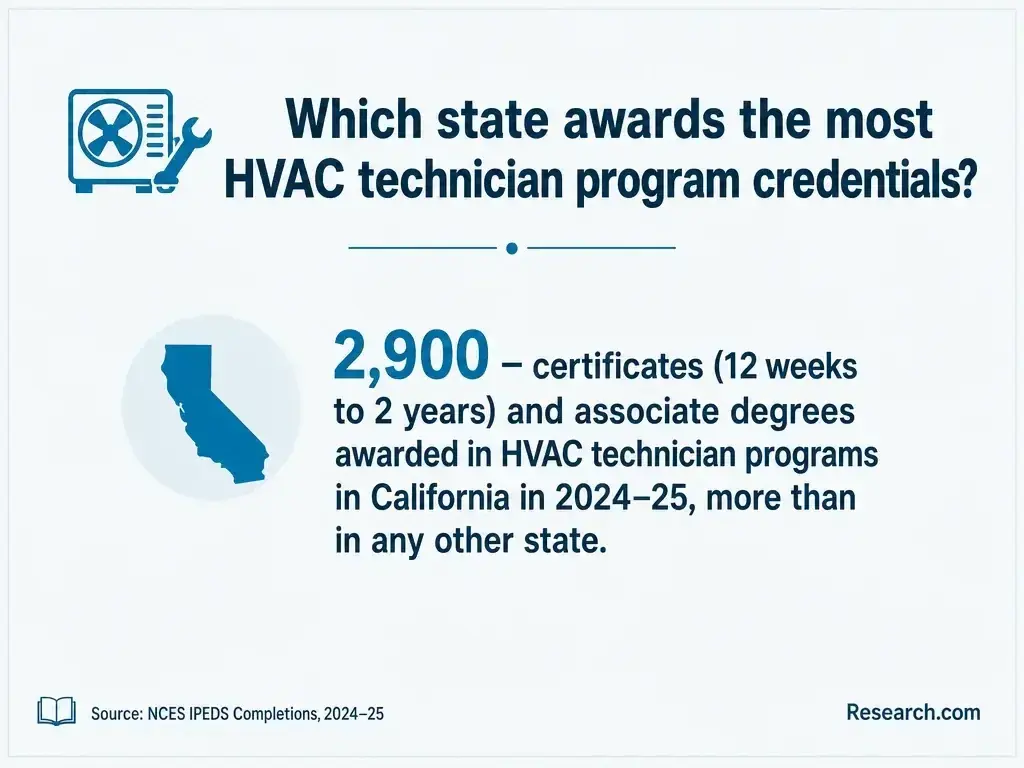
A defensible West Covina average cannot be stated without comparable, current prices for the same kind of training and all required charges. The affordability ranking is a starting point, not a 2027 price quote. Ask each provider for the total cost to reach your intended entry role, including tuition, mandatory fees, books, tools, safety gear, consumables, certification exams, and travel to labs or worksites.
Separate billed charges from costs that depend on your circumstances. This comparison shows why the lowest tuition may not produce the lowest overall investment.
| Cost factor | What to verify | Why it changes the comparison |
| School charges | Tuition, required fees, materials, and refund terms | Advertised tuition may omit mandatory purchases |
| Career-entry purchases | Tools, PPE, and certification exam charges | These may be paid outside the school |
| Time and travel | Commute, schedule, and earnings forgone | An accelerated course can still be expensive if it prevents paid work |
| Cost offsets | Grants, eligible aid, employer payment, or apprenticeship wages | Net cost differs from sticker price |
Check federal-aid eligibility for the specific program, not just the institution, with Federal Student Aid and the provider. California workforce assistance may also depend on eligibility and an approved training-provider listing (California Employment Development Department). Lists of cheap online colleges that accept financial aid do not establish that an HVAC credential qualifies for aid or includes practical training.
The award depends on the pathway: a school may issue a certificate or diploma, a community college may award a certificate or associate degree, and a registered apprenticeship has its own completion credential. None should be confused with EPA Section 608 technician certification, which is required for technicians performing covered work that could release regulated refrigerants (U.S. Environmental Protection Agency). Confirm whether an exam voucher is included and which certification type the curriculum prepares you to pursue.
Ask employers which credential they recognize for the role you want and whether they expect practical experience as well. A search for an accelerated bachelors degree addresses a different educational goal; it is not a substitute for HVAC equipment practice or a required refrigerant certification.
Requirements vary by provider and pathway. A school may request proof of prior schooling, an assessment, or orientation; an apprenticeship sponsor may use its own eligibility, application, and selection process. Ask about math preparation, minimum age, physical demands, transportation, and whether employer-site participation has additional conditions. Confirm requirements directly rather than assuming that admission to a school means admission to a paid placement.
A college with open admission may be easier to enter academically, but that says nothing by itself about an HVAC program's lab capacity, apprenticeship selection, or job readiness. For a private career-school option, check California Bureau for Private Postsecondary Education authorization where applicable; school authorization is distinct from institutional accreditation and occupational certification (California Bureau for Private Postsecondary Education; U.S. Environmental Protection Agency).
Core training generally covers refrigeration principles, electrical circuits, motors, controls, airflow, heating and cooling equipment, safety, and fault diagnosis (U.S. Bureau of Labor Statistics, Occupational Outlook Handbook). Students should apply these topics in a shop or supervised work setting - for example, measuring electrical values, interpreting a wiring diagram, and explaining why a system is not performing as expected.
For work in California, ask how the curriculum addresses applicable building-energy rules and efficient equipment operation; that knowledge can affect installation and troubleshooting on local jobs (California Energy Commission). Also check whether it teaches customer documentation and safe work habits. A course that concentrates on exam questions but offers little equipment time may fit a current worker seeking review better than a first-time entrant who needs practice.
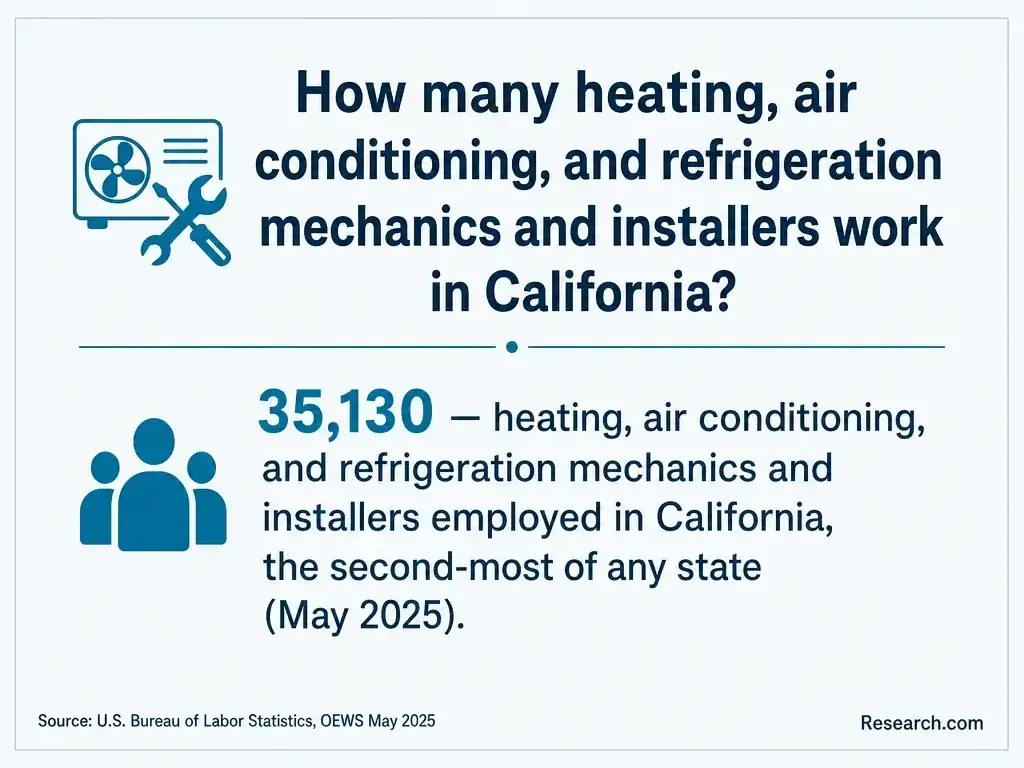
California does not issue a general state HVAC technician license simply for taking an employee technician job. But federal EPA Section 608 certification applies to technicians who perform covered work on equipment that could release regulated refrigerants; the applicable certification type depends on the equipment (U.S. Environmental Protection Agency). A school certificate does not replace it.
Operating an HVAC contracting business is a different decision. California's Contractors State License Board regulates contracting and identifies C-20 Warm-Air Heating, Ventilating and Air-Conditioning as the relevant contractor classification. Contractor licensure involves requirements beyond completing school, including qualifying experience and examinations (California Contractors State License Board). If self-employment is your goal, ask a provider what experience its training helps you obtain, then verify current licensing requirements with the board before paying for a program.
Start with your target role - helper, service technician, installer, or future contractor - then compare programs on what they actually provide. A low-cost course is a good investment only if its schedule, practical training, and credential align with that goal. Use these checks when speaking with admissions staff or an apprenticeship coordinator:
Check the U.S. Department of Education's accreditation records, California's school regulator where applicable, and the apprenticeship sponsor or state registration information for a paid training route. Red flags include vague answers about shop hours, a price that omits required tools, or a claim that graduation automatically qualifies you to perform every HVAC task. Rankings can help shortlist options, but they cannot resolve those questions for you.
Many entrants begin as helpers, installers, or maintenance technicians and build toward independent service diagnostics. With experience, they may specialize in refrigeration, commercial systems, controls, or supervision; running a contracting business brings separate California licensing considerations (U.S. Bureau of Labor Statistics, Occupational Outlook Handbook; California Contractors State License Board).
Choose training for the next role, not just a distant title. Someone seeking quick paid experience may prefer an employer entry route or apprenticeship; someone changing careers without equipment exposure may benefit from a structured shop program. Ask whether a provider can document prior-learning credit, advanced standing, or credit for apprenticeship instruction before assuming that training will transfer between pathways.
The U.S. Bureau of Labor Statistics projects 10.9% employment growth from 2025 to 2035 for heating, air conditioning, and refrigeration mechanics and installers. This is a national occupational projection, not a count of West Covina openings or a guarantee of local placement. It supports considering the trade, but not paying for training without checking nearby demand.
Review current openings across a commute you would actually accept and note which seek entry-level help, EPA certification, a driver's license, or prior service experience. Compare those requirements with the program's lab work and employer connections. That local check is more useful for choosing between a short school program and paid work-based training than the national growth rate alone.
Investing in training is an important decision, especially when a low advertised price may exclude tools, fees, or time away from work. Research.com's team evaluates trade programs against others in the same occupation and location, checks multiple data sources, and limits the ranking to programs with completions reported to the Integrated Postsecondary Education Data System (IPEDS). That limit means the ranking cannot represent every apprenticeship, employer-training route, or trade provider available to West Covina residents.
The most affordable ranking scores costs and debt only: tuition, cost of attendance, median student debt, and federal loan default rate. Weights are assigned using an entropy-based method, which gives more weight to measures that differ more across programs. Accreditation, instruction quality, and career outcomes are not included in this affordability score; readers should check them separately before enrolling. The following sources inform Research.com's trade-program ranking work. Some cover other occupations and should not be mistaken for HVAC-specific approval:
Use the ranking to narrow a price comparison, then request current, itemized HVAC program quotes and verify practical training and regulatory fit yourself. More detail on Research.com's approach is available on its methodology page.
# 1 position
# 2 position

Compare itemized school quotes with registered apprenticeships and employer-sponsored entry jobs. Paid training may lower upfront cost, but check selection requirements, instruction, wages, and the time needed to reach your goal.
Online study can teach theory and support exam preparation. It does not replace supervised equipment practice, and course completion alone does not confer EPA Section 608 certification (U.S. Environmental Protection Agency).
It depends on the tasks. EPA Section 608 certification is required for covered work that could release regulated refrigerants; an employer may have other duties for a trainee. Confirm the intended role and certification type before enrolling (U.S. Environmental Protection Agency).
No. It includes programs with completions reported to IPEDS. An apprenticeship or employer program can be a valid option even if it does not appear in that college-oriented dataset (Research.com methodology; National Center for Education Statistics).
No. School completion is distinct from California contractor licensure. Check the Contractors State License Board's current C-20 requirements, including experience and examinations, before planning to contract independently (California Contractors State License Board).