
Most Affordable HVAC Technician Schools & Training in Temecula for 2027
Audited and Verified:
Our Editorial and Data Verification Process
Research.com uses government datasets, official education statistics and primary institutional information to support its career and degree guides. Our review process checks factual accuracy, occupational definitions, source dates and the requirements associated with the credentials discussed.
How This Article Was Fact-Checked
Our editorial team verifies salary estimates, employment projections, education requirements and program information against original data providers and official organizations. Salary figures are checked against the relevant occupational definitions and reporting periods. Information about licensure, accreditation and required in-person training is reviewed separately.
Fact-checked and verified on:

Co-Founder and Chief Data Scientist

Reviewed by Karolina Broda
Fact-Checker and Data Verification
Choosing HVAC training near Temecula means comparing more than tuition: hands-on practice, commute time, certification preparation and the cost of getting job-ready all matter. The U.S. Bureau of Labor Statistics projects 10.9% national growth for HVAC mechanics and installers from 2025 to 2035. This guide helps prospective students and career changers compare training routes, costs and employment requirements. It also features a Most Affordable HVAC Technician Trade Schools in Temecula for 2027 ranking, created by the Research.com team of data scientists to help students make an informed choice about programs worth considering.
Key findings about HVAC technician degrees in Temecula
- Compare the full entry cost, not tuition alone. Temecula-area students should ask about tools, exam fees and travel to labs or worksites; the affordability ranking does not score hands-on training quality.
- Plan for refrigerant certification. Technicians who maintain, service, repair or dispose of equipment in ways that could release refrigerants generally need U.S. Environmental Protection Agency Section 608 certification; a school credential does not replace it (EPA).
- Keep wages in perspective. The national median for HVAC mechanics and installers was $61,010 in May 2025, not a Temecula starting-pay estimate (U.S. Bureau of Labor Statistics).
Table of Contents
- Most Affordable HVAC Technician Schools & Training in Temecula for 2027
- What can I expect from an HVAC technician trade school program in Temecula?
- Where can I work with an HVAC technician trade school training in Temecula?
What can I expect from an HVAC technician trade school program in Temecula?
An HVAC training program teaches students to install, maintain and troubleshoot heating, ventilation, air-conditioning and refrigeration equipment. For a Temecula applicant, the first decision is whether to pay for structured school-based practice or seek paid, work-based training. A certificate or diploma may suit someone seeking a faster route to entry-level work; an associate-degree program adds broader coursework and takes longer. A registered apprenticeship combines related instruction with paid supervised work, while an employer may train a new helper on the job.
Ask each provider to identify the actual credential, scheduled clock or contact hours, lab hours and any supervised field placement. These vary by program; similarly named credentials are not evidence of equivalent practice. A worthwhile lab should let students use electrical meters, read wiring diagrams, measure system performance and troubleshoot equipment safely - not merely watch demonstrations. Neither an online accelerated bachelor's degree nor a general academic credential substitutes for those practical HVAC competencies.
Where can I work with an HVAC technician trade school training in Temecula?
Training can lead to jobs with residential service contractors, commercial building-maintenance teams, installation companies and refrigeration service employers. Temecula residents can also consider work elsewhere in Riverside County, but a wider search may increase commuting costs and affect the value of an otherwise inexpensive program. Commercial refrigeration, installation and service calls demand different equipment experience; ask employers which skills they expect from new hires before choosing a curriculum.
Entry-level work is commonly supervised. A graduate who has practiced diagnosis and safe refrigerant handling may be better prepared for service work than someone whose training emphasizes installation alone, but employers still assess field ability, driving requirements and customer communication (U.S. Bureau of Labor Statistics, Occupational Outlook Handbook).
The U.S. Bureau of Labor Statistics reports a $61,010 national median annual wage for heating, air-conditioning and refrigeration mechanics and installers in May 2025. It covers experienced and newer workers across the country; it is not a quoted wage for Temecula graduates. When assessing a program's return, compare actual local entry-level offers and likely hours with your current earnings, rather than treating the national median as a first-year outcome.
Pay can change with experience, overtime, equipment specialization and whether work is residential or commercial. Lists of highest-paying college majors answer a different earnings question and should not be used to estimate an HVAC trainee's pay. Request occupation-specific placement information from a provider, including the period measured and how many completers were counted.
Completion time depends on the credential, schedule and amount of practical work. A short, full-time certificate is generally faster than a part-time or associate-degree program; an apprenticeship takes longer but includes paid, supervised job experience. There is no single Temecula-wide clock-hour requirement for becoming an employee HVAC technician. Before comparing advertised durations, ask whether the stated period includes labs, an externship and preparation for the EPA Section 608 exam.
An accelerated timetable helps only if students can attend enough in-person sessions to gain competence. Someone who must keep working may finish later in a part-time program but give up less income during training. An easiest master degree online comparison, for example, cannot answer how much physical HVAC practice an accelerated schedule provides.
Online instruction can cover refrigeration theory, calculations, controls and exam preparation. It cannot by itself demonstrate that a student can connect instruments, test live circuits safely, braze components or diagnose an operating system. For most new entrants, on-campus or hybrid training with substantial in-person labs offers a clearer way to build and demonstrate those skills. Experienced workers may find remote theory more useful when an employer already provides supervised practice.
A low advertised online price is not the whole comparison. Ask where practical sessions occur, how often attendance is required and whether travel or equipment is extra. Guides to cheap accredited online colleges may help frame a general education-cost search, but they cannot establish that a particular HVAC program supplies hands-on training or prepares students for a required certification.
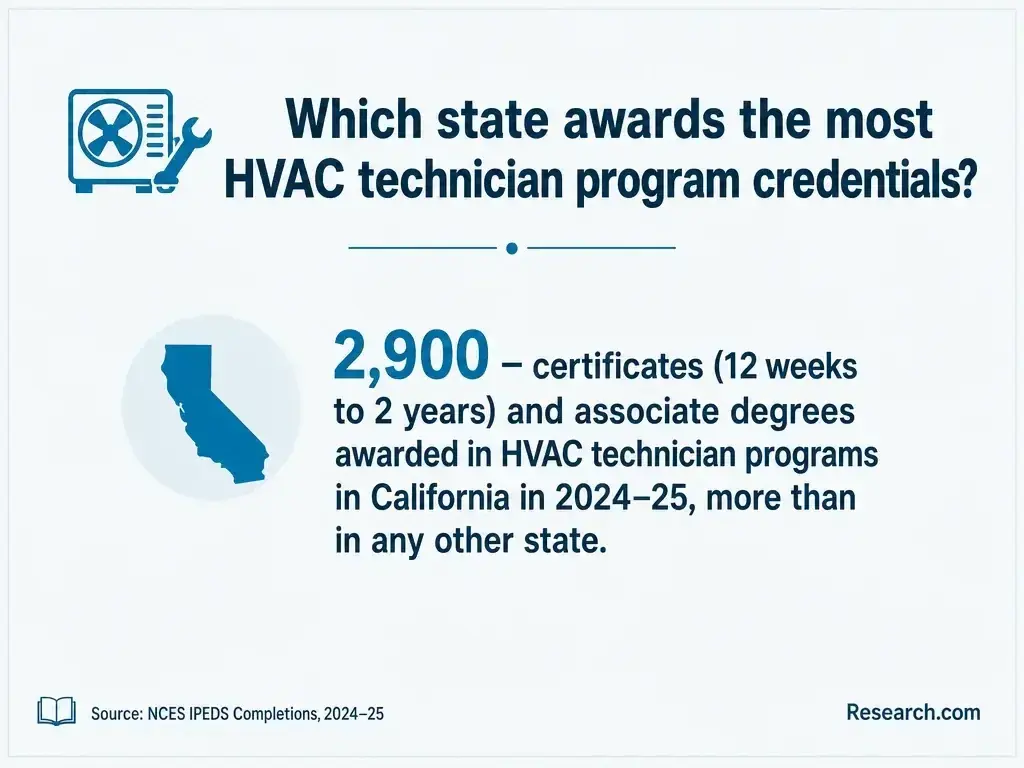
There is no reliable single average price for every HVAC pathway available to Temecula residents: public-college, private-school, apprenticeship and employer-training costs are structured differently. Request a written, program-specific estimate rather than relying on a tuition advertisement. The most useful comparison is the total cost to become job-ready, offset by aid or wages earned while training.
The following categories show what to include when comparing offers; the final amount will depend on the provider and your circumstances.
| Cost or offset | Why it matters |
| Tuition and mandatory fees | Check what the published price includes and whether residency changes public-college charges. |
| Tools, PPE, materials and exams | Confirm what students must buy and whether certification testing is included. |
| Travel and forgone earnings | Lab locations, worksites and class schedules can materially change the cost of attendance. |
| Grants, eligible aid or paid training | Compare net cost after confirmed assistance, including apprenticeship or employer wages. |
Ask whether a program is eligible for federal aid and whether you personally qualify; institutional accreditation alone does not establish either point (Federal Student Aid). California workforce services may also identify eligible training assistance, subject to local eligibility and funding (California Employment Development Department). Do not choose a more expensive program on the assumption that its graduates will earn enough to repay the difference.
A school may award a certificate, diploma or associate degree; a registered apprenticeship documents completion of its approved work-and-instruction pathway. These are different from EPA Section 608 technician certification, which concerns refrigerant-handling activities and requires passing an EPA-approved test. Check whether exam preparation and testing are included, and which certification type fits the equipment you plan to service (EPA).
Institutional accreditation concerns the school; state authorization concerns permission to operate; industry recognition concerns a particular training standard. None automatically grants certification or a California contractor license. When comparing credentials, ask what a completer actually receives and what additional test or work experience remains. A list of top online universities with national accreditation cannot answer whether an HVAC course meets those occupation-specific needs.
Entry rules vary. Schools may ask for evidence of secondary-school completion, an application and a placement assessment; apprenticeships and employers set their own selection requirements. HVAC applicants should also ask about physical work, safe use of ladders and tools, driving expectations for field placements, and the mathematics needed for measurements and electrical troubleshooting. Do not assume a school admission offer is an apprenticeship placement or job offer.
Before paying a deposit, request the provider's current admissions policy, lab schedule, completion requirements and refund terms. If you have related work experience or previous technical coursework, ask whether it can reduce required classes or support apprenticeship advanced standing; obtain any credit decision in writing before comparing program lengths.
Core instruction typically joins refrigeration-cycle theory with electrical controls, airflow, heating systems, installation, maintenance, diagnostics and jobsite safety (U.S. Bureau of Labor Statistics, Occupational Outlook Handbook). The practical question is how students apply that knowledge. Ask to see a lab inventory and whether students individually measure voltage, test components, interpret gauges and diagnose faults on operating equipment.
California work can also involve equipment selected for hot-weather cooling loads, making airflow and cooling diagnostics useful skills. Beyond technical practice, service technicians need clear customer explanations and accurate work records. A program that teaches theory but offers little individual equipment time may be a poor fit for someone seeking an entry-level service role.
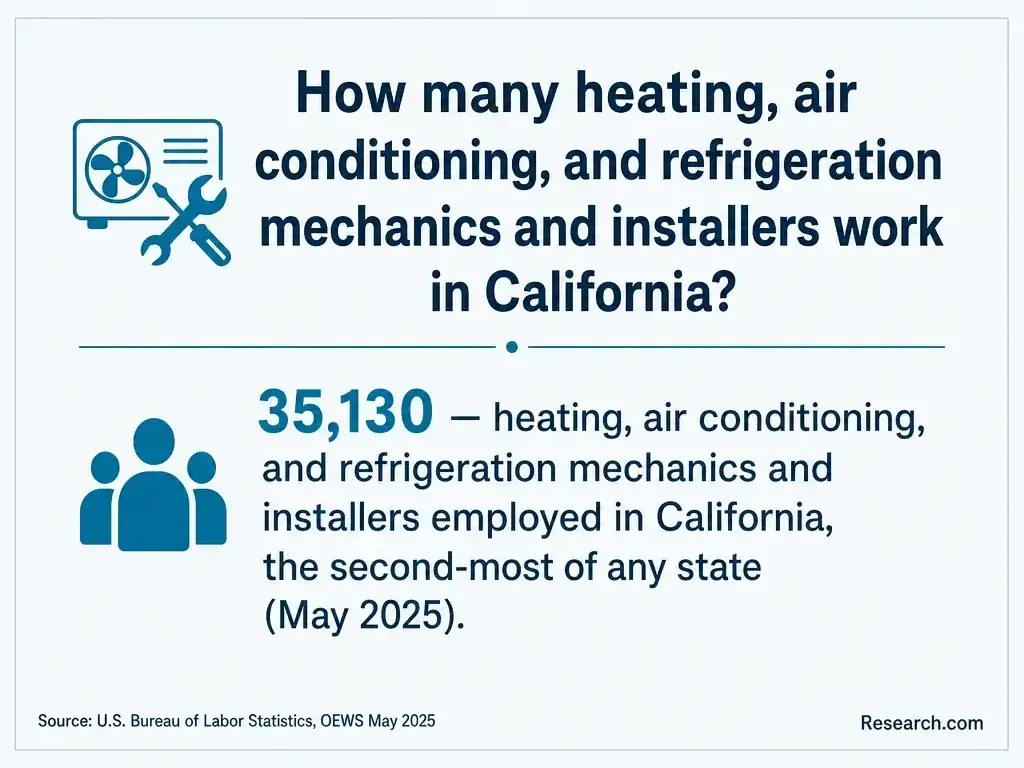
California does not issue a general statewide occupational license that every employee HVAC technician must hold. Federal rules are separate: technicians performing covered work that could release refrigerants generally must hold the appropriate EPA Section 608 certification (EPA). Confirm the equipment covered by the test you plan to take; a completion certificate from a school is not the same credential.
Contracting independently is a different step. California generally requires a Contractors State License Board license for contracting work at or above its licensing threshold; classifications relevant to the proposed work include C-20 warm-air heating, ventilating and air-conditioning and C-38 refrigeration. Licensure involves qualifying experience and examinations, among other requirements - not simply graduating from school (California Contractors State License Board). If self-employment is the goal, check current CSLB rules before paying for training on the promise of immediate contractor eligibility.
The best-value choice is the lowest credible total cost for a pathway that fits your intended work - not necessarily the lowest tuition or quickest credential. Compare a school-based program with paid apprenticeship or employer training if you can access those routes. An apprenticeship can reduce forgone earnings and provide sustained field experience, but selection and scheduling may differ from open-enrollment school training.
Use these checks when speaking with San Joaquin Valley College-Temecula or any other provider you are considering; verify current HVAC availability and details directly rather than assuming a campus offers a particular program.
- Request the exact credential, total price, required fees and a list of tools and safety gear you must purchase.
- Ask for scheduled instruction and lab hours, equipment access, field-placement terms and the share of practice each student performs.
- Confirm who authorizes or accredits the provider, whether aid is available to you, and how the curriculum prepares students for the relevant EPA Section 608 test.
- Request recent completion and occupation-specific placement results, including definitions, reporting periods and the number of students measured.
- Compare net cost, time away from paid work and realistic entry-level offers before deciding whether borrowing is worthwhile.
Red flags include a price that excludes required supplies, an online-only course marketed as complete practical preparation, and a claim that graduation alone grants a contractor license. A ranking cannot resolve those questions for you.
Common starting paths include installation helper, supervised service technician and building-maintenance worker. With field experience, a technician may move toward commercial systems, refrigeration, controls, lead-technician duties or supervision. Independent contracting is another possible later goal, subject to California licensing requirements (California Contractors State License Board).
Match the first training choice to the path you actually want. Someone focused on troubleshooting should seek repeated diagnostic practice; someone aiming for commercial refrigeration should check which equipment the program uses and pursue relevant employer experience. Additional credentials can support specialization, but they do not replace the work history and regulatory steps required for a contractor license.
The U.S. Bureau of Labor Statistics projects 10.9% national employment growth for heating, air-conditioning and refrigeration mechanics and installers from 2025 to 2035. That points to a growing occupation nationally, not a guaranteed opening in Temecula. Students should check current Riverside County vacancies and apprenticeship recruitment before choosing a start date, paying particular attention to whether employers seek helpers, experienced service technicians or refrigeration specialists.
New equipment and changing refrigerant practices make safe handling and continuing technical training important (EPA; U.S. Bureau of Labor Statistics, Occupational Outlook Handbook). A program is a better investment when its practical equipment and instruction reflect the work local employers advertise - and when its total cost remains manageable if finding the first job takes time.
Most Affordable HVAC Technician Schools & Training in Temecula for 2027
Investing in training is an important decision. Research.com created the affordability ranking to help readers compare programs against other reported HVAC options in the same location, rather than against unrelated trades. Its team reviews multiple sources for credible, consistent comparisons; the ranking is a starting point, not a substitute for checking a program's current price and hands-on training.
Only programs with completions reported to IPEDS are included. Most-affordable rankings score tuition, cost of attendance, median student debt and federal loan default rate, with weights assigned through an entropy-based method. Accreditation and other quality indicators do not contribute to the affordability score. Consequently, an apprenticeship or employer program can be a strong local option even if it does not appear in the ranking, and a ranked program still needs a separate quality check.
The ranking process draws on the following sources. Some cover occupations other than HVAC; their inclusion in the broader research process does not make a health-care accreditor an HVAC accreditor.
- IPEDS database - institutional reporting, including completions and costs.
- National Center for Education Statistics - federal education data and definitions.
- College Scorecard database - available cost, debt and outcome measures.
- Peterson's database - supplemental institutional information.
- Commission on Accreditation of Allied Health Education Programs (CAAHEP) - occupation-specific accreditation information where relevant.
- Accrediting Bureau of Health Education Schools (ABHES) - occupation-specific accreditation information where relevant.
- Commission on Dental Accreditation (CODA) - occupation-specific accreditation information where relevant.
- Dental Assisting National Board (DANB) - occupation-specific credential information where relevant.
- National Center for Construction Education and Research (NCCER) - construction-training and industry-recognition information.
- Apprenticeship.gov Partner Finder - registered-apprenticeship alternatives.
For more detail on Research.com's approach, see its methodology. Use the ranking to narrow a shortlist, then request current written costs and verify that each option supports the HVAC work you intend to do.
# 2 position
Frequently asked questions about HVAC technician programs in Temecula
What is the cheapest way to start HVAC training near Temecula?
Compare written net costs for school programs with paid apprenticeships and employer training. Include tools, travel and earnings you would give up while studying; the lowest advertised tuition may not be the cheapest route.
Can I become an HVAC technician without trade school?
Yes. An employer may train a helper, and a registered apprenticeship combines instruction with paid work. You still need the appropriate EPA Section 608 certification before performing covered refrigerant work (EPA).
Can I train entirely online?
Online coursework can teach theory and support exam preparation, but new technicians need supervised practice with tools and operating equipment. Confirm where and how a program provides it.
Do I need a California HVAC license to work for a contractor?
California does not require every employee technician to hold a statewide HVAC occupational license. Independently contracting for work that meets the state's licensing threshold is different and generally requires the appropriate contractor license (California Contractors State License Board).
Does the affordability ranking include apprenticeships?
Not unless a program reports completions to IPEDS and meets the ranking's inclusion rules. Check registered apprenticeships separately so you do not overlook paid training.
- U.S. Bureau of Labor Statistics - Heating, Air Conditioning, and Refrigeration Mechanics and Installers
Used to verify salary, employment outlook, and typical education requirements.
https://www.bls.gov/ooh/installation-maintenance-and-repair/heating-air-conditioning-and-refrigeration-mechanics-and-installers.htm - NCCER - Accredited Training
Used to verify programmatic accreditation or industry recognition of programs.
https://www.nccer.org/ - NATE - Certification
Professional certification reference for graduates of this occupation.
https://natex.org/ - San Joaquin Valley College-Temecula - official website
Official school website (programs, tuition, admissions).
https://www.sjvc.edu/