
Most Affordable Electrical Technician Schools & Training in Martinsburg for 2027
Audited and Verified:
Our Editorial and Data Verification Process
Research.com uses government datasets, official education statistics and primary institutional information to support its career and degree guides. Our review process checks factual accuracy, occupational definitions, source dates and the requirements associated with the credentials discussed.
How This Article Was Fact-Checked
Our editorial team verifies salary estimates, employment projections, education requirements and program information against original data providers and official organizations. Salary figures are checked against the relevant occupational definitions and reporting periods. Information about licensure, accreditation and required in-person training is reviewed separately.
Fact-checked and verified on:

Co-Founder and Chief Data Scientist

Reviewed by Karolina Broda
Fact-Checker and Data Verification
Choosing the cheapest electrician program in Martinsburg means looking beyond tuition: you need training that builds practical skills and supports your path into paid electrical work. The Research.com team of data scientists created the Most Affordable Electrician Trade Schools in Martinsburg for 2027 ranking to help prospective students and career changers make an informed choice about programs worth considering. With electrician employment projected to grow 9.2% nationally from 2025 to 2035, this guide explains how to compare costs, apprenticeships, credentials, licensing, and career prospects before enrolling (U.S. Bureau of Labor Statistics).
Key findings about electrician degrees in Martinsburg
- The lowest-ranked price is not necessarily the lowest cost to become job-ready: compare tuition with tools, safety gear, travel, and any unpaid training time.
- A school certificate and an apprenticeship serve different purposes. In West Virginia, completing a school program alone does not establish eligibility for an electrician license; verify experience and examination requirements with the West Virginia State Fire Marshal.
- The national median electrician wage was $63,190 in May 2025, and projected national employment growth is 9.2% for 2025-2035. Neither figure represents a Martinsburg beginner's expected pay or a local job guarantee (U.S. Bureau of Labor Statistics).
Table of Contents
- Most Affordable Electrical Technician Schools & Training in Martinsburg for 2027
- What can I expect from an electrician trade school program in Martinsburg?
- Where can I work with an electrician trade school training in Martinsburg?
What can I expect from an electrician trade school program in Martinsburg?
Expect a mix of electrical theory and supervised practice, not simply exam preparation. A useful program teaches students to read plans, calculate loads, install and test circuits, select materials, and work safely under the National Electrical Code. Ask to see the shop schedule: two programs awarding certificates may offer substantially different amounts of wiring, troubleshooting, and equipment practice.
For local comparisons, investigate the current electrician-related offerings at Blue Ridge Community and Technical College and James Rumsey Technical Institute, including who may enroll and whether instruction is scheduled for adults or secondary students. Confirm the precise credential and whether the provider connects students with employers. A pre-apprenticeship or school certificate can help you compete for entry-level work, while a registered apprenticeship combines paid, supervised work with related instruction and may be the more direct route for someone ready to work. Neither label, by itself, establishes West Virginia license eligibility.
Where can I work with an electrician trade school training in Martinsburg?
Potential workplaces include electrical contractors serving homes and commercial buildings, industrial facilities, and employers maintaining building electrical systems. The distinction matters: a contractor may offer varied installation experience, while a maintenance role may emphasize diagnosis and repair. Ask employers whether an opening provides supervised experience relevant to your intended West Virginia license; a general maintenance job should not be assumed to count as electrician experience.
Martinsburg's location also makes commute distance an important part of the job search. Before accepting work or choosing training across a state line, check the licensing rules where the job is located. A West Virginia credential should not be assumed to authorize electrical work in another jurisdiction (West Virginia State Fire Marshal).
A reliable Martinsburg-specific starting wage is not established here. For context, the U.S. median annual wage for electricians was $63,190 in May 2025 (U.S. Bureau of Labor Statistics). That is a national figure across experience levels, not an offer a new trainee can expect locally. Apprentice pay can differ from qualified-worker pay, and travel, overtime, employer, and type of electrical work can change earnings.
For an investment decision, request recent pay ranges from local apprenticeship sponsors and employers for first-year trainees as well as experienced electricians. Compare the likely increase over your current earnings with training costs and the time it may take to reach qualified-worker pay - not with the national median alone.
A school-based introductory certificate can be shorter than an apprenticeship, but completion time depends on the provider's calendar, required contact hours, and whether you attend full time or around work. Registered apprenticeships generally span multiple years because they include substantial supervised employment and related instruction (U.S. Department of Labor). A shorter course may get you ready to apply for an entry-level position sooner; it does not replace experience required for later licensing.
Ask each provider for its published classroom, lab, and worksite hours rather than treating "one year" as a standard. If you are comparing 1 year certificate programs that pay well, check whether the electrician option includes enough practical preparation to help you secure supervised work after the certificate.
Online lessons can cover code concepts, electrical calculations, and reading diagrams. In-person instruction lets an instructor observe how you use tools, make connections, test circuits, and correct unsafe practices. Hybrid training may suit someone balancing work and study if its required labs are accessible and clearly scheduled; an entirely remote course should not be treated as a substitute for supervised electrical work.
Before paying for an online option, ask where practical assessments occur and whether its hours or credential will be recognized by a prospective apprenticeship sponsor or employer. A search for the easiest online degree answers a different question: electrician training should be judged by demonstrated hands-on competence, not just remote convenience.
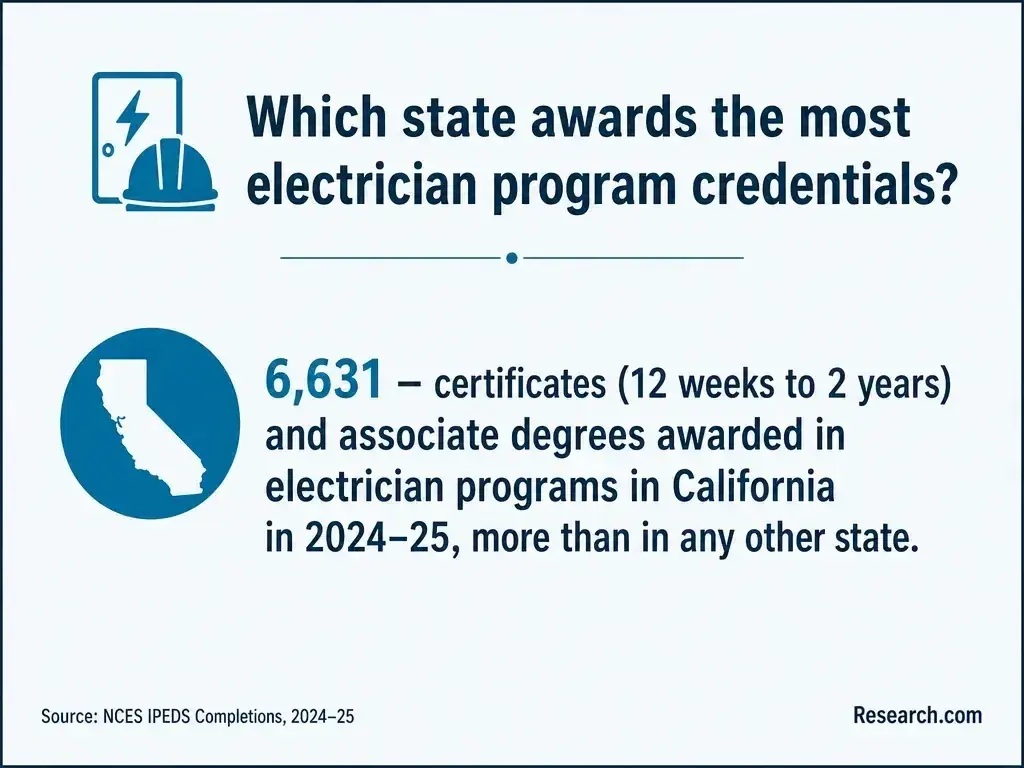
There is no single verified Martinsburg-wide average that fairly combines school certificates and paid apprenticeships. Request a written, current total cost to become job-ready from each provider: tuition, mandatory fees, books or code materials, tools, personal protective equipment, consumables, travel to labs or worksites, and any applicable exam or license application fees. Add earnings you would forgo while attending. A lower tuition quote can be the costlier choice if it excludes tools or requires a long unpaid commute.
A paid apprenticeship may offset training costs through wages, though entry can be competitive and related-instruction or equipment expenses may still apply. Ask schools about eligible federal aid, scholarships, and workforce funding; ask sponsors which costs apprentices pay themselves. Federal aid depends on the eligible student and program, not merely on a school's accreditation (Federal Student Aid). Lists of accredited online colleges that accept fafsa do not establish aid eligibility for a particular electrician course.
The answer depends on the pathway. School-based training may award a certificate or diploma; a registered apprenticeship documents completion of an approved work-and-instruction program. Some providers may offer an industry training credential, but you should confirm what it assesses and whether local employers value it. None is automatically a West Virginia electrician license.
Ask for the credential's exact title and whether classroom or lab work can receive credit toward a subsequent apprenticeship. If advanced standing is offered, obtain the receiving sponsor's written confirmation before enrolling; recognition of prior training is not automatic (U.S. Department of Labor; West Virginia State Fire Marshal).
Requirements vary by provider and pathway. Ask about minimum age, educational prerequisites, math assessment, application dates, and whether you must supply tools or transportation. A school's admission decision is separate from an employer's hiring decision or a registered apprenticeship sponsor's selection process. Sponsors may also assess readiness for physically demanding, safety-sensitive work (U.S. Department of Labor).
Check the intended audience before applying: an electrician course offered through a technical institute may have different access rules for secondary students and adult learners. If you already have construction experience, ask whether you can demonstrate skills or receive documented prior-learning credit rather than paying to repeat introductory work.
Relevant training covers electrical safety, circuit theory, measurements, wiring methods, plans and schematics, code use, installation, and troubleshooting (U.S. Bureau of Labor Statistics). The useful question is how students apply those topics: can they assemble circuits, use testing instruments, identify faults, and explain safe procedures under an instructor's supervision?
Compare the equipment and assessments with the work you want. Residential installation, commercial construction, and industrial maintenance share fundamentals but use different systems and troubleshooting routines. A program concentrated on classroom theory may be a reasonable first step, but someone seeking installation work should plan how to obtain supervised field experience.
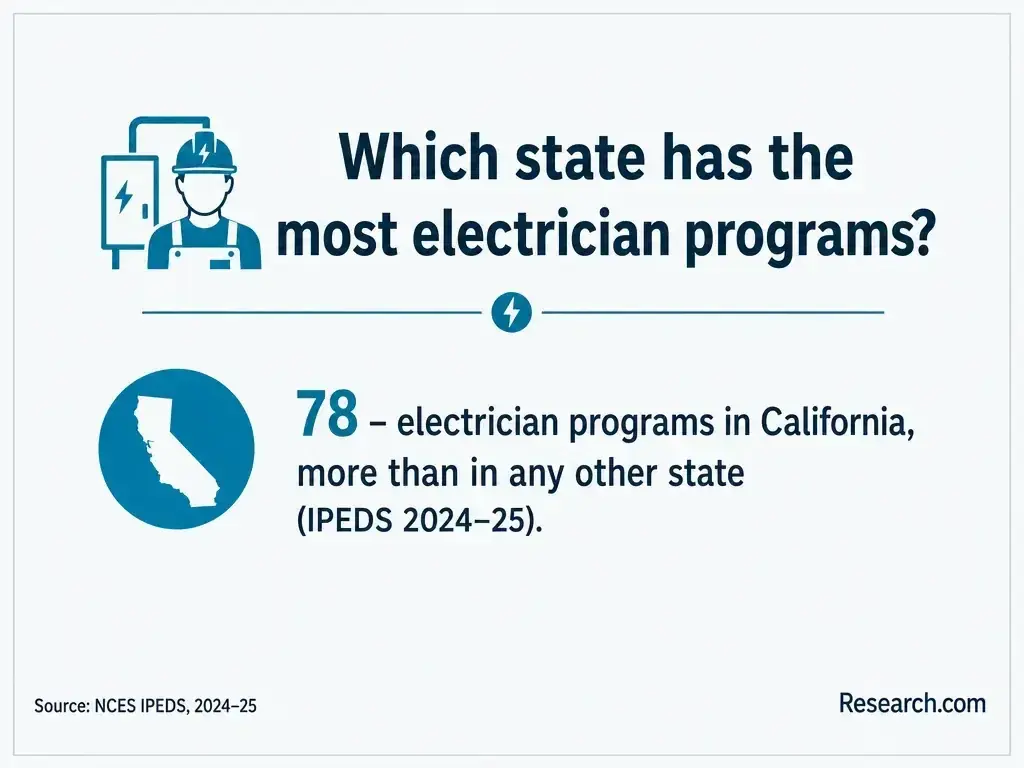
West Virginia regulates electrician licensing through the West Virginia State Fire Marshal. The license category and applicable experience and examination rules depend on the work and level of responsibility; completing a school certificate does not itself grant permission to work independently. Before enrolling, ask the Fire Marshal which requirements apply to your intended role and what documentation of supervised experience you will need (West Virginia State Fire Marshal).
Keep the distinctions clear: institutional accreditation evaluates a school, state authorization concerns its permission to operate, apprenticeship registration concerns a work-based training program, an optional industry credential documents particular skills, and an occupational license governs regulated work. One does not replace another. If you expect to work outside West Virginia, verify that jurisdiction's rules separately rather than assuming your training or license transfers.
Start with your goal: entry-level hiring, entry into an apprenticeship, or progress toward a West Virginia license. Then compare the training you can complete and afford - not just the ranking position. A low-cost introductory course may fit someone who has an employer ready to supervise them; a paid apprenticeship may fit someone seeking wages and structured work experience from the start.
Use these questions when contacting Blue Ridge Community and Technical College, James Rumsey Technical Institute, or an apprenticeship sponsor. Written answers make similarly named programs easier to compare:
- What credential will I receive, and what are the exact classroom, lab, and supervised-work requirements?
- What is the full current cost, including tools and travel, after any aid or wages?
- Which employers or sponsors recognize the training, and is any apprenticeship credit confirmed in writing?
- What evidence supports claims about completion, job placement, or West Virginia license eligibility?
Be wary of a promise that a short certificate alone makes you licensed, or of an online course with no clear practical component. For a return-on-investment comparison, account for debt, aid, completion probability, lost earnings, likely pay progression, and how long you expect to work in the trade. Searches for most profitable bachelor degrees address a different investment decision; they should not be used as a substitute for electrician-specific costs and outcomes.
An introductory program can support applications for supervised helper or apprentice roles. With documented experience and any applicable examination and licensing steps, a worker may progress toward more independent electrical work, then pursue supervisory, specialized installation, maintenance, or business responsibilities (West Virginia State Fire Marshal; U.S. Bureau of Labor Statistics). Progression depends on actual experience and regulatory eligibility, not simply time since graduation.
Choose training that matches the first job you want and allows room to build skills. Someone focused on industrial troubleshooting should ask about motors, controls, and relevant equipment; someone aiming for construction should prioritize installation practice and access to a supervising contractor. Comparisons with dual degree programs usa will not resolve that trade-specific choice.
The U.S. Bureau of Labor Statistics projects 9.2% growth in electrician employment nationally from 2025 to 2035. That points to demand for the occupation overall, but it is not a Martinsburg vacancy forecast and does not guarantee work after training. Local opportunities also depend on construction schedules, maintenance hiring, and an applicant's ability to travel to worksites.
Use the national projection as context, then test local demand before committing money: ask apprenticeship sponsors and employers when they expect to recruit, which skills they seek, and whether openings offer the supervision needed for your next step. This matters more to a first-time trainee than a national growth figure alone.
Most Affordable Electrical Technician Schools & Training in Martinsburg for 2027
Education is a significant investment, so Research.com evaluates programs against others in the same occupation and location rather than against unrelated schools nationwide. Only programs reporting completions to the Integrated Postsecondary Education Data System (IPEDS) are eligible. That makes the ranking useful for comparing listed programs, but it does not capture every apprenticeship, employer-sponsored course, or training provider.
The most affordable ranking scores tuition, cost of attendance, median student debt, and federal loan default rates. Indicator weights use an entropy-based method, which gives more weight to measures that vary more across eligible programs. Accreditation and other quality measures are not part of the affordability score; a low-cost rank is not a finding that a program meets West Virginia licensing requirements. Research.com also produces separate best-program rankings that consider outcomes, earnings, costs, accreditation or industry recognition, and student support.
To check the quality and credibility of its rankings, the Research.com team draws on the following data sources. Some cover other trades and are not evidence of electrician-specific approval:
- IPEDS database - program completions and institutional reporting.
- National Center for Education Statistics - federal education data and definitions.
- College Scorecard database - available cost, debt, and student-outcome data.
- Peterson's database - supplemental institutional information.
- Commission on Accreditation of Allied Health Education Programs (CAAHEP) - occupation-specific recognition checks where relevant to other trades.
- Accrediting Bureau of Health Education Schools (ABHES) - accreditation checks where relevant to other trades.
- Commission on Dental Accreditation (CODA) - programmatic accreditation checks where relevant to other trades.
- Dental Assisting National Board (DANB) - credential information where relevant to other trades.
- National Center for Construction Education and Research (NCCER) - construction-training recognition and credential information.
- Apprenticeship.gov Partner Finder - registered-apprenticeship sponsor information.
Use the ranking to narrow your cost comparison, then confirm each program's current price, practical training, and licensing relevance directly with its provider. More detail about Research.com's approach is available on its methodology page.
# 2 position
James Rumsey Technical Institute - Electrician.
certificate or diploma
Frequently asked questions about electrician programs in Martinsburg
What is the cheapest route into electrical work?
A paid apprenticeship may reduce the need to stop earning while training, but compare its entry requirements and any tool or travel costs with a school program. There is no universally cheapest route without current quotes and your expected wages.
Does a Martinsburg electrician certificate make me licensed?
No. Confirm the applicable experience, examination, and application requirements with the West Virginia State Fire Marshal before relying on a program's licensing claim.
Can I become an electrician through online classes alone?
Online coursework can teach theory, but electrical installation and troubleshooting require supervised practical experience. Ask where a program delivers and assesses those skills.
Should I choose trade school or an apprenticeship?
Choose a school program if you need foundational skills before applying for work and its total cost is manageable. Consider a registered apprenticeship if you can obtain a place and want paid, structured work experience alongside instruction.
Will prior electrical training shorten an apprenticeship?
Possibly, but only if the receiving sponsor recognizes it. Ask about advanced standing and obtain the decision in writing before paying for training.
- U.S. Bureau of Labor Statistics - Electricians
Used to verify salary, employment outlook, and typical education requirements.
https://www.bls.gov/ooh/construction-and-extraction/electricians.htm - Apprenticeship.gov - Partner Finder
Used to verify programmatic accreditation or industry recognition of programs.
https://www.apprenticeship.gov/partner-finder - O*NET OnLine - Electricians
Used to verify common responsibilities, skills, work settings, and education expectations.
https://www.onetonline.org/link/summary/47-2111.00 - Blue Ridge Community and Technical College - official website
Official school website (programs, tuition, admissions).
https://www.blueridgectc.edu/ - James Rumsey Technical Institute - official website
Official school website (programs, tuition, admissions).
https://www.jamesrumsey.com/