# 1 position


Audited and Verified:
Our Editorial and Data Verification Process
Research.com uses government datasets, official education statistics and primary institutional information to support its career and degree guides. Our review process checks factual accuracy, occupational definitions, source dates and the requirements associated with the credentials discussed.
How This Article Was Fact-Checked
Our editorial team verifies salary estimates, employment projections, education requirements and program information against original data providers and official organizations. Salary figures are checked against the relevant occupational definitions and reporting periods. Information about licensure, accreditation and required in-person training is reviewed separately.
Fact-checked and verified on:

Co-Founder and Chief Data Scientist

Reviewed by Karolina Broda
Fact-Checker and Data Verification
The cheapest electrician program is not necessarily the cheapest route to becoming job-ready: tools, travel, unpaid training time, and access to an apprenticeship can change the calculation. The U.S. Bureau of Labor Statistics projects electrician employment to grow 9.2% nationally from 2025 to 2035. For prospective students and career changers, this guide compares Harrisburg-area training pathways, costs, credentials, and work requirements. It accompanies the Most Affordable Electrician Trade Schools in Harrisburg for 2027 ranking, created by the Research.com team of data scientists to help students make informed choices about programs worth considering.
An electrician trade-school program typically teaches electrical theory, circuits, blueprint reading, code use, testing, and safe installation in a classroom and lab. It can prepare a beginner to seek an electrical helper position or apprenticeship, but a short program is not equivalent to years of supervised fieldwork. Around Harrisburg, compare a school-based option with a registered apprenticeship before deciding whether paying upfront will improve your access to the work you want.
These pathways differ most in when you begin earning and how you obtain practical experience. Ask each provider for its current schedule and written description of lab and worksite hours.
| Pathway | Typical credential or outcome | Best fit and principal trade-off |
| Certificate or diploma program | School credential; possible entry-level skills | Fits someone who needs structured preparation before applying to employers; verify whether it includes substantial lab work and an apprenticeship connection. |
| Associate-degree electrical program | Academic associate degree, where offered | Fits someone seeking broader technical study; generally takes longer and costs more than a short certificate. |
| Registered apprenticeship | Paid, supervised training and a completion credential | Fits someone ready to work while learning; admission and placement depend on sponsor openings. |
| Direct employer entry | Wages and employer-provided training; credential varies | Fits someone who can secure a helper job; confirm whether experience and instruction are documented toward advancement. |
Harrisburg Area Community College is one local institution to ask about currently available electrical training, its exact credential, and connections to employers or apprenticeships. Do not assume a listed course sequence includes a paid placement unless the provider confirms it.
Electrical training can lead to work with construction contractors, building-maintenance teams, industrial facilities, and contractors serving commercial buildings. The distinction matters in the Harrisburg area: a trainee seeking construction installation needs substantial jobsite experience, while someone targeting facility maintenance should look for troubleshooting, motors, and control-system practice. An employer may still require supervised experience after school, even for an applicant who has completed extensive labs (U.S. Bureau of Labor Statistics, Occupational Outlook Handbook).
Ask programs where recent trainees obtained paid electrical work, not merely whether they offer career services. If worksites extend beyond the city, factor the commute, vehicle access, and varying municipal work requirements into the value of a placement.
The U.S. Bureau of Labor Statistics reports a $63,190 national median annual wage for electricians in May 2025. That figure covers employed electricians at different experience levels and should not be used as an expected first-year wage for a Harrisburg trainee. Local apprentice wages, work hours, overtime, and benefits depend on the employer or sponsor.
For a meaningful local comparison, request the current wage progression from apprenticeship sponsors and compare it with the latest Harrisburg-area electrician wage estimates published by the Bureau of Labor Statistics or Pennsylvania's labor-market agency. A paid route can offset training costs even when its starting wage is below the occupation-wide median.
A school certificate may take months, while an associate-degree program usually requires a longer course of study. Neither duration tells you how much supervised work is still needed. Registered electrician apprenticeships commonly extend over several years because they combine related instruction with extensive on-the-job training; the exact hours and progression rules depend on the registered sponsor (U.S. Department of Labor, Apprenticeship.gov).
Before enrolling, ask for the program's total clock or credit hours, electrical lab hours, attendance schedule, and any documented worksite hours. Then ask an apprenticeship sponsor whether the coursework qualifies for advanced standing. Credit is sponsor-specific: finishing a school program does not automatically shorten an apprenticeship.
Online instruction can be useful for electrical theory, calculations, and reading plans. It cannot replace supervised practice making connections, using test instruments, applying lockout procedures, and identifying hazards on actual equipment. A hybrid program makes sense only if its in-person labs are accessible from Harrisburg and its schedule fits around work; compare travel time as well as online tuition.
A top online school for trade skills can be a starting point for finding coursework, but its online label does not verify electrician job readiness. Ask where practical assessments occur, who supervises them, and whether an apprenticeship sponsor recognizes the training.
Likewise, online universities with open admission should not be confused with electrical apprenticeships: a sponsor may have separate entry standards and a selection process for available work positions.
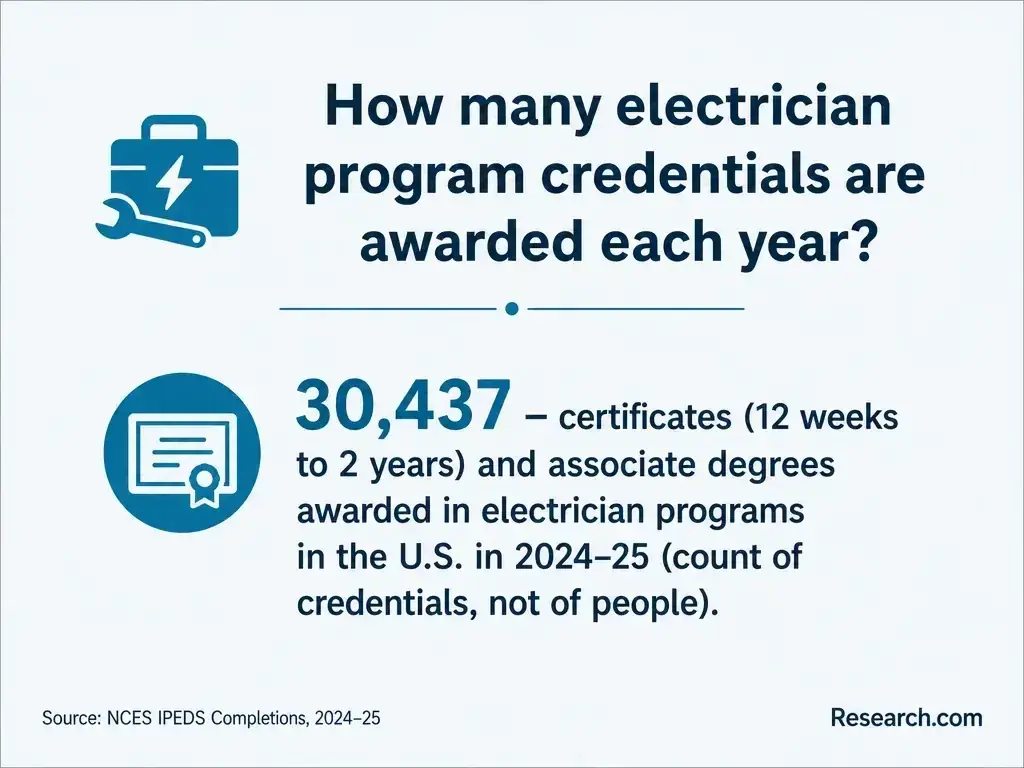
There is no single defensible Harrisburg-area average price for every electrician training route: a school program charges tuition and fees, whereas a paid apprenticeship has a different cost and wage structure. Request an itemized, current quote rather than treating a ranking position or advertised tuition as the amount needed to become job-ready.
For a school option, include mandatory fees, books, tools, safety gear, consumable materials, travel to labs or worksites, and earnings forgone during class. For an apprenticeship, ask who pays for related instruction, tools, and transportation, then account for wages earned during training. Federal aid eligibility depends on the institution and program, not simply on whether instruction is called a trade program (Federal Student Aid, U.S. Department of Education).
To assess return on investment, compare each route over the same time horizon: likely completion, aid, debt, time until paid work, expected earnings progression, and the cost of delaying employment. The lowest tuition is not necessarily the least costly route if it leaves you without a practical-training opportunity.
The credential depends on the route. A school may award a certificate, diploma, or - in a qualifying academic program - an associate degree. A registered apprenticeship documents completion of a structured work-and-instruction program. An industry certificate may demonstrate particular skills, but none of these is automatically a municipal license or authorization to work without supervision (U.S. Department of Labor, Apprenticeship.gov; Pennsylvania Department of Labor & Industry).
Ask what appears on the final credential and whether local employers or apprenticeship sponsors accept it for hiring or advanced standing. An accelerated bachelor degree online is a different educational route; it does not substitute for supervised electrical experience.
School and apprenticeship entry requirements are not interchangeable. A school may ask for a high school diploma or equivalent, an application, and evidence of readiness for technical math. An apprenticeship sponsor may also assess applicants and require eligibility to work, reliable travel to jobsites, and the ability to perform the role safely. Confirm the current criteria directly with each provider; meeting minimum requirements does not guarantee an apprenticeship opening.
Before paying an enrollment deposit, ask whether you can enter with your existing math background, whether safety equipment is required on day one, and whether any prior coursework or electrical experience can be reviewed for credit. Those answers affect both cost and time to paid work.
Useful electrician training connects calculations to physical work: reading a wiring diagram, selecting materials, installing circuits, testing a fault, and explaining the safety decision behind each step. Look for hands-on practice with tools, meters, panels, and troubleshooting - not just recorded demonstrations. Electrical code instruction should teach students to locate and apply the code relevant to their work, rather than memorize rules without context (U.S. Bureau of Labor Statistics, Occupational Outlook Handbook).
For someone aiming at maintenance, ask specifically about motors and controls; for construction installation, ask about conduit, branch circuits, and jobsite procedures. Similar-sounding certificates may devote very different amounts of time to these skills.
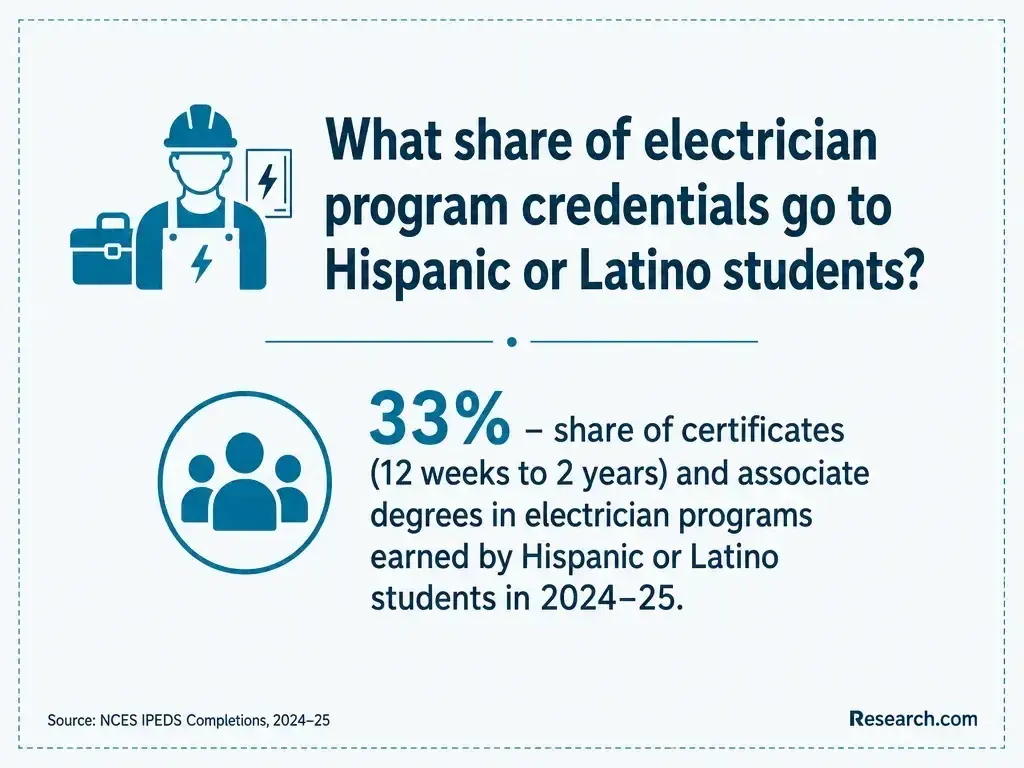
Pennsylvania does not issue one general statewide electrician license covering all electrical work. Local jurisdictions can set contractor licensing, registration, permit, and inspection requirements, so the rules for working independently may differ across the Harrisburg area (Pennsylvania Department of Labor & Industry; applicable municipal code offices). A school certificate, apprenticeship completion, institutional accreditation, and a local contractor authorization serve different purposes; none should be assumed to replace another.
If your goal is to run an electrical contracting business, contact the code office where you intend to take jobs before choosing training. Ask what experience, examinations, business documentation, and permits apply. If your immediate goal is a supervised trainee job, ask the prospective employer what you may perform under its supervision and what credentials it expects.
The best-value choice is the one that gets you from your present skill level to paid, competent electrical work at a manageable total cost. Use the affordability ranking to narrow school options, then compare them with registered apprenticeships and employer training. Verify current details with the provider rather than relying on a ranking alone.
These questions expose the most consequential differences before you enroll:
Check institutional accreditation and school authorization separately from employer recognition, apprenticeship registration, and municipal rules. A common mistake is treating one of those checks as proof of all the others. General comparisons of bachelor's degrees with highest earning potential also cannot establish the value of an electrician program; use the costs, completion prospects, and wages of the electrical routes you can actually enter.
A realistic progression is helper or apprentice work, increasing responsibility through supervised experience, and later specialization or leadership. Construction installation, building maintenance, industrial troubleshooting, and supervisory work draw on overlapping electrical skills but may call for different equipment experience. Independent contracting introduces local authorization and business responsibilities beyond technical training.
Ask employers how they advance trainees and which additional credentials they value; distinguish optional specializations from requirements for a particular job or municipality. Lists of short doctoral programs do not answer those questions or shorten the electrical work experience an employer expects.
The U.S. Bureau of Labor Statistics projects 9.2% growth in electrician employment nationally from 2025 to 2035. That supports considering the trade, but it is not a Harrisburg hiring forecast or a guarantee of an apprenticeship place. Local opportunity depends on contractors' workloads, maintenance hiring, and whether sponsors have openings when you apply.
Use the national projection as context, then check current postings and speak with Harrisburg-area sponsors about selection dates and jobsite locations. A candidate able to travel to multiple worksites may have more options, but should include that travel in the cost of training and employment.
Investing in electrician training is an important decision, especially when a low advertised tuition may not reflect the full cost of reaching employment. Research.com compares programs with other programs in the same occupation and location; only programs reporting completions to the Integrated Postsecondary Education Data System (IPEDS) are eligible for this ranking. The team uses multiple datasets to check cost and debt measures rather than treating one advertised price as definitive.
The most affordable ranking scores tuition, cost of attendance, median student debt, and federal loan default rate. Weights are assigned using an entropy-based method, which gives more weight to measures that vary more across eligible programs. Accreditation, student support, and other quality indicators are not part of this affordability score. That differs from Research.com's best-program rankings, which also evaluate outcomes, earnings, and quality. Readers should therefore use the affordability ranking to identify programs for closer investigation, not as proof that a program provides the practical experience they need.
The ranking draws on the following sources. Some cover education broadly or other occupations and should not be mistaken for electrical-program approval; apprenticeship options also may not appear in college-oriented datasets.
See Research.com's ranking methodology for more detail. Because IPEDS does not cover every union, employer, or apprenticeship provider, compare the ranked choices with paid-training routes before committing money.
# 1 position
# 2 position
A paid apprenticeship or employer-trained helper position may reduce upfront costs, but compare wages, required purchases, admission prospects, and the quality of supervised instruction with a school program.
No. Pennsylvania has no general statewide electrician license, and local rules for independent or contracting work can vary. Check the municipality where you plan to work.
Online coursework can cover theory, but competent electrical work requires in-person practice and supervised job experience. Ask any online provider where those components occur.
An apprentice or helper can earn wages while training if hired. A school-only student should ask whether a paid placement is included and when it typically begins; completion alone does not ensure a job.
Not necessarily. Compare total expenses, time out of work, hands-on hours, completion prospects, and access to paid experience. An inexpensive credential has limited value if it does not move you toward the electrical role you want.