# 1 position


Audited and Verified:
Our Editorial and Data Verification Process
Research.com uses government datasets, official education statistics and primary institutional information to support its career and degree guides. Our review process checks factual accuracy, occupational definitions, source dates and the requirements associated with the credentials discussed.
How This Article Was Fact-Checked
Our editorial team verifies salary estimates, employment projections, education requirements and program information against original data providers and official organizations. Salary figures are checked against the relevant occupational definitions and reporting periods. Information about licensure, accreditation and required in-person training is reviewed separately.
Fact-checked and verified on:

Co-Founder and Chief Data Scientist

Reviewed by Karolina Broda
Fact-Checker and Data Verification
Choosing affordable electrician training in Malvern means looking beyond tuition: the cheapest classroom program may not provide the supervised experience needed for the work you want. The U.S. Bureau of Labor Statistics projects 9.2% growth in electrician employment nationally from 2025 to 2035, making the training decision timely. This guide accompanies the Most Affordable Electrician Trade Schools in Malvern for 2027 ranking, created by the Research.com team of data scientists to help students identify programs worth considering. You'll learn how to compare costs, apprenticeships, credentials, and Arkansas requirements before enrolling.
Expect electrical theory paired with practical work: reading plans, measuring and installing circuits, selecting materials, testing systems, and applying safety procedures. A useful program should make clear which tasks students perform in a lab and which supervised jobsite experience they must obtain elsewhere. The U.S. Bureau of Labor Statistics describes apprenticeship as the typical route into electrician work; classroom training alone is not equivalent to completing one.
The pathways below lead to different credentials and different amounts of work experience. Compare them against your intended first job, not just the name of the course.
| Pathway | What you typically receive | Best fit and key limitation |
| Trade-school or college certificate or diploma | School credential and classroom or lab instruction | Fits someone building fundamentals before seeking work; confirm whether a sponsor credits the instruction toward an apprenticeship. |
| Registered apprenticeship | Paid supervised work, related instruction, and an apprenticeship completion credential | Fits someone ready to learn on a jobsite; openings and entry requirements depend on the sponsor. |
| Employer-sponsored entry training | Training determined by the employer | Can reduce upfront school cost; confirm whether the work and instruction count toward the intended Arkansas pathway. |
| Associate degree in electrical technology | Academic degree with technical coursework | May suit broader technical goals; the degree does not replace required occupational experience or licensing steps. |
In Malvern, ask Arkansas State University Three Rivers which electrical credentials, if any, are currently offered and whether its instruction connects to an apprenticeship. Do not assume that two similarly named credentials include the same lab hours or lead to the same jobsite opportunities.
Possible workplaces include residential and commercial electrical contractors, industrial facilities, maintenance departments, and construction sites. The work may involve installation, troubleshooting, or maintaining equipment; the U.S. Bureau of Labor Statistics notes that electricians work both indoors and outdoors and may travel between jobsites. A Malvern student should ask where a provider places trainees, since reaching a sponsor or jobsite outside town can change the real cost of training.
A school credential may help someone compete for an entry-level opening, but it does not establish that they can work independently. If your goal is a particular type of contractor or industrial workplace, ask whether the program's labs and employer relationships cover that setting.
A reliable Malvern-specific electrician median is not available here. For perspective, the U.S. Bureau of Labor Statistics reports a $63,190 national median annual wage for electricians in May 2025. That figure includes experienced workers across the United States; it is not an expected wage for a newly trained worker in Malvern.
Compare actual local apprentice or entry-level offers when estimating whether training will pay off. Check the hourly rate, expected hours, benefits, travel to jobsites, and how pay progresses with experience. A paid apprenticeship can improve the calculation even if its initial wage is lower than an experienced electrician's wage.
A school certificate may be much shorter than the full route to independent electrical work. The U.S. Bureau of Labor Statistics describes electrician apprenticeships as typically lasting four or five years and combining technical instruction with paid on-the-job training. A shorter course can be a starting point, not proof that its graduate has completed that experience.
Ask providers for the program's actual calendar length, classroom hours, lab hours, and schedule. Then ask an apprenticeship sponsor whether any coursework earns credit or advanced standing; do not assume it will shorten the apprenticeship. Full-time classes may get you through school sooner, while part-time study can preserve earnings needed to cover transportation and tools.
Online instruction can cover concepts such as electrical theory, calculations, and plan reading. It cannot, by itself, demonstrate safe installation, testing, troubleshooting, or supervised performance on a jobsite. A hybrid option makes sense only when its in-person labs and work-based training are accessible from Malvern and accepted by the relevant sponsor or regulator.
This comparison focuses on what each format lets you practice, not merely where you watch lessons. Verify the required in-person portion before paying for a remote course.
| Format | Potential advantage | What to verify |
| On-campus | Regular access to tools, equipment, and instructor-supervised labs | Lab time, equipment availability, and commute |
| Hybrid | Remote theory with scheduled practical sessions | Lab location, attendance requirements, and jobsite arrangements |
| Online-only coursework | Flexible study of theory | How practical competencies and required supervised experience will be obtained separately |
Some online certification programs that pay well suit occupations with different practical requirements. For electrician work, judge an online course by its connection to hands-on training, not by the convenience of its delivery.
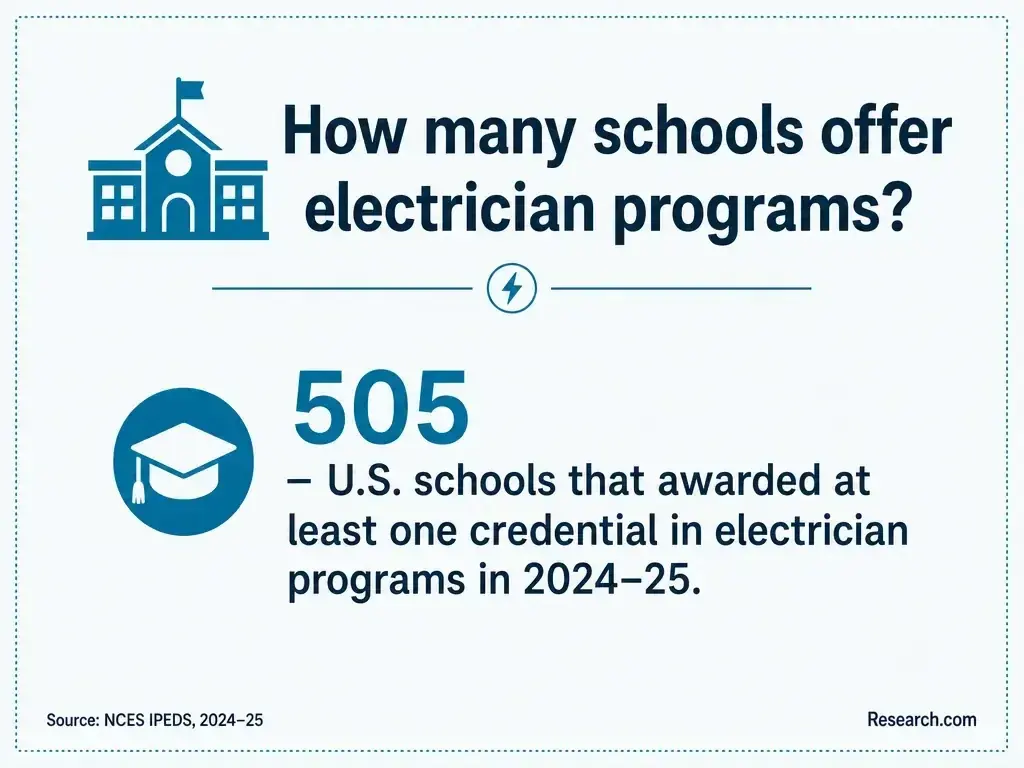
There is no defensible single average for Malvern electrician training across school programs, apprenticeships, and employer-sponsored routes. These options charge and pay students differently, and a tuition figure alone would conceal important costs. Request a current, itemized quote for the exact program and attendance status you are considering.
To compare offers on the same basis, total the costs needed to reach your intended first job and then account for available offsets:
Federal student aid depends on the student, institution, and eligible program, according to Federal Student Aid; do not assume every short course or apprenticeship qualifies. Comparing unrelated credentials such as a cheapest online phd will not reveal the least expensive route into electrical work. The useful comparison is total cost through employable experience, alongside expected earnings during training.
It depends on the pathway. A school may award a certificate, diploma, or associate degree; a registered apprenticeship awards its own completion credential after its requirements are met. An employer's internal training record may be useful for hiring without being the same as either credential. Ask for the exact credential name before enrolling.
Keep four distinctions clear: institutional accreditation concerns the school; state authorization concerns permission to operate; apprenticeship registration concerns the work-based training program; and occupational licensure concerns legal authority to perform regulated work. Industry curriculum recognition or an optional certification is another separate matter. None automatically substitutes for the Arkansas experience, examination, or licensing requirements that apply to your goal.
Requirements vary by provider and pathway. A school may ask for prior education records and placement information; an apprenticeship sponsor may assess applicants' math preparation, ability to meet jobsite requirements, and readiness for supervised work. Ask about age, work authorization, transportation, and any employer screening before spending money on an application. The sponsor or school, not a general program description, can confirm its current rules.
Application convenience is not a substitute for occupational fit. Even if you are comparing accredited online colleges with no-fee applications, an electrician pathway still needs an achievable plan for practical training. Ask whether admission includes access to an apprenticeship or merely eligibility to apply for one later.
Relevant instruction includes electrical safety, circuit fundamentals, calculations, wiring methods, blueprint reading, code use, and testing. Practical sessions should require students to handle materials and instruments, diagnose faults, and explain safe decisions - not only identify components in a video. The U.S. Bureau of Labor Statistics identifies technical knowledge, troubleshooting, and physical dexterity as important to electrician work.
Match the training environment to your intended work. Someone aiming for industrial maintenance should ask about motors, controls, and troubleshooting equipment; someone aiming for building installation should ask about construction drawings and wiring practice. Request the lab syllabus and ask how instructors assess hands-on competence.
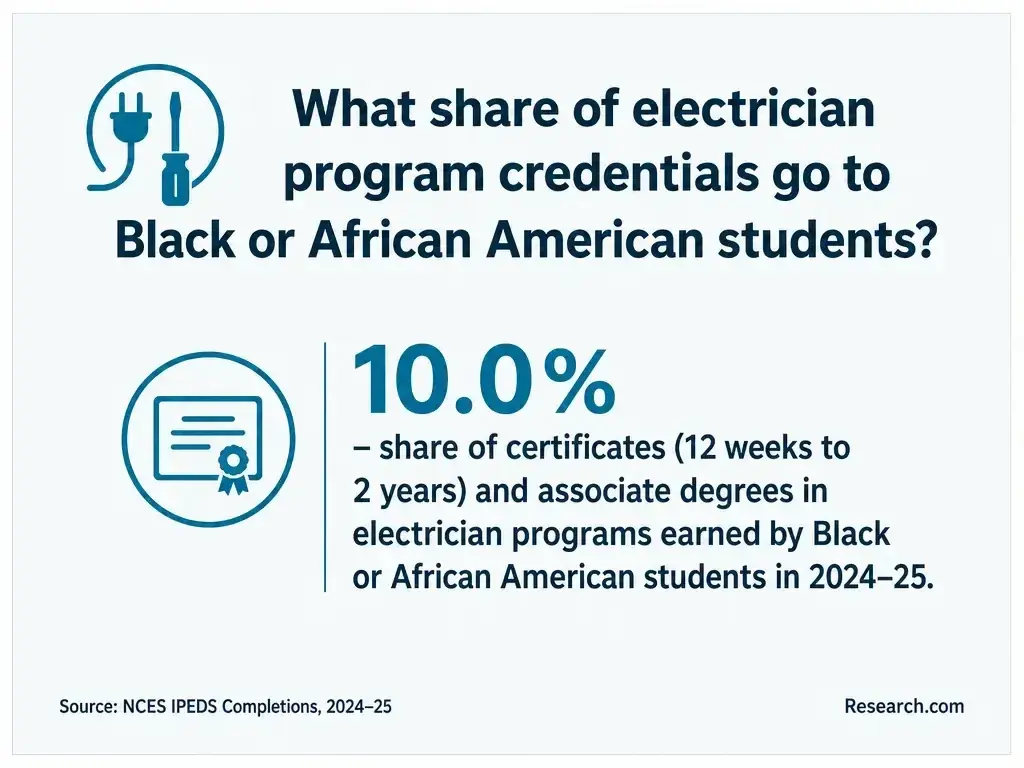
Arkansas regulates electrical work through its Board of Electrical Examiners within the Arkansas Department of Labor and Licensing. The appropriate registration or license depends on the work and the worker's stage of training. Before enrolling, ask the board which apprentice, journeyman, or other requirements apply to your intended role, including supervised experience and any examination. A school's certificate alone should not be treated as permission to work independently.
If a provider says its course is "license-ready," ask it to identify the Arkansas requirement the course satisfies and what remains afterward. Verify that explanation with the board, particularly if the provider is outside Arkansas or delivers coursework online. An optional industry certificate may document skills, but it is not a replacement for a required state credential.
Start with the job you want, then work backward from the experience and credential it requires. An affordable school program can be worthwhile if it provides substantial practice and a workable route to supervised employment. A paid apprenticeship may be the better investment if you can enter one directly; a short classroom course is a weaker choice if its practical training or next step is unclear.
Use these questions when speaking with a provider and an apprenticeship sponsor. They expose gaps a ranking or advertised tuition cannot show:
Do not choose solely by price, accreditation, or a promised salary. To assess return on investment, consider the chance of completing the pathway, debt, earnings while training, earnings before and after training, the time required to advance, and the value of future income over time.
An entry route may lead to supervised installation or maintenance work, followed by broader responsibilities as experience and any required Arkansas credentials are earned. Later options can include troubleshooting, industrial electrical work, crew leadership, or contracting, subject to the requirements of the particular role. A certificate may support the first step; advancement generally depends on demonstrated jobsite skill as well as any applicable license.
If you are comparing trade jobs that pay well, consider the work environment and time to qualify alongside eventual pay. For electrician training, ask whether the program prepares you for the local employers and apprenticeships you can realistically reach, rather than assuming every electrical specialty has the same entry route.
The U.S. Bureau of Labor Statistics projects 9.2% national employment growth for electricians from 2025 to 2035. That is a national occupation projection, not a forecast of openings in Malvern or a guarantee of placement. Use it as a reason to investigate the trade, then test local demand through current sponsor recruitment and employer openings.
Ask where apprentices actually work and whether travel beyond Malvern is expected. A program with credible connections to accessible jobsites may be more useful than a cheaper course that leaves you to find all supervised experience yourself.
Investing in education is a consequential decision. Research.com created its affordability ranking to help readers compare electrician programs with other programs in the same occupation and location, rather than with unrelated schools. The team evaluates the quality and consistency of reported data, but the ranking covers only programs with completions reported to IPEDS. An apprenticeship or employer training program can be a strong option even if it does not appear.
The most affordable ranking scores tuition, cost of attendance, median student debt, and federal loan default rate. It distributes weights using an entropy-based method, which gives more weight to measures that differ more across included programs. Accreditation and other quality indicators are not part of this affordability score. Research.com's separate best-program rankings also consider student outcomes, earnings, support, accreditation, and occupation-relevant recognition; those broader measures should not be mistaken for the affordability formula.
The team draws on the following sources to check education, cost, outcome, and occupation-related information. Some sources cover other trades and may not supply an electrician-specific measure for every ranked program:
Use the ranking to narrow your search, then confirm current prices, hands-on instruction, apprenticeship connections, and Arkansas eligibility directly with each provider. More detail on the ranking process is available in Research.com's methodology.
# 1 position
# 2 position
Not necessarily. A registered apprenticeship or qualifying employer-supported pathway may provide classroom and supervised jobsite training. Confirm the applicable route with the Arkansas Board of Electrical Examiners and the apprenticeship sponsor.
Online study can teach theory, but it does not replace hands-on practice or supervised work. Ask how you will complete those components before enrolling.
No. A school credential and an Arkansas occupational license are different. Check the board's requirements for the role you intend to pursue.
It can reduce upfront costs and provide wages during training, but compare tools, travel, related instruction, entry requirements, and time to completion before deciding.
Request the full fee and equipment list, supervised lab hours, exact credential, and written details of any apprenticeship connection. A low tuition price does not establish a low cost to become job-ready.