# 1 position
Ocean County Vocational-Technical School - Electrician.
certificate or diploma

Audited and Verified:
Our Editorial and Data Verification Process
Research.com uses government datasets, official education statistics and primary institutional information to support its career and degree guides. Our review process checks factual accuracy, occupational definitions, source dates and the requirements associated with the credentials discussed.
How This Article Was Fact-Checked
Our editorial team verifies salary estimates, employment projections, education requirements and program information against original data providers and official organizations. Salary figures are checked against the relevant occupational definitions and reporting periods. Information about licensure, accreditation and required in-person training is reviewed separately.
Fact-checked and verified on:

Co-Founder and Chief Data Scientist

Reviewed by Karolina Broda
Fact-Checker and Data Verification
Choosing electrician training in Toms River means looking beyond a school's name: you need hands-on practice, a workable route into supervised employment, and a plan for New Jersey's licensing rules. The U.S. Bureau of Labor Statistics projects 9.2% growth in electrician employment nationally from 2025 to 2035. For the Best Electrician Trade Schools in Toms River for 2027 ranking, the Research.com team of data scientists evaluates programs to help students make an informed choice. This guide explains the pathways, costs, credentials, and career steps behind that choice.
Expect instruction in electrical theory and code alongside physical practice: identifying components, using meters, installing wiring and raceways, and working safely around energized systems. The decisive question is how much of that practice you perform yourself, under supervision, rather than merely watch. Ask for the current schedule of shop hours and whether employers help students find supervised work.
These routes serve different goals. The table separates the credential received from the experience still needed to progress in the trade.
| Pathway | What it provides | Best fit and main limitation |
| Vocational certificate or diploma | Structured classes and, where offered, shop practice | Useful preparation before applying for helper or apprentice jobs; completion alone does not confer a contractor license. |
| Associate degree with electrical coursework | Technical instruction plus broader coursework | Fits students who value the additional credential; confirm that its practical training and cost serve an electrician-entry goal. |
| Registered apprenticeship | Paid supervised work paired with related instruction | Fits students ready to earn while training; entry may depend on sponsor openings and selection requirements. |
| Employer-sponsored entry | Paid helper work and employer-directed training | May reduce upfront school costs; ask whether instruction and experience are documented for future progression. |
A search for the best 6 month associate degree should not set your electrician-training timeline. Compare the actual electrical coursework, in-person practice, and next step into supervised employment, regardless of how quickly a credential is advertised.
Potential workplaces include electrical contractors serving Ocean County homes and businesses, construction sites, facilities-maintenance departments, and employers maintaining building systems. Work may require travel to changing job sites rather than a fixed shift at a school or shop. The U.S. Bureau of Labor Statistics identifies electrical contractors and self-employed workers among electrician employment settings.
For a first job, distinguish an electrical helper opening from an apprenticeship: both may involve supervised tasks, but only a properly structured apprenticeship provides its specified combination of work experience and related instruction. Ask a prospective employer who supervises you, what work you may perform, and how your hours will be recorded for New Jersey requirements.
The U.S. Bureau of Labor Statistics reports a $63,190 national median annual wage for electricians in May 2025. It describes workers across experience levels and locations - not what a newly trained helper in Toms River should expect. Local offers can differ with experience, employer, union agreement, specialization, overtime, and travel.
When judging an offer or training investment, compare the pay you could earn during training as well as afterward. Request actual apprentice or helper wage schedules from prospective sponsors and employers; do not use the national occupational median as a projected first-year salary. A credible return-on-investment comparison also accounts for aid, debt, completion likelihood, lost earnings during school, and how long you expect to work after training.
School programs can range from short introductory training to longer certificates or associate degrees; the provider's published calendar, clock hours, and lab hours determine the actual commitment. A registered electrician apprenticeship typically takes several years because it includes substantial supervised employment as well as classroom instruction, according to the U.S. Department of Labor. Finishing school sooner does not eliminate the work-experience steps that may matter later.
Before enrolling, request the program's total contact hours, shop hours, attendance rules, and schedule for arranging work-based training. If you are comparing the easiest associates degree options, treat ease or speed as secondary: electrical competence depends on demonstrated safe practice, not just time to graduation.
Online instruction can cover theory, calculations, and some code study. It cannot replace supervised practice with tools, wiring methods, test instruments, and job-site safety. A hybrid format may save trips for classroom lessons while retaining scheduled shop sessions; confirm where and when those sessions occur before paying a deposit.
The format comparison below focuses on the requirement most likely to change your choice: access to practical work.
| Format | What may work remotely | Practical-training check |
| On-campus | Some readings and assignments | Inspect the shop, equipment access, and hours of individual practice. |
| Hybrid | Theory and some code coursework | Confirm required in-person dates, location, and missed-session policies. |
| Fully online coursework | Academic preparation | Do not assume it supplies hands-on experience or meets New Jersey occupational requirements. |
A listing for the most popular online school for trade skills can help you discover coursework, but popularity does not establish shop access, apprenticeship placement, or licensing eligibility. Ask the provider to identify the in-person training and supervised-work arrangements in writing.
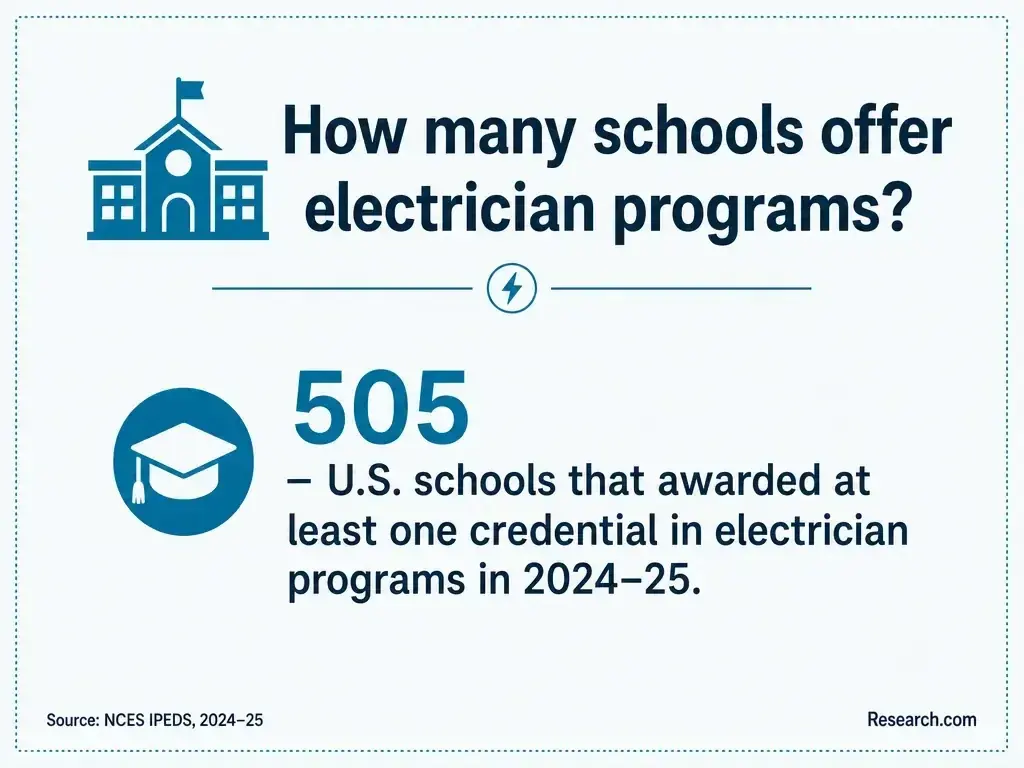
There is no reliable single Toms River average that captures vocational programs, associate degrees, and paid apprenticeships on the same basis. Published tuition alone also misses the cost of becoming job-ready. Get an itemized estimate for the specific program and start date, then compare it with the cost and wages of an apprenticeship or employer-sponsored route.
For a useful side-by-side budget, ask each provider which of these items are included and which you must pay separately:
Federal aid depends on the institution and program meeting U.S. Department of Education eligibility rules; do not assume every short course qualifies. For New Jersey workforce assistance, ask a local workforce representative whether the particular training is eligible before enrolling. Compare your net cost, not a school's advertised sticker price.
The award depends on the route: a school may issue a certificate or diploma, an eligible associate program awards an associate degree, and a registered apprenticeship leads to its apprenticeship completion credential. An NCCER credential, if specifically offered and earned, is an industry credential - not a New Jersey occupational license. Verify the exact award and issuing organization with the provider.
Credential, accreditation, and permission to work are separate questions. Institutional accreditation concerns the school; state authorization concerns its permission to operate; apprenticeship registration concerns a training program; and New Jersey's electrical board governs relevant occupational registration and contractor licensing. None automatically substitutes for the others. Unrelated searches such as doctorate no dissertation do not help establish electrician eligibility: use the electrical board's current requirements and the provider's written program details.
Requirements vary by provider. A vocational program may ask for an application, proof of prior schooling, and placement information; an apprenticeship sponsor may also assess math skills, require an interview, and apply work-eligibility or employer conditions. Do not assume admission to a school reserves an apprenticeship position.
Ask Ocean County Vocational-Technical School and American Institute-Toms River to confirm whether an electrician program is currently offered at the location you can attend, who can enroll, its prerequisites, and its next start date. For a registered apprenticeship, ask the sponsor directly about its selection process, instruction schedule, wages, and how prior relevant training is assessed. Credit or advanced standing is a sponsor or provider decision, not an automatic benefit of holding a certificate.
A useful entry program builds from electrical measurements and circuit concepts to wiring methods, reading plans, interpreting applicable electrical code, and testing for faults. Shop exercises should develop safe tool use, installation, troubleshooting, and communication about hazards; supervised work then tests those skills under real site conditions. The U.S. Bureau of Labor Statistics describes reading technical diagrams, installing and maintaining wiring, and identifying electrical problems as core electrician duties.
Compare curricula by the work you want to pursue. Residential installation practice may be immediately useful for a housing-focused contractor, while commercial systems, motor controls, or building-maintenance tasks may better match other employers. Ask to see the task list students actually perform, how skills are assessed, and whether instruction reflects the code and safety practices used by prospective New Jersey employers.
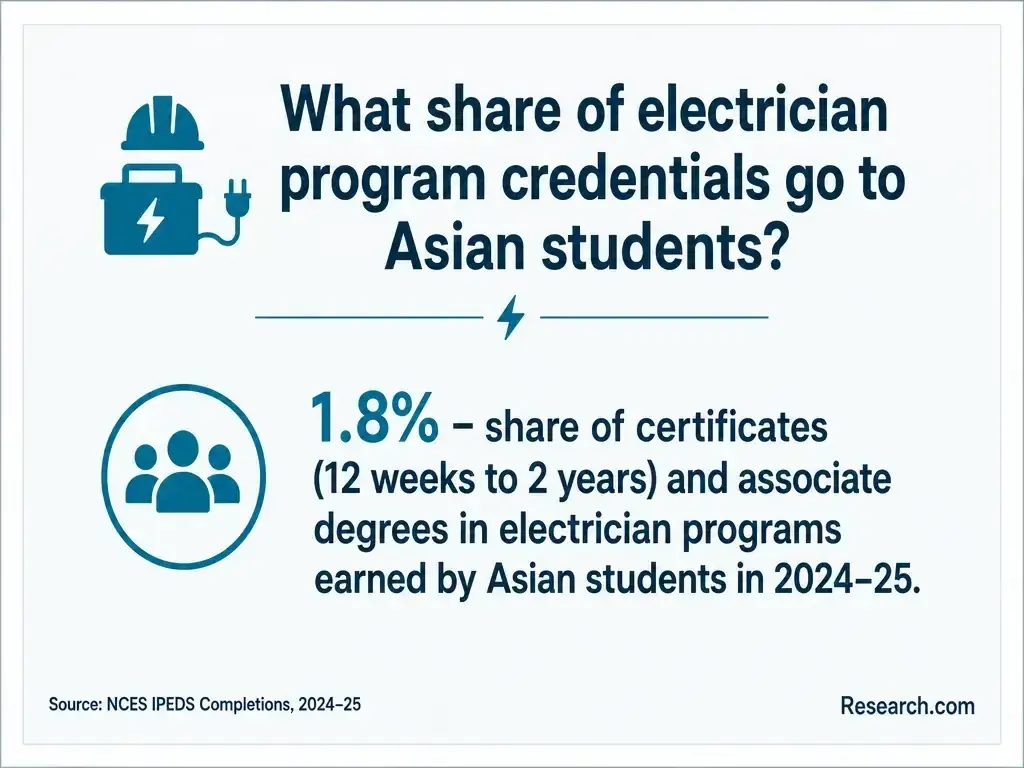
Do not confuse working under supervision with operating an electrical contracting business. New Jersey's Board of Examiners of Electrical Contractors regulates electrical contractor licensing and journeyman electrician registration. The applicable status depends on the role and work performed; a school certificate alone is not a license or proof that required experience and examinations have been completed. Confirm current requirements with the board before choosing training intended to support a particular registration or license.
Ask the school and prospective apprenticeship sponsor how classroom instruction and supervised work are documented, who will verify experience, and whether graduates have a route into the role they intend to pursue. Optional industry credentials can demonstrate specific skills but should not be marketed as substitutes for state requirements. If you plan to work outside New Jersey, check that jurisdiction separately rather than assuming your training or registration transfers.
Start with the job you want - supervised entry, eventual journeyman-level work, or electrical contracting - then compare programs on the next step they make possible. A lower-cost program is not necessarily a better investment if it lacks meaningful shop practice; an expensive accelerated course is not necessarily faster if you still need years of supervised experience.
Use these checks before signing an enrollment agreement:
Use rankings as a shortlist, not a substitute for those checks. Even top schools online lists cannot tell you whether an electrical program provides accessible shop time or a credible local work-based route. A red flag is a claim of quick independent practice that does not explain New Jersey's separate experience and licensing steps.
An entry credential may help you compete for helper or apprentice positions. With documented experience and additional training, electricians can move toward more complex installation, troubleshooting, maintenance, or supervisory work; contracting independently requires meeting New Jersey's applicable licensing and business requirements, according to the New Jersey Board of Examiners of Electrical Contractors.
Choose specialization after identifying employers willing to train you in it. For example, someone interested in controls or commercial maintenance should ask whether a program's shop work goes beyond basic residential wiring. School instruction can open a door, but progression depends on the work you perform, the experience you document, and any required registration or licensing - not the certificate title alone.
The U.S. Bureau of Labor Statistics projects 9.2% national growth in electrician employment from 2025 to 2035. That supports exploring the trade, but it is not a forecast of vacancies in Toms River or an assurance that a particular program's graduates will be hired. Construction activity, replacement work, and employers' willingness to take on trainees determine which openings a local applicant can pursue.
Test the market before enrolling: review current Ocean County-area helper and apprentice postings, ask sponsors when they expect to recruit, and note the travel radius required for job sites. If nearby openings are limited, willingness to commute can matter as much as the program's location. Favor training that gives you skills employers request and a realistic way to gain supervised experience.
Investing in electrician training is a consequential decision. Research.com created this ranking to help readers compare programs against other electrician programs in the same location, rather than against unrelated trades. The team evaluates reported outcomes, costs, recognition, and student support, while checking the credibility and relevance of the underlying data.
Best-program rankings assess student outcomes; earnings and return on investment; costs and debt; and quality and recognition. Programmatic accreditation or relevant industry recognition accounts for 20% of the score, institutional accreditation for 10%, and student support for 10%. The remaining 60% covers outcomes, earnings, and costs, with an entropy-based method assigning more weight to indicators that vary more across programs. A separate most-affordable-programs ranking scores only tuition, attendance cost, debt, and federal loan default rate; it does not include accreditation or other quality indicators.
The ranking draws on the following databases and organizations. Some cover multiple occupations and are not electrician-specific endorsements:
Scope matters: Only programs with completions reported to IPEDS can appear in this ranking. An unlisted apprenticeship or employer training route may still be a strong option; its absence does not establish poor quality. Likewise, a ranking score does not establish New Jersey licensing eligibility. Use the ranking to narrow your choices, then verify each program's practical training and current requirements. Read more about the approach on the Research.com methodology page.
# 1 position
# 2 position

Not necessarily. An apprenticeship or employer-supported route may combine instruction with supervised work. Verify how your chosen route meets the New Jersey electrical board requirements relevant to your eventual role.
No. A school credential does not itself grant electrical contractor licensing or replace required experience, registration, or examinations. Check current rules with the New Jersey Board of Examiners of Electrical Contractors.
You can study some theory online, but practical electrical work requires in-person training and supervision. Confirm the location and amount of required shop or worksite practice.
Choose school if its instruction and hands-on practice help you reach an entry opportunity you cannot yet access. Compare it with an apprenticeship if you can qualify for paid training now; ask whether school coursework would receive any credit.
Request a written total covering tuition, fees, tools, safety gear, materials, travel, and any required exams. Subtract confirmed aid, then compare the result with potential wages and costs during apprenticeship training.