# 1 position


Audited and Verified:
Our Editorial and Data Verification Process
Research.com uses government datasets, official education statistics and primary institutional information to support its career and degree guides. Our review process checks factual accuracy, occupational definitions, source dates and the requirements associated with the credentials discussed.
How This Article Was Fact-Checked
Our editorial team verifies salary estimates, employment projections, education requirements and program information against original data providers and official organizations. Salary figures are checked against the relevant occupational definitions and reporting periods. Information about licensure, accreditation and required in-person training is reviewed separately.
Fact-checked and verified on:

Co-Founder and Chief Data Scientist

Reviewed by Karolina Broda
Fact-Checker and Data Verification
Choosing electrician training near Abingdon means comparing more than tuition: a short classroom program and a paid apprenticeship can lead to very different costs, experience, and licensing readiness. The U.S. Bureau of Labor Statistics projects 9.2% national electrician employment growth from 2025 to 2035. This guide explains local training routes, Virginia requirements, costs, and career prospects. It also accompanies the Most Affordable Electrician Trade Schools in Abingdon for 2027 ranking, created by the Research.com team of data scientists to help students decide which programs are worth considering.
Expect instruction in electrical theory, circuits, blueprint reading, code use, and safe installation, plus supervised practice with wiring, devices, meters, and troubleshooting. The decisive question is how much practice happens in a lab or on a worksite. A program that teaches terminology but offers little hands-on work is not equivalent to one with substantial practical instruction, even if both award a certificate.
Virginia Highlands Community College is a local public-college option to investigate, but verify its current electrician-related offerings, credential, schedule, and lab access directly before assuming a particular program is available. Also compare registered apprenticeships and contractor-sponsored training: these combine related instruction with paid, supervised work but may require finding a sponsoring employer and meeting its entry requirements. A short school program can help someone test the trade or prepare for an apprenticeship; by itself, it should not be assumed to replace required work experience.
Potential work settings include residential construction and service, commercial buildings, industrial maintenance, and institutional facilities. In Abingdon, compare opportunities across Washington County and the wider Southwest Virginia commuting area rather than assuming every job or apprenticeship will be in town. Travel to worksites - and whether that travel is paid - can materially change the value of an offer.
Training alone does not establish demand for a particular employer. Lists of top college majors in demand are likewise not a substitute for checking local electrician vacancies and apprenticeship sponsors. Ask prospective employers whether they hire beginners, provide supervised work, and support the experience documentation needed for advancement.
A reliable Abingdon-specific electrician median is not established here, so the national figure is a benchmark, not a local pay quote. The U.S. Bureau of Labor Statistics reports a May 2025 national median annual wage of $63,190 for electricians. The median covers experienced workers as well as newer entrants; an apprentice's offer may be lower, while hours, specialization, and travel can affect take-home pay.
For a useful local comparison, request the starting wage, scheduled raises, benefits, overtime terms, and travel policy from actual Abingdon-area employers or apprenticeship sponsors. Compare those terms with the cost of training and the wages you would give up while studying.
Duration depends on the route. A short introductory certificate may take substantially less time than an associate-degree program, while a registered apprenticeship ordinarily spans multiple years of related instruction and supervised work. Neither a short completion date nor a credential title tells you how much qualifying experience you will have afterward.
Ask each provider for its published clock or credit hours, lab hours, part-time schedule, and expected completion date. Ask an apprenticeship sponsor for its related-instruction and on-the-job-training schedule and how prior training is assessed for advanced standing; credit is not automatic. An easiest associates degree to get list cannot answer whether a particular electrical program provides the practice and work pathway you need.
Electrical theory, code reading, and some calculations can be studied remotely. Wiring, meter use, fault diagnosis, and safe work practices require supervised physical practice. A hybrid option can reduce classroom trips for someone living outside Abingdon, but its lab location and required worksite visits may still create substantial travel costs.
Ask exactly which activities occur in person and who assesses practical skills. Do not assume a fully online course supplies experience toward Virginia licensure. Search results for a cheap online bachelors degree address a different kind of education; they do not resolve electrician lab or supervised-work requirements.
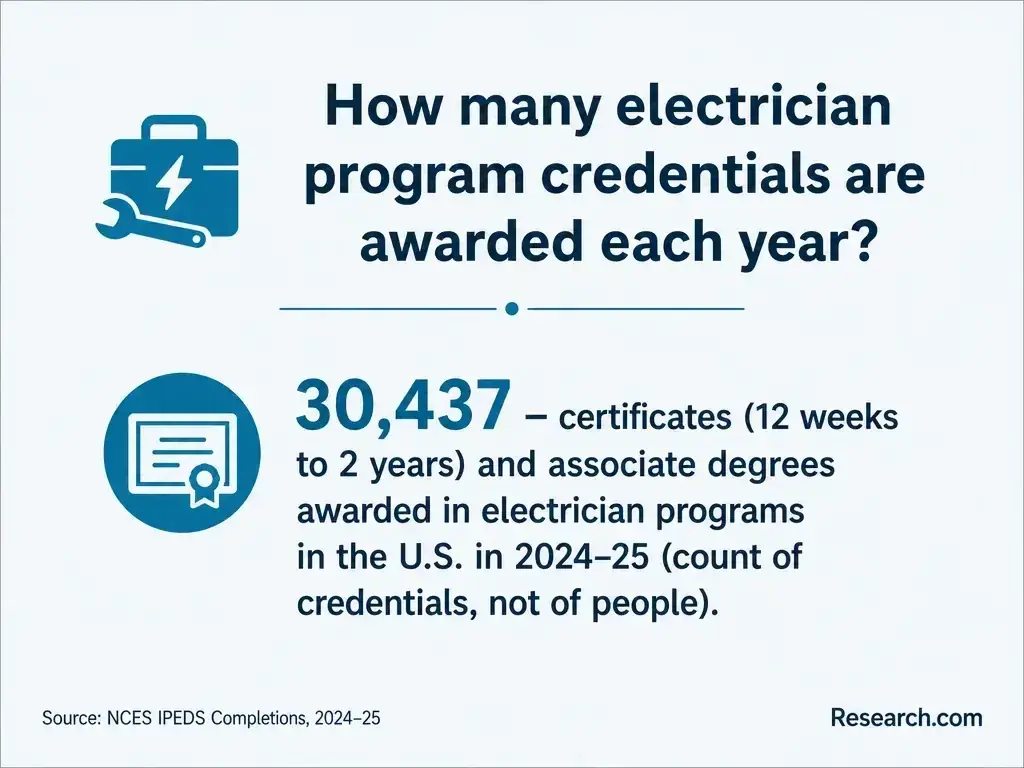
There is no defensible single Abingdon average for the full range of college, private, employer-sponsored, and apprenticeship routes. Published tuition alone cannot measure their relative affordability. Request a written estimate for each available option and compare the cost of reaching the same employment or licensing milestone.
The following comparison separates charges from costs that are easy to miss. Amounts vary by provider, so obtain actual prices rather than applying a generic trade-school average.
| Cost or offset | What to verify | Why it changes the comparison |
| School charges | Tuition, mandatory fees, books, materials, and payment schedule | A lower tuition quote can carry higher required fees. |
| Job-readiness expenses | Tools, PPE, transportation, exams, and license applications | These may fall outside the school's advertised price. |
| Time and funding | Hours away from paid work, grants, eligible aid, and apprentice wages | Paid training can offset costs; unpaid study can increase them. |
Check eligibility for federal aid, Virginia workforce funding, and employer assistance with the provider; availability depends on the student and program. A list of affordable online master program options is not a price benchmark for occupational electrician training.
The credential may be a certificate, diploma, or associate degree, depending on the provider. A registered apprenticeship has a different structure: its sponsor documents completion of an approved work-and-instruction program. Employer training may instead produce records of competencies and work hours. Ask for the exact credential name, the issuing organization, and whether local employers or apprenticeship sponsors recognize it.
Keep four distinctions clear: institutional accreditation concerns the school; state authorization concerns its permission to operate; apprenticeship registration concerns the work-based program; and occupational licensure concerns an individual's legal qualifications. None automatically substitutes for the others. NCCER credentials, where offered, can document construction skills but are not Virginia electrician licenses.
Requirements vary by provider. A school may ask for an application, prior education records, and placement information; an apprenticeship sponsor or employer may also assess math readiness, availability, transport to changing jobsites, and ability to perform work safely. Ask whether tools are needed on day one and whether an entrance assessment affects admission or only course placement.
For working adults, the important distinction is admission versus advanced standing. Prior coursework or documented electrical experience might shorten training only if the receiving school or sponsor evaluates and accepts it. Get any credit or adjusted work-hour requirement in writing before paying a deposit or leaving a job.
Useful entry training connects calculations and circuit theory to installation and diagnosis: reading plans, selecting materials, using test instruments, interpreting applicable electrical code, grounding and bonding, and working safely around energized systems. The U.S. Bureau of Labor Statistics identifies installation, maintenance, testing, and repair as core electrician duties.
Compare the curriculum with the work you want. Someone seeking industrial maintenance should ask about motors, controls, and troubleshooting; a residential-service applicant should ask about branch circuits and customer-site practice. Request a lab syllabus or demonstration rather than treating a course title as proof of proficiency.
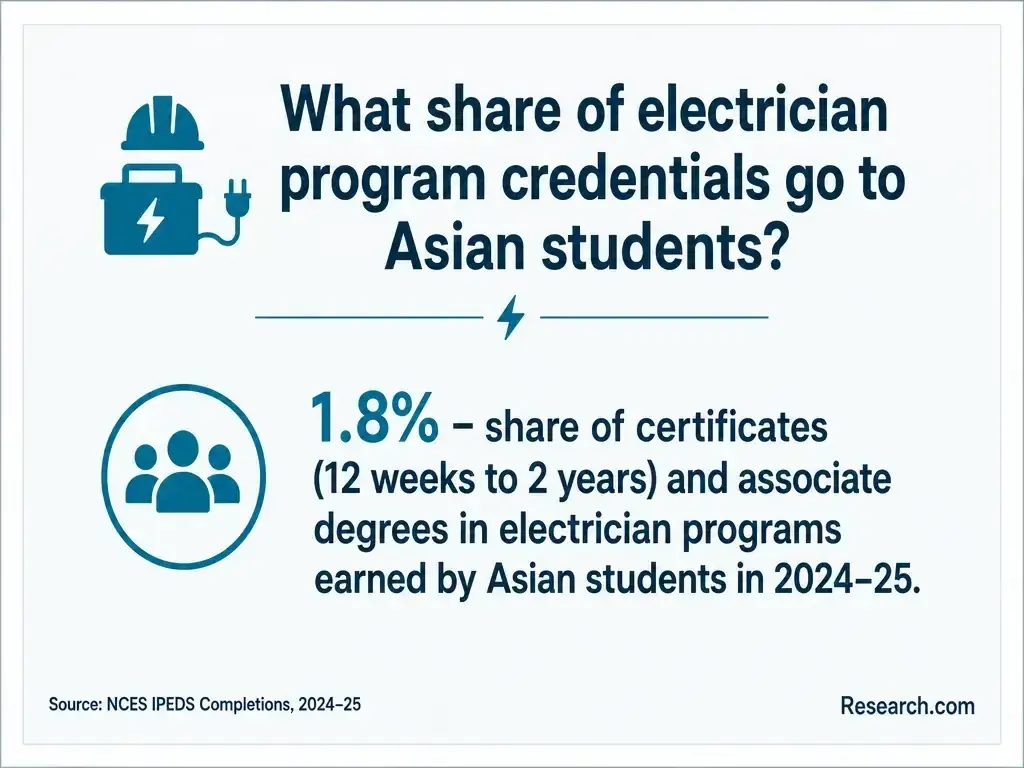
Virginia regulates electrician tradesman licensing through the Virginia Department of Professional and Occupational Regulation (DPOR). Its journeyman and master pathways involve qualifying experience and, where applicable, education and examinations. Finishing a school program does not itself grant a license or establish that every graduate meets an examination pathway. Work performed while learning must follow applicable supervision and contractor rules.
Before enrolling, ask the provider which DPOR pathway its instruction is intended to support, what proof of hours it issues, and what additional supervised experience you would need. Verify the current requirements with DPOR because a school credential, an industry certification, apprenticeship registration, an individual tradesman license, and a contractor business license are different things.
Start with your intended first job and work backward to the credential, practice, and supervised experience it requires. An affordable short course can be worthwhile preparation for someone who already has an employer pathway; a paid apprenticeship may make more sense for someone who needs both income and documented work experience. Do not select an accelerated program solely because it finishes first.
Use these checks to compare options on the same basis and catch costly omissions:
Resources about best accredited non profit colleges cannot establish whether electrician labs, supervised hours, or Virginia licensing conditions are met. Likewise, institutional type alone does not determine return on investment: duration, debt, aid, probability of completion, earnings before and after training, and the time needed to realize those earnings all matter.
A common progression is supervised entry-level work, increasing responsibility as skills and documented experience accumulate, and pursuit of a Virginia journeyman or master credential when eligible. Depending on the employer, electricians may move toward service troubleshooting, construction, industrial controls, supervision, or business ownership. Some advancement routes require additional examinations or a properly licensed contracting business; they are not automatic outcomes of a school certificate.
Choose training that matches the next step rather than paying in advance for every possible specialization. A beginner needs safe installation and substantial practice; a working electrician considering controls training should first check whether local employers use that equipment and will recognize the added skills.
The U.S. Bureau of Labor Statistics projects 9.2% growth in U.S. electrician employment from 2025 to 2035. That national projection signals continued demand for the occupation, but it does not measure openings in Abingdon or promise a local apprenticeship place. Construction cycles, maintenance needs, and the number of nearby sponsors will shape a beginner's options.
Before committing to training, check current openings across a realistic commute, ask sponsors when they recruit, and compare entry requirements with the program's practical instruction. That local check matters more to an Abingdon student than assuming national growth will translate into a job immediately after completion.
Investing in electrician training is a consequential decision, especially when a low advertised price may omit tools or leave a student needing years of supervised work. Research.com's team checks comparable program data to make the ranking a useful starting point - not a substitute for confirming current prices, practical training, and Virginia licensing eligibility.
The most-affordable ranking compares electrician programs with other programs in the same occupation and location. It includes only programs reporting completions to IPEDS and scores tuition, cost of attendance, median student debt, and federal loan default rate. Weights are assigned through an entropy-based method, giving more weight to measures that differ more across programs. Unlike Research.com's separate best-program rankings, accreditation, student support, outcomes, and earnings do not contribute to the affordability score. The team used these data sources across its trade-program ranking work; occupation-specific recognition sources are applied where relevant, not treated as electrician accreditors:
Because IPEDS does not cover every private training provider, employer program, or registered apprenticeship, an option's absence is not evidence that it is unavailable or poor quality. Use the ranking to narrow a cost comparison, then ask providers for a written, current total-cost estimate and a clear account of how their training fits Virginia's experience and examination requirements. More detail on the ranking process is available in Research.com's methodology.
# 1 position
# 2 position
Not necessarily. A paid apprenticeship may offset training costs with wages, while a school program may offer a shorter introduction. Compare fees, tools, travel, lost earnings, and how much supervised experience each route provides.
Do not assume so. Virginia DPOR has qualification and examination requirements; ask how the certificate and your documented experience fit a specific licensing pathway.
You may study some theory online, but wiring, testing, and other practical competencies require in-person training or supervised work. Confirm the location and hours of every required hands-on component.
No. Compare its current offerings with registered apprenticeships and employer-sponsored routes available within a workable commute. Confirm schedules, entry requirements, and costs directly with each provider.
Ask for the complete cost, exact credential, lab schedule, documented training hours, and an explanation of what further experience you will need for your intended Virginia license or job.