# 1 position
Brazosport College - Electrician.
associate

Audited and Verified:
Our Editorial and Data Verification Process
Research.com uses government datasets, official education statistics and primary institutional information to support its career and degree guides. Our review process checks factual accuracy, occupational definitions, source dates and the requirements associated with the credentials discussed.
How This Article Was Fact-Checked
Our editorial team verifies salary estimates, employment projections, education requirements and program information against original data providers and official organizations. Salary figures are checked against the relevant occupational definitions and reporting periods. Information about licensure, accreditation and required in-person training is reviewed separately.
Fact-checked and verified on:

Co-Founder and Chief Data Scientist

Reviewed by Karolina Broda
Fact-Checker and Data Verification
Choosing electrician training near Lake Jackson means deciding whether to pay for classroom preparation, pursue a paid apprenticeship, or combine the two. The U.S. Bureau of Labor Statistics projects electrician employment to grow 9.2% nationally from 2025 to 2035, but training alone does not confer a Texas license. This guide explains the local options, costs, practical training, and licensing steps. It also accompanies the Best Electrician Trade Schools in Lake Jackson for 2027 ranking, created by the Research.com team of data scientists to help students identify programs worth considering.
Expect a mix of electrical theory, code reading, calculations, and supervised practice with tools, wiring, circuits, and testing equipment. A pre-apprenticeship or short certificate chiefly prepares someone to seek entry-level work. A longer college program may add industrial controls or broader technical coursework. Neither is the same as accumulating supervised hours on the job.
Lake Jackson applicants should distinguish building-wiring preparation from industrial electrical training. Nearby Brazoria County worksites can involve plant equipment and controls, while residential and commercial contractors need installation and service skills. Ask to see the actual lab tasks and employer connections before treating similarly named credentials as interchangeable.
Possible settings include residential and commercial electrical contractors, construction projects, maintenance teams, and industrial facilities in the wider Brazoria County and Houston-area labor market. The distinction matters: industrial maintenance may emphasize motors, controls, and troubleshooting, while building contractors emphasize installation and code-compliant wiring. An entry-level applicant should check the job's duties and Texas license category rather than assume every electrical job has identical requirements (Texas Department of Licensing and Regulation).
Ask prospective employers whether they hire registered apprentices, provide the supervision needed to document experience, and reimburse classroom or tool costs. If an accessible employer offers paid supervised training, that route may be more useful than paying for a credential that does not help secure an appropriate position.
The U.S. median annual wage for electricians was $63,190 in May 2025 (U.S. Bureau of Labor Statistics). It describes the national occupation across experience levels, not apprentice starting pay or a Lake Jackson wage. Compare actual local apprentice offers by hourly pay, expected hours, benefits, raises, travel, and whether classroom time is paid.
For a later-career pay comparison, check the latest U.S. Bureau of Labor Statistics Houston-area occupational wage release and the Texas Workforce Commission's local labor-market information. Their geographic and reference periods may differ from the national figure, so do not treat them as interchangeable estimates.
Length depends on the credential and attendance schedule: a focused certificate can be shorter than an associate degree, while a registered apprenticeship combines ongoing instruction with years of supervised work. Texas generally requires 8,000 hours of supervised on-the-job experience for journeyman electrician licensure; eligible applicants may take the examination after 7,000 hours but must complete the full experience requirement for the license (Texas Department of Licensing and Regulation). Ask whether a school's stated length includes only classes or also work experience.
A short credential can help someone test the field, but do not confuse speed with a faster route to independent licensed work. Even 3-month certificate programs that pay well serve different occupations and do not replace Texas electrician experience requirements.
Online instruction can cover calculations, electrical theory, and code study. It cannot by itself demonstrate safe installation, tool use, testing, or supervised work at a jobsite. Campus and hybrid programs are worth comparing by scheduled lab access, equipment, instructor feedback, and whether in-person sessions fit a working apprentice's hours.
Use a listing of best accredited trade schools online as a starting point, not proof of electrician licensing eligibility. Institutional accreditation addresses the school; Texas occupational licensure addresses the worker and requires separate experience and examination steps (Texas Department of Licensing and Regulation).
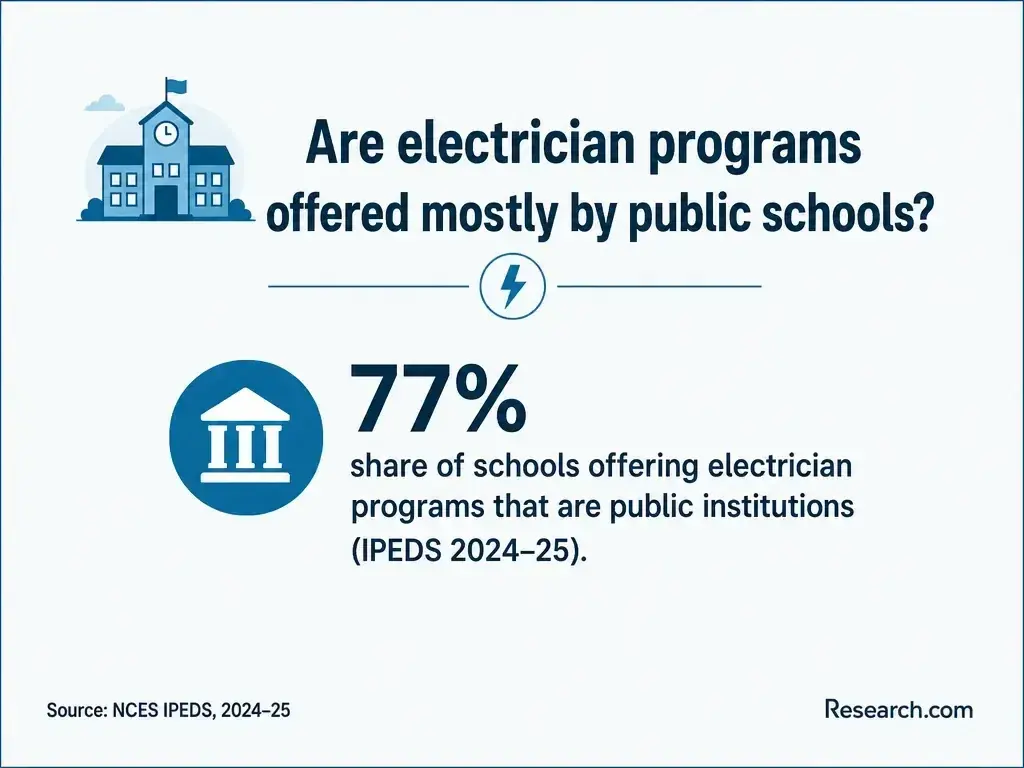
There is no single verified Lake Jackson average that fairly combines college certificates, associate degrees, and paid apprenticeships. Obtain a current, program-specific estimate from Brazosport College if its available electrical coursework fits your goal, then compare it with any apprenticeship or employer-training offer. Resident tuition eligibility, course load, and whether tools are included can change the comparison.
To estimate the cost of becoming job-ready, include tuition, mandatory fees, books, tools, safety gear, transportation to labs and worksites, and Texas license and examination fees where applicable. Subtract eligible grants or employer support, and account for wages earned - or work hours forgone - during training. An online degree low cost comparison may help frame tuition questions, but low online tuition does not price the required electrical lab or supervised work.
Ask the provider about aid eligibility and the local workforce office about training assistance; neither is automatic. For return on investment, compare likely completion, debt, apprentice pay, possible post-training pay, and the time it takes for added earnings to offset your net cost - not tuition alone (Federal Student Aid; Texas Workforce Commission).
The award depends on the route: a college may issue a certificate or an associate degree; a pre-apprenticeship may issue a completion document; and a registered apprenticeship has its own completion credential (U.S. Department of Labor). Ask the provider for the exact award name, its documented practical competencies, and whether any coursework receives credit in a later program or apprenticeship. Do not assume credit transfers without written confirmation.
A school credential is not a Texas electrician license. Institutional accreditation, any industry training recognition, apprenticeship registration, and occupational licensure answer different questions. Check each separately when it matters to your intended job (Texas Department of Licensing and Regulation; U.S. Department of Labor).
School admission, apprenticeship selection, employer hiring, and state license applications are separate processes. Ask Brazosport College about the current entry requirements for the specific coursework you want; ask an apprenticeship sponsor about its education, assessment, interview, transportation, and work-availability requirements. Do not assume acceptance into one route secures a paid placement in another.
Texas electrical apprentices must register with the Texas Department of Licensing and Regulation and work under the required supervision. Before accepting a job, verify the employer can provide qualifying supervision and explain how experience hours will be recorded. An employer may impose additional hiring or safety requirements (Texas Department of Licensing and Regulation).
Useful entry-level instruction covers electrical safety, circuits, blueprint reading, measurements, wiring methods, code use, and testing. Practical instruction should let students select tools, make connections, identify faults, and work safely under observation - not just watch demonstrations. Industrial-focused training may add motors and controls; compare that content with the jobs you intend to pursue (U.S. Bureau of Labor Statistics, Occupational Outlook Handbook).
Request a course outline showing lab hours and equipment, plus any field placement arrangements. A program with limited practice may still provide valuable theory, but you would need a credible plan to develop hands-on competency through supervised employment.
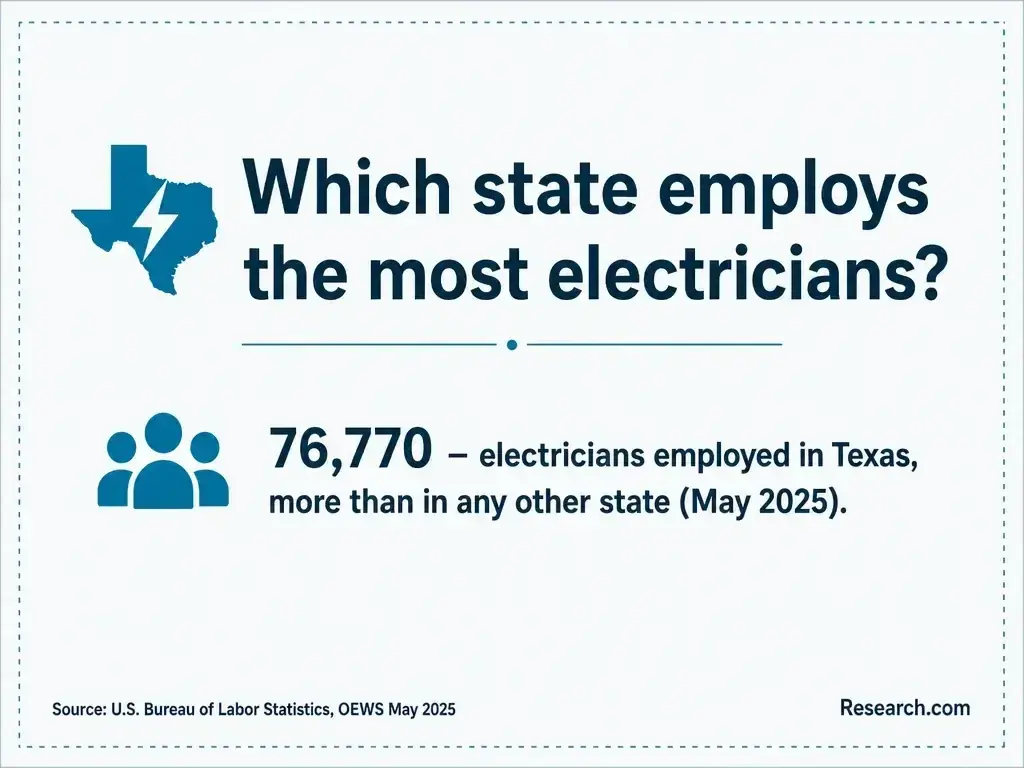
Yes, Texas regulates electrical work through occupational licenses. An entrant commonly registers as an electrical apprentice and works under appropriate supervision. Journeyman applicants generally need 8,000 hours of supervised on-the-job experience and must pass the state examination; Texas also has other license categories with different scopes and requirements (Texas Department of Licensing and Regulation). Confirm the category applicable to the work you want before choosing training.
School completion, voluntary industry certification, and registration in an apprenticeship do not substitute for a Texas occupational license. For experienced workers, master electrician licensure has additional experience and journeyman-license requirements. Check the Texas Department of Licensing and Regulation's current rules before paying for examination preparation or assuming prior experience qualifies.
Start with your target job and the route to qualifying supervised experience. A college program may fit someone who needs structured fundamentals before applying to employers; a paid apprenticeship may fit someone ready to learn while earning. Neither should be chosen solely because it ranks well or has the shortest advertised duration.
Use these checks to compare an actual offer with your licensing and budget needs:
A red flag is a claim that a certificate alone makes graduates journeyman electricians. Another is an "online-only" offer that cannot explain where practical training and qualifying work experience occur. Verify both claims with the provider and Texas Department of Licensing and Regulation before enrolling.
A practical progression is supervised apprentice work, qualifying experience and an applicable Texas license, then specialization or greater responsibility. Depending on experience and employer needs, an electrician might focus on residential service, commercial construction, or industrial equipment; advancement can involve supervision or, with the required licensing and business arrangements, contracting (Texas Department of Licensing and Regulation; U.S. Bureau of Labor Statistics).
Match the first credential to that progression. Advanced academic searches such as easiest doctorate degrees to get are not part of Texas electrician entry requirements; supervised trade experience is the constraint to plan around.
National electrician employment is projected to grow 9.2% from 2025 to 2035 (U.S. Bureau of Labor Statistics, Employment Projections). That signals demand across the occupation, not a forecast of openings in Lake Jackson. Local opportunity depends on construction schedules, industrial maintenance hiring, and whether employers have capacity to supervise new apprentices.
Before committing to a schedule or commute, review current Brazoria County and Houston-area postings for apprentice roles and ask sponsors when their next intake occurs. A search for online doctorate no dissertation addresses a different education decision; it will not resolve the hands-on training and licensing questions that determine electrician entry here.
Investing in electrician training is an important decision, so Research.com evaluates programs against others in the same occupation and location rather than against unrelated schools nationwide. The ranking is intended to help readers compare outcomes, costs, and recognized quality indicators. Only programs with completions reported to the Integrated Postsecondary Education Data System (IPEDS) are included; a registered apprenticeship can be a strong option without appearing in this ranking.
Best-program scores assess student completion and full- and part-time retention; earnings one year after completion and earnings relative to annual attendance cost; tuition, attendance cost, debt - including debt held by students who withdrew - and federal loan defaults; and accreditation, relevant industry recognition, and student support. Programmatic accreditation or relevant industry recognition carries 20% of the score, institutional accreditation 10%, and student support 10%. The remaining 60% covers outcomes, earnings, and costs, with entropy-based weights that give more influence to indicators that vary more across programs. Most-affordable rankings instead score only tuition, attendance cost, median debt, and loan defaults using entropy-based weights; accreditation and other quality measures do not enter that score.
The team uses the following databases and organizations to check program, institution, and recognition information. Some sources cover other trades or health programs rather than electrician training; their inclusion in the broader ranking methodology does not make them electrician licensing authorities.
Because college-oriented datasets do not cover every apprenticeship or employer training route, use the ranking as a comparison tool, not a complete directory or a substitute for checking Texas licensing requirements. Further details appear on Research.com's ranking methodology page.
# 1 position
# 2 position
Yes. Supervised employment and an apprenticeship can provide an entry route. You still need the appropriate Texas registration or license, qualifying experience, and any required examination (Texas Department of Licensing and Regulation).
Do not assume it does. Texas specifies supervised on-the-job experience for journeyman licensure. Ask the Texas Department of Licensing and Regulation how any particular training or prior experience applies before enrolling.
No online coursework alone replaces the supervised work experience required for Texas journeyman licensure. Check where a program provides practical training and how you will obtain qualifying work hours (Texas Department of Licensing and Regulation).
Choose based on your readiness for paid work, need for structured instruction, total net cost, and access to supervised hours. Ask whether college coursework offers an advantage in the apprenticeship you are considering; do not assume the two routes grant identical credit.
Request the current program-specific cost and schedule directly from Brazosport College if its offerings match your goal. Confirm license categories, experience, fees, and examinations with the Texas Department of Licensing and Regulation.