# 1 position

Audited and Verified:
Our Editorial and Data Verification Process
Research.com uses government datasets, official education statistics and primary institutional information to support its career and degree guides. Our review process checks factual accuracy, occupational definitions, source dates and the requirements associated with the credentials discussed.
How This Article Was Fact-Checked
Our editorial team verifies salary estimates, employment projections, education requirements and program information against original data providers and official organizations. Salary figures are checked against the relevant occupational definitions and reporting periods. Information about licensure, accreditation and required in-person training is reviewed separately.
Fact-checked and verified on:

Co-Founder and Chief Data Scientist

Reviewed by Karolina Broda
Fact-Checker and Data Verification
Choosing electrician training in Fort Dodge means comparing more than school names: a classroom credential, paid apprenticeship, and Iowa license serve different purposes. National employment for electricians is projected to grow 9.2% from 2025 to 2035, according to the U.S. Bureau of Labor Statistics, making the route into the trade worth examining carefully. This guide explains local training choices, costs, hands-on requirements, and licensing. It also accompanies the Best Electrician Trade Schools in Fort Dodge for 2027 ranking, created by Research.com's team of data scientists to help students identify programs worth considering.
Expect a mix of electrical theory, code interpretation, safety, and physical practice - not a classroom-only route to independent work. A prospective student can investigate Iowa Central Community College's current electrical training options, including the credential offered, scheduled labs, and whether the curriculum connects to an apprenticeship. Program titles and offerings can change; obtain the current catalog and written program requirements rather than relying on a ranking label.
A school-based program typically teaches foundational skills in a supervised lab. A registered apprenticeship pairs related instruction with paid work under experienced electricians and leads toward the experience needed for licensure. Direct entry with an employer may also be possible if the worker obtains the registration and supervision Iowa requires. For someone who needs wages while learning, apprenticeship may be the stronger financial fit; for someone who needs structured preparation before applying to employers, a college program may be more useful.
Neither route should be judged by credential name alone. Ask how much time is spent wiring and troubleshooting in person, who supervises that work, and whether an apprenticeship sponsor will recognize prior coursework. Information about 6 month online courses that pay well can help frame a short-training comparison, but a brief online credential cannot replace the supervised electrical work required for this trade.
Training can prepare a candidate to seek supervised work with electrical contractors or maintenance teams serving homes, commercial buildings, industrial facilities, and agricultural operations in and around Fort Dodge. The setting matters: a contractor may offer varied installation work and travel between sites, while a plant maintenance role may emphasize troubleshooting and scheduled equipment work. School completion alone does not authorize independent electrical contracting in Iowa.
Because the immediate Fort Dodge market is smaller than a statewide labor market, ask programs and apprenticeship sponsors where their recent trainees actually worked and how far they traveled. A placement claim is more useful when it identifies the job type, service area, and whether the position was an apprenticeship.
A reliable Fort Dodge-specific electrician wage is not established here, so the national median should be treated as context rather than a local offer. The U.S. Bureau of Labor Statistics reports a May 2025 median annual wage of $63,190 for U.S. electricians. It includes workers at different experience levels; apprentice wages are generally structured differently from experienced electrician pay.
For a useful local comparison, request current apprentice wage steps and benefit details from sponsors or employers, then compare them with the cost and time of a school program. Consider travel to worksites, overtime expectations, and whether the advertised rate applies to an apprentice, a licensed journeyperson, or a supervisor. A comparison with other highest paying vocational trades is meaningful only when entry costs and time to qualification are included.
The answer depends on the credential and the goal. A school certificate or diploma may be shorter than an associate degree, but neither should be confused with the full period of supervised work needed to progress toward Iowa journeyperson licensure. Registered electrician apprenticeships ordinarily extend over multiple years because they combine work experience and related instruction; a short pre-apprenticeship is preparation for that route, not a substitute for it.
Ask Iowa Central Community College for the current program's credits, calendar length, lab schedule, and part-time availability. Ask any apprenticeship sponsor for its required work hours, classroom hours, wage progression, and policy on credit for prior training. The shortest school schedule is not necessarily the fastest path to independent, licensed work.
Online instruction can cover theory, calculations, and portions of code study. Wiring, testing, safe tool use, and supervised installation require physical equipment and observation; an apprenticeship additionally requires work at actual jobsites. A hybrid option may reduce trips for lectures, but Fort Dodge students still need a workable plan for labs and employer sites.
The distinction is especially important when an online course advertises speed. Before enrolling, get written answers identifying the in-person components, their location and schedule, and whether an Iowa apprenticeship sponsor recognizes the instruction. Online completion by itself should not be interpreted as permission to perform licensed electrical work.
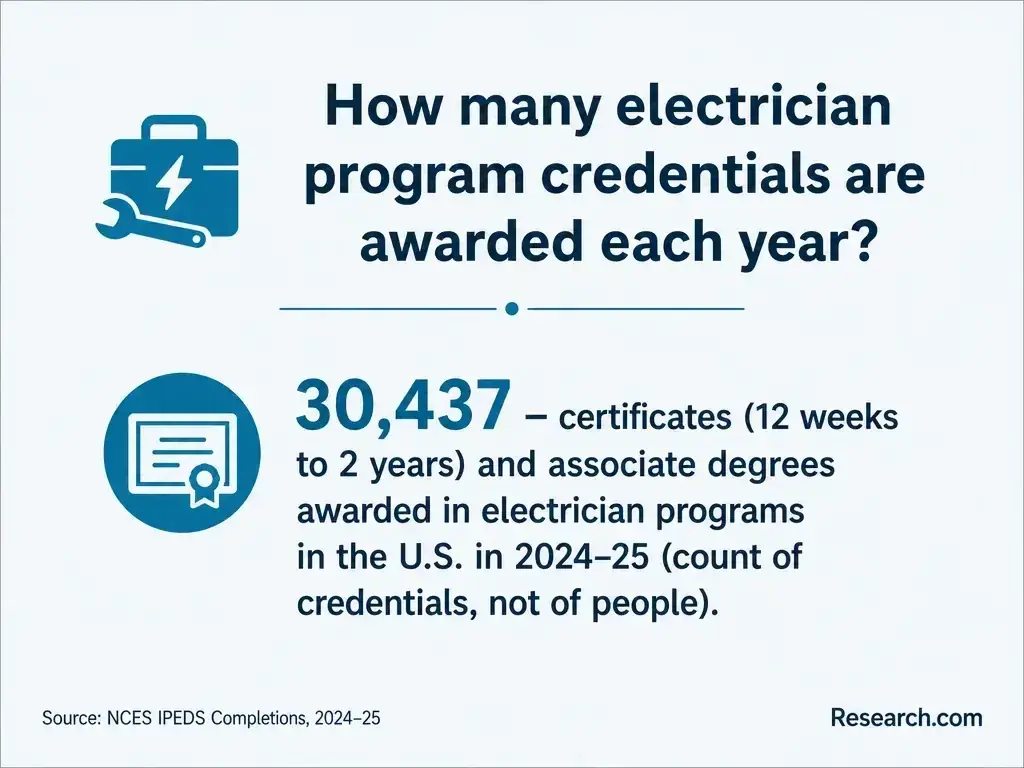
There is no defensible single Fort Dodge average that covers college training, short courses, and paid apprenticeships. Instead, compare the total cost to become job-ready for the routes actually available to you. Request Iowa Central Community College's current program-specific estimate; published tuition alone may omit required expenses.
Build the comparison around tuition and mandatory fees; books, tools, testing equipment, and protective gear; travel to labs or jobsites; and any application, examination, and licensing charges. Then subtract grants, scholarships, eligible aid, or wages earned during a paid apprenticeship. Federal aid eligibility depends on the program and student, not simply on the provider calling itself a trade school; confirm eligibility through the school's aid office and Federal Student Aid. Iowa workforce assistance may also be worth checking for an eligible applicant.
For return on investment, account for completion probability, debt, wages you give up during full-time study, and the time before you can earn at the next apprenticeship or license level. A lower tuition bill can be a poor bargain if the training lacks usable hands-on experience or does not advance your intended pathway.
The award depends on the specific program: electrician-related school training may lead to a certificate, diploma, or associate degree. Ask Iowa Central Community College to identify the exact award attached to the current option you are considering. A pre-apprenticeship completion document, a registered apprenticeship completion credential, and an Iowa occupational license are different things.
Institutional accreditation concerns the school; industry recognition concerns particular training or credentials; apprenticeship registration concerns the work-and-instruction program; and the Iowa Electrical Examining Board governs occupational licensing. None automatically substitutes for the others. If you may enter an apprenticeship later, ask for written confirmation of whether completed courses earn advanced standing or related-instruction credit - and which sponsor will grant it.
School admission and apprenticeship hiring are separate decisions. Confirm the current college program's application, placement, mathematics, and safety requirements directly with Iowa Central Community College. Apprenticeship sponsors or employers may separately assess applicants' readiness for physical jobsite work, scheduling, transportation, and foundational math; meeting school admission criteria does not secure an apprenticeship position.
In Iowa, people entering regulated electrical work must also check the Iowa Electrical Examining Board's apprentice registration and supervision rules. Before accepting a work offer or paying for a program, ask who handles registration, when it must be active, and whether the proposed work and instruction will count toward the intended license pathway.
A sound entry-level curriculum develops electrical calculations, circuit reading, installation methods, code use, testing, and safe work practices. Hands-on sessions should let students work with tools and components and diagnose faults rather than only watch demonstrations. The U.S. Bureau of Labor Statistics describes electricians' work as installing, maintaining, and repairing electrical power, communications, lighting, and control systems; those duties provide a practical test of curriculum relevance.
Match the labs to your likely first job. Someone pursuing construction needs installation practice; someone interested in industrial maintenance should ask about motors, controls, and troubleshooting. Request a syllabus and lab-hour breakdown rather than assuming similarly named credentials teach the same skills.
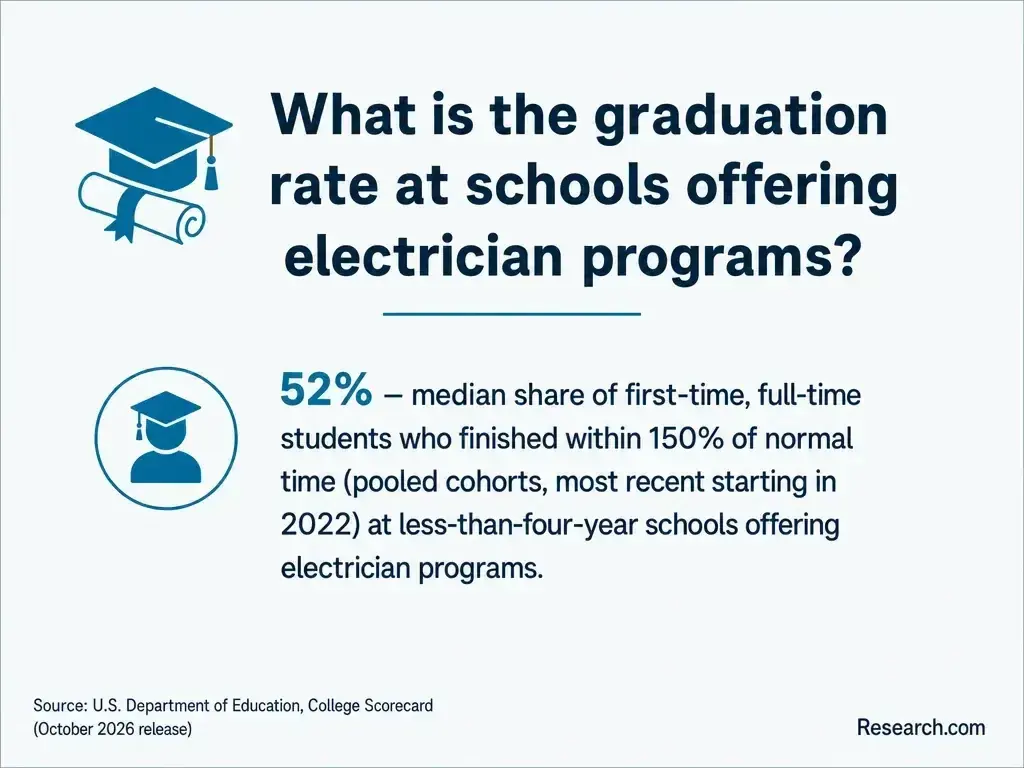
Yes, Iowa regulates electrical work. The Iowa Electrical Examining Board administers electrician licensing and apprentice registration. The requirements for supervised apprentice work differ from those for a journeyperson or electrical contractor; school graduation alone is not a license. Check the board's current rules for registration, qualifying experience, examinations, and the exact license classification you intend to pursue before choosing training.
An optional industry credential may demonstrate a skill, but it does not replace Iowa authorization. Likewise, institutional accreditation or a registered apprenticeship's status does not by itself grant an individual occupational license. If you expect to work across state lines, verify the destination state's requirements separately rather than assuming an Iowa credential transfers automatically.
Start with the role you want - construction apprentice, industrial maintenance worker, or eventual licensed journeyperson - then compare school and paid-training routes against that goal. A ranking helps identify programs to examine, but the decisive evidence is whether the training fits Iowa's regulatory pathway and the work you want to do.
Use these questions with the school, employer, or apprenticeship sponsor before committing money or time:
Red flags include a claim that an entirely online course makes someone license-ready, a price that excludes mandatory tools, or vague assurances that credits "should transfer" to an apprenticeship. Choose an accelerated program only if its practical training and recognition still meet your goal. Broad education comparisons, including easiest bachelor's degrees to get, answer a different question; they do not establish whether an electrician program leads to supervised work or Iowa licensing eligibility.
A realistic progression begins with supervised entry-level work, continues through apprenticeship and the applicable Iowa licensing steps, and may lead to journeyperson-level work. With additional experience and any required authorization, electricians may pursue supervisory, specialized maintenance, or contracting roles. Those later roles are not automatic outcomes of an entry-level school credential.
In this area, the choice between installation and maintenance matters when selecting labs and an apprenticeship sponsor. Ask whether the training exposes you to the equipment and worksites relevant to your preferred role. Other education guides, such as bachelor degrees that pay well, compare a different investment; they should not be used as a substitute for evaluating an electrical apprenticeship's paid experience and licensing progression.
The U.S. Bureau of Labor Statistics projects 9.2% growth in U.S. electrician employment from 2025 to 2035. That national projection supports investigating the trade, but it does not measure Fort Dodge openings or promise a local apprenticeship placement. For a decision closer to home, ask sponsors about current intake, service territory, and recent demand from contractors and maintenance employers.
Travel flexibility may widen a Fort Dodge applicant's options when a nearby sponsor has limited openings. Compare that advantage with commuting cost and the schedule for classroom instruction. Guides to unrelated long-form study, including what are the shortest phd programs, do not answer the central electrician-training question: how quickly a route provides recognized instruction, supervised work, and eligibility for the next Iowa licensing step.
Education is a significant investment, so Research.com evaluates electrician programs against other programs in the same occupation and location rather than treating every trade program as interchangeable. The ranking includes only programs with completions reported to the Integrated Postsecondary Education Data System (IPEDS). That makes it useful for comparing included schools, but not a complete inventory of registered apprenticeships or employer-sponsored training.
Best-program scores consider student outcomes; earnings and return on investment; costs and debt; and quality and recognition. Occupation-relevant programmatic accreditation or industry recognition receives 20% of the score, institutional accreditation 10%, and student support services 10%. The remaining 60% covers completion and full- and part-time retention, earnings one year after completion relative to annual attendance cost, tuition, attendance cost, debt - including debt held by students who withdrew - and federal loan default rates. An entropy-based method assigns more weight to indicators that vary more across programs. Separate most-affordable-program rankings score only cost and debt indicators using that method; accreditation and other quality measures do not enter those scores.
The Research.com team uses the following sources to check program, institutional, cost, outcome, and occupation-specific information. Some specialty organizations in this cross-trade source set do not accredit electrician training; their inclusion does not imply that they endorse any Fort Dodge program.
Readers can use the ranking to narrow their school search, then verify current program details and Iowa licensing eligibility directly before enrolling. Research.com explains its broader approach on its methodology page.
# 1 position
# 2 position
Not necessarily. A registered apprenticeship or qualifying employer-sponsored route may combine instruction and supervised work. Confirm the current pathway and apprentice-registration rules with the Iowa Electrical Examining Board.
Online study can support theory and code learning, but it cannot provide the in-person practical work needed to develop electrical jobsite skills. Verify how any program connects to supervised training and Iowa requirements.
It may be if you need income and have a suitable opening. A college program may help you build fundamentals before applying. Compare employer access, training hours, total costs, and whether college coursework earns apprenticeship credit.
Not by itself. Iowa licensing has requirements beyond a school award, including the applicable experience and examination rules. Check the Iowa Electrical Examining Board's requirements for your intended license.
Request the current electrical program's exact credential, total required cost, lab schedule, aid eligibility, and documented connections to apprenticeships. Ask whether a specific sponsor accepts its coursework for credit.