# 1 position
Prairie State College - Electrician.
associate

Audited and Verified:
Our Editorial and Data Verification Process
Research.com uses government datasets, official education statistics and primary institutional information to support its career and degree guides. Our review process checks factual accuracy, occupational definitions, source dates and the requirements associated with the credentials discussed.
How This Article Was Fact-Checked
Our editorial team verifies salary estimates, employment projections, education requirements and program information against original data providers and official organizations. Salary figures are checked against the relevant occupational definitions and reporting periods. Information about licensure, accreditation and required in-person training is reviewed separately.
Fact-checked and verified on:

Co-Founder and Chief Data Scientist

Reviewed by Karolina Broda
Fact-Checker and Data Verification
Choosing electrician training near Chicago Heights means deciding whether to pay for classroom preparation or pursue paid, work-based training. The U.S. Bureau of Labor Statistics projects electrician employment to grow 9.2% nationally from 2025 to 2035, but that does not make every program a good investment. This guide compares credentials, hands-on training, costs, and entry requirements. It also accompanies the Best Electrician Trade Schools in Chicago Heights for 2027 ranking, created by the Research.com team of data scientists to help students identify programs worth considering.
Expect a combination of electrical theory and supervised practice: reading drawings, measuring circuits, installing wiring and conduit, and following safety procedures. A classroom-only credential is preparation for entry-level work, not a substitute for experience on a jobsite. Ask how many hours students spend actually wiring, bending conduit, troubleshooting, and working with instructors - not merely watching demonstrations.
These routes solve different problems. The comparison helps you decide whether you need preparation before applying for work or would rather learn while earning.
| Pathway | What it provides | Best fit and limitation |
| Trade-school certificate or diploma | Focused instruction and labs; credential and duration depend on the provider | Useful for building basic skills before seeking a helper job or apprenticeship; does not itself confer independent practice rights |
| Electrical associate degree | Electrical coursework, labs, and broader technical study | Potential fit for someone interested in controls or further technical advancement; confirm how much instruction is directly relevant to electrician work |
| Registered apprenticeship | Paid, supervised jobsite training plus related instruction | Strong fit for earning while learning; entry may depend on openings, screening, and a sponsor's selection process |
| Employer-sponsored entry | Helper work and training arranged by an employer | Possible lower-upfront-cost start; confirm supervision, instruction, and whether experience counts toward your next goal |
In the south-suburban Chicago area, compare Prairie State College's current offerings with apprenticeship and employer routes rather than assuming a similarly titled course delivers the same field experience. Verify the credential, lab access, and any documented pathway into work directly with the provider.
Potential settings include residential and commercial electrical contractors, industrial plants, building maintenance departments, and contractors working on power, controls, or building upgrades. Chicago Heights' access to the wider Chicago-area labor market expands the range of potential jobs, but it also makes commute time, worksite location, and a sponsor's service territory practical considerations. A training site near home may lead to jobs across the metro area.
School training can support applications for electrical helper, trainee, or maintenance roles; employers may still require supervised experience. If you want construction work, ask employers or apprenticeship sponsors whether they recognize your coursework and whether it changes entry placement. If you want industrial maintenance, prioritize troubleshooting and motor-control practice over a program focused almost entirely on residential wiring.
The U.S. Bureau of Labor Statistics reports a May 2025 national median annual wage of $63,190 for electricians. This is a midpoint across experienced and less-experienced workers nationwide - not an offer a new trainee in Chicago Heights should expect. Pay may differ by employer, specialty, union agreement, overtime, and worksite; ask local employers and sponsors for current entry-level wage schedules before estimating a return on training.
Compare likely earnings during training as well as afterward. A paid apprenticeship can reduce the income you give up while learning, whereas a shorter school program may help you apply for entry-level jobs sooner. Neither advantage settles the question without considering your admission prospects, completion likelihood, debt, and commuting costs.
There is no single required length for an electrician school credential. A focused certificate may take less time than an associate degree, while part-time attendance extends either schedule. Request the program's published calendar and separate its classroom, lab, and any work-based hours; two credentials with similar names may provide very different amounts of practice.
Registered apprenticeships generally span multiple years. U.S. Department of Labor apprenticeship standards use approximately 2,000 hours of on-the-job learning per year as a common time-based benchmark and recommend at least 144 hours of related instruction annually; the actual registered program's standards govern its requirements. For someone who needs immediate income, those paid work hours can matter more than the shortest possible school calendar.
Electrical theory, code reading, and some calculations can be taught remotely. Safe installation, instrument use, conduit work, and troubleshooting require equipment and supervised practice in a lab or on a worksite. An online-only course should not be treated as equivalent to a hands-on electrician training pathway.
Hybrid training may suit a working adult if its lab sessions and location are workable. When comparing trade schools online, obtain a written schedule of required in-person sessions and ask who supplies tools and verifies practical skills. A flexible lecture schedule has little value if required labs are too far from Chicago Heights to attend consistently.
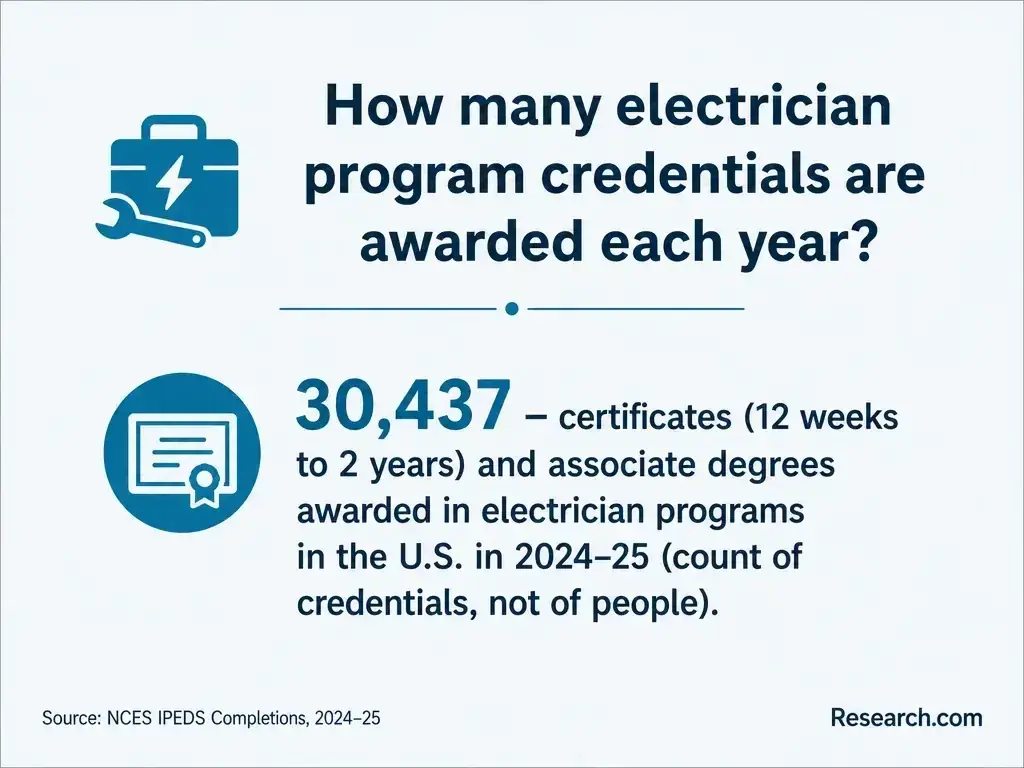
A defensible Chicago Heights average cannot be stated without comparable, current prices for the specific programs under consideration. Published tuition alone will understate the cost of becoming job-ready. Ask each provider for a written estimate covering tuition, mandatory fees, books or software, tools, consumable materials, safety gear, and travel to labs or worksites. Include any applicable screening, examination, or local application charges, plus earnings forgone while attending.
Compare that total with paid alternatives. Registered apprenticeships may pay wages during training, though applicants still face selection, transportation, and tool costs. Eligible students can ask a school's aid office about federal aid and the Illinois Student Assistance Commission's Monetary Award Program; eligibility depends on the student, institution, and program. Local workforce assistance and employer support are also worth checking. Federal Student Aid and the Illinois Student Assistance Commission provide the governing eligibility information.
For a useful return-on-investment comparison, consider aid, debt, time out of work, your current earnings, realistic post-training pay, your chance of completion, and how long you expect to work in the trade. A cheap program with little lab practice may cost more in missed opportunities than a better-supported option.
Depending on the offering, you may earn a certificate, diploma, or electrical associate degree. A registered apprenticeship instead documents completion under its sponsor's registered standards. Ask for the exact credential name and a course-and-hours breakdown before enrolling; "electrician training" on an advertisement does not identify the credential or its employer value.
Institutional accreditation concerns the school. Programmatic recognition, such as relevant construction-training recognition, concerns a particular training approach. State school authorization, apprenticeship registration, professional certification, and permission to perform regulated work are separate matters. None follows automatically from the others. If you are comparing easy aa degrees, do not use a credential's perceived ease as a proxy for electrical lab time or jobsite preparation.
Requirements vary by provider. Ask whether an application calls for a high school diploma or equivalent, a placement assessment, math preparation, minimum age, or other documentation. Apprenticeship sponsors can also have their own eligibility and selection rules, including tests, interviews, and requirements connected to jobsite work. Confirm the current criteria with the school or sponsor rather than assuming admission to one pathway qualifies you for another.
If you are uncertain about algebra or reading technical instructions, request sample entry assessments and ask what preparatory help is available. More useful than choosing a program because it looks easy to enter is finding one whose admissions standard you can meet and whose instruction leads to the work you intend to pursue.
Core instruction commonly covers circuit theory, electrical measurements, blueprint and schematic reading, wiring methods, overcurrent protection, code use, and jobsite safety. Labs should let students apply those concepts to real equipment. Depending on the program's focus, instruction may also include conduit bending, motors, controls, or low-voltage systems. Compare the actual syllabus with the entry-level jobs you want.
Electrical work changes with building equipment and controls, so the ability to diagnose faults and read updated technical instructions is valuable beyond an initial credential. Ask to see the lab equipment and find out whether students complete assessed tasks individually. If prior training could shorten the route, request the provider's written policy on transfer credit, prior learning, or apprenticeship-related advanced standing; never assume credits or hours will transfer.
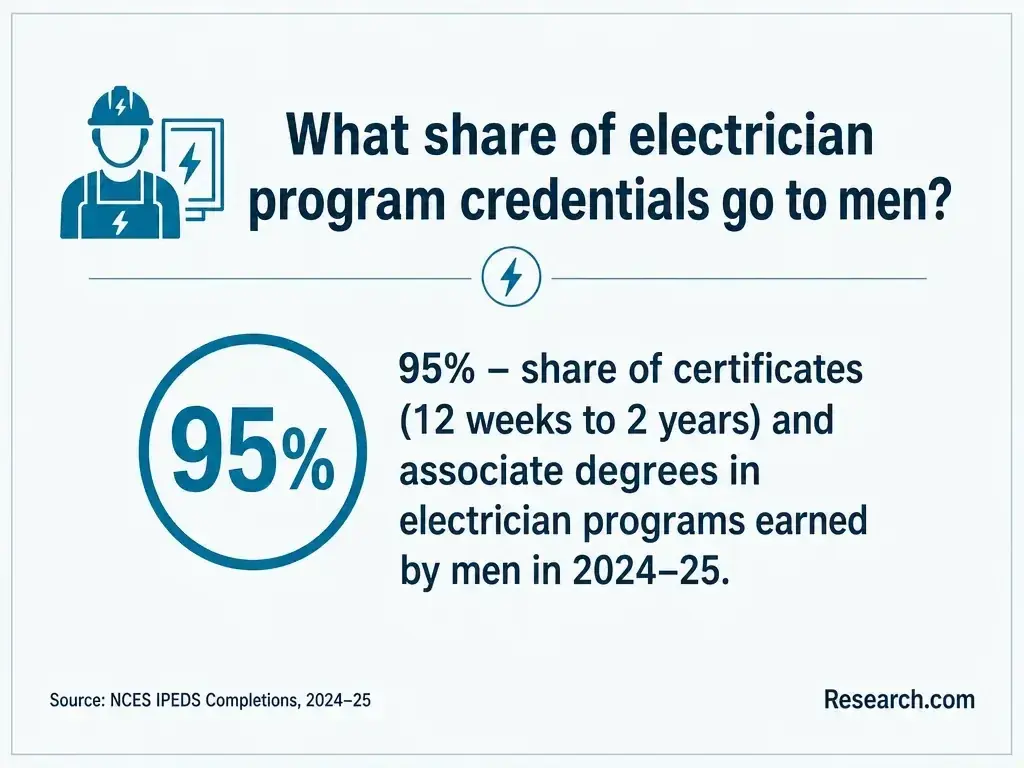
Illinois has no general statewide electrician occupational license. That does not mean every electrical job can be performed independently without local authorization. Municipal rules, permits, contractor registration or licensing, and employer supervision requirements may apply where a job is performed. Illinois' local-rule structure means the relevant question is not just where you train, but where you plan to work; confirm current requirements with the Chicago Heights building department and any other municipality in your intended service area.
A school certificate, voluntary industry credential, and registered-apprenticeship completion are distinct from a local contractor authorization. If a program claims it makes graduates "licensed," ask which authority issues the license, what work it permits, and what experience or examination is still required. Crossing into another jurisdiction can change the answer; never rely on a school's accreditation as proof of work authorization.
Start with your intended first job, then compare programs against it. A construction-focused applicant should prioritize supervised installation and an apprenticeship connection; someone targeting plant maintenance should inspect the controls and troubleshooting curriculum. A ranking can narrow the search, but the following checks determine whether a particular route is worth your time and money.
Red flags include a "fully online electrician" claim without practical training, a quote that omits tools and fees, or an implication that graduation automatically grants a license. If speed is your priority, remember that accelerated bachelors are not a shortcut around supervised electrical practice. Choose the route with a credible path to the work you want, not simply the shortest advertised completion time.
A common progression is helper or apprentice work, increasing responsibility with supervised experience, and eventual work as an experienced electrician; some workers move into estimating, supervision, contracting, or specialties such as industrial controls. Those transitions depend on demonstrated ability, employer needs, and applicable local rules - not the school credential alone. The U.S. Bureau of Labor Statistics describes electricians as installing, maintaining, and repairing electrical power, communications, lighting, and control systems.
For a career pivot, decide whether you want hands-on construction work, recurring maintenance at a facility, or a longer-term business path. That choice affects which labs and worksites are most valuable. Unlike a doctoral degree online no dissertation, electrician entry depends on practical competence and supervised work, not a remote academic credential.
The U.S. Bureau of Labor Statistics projects 9.2% national growth in electrician employment from 2025 to 2035. This indicates demand across the occupation, not a forecast of openings in Chicago Heights or a guarantee of a job after training. Construction activity, maintenance needs, and employers' hiring schedules can differ across the Chicago metropolitan area.
Use the national projection as context, then test local demand: review current employer and apprenticeship openings, note their required skills and work locations, and ask providers which employers recruit their trainees. An applicant willing to commute across the metro area may have more options than one restricted to Chicago Heights. The choice is about reaching competent, employable practice - not finding one of the shortest online doctoral programs or another unrelated fast credential.
Investing in education is a consequential decision. Research.com created its ranking to help readers compare electrician programs against other programs serving the same occupation and location, rather than against unrelated schools. The team evaluates available evidence on outcomes, cost, and quality; only programs with completions reported to IPEDS are eligible. That boundary matters: a registered apprenticeship or employer training program may be a strong option even if it does not appear in the ranking.
For best-program rankings, student outcomes include completion and full-time and part-time retention; earnings and return-on-investment measures include median earnings one year after completion and earnings relative to annual attendance cost. Cost and debt measures include resident and nonresident tuition, attendance cost, median debt - including for students who withdrew - and the federal loan default rate. Quality measures include institutional accreditation, occupation-relevant programmatic accreditation or industry recognition, and student support. Occupation-relevant recognition receives 20% of the score, institutional accreditation 10%, and support services 10%. The remaining 60% is allocated across outcomes, earnings, and costs using an entropy-based method that gives more weight to indicators that distinguish programs. Most-affordable rankings instead score only tuition, attendance cost, median debt, and loan default rate, with entropy-based weights; accreditation and other quality indicators are not scored.
The ranking draws on the following sources. Each serves a different purpose, so readers should still confirm a program's current details and eligibility directly with its provider.
The allied-health and dental sources do not establish electrician-program approval or licensing eligibility. Because college-oriented datasets do not cover every apprenticeship or employer program, use the ranking as a shortlist, not a complete inventory. For more on the approach, see Research.com's methodology.
# 1 position
# 2 position
No. A registered apprenticeship or employer-sponsored route may combine instruction with supervised, paid work. Trade school can help build entry-level skills, but ask whether its credential improves access to the jobs or apprenticeships you want.
You can study some theory online, but installation, testing, and troubleshooting require hands-on practice. Check the location and schedule of required labs or worksites before enrolling.
Not automatically. Illinois has no general statewide electrician license, and local rules may govern electrical contracting and permitted work. Check the requirements where you intend to work.
It depends on fees, tools, aid, travel, and lost earnings. An apprenticeship may pay wages during training, while a school program may offer a shorter initial course. Compare written total costs and realistic admission prospects.
Use rankings to identify options, then verify lab hours, total cost, schedule, employer recognition, and local work requirements. A paid apprenticeship or employer program may suit you even if it is outside a ranking limited to IPEDS-reported completions.