
Best Electrical Technician Training Programs & Trade Schools - Top Electrical Tech Schools in California for 2026

Co-Founder and Chief Data Scientist
Electrician training in California is a practical career decision: you are weighing tuition, time in school, apprenticeship or trainee requirements, hands-on lab access, job placement support, and whether a program helps you move toward state certification. The right trade school can shorten the learning curve, but it should also fit your budget, schedule, and target work setting, whether that is residential wiring, commercial construction, industrial maintenance, low-voltage systems, or renewable energy.
This guide reviews what students should know before choosing an electrician trade school program in California. It explains expected coursework, program length, online versus on-campus formats, costs, financial aid, prerequisites, specializations, salary expectations, and the job market. It also highlights the licensing-related work experience requirements students should plan for after classroom training.
Use this ranking guide as a decision tool, not just a school list. Before enrolling, confirm a program’s accreditation or approval status, ask how hands-on training is delivered, verify whether credits or hours apply toward your intended pathway, and compare total costs beyond tuition, including books, supplies, tools, exam fees, and transportation.
Key benefits of finishing electrician trade school in California
- Stronger entry into a skilled trade: Electrician trade school can help students build the technical foundation employers expect, including electrical theory, safety practices, wiring methods, conduit work, and code awareness.
- Competitive earning potential: Graduates of electrician trade schools in California can expect competitive salaries, with average annual wages around $69,678 and entry-level positions starting near $61,610, giving many new workers a solid financial starting point.
- Multiple career directions: Career paths from trade schools include residential, commercial, and industrial electrical work. Some graduates pursue union positions, contractor employment, low-voltage work, renewable energy roles, or other specialized fields.
- Hands-on preparation: Quality programs give students structured lab practice before they enter job sites, helping them learn how to use tools safely, read diagrams, troubleshoot circuits, and follow electrical standards.
- Flexible learning options: Completing an electrician trade school online can offer flexibility and convenience for theory-based coursework, especially for students balancing work and study. However, students should verify how the program handles required hands-on training.
What can I expect from electrician trade schools in California?
Electrician trade schools in California typically combine classroom instruction with lab-based practice. Students study the principles behind electrical systems, then apply those concepts through wiring exercises, circuit testing, conduit bending, equipment setup, and troubleshooting activities. The goal is to prepare students for entry-level electrical work and for the supervised experience required on the path to certification or licensing.
Core topics commonly include AC/DC theory, electrical math, blueprint reading, the National Electrical Code, residential wiring, commercial wiring, grounding, safety procedures, tools, materials, and OSHA-related job site practices. Strong programs do not treat safety as a side topic; they build it into every lab and installation exercise.
Students should also expect programs to vary in intensity. Some are full-time and structured for faster completion, while others are part-time or hybrid so students can keep working. Before enrolling, ask how many lab hours are included, whether instructors have current field experience, what equipment students use, and whether the school helps students register or prepare for the next step after graduation.
Many programs also offer career services such as résumé support, interview preparation, employer introductions, and guidance on Electrician Trainee pathways. These services matter because trade school alone is not the final credential for most electrician roles in California; students still need supervised work experience and must follow state requirements for their intended classification.
Where can I work after finishing electrician trade schools in California?
After finishing an electrician trade school program in California, graduates may qualify for entry-level roles with electrical contractors, construction companies, maintenance departments, industrial employers, public agencies, or specialty system installers. The exact role depends on the student’s training, work authorization, certification status, and supervised experience.
Common work settings include homes, apartment buildings, retail spaces, offices, schools, hospitals, factories, warehouses, data-related facilities, and infrastructure projects. Residential work often focuses on wiring, panel upgrades, lighting, outlets, troubleshooting, and remodels. Commercial work may involve larger systems, conduit runs, service equipment, tenant improvements, and code-driven installations.
Some graduates move into specialized areas such as renewable energy systems, fire alarm systems, low-voltage wiring, security systems, controls, or industrial maintenance. These paths can require additional training, employer-specific instruction, or separate certification steps.
Schedules can vary. Many electricians work full time, and evening, weekend, travel, emergency, or overtime hours may occur depending on the employer and project deadlines. The annual mean wage of $84,330 shows the strength of the California market, but actual pay depends on location, experience, union status, specialty, certification, and overtime availability.
How much can I make after finishing electrician trade schools in California?
Pay after electrician trade school in California depends on where you work, your level of supervised experience, your certification status, and the type of electrical work you perform. Graduates from top trade schools in the state report starting around $61,610 per year, which breaks down to roughly $29 to $35 an hour.
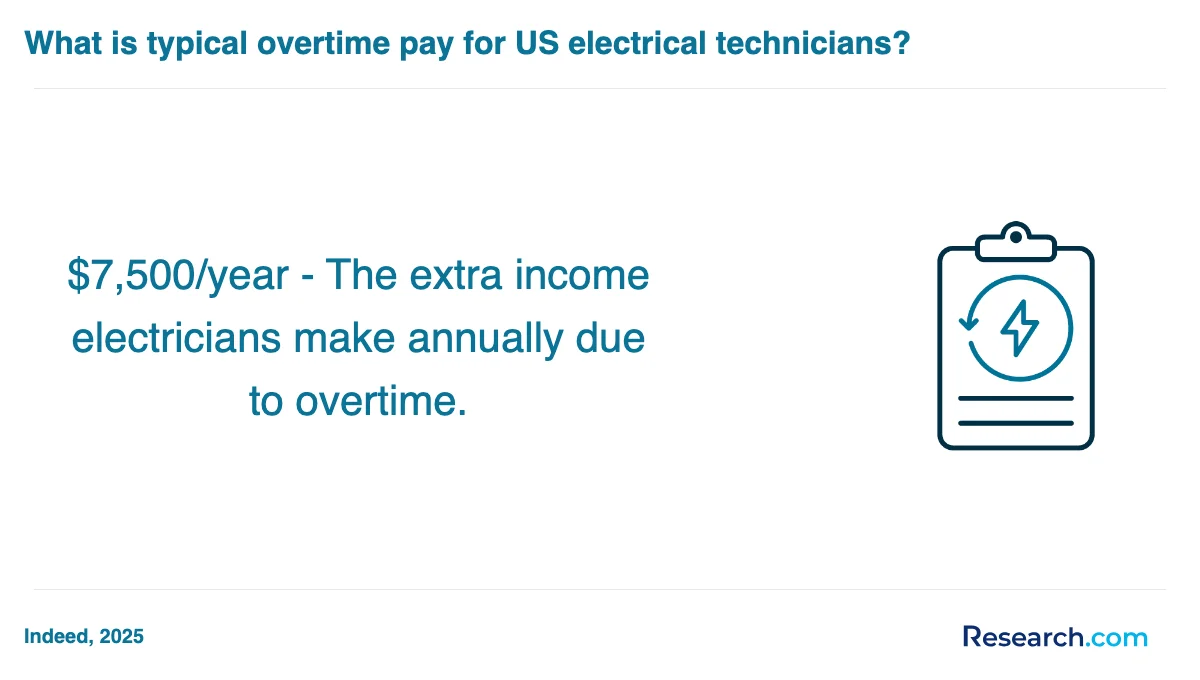
Wage ranges can be wide across California. Some positions may pay as low as $21 an hour, while others may exceed $57 an hour. Overtime can also change annual earnings; one example shows overtime boosting pay by an extra $10,500 per year. With experience and certifications, many electricians see their pay climb up to $86,311 annually.
Students should read salary figures carefully. Starting pay is not the same as experienced electrician pay, and trade school completion is not the same as full licensing. Entry-level graduates may begin as trainees, helpers, apprentices, or junior technicians while they build the hours and competencies required for higher-paying roles.
- Higher pay is often tied to experience: Employers typically pay more for workers who can troubleshoot independently and complete work to code with limited supervision.
- Specialization can matter: Industrial systems, controls, renewable energy, and commercial projects may offer different wage paths than basic residential work.
- Location affects earnings: Metro areas with heavy construction, infrastructure, or technology-related demand may offer stronger wages but also higher living costs.
Best Electrical Technician Training Programs & Trade Schools - Top Electrical Tech Schools in California for 2026
# 1 position
Los Angeles Trade Technical College - Electrician.
associateLos Angeles Trade Technical College offers a hybrid Electrician program that prepares students to install, operate, maintain, and repair electrical systems in residential, commercial, and industrial settings. The curriculum includes electronics, wiring, power transmission, safety, and electrical codes. The program is accredited by the Western Association of Schools and Colleges Accrediting Commission for Community and Junior Colleges. Annual in-state tuition is $1,238, and median earnings one year after completion are $50,745.
# 2 position
Los Angeles Trade Technical College - Electrician.
certificate or diplomaLos Angeles Trade Technical College offers a hybrid Electrician program that prepares students to install, operate, maintain, and repair electrical systems in residential, commercial, and industrial settings. The curriculum covers electronics, wiring, power transmission, safety, electrical testing, and relevant codes. Annual in-state tuition is $1,238. Graduates have median earnings of $50,745 one year after completion. The program is accredited by the Western Association of Schools and Colleges Accrediting Commission for Community and Junior Colleges.
# 3 position
Chaffey College - Electrical and Power Transmission Installation/Installer, General.
associateChaffey College offers a hybrid program in Electrical and Power Transmission Installation/Installer, General, preparing students to install residential, commercial, and industrial electrical systems and power transmission lines. The curriculum covers electricity, safety, wiring, insulation, grounding, blueprint reading, equipment operation, and relevant codes. The program is accredited by the Western Association of Schools and Colleges Accrediting Commission for Community and Junior Colleges. Annual in-state tuition is $1,184.
# 4 position
Chaffey College - Electrical and Power Transmission Installation/Installer, General.
certificate or diplomaChaffey College offers a hybrid program in Electrical and Power Transmission Installation/Installer, General, preparing students to install residential, commercial, and industrial electrical systems and power transmission lines. The curriculum covers electricity, safety, wiring, insulation, grounding, blueprint interpretation, equipment operation, and codes. The annual in-state tuition is $1,184. The program is accredited by the Western Association of Schools and Colleges Accrediting Commission for Community and Junior Colleges.
# 5 position
Independent Training & Apprenticeship Program - Electrician.
certificate or diplomaThis Hybrid Electrician program prepares individuals to install, operate, maintain, and repair electric apparatus and systems, including residential, commercial, and industrial wiring. Instruction covers electronics, power transmission, safety, electrical testing, and applicable codes and standards. Graduates have median earnings of $42,896 one year after completion. The program is accredited by the Accrediting Council for Continuing Education & Training.
# 6 position
CET-Soledad - Electrician.
certificate or diplomaThe Electrician program at CET-Soledad offers a hybrid format combining in-person and distance education. It trains students in installing, operating, maintaining, and repairing electric apparatus and systems, including residential, commercial, and industrial wiring. The curriculum covers electronics principles, power transmission, safety, job estimation, electrical testing, and relevant codes and standards. The program is accredited by the Council on Occupational Education.
# 7 position
Irvine Valley College - Electrician.
certificate or diplomaThe Electrician program at Irvine Valley College offers a hybrid format with some distance-education options. It prepares students to install, operate, maintain, and repair electrical systems in residential, commercial, and industrial settings. Instruction covers electronics principles, wiring, power transmission, safety, testing, inspection, and codes. The program's annual in-state tuition is $1,156 and it is accredited by the Western Association of Schools and Colleges Accrediting Commission for Community and Junior Colleges.
# 8 position
CET-San Jose - Electrician.
certificate or diplomaThe Electrician program at CET-San Jose offers hybrid learning to prepare students for installing, operating, maintaining, and repairing electric systems, including residential, commercial, and industrial wiring. The curriculum covers electronics, power transmission, safety, electrical testing, and relevant codes. This program is accredited by the Council on Occupational Education.
# 9 position
College of San Mateo - Electrician.
associateThe Electrician program at College of San Mateo offers a hybrid learning format combining distance education with hands-on training. It prepares students to install, operate, maintain, and repair electrical systems in residential, commercial, and industrial settings. Instruction covers electronics principles, wiring, power transmission, safety, job estimation, and electrical codes. The annual in-state tuition is $1,332. The program is accredited by the Western Association of Schools and Colleges Accrediting Commission for Community and Junior Colleges.
# 10 position
College of San Mateo - Electrician.
certificate or diplomaThe Electrician program at College of San Mateo offers a hybrid format with some distance-education options. It prepares students to install, operate, maintain, and repair electric apparatus and systems including residential, commercial, and industrial wiring. Instruction covers electronics, power transmission, safety, electrical testing, and applicable codes. The program’s annual in-state tuition is $1,332 and it is accredited by the Western Association of Schools and Colleges Accrediting Commission for Community and Junior Colleges.
Key Findings
- Applicants need a high school diploma or GED, and some programs require completion of at least one year of high school algebra with a grade of C or better.
- Programs combine classroom instruction with hands-on training, covering topics like the National Electrical Code, wiring fundamentals, safety standards, and conduit installation.
- Students must complete 8,000 hours of supervised work experience for general electrician licensing, or 4,800 hours for residential electricians.
- Tuition costs typically range from $5,000 to $20,000, with financial aid and payment plans often available.
- The average starting salary for electrician graduates in California is about $55,000, with experienced electricians earning $80,000 or more annually.
How long does it take to complete electrician trade schools in California?
Most electrician trade school programs in California take about 9 to 18 months to complete. Shorter programs may focus on core technical skills and entry-level preparation, while longer programs may include more lab time, broader code instruction, or additional preparation for specialized work.
Program length is only one part of the timeline. Students should also plan for the supervised work experience required after or alongside formal training. For example, students must complete 8,000 hours of supervised work experience for general electrician licensing, or 4,800 hours for residential electricians. This means trade school can be the first major step, but it is not usually the entire path to becoming fully qualified.
When comparing timelines, ask each school these questions:
- Is the program full time, part time, evening, weekend, hybrid, or self-paced?
- How many contact hours are classroom-based, and how many are hands-on lab hours?
- Does the program help students find supervised work experience after completion?
- Are there required externships, internships, or employer placements?
- Will the schedule allow you to work while enrolled?
A faster program can be appealing, but speed should not come at the expense of hands-on practice, safety training, code preparation, or employer recognition.
What's the difference between online and on-campus electrician trade school programs?
The main difference is how students learn theory versus hands-on skills. Online electrician trade school programs can work well for topics such as electrical theory, code concepts, safety rules, math, blueprint reading, and test preparation. On-campus programs are usually stronger for tool use, conduit bending, wiring labs, panel work, equipment testing, and supervised troubleshooting.
Purely online courses may be convenient, but students should be careful: electrical work is a hands-on trade, and California licensing-related pathways require practical experience. A program that teaches only theory may not be enough to prepare students for job site expectations or supervised work requirements.
Hybrid programs can offer a useful compromise. Students may complete lectures and assignments online, then attend scheduled labs in person. This format can help working adults reduce commute time while still building the physical skills employers expect.
- Online format is best for: flexible theory study, code review, math practice, and students with work or family obligations.
- On-campus format is best for: hands-on wiring, instructor feedback, tool familiarity, safety drills, and simulated job site practice.
- Hybrid format is best for: students who need flexibility but still want structured lab training.
Before choosing an online or hybrid program, confirm where labs take place, how often attendance is required, whether tools are provided, and whether the school’s training aligns with California requirements.
What is the average cost of electrician trade schools in California?
The average tuition fees for electrician programs in California hover around $20,905, significantly higher than the national average of $15,963. However, costs vary widely by school, program length, credential type, and whether the institution is public, private, nonprofit, or for-profit. Some lower-cost options exist; graduates from institutions like Baldwin Park Adult & Community Education have reported tuition fees as low as $1,665.
Students should look beyond tuition when comparing programs. Books and supplies average around $1,031 in California, and some programs may also require tools, uniforms, safety gear, transportation, parking, background checks, exam fees, or licensing-related fees. A 9-month intensive program with roughly 254 contact hours may have very different value depending on how much hands-on training and career support it provides.
Because tuition costs typically range from $5,000 to $20,000, the best financial choice is not always the cheapest program. A low-cost school may be a strong option if it has experienced instructors, adequate labs, employer connections, and clear alignment with California requirements. A higher-cost program should be able to justify the price through stronger facilities, scheduling flexibility, support services, or placement outcomes.
Before enrolling, ask for a written cost breakdown that includes tuition, fees, books, supplies, tools, payment plan terms, refund policies, and any costs not included in the advertised price. Students considering related electrical career paths can also review how do you become an electrical lineman for additional context on training routes and expenses.
What financial aid is available for electrician trade schools in California?
Financial aid for electrician trade schools in California may include federal aid, state aid, institutional scholarships, private scholarships, employer support, payment plans, and loans. Availability depends on the school’s eligibility, the student’s financial situation, enrollment status, and program type.
Many students begin by completing the FAFSA, which can determine eligibility for federal grants, federal loans, and work-study. The Federal Pell Grant may provide up to $7,395 a year for eligible students and does not need to be repaid. For career and technical education students in California, Cal Grant C may help cover training-related costs, including tools and equipment in some cases.
Private and industry scholarships can also reduce out-of-pocket costs. Examples include awards from the mikeroweWORKS Foundation and DEWALT Trades Scholarships. These scholarships often focus on students pursuing skilled trades and may have separate application deadlines, essays, or eligibility rules.
When comparing aid packages, pay attention to what must be repaid. Grants and scholarships are generally more favorable than loans. Payment plans can help spread costs over time, but students should check fees, interest, late penalties, and whether payments are due even if they withdraw.
- Ask whether the school is eligible for federal financial aid.
- Confirm whether aid applies to the specific electrician program, not just the institution.
- Request the net cost after grants and scholarships, not only the advertised tuition.
- Compare loan amounts carefully against expected entry-level wages.
- Look for employer, union, or apprenticeship-sponsored training opportunities when available.
What are the prerequisites for enrolling in electrician trade schools in California?
Most electrician trade schools in California require applicants to have a high school diploma or GED. Some programs also require completion of at least one year of high school algebra with a grade of C or better because electrical training relies on measurements, formulas, load calculations, and basic problem-solving.
Many schools require students to be at least 18 years old, although requirements can vary by institution and pathway. Applicants may also need a valid government-issued ID, proof of legal ability to study or work, and reliable transportation for labs, internships, or job site-related activities.
Common prerequisites include:
- High school diploma or GED
- Minimum age of 18
- Basic math skills, especially algebra
- Completion of at least one year of high school algebra with a grade of C or better, if required by the program
- Proof of residency or legal ability to study in California
- Physical ability to handle manual tasks, lift equipment, climb ladders, and work safely around electrical systems
- Reliable transportation, especially for programs with off-campus labs or fieldwork
Applicants should also be prepared for placement tests, admissions interviews, orientation sessions, or safety requirements. If your math skills are weak, consider refreshing algebra before enrolling; it can make electrical theory, conduit calculations, and code-related coursework easier to manage.
What are the typical courses in electrician trade schools in California?
Typical electrician trade school courses in California are designed to build both technical understanding and job-ready skills. Students usually start with electrical fundamentals, then progress into wiring, code, safety, installation methods, and troubleshooting.
Common coursework includes:
- Basic electrical theory: voltage, current, resistance, power, Ohm’s Law, circuits, capacitance, and electrical measurements.
- Electrical math: algebra and trigonometry applied to circuit problems, load calculations, conduit fill, and measurements.
- National Electrical Code: rules and standards that guide safe electrical installation and inspection.
- Wiring methods and electrical installation: switches, outlets, panels, raceways, cable types, grounding, bonding, and circuit layout.
- Conduit installation: bending, cutting, fitting, and routing conduit for residential, commercial, or industrial use.
- Blueprint reading: interpreting symbols, plans, diagrams, and specifications used on job sites.
- Safety training: OSHA safety protocols, personal protective equipment, lockout/tagout concepts, and CPR training.
- DC/AC electronics: transformers, motors, controls, and other system components.
- Programmable logic controllers: PLCs for students interested in automation or industrial electrical work.
Hands-on labs are especially important. Students should not only read about circuits; they should practice wiring, testing, diagnosing faults, using meters, and following safety procedures under instructor supervision. California’s requirement of 8,000 hours of supervised work experience means classroom training should prepare students for a long period of practical learning in the field.
What are the available specializations in electrician trade schools in California?
Electrician trade school specializations in California help students prepare for different work environments and certification paths. The best choice depends on whether you want to work in homes, commercial buildings, factories, public facilities, low-voltage systems, or emerging energy technologies.
- Residential Electrician: Focuses on home wiring, outlets, lighting, service panels, troubleshooting, remodels, and residential code requirements.
- Commercial Electrician: Prepares students for offices, retail spaces, schools, and larger building systems that require conduit, panels, lighting systems, and commercial code compliance.
- Industrial Electrician: Emphasizes factories, manufacturing equipment, power distribution, motors, controls, and programmable logic controllers.
- General Electrician: Covers a broader mix of residential and commercial systems and can be useful for students who want flexibility across job types.
- Fire/Life Safety Technician: Trains students in fire alarms, emergency systems, and safety-related electrical installations.
- Voice Data Video Technician: Focuses on telecommunications, networking, low-voltage systems, and the digital infrastructure used in modern buildings.
- Renewable energy and solar-related training: May be useful for students interested in California’s energy sector, depending on program offerings and employer demand.
Some students choose broad training first, then specialize after gaining field experience. Others select a specialized route early because they already know the type of work they want. Either approach can work, but students should confirm how the specialization connects to California certification requirements, employer expectations, and supervised hour requirements.
Students comparing electrical and engineering-related options can also explore jobs you can get with an electrical engineering degree, though electrician trade training and electrical engineering degrees lead to different types of roles.
How do you choose the best electrician trade school program in California?
To choose the best electrician trade school program in California, start with outcomes and requirements, not marketing claims. A strong program should teach the skills employers need, provide meaningful hands-on training, explain the path toward certification, and offer a cost structure you can realistically manage.
Use these factors to compare schools:
- Approval, accreditation, or recognition: Verify the school’s status and whether the specific electrician program meets the standards required for your intended pathway.
- Hands-on training: Look for modern labs, safe equipment, wiring boards, conduit practice, meters, panels, and instructor-supervised troubleshooting.
- Curriculum depth: Make sure the program covers electrical theory, wiring, the National Electrical Code, safety, conduit installation, blueprint reading, and job site practices.
- Instructor experience: Instructors with field experience can connect classroom lessons to real electrical work and common job site problems.
- Scheduling: Compare full-time, part-time, evening, weekend, online, on-campus, and hybrid options based on your work and family obligations.
- Career support: Ask about employer partnerships, union connections, apprenticeship guidance, résumé help, interview preparation, and job placement assistance.
- Total cost: Compare tuition, fees, tools, books, supplies, financial aid, payment plans, and refund rules.
- Student support: Tutoring, math support, advising, and licensing guidance can be valuable, especially for students returning to school after time away.
Avoid choosing a school based only on speed or advertised salary. Ask for written details on program length, lab hours, completion expectations, job placement support, and how the program helps students move into supervised electrical work. Students interested in related energy careers may also compare options such as the best online wind turbine technician certification courses.

What career paths are available for electrician trade school graduates in California?
Electrician trade school graduates in California can pursue several career paths, depending on their training, certification progress, supervised experience, and employer needs. Many begin in entry-level roles and advance as they complete required hours and build field competence.
Common career paths include:
- Residential electrician trainee or apprentice: Works on homes, apartments, lighting, panels, outlets, and remodel projects.
- Commercial electrician trainee or apprentice: Supports installations and repairs in offices, retail buildings, schools, hospitals, and other commercial facilities.
- General electrician pathway: Builds broad experience across residential and commercial systems while working toward state requirements.
- Industrial electrical technician: Works with motors, controls, machinery, power distribution, and automation systems in manufacturing or industrial environments.
- Low-voltage technician: Installs or maintains fire alarms, security systems, communications cabling, networking systems, and related infrastructure.
- Solar or renewable energy technician: Applies electrical knowledge to photovoltaic systems, energy storage, or related clean energy projects.
- Maintenance electrician: Troubleshoots and repairs electrical systems for buildings, campuses, plants, or public agencies.
- Supervisor, estimator, project manager, or contractor: Experienced electricians may move into leadership, planning, or business ownership after meeting licensing and experience requirements.
Some graduates continue into apprenticeships, union programs, manufacturer training, or specialty certifications. Others branch into renewable energy roles; one related path is explained in this guide on how to be a wind turbine technician.
What is the job market for electrician trade school graduates in California?
The job market for electrician trade school graduates in California is strong, supported by construction, infrastructure upgrades, building maintenance, renewable energy projects, and ongoing demand for skilled electrical workers. California has nearly 73,000 employed professionals statewide, and demand for electricians in California is projected to grow 11% from 2023 to 2033.
Pay also reflects the strength of the market. Annual salaries average $84,330, and hourly rates surpass $42 in metro areas. However, new graduates should understand that wages vary by region, employer, certification status, union affiliation, specialty, overtime, and experience level.
Graduates may find opportunities in large metro areas such as Los Angeles and San Francisco, but demand can also exist in suburban, industrial, agricultural, and infrastructure-heavy regions. Students willing to commute or relocate within California may have access to a wider range of openings.
- Demand drivers: construction activity, building upgrades, infrastructure work, energy projects, and replacement needs as experienced workers leave the field.
- Competitive advantage: graduates with hands-on lab experience, safety training, code familiarity, and strong math skills may be better prepared for entry-level roles.
- Long-term growth: certification, supervised experience, specialization, and reliability on job sites can lead to higher wages and advancement.
Choosing a respected trade school is one step in entering the field. Students should also plan for supervised work hours, state requirements, and employer expectations. To compare broader options, review trade schools for electricians that align with your career goals.
Frequently Asked Questions about electrician
To choose the best electrical technician training program in California, consider factors such as program accreditation, curriculum alignment with industry standards, experienced faculty, hands-on training opportunities, and graduate success rates. Additionally, check for state-of-the-art facilities and financial aid options to ensure a comprehensive educational experience tailored to your career aspirations.
In 2026, electrical technician students in California often face challenges like adapting to rapidly evolving technologies, managing tuition costs, and balancing hands-on training with theoretical knowledge. Schools address these issues by offering financial aid, incorporating advanced tech training, and maintaining a robust curriculum.
An electrician trade school diploma significantly enhances career mobility and advancement in California. Graduates gain hands-on skills and knowledge, making them competitive candidates for entry-level positions. The diploma lays the groundwork for further certifications, increasing potential for advancement into supervisory or specialized roles. Relationships with industry partners can also facilitate career progression.
Employers highly value hands-on electrical expertise, problem-solving abilities, and a strong grasp of electrical safety protocols among graduates. Additionally, skills such as proficiency in using electrical tools, understanding circuitry, and ability to read technical diagrams play a crucial role in securing job opportunities.
To choose the best Electrician degree program near me, consider looking at Research.com to assess the academic quality and reputation of programs near California. Check if these programs offer hands-on training opportunities and whether they are affiliated with trade unions or professional organizations. Additionally, explore universities and vocational schools that offer good reviews and successful graduate outcomes, ensuring they are conveniently located near you.
Related Electrician Rankings for Nearby States
- Best Electrical Technician Training Programs & Trade Schools - Top Electrical Tech Schools in Arizona for 2026
- Best Electrical Technician Training Programs & Trade Schools - Top Electrical Tech Schools in Idaho for 2026
- Best Electrical Technician Training Programs & Trade Schools - Top Electrical Tech Schools in New Mexico for 2026
- Best Electrical Technician Training Programs & Trade Schools - Top Electrical Tech Schools in Montana for 2026
- Best Electrical Technician Training Programs & Trade Schools - Top Electrical Tech Schools in Texas for 2026
- Best Electrical Technician Training Programs & Trade Schools - Top Electrical Tech Schools in Hawaii for 2026
- Best Electrical Technician Training Programs & Trade Schools - Top Electrical Tech Schools in Missouri for 2026
- Best Electrical Technician Training Programs & Trade Schools - Top Electrical Tech Schools in Louisiana for 2026
- Best Electrical Technician Training Programs & Trade Schools - Top Electrical Tech Schools in Wisconsin for 2026
- Best Electrical Technician Training Programs & Trade Schools - Top Electrical Tech Schools in Illinois for 2026
Top Trending Rankings
References
- What Does It Take to Become an Electrician? - InterCoast Colleges https://intercoast.edu/articles/become-electrician-in-california/
- Electrician Trainee Program | American River College https://arc.losrios.edu/academics/programs-majors/electrician-trainee-program
- Electrical Technology Program for Future Electricians - San Joaquin Valley College https://www.sjvc.edu/program/electrical-technology/
- Electrical Trade School: Powering Careers in a Thriving Field https://abcsocal.org/electrical-trade-school/
- Electrician (Residential & General) - Center for Employment Training https://cetweb.edu/program/electrician
- Electrical Technology - Degrees and Certificates - Pasadena City College https://pasadena.edu/academics/degrees-and-certificates/certificates-of-achievement/electrical-technology.php
- Electrical Technician Trade School Programs & College Courses Rocklin CA - National Career Education https://nce.edu/electrician-training/rocklin-ca/
- Electrical Technology | Irvine Valley College http://www.ivc.edu/idea/electrical-technology
- Best Electrician Programs in California | Learn How to Become https://toptradeschools.com/near-you/electrician/california/
- Find an apprenticeship program https://www.dir.ca.gov/databases/das/aigstart.asp


