
Best Electrical Technician Training Programs & Trade Schools - Top Electrical Tech Schools in Arizona for 2026

Co-Founder and Chief Data Scientist
Electrician training in Arizona can be a fast route into paid skilled work, but the best program depends on more than the school name. You need to compare cost, schedule, hands-on lab access, apprenticeship connections, licensing preparation, and whether the curriculum fits the type of electrical work you want to do.
This Research.com guide is designed for students comparing electrician trade school options in Arizona, including recent high school graduates, working adults changing careers, and people who want a shorter training path than a traditional degree. It explains what electrician trade schools usually teach, how long programs take, what they may cost, what financial aid can help, and which career paths may be available after training.
Use this guide as a decision tool. A trade school can help you build job-ready skills and prepare for apprenticeship opportunities, but it is not always the final step toward licensure. In Arizona, your long-term earnings and job options will also depend on supervised work experience, exam requirements, employer demand, and the specialty you pursue.
Key benefits of finishing electrician trade school in Arizona
Finishing an electrician trade school program in Arizona can give you a structured foundation before entering an apprenticeship, helper role, or entry-level electrical position. The strongest programs combine electrical theory with repeated practice using tools, wiring systems, code references, and jobsite safety procedures.
- Clearer path into paid electrical work: Graduates from electrician trade schools in Arizona can expect an average hourly wage around $27.50, with potential to earn up to $43.91 per hour as they gain experience.
- Multiple job directions: Career paths include residential, commercial, and industrial electrician roles, giving graduates options to specialize as their skills and work experience grow.
- Practical preparation before apprenticeship: Trade school can help students understand wiring, blueprints, electrical safety, tools, and code concepts before they enter a jobsite.
- Flexible training formats: Finishing an electrician trade school online can provide flexibility and convenience for students balancing work, family, and study, though hands-on practice remains essential for this trade.
The main benefit is not just earning a certificate. It is leaving school with enough technical vocabulary, safety awareness, and hands-on confidence to learn faster on the job.
- Best Electrical Technician Training Programs & Trade Schools - Top Electrical Tech Schools in Arizona for 2026
- What can I expect from electrician trade schools in Arizona?
- Where can I work after finishing electrician trade schools in Arizona?
What can I expect from electrician trade schools in Arizona?
Electrician trade schools in Arizona usually blend classroom instruction with hands-on lab work. You can expect to study electrical theory, wiring methods, blueprint reading, safety practices, and the National Electrical Code, then apply those concepts at training stations that simulate residential, commercial, or industrial work.
Full-time programs typically last between 7 to 10 months, although the exact schedule depends on the school and credential. Many programs are designed to move students into apprenticeship or entry-level work quickly, so the pace can be steady. Expect frequent quizzes, skills checks, lab assignments, and tool-based practice.
Common training experiences
- Classroom lessons: Students learn core concepts such as circuits, voltage, current, grounding, load calculations, and code requirements.
- Hands-on labs: Training may include mock wiring stations, conduit bending, motor controls, programmable logic controls, and troubleshooting practice.
- Safety preparation: OSHA training and jobsite safety procedures are important because electrical work carries real risk when shortcuts are taken.
- Career-focused exposure: Some programs introduce newer fields, including solar electric systems, which are especially relevant in Arizona's sunny climate.
A good program should not feel like theory alone. By the time you finish, you should be more comfortable reading diagrams, using basic electrical tools, following safety rules, and communicating with supervisors or journeyman electricians on a jobsite.
Where can I work after finishing electrician trade schools in Arizona?
After finishing an electrician trade school program in Arizona, many graduates start in apprentice electrician, electrician helper, construction, or facilities maintenance roles. These jobs let new workers apply classroom and lab skills while building the supervised experience needed for advancement.
Some graduates pursue apprenticeships with large employers such as Arizona Public Service (APS), where training may rotate through roles such as line worker or substation electrician. Others look for city department opportunities in Phoenix, including apprentice programs in Aviation or Public Works, where work may involve systems such as airfield lighting or water treatment plants.
Common work settings
- Residential construction: Wiring new homes, installing panels, outlets, switches, fixtures, and safety devices.
- Commercial buildings: Working on offices, stores, schools, hospitals, and other larger facilities.
- Industrial environments: Supporting machinery, motors, controls, and electrical systems in production or utility settings.
- Public infrastructure: Maintaining electrical systems used by airports, water facilities, and municipal departments.
- Facilities maintenance: Troubleshooting and repairing electrical systems in existing buildings.
Wages in construction or facilities maintenance jobs can range from $22 to $45 per hour depending on experience. Trade school can help you qualify for interviews, but employers will still look for reliability, safety habits, tool familiarity, and willingness to continue learning in the field.
After finishing an electrician trade school program in Arizona, entry-level pay depends on your role, city, employer, and whether you enter an apprenticeship or another electrical job. Many recent graduates report first jobs paying between $22 and $30 an hour, which equals about $46,000 to $63,000 annually if working full-time.
The average wage is around $27.50 per hour, but earnings usually increase with supervised experience, additional certifications, specialized skills, and progress toward journeyman status. In cities like Phoenix or Tucson, some specialty electrician roles report salaries from $48,000 up to $77,000 a year. Journeyman electricians who have completed apprenticeships after trade school often see salaries around $69,000 in Phoenix, with some earning close to $79,000.
| Career stage or role | Pay information stated for Arizona |
| Recent trade school graduates | Between $22 and $30 an hour, or about $46,000 to $63,000 annually full-time |
| Average electrician wage | Around $27.50 per hour |
| Specialty electricians in Phoenix or Tucson | From $48,000 up to $77,000 a year |
| Journeyman electricians in Phoenix | Around $69,000, with some earning close to $79,000 |
The important point is that trade school is usually the beginning of the wage ladder, not the top. The fastest earnings growth generally comes from combining formal training with reliable job performance, apprenticeship hours, code knowledge, and specialization.
- Applicants must be at least 18 years old and have a high school diploma or GED, with some programs requiring math courses like Algebra.
- Most apprenticeship programs last about four years, including 8,000 hours of on-the-job training and up to 900 hours of classroom instruction.
- Application fees are generally around $25, while tuition ranges from $10,000 to $20,000, excluding tools and books.
- State licensing fees include $720 for a residential electrician license, $580 for a commercial license, and $116 for exams.
- Starting salaries for entry-level electricians in Arizona range from $40,000 to $50,000, with experienced electricians earning over $60,000 annually.
These findings show why students should compare both short-term school costs and long-term career requirements. Tuition is only one part of the decision. You should also budget for tools, books, licensing-related costs, transportation, and the time required to complete apprenticeship training after school.
Electrician trade school programs in Arizona typically take about 6 months to a year to complete, depending on the school, credential, and whether you study full-time or part-time. Full-time programs are usually the fastest option for students who can commit to a regular schedule and want to enter the workforce quickly.
Part-time students may take around 12 to 18 months, especially if they are working, caring for family, or taking evening courses. This slower pace can be worthwhile if it helps you avoid dropping out or taking on more debt than necessary.
Trade school timeline versus apprenticeship timeline
| Training stage | Typical time commitment | Purpose |
| Electrician trade school | About 6 months to a year; some full-time programs run between 7 to 10 months | Builds classroom knowledge, lab skills, safety habits, and entry-level readiness |
| Part-time trade school | Around 12 to 18 months | Offers more flexibility for students balancing school with work or family |
| Apprenticeship | About four years | Provides 8,000 hours of on-the-job training and up to 900 hours of classroom instruction |
Before enrolling, ask whether the program's hours and coursework can support your next step into an apprenticeship, employer-sponsored training, or licensing pathway. A short program is valuable only if it prepares you for the requirements that come after graduation.
The main difference between online and on-campus electrician trade school programs is how students learn theory and practice physical skills. Online formats can be useful for electrical concepts, safety rules, code study, and assignments. On-campus formats are stronger for tool handling, wiring practice, conduit bending, troubleshooting, and immediate instructor feedback.
Online programs, such as the one at Central Arizona College, may let students study electrical theory, wiring methods, and safety rules with more schedule flexibility. This can help working adults and students with family responsibilities keep moving through coursework.
On-campus programs at schools such as Mohave Community College or Cochise College place students in classrooms and labs where they can work with real tools and wiring systems. For many learners, that physical repetition is essential because electrical work is a hands-on trade.
Hybrid programs, such as the one at UEI College in Mesa, combine online study with scheduled lab time. This format can work well for students who want flexibility but still need practical training before entering a jobsite.
| Format | Best for | Key limitation |
| Online | Students who need flexibility for theory, safety, and code-focused coursework | Limited hands-on tool and wiring practice unless paired with labs |
| On-campus | Students who learn best through direct practice, demonstrations, and instructor feedback | Less flexible schedule and possible commuting requirements |
| Hybrid | Students who want online convenience plus required in-person lab experience | Still requires travel for practical training sessions |
For electrician training, avoid choosing an online option based on convenience alone. Make sure the program explains how students complete hands-on requirements and how the training connects to employment or apprenticeship opportunities.
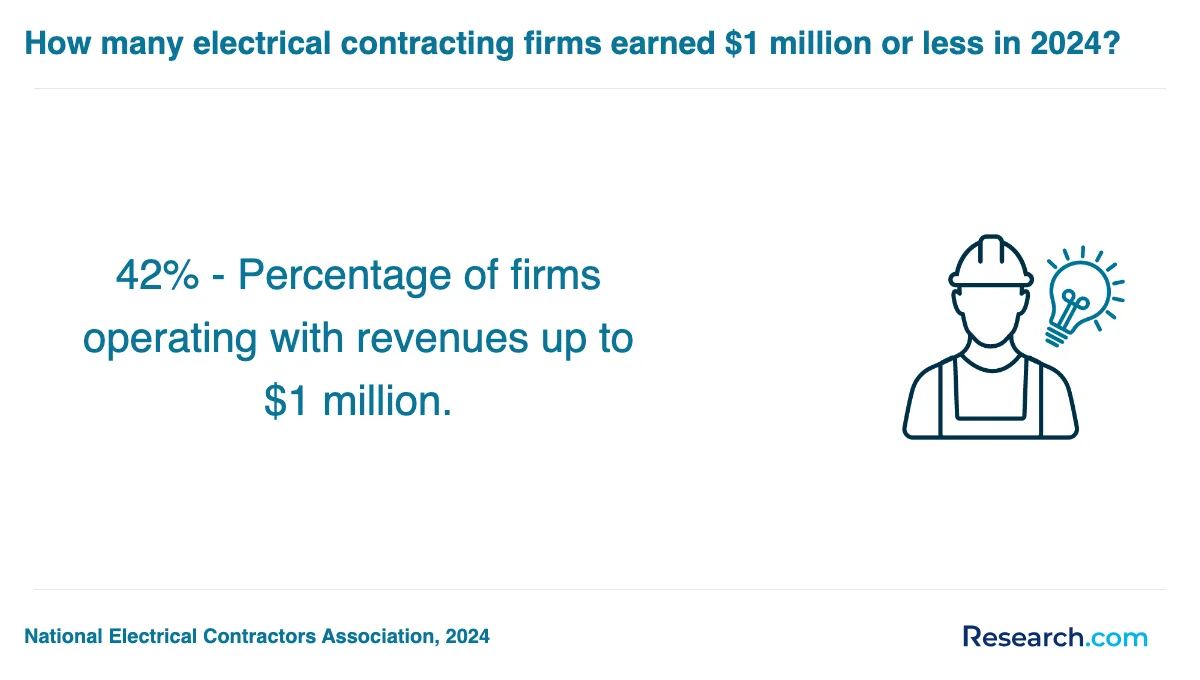
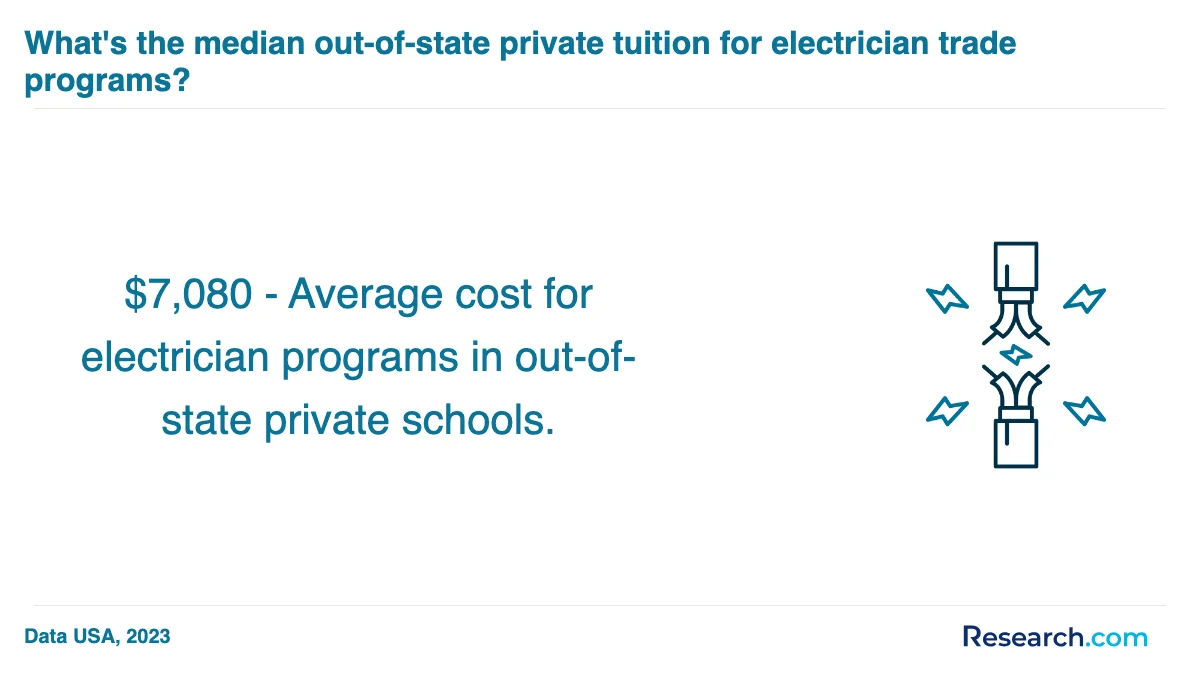
The average cost of electrician trade schools in Arizona varies by credential, school type, program length, and what is included in tuition. Certificate or diploma courses usually cost between $3,000 and $15,000. Some programs cost more when they include supplies, books, or extended training.
For example, UEI College in Mesa offers a program that spans about 36 weeks and costs $21,500, with books and supplies included. Associate degree programs can cost anywhere from $10,000 to $25,000 and typically take two years. At community colleges like Pima, students often point to the lower annual cost, roughly $1,513.99 excluding tax, and the possibility that credits may count toward further education.
Students should also budget for tools and equipment, which can add another $500 to $1,500. Insulated pliers, wire strippers, multimeters, work clothing, and other required items may not be fully covered by tuition.
| Cost category | Amount stated | What to check before enrolling |
| Certificate or diploma courses | Between $3,000 and $15,000 | Whether books, supplies, labs, and exam preparation are included |
| UEI College in Mesa program | About 36 weeks and $21,500 | Books and supplies are included |
| Associate degree programs | Anywhere from $10,000 to $25,000 over two years | Whether credits transfer or support further education |
| Pima-related annual cost example | Roughly $1,513.99 excluding tax | Fees, books, tools, and total program length |
| Tools and equipment | Another $500 to $1,500 | Required tool list and whether financial aid can cover supplies |
When comparing prices, look at total cost rather than tuition alone. Ask each school for an itemized estimate that includes application fees, books, supplies, tools, uniforms, exam preparation, and any required campus or lab fees. If cost is your top concern, you can also review affordable online trade schools programs for electricians to compare lower-cost training options.
Financial aid for electrician trade schools in Arizona may come from federal aid, state or private scholarships, school-based awards, employer support, and paid apprenticeship pathways. The right option depends on whether your program is eligible for aid and whether you meet application deadlines.
Many students start with the FAFSA to determine eligibility for federal aid, including the Pell Grant, which does not need to be repaid. This can be especially helpful for students who want to reduce loans while completing a career-focused program.
Arizona students may also look for scholarship support. The Desert Financial Foundation offers aid for Arizona adults entering electrical trades, while the Shared Energy Future Foundation Trades Scholarship supports students who show promise through academics and community involvement.
Some schools, including Refrigeration School, Inc. (RSI), provide institutional scholarships and financial aid advising. Apprenticeship options through programs such as those at EVIT can also help students earn wages while learning practical electrical skills.
Financial aid checklist
- Ask whether the electrician program is eligible for federal financial aid.
- Complete the FAFSA early if the school accepts federal aid.
- Request a written cost breakdown before signing an enrollment agreement.
- Ask whether scholarships can cover tools, books, supplies, or only tuition.
- Compare school-based training with paid apprenticeship routes.
- Avoid borrowing until you understand repayment terms and likely entry-level wages.
The best aid package is one that lowers your out-of-pocket cost without limiting your ability to complete training. If a school cannot clearly explain its aid options, total program cost, and refund policy, keep comparing.
Most electrician trade schools in Arizona have straightforward admissions requirements. Applicants generally need to be at least 18 years old and have a high school diploma or GED. Some programs also require math preparation, including courses like Algebra, because electricians use measurements, formulas, load calculations, and technical diagrams regularly.
Schools may also ask applicants to complete an aptitude test covering math and reading. This helps confirm that students are ready for technical coursework and safety instructions. If your math skills are rusty, ask whether the school offers refresher support before the most technical courses begin.
Common enrollment requirements
- Being at least 18 years old
- Having a high school diploma or GED
- Completing math prerequisites such as Algebra, if required
- Passing a basic aptitude test related to math and reading
- Having reliable transportation to campus, labs, or off-site training locations
- Being physically able to lift, stand, climb, handle tools, and work safely for long periods
These prerequisites are not just administrative hurdles. They reflect the realities of electrical work: you need to understand instructions, calculate accurately, follow safety rules, and perform physical tasks in changing jobsite conditions.
Electrician trade school courses in Arizona are usually built around the skills employers expect from entry-level electrical workers: safe work habits, code awareness, wiring practice, troubleshooting, and the ability to read technical information. Many programs combine lectures, labs, and assessments so students can connect theory to jobsite tasks.
Typical courses include:
- Electrical Theory: Covers current, voltage, resistance, circuits, and how electricity behaves in residential, commercial, and industrial systems.
- Residential Wiring: Teaches installation of outlets, switches, fixtures, panels, and safety devices in home-like training environments.
- Commercial and Industrial Wiring: Introduces larger systems, three-phase power, conduit bending, raceways, and equipment common in business or industrial settings.
- Blueprint Reading and Estimating: Builds the ability to interpret schematics, follow plans, and understand project materials and costs.
- Motor Controls and PLCs: Provides exposure to automation, controls, motor maintenance, and programmable logic controls used in industrial environments.
- Low Voltage and Photovoltaic Systems: Covers systems such as alarms, communications, and solar-related electrical work that may be relevant in Arizona.
- Electrical Codes and Safety: Focuses on NEC requirements, OSHA standards, safe tool use, grounding, lockout procedures, and hazard prevention.
These courses may total 700 to 900 hours depending on the program. When comparing schools, ask how much of that time is hands-on lab work, how students are evaluated, and whether the curriculum supports the apprenticeship or licensing path you plan to follow.
Electrician trade schools in Arizona may offer broad electrical training or allow students to focus on specific career areas. Specialization matters because the skills used in home wiring, industrial controls, solar installation, and low-voltage systems can differ significantly.
Students at schools such as Pima Community College may pursue residential and commercial electrician training that prepares them to work on homes, offices, and other buildings. Other programs, including those at UEI College, may introduce low-voltage systems that support roles such as Fire Alarm Technician.
Common specialization areas
- Residential electrical work: Wiring homes, panels, lighting, outlets, switches, and safety systems.
- Commercial electrical work: Installing and maintaining systems in offices, retail buildings, schools, and other facilities.
- Industrial controls: Working with motors, programmable logic controls, equipment maintenance, and troubleshooting.
- Low-voltage systems: Supporting alarms, security systems, communications wiring, and related technologies.
- Solar and photovoltaic systems: Building skills for solar panel installation and related electrical work in Arizona's sunny climate.
- Certification and safety preparation: Preparing for OSHA training, state licenses, and other credentials that may support advancement.
Choose a specialization based on the type of work you want to do, not just what sounds interesting in a course catalog. If you are also exploring renewable energy careers, fast affordable wind turbine technician certification programs online can help you compare related training paths.
The best electrician trade school program in Arizona is the one that fits your career goal, budget, schedule, and learning style while preparing you for real job requirements. A low tuition price is attractive, but it should not be the only factor. Weak lab access, limited employer connections, or unclear licensing preparation can cost you more later.
What to compare before enrolling
- Accreditation and approval: Confirm that the school is recognized and that the program supports your intended career or apprenticeship path.
- Hands-on training: Ask how much time students spend in labs using tools, wiring systems, meters, conduit, and troubleshooting exercises.
- Schedule flexibility: Evening, weekend, hybrid, or part-time options can be important if you are working while studying.
- Apprenticeship and employer connections: Strong industry relationships may help students find interviews, apprenticeships, or entry-level roles after completion.
- Total cost: Compare tuition, fees, tools, books, transportation, and licensing-related expenses.
- Student support: Look for tutoring, financial aid advising, career services, and help preparing resumes or interviews.
- Licensing preparation: Ask how the curriculum connects to state requirements, exams, and apprenticeship expectations.
It also helps to speak with admissions staff, instructors, current students, and recent graduates before committing. Ask direct questions about completion support, job placement services, lab equipment, class size, and what graduates typically do next.
If you want related skills that may complement electrical training, you can also compare affordable online maintenance technician certification programs. Maintenance training can be useful for students interested in facilities work, troubleshooting, and broader technical roles.
Electrician trade school graduates in Arizona can pursue several career paths, beginning with entry-level roles and progressing through apprenticeship, journeyman-level work, supervision, or specialization. Some students complete a 7-month Electrical Applications course in Phoenix and then seek roles that let them build supervised experience.
Common early roles include residential electrician helper, commercial electrician helper, apprentice electrician, industrial maintenance trainee, and facilities maintenance worker. These jobs may involve installing wiring in homes, maintaining systems in stores, or troubleshooting machinery in factories.
As experience grows, graduates may move toward journeyman electrician, master electrician, electrical foreman, project manager, safety coordinator, or business owner roles. Some also pursue specialized areas such as telecom, security systems, building automation, or renewable energy-related electrical work. Arizona's licensing reciprocity with nearby states may also be useful for electricians who plan to work across regional markets.
| Career stage | Possible roles | Typical focus |
| Entry level | Helper, apprentice, maintenance support | Learning tools, safety, wiring methods, and jobsite expectations |
| Experienced electrician | Residential, commercial, or industrial electrician | Installing, maintaining, and troubleshooting electrical systems |
| Advanced or supervisory | Journeyman, master electrician, foreman, project manager, safety coordinator | Leading work, managing projects, ensuring code compliance and safety |
| Specialized technical | Telecom, security systems, building automation, renewable energy-related roles | Working with specific technologies and systems |
For students interested in renewable energy and electrical technology, reviewing the best wind turbine technician training online may also help identify adjacent career options.
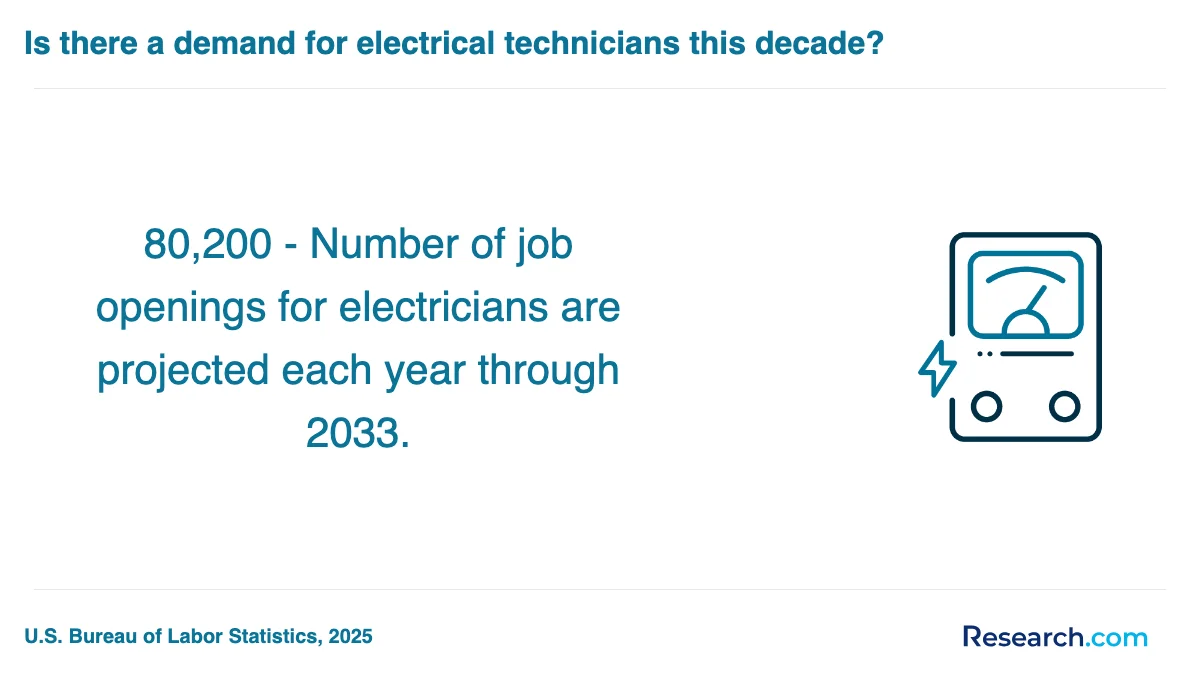
The job market for electrician trade school graduates in Arizona is supported by construction activity, population growth, infrastructure needs, and renewable energy projects. Arizona's population has surged past 7 million, and demand is especially visible in fast-growing areas such as the Phoenix metro area.
The electrician job outlook in Arizona includes strong 35% projected job growth through 2030. Hourly wages average $27.50, with top electricians earning much more. The Phoenix metro area has also seen yearly increases around 22% in employment, reflecting strong regional demand.
Why demand continues to grow
- Strong 35% projected job growth through 2030.
- Hourly wages averaging $27.50, with top electricians earning much more.
- Fast growth zones like the Phoenix metro area with yearly increases around 22% in employment.
- Expanding renewable energy projects that require specialized electrical skills.
- Ongoing construction, maintenance, and infrastructure work across residential, commercial, and public-sector settings.
Graduates should still be realistic. A strong job market does not guarantee the same outcome for every student. Employers will evaluate your attendance, safety habits, technical skills, reliability, references, and willingness to continue training. If you want to understand the broader technical education behind electrical systems, review the latest electrical engineering education requirements and compare how engineering education differs from trade-based electrician preparation.
Best Electrical Technician Training Programs & Trade Schools - Top Electrical Tech Schools in Arizona for 2026
# 1 position
Refrigeration School Inc - Electrician.
certificate or diplomaThe Electrician program at Refrigeration School Inc offers hybrid learning to teach installation, operation, maintenance, and repair of electric apparatus and systems. Instruction covers electronics principles, wiring, power transmission, safety, and electrical codes. Graduates have a median earning of $35,084 one year after completion. The program is accredited by the Accrediting Commission of Career Schools and Colleges.
# 2 position
Pima Community College - Electrical and Power Transmission Installation/Installer, General.
certificate or diplomaPima Community College offers a hybrid Electrical and Power Transmission Installation/Installer, General program. It prepares students to install indoor and outdoor electrical systems and power transmission lines for residential, commercial, and industrial settings. The curriculum covers electricity, safety, wiring, insulation, grounding, blueprint reading, equipment operation, maintenance, and relevant codes. The program’s annual in-state tuition is $2,370. It is accredited by the Higher Learning Commission.
# 3 position
Pima Community College - Electrician.
certificate or diplomaPima Community College offers a hybrid Electrician program that prepares students to install, operate, maintain, and repair electrical systems including residential, commercial, and industrial wiring. The curriculum covers electronics principles, power transmission, safety, electrical testing, and applicable codes. Annual in-state tuition is $2,370. The program is accredited by the Higher Learning Commission, providing technical skills for various electrical apparatus and systems.
# 4 position
South Mountain Community College - Electrician.
certificate or diplomaSouth Mountain Community College offers a Hybrid Electrician program designed to develop technical skills for installing, operating, maintaining, and repairing electrical systems including residential, commercial, and industrial wiring. The curriculum covers electronics, wiring, power transmission, safety, job estimation, electrical testing, and relevant codes. The program’s annual in-state tuition is $2,358 and it is accredited by the Higher Learning Commission.
# 5 position
GateWay Community College-Central City - Electrician.
certificate or diplomaThe Electrician program at GateWay Community College-Central City offers hybrid instruction that combines in-person and distance-education options. It prepares students with technical skills to install, operate, maintain, and repair electric apparatus and systems, including wiring, motors, controls, and electrical panels. The curriculum covers electronics principles, power transmission, safety, testing, inspection, and relevant codes. The program is accredited by the Higher Learning Commission.
# 6 position
Mohave Community College - Electrical and Power Transmission Installation/Installer, General.
associateMohave Community College offers a Hybrid program in Electrical and Power Transmission Installation/Installer, General, preparing students to install residential, commercial, and industrial electrical systems and power transmission lines. The curriculum covers electricity, safety, wiring, insulation, grounding, blueprint interpretation, equipment operation, and codes. The annual in-state tuition is $2,136. The program is accredited by the Higher Learning Commission.
# 7 position
Mohave Community College - Electrician.
associateMohave Community College offers a hybrid Electrician program that prepares students to install, operate, maintain, and repair electric apparatus and systems, including residential and industrial wiring. The curriculum covers electronics principles, safety, electrical testing, and applicable codes. The program is accredited by the Higher Learning Commission. Annual in-state tuition is $2,136. This program includes both technical skills and knowledge essential for working with electrical distribution panels and motors.
# 8 position
GateWay Community College - Electrician.
associateGateWay Community College offers a Hybrid Electrician program designed to teach technical skills for installing, operating, maintaining, and repairing electrical systems, including residential, commercial, and industrial wiring. The curriculum covers electronics principles, power transmission, safety, electrical testing, and relevant codes. The program’s annual in-state tuition is $2,358 and it is accredited by the Higher Learning Commission.
# 9 position
Central Arizona College - Electrician.
certificate or diplomaCentral Arizona College offers a hybrid Electrician program that prepares students to install, operate, maintain, and repair electric apparatus and systems including residential, commercial, and industrial wiring. The curriculum covers electronics principles, electrical systems, power transmission, safety, testing, inspection, and applicable codes. The program’s annual in-state tuition is $2,250 and it is accredited by the Higher Learning Commission.
# 10 position
Mohave Community College - Electrical and Power Transmission Installation/Installer, General.
certificate or diplomaMohave Community College offers a hybrid Electrical and Power Transmission Installation/Installer, General program that prepares students to install indoor and outdoor electrical systems and power transmission lines. The curriculum includes electricity, safety procedures, wiring, insulation, grounding, blueprint interpretation, equipment operation, maintenance, and applicable codes. The program's annual in-state tuition is $2,136 and it is accredited by the Higher Learning Commission.
Frequently Asked Questions about electrician
An electrician trade school diploma in Arizona significantly enhances career mobility by equipping graduates with necessary skills that employers value. It opens doors for advancement into supervisory roles or specialized positions, often requiring additional certifications for further career growth.
Employers in Arizona highly value electrician trade school graduates who demonstrate strong technical skills, including knowledge of electrical systems, wiring, and safety codes. According to the U.S. Bureau of Labor Statistics, proficiency in reading blueprints and electrical schematics is critical for job performance.
Effective problem-solving skills and the ability to troubleshoot electrical issues efficiently are also sought after. The Arizona Office of Economic Opportunity emphasizes the importance of hands-on experience gained through apprenticeships or practical training.
Additionally, employers look for candidates with a solid understanding of local electrical codes and regulations, as compliance ensures safety and legal operation. Communication skills and teamwork are increasingly important in collaborative work environments typical of construction and maintenance projects.
When selecting an electrician trade school in Arizona for 2026, consider factors such as accreditation, curriculum relevance to current technology, hands-on training opportunities, faculty expertise, job placement rates, and industry connections. These elements can significantly impact the effectiveness of your education and future career prospects.
After completing an electrician trade school program in Arizona, graduates can pursue several professional certifications such as Journeyman Electrician, Master Electrician, and specialized certifications like Solar Photovoltaic Installation or Electrical Safety Compliance to enhance their career prospects and expertise.
Students enrolled in electrician trade schools in Arizona often seek part-time jobs that complement their technical education. Positions such as electrical apprenticeships or helper roles with licensed electricians provide valuable hands-on experience. These jobs allow students to apply classroom knowledge in real-world settings, essential for skill development and meeting licensing requirements.
Additionally, roles in construction sites or maintenance departments offer practical exposure to electrical systems. According to the U.S. Bureau of Labor Statistics, Arizona's electrician employment is projected to grow 8% from 2022 to 2032, indicating steady demand for skilled workers.
Retail positions at hardware or electrical supply stores can also enhance product familiarity and customer service skills relevant to the trade.
Electrician trade school students in Arizona often face challenges such as balancing work and study, managing financial obligations, and staying up-to-date with evolving industry standards. Additionally, securing hands-on experience through apprenticeships or internships can be competitive and time-consuming.
- Best Electrical Technician Training Programs & Trade Schools - Top Electrical Tech Schools in New Mexico for 2026
- Best Electrical Technician Training Programs & Trade Schools - Top Electrical Tech Schools in Nevada for 2026
- Best Electrical Technician Training Programs & Trade Schools - Top Electrical Tech Schools in Texas for 2026
- Best Electrical Technician Training Programs & Trade Schools - Top Electrical Tech Schools in Idaho for 2026
- Best Electrical Technician Training Programs & Trade Schools - Top Electrical Tech Schools in Montana for 2026
- Best Electrical Technician Training Programs & Trade Schools - Top Electrical Tech Schools in Missouri for 2026
- Best Electrical Technician Training Programs & Trade Schools - Top Electrical Tech Schools in Louisiana for 2026
- Best Electrical Technician Training Programs & Trade Schools - Top Electrical Tech Schools in Wisconsin for 2026
- Best Electrical Technician Training Programs & Trade Schools - Top Electrical Tech Schools in Illinois for 2026
- Best Electrical Technician Training Programs & Trade Schools - Top Electrical Tech Schools in Mississippi for 2026
- Electrician Trade School | Edvisors https://www.edvisors.com/plan-for-college/careers/electrician-trade-school/
- Should You Choose a Trade School or an Apprenticeship? Exploring the Electrical Training Path - InterCoast Colleges https://intercoast.edu/articles/trade-school-apprenticeship/
- 11 Best Electrician Trade Schools: Training, Cost, and Career Outlook - Podium https://www.podium.com/article/electrician-trade-school
- Want to Become an Electrician in 2025? Here’s What You NEED to Know! https://www.youtube.com/watch
- Electrician - Trades Training BC https://www.tradestrainingbc.ca/trades/electrical-telecommunications/electrician
- How Long is Trade School for an Electrician? The Comprehensive Guide - CET https://cetweb.edu/blog/how-long-is-trade-school-for-an-electrician-the-comprehensive-guide
- Electrician https://www.sait.ca/apprenticeships-and-trades/programs/electrician
- 10 Best Electrician Trade Schools 2024 https://www.accreditedschoolsonline.org/vocational-trade-school/electrician/
- Online Electrician School: Trade Classes | U.S. Career Institute https://www.uscareerinstitute.edu/online-electrician-school
- Electrical Training - American Trade School https://www.americantradeschool.edu/electrical-training/


